Home Blog Page 52

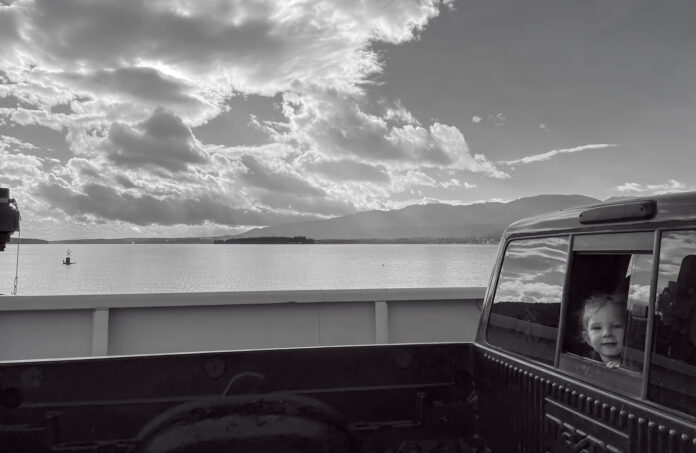
Boyle Point Beckons

https://printartphotography.ca

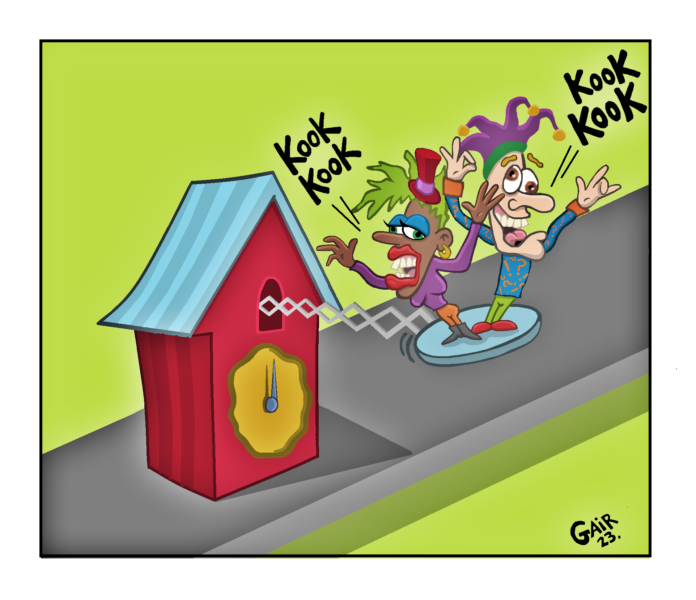
big burp

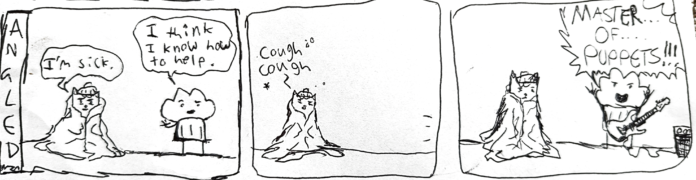
#1700

Shucking Oysters: Nudge, Nudge

Shucking Oysters: Nudge, Nudge

By Alex Allen

Every summer mid to late August, like clockwork, I have a mini meltdown. 1+1=2. Except this year, I had three in one week. Some action by a visitor always melts me down. It often involves a dog or a child or a spouse. It’s not pleasant and I am always three degrees of separation from sharing my angry words with those with no empathy or heart. 

But this kind of behaviour alarms me, quite frankly. The sheer lack of self-consciousness out there. What is happening to “human” beings? Consciousness was what separated us from other wildlife, was it not? Why have we become so mean and heartless? Is it the weather? The heat? The global unrest and divisiveness? Leaders unravelling worldwide? Fragile mental health? The aftermath of the pandemic? Trump?

I’m blaming it on the gadget that they call “smart,” yet those who use it seem to be getting dumb and dumber. This was all planned. Sean Parker, Facebook’s first president, shared their strategy: “How do we consume as much of your time and conscious attention as possible?”

Known as the “social-validation feedback loop,” they figured out how to exploit our vulnerabilities. A little dopamine hit because someone liked the photo you posted of your perfect Asian chicken lettuce wraps, getting you to post more photos, so you can have even more likes and comments. Adore me!

Nir Eyal, wrote in Hooked: How to Build Habit-Forming Products, that your smartphone is a glorified slot machine. A ping when you insert your coin. A ka-ching when you pull the lever. “Training your mind to conflate the thrill of winning with its mechanical clangs and buzzes.” 

Like sex and hunger, the act of pulling the lever, becomes pleasurable in itself. Dopamine is social media’s partner in your brain. Even your smartphone looks and feels like a slot machine, “pulsing with colourful notification badges, whoosh sounds, and gentle vibrations.” We are distracted because we want to be. Because it’s fun. 

And then the nerds discovered “intermittent variable reinforcement.” Like slot machines, they use this psychological weakness to incredible effect. The unpredictability of the payouts makes it harder to stop. Social media does the same. Posting a picture of your lettuce wrap may get you some likes or nothing at all. Compulsively seeking a positive response, you are unable ever to logoff from the platform.

Social media apps are some of the most easily accessible products on earth. Max Fisher wrote in The Chaos Machine, “It’s a casino that fits in your pocket, which is how we slowly train ourselves to answer any dip in our happiness with a pull at the most ubiquitous slot machine in history.” And the Fear Of Missing Out makes one a slave to their gadget. Obsessively checking their Facebook feeds – during meals, while driving, immediately upon waking or before sleeping, and so on. This compulsive behaviour is intended to produce relief in the form of social reassurance, but instead it breeds more anxiety and more searching. It’s as if we’re being forced into casinos at gunpoint, where we lose everything, generation after generation, and then we’re told we’ve got a gambling problem. 

Facebook’s “Like” feature, Fisher writes, is the equivalent of a car battery hooked up to a sociometer. It’s not just the ‘Likes’ that we spend so much of our energy pursuing, it’s that they offer immediate gratification. This is a powerful form of approval because it shows the world how popular you are and activates your dopamine. When was the last time 80+people publicly adored you in person? 

People don’t want to miss anything, or fall out of touch, or have to rely on their own internal thoughts – to say nothing of having to converse with their like-minded phone scrolling mates, sitting right next to them. But social media is not a substitute for real public discourse. Instead of connection, we have disconnection.

As with every human invention, we have the dark side. Platforms that promote mob-like hysteria and harassment with virtually no constraints or safeguards. Identity groups, silos, cyber-bullying, fake news, and conspiracy theories. 

We enjoy being outraged. Fisher wrote, “Outrage is a simple emotional cocktail: anger plus disgust. Moral outrage is a social instinct.” Like when I saw the visitor treating their dog with complete disrespect, I was morally angry. I wanted to see them punished and shamed. The difference, I was not online nor out of line. 

But this is how people get riled up online. It’s what extremists and propagandists have figured out. Rally people to their side by triggering outrage, often at a poor scapegoat or an imagined bad person. Someone, say, who flips out at a ferry crew member might have once expected some finger wagging from fellow passengers. Now, if the incident is recorded and posted online, they might face weeks of abuse hurled at them not only from the local community but from all over the world. 

Unfortunately, it is easier than ever for shaming to spin out of control, and alarmingly, it has grown more crueller and even sadistic. Whether anything is true or false, has little bearing on reality. What matters is whether the post can provoke a powerful reaction – a moral outrage. Facebook and Google, not only profit from shaming events but are engineered to exploit them. The more time feuding online, the more they idly reveal your browsing habits, the more precisely you can be targeted by advertisers. 

I have nothing against technology, so long as the tools are put to use to improve our real-world social life as opposed to diminishing it. Think hard about how much meaning and fulfillment “modern wonders” actually bring to your lives. If everyone is spending hour after hour on their phones, scrolling through texts and timelines, then that becomes normal behaviour. But as Matt Haig noted, “when normality becomes madness, the only way to find sanity is daring to be different.” 

Cowboy Corner: The Donkey And The Dirtbike

The Donkey And The Dirtbike

It was the dawn of 1976 and I don’t think that there was anyone out there happier about it than me. We had just been through the harshest winter in recorded history, and the idea of putting away the snow shovels and parkas was a welcome thought indeed.

February 2nd found us all outside, huddled together in anticipation of our annual family event. We all watched with fingers crossed as we arched our backs against the icy wind while stomping our feet and patting our hands together to keep warm. Suddenly, we heard a rustling sound. Could it be? Yes! My Uncle Mike emerged from his cave to see his shadow, a harbinger of good fortune, warm weather, and prosperity for the year to come!

April soon turned to May and the fields and roads dried up as the time for planting drew nearer. One day I was busy trying to pry my brother’s head out of the chicken fence before the heinous birds pecked his face away when I heard a strange sound off in the distance. It was a high pitched revving sound, an engine of some sort. Suddenly from around the old shed flew not one, not two, not three, but four brand new dirtbikes! It was my friends Larry and Doug, and their two little brothers!

They all pulled alongside where I stood, and as Larry lifted his visor I said, “Wow! Cool bikes! When did you….how did you….” I was utterly speechless!

“Our Dads’ went into town and bought them for us! You should ask your old man to get you one! Then we could all go riding together!”, was Larry’s cheerful challenge. And with that they all sped off, tires spitting gravel as they laughed and cheered.

I finished up my chores for the day and I even took the extra steps to put in a fresh bale of straw in the calf pens, a job Dad usually had to force me to do.

That night at the supper table I nervously pushed Mum’s bark mulch meatloaf around on my plate, trying to work up my nerve. Finally, I could contain myself no further.

“Dad,” I said, “Doug and Larry’s Dads bought them these really cool dirtbikes, and I just know we’re going to have a good year, so, I was wondering, well, could I get one too so I can go riding with my pals?”.

Dad looked annoyed as he picked up the large wooden spoon and spanked another huge pile of mashed potatoes down onto his plate.

“Those dirtbikes are the most dangerous things on the planet! I’m not getting any son of mine one of those bloody suicide machines! I’ve got a better idea! Your Uncle Mike and I will drive into town tomorrow and get you a nice safe horse! You’ll have just as much fun and your Mother and I won’t have to worry about you killing yourself!”.

So the very next day Dad hooked up the old trailer, sobered up Uncle Mike, and off to the city they went. I can’t say that I was anxiously anticipating their return, but curiosity soon began to get the better of me. As daylight began to fade into dusk, the old phone on the wall began to ring.

“Hello”, Mum spoke into the receiver.

It was Dad.

“Hey, it’s me. Listen, your brother and I found the boy a good horse but we’ve decided to stay in town for the night, as my eyes aren’t what they used to be and, well, you know this old truck. We’ll be back at first light, don’t you worry, we’ll be fine”.

“OK. OK. just don’t be too late”, was Mum’s reply.

I had to know what was going on.

“Are Dad and Uncle Mike alright, Mum?,” I asked.

“Yes,” Mum answered. “They’re at some stripper bar getting drunk and gave me the usual bullshit about bad eyesight and the truck breaking down. They should be here tomorrow around noon”. So off to bed I went.

The next morning I was roused from my slumber by the sound of a loud horn. Dad and a bleary eyed Uncle Mike stumbled out of the old truck and as I approached I could see the trailer rocking back and forth accompanied by a loud braying.


“Come on, son! Come and check out your new horse!” , grinned Dad, and just as he spoke the old trailer was rendered to splinters by the vile beast it had encaged.

As the dust cleared, I was able to make out the figure of, no, it couldn’t be….could it? Then it became all too obvious.

“Jesus Tap Dancing Christ you guys!”, I moaned. “That’s not a horse! It’s a fucking donkey!! What the hell were you thinking? Does this look like a fucking horse to you?! Did the loud braying not tip you off? Or were you totally oblivious to these big red letters painted on its side that say DONKEY FOR SALE??  Anybody with an eye and an asshole can tell that this a is not a fucking horse!!”.   

Then Dad sheepishly looked at Uncle Mike.  “Well, let’s get this thing in the barn before somebody sees us. Come on, Mike, I’ll pull, you push”.

Finally, I’d heard enough. I decided to go back to the house and see what was for breakfast, while these two Mensa candidates figured out what to do with that mangy mule.

I walked up the porch steps, and opened the screen door to see Mum at the stove stirring a pot of what looked like tile grout.

“Hey, Mum, any porridge left?”  I asked.

“Porridge?!? What are we made of money? I want you to take this over to your Grandma. She called and said she’s not feeling well”, then handed me a wicker basket with a checkered cloth on top. I lifted the edge and peered inside. Just as I thought – two bottles of vodka and a carton of cigarettes. Chicken soup for the soul, alright.  

“It’s cold out”, Mum warned. “Better bundle up. And be careful! Mr. Harrison said he saw a wolf lurking about!!”. So I pulled on my red hoodie and headed off to Grandma’s house with basket in hand.

I set off along the path and it drew me deeper and deeper into the forest.  ‘A fucking donkey’, I muttered. ‘What a couple of world class morons!’ . I reached into the basket and tore the wrapper off of one of the packs of cigarettes, and as I placed one between my teeth, I pulled out my Zippo from my breast pocket and snapped open the lid to expose a willing flame. The tip of the Rothmans crackled as I drew its welcome smoke into my healthy pink lungs. Ahhhh heaven, I thought, as I took a generous swig of Granny’s vodka. I knew I could polish off a quarter of that thing, water it down in the stream, replace the cap, and old Granny would be none the wiser. The trick was to give her the fresh bottle first, and by the time she mowed through that, she’d be so bombed I could give her paint thinner and she wouldn’t know the difference.  

After about an hour of walking I had finally arrived at my destination. Odd… the front door was wide open. That wasn’t like the old bird, as she had a penchant for passing out in front of the TV naked and harboured an irrational fear that someone would happen by and snap a photo of her that would end up in one of those GILF fetish magazines.

I cautiously walked into the kitchen and there was Granny, sitting at the table with her back to me.

“Oh, there you are”, I said with a sigh of relief. “I was worried something bad had happened to you”.

“Goodness no, my child, I’m fine…just fine!”, she replied, and turned her head and flashed me a wide grin that exposed pearly white teeth.

Now, the thought occurred to me to say something pithy like, “Oh Grandma, what big teeth you have!”, but I didn’t just fall off the turnip truck yesterday. This was clearly a wolf, dressed in her mustard stained sweatpants and worn out old Pink Floyd t-shirt. The dead giveaway was the teeth – the sparkly white teeth. You see, Granny wouldn’t know a toothbrush if she tripped over one, and her chompers were stained a lovely hue of brown from years of drinking black coffee and chain smoking. They looked like two little rows of baked beans. The second tip was that when I told her I was worried about her, she was actually nice to me, something my real Grandma would never do.

I reached into my vest and pulled out a fresh cigarette and sparked it up, and as I shoved my lighter back into my pocket I took a deep puff and looked at its glowing ember as I exhaled the thick smoke from my lungs.

“Listen up, wolfy boy”, I sighed. “I’ve had a really shitty day and I’m in no mood for any of your ‘All the better to eat you with’ crap. So I’m gonna make this real easy for you. You come into town with me, I’ll see you get a fair trial. And nobody gets hurt. We got a deal here or what furball?”.

Suddenly the beast leapt up on its hind legs, tore off Granny’s nightcap, and hissed, “Not today kid! I ate your shitty old Grandma, and now I’m going to eat you too!!”.

But that morning good fortune had smiled upon me. You see, Granny always hid her weed under a loose floorboard in the kitchen, and as luck would have it that wolf found himself standing directly over top of it. Without even thinking I stomped down on my end of that plank and it flew up and nailed him right in the acorns and he folded up like a Grade Four love letter.

Suddenly the wolf began to choke and gasp for air, so I grabbed him by the throat and spun him around and started to administer the Heimlich Maneuver, and after three or four good cranks to my surprise out popped Grandma! And she was big mad…

“What the fuck kept you, you little shit head?!!? I could hardly breathe in there! And where’s my vodka? And you bloody well better not have drank half of it and watered it down in the stream like you always do! Now gimmee my smokes and make me a damn coffee!!”.

All of a sudden a hunter burst through the door with some of the local farmers.

“There! There it is! The wolf that has been killing our sheep! Oh, thank you, my dear boy! Thank you! A curse has been lifted from this land! Let us all rejoice!”.

Soon word of my exploits spread throughout the land, and from that day forward, I would become known as…..

That kid whose Dad was too cheap to buy him a dirtbike.

THE END


Dr. Frankenstein, and the Politics of Artificial Intelligence

Dr. Frankenstein, and the Politics of Artificial Intelligence

By Keith Porteous

Artificial intelligence (AI) has moved rapidly from speculative technology to a pervasive force shaping economics, militarism, culture, and civil liberties. While its applications in healthcare, finance, and communication are often framed in terms of efficiency and innovation, the deeper question is political: who controls AI, how is it governed, and what power relations does it reinforce or disrupt? The political implications of AI reach into state power, global competition, governance, and the very idea of human agency.

Governments view AI both as a tool of governance and as a strategic resource. Nation states have adopted AI-driven surveillance systems to monitor populations, track dissent, and manage social behaviour. “Social credit” systems, facial recognition technologies, and predictive policing illustrate how AI can consolidate centralized authority, while deploying AI in law enforcement and immigration control. The political danger lies in the normalization of surveillance and the erosion of civil liberties, especially when such technologies are adopted without transparency or public debate.

AI has become a core element of international rivalry. The United States, China, Russia, and the European Union are racing to dominate AI research, infrastructure, and standards. This race has implications similar to the nuclear arms race of the 20th century, but with subtler tools: data monopolies, control over semiconductor supply chains, and influence in setting global AI regulation. States that lead in AI may gain massive economic and military advantages, growing and creating new asymmetries in international relations. Smaller states and cultures risk dependency on AI systems designed and controlled elsewhere, raising even more threats of digital colonialism.

Domestically, AI reshapes processes of governance in both overt and hidden ways. Algorithmic curation of information affects political discourse, amplifying certain voices while minimizing others. Mainstream disinformation campaigns across the ideological spectrum are powered by generative AI that are coercive to public opinion, with convincing deep-fakes and automated propaganda. Beyond media, AI-driven decision-making in welfare distribution, credit scoring, or policing, can deepen social inequalities if underlying systems reflect pre-existing biases, and those that are newly manufactured. 

The Canadian government, like those of most Western countries, has moved to bring forward legislation that ratifies the full spectrum of intrusions into privacy and civil liberty. This is often done under the guise of “security”, and to thwart human trafficking and the exploitation of children, where there are already existing laws and means of dealing with these issues. By elevating perceived threat levels, the populace can be coerced into accepting unnecessary and previously unacceptable digital surveillance and manipulations, using the tactic of manufacturing unwarranted fears of an array of risks and perils.

The political struggle over AI is also a struggle over regulation. Should AI be governed nationally, through democratic institutions, or internationally, through treaties and standards bodies? Global consensus is far from assured. In the absence of robust resistance, private corporations—particularly large technology companies—set de facto rules through the design and deployment of AI systems. This raises questions about accountability, as corporations increasingly wield wildly excessive powers.

At the deepest level, AI challenges all political philosophies by shifting the boundaries between human and machine decision-making. When algorithms influence judicial rulings, financial markets, or battlefield strategy, responsibility becomes blurred. Who is accountable for an AI decision: the programmer, the corporation, the state, or the algorithm itself? This diffusion of agency undermines traditional notions of free expression, sovereignty, justice, and accountability. 

While it may already be too late to mitigate the worst implications of AI and its outcomes, the task for politics in the 21st century is therefore not to adapt to AI, but to ensure that AI cannot and will not further corrupt and diminish our human experience. 

Johnny Alchemy has answered the question, Why are we here?

Gabriel Jeroschewitz, August 18th, 2025. Abridged. But a further Johnny alchemy will be coming at the beginning of October.


We watch him now, just as we watched them then. We are the echo in the ruins, the ghost in the machine, the collective sigh of a civilization that looked into the mirror of its potential and chose to smash it. We saw what Walter M. Miller Jr. saw, and it left us staring at the ceiling of eternity, wondering if the cycle was the only truth.

His name is Johnny Alchemy, a name he gave himself. It’s a good name for a tough guy in a broken world. “Alchemy” suggests transformation, the turning of lead into gold. Johnny, however, works with silicon and rust, scavenging the digital graveyards of the Before Times. He moves through the skeletal remains of server farms and data centers like a priest through a fallen cathedral, his calloused hands seeking not relics of saints, but the cold, hard memory of humanity.

We watch him one night, silhouetted against the green glow of a salvaged monitor he has coaxed back to life with a patchwork of solar cells and scavenged batteries. The air in his sanctuary—a reinforced concrete bunker that once housed the digital soul of a metropolis—is thick with the smell of ozone and dust. The ghosts he has resurrected on the screen flicker: fragments of video calls, cascading news feeds from the final days, social media posts screaming into the void.

He leans back, the chair groaning in protest, and stares past the monitor at the pockmarked concrete ceiling. This is his ritual, his vigil. He’s not just looking for schematics or survival data; he’s asking questions.

Is this the end? The question hangs in the dead air—an absurd question. The end came and went. The Flame Deluge, they called it. A poetic term for the atomic fire that scoured the world clean of its arrogance. This isn’t the end. This is the long, quiet, agonizing after.

Johnny runs a hand over his shaved head. He’s seen the new settlements rising from the ashes. He’s seen them build bigger walls, hoard more resources, and eye their neighbours with the same ancient suspicion that led to the Deluge in the first place. They are rebuilding the world precisely as it was, with the same flawed materials: fear, greed, and the unshakable belief that surely, this time, they wouldn’t make the same mistakes. We’ve all said it. We’ve learned from history. Johnny snorts, a harsh, grating sound in the silence. Liars. All of them.

Will God come down? He scrolls through a rescued theological forum from the last week of the world. Thousands of posts, a cacophony of prayer and panic. Promises of the Rapture, desperate pleas for intervention. Johnny looks at the silent, indifferent sky through a crack in the ceiling. The only thing that came down was fire. He doesn’t think Jesus is coming back. If he was going to, he missed a spectacular entrance.

This is the knowledge that Miller bottled and left for us to find: the cold dread that settles in your gut when you realize the cavalry isn’t coming. There are no divine fail-safes. The responsibility was always ours.

Johnny finds a video file. A family huddled in their basement. The father tries to explain to his young daughter how their smart home works and how the network connects them to the world, even as it transmits launch codes and targeting data. He can explain what it does, but not why it’s doing it. The gap. The same terrible gap the monks of St. Leibowitz faced, copying blueprints for machines of death with the piety of scribes. Knowledge without wisdom. The most toxic compound in the universe.

Why are we here? Do we have a soul? This is the real gold Johnny seeks. He pores over the data not as an archaeologist, but as a coroner performing an autopsy on a species, trying to find the precise moment the soul left the body. Was it when they learned to split the atom? Or when they used that knowledge to build a bomb instead of a star? He sees the Before People chasing power while preaching restraint, building weapons while claiming peace. They treated knowledge like a prize to be won, not a burden to be carried responsibly.

We recognize Johnny’s look. It is the weary expression of the ageless observer, the Wandering Jew of Miller’s tale, cursed to watch humanity’s follies on repeat. Johnny has seen it in the data, and he sees it in the faces of the new tribes: the same lust for certainty, the exact desperate search for a leader to absolve them of the terror of thinking for themselves.

Are there any true believers? Oh, yes. There are plenty. They believe in the New Canaan Warlord fifty miles east, who promises order through strength. They believe in the Fission-Prophets to the west, who worship an unexploded warhead. They believe in anything that gives them a simple enemy and purpose. They are the true believers. But they are not what Johnny is looking for.

What guts him most, what we see twisting his tough-guy face into a mask of despair, is the sheer, predictable, maddening inevitability of it all. The cycle. The grand, stupid, tragic loop. Humanity learns to build, builds to dominate, dominates until it destroys, and the survivors are left to know how to make again.

He could use what he knows. With the knowledge of these drives, he could become a king. He could build weapons, create control systems, become the Thon Taddeo of his age, a harbinger of a new, terrible renaissance. The temptation is there, a serpent whispering in the hum of the servers.

But then, he finds something else. A small, encrypted file buried deep in a university server. It takes him weeks to crack. It’s not a weapon schematic or a political secret. It’s a seed bank. A digital archive of every poem ever written, every symphony ever composed, every philosophical treatise on ethics and mercy. It’s a backup of humanity’s soul. The people who made it must have known. They must have seen the fire coming and decided this was the only thing worth saving. Not the power, but the potential for wisdom.

In that moment, Johnny’s alchemy succeeds. He realizes he is not meant to turn lead into gold but despair into purpose. He isn’t here to break the cycle—no single person can. He is here to be a witness, a preserver, a monk in a leather jacket.

He begins a new project. He starts collating the data, creating a curated history. He places the launch codes next to the poems about peace. He puts the political speeches full of hate next to the philosophical arguments for empathy. He adds his logs and observations of the world being reborn into the same old sins. He is not building a weapon. He is building a warning, a mirror.

He will never know if it will work. He will likely die here, in his concrete monastery, surrounded by the ghosts of a species that couldn’t stop punching itself in the face. But as we watch him work, a fierce, quiet dignity settling over him, we feel something that resembles hope.

Self-help isn’t a grand solution. It’s in the small, defiant act. Johnny Alchemy has answered the question, Why are we here? We are here to remember. We are here to bear witness. We are here to tend the embers of wisdom, however small, and to pass them into the darkness, praying that the next hands that receive them might, just might, choose to build a hearth instead of an inferno.

A Curse

A Curse 

by thomas p. hunterson

So we speak, so it is cursed.

By the rusted nails of greed,
by the hollow laughter of bankers’ gods,
we bind this scheme.

May every blueprint curl like burnt paper,
every profit projection sink in mud,
every marketing slogan choke on its own gloss.

Let the survey stakes inspire blight,
let the bulldozers dream of rust,
let the ground remember it is older than ownership.

We invoke the saints of red-taped permits,
the trickster spirits of zoning bylaws,
the phantom accountants who misplace decimal points.

May financing falter,
both clients and grapes sour,
and public opinion hiss like wind through broken windows.

Thus the land shall remain what it is:
a stubborn altar of earth and sky,
a place where a vineyard cannot take root,
and where any who try will know only loss.

So we speak, so it is cursed. 

They’re Lying About Venezuela While Moving War Machinery Into Place

Listen to a reading of this article (reading by Tim Foley):

As if we didn’t have enough ugliness in the world right now, Trump has deployed warships near Venezuela’s coast, prompting Caracas to ready drone and naval patrols for conflict.

In an article titled “Inside Trump’s gunboat diplomacy with Venezuela,” Axios’ Marc Caputo writes that “The U.S. has never been closer to armed conflict with Venezuela, with a fully loaded U.S. flotilla sitting off its coast and dictator Nicolás Maduro living under a $50 million bounty.”

“President Trump ordered seven warships carrying 4,500 personnel — including three guided-missile destroyers and at least one attack submarine — to the waters off Venezuela,” Caputo writes. “Officially, they’re there to combat drug trafficking. But Press Secretary Karoline Leavitt leaned into the ambiguity of the mission on Thursday, noting that the U.S. considers Maduro the ‘fugitive head of [a] drug cartel’ and not Venezuela’s legitimate president.”

The US personnel reportedly include some 2,200 Marines.

“This could be Noriega part 2,” an unnamed official in the Trump administration told Axios, saying that “Maduro should be shitting bricks.”

So they’re not even disguising the fact that Trump is at least contemplating some kind of direct military strike on Caracas. Drugs are the official-official reason for the deployment, but the unofficial-official reason that’s being freely leaked to the press is to remove the leader of a sovereign state.

It’s probably worth noting that Trump-aligned pundits like Alex Jones have been busy manufacturing consent for regime change intervention in Venezuela.

“I don’t like any of these wars,” Jones said recently on whatever his show is called now. “But if you look at US doctrine and wars that we fought that were right, it’s in Latin America, this is our sandbox. And Venezuela is a communist dictatorship with the biggest oil reserves per square foot in the world, their people are absolute slaves, and I don’t like regime change, but they’re manipulating our elections, they’re flooding us with Fentanyl, and if there were surgical strikes to take out the communists there would be an uprising and they could have elections, and it would be a good thing.”

Jones could have stopped at “communist” and “oil reserves”. Venezuela has the largest proven oil reserves of any country on the planet, and is not aligned with the capitalist western empire that is loosely centralized around Washington DC. Any reasons given for US regime change intervention beyond this should be read as excuses.

Whenever the US war machine moves its crosshairs to a different target I always get people telling me “No no Caitlin, THIS time the Evil Bad Guy really DOES need to be regime changed! THIS time our government and media are telling us the TRUTH!”

And it’s always so stupid, because it’s just the same rehashed lies over and over again. The empire takes whatever actions will help it to dominate our planet and its resources to a greater extent than it already does, and then it makes up justifications for those actions.

They’ll say they’re doing it for humanitarian reasons while ignoring the humanitarian abuses of empire-aligned nations. They’ll say they’re doing it to stop drug abuse while ignoring all the evidence regarding the actual causes of drug abuse, even as Maduro sends 15,000 troops to the Colombian border to help fight drug trafficking. They’ll say they’re doing it to stop interference in US affairs while letting US-aligned nations like Israel interfere in US politics at will.

They’re just lying. The US empire lies about all its acts of war. Trump tried to orchestrate a regime change in Venezuela the last time he was in office, and he’s doing it again for the exact same reasons. It’s an oil-rich nation that refuses to bow to the dictates of Washington, and all the worst warmongers in the imperial swamp are eagerly pushing to absorb it into the folds of the empire.

That’s all we are looking at here, and anyone who says otherwise is lying.

________________

Caitlin’s Newsletter is a reader-supported publication. To receive new posts and support my work, consider becoming a free or paid subscriber.

The best way to make sure you see everything I write is to get on my free mailing list. My work is entirely reader-supported, so if you enjoyed this piece here are some options where you can toss some money into my tip jar if you want to. Click here for links for my social media, books, merch, and audio/video versions of each article. All my work is free to bootleg and use in any way, shape or form; republish it, translate it, use it on merchandise; whatever you want. All works co-authored with my husband Tim Foley.

Bitcoin donations: 1Ac7PCQXoQoLA9Sh8fhAgiU3PHA2EX5Zm2

Feature image via Adobe Stock.

Chickadee Lake from the South Shore

https://printartphotography.ca