Gabriel Jeroschewitz, November. 4th 2026, Inspired by James Joyce and dedicated to him.
The Bog Remembers Your Pension
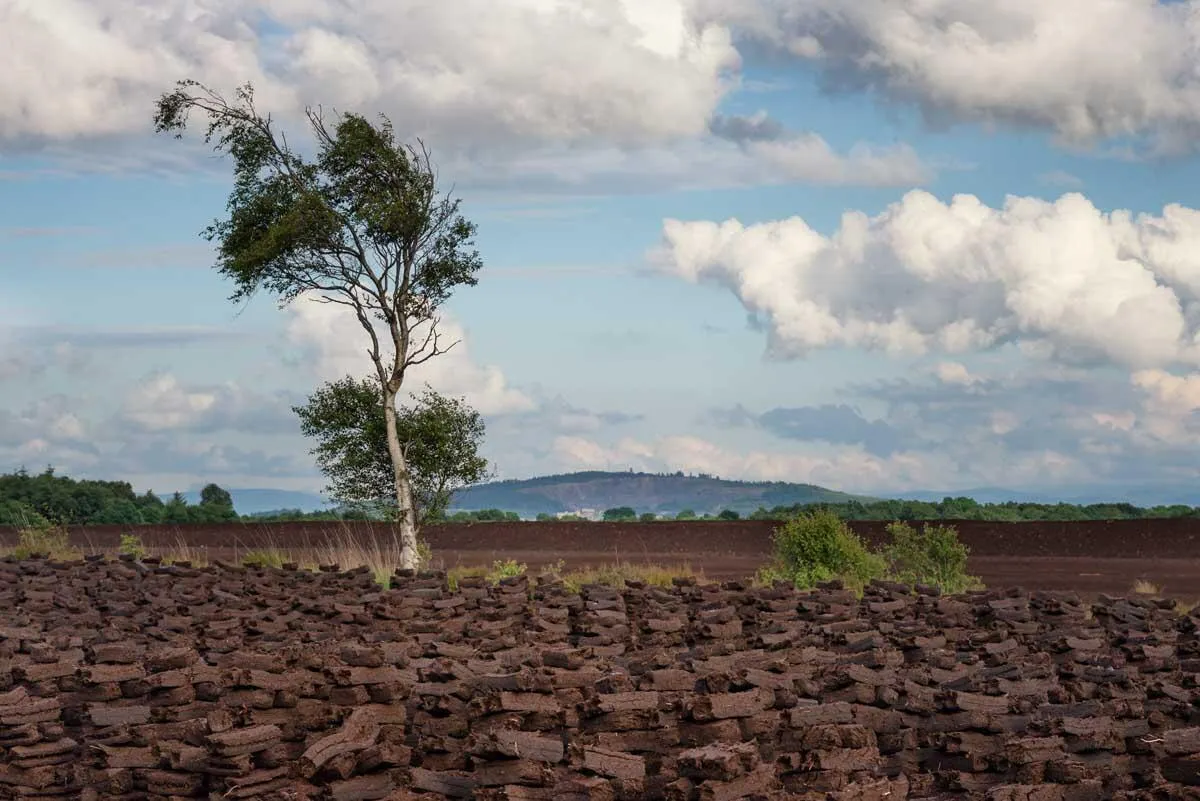
The Bog of Allen remembers nothing at all about your pension. It knows nothing of Seamus O’Donnell measuring out his grave space twice yesterday with a stick in rancid bacon fat, muttering about “needing room for the swell” after his third pint. It has no recollection of Brigid Flynn spending three hours yesterday arranging dried lavender in her very finest Waterford crystal vase (the one which Chubbs the terrier knocked over last Sunday, and which she now insists was always “meant for the fairies anyway, so it’s grand”). The bog is just the bog. It remembers the buttercream of the past. It remembers the sheep that get in. It doesn’t care a fig about our frantic efforts on the shrouds of the present.
I was at the damp bank at dawn, the pale light trying to gild the mist lifting from the peat. My breath turned to grey as I exhaled it with the movement of the midges. Down in the depression where the old boreen curves towards Turraheen, the village was already going through its daily ritual of denial. Old Man Hannigan was shuffling out with his walking stick held like a scepter, inspecting his marrows as a general might inspect his troops before Waterloo. “Look at that curve on that one, Brigid!” he calls out to her in the cottage where she was scraping the burnt porridge from the pot. “That’s more than vegetable! That’s character! Like a good man’s chin!” Brigid is still scraping porridge, muttering, “Aye, Seamus, and yours looks like a failed scones experiment.” She then viciously plunges her spoon into the pot. The comedy is in the detail. The sound of Hannigan’s false tooth clicking as he says “curve”. The sharp angle of the spoon as it is plunged. The certainty that this marrow, this particular curve of beta-carotene, will somehow be of use in their resistance to the pull of all names, all stories and indeed the very need to grow marrows at all, and will return them to the patient silence of the bog.
They build castles. Castles of course not of stone. Castles of pride and sorrow. The wind (or was it just a breeze through the bog myrtle?) brought that to mind. Hannigan’s castle is built upon the foundation of being the King of Marrows, all his authority stemming from his stories of slug fights and his moonlight fertilization rites. Brigid’s castle is built on the very threads of being the maker of the best soda bread in three parishes. She maintains that status by a very secret addition of a pinch of whiskey to her bread and by a very determined refusal to let anyone else guess what she’s doing. Seamus O’Donnell, poor sod, built his on the foundation of being remembered. His castle is measured in terms of grave space. He will be at the wakes not out of grief but in an attempt to assess the polish of the coffins, the choice of hymns (“Too slow, Father O’Leary! Needs a bit of lift for the journey!”) and above all else in the hope that his own will be remarked upon, discussed and possibly even held in some degree of esteem. All of this is going on as the bog continues its work. It takes the pollen, the leaves, the faint smell of heather as it rots. It takes all the things that were and it whispers that nothing ever sticks.
The golden hour thief went through their hands as if through wet sand. Hannigan would be mid-mouthful of marrow and his eyes would go completely blank as the light would shift just so across the bog and the water would turn to liquid mercury. He’d then sigh as if sacks of peat were settling and would say “Fades fast, doesn’t it?” Brigid would then wipe her hands on her skirt and look up to follow Hannigan’s gaze. For a moment the marrows, the lavender, the porridge and the whole of it would seem to be nothing at all. Then Seamus would appear looking towards the horizon and grumbling about needing room for the “proper settling” of a grave. And then it would all be over. Hannigan would grunt about bog trotters. Brigid would be complaining about Seamus tracking mud in, and they’d all turn to their castles, re-strengthening the walls of pride and borrowed time. They’d be absolutely certain this time that the marrow, the loaf, the perfectly measured six foot two grave space would be the thing that sticks.
Gold can’t haggle. Power can’t stay. The only thing that seemed to be calling was the cold mountain breeze from the foothills of Wicklow – the breeze that carries the dampness of the rain and the distant tang of peat smoke. It was calling not to accumulate but to be aware. To feel the roughness of the old hawthorn by the well not as an asset but as another thing in the world which shares the same brief period of sun. To taste the sharpness of a wild strawberry plucked in the middle of the weed not as a trophy but as a moment of pure joy which is so fleeting you have no time to think about what you’ll leave behind. The circle turns – it turns continuously as the tides of the Shannon estuary. The morning will come whether we’re ready for it or not. And what do we take with us? Only what we can never take – the breath of heather crushed on the hillside as we walk, the sight of a single ash leaf spinning down the current of the River Barrow and the sound of a loved one’s laugh caught in the sudden burst of wind – all of it drifting away in the middle of a dream, yet still the cold, wet of the bog itself.
Our names will disappear. Our stories will thin out like old broth. We’ll go back to the dust and the wind. Don’t wait for the seasons to wane and fall. They’re coming anyway and they’ll be laughing at our seed catalogues and our planners. The earth has a memory down in the dark just like the bog itself. It remembers the press of a foot on the soft bog earth, the heat of a hand briefly held and the particular shade of blue in a child’s eyes as she points at a plover circling over the reeds. This isn’t the deed to a field. This isn’t even the entry in the bank book or the damaged mug that says “World’s Okayest Da”. What is remembered is not ownership at all but the experience of that moment shared.
We’ve trundled through the shadowed valleys and the stone. The limestone pavements of the Burren, the shaded valleys of Glenmalure. The sheer bulk of our accumulation, of what we’ve acquired and what we feel we have to leave behind, is utterly absurd in these places, as if we’re actually trying to carry the bog on our backs. Yet… in the midst of all the hustle and bustle, all the anxiety and the frantic measuring out of grave space we’re not quite alone. Not in the way the politicians mean it, not in the way the priests mean it when they preach from the damp pulpits. But in the way the wind carries the same seeds to the mountain avens and the bog myrtle. In the way the rain that is falling on Seamus’s precisely measured grave space is also falling on Brigid’s lavender and seeping into the hollow where Hannigan’s prize marrow is struggling to get to the weak light. We’re simply passing on the moisture in the great slow cycle.
The circle turns. The morning will come. We’re not here as owners really, we’re just witnesses. All we can do is hold on to the feeling, the fleeting connection and the sheer unexpected kindness. We can’t take the marble top of the sideboard, we can’t take the signed first edition, we can’t take the perfectly formed potato or the envy of the neighbours. What we have is not in the attic or the safe deposit box. It’s in the breath on the heather and the rose, in the leaf on the stream, drifting away as mist on a dream. Our names will be gone. Our stories are thin. We go back to the dust in the wind.
We’re just a breath on a mountain. Scattered through the heather. And the leaves in the trees.
Tuileadh na gcroíthe, níorbh fhaighinn sé – The desire of hearts, it was not attained.
We’re just dust in the wind.
Níl aon tinteán mar do thinteán féin. – Nowhere feels like home.
(But the hearth, just like the name, just like the story, goes cold. All that’s left is the memory of having sat by it.)
So we let go of the marrows. Of the lavender. Of the plots. Of the need to be remembered.
And in that act of simply letting go, as the wind lifts the final flake of yesterday’s bog butter off the surface we find, quite absurdly, quite lightly, what was always there:
Not what we kept.
But what we felt.
What we dreamed.
What we were, briefly, brightly, before we became part of the wind’s endless gentle song.
The bog remembers.
It always does.
And it is enough.
(For now. For this breath. For this mist on the dream.)