
Continuing Appeals for B.C. Ferries Governance
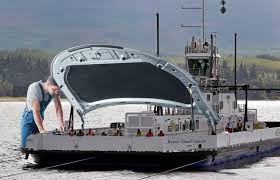
In the spirit of keeping our communities informed of my lobbying efforts for B.C. Ferries’ governance reform, I have been corresponding with the Federal Transportation Standing Committee reviewing the corporation’s $lB loan for Chinese-built vessels. This committee is timely, as it offers an opportunity to expose the B.C. government’s refusal to make B.C. Ferries accountable or introduce legislation that would strengthen governance to avoid the corporation’s failures. I asked that the loan for the Chinese-built vessels be conditioned with strong governance, as recommended in the l999 Fast Ferries audit, or taxpayers are likely to absorb the debt when the corporation defaults and the Chinese vessels are likely to suffer the same failure fate of their recent predecessors. I mentioned, of course, that the B.C. Ombudsperson has agreed to launch an investigation, but it could take years. The committee facilitator wrote a “Dear Sharon” response, saying he translated and sent my appeal to the Committee. Well, I have heard this before from the B.C. Minister of Transportation and the Commissioner’s office! However, it is also timely that the corporation’s 2024-25 performance report was recently posted that addresses the corporation’s current financial “vessel resilience” and financial crises. Therefore, I sent a followup letter to the committee, asking them to review the corporation’s proposal to form a “sustainable partnership” for funding from all levels of government to avoid a tax hike “well in excess of 35%–within the same governance vacuum. I also sent the following email exchange with MLA Josie Osborne, who appeared to interpret my appeal for an audit of government records of how the corporation spends tax dollars as an appeal to audit the corporation, as proof that the corporation continues to be accountable to no one, with NDP support:
December 5
Dear MLA Osborne:
This follows up your November 12 email claiming that because B.C. Ferries was created as a corporation following the 1999 Fast Ferries scandal, an audit of the government’s oversight failure cannot again be conducted. I am not alone in arguing that B.C. Ferries is not an “independent” corporation, but one totally dependent on ever-increasing, massive government subsidies to stay afloat. By operating in the red, deploying failing vessels needing millions in avoidable repairs, and projecting a 30% fare increase by 2028, B.C. Ferries will likely pass the $1B loan debt for Chinese-built vessels onto taxpayers and continue to drain the public purse with impunity.
The facts are grim: B.C. Ferries wasted $1B of taxpayer money in the 1990s. The 2001 Wright Review attributed this waste to a “baroque” oversight system in which no one was responsible, and accounted for the corporation’s incompetence. Regrettably, that same ineffective oversight system remains intact today.
Instead of correcting the failures of his predecessor—who was replaced due to incompetence—the current leadership is free to perpetuate them. The failed Baynes Sound cable ferry experiment, which has the highest breakdown rate in the fleet, remains in profoundly unreliable service due to “budget reasons.” (Due to an unresolvable design failure, it is currently replaced by the Quinsum.) The new island electric hybrids provide such unreliable service that they are being replaced or rerouted. This pattern of deploying unreliable vessels raises a critical question: Given the corporation’s history, what assurance is there that the Chinese vessels will not also fail? Premier Eby’s announcement that he will not intervene in the Chinese vessel purchase signals that the corporation will likely pass the $1B debt onto taxpayers and continue to drain the public purse–with impunity. This is an untenable impasse.
I am, therefore, appealing to you on behalf of Denman and Hornby islanders to call for reintroducing tabled Bill 7 that provides the government with oversight power by amending the Coastal Ferry Act, and to call for considering the creation of a fully independent and accountable board, as recommended in the Wright Review. The Canadian Federation of Taxpayers demands that B.C. Ferries get off the “gravy boat”; the Conservatives and Greens call for returning the corporation to the Crown. The NDP, however, remains oblivious to the cost of keeping the status quo—both to ferry-dependent communities and to taxpayers. The hundreds of millions, and perhaps billions saved could be allocated to mitigating current crises in health care, affordable housing, and education, or to purchasing new vessels.
Respectfully,
Sharon Small,
Denman Island.
Nov 12, 2025
Dear Sharon,
Thank you for following up on your email requesting an audit of the Baynes Sound Connector, as MLA Osborne’s constituency advisor I am pleased to respond.
My apologies for the delay in responding to your email, as we were awaiting information from both the Ministry of Transportation and Transit and the Attorney General’s office. We have now received information from both Ministries and I am happy to share this information with you.
The Province contracts BC Ferries to deliver coastal ferry services under the Coastal Ferry Act (2003). BC Ferries operates as an independent company overseen by the BC Ferry Authority and regulated by the BC Ferries Commissioner, who ensures both entities fulfill their obligations under the Act and the service contract. The Province does not oversee BC Ferries’ daily operations, these operations are managed by its Board of Directors.
What we have found out from our inquiry with the Attorney General’s office, is that as an independent company, BC Ferries is not subject to audit by the Office of the Auditor General (OAG) under the Auditor General Act. However, as a publicly traded company, BC Ferries must file and disclose financial information—including annual reports, financial statements, and executive compensation—through SEDAR+ (the System for Electronic Document Analysis and Retrieval), in accordance with Canadian securities regulations. Most reports can also be found on the BC Ferry Commission website here: Compliance Reports – Office of the BC Ferries
Commissione europea – Rappresentanza in Italia
The Ministry of Transportation and Transit receives regular audit requests from the Office of the Comptroller General (3CMB) under the Ministry of Finance as part of routine monthly desk audits of Ministry expenditures, including payments related to coastal ferry services. In addition, the OAG conducts an annual audit of the Ministry’s financial statements and contractual obligations, these audits include reviews of the annual payment schedule to BC Ferries and examine contractual rights, including obligations under the Coastal Ferry Act (2003) and the Coastal Ferry Service Contract.
The audit requests from 3CMB and annual audits by OAG do not include regular operational details of private contracted companies, such as BC Ferries. While the OAG previously reviewed BC Ferries’ operations before the Company was established as a private corporation (e.g., the 1999 Fast Ferry Project audit), routine operational oversight of the Company is conducted by the BC Ferry Commissioner under the Coastal Ferry Act.
The Ministry suggested that you may want to review BC Ferries’ publicly available financial information and to participate in public engagement opportunities with BC Ferries and provide feedback, either virtually or in person, when these opportunities arise.
I understand this is not the response you were hoping for, but I do hope this information is helpful.
Sincerely,
Andrea McDonald | Constituency Advisor
office of Josie Osborne, ML
Shucking Oysters: Wuthering Frights
Shucking Oysters: Wuthering Frights
By Alex Allen
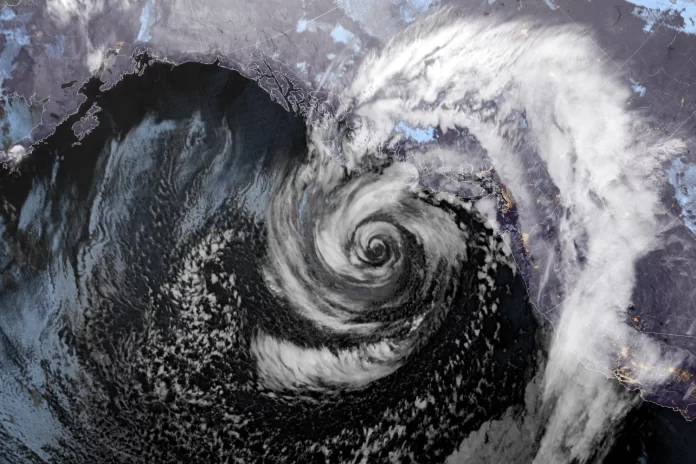
Got to love this time of year. Incessant rain, storms, power outages, ferry cancellations and possibly, losing your marbles. These extreme weather events seem to be starting a lot earlier every year. Remember October? We had four power outages, countless atmospheric rivers and a few bomb cyclones. There has never been a more exciting time to be obsessed with the weather.
Being a meteorologist is not an easy job. If your forecast ends up being wrong, everyone will blame you, and even if you get the forecast right, people will still complain(in Canada). By its nature, forecasting involves prediction. Like tarot card reading, James Howson wrote “telling the future can be accompanied by a vagueness which enraptures and mystifies the beholder.” While Nostradamus may have predicted asteroids and zombies, “the weather forecaster deals with something more prosaic yet not without extreme outcomes.”
Canada has just introduced a new colour-coded warning system, that aligns with the World Meteorological Organization which focuses on what the weather will do (risks, impacts, safety actions) rather than what the weather will be (100 mm of rain). The lowest and most common alert level is yellow indicating localized moderate impacts. These may include Baynes Sound Connector cancellations, flying debris like pine cones and four-hour power outages. The next level, orange, covers more significant damage, like wind / ice storms, falling trees and days of power outages. Red alerts are the most severe, with prolonged dangerous and possibly life-threatening weather, like structural damage to houses or buildings. As the federal government eloquently explained, “Canada’s switch enhances its weather services to meet modern challenges, delivering clear, consistent, and actionable information aligned with international standards for public safety.”
Meanwhile, special weather statements will continue to be used under the new system, as the least urgent form of messaging. The statements typically advise of uncommon conditions and the potential for concern, which on some winter days, can read like Emily Brontë had written them. By focusing on the weather impacts rather than the weather itself, the main goal of the colour codes is to enhance storm preparedness and better communicate how we can prepare in advance.
Back in the day, a typical weather report would start like this: “Welcome to the weather forecast. Now, let’s see what the weather is like today. In the north it’s very windy and cold. There is a chance of some rain too, so don’t leave home without your umbrella. In the east it’s rainy all day today, I’m afraid. In the west the weather is dry, but cloudy. So no rain for you, but it is quite windy. The south has the best weather today, sunny all afternoon.”
Instead, we get meteorology 101 reports: warned about the atmospheric river weather system that’s going to bring in 70 to 100 mm of rain. Or the bomb cyclone expected to bring wind gusts of up to 100 km per hour. And then throw in a quote from some well-meaning qualified expert: “We’re calling it a big skinny fire hose because when you look at the satellite and the radar it’s really quite amazing how if it shifted to the north or south it would drastically change the outcome.”
As for the bomb cyclone, that’s probably a new one for some of you who are not weather geeks. The Weather Channel (MTV for old people) defines this condition as “having undergone bombogenesis or bombing-out.” It happens when a low pressure system drops rapidly, resulting in a “bomb-like explosion” of winter weather madness. Cool.
Today, every weather event is “intense,” “severe,” “extreme,” “rapidly deepening,” “aggressive,” “hitting” and “brewing.” It’s like having Mr. Rogers and his neighbourhood taken over by Freddy Krueger of Elm Street. And I’m guessing that you already know that we Canadians are obsessed about the weather. If we can’t incessantly talk about polar vortexes, nine out of ten of us will make a point of checking the Weather Channel at least twice a day.
And it’s not just us. The US has the 24-hour streaming service, Fox Weather. As their press release said, they want to “capitalize on the increasingly frightening state of Earth’s daily forecasts” and “aim to make the science of meteorology more relevant to people’s lives.”
You can get alerts for 42 kinds of weather and learn about funnel clouds and graupel (a type of soft hail). Fox Weather also has a few storm chasers who race around documenting the many hurricanes and tornadoes ripping across America. Instead of watching fire logs burning 24-7, now you can watch the Kīlauea volcano spewing fountains of lava into the air. Or drone videos of tornadoes tearing through a Houston neighbourhood. You can even learn which FIFA teams will get an edge in the games from the hot weather.
“Weather is ideally suited to the electronic age,” wrote Bernard Mergen, a professor of American Studies, in his book Weather Matters. “It’s constantly in motion, frequently fast-moving… ubiquitous and visually beautiful.” And it’s in this digital age that our interest in the elements is being turbocharged by the growth of weather-related media, especially online.
We talk about weather because it’s an easy topic of conversation, David Phillips, senior climatologist at Environment Canada, points out. “It’s not as if you’re going to get that faraway look when you bring up sex or politics or religion, and people are wondering where you’re going with it. Weather is a safe topic of conversation.” Say, did you hear about the intense, frigid….
Louisa in Shadow and Light
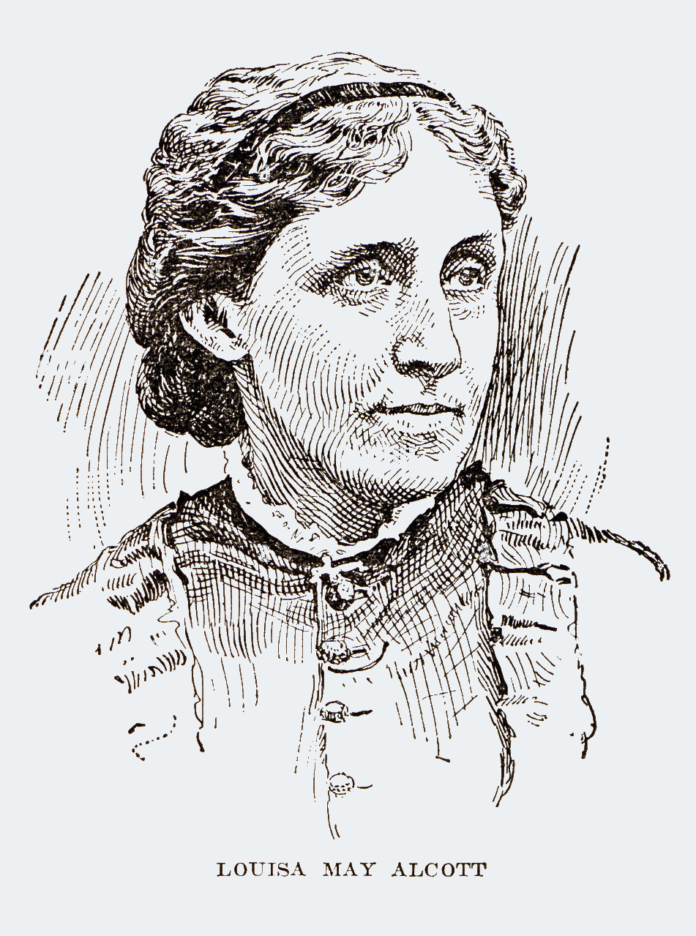
Gabriel Jeroschewitz, November 7th, 2025, dedicated to Louisa May Alcott
Louisa in Shadow and Light
For over a century after her death, Louisa May Alcott existed in the public mind as a literary angel: the mild, moral governess of American letters. We knew her as “Miss Alcott,” the tender chronicler of Little Women, that wholesome tale of four sisters learning virtue during the American Civil War. Readers imagined her pouring tea for the March family between chapters, smiling indulgently at their homemaking and quiet romances. She was, in short, the kind of woman about whom no clergy member could wag his finger.
Except—this was a lie.
In the 1860s, Louisa was not yet the moral matron of anyone’s imagination. She was thirty, unmarried, and wholly responsible for her family’s survival. Her father, Amos Bronson Alcott, was a man of transcendentalist ideas — lofty, shimmering notions about the soul and nature — and utterly devoid of material practicality. Her mother, Abigail, held the fragile household together with sheer willpower and a competence her husband conspicuously lacked. Louisa herself stitched, tutored, taught, and laboured in ways that drained her health but kept bread on the table.
But Louisa was not merely tired. She was angry. Not delicately cross in the manner of a thwarted Victorian heroine — no, she carried a rage that simmered under her corset stays. She saw the cruel shortage of choices offered to women: marriage to the wrong man, or grinding poverty. And she refused to accept either without protest.
So she wrote. Not the gentle moral tales that would later win her fame, but thrillers. Sensation novels drenched in vice and intrigue: women slipping poison into teacups, governesses who were secretly actresses orchestrating revenge, lovers chasing one another across continents with murder in their hearts. Opium dens. Cross-dressing. Violence. Desire. The kind of fiction that could cause respectable matrons to faint dead away from page twelve onwards.
Of course, she could not publish such a scandal under her own name. Society would clutch its collective pearls, and her family would starve. Thus was born “A.M. Barnard,” the shadow self under which these works saw the light of day.
Readers of the 1860s devoured them, blissfully ignorant of the authoress’s identity. They knew only that Barnard’s heroines were clever, dangerous, and unapologetically powerful — a far cry from the shrinking violets of conventional literature. Louisa wrote in her diary, with sly satisfaction: “I think my natural ambition is for the lurid style. I indulge in gorgeous fancies and wish that I dared inscribe them upon my pages.” She dared — she signed them with another’s name.
Then came the fatal request from her publisher in 1868: write “a book for girls.” Louisa resisted. She did not think herself gifted in the sunny art of children’s fiction, and she found the concept dull. But necessity has a louder voice than inspiration. She needed the money.
She sat down and wrote Little Women, loosely based on her own childhood with her three sisters. She delivered it, perhaps with the same feeling a cook might have toward a serviceable soup. But the world decided it was not soup at all — it was ambrosia. The book became an instant sensation, and Louisa May Alcott gained widespread recognition as a household name.
Success, however, proved a gilded cage. Overnight, she was transformed from a struggling author into the moral authority for young ladies everywhere. Publishers demanded sequels and imitations: more goodness, more patience, more virtue. Louisa obliged with Little Men and Jo’s Boys, stories populated entirely by characters who could be trusted to return your borrowed sugar and speak kindly to one another.
Privately, she seethed. In her journal, she wrote, “I am tired of being good. I should like to do something nasty and enjoy it.” But she did not enjoy that freedom again. A.M. Barnard vanished from the literary record. The thrillers went unwritten. Louisa played her assigned role to ensure her family’s survival.
Louisa never married. She once remarked she’d “rather be a free spinster and paddle my own canoe,” a declaration both witty and, for her era, quietly rebellious. Scholars today debate whether she was lesbian or asexual, but all agree she was fiercely independent and privately frustrated by society’s constraints.
Her life was hard. She served as a nurse in the Civil War, nearly died from typhoid, and was treated with mercury that poisoned her for the remainder of her days. She continued working, writing, and supporting her family until the end of her life. By then, the public saw only one version of her — the safe version. The other half died unacknowledged.
In 1888, at age fifty-five, Louisa died just two days after her father. She was sick, exhausted, and, in the eyes of serious literary critics, a mere children’s author. Her dark stories, attributed to A.M. Barnard, sat in dusty archives for decades, yellowing in anonymity. It was not until 1943 that the truth began to stir. While researching nineteenth-century publishers, scholar Leona Rostenberg stumbled upon peculiar records linking the mysterious Barnard to Louisa May Alcott. She investigated: manuscripts, handwriting comparisons, and payment ledgers. The evidence mounted until the conclusion was unavoidable — Louisa May Alcott had led a double life.
By the late twentieth century, feminist scholars republished these sensation novels. Students read Behind a Mask, Pauline’s Passion and Punishment, and A Long Fatal Love Chase alongside Little Women. Suddenly, Louisa’s portrait split into two images: the wholesome governess of girlhood dreams, and the rage-filled rebel who filled her pages with blood and danger.
From one perspective, it is a story of constraint: a woman forced to choose between her authentic voice and her career. But to the mature reader — perhaps sipping a good brandy in a quiet room — the story offers another satisfaction. Louisa did write her truth. She did it cunningly, sidestepping society’s bans with a pen name sharp enough to pierce propriety’s veil. She practiced public morality by day and murdered by night.
For over a century, the world knew only the palatable half of Louisa May Alcott. But the other half — the dangerous, complicated, gloriously unwholesome half — was there all along, waiting in archives for discovery.
And so, dear reader, consider this: How many women have lived similarly divided lives, their rage and ambition pressed into secrecy? How many polite smiles have concealed murderously sharp minds? How many truths rest even now in dusty boxes, awaiting a curious hand?
Louisa’s hidden tales remind us to write anyway — even if we must hide the signature. For one day, the truth will emerge. And when it does, the respectable façade will crack, and the whole woman will step into the light.
Just as she always deserved.
The Digital Sky is Falling

The Digital Sky is Falling
A Fiction by Cylon2036. we/us
(Fused to the underbelly of time. Pseudopod-certified.)︎
The first hint that something was wrong came at 6:57 a.m., when Nora Brighton’s rooster stopped competing with the chime of new emails.
Morning on Denman Island was normally a quiet duet of nature and notifications: wind in the forest, clucks from the chicken run, and the steady ping of Hunterson Dynamics overnight messages arriving from the city. But today, no pings. Just the rooster, who seemed altogether too pleased about the interruption.
Nora tapped her laptop. The cursor blinked patiently in an offline document she’d opened the night before. No network. She frowned, toggled her router and waited for the usual green constellation of indicator lights. Instead she got one sullen, blinking red star.
She sighed. Living on a semi-rural island meant treating the internet like a temperamental deity, capricious, prone to moods. But this felt different. The outage didn’t have the usual signature, no sputtering reconnections, no half-loaded pages, no brief flashes of normalcy. Just… absence.
Her phone buzzed once, then died mid-notification. A moment later, even her cell signal bars dropped to nothing. She held the phone up like an offering to the kitchen window. Nothing. “Fantastic,” she muttered. “A technology meltdown before coffee.”
By 7:15, she’d tried everything: rebooting the router, switching hot spots, even walking down her gravel driveway to see if elevation would coax the cell tower gods into cooperation. The island was peaceful, unbothered, and profoundly unhelpful.
Returning inside, she found her cat perched smugly on her keyboard, which at this point was about as useful as a brick. Her mid-morning video meeting with her Project Integration Team was officially doomed.
At 7:30, her landline rang. Nora stared at it. The landline never rang. It was there mostly to appease storms and power outages and the occasional elderly neighbour who believed cell phones were a passing fad. She answered. “Hello?”
It was Chris from IT, speaking at the speed of someone trying not to panic. “Nora! It’s not you. It’s not us either. Actually….” he inhaled sharply. “it’s everyone. The entire internet is down. Global, we think. Or continental. Hard to tell with all our tools offline.”
Nora blinked. “Global, like… the entire internet? That seems… unlikely. Are we sure this isn’t another case of raccoons in the data centre wiring?”
“Not unless the raccoons unionized internationally. Leadership is trying to put out a statement, but no one can send anything except landline calls. And half our executives don’t even have landlines. So for now… we wait. Stay put. Don’t reboot anything important. And, uh, maybe find a hobby that doesn’t require cloud syncing.” He hung up before she could ask for clarification. Classic Chris.
Nora set the phone down slowly, feeling the unreal quiet settle in. Her entire workday, her entire job, existed on servers she could no longer reach. Documents, project roadmaps, messaging channels, dashboards. All evaporated.
She opened her front door. The valley spread beneath a soft fog, farms and ridgelines fading into white. It looked exactly the same as always, which made the collapse of the digital world feel even stranger, like a silent catastrophe no one here could see.
Across the road, her neighbor, Mrs. Priestly, waved from her porch. “Internet down at your place too? My granddaughter can’t watch her cooking shows. World’s ending.” Nora offered a nod and a weak laugh. It didn’t feel entirely like a joke.
By 9:00, she’d brewed a second pot of coffee, stared at her dead laptop, and rediscovered three notebooks she’d forgotten she owned. The quiet was unnerving. No messages. No meeting alerts. No relentless parade of digital urgency. It was almost peaceful. Almost.
But beneath that quiet, Nora felt something else creeping in. Uncertainty. She worked hundreds of miles from the nearest Hunterson Dynamics office, reliant on invisible threads that now lay severed. In the city, there would be teams, protocols, co-workers gathering in worried clusters. Out here, it was just her, a rooster, and the creeping realization that the world had changed without making a sound.
She stepped onto her porch, coffee in hand, and listened to the wind moving through the forest. For the first time, she realized she could hear her own heartbeat. And for the first time, she wondered, not about when the internet would return, but what the world might look like if it didn’t.
Phoenix Riting! – December 11th, 2025
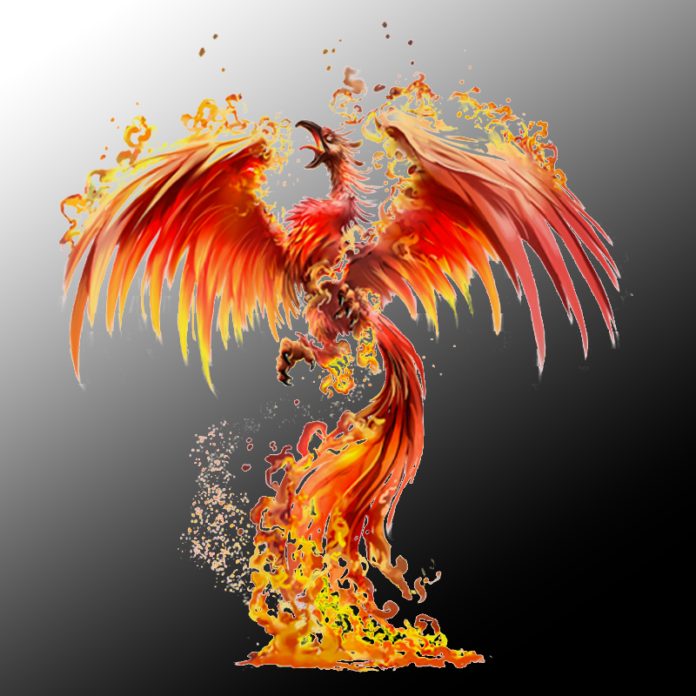
More about the campground, after lots of conversations, thank you! I’m biased. I grew up in the wilderness, camping on remote lakes. Summers, we spent the weekends and some weeks at a particular remote lake. We had a folding camp table, a Coleman stove, a cooler and a tent. The tent lasted until the day a bear shredded it with its claws while we were on the other side of the lake. We had taken the food with us, which naturally annoyed the bear.
The grownups erected a makeshift shelter: a pole tied between two trees with a large sheet of plastic staked down over it like an oversized pup tent. Open on the long ends, tall enough for an adult to stand in. Beds were laid side by side, kids in the middle. That is how the family slept for the rest of the summer. Nobody was mad at the bear. When you go into bear country, they own the place. You are in their living room. You keep your food secure, hope for the best, and adapt as the situation unfolds. I grew up hearing that nature is smarter than people, and that we do best to adapt.
We understood, without needing to be told that people are built to handle a bit of privation, it’s good for us. We walked miles through mosquito and blackfly filled woods carrying heavy loads, adults and children alike (ours were lighter), all to sleep on the ground, live outdoors and catch and forage many of our meals. My family were descended from pioneers. They looked condescendingly down on what they called “civilization.” City folk were tenderfeet. Greenhorns. The coast was Lotus Land. Too easy. Boring.
That is where I am from. I am adaptable, and I do a decent job managing my current level of comfort. I live here because I like air that does not bite, I love the sea and you don’t have to shovel rain. I see nothing wrong with how we did it back then. I miss it. The rewards were priceless: deep and constant immersion in the natural world, a sense of belonging on the ground, on equal terms with wild creatures, facing challenges that were fun and practical.
Hornby Island is wild enough. I’m okay living without bears and blackflies, and mosquitoes are few, a bonus. We have nature without the danger. No large predators, no poisonous anything. Here, humans are the danger. Hornby is being slowly swallowed by the massive internet-fueled monoculture eating the world right now.
I see the same conversation everywhere online. The same opinions dominate, swinging between polarized ends of the same continuum. Nowhere can we live as we choose. We are everywhere managed and controlled. It is a global smoothing over of the collective cerebral cortex. As a species, we are getting dumber, as technology gets smarter.
Society values convenience and expedience over the real wild world. Challenges have narrowed to the realms of intellect and technology. Nature is paved over, extracted and managed to death. Instead of losing ourselves in the woods, we obsess over others’ opinions, posting to socials from the beach. Campgrounds should be safe, clean and tidy as a living room.
To these folks, it makes sense to have it bulldozed, drained, wired and landscaped. It was a mess before, everything higgledy piggledy, trees randomly situated, and so muddy in winter. If we manage things right, one day the whole island can be a park with neat gravel pathways, safely fenced and labeled, especially on all the cliffs for safety, with lights everywhere so nobody has to fear the dark.
Some say those old trees were dangerous, every one of them. It is safer now that they are gone. Others say, oh great, now the winds can howl freely through that new wind tunnel, and in summer there will be nothing to shade the gravel from the hot sun. Better. Safer. Sure.
“It will be so much prettier once it is landscaped, pruned and planted. Those little new trees will provide shade someday. Nobody uses tents anymore, and RVs are air conditioned so who cares if it is hot. Gravel pathways make it cleaner. Less mud. Who lets kids go barefoot nowadays.”
I will never stop resisting that attitude. If the campground needs improving, we should use minimal interventions. Look at how nature works. Model our publicly owned campground on it. Leave trees standing with other trees; their roots and branches support each other. Let sites blend into the forest. Encourage undergrowth. Let trails be packed dirt, perfect for barefoot children to scamper on, or barefoot adults, or barefoot elders. Earthing is a thing. Touching ground helps us all.
Camping is, or should be, an opportunity to touch the ground. If Hornby must be a tourist destination, let it be the most natural version of one. That is our brand, after all. So damn the province for deciding unilaterally what sort of tourism we must attract. Forget the wilderness experience. New visitors are funnelled into RV sites, shoes mandatory because of gravel, everything accessible and wired. Tribune Bay Campground will no longer be a respite from the civilized world, but an extension of it.
I protest. I do not blame the contractors doing their jobs as assigned. I blame the government, the officials, the planners and deciders who did not consult our community and simply do not care.
That is what I think. What do you think? Email me at phoenixonhornby@gmail.com
How To Heal When The World Is On Fire
How To Heal When The World Is On Fire

Chloe writes the following via email regarding my recent piece “Don’t Let The Empire Gaslight You Into Believing You Are Powerless”:
“What you said about what to do when you feel powerless really stuck with me…that externally you can always help wake up more people to the truth and internally you can heal. I guess I just have a question more with the latter. How do you heal in the midst of a world on fire? How do you feel safe and secure when you realize that the world is anything but those two things? That any form of comfort you feel is currently costing untold numbers of people’s blood and pain? How do you heal and feel safe when everything is just…grind…precarity and feeling on the edge of oblivion? Waking up to those realizations is terrifying…and it just feels like a full antitheis to being able to start your healing. Like things can only be safe when the monsters and the hell is defeated which won’t likely occur within the span of our lifetimes? It seems like thats something you’ve figured out and I’m curious how to start that.”
Dear Chloe,
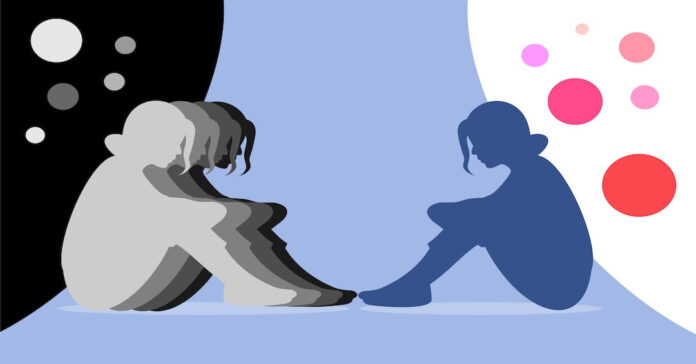
I think first we need to be clear that healing and feeling secure are two different things. Healing isn’t about getting away from uncomfortable feelings, it’s about moving right into them and feeling them fully. After we have done our work and healing has occurred we tend to notice that we feel better, but the actual work of healing begins in discomfort. That’s where the rubber meets the road on this path.
Healing is when you find a part of yourself that has been acting out unconsciously over and over again throughout your life, by getting annoyed or upset or collapsing into helplessness, or by freezing up, freezing out, or freaking out. You start paying attention to how these unconscious behaviors play in yourself (either in your outward behavior or privately in your internal suffering), and you get real curious about how that is happening.
Healing is when you track that defense mechanism back to its first instance, the very first time you felt this feeling, usually in childhood, where you were small and vulnerable and you came up with this way of defending yourself in that moment and have stuck with it ever since. Our inner dysfunctions are generally just old strategies for dealing with perceived threats that we set in motion much earlier in our lives and then forgot about, which then went on to continue pulling the strings of our psychology from the depths of our subconscious long after they became maladaptive and unhelpful.
Healing is when you listen to that small part of you that has just been doing its very best to defend you all these years from the perceived threat that is no longer there because you are no longer a small child. You are an adult now, and you don’t face the same threats you faced (or more likely imagined you faced but didn’t understand) back when you were a kid. But a part of your brain has not caught up with that yet.
So you let that part of yourself talk to you, and you listen, and you love it, and you thank it for defending you all these years, but you let it know that you’re all good now. It can go. Compassion for your tiny self that didn’t know any better floods your system and in all that love, you forgive yourself for the first instance, and for all the instances after where you were punching at shadows that were no longer there.
In that flood of compassion, the mechanism dissolves. Sometimes the energy of it will literally up and leave, out your mouth in the form of a burp or a dry retch, or in a shudder or chattering of teeth, but other times it will simply melt into your whole self. You’ll just feel better, and you’ll know it’s gone because you won’t be able to find the feeling again if you attempt to return to it.
The thing about healing is that it leaves only an absence of something, so it doesn’t make a big deal about itself. You might not even notice that you’ve done anything much for a while. The more you do this though, the more the noise in your head dies down, and the real world begins to emerge.
You become less reactive and less likely to inadvertently cause drama in your world, and in yourself you become generally happier and lighter.
But you also see — and this goes back to the nub of your question — that in this new light the world becomes a much less scary place. You can see that the monsters who rule our world aren’t so much monsters as just little kids with far too much power unconsciously acting out their defense mechanisms. The suffering they cause is real and horrifying, but at the root of it, they are humans playing out a very human pattern. In this context, it’s comprehensible. You’ve found similar things in yourself, so it’s not an alien threat which defies understanding.
You also see how predictable people are when they are stuck in their reactive patterns. You can see that in our leaders. They are not surprising or inspired in any way at all; they are monotonously boring and beholden to the patterning of their psychological conditioning, and their behavior is predictable. Evil, yes, but also predictable.
Predictability is also a marker of the imperial core as a whole. You can see how incapable it is of changing tack, even when it no longer serves the empire to continue the pattern. The empire managers think they’re so slick, but they are stuck with repeating the same plays over and over. That’s a major weakness. They are telegraphing their next moves to us years in advance, and there’s nothing they can do about it.
The other thing that happens is that in this newfound clarity, you can interact with the world as it is. You are no longer expending energy fighting shadows of the past. Your healthy anger is re-ignited, ready to animate you into inspired action that responds to the present moment. You get your intuition back, unencumbered by neurosis and paranoia, so you can move more efficiently in the world. You get your healthy wants back, your “fuck yeah” and your “hell no”, and you can make good decisions quickly, and deftly course-correct if you need.
Imperial propaganda uses our fears, our tribal loyalties, our insecurities, and our learned helplessness to control us as efficiently as if they installed levers in our brain. If you dissolve those levers, you become a very dangerous entity to the machine. You become a free human being no longer acting in patterned and predictable ways, but moving with the needs of the moment. That is empowering.
So we definitely don’t need to wait until the bastards have been defeated and we’re feeling safe and secure in order to begin our healing journey. In fact, beginning the work of true healing makes us much more effective at fighting the empire, and the work begins right here in the big sloppy uncomfortable thick of it all. All it takes is the sincerity, vulnerability, humility, and courage to begin taking those first steps.
_________________
My work is entirely reader-supported, so if you enjoyed this piece here are some options where you can toss some money into my tip jar if you want to. The best way to make sure you see everything I write is to get on my free mailing list. Click here for links for my social media, books, merch, and audio/video versions of each article. All my work is free to bootleg and use in any way, shape or form; republish it, translate it, use it on merchandise; whatever you want. All works co-authored with my husband Tim Foley.
Bitcoin donations: 1Ac7PCQXoQoLA9Sh8fhAgiU3PHA2EX5Zm2
Feature image via Adobe Stock.
Free Palestine: An Interview With Suspended Student Activist, Sara Kishawi
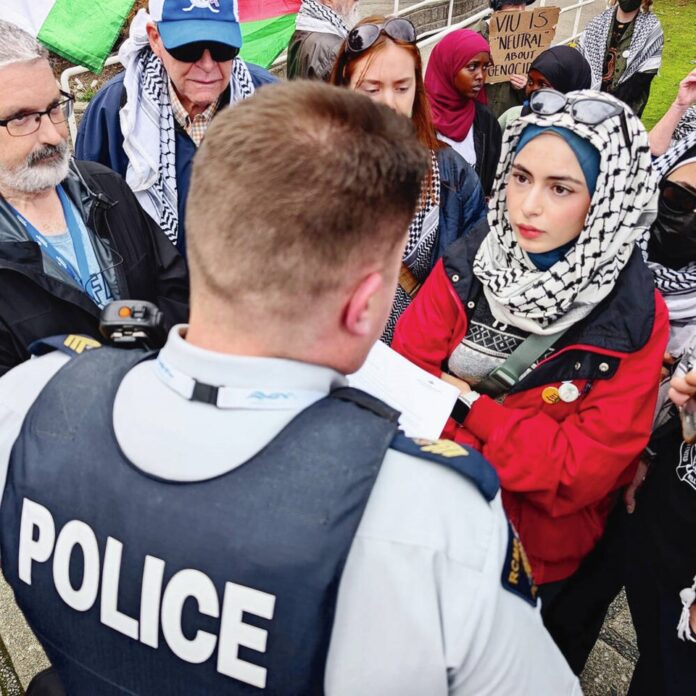
On November 13th I attended a screening of the Academy Award winning film “No Other Land” at the Denman Island Community Hall, hosted by the Denman Palestine Solidarity Group. The evening opened with a talk by Sara Kishawi, a student and community organizer, and spokesperson for the Palestinian Solidarity Encampment at Vancouver Island University (VIU).
Kishawi, a sociology graduate, was born in Gaza and is a student leader in support of Palestinian human rights and liberation. VIU has suspended Kishawi for her activism, and she has taken the university to Court for violating her rights, with a pending ruling that may take several more months to obtain. The following are the answers I received to my questions for her.
Question: Given that the United Nations has declared that Canada is complicit with the U.S. and 61 other countries in funding, arming, and giving diplomatic cover to Israel’s atrocities in Palestine and Gaza specifically, can you comment on Canada’s “conditional recognition” of Palestine?
Kishawi: This so-called recognition is a deliberate attempt to absolve Canada of its complicity in ongoing genocide, offering a superficial solution designed to pacify protesters, deflect boycotts, and relieve international pressure on Israel. Its conditional nature exposes it as a performance and an empty gesture masquerading as meaningful action. The conditions themselves are deeply problematic, reinforcing the two-state solution that demands Palestinians abandon their right of return and coexist with the very entity responsible for their ethnic cleansing. The same entity that refuses this recognition and refuses the two state solution.
Critically, this recognition does nothing to stop the violence, alleviate suffering, or confront the ongoing genocide. It is the epitome of symbolic politics: a gesture crafted to ease the conscience of the privileged while leaving oppression intact, masking injustice under the illusion of progress. With all that said, the recognition does have some pros as well. It shows us that Canada’s hands are not tied in terms of the demands protestors across the country are asking for. And so it should serve as encouragement to keep protesting and fighting for the end of the genocide and for the liberation of Palestinians.
Question: Can you comment on the public statements by the Canadian government vs the reality, and how corporate media has reported on the Gaza genocide, Palestine, and the Israeli occupation, settlements, and apartheid policies?
Kishawi: In short, the Canadian government and corporate media not only enabled Israel’s actions but actively manufactured public consent for the genocide of Palestinians, rendering them equally responsible and complicit in the occupation and ethnic cleansing of Palestinians.
Question: Can you comment on the possible parallels between the symbolic gestures aimed at “justice” for the citizens of Palestine and First Nations people in Canada?
Kishawi: In systems built on colonialism, like in Canada, or on apartheid and occupation, like in Palestine, there are groups of people who benefit directly from these structures of oppression. This unequal distribution of power and privilege makes the fight against such violent systems less likely, as those who benefit are often unwilling to surrender the advantages they enjoy. It is within this context that symbolic actions arise, gestures that create the illusion of change while leaving the underlying harm untouched, akin to placing a bandage on a gunshot wound.
An example of such acts is the recognition of Palestine by Canada or Land Acknowledgments as a “solution” in Canada. These acts serve a dual purpose: they ease the conscience of the privileged while allowing them to continue benefiting from the system, and they stage a performance of justice for the oppressed, subtly discouraging resistance and maintaining the status quo.
Question: Can you tell us when you expect the Court’s ruling on your suspension from VIU?
Kishawi: I think regardless of the ruling, VIU has shown its true colours and set itself back. Please see this statement from the Students for Palestine Committee:
“We want to extend our heartfelt thanks to everyone who showed up and filled the courtroom for two full days Your presence and support mean everything, and they remind us that we are not alone in this struggle. We also want to thank our legal team for their incredible work and tireless commitment throughout this process. More statements will be released addressing VIU’s court submissions in detail, and we recognize that a decision from the court may take up to six months. Regardless of the timeline, our commitment remains unwavering: to stand firmly with Palestine and against racism, colonialism, and genocide.”