Home Blog Page 174

Denman Green, A Sustainable Housing Project

Denman Green – A Sustainable Housing Project

Submitted by Denman Housing Association

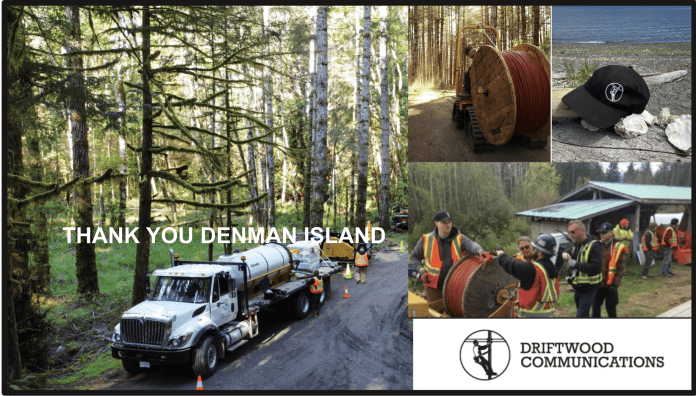
Many of you know that the Denman Housing Association (DHA) is creating a 20-unit affordable housing project in ‘downtown’ Denman. The project is currently in the design stage. A key part of our design is the inclusion of many sustainable features that will make Denman Green a long-term asset for the Denman community.

Key Sustainability Features

Potable Water. Although the on-site well is capable of meeting the entire potable water needs of Denman Green year-round, we are electing to supply 50% of that volume from treated rainwater. The intent is to help mitigate against climate change by ensuring that our community’s water supply remains reliable. The project also incorporates water-saving devices and fixtures to minimize water usage.

Greywater. Water from showers and basins represents 25% of indoor water use in a typical household. By treating it and re-using it for toilet flushing Denman Green will save about 650,000 litres of water per year

Solar Array. A solar array is planned to meet most of our energy demand on an annual basis.

BC Energy Step Code. The building is being designed to meet the highest level of the province’s non- mandatory energy performance code. This involves well insulated walls and roofs, high performance windows, an air-tight building envelope and heat recovery ventilation.

Another key sustainable aspect of Denman Green is its location; steps from village stores, across the road from the school, a 10 minute walk to the ferry, all to minimize vehicle use.

Federation of Canadian Municipalities

Our sustainability plan is possible due to a grant from the Federation of Canadian Municipalities and is a key step in making Denman Green a reality.

The Sustainable Affordable Housing initiative, an expansion of the FCM’s Green Municipal Fund, assists organizations such as ours in building affordable housing to ambitious energy-efficiency and sustainable standards.

“Municipalities are on the front lines of climate change and climate action, and communities of all sizes are showing climate leadership at a time when we need it most. GMF empowers them to get results on the ground, this is why this announcement is so important. We deliver results with our federal partners – helping cities and communities tackle affordable housing challenges, create jobs and build a greener, more sustainable country. Together, we’re on the path to net-zero.”

– Joanne Vanderheyden, President, Federation of Canadian Municipalities

For Denman Green the help of the Federation of Canadian Municipalities means we have the resources to design a sustainable high-performance project.

Memo: Community Information Meeting. Via zoom. Thursday January 13. 7 – 9 p.m.

Check-in. Find out where we are at and where we are going. Join the Q & A.

https://islandstrust.bc.ca/event/denman-ltc-electronic-special-meeting-to-hold-a-community-information- meeting/

2022 01 02 Denman Green Affordable Housing Project – Update.docx Page 1 of 1


An Unpainted Portrait, Gastrointestinal Fortitude

Gastrointestinal Fortitude.

Recruit life rapidly began to assume a pattern of hard work, more hard work, not very much relaxation and – it’s worth pointing this out – truly appalling food. The academic aspect of the course was very much our professional focus – as a colleague put it: our job at that time was “…to learn about a lot of sh*t”. Surprisingly, the discipline regime, the food and the tiny amount of time that we could realistically call our own were much greater psychological pressures. Those of us unused to living in what amounted to a military camp – we were not permitted to leave the campus until our release each weekend – experienced a kind of shock.

Food breaks became the punctuation of our working day; and the first public act of each morning was the trudge from our accommodation block to the main building, there to do battle with the first efforts of the machiavelian kitchen staff. Their goal, it became obvious, was to make us eat sh*t as well as learn about it. Anyone choosing to avoid this unpleasantness was subsequently asked to explain themselves to the authorities (they knew, you see) and warned to never repeat such outrageously reckless conduct. Almost every transgression of the rules entailed being summarily removed from post. Yes, really. Everything we did, it seemed, was observed.

The main building complex of the centre – part of which included the dining hall – was essentially unchanged since its formative days as an American army camp. Dull brown brick walls were broken up with cast-iron window frames painted in a daring institutional beige. The overall effect was of a small hospital with extraordinary security measures and a fully-fledged program of malnutrition overtly intended to starve the patients to death. It’s been suggested that this was a deliberate attempt by the Home Office to shore up our digestive resistance to eating twenty kinds of crap while working an unsympathetic shift system. Plausible, perhaps. However, I think this bestows an unrealistic level of benevolence upon the workings of that meal production facility. Generous by nature, I can no longer continue mis-using the word ‘kitchen’ in relation to that collection of misanthropes behind the counter.

The food hall had a ‘Tardis’-like quality; a large and austere room opening out from an innocuous entrance and a truly tiny cloakroom which was entirely incapable of dealing with the numbers of coats, helmets and caps requiring storage while their owners suffered unspeakable torture within at the hands of a ‘coconut sponge’. As many as two hundred helmets and caps were left hanging in the cloakroom, a practice which over the following fourteen weeks would result in many unintentional and perhaps unavoidable helmet-swapping episodes. I was fortunate to avoid this irritation; having a kidney bean-shaped noggin to which my helmet had conformed meant that nobody walked more than half a dozen paces wearing my helmet before returning to find their own headgear.

At strategic points on the walls of the dining hall hung diverting items designed to entertain the waiting customers. Between things such as peeling flakes of pale blue paint or an occasional mysterious blood-coloured stain, hung force crests looking for all the world like mediaeval ceiling bosses. To distract us from our gag reflexes, we had merely to look upto find framed photos of fierce-looking former commandants. In pride of place where everyone had a view of it, sat a rather incongruous, out-of-date portrait of the monarch. It all felt very archaic and out of touch with what I considered to be modern Britain. Nevertheless, I doubt that the countenance of Her Majesty had ever looked down upon a more unhappy group of new public servants. Mealtimes – and I’m using the word ‘meal’ generously – were not parts of our day that anyone anticipated with relish. As we queued around the walls of the large room, not a single soul expected to find the smallest amount of comfort or succour at the serving counter.

Sweaty, unwashed constables were most definitely not welcome inside the dining hall. Anyone engaged in PT or sport before a meal break was obliged to shower and change into a hot, itchy uniform before eating. In the heat of that summer, this was a less than attractive proposition. However, rules were rules. Besides, itchy pants were a distraction from whatever was on our plates. Anyone caught missing a meal was hauled over the coals for – without any obvious sense of irony – risking their health and wasting Home Office cooking talent (an oxymoron if ever there was one) and/or public resources.

After a frustrating wait in the long queue, the malnourished recruit would shuffle into position at the dolloping counter, tray trembling in hand. Invariably, he or she would be grimly presented with a dispiriting choice of boiled everything. Even the grilled or fried food was boiled for good measure to make sure that no calorific value or colour remained. Credit where it’s due: their success rate was one hundred per cent. I had never before seen beef which was the same colour – and a remarkably similar texture, come to think of it – as my potatoes. This was, I told myself, just another new experience to endure, courtesy of my training. The trick was to bear up under this kind of treatment, and press on regardless, in the Blitz spirit. It was, nevertheless, apparent to everyone that our worst memories of school dinners were nothing compared to the horrors that would live with us after eating at the Home Office counter.

It really was, without a doubt, the worst food I had ever been expected to eat and was obviously the product of many years of practice of steadfastly removing any lingering nutritional value from all the basic food groups. It felt not altogether unlike being sick backwards. The only reason that anything was consumed at all was that being engaged in hard physical training each day, we needed something – anything – to fill our growling bellies. Even that strange ‘tart’ creation with the dried coconut shavings on the top of it…boiled, of course. Only in the last few years of my life did I find this appalling cuisine’s equal, within the mis-named ‘diabetic menu’ of Vancouver General Hospital. A mighty achievement indeed.

The vast majority of us facilitated our survival using another food group entirely – that which was supplied by a purveyor of hot vittles situated in the centre’s dimly-lit, grim bar. A fun palace it was not. A jacket and tie were required for the men to attend. Pants, as well, thankfully…Women were simply expected to dress ‘smartly’. Oh, how we laughed hysterically each night as we crawled over there, nursing stomach cramps. This sanctuary of hot, non-boiled grub catered to our cravings for that great British staple: grease. Thanks to generous helpings of sausages and chips, egg and chips, hamburger – we were big on the hamburgers because it included a bread roll, too – and chips, chips and gravy and chips and curry sauce, we at least kept our net calorific intake slightly above fainting level. I think we also kept the local potato industry on its feet. The fats and cholesterol levels were off the scale of course, but we were young and felt quite indestructible, and if it meant that we survived another day of boiled something(s), we really couldn’t give a hoot about the distant future. Twits.


Green Wizardries, Going the Full Canadian

Green Wizardries, Going the Full Canadian, by Maxine Rogers

It is early morning as I write this and I am seated in front of a blazing-wood fire in a cool house in the snow. Soon, the house will be warm.

We have had a great snowfall, the likes of which I have never seen in over ten years on this island. I feel very lucky and a bit surprised that we still have electrical power. At the beginning of this snowstorm, we did lose power for a day but the heroic BC Hydro crews came out and set the island to rights, coming out on Christmas Day no less! But, I ask you, what would have happened if the ferry had not been able to run?

Sometimes bad luck arrives all at once in the form of heavy, wet snow, power lines down all over, the ferry can’t run due to high winds, the temperature drops, the roads turn to skating rinks and an important piece of safety equipment freezes solid on the ferry and they cannot legally put to sea without it being operational. By the way, this latter problem did happen this week and several sailings were cancelled before the crew was able to thaw out the mechanism. Well done that crew!

This scenario is possible but others are also possible on a more personal level. What happens if a person can no longer pay for hydro? What if they can no longer pay for or source propane? Hydro doesn’t have to go up so far to be unaffordable. Steady inflation is eating the value out of our dollar. People may have to decide between heating and eating. This is now happening in Western Europe due to the high price of natural gas.

I was talking to an older Denman resident about my story on Hay Boxes. He said most people here used to have them. People would put a stew to boil on the wood stove before they left for work off island. He said they would also heat a flat rock on the stove and put that in the haybox to warm the box up. I guess they left the rock in the box for extra thermal mass which is pretty clever,

They would put the boiling stew pot in the hay box and when they came back nine hours later, their supper was hot and perfectly cooked. I was joking with him that he could still do that in a power outage. He admitted that he had no wood stove and no backup heating system of any kind. I find this troubling.

I believe a wood stove is an excellent piece of emergency equipment even if you do not use it for primary heating and cooking as I do. Mine is a Nectre 550 stove built in Australia. It has a cook top and a baking oven. I just love it and recommend it highly. I don’t get kickbacks for this opinion either.

Having a wood stove and a supply of dry fire wood for emergencies is a really good idea. However, wood stoves are very expensive to have installed and not everyone owns their own home so how could they prepare for winter troubles?

We have an ancient Coleman white-gas stove which is suitable for boiling some water or even getting a stew up to the boiling point. This sort of stove has to be used out of doors but is very convenient for power outages that happen in the summer and people still need to boil a pot of coffee in the morning without heating the whole house with the wood stove. Such a stove could make life much easier in the winter power outages too.

One thing I hope becomes popular again is Stanfield’s long johns! I bought a pair of Stanfield’s under trousers this autumn and I love them! They are just the thing for working out of doors in the winter. They are also really comfortable to wear around the house with a wool sweater.

We are using substantially less firewood because of this. Burning wood contributes to carbon emissions so we want to burn as little as we can. The Stanfield’s long johns also make a great under layer for use with wet weather gear. I got the 80% wool really heavy grey ones. There are other sorts of long johns with an inner layer of cotton for people who don’t like wool next to their skin.

Before the really decadent portion of the twentieth century got going, everyone in the northern latitudes used to wear long underwear as a matter of course. This was indoor wear and, for men, used to be topped by wool trousers, a shirt, a wool waist coat, a wool jacket and if the person had to go out in inclement weather, a wool greatcoat would be thrown over the ensemble. The person wearing all that wool would be perfectly warm even in the, largely, unheated houses, in Britain. Exactly this style will not come back but a new style will develop as the cost of heating rises out of the reach of many.

I was talking to a young person about home heating and her house is largely unheated. She has indoor toques and outdoor toques. Indeed, she has light toques and heavy toques for both indoor wear and outdoor wear. I think having a good selection of toques, tams or berets is one of the best ways of staying comfortable in lower temperatures. She also has a collection of throws and lap blankets so she is ahead of the curve.

My husband and I always use sheepskin slippers inside and we have lovely wool blankets from Nova Scotia. They are so warm and cozy. We also use an old-style hot water bottle on cold nights. All of this is low tech and useful in a power outage or just to reduce ones consumption of heating fuels.

We visited friends recently and found them to be wearing the most beautiful fairisle sweaters with metal clasps on the collars. I asked if the sweaters were Norwegian and was told they had been bought used on Etsy and the couple is only buying previously-owned articles to combat the mountains of material goods being chucked away and wasted.

As Canadians, we used to be good at living in the cold. Come on, let’s go the full Canadian!


Unicorns

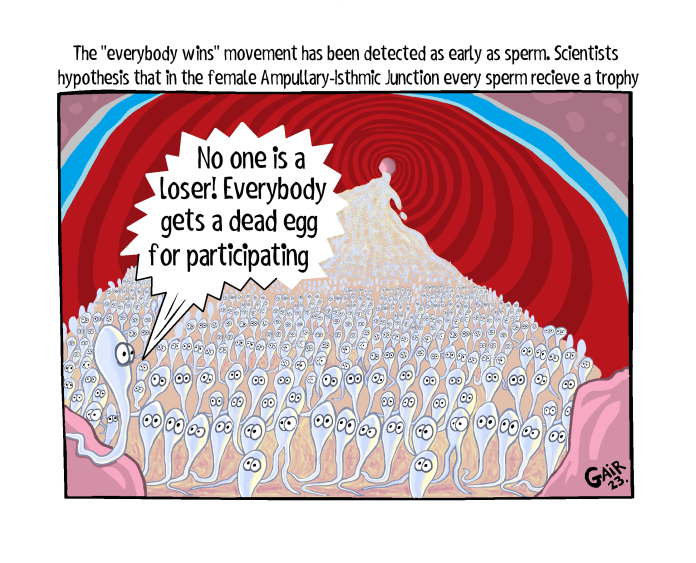
As in the cartoon, most of us really want to have a Unicorn to look after and to emulate. After all, Unicorns have always escaped captivity, choosing to fling themselves off of tall mountains to avoid domestication. The only time a Unicorn was seen getting close to a human was, according to Judeo-Christian mythology, when the young Virgin Mary quietly sat under a tree, praying. The Unicorn sniffed her reverence for life and slowly came to lie down with her and rested it’s head on her lap. From the magnetic presence of the Unicorn, she conceived a child we call Jesus, or Yeshua, from the soul of Yahweh. So this proves that when humans realize their oneness with nature, miracles happen!!! 

How can we expect cold-hearted, greedy, mega-billionares to want to lie down on the earth and stop their addiction to playing Monopoly with this depleted, desperate planet? We cannot. But we can remember that the Trudeau and Horgan’s governments have given us another year of flake news, full of green-washed commitments to UNDRIP, climate change and environmental conservation. Yes, some social policies have been improved. However, long-term human health and happiness depend on The Unicorns of healthy oceans, clean water, clean air, local food security systems, intact multi-generational communities, ancient forests to store carbon and most of all, the shut-down of industrial capitalism. I realize that political puppets of profit are easy targets for our disdain and merely reflect the false promises and lies fed to us by the faceless kings of multinational corporations. The bedrock of this global systemic delusion is hard to dismantle. The pick-axes of Indigenous allyship actions, forest blockades, pipeline protests, bank occupations and flooding politicians’ phone lines with angry agitations seem to barely remove the smallest of stones from it’s walls. The endless wealth paradigm pretends to exist in a vacuum but most of us know otherwise. Endless consumption depends on endless resource extraction; all taking place on stolen Indigenous lands. The Unicorns of traditional ways of living on the land, lush ecosystems and the last fragments of biodiversity need our help.

Human arrogance ignores our ultimate interdependency with the natural world. Humans who busily run around telling lies, try to capture innocent Unicorns, to avoid feeling vulnerable. Limitless plunder of the natural world capitalizes on the human tendency for laziness, addiction, fear of sacrifice and fear of intimacy with the unknown. Unicorns live in the wide open spaces of courage, wisdom, compassion, joy and skillful action. I think Desmond Tutu, who died on December 26, this year, was a Unicorn. He once said: “It is through vulnerability that most of us learn empathy and compassion and discover our souls.” He also said: “True reconciliation exposes the awfulness, the abuse, the truth…. only an honest confrontation with REALITY can bring real healing.” What can each of us do this new year to bring back the Age of Unicorns?


Phoenix Riting! – December 30th, 2021

Dear community:


Once again, what a year it’s been. At the end of every year for the last few, we release our collective breath and say, “What a terrible, no good, very bad year! Next year will be better, it has to be!”


Hahaha! Remember when we used to believe that? Those were the days. I do wish I could feel optimistic, but all I’ve got is hope. In the background looms a sense of doom, or transformation, which sounds great, but can mean literally anything.


In these dark times, I don’t believe everything will be fine. I don’t believe we are doomed, either. I don’t believe, period. I fear, and I hope, with all my might. Pressures are mounting. We are headed for a shattering, but what will break and how it will heal, I can’t say. Something must change; perhaps everything. Some things must endure, and some we thought lost return, before we can reverse our course of destruction. There is little doubt left about the stakes now.


It’s not Covid-19, the government nor the elites we need to worry about most. It is the air we breathe, the world we share, the fires, the floods, the mass extinctions. What we view to be Big Problems are mostly symptoms. The real fix starts here, inside each bag of skin, in our choices to be authentic, to face and own reality, or to jump into a hole and pull it in after ourselves, like Wile E. Coyote (I notice that never worked well for him).


On our tiny island, it seems our community’s choices, collective or individuals, have no impact upon the fate of the whole, but we matter. This is our sphere. Our changes may be small, but ripple out, spreading around the globe via mysterious pathways of the psyche, or the internet, whatever. We need to take care to ask, what kind of world do we want to live in? What are my core values? What are yours? Where do we agree, what are our differences? The kind of community we need to create takes participation.


A whole requires all of its parts. A bird needs two wings to fly with, a heart needs a left and a right ventricle. We need both arteries and veins, both sides of our brains, and so on. This is not a war between right and wrong. It’s a struggle to balance our differences, to live in a good way with respect for all, and not just people. We are only one of Earth’s creatures. Our species has become a scourge, but we needn’t participate in destructive games of progress and increase. We can abdicate from the matrix and live our lives as best we can with the people who share this island with us.


Probably we will continue to behave as a sometimes-squabbling microcosm of the whole, because after all, we are humans. But wouldn’t it be nice to have a break from it all? Turn off the screens and show up smiling to a party or a dance, to release our cares into the collective arms of our community, to know we belong just because we are here, and together? Remember how that felt? It seems so long ago now.


I pray for an end to division and suspicion, and an opening into greater love and connectedness. I long for belonging, a sense of purpose and a context that includes all shades and sorts. On this sacred Earth, holy for its wholeness, great round heaving body breathing with our own breath, may we land on solid ground and real-eyes what and who we are, together with the rest. 


Blessed New Year to all, and may this next year truly be better. Maybe it will. Weird things happen. With love, hope and trepidation, we begin another adventure around the sun, and for sure, some of it will be fun. I shall see you there.


Next year, as before, I want to hear from you! Please send feedback, invitations, suggestions and more to phoenixonhornby@gmail.com


A message from Dr. Ron

You may be wondering what is happening at the Denman Island Medical Clinic in 2022. The following information is intended to bring you up to date.

For regular users of the Clinic you will know that Dr. Stephen Fox took over the lease of the Clinic space at the beginning of 2020.  This space is maintained by the Denman Health Centre Society (DHCS). Dr. Wilson who has worked on Denman since 2013, continued working on Thursdays and Fridays, Dr. Alsoon Brine who lives on Hornby came over to work every Tuesday and Wednesday, and Dr. Fox who also had a clinic in Cumberland came over on Mondays. For reasons unbeknown to us, Dr. Fox decided he was no longer working here or in Cumberland and left abruptly at the beginning of July this year. Drs. Wilson and Brine continued working on Denman and have been able to provide ongoing health care for Denman Residents. It should be noted that we see anyone who lives on Denman and will see any emergencies otherwise. 

We will be very sad to see Dr. Brine go as she has decided she will finally retire at this time.  She has been putting her retirement off for at least a couple of years.  She will be greatly missed as she has provided exceptional care over these past 2 years. As of yet, we have not found a permanent replacement for Dr. Brine.  So what will 2022 be like at the clinic?

Dr. Wilson who plans to fully retire at the end of 2022 will continue to work on Thursdays and Fridays. One of the doctors who works on Hornby (Dr. Froehner) has agreed to help when she can. She will work for two days a week for two weeks out of each month. Currently we have placed adds for locum doctors to help us on the other weeks. As of now, we have no definite replies to our adds. Adds have also been placed in the appropriate medical journals looking for doctors who may wish to relocate to Denman and provide ongoing care in the future to our residents. There has been some interest in this but so far, we have nothing definite to report. 

We may have some gaps in care this year. Dr. Wilson will do his best to cover the necessities of patient care on the weeks when there are no other doctors working. If you have prescription renewals we would ask that you get them into the clinic or requested through your pharmacy early in the week in order for them to be filled in a timely manner. 

The Denman clinic is also part of the Comox Valley Primary Care Network. Because of this association we are fortunate to have a pharmacist, a social worker, a mental health/substance use worker and a Registered Nurse (whose focus will be management of chronic disease) coming to the clinic once a week or every other week.  Also Carmen Bedard, our physiotherapist is returning from Maternity leave and will be starting up again on Mondays and expanding to a second day per week if the demand is there for her services.  So there will be a lot of activity happening at the clinic that residents can take advantage of.  

The receptionists will be at the clinic every day during clinic hours (9:30 to 4:30).  On the days when there is no doctor they will work from 9:30 to 2:00 pm.  Because there may be changes on a weekly basis, there will always be an updated voice message with current information about doctor availability and working hours. Messages can be left and will be responded to as soon as possible. We appreciate your patience during these times. 

We are grateful to the DHCS who continue to maintain the facility for Denman. There are also some exciting plans ahead to enhance the health and wellness of our residents. So stay tuned for updates on these. 

I hope that as we move into 2022, Denmanites will continue to support and care for one another as they have done so well over the years.   

Dr. Ron


Memoir of a Rural Sisyphus-Redux

Introduction

Memoir of a Rural Sisyphus-Redux

Bill Engleson

www.engleson.ca

For a few years, I kept a diary of my inauguration into the Denman Community. This column, recently renamed Memoir of a Rural Sisyphus-Redux, will extract a few of my observations from a dozen or so years ago and share them. Hopefully, they will have some modern times currency.

Food Thoughts

November 18, 2004

As I resume this modest memoir after taking a few days off from conversing with myself, I should clarify that (for the benefit of any future biographer should there be a need for one, a long shot at best) this opus won’t always have an entry every day. I suspect that months might pass without comment. On those occasions I’ll be observing my life by living it rather then alluding to it in small summations, little packages weaned from the fresh memory of the day.

Some days though will be like this day. I hope you have had at least one and ideally hundreds of days like the one that has just about seen the sun set. For me, a day like today had to have an evening recipe. I love to cook, especially when I have companioned one or two new recipes and I venture into a sweet new territory. Today, I am preparing a middle eastern eggplant and onion dish bathed in yogurt, mint, and garlic and sprinkled (and you know the recipe world loves to sprinkle things) liberally (not a recipe George Walker Bush would embrace) with paprika. As a travelling cohort, I’ve made a lentil stew simmering with, amongst other things, frozen tomatoes from our fall crop. Have you ever sliced a frozen tomato? It’s like drawing a blade across chilled, blood-red, brittle frozen snow.

In addition to meal preparation, I’ve emailed a number of friends with overdue communiqués, sent a pithy letter to the Globe and Mail concerning Carolyn Parrish, rogue parliamentarian, and her views on mad cow disease.

I also have had a fine half hour this winter afternoon in the hot tub. Later, my cat refrained from clawing me once during our scheduled mandatory male bonding session. Things are improving on that front.

All in all, a superlative day.


Letter to the Editor

The following statement was delivered at a December 12 livestream event hosted by Unity Project and Global Covid Summit. Dr. Robert Malone and other leading physicians discussed their recent Physicians’ Declaration update, why healthy children should not vaccinated and the associated risks.

My name is Robert Malone, and I am speaking to you as a parent, grandparent, physician and scientist. I stand by this statement with a career dedicated to vaccine research and development. I’m vaccinated for Covid and I’m generally pro-vaccination. I have devoted my entire career to developing safe and effective ways to prevent and treat infectious diseases.

Before you inject your child – a decision that is irreversible – I want to let you know the scientific facts about this genetic vaccine, which is based on the mRNA vaccine technology I created:

There are three issues parents need to understand:

The first is that a viral gene will be injected into your children’s cells. This gene forces your child’s body to make toxic spike proteins. These proteins often cause permanent damage in children’s critical organs, including

  • Their brain and nervous system
  • Their heart and blood vessels, including blood clots
  • Their reproductive system, and
  • This vaccine can trigger fundamental changes to their immune system

The most alarming point about this is that once these damages have occurred, they are irreparable.

  • You can’t fix the lesions within their brain
  • You can’t repair heart tissue scarring
  • You can’t repair a genetically reset immune system, and
  • This vaccine can cause reproductive damage that could affect future generations of your family

The second thing you need to know is that this novel technology has not been adequately tested.

  • We need at least 5 years of testing/research before we can really understand the risks
  • Harms and risks from new medicines are often revealed many years later

Ask yourself if you want your own child to be part of the most radical medical experiment in human history.

One final point: the reason they’re giving you to vaccinate your child is a lie.

  • Your children represent no danger to their parents or grandparents
  • It’s actually the opposite. Their immunity, after getting Covid, is critical to save your family if not the world from this disease

In summary: there is no benefit for your children or your family to be vaccinating your children against the small risks of the virus, given the known health risks of the vaccine that as a parent, you and your children may have to live with for the rest of their lives.

The risk/benefit analysis isn’t even close.

As a parent and grandparent, my recommendation to you is to resist, and fight to protect your children.

Submitted by Amanda Hale, December 26, 2021


Letter to the Editor

I feel I should correct an inaccurate interpretation by Doug Rennpfred of my comments about COVID-19 vaccines. He stated I said two doses of mRNA [COVID vaccines] “are enough.” In fact I said two doses are the initial vaccination treatment and that we will have to have booster shots (as are now being offered).

It’s also not correct that protection drops off “after roughly two months” as DR says. They provide strong protection for at least four months after the second dose – maybe more but it will depend on variants.

It’s absolutely wrong that vaccinated people “are transmitting the virus far more due to their unimpeded travel and gathering.” Firstly, fully vaccinated people do not enjoy unimpeded travel and gathering. More importantly, they are far less likely to contract COVID-19 than unvaccinated people. If they don’t contract an infection, they can’t transmit it to others.

I said in my letter that unvaccinated people are at greatest risk to themselves, and some of the restrictions help protect them. They are still a risk to others, however, as they are far more likely to contract COVID.

The best explanation I’ve heard of how the COVID-19 vaccines work is that they erect the equivalent of two walls: the outer wall prevents infection; the inner wall greatly reduces the likelihood of hospitalization and death. Unfortunately, the Omicron variant is proving effective in breaching that outer wall. That’s all the more reason to become fully vaccinated and get a booster dose as soon as we’re eligible. That’s also why we all need to follow the other pandemic protocols as well.

I make my comments as a communications manager with a provincial health authority (the First Nations Health Authority). I’ve been working with colleagues for a year now to provide accurate information about COVID-19 vaccines. I’ve heard clinical colleagues, including Dr. Bonnie Henry, refer to the vaccines as miracles due to their effectiveness and the speed with which they were developed (due to unprecedented global cooperation that built on many years of mRNA research). This isn’t language scientific folks use often!

It’s frustrating to hear people dismiss vaccines in favour of wildly inaccurate claims. I urge people to get information from credible sources, such as the BC Centre for Disease Control.

I am not a Nazi, a fool, a scoundrel, or a mindless tool (tool being used to what end I wonder what folks like DR think?) I am simply someone near broken from working to promote safety and wellness – for us all.

In peace and goodwill,

Stephanie Slater


Letter to the Editor

Letter to the Editor

Recent correspondents have stated that vaccinated persons can harbour and spread the Covid virus. This is not wrong, but knowledge of the entire process is necessary to reveal the complex meaning of the statement.

The Covid virus, like most viruses, is sterile on its own. Just as the malarial parasite needs the mosquito to complete its life cycle and would be extinguished without this helpful little insect, a virus needs an organic host to reproduce. The only ‘purpose’ of a virus is to reproduce, which it does by using the generative machinery of the host’s cells to replicate itself, killing the host’s cells in the process. The host population should be as large and social as possible to make sure the virus population thrives. Any sickness brought about by viral infection is collateral damage. This viral play book is true whether for polio, measles, mumps or Covid. Very crudely the number of your cells destroyed by the virus determines whether you suffer a lot or a little and whether you live or die.

However vaccines differ in their ability to reduce viral load. Some ,such as the smallpox and measles vaccines, give sterilizing immunity which means they both prevent the disease breaking out in the individual and kill the virus entirely—no transmission possible. Others such as the Hepatitis B and the rotavirus vaccines protect the individual from the disease but retain the infective virus in the individual’s body. The rotavirus vaccine is an interesting case because it still allows infection by the vaccinated but reduces significantly the viral load and thus the level of transmission. A 10 year (2006-2016) study indicated that positive tests for the rotavirus dropped anywhere from 74% to 90% after the vaccine was introduced in the U.S. As it takes a long time to measure AND interpret transmission rates and vaccine lifetimes the jury is still out on the Covid vaccines. But it does appear they do not have sterilising immunity, they do reduce the viral load in vaccinated people, and they do offer good protection against effects of the disease. The vast majority of vaccinated persons, if not already in compromised health, usually suffer no ill effects or, at most, a much milder version of the sickness associated with the virus. And vaccination ensures that any virus spread by a vaccinated person will be significantly less potent.

‘Natural’ immunity creates the same defence antibodies a vaccine does. But the virus has much more time to get to work replicating and destroying cells while the immune system takes time to recognize the virus’ protein, notify the immune cells to create antibodies, and finally gets busy doing so. In that extended time the virus is busy reproducing by killing the host’s cells. If you survive an infection without vaccination, you have now become vaccinated. The Black Death is seen as an historical artefact, however an outbreak in Madagascar in 2017 left thousands infected and 170 deaths. With a minimum death rate of 30% I leave it to your imagination as to what reliance on ‘natural’ immunity to the Black Death would produce if public health providers were not allowed to ameliorate its effects by placing antibiotics in the body’s ‘sacred’ temple and instituting widespread sanitation procedures.

Simply stating that vaccinated persons can spread the virus is meaningless without the full viral story and doing so bolsters an unstated belief by assuming that the reader will see it as a reason for believing vaccines are harmful. The out-of-context bias is very common deflective trope. It is an example of what Freud called externalisation. Perhaps the most egregious trope of this type is the projection of your own faults onto others—Rush Limbaugh was an expert practitioner of externalisation when he endlessly spoke of femi-nazis and the drive-by-media as being guilty of name calling. Conspiracy theorists do the same in accusing their opponents of lacking ‘critical reasoning’ while they build their fantasies with illogical reasoning. Mr. Rennpferd’s letter in the Grapevine of Dec. 16th maligning his opponents by quoting Dietrich Bonhoeffer is a classic example of this form of externalisation. The Nazis made widespread use of denial of reason and falsification of facts as first conceived by Hitler as “the big lie”in Mein Kampf . Bonhoeffer, a pastor whose short life was dedicated to resisting Nazis would be horrified to find his words being used to attack the very people he would consider as allies.

Lee McIntyre in his book “How to Talk to a Science Denier lists five tropes commonly used by conspiracy theorists. The most interesting one is “a belief that if science isn’t perfect, then it is wrong.” Science has never claimed perfection; indeed its exponents have endlessly upheld its existence as an ongoing process subject to change. But it appears to be this particular belief in perfection that lets our anti-vaccine correspondents dismiss entirely all real vaccine evidence. The viral cycle is so well known that it should be accepted by both sides in this controversy before they even begin to put forward their arguments for and against vaccination. It is the result of the ‘critical thinking’ we are endlessly encouraged to use and therefore one of the known facts on which we could begin to come together, as some of your heartfelt correspondents have so earnestly requested us to do.

Oakley Rankin