
Home Blog Page 147

Liberal Finger-Wagging At Netanyahu Is A Phony, Cynical Charade


Listen to a reading of this article (reading by Tim Foley):

We’re seeing more and more of the cynical, obnoxious plan of the western liberal political-media class to try and pin the blame for the entire multinational genocidal campaign in Gaza solely on Israeli Prime Minister Benjamin Netanyahu.

“There is growing opposition to Netanyahu’s war machine,” reads a new tweet by Senator Bernie Sanders. “More Americans than ever are standing up against this horrific war in Gaza, which is causing tremendous suffering amongst the Palestinian people.”

This is on the same day we learned that the Biden administration has quietly signed off on the delivery of billions of dollars worth of 2,000-pound bombs and warplanes for Israel to use in its ongoing massacres of civilians in Gaza. There is absolutely no excuse for continuing to babble about “Netanyahu’s war” this far into a US-backed genocide. This is Biden’s war as much as it is Netanyahu’s — and Sanders supports Biden.

Sanders has been at this schtick for a while now, working to insert the idea into public consciousness that what we are seeing from Israel today is some kind of fluke aberration in the apartheid state’s history and not the obvious fulfillment of its inbuilt nature. The other day he publicly griped that “the Israel of today is not the Israel of Golda Meir,” falsely suggesting that there was once some kind of golden age in which Israel was not an abusive ethnostate built on ethnic cleansing, oppression, racism and injustice.

In an Al Jazeera article published earlier this month titled “This is not ‘Netanyahu’s war’, it is Israel’s genocide,” Ahmad Ibsais berates Sanders and his fellow “progressive” senator Elizabeth Warren for this pernicious narrative control campaign, saying that “Blaming Israel’s blatant human rights abuses, disregard for international law, and open celebration of war crimes on Netanyahu alone is nothing but a coping mechanism for liberals like Sanders and Warren.”

Ibsais writes the following:

“By blaming Netanyahu for the suffering and oppression of the Palestinian people, past and present, they keep alive the lie that Israel was built on progressive ideals, rather than ethnic cleansing.

“By blaming Netanyahu, they whitewash their seemingly unconditional support for a state blatantly committing war crimes and crimes against humanity.

“By blaming Netanyahu, and casting Israel as a progressive, well-meaning state that would respect international humanitarian law but is currently taken over by a bad leader, they are absolving themselves — and the US at large — of complicity in Israel’s many war crimes.”

But that’s exactly what the Democratic Party has been trying to do in recent weeks. A couple of weeks ago Senate Majority Leader Chuck Schumer drew the ire of the Israeli right wing with a speech on the Senate floor saying that Netanyahu has become a “major obstacle to peace” who has allowed “his political survival to take precedence over the best interests of Israel,” calling for new elections to oust the prime minister.

In a recent article for Jewish Currents titled “Chuck Schumer and Democrats’ New Line on ‘Netanyahu’s War’,” Alex Kane picks apart the fallacious reasoning behind this trend:

“But despite Democrats’ repeated suggestion that Netanyahu is the impetus for Israel’s war, political analysts say that in reality the prime minister’s actions are in step with Israel’s political mainstream. ‘Schumer is operating in this fantasy that if you get rid of Netanyahu, you might be able to get somebody else who’s more moderate who could then save the relationship between the US and Israel under the pretense of support for progressive values and democracy,’ said Omar Baddar, a Palestinian American political analyst. But this narrative ignores how Israeli politicians almost across the board agree with Israel’s conduct in Gaza, as do the majority of Israelis. Yair Lapid, the former prime minister and head of the Israeli opposition, supports the ongoing assault, as does war cabinet member Benny Gantz, Netanyahu’s main political rival and the man who, according to polling, would become prime minister if Israel held elections today…

“Instead of constituting a substantive shift in US support for Israel, experts say, Democrats’ emboldened critique of Netanyahu should be understood as an attempt to respond to growing voter frustration without changing policy, as the Biden administration remains unwilling to use US aid and arms exports to Israel as leverage to demand a change in behavior.”

Portuguese author and journalist Bruno Maçães recently tweeted that “One possible outcome of this is 200,000 Palestinians will be dead, Gaza will be destroyed, hundreds of thousand will be expelled and everyone will blame Netanyahu and move on.”

Would it surprise you if this happened? Would it not be entirely in keeping with what we have been seeing from the US empire in recent years? Would it be very different from what happened after the US destroyed Iraq, blamed George W Bush and Dick Cheney, and then moved on without anyone having been held responsible or any meaningful policy changes implemented?

That’s the entire goal here. The empire managers want nothing to change about Israel, nothing to change about Washington’s relationship with Israel, nothing to change about US foreign policy or the US war machine in general, and for the mainstream public to be thrown some cognitive bone to chew on while the amnesia of the daily news cycle sets in.

They want everyone to pin all the blame for the Gaza genocide on Netanyahu, but this is not all the fault of Netanyahu. It’s the fault of the entire Israeli state. It’s the fault of Joe Biden. It’s the fault of the Democrats. It’s the fault of all the Israel supporters on Capitol Hill. It’s the fault of the western press. It’s the fault of the Israel lobby. It’s the fault of the unelected empire managers in US government agencies. It’s the fault of the entire US empire and all its imperial member states like Australia, the UK, the EU, and Canada.

Gaza is proof that the US empire cannot be permitted to exist any longer, and they’re trying to get everyone to ignore this fact and blame the whole thing on one guy. Don’t let them do this. Don’t let them deceive you into losing sight of what they’ve done.

______________

Caitlin’s Newsletter is a reader-supported publication. To receive new posts and support my work, consider becoming a free or paid subscriber.

My work is entirely reader-supported, so if you enjoyed this piece here are some options where you can toss some money into my tip jar if you want to. Go here to find video versions of my articles. Go here to buy paperback editions of my writings from month to month. All my work is free to bootleg and use in any way, shape or form; republish it, translate it, use it on merchandise; whatever you want. The best way to make sure you see the stuff I publish is to subscribe to the mailing list on Substack, which will get you an email notification for everything I publish. All works co-authored with my husband Tim Foley.


Bitcoin donations: 1Ac7PCQXoQoLA9Sh8fhAgiU3PHA2EX5Zm2

Featured image via Wikimedia Commons and Gage Skidmore.
Green Wizardries – Green Soup and Seedlings

Green Wizardries,  Green Soup and Seedlings by Maxine Rogers

I made a pot of green soup.  I heard about it on Danu’s Irish Herb Garden on YouTube.  I recommend this channel as Terri Conroy, the host, is a good herbalist and listening to her always makes me feel happy.  

 Green soup is a wonderful spring tonic and collecting the greens is fun.  I went around with a wicker basket and picked nettle tops, chickweed, dandelion greens, kale, green onions and chives.  I have never cooked with weeds before and was not at all sure how the soup would taste.  People always talk about dandelion being bitter.   I love chickweed and am happy to put its very mild-tasting leaves in salads but had never cooked it before either.   

I started off with some goose fat to fry the onion and then, once the onion was translucent, lots of chopped garlic.  I chopped the nettle tops, wearing a clean gardening glove to protect myself from the stings, and added that to the pot.  I harvested the chickweed with scissors to make sure I didn’t damage any roots.  I can never grow enough chickweed.  Our chickens and ducks love the stuff and it makes a very soothing eye wash and antihistamine cream.  I chopped the chickweed up and added it to the pot. 

The dandelion was next and  I think it has a great future as a garden vegetable as it is a perennial and very deep rooted.  I have a splendid dandelion in my vegetable garden that I do not weed out because the early bumble bees need the nectar from the very attractive dandelion flowers.  

I chopped up the kale and green onions and added them.  Once all the greens were wilted, I added a quart of home-made chicken stock.  I make my own stock in a huge pot and pressure can it.  Pressure canning is a great skill to have in the country to can stock and soups.  Having them ready to use in the pantry makes it so easy to make a quick meal and it can save your life when everyone in the house is too ill to cook.  I hear there has been a Noro-style tummy sickness going around.  Condolences if you have that.  

One the greens were cooked, I squeezed a couple of organic lemons and added the juice to the soup.  Then, I beat a couple of eggs in a bowl and added the hot stock to them gently. I poured the creamy eggs into the hot but not boiling soup to give it a nice creamy texture.  This is a sort of variation on avgolemono soup without the rice.  You can skip the lemons and finish the soup with cream or coconut cream.  This soup is very versatile.  I finished the soup by adding chopped chives at the last moment.  The only other things I added were sea salt and freshly-ground pepper.  

People used to be desperate for the first spring greens because they could not go to the grocery store and buy stale, pesticide-soaked greens from California and Mexico all winter.  Having tried this soup, I think you only have to make it once to understand the value of these fresh, wild, spring greens.  My husband loved the soup and the dandelions did not taste bitter at all.

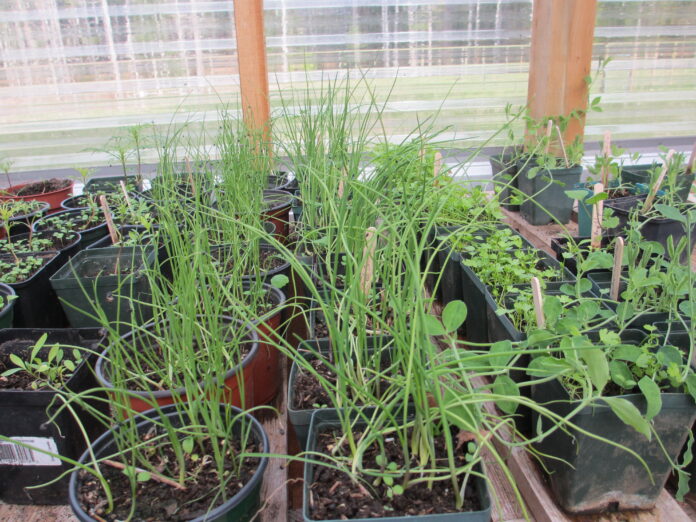
Now, onto the seedlings.  My propagation shelves  are quite full and my greenhouse tables are filling up with seedlings.  I took a friend in to the greenhouse to show her the seedlings and she asked me why I was blowing on them.  A seedling in nature feels the wind shaking its stem.  This causes the seedling to produce a hormone that strengthens its stem.  Without this stimulus, the seedling grows a weak stem and falls over.  In commercial greenhouses, I have seen people using  fans and even a mechanical device to brush the seedlings.  

As soon as the seedlings have their first true leaves, I begin to give them a weak fertilizer.  I use human urine diluted with ten parts of water and I use seaweed tea.  The plants love both brews and grow strong and stocky.  To get human urine, pee into a bucket or purchase a Luggable Loo from Canadian Tire.  It is a tall bucket with a toilet seat attached and you just pour the resulting urine into a watering can and top it up with water.  Dahlias just love human urine.  In fact, I cannot think of a plant that doesn’t like it: roses, geraniums, apple trees, squash.  They all flourish on a diet of human urine which contains mostly nitrogen but it also has a little phosphorus for fruiting and flowering.

To make seaweed tea, soak some fresh or dried seaweed in a bucket of water for two or three days.  Strain out the seaweed and put it in the compost bin.  Water your plants and then give them a shot of seaweed tea.  I use either brew especially when I am transplanting as it saves the plants from transplant shock.  I did this when I was staying over on Hornby with a friend.  The next morning, she was amazed at how robust the transplants were and has been using this trick ever since.  Happy Gardening!

Malaspina Gardens Hospice

June 22nd, 2007

So in the course of finishing up our work at the hospice, it eventually came to pass that no more efforts were required outside landscaping. The only tasks remaining were within the old folks home itself. Something that I’ll admit I was actively avoiding for myself. I don’t know, I guess with Dad’s passing and that of Johnny’s as well, coupled with spending a sleepless night preparing a speech to be given at Johnny’s memorial, I was feeling a bit inundated with mortality. The idea of going into the hospice and seeing up close and personal, the frail and tired, aged just seemed to be more than I could take. But in the end there could be no more skirting the issue. What seemed to be of little consequence or noticeable recognition by the younger guys on the crew, and hence my willingness to allow them to foray into the hospice to assist Lloyd and the removal of old and dated furniture, was now for me to witness as I helped over the last hour to finish up the day. Going in on my own as the gang was upstairs on the third floor, I came upon an old man seated aside the elevator doors. As I awaited the arrival of the elevator car he began to ask me with a dismayed and wanting tone, where all of the televisions were going. As I hadn’t seen all that the fellows were extracting from the upper floors I found myself at a loss for an adequate answer. He proceeded to ruminate on the televisions. His tone and far off look to his eyes started to tear at my heartstrings. It was apparent to my eyes that we weren’t fully connecting within our brief conversational encounter. He may have been verging on senility but I was verging on discord for the multitude of thoughts that were crowding my mind. 

Where were they going with all the t.v.’s? 

By his count there were five that had walked out of the elevator doors past him, before my arrival at his side. 

Didn’t he have a television? 

Were they even televisions at all? 

In a world that is constantly subjected to and undergoing change is it too much to ask that in our twilight years we might be afforded some insulation from the constant that begs our acquiescence throughout all of our adulthood? To see this withered old man who appeared too weak to move from his seat, exhausted from a life of chasing toys, then balls, then girls, then babies, then bills, then memories and finally age itself, it looked to my struggling eyes as though time was now chasing him. The tables turned. Only he wasn’t running. His weakened body confined to his chair by the main floor elevator as though he were a display. The rush of time pressing him in the oscillation of the guys as they went up empty handed and came down arms full. I had only seen chairs and bric-a-brac exit the building previously from where I had been working. No televisions by my count had come out but not everything that the guys were drawing out of the hospice was bound for the refuse bin where I was toiling. The front side parking lot was beginning to fill up with furnishings intended for another destination. One that might see their further utilization. Lamps still to be lit. Seats still to be sat. Dressers still to be filled with dress. Bookshelves still to shelve books. Perhaps even televisions still to be viewed. My heart began to ache for this elder. Must change continue to erode… everything? I would imagine that for the infirm occupants of this hospice, and any other, that change would not only be disturbing to their compromised abilities to cope with it but actively be warded against by those charged with their care. What I was seeing however, showed me otherwise. Time indeed was chasing this man, whether he liked it or not, realized it or not, and the constant that is change would sooner or later see this fellow’s residence change from a hospice to a cemetery. Utterly depressing to stare down though utterly unavoidable as well. For him, for me, for you, for the crew. Joking, laughing, working, gawking at the nurses, eating burgers and salmon, grinding out a jail bit, chasing life until death catches each and every one of us. And in the name of this nameless old man, I pray that when that time arrives we’ll each have our dignity, the love of our families and a freaking television!

So upstairs I eventually found and got to helping Lloyd and the guys remove the last vestiges of furnishings from the hallways and the rooms they led to. Lloyd I found to be quite friendly but hard to get a straight answer from. Yesterday I had asked him what the total yearly budget was to operate the hospice and he rather wistfully and somewhat bluntly replied, “millions.” Then I proceeded to to inquire as to how many occupants resided in the hospice and his answer was that there were five floors of rooms. It was then that I decided that he either didn’t know or was unwilling to convey such information to me so I dropped my pursuit of it. 

The work was pretty much done by the time i joined the crew. I showed in time to watch Lloyd somewhat aimlessly or absentmindedly ducking into this room or that, that room then this, the others in tow. Standing at the convergence of four radiating wings, I waited for instruction as James Hudzicker was playfully propelling himself around in a wheelchair and the others halfheartedly conducted a search of the various rooms, almost as if looking for an exit. I decided to go into one of the rooms to sneak a look at the view, which happened to reach the waters of Nanaimo Harbour and Gabriola Island. Impressive. But as I turned back to face the empty room and return to the hallway it adjoined, I began to realize that the entire four wings were deserted. Not a soul up on the third floor besides ourselves. The entire four wings of floor number three empty, as if decommissioned. The end of the day was upon us and answers from Lloyd seemed moot to question. Room #3331 empty. No grandmother in room #3337. No tired patriarch in room #3346. Just flotsam and jetsam strewn about the floors of each empty space. The lifeless void of each room and their whispers of unheard stories leaving each more cluttered than when they were furnished and occupied. The shadows of the twilight years. 

Who knew what the reason for the empty rooms were? 

Where are the elderly of floor #3? 

Why is the furniture being removed? 

The other floors of the Malaspina Gardens Hospice were fully functioning. Part of me felt like pulling up a chair beside the old man on the main floor for inside I was equally dismayed and wanting for answers to my questions. The deserted rooms of floor number three seemed eerily foreboding of change. 

Where are the televisions? 

Where are the occupants of floor number three?! 

While people can’t withstand change, nor too it seems can buildings. Hell, televisions likely won’t be able to withstand change forever either. Change. The one true constant, aside from time itself and being 2:30 pm, it was sadly yet also thankfully time to leave. 

It’s time to stand our ground

It’s time to stand our ground

The world is at war with itself

Divide and conquer 

is the pandemic du-jour

We are cornered by events 

we don’t understand

It’s been going on far too long

It’s still a beautiful world if only

they’d stop telling us it wasn’t

They won’t leave us alone

to live our lives 

It’s been going on far too long

Fight, flight, freeze or fawn 

are our choices

when peace is not allowed

Some are fleeing. To anywhere else 

Some are freezing. It’s cold here

Some like to fawn. That’s our culture

Some are fighting.  Peacefully  

No to the deceit and greed 

of the political class

It’s been going on far too long

Honesty and integrity

must be demanded

It’s time to stand our ground

The Afternoon Train

2 22 24 the afternoon train

I was on the late afternoon train

with a drunk skinhead

who wrapped his tattooed baldness

in the chubby embrace of his puffy short arms

as he slept through the dull urbanity of the mainland

and I felt the shallow blandness of his culture

with a new level of melancholy

as if I were the spider

confined in his green ink web tattoo

never getting to taste the blood of a fly

or feel the hapless wiggle of a trapped grasshopper.

Helliwell habitat restoration and fuel management update

OLYMPUS DIGITAL CAMERA

By Chris Junck, Taylor’s Checkerspot Butterfly Recovery Project Team

Ecological restoration work that began in 2015 continues in Helliwell Provincial Park. With guidance from the BC Ministry of Environment and Climate Change Strategy, BC Parks and the Taylor’s Checkerspot Butterfly Recovery Project Team, habitat enhancement is achieved through a combination of conifer removal, pruning, weeding, and planting/seeding of native vegetation. A broad variety of species are used in the restoration, including common camas, woolly sunflower, harsh paintbrush, small blue-eyed Mary, and others that are important host plants for Taylor’s checkerspot butterflies. With support from Wildlife Preservation Canada, the Vancouver Zoo has raised and released the endangered butterflies annually in the restoration areas since 2020. Several other at-risk and uncommon coastal bluff species benefit from this project, such as dun skipper and propertius duskywing butterflies, western bumble bee, western screech-owl, bats, and numerous other animals and plants.

Vegetation monitoring has been conducted annually to assess restoration success through time. The latest surveys that occurred in early March 2024 indicate that there has been successful regeneration of meadow vegetation. However, native vegetation specifically beneficial to Taylor’s checkerspot is not recovering to its full potential. Do you ever wonder why there aren’t a sea of wildflowers in the Helliwell meadows? It’s because of invasive grass thatch build-up and grazing by deer on blooming wildflowers. 

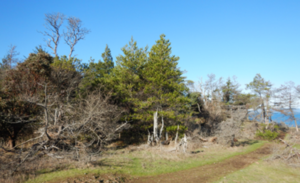
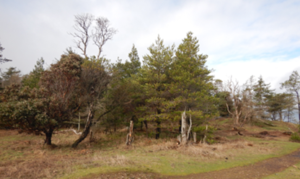
Woodboring beetles have also affected the park’s ecology in recent years. Large numbers of shore pine along the bluff towards St. John’s Point have died or are dying due to beetle infestations. Additionally, there have been substantial blowdowns in some areas of the park. The resulting large number of dry branches, dead trunks, and dead fall is creating a potential fire hazard.

In 2020, BC Parks hired a consultant to conduct a fire fuel risk assessment and to write a fuel management prescription for Helliwell Provincial Park. Work on implementing the plan began in 2021 and has continued annually since then. Over these four subsequent years, forest fire fuel has been reduced around the parking lot and partway along the eastern portion of the bluff trail toward St. John’s Point. 

Fuel management work consists of cutting, limbing, piling, and burning dead and dying shore pine and invasive English holly. Most dead wood was removed, however, both standing and fallen logs providing wildlife benefits were retained. Although arbutus on site also had dead and dying limbs, dead wood from this species was left in place. The total material removed over these three years of treatments was just under 5,000 m3, or about the same as 500 tandem dump truck loads. 

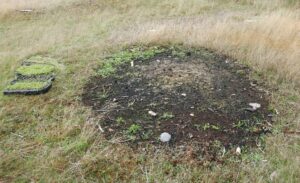
All cut wood was hauled to 13 burn sites distributed along the bluff trail. Custom native plant seed mixtures prepared by Satinflower Nurseries were spread on the burn areas in early March each year. In previous years, burn sites and other restoration areas were also planted and seeded by volunteers from the Hornby Island Natural History Centre, Hornby Island Community School, Conservancy Hornby Island, Hornby Island Provincial Parks Committee, contractors, and BC Parks staff. 

According to Neil Wilson of the Hornby Island Natural History Centre, “The planting event with the Hornby Island Community School last fall was a great success.” He adds, “This was the seventh year they have participated in the restoration project in Helliwell and have planted around 25-30,000 plants. An amazing accomplishment!”

BC Parks and the project team thank Cowichan Tribes, Halalt, Homalco, K’ómoks, Lake Cowichan, Lyackson, Penelakut, Qualicum, Snaw’Naw’As, Stz’uminus, Tla’amin, We Wai Kai, and We Wai Kum First Nations for allowing us to restore ecosystems in their traditional territories. There has also been a lot of local assistance for the project from Helliwell Park neighbours in High Salal Ranch Strata and community volunteers. 

The recovery project has benefited from funding and in-kind contributions from the BC Parks Licence Plate Program, the Habitat Conservation Trust Foundation, the Environment Canada Habitat Stewardship Fund, the B.C. Ministry of Water, Land and Resource Stewardship, the B.C. Ministry of Environment and Climate Change Strategy, and others.

The Taylor’s Checkerspot Butterfly Recovery Project Team includes biological consultants and representatives from the B.C. Ministry of Water, Land and Resource Stewardship, BC Parks, Denman Conservancy Association, Garry Oak Ecosystems Recovery Team, Greater Vancouver Zoo, Mosaic Forest Management, Wildlife Preservation Canada, and others. 

Learn more about the Taylor’s checkerspot butterfly: 

https: //goert.ca/activities/taylors-checkerspot/

and

https://www2.gov.bc.ca/gov/content/environment/plants-animals-ecosystems/species-ecosystems-at-risk/implementation/conservation-projects-partnerships/taylors-checkerspot


Photos  

Photo 1.

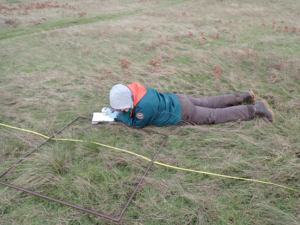
Caption 1. Botanist Kristen Miskelly conducted the annual assessment of Helliwell’s coastal bluff meadow restoration on March 2nd, 2024. Photo by James Miskelly. 


Photo 2.


Photo 3.


Caption for photos 2, 3: Before and after photos of a forest fire fuel reduction site near St. John’s Point. Photos by Bonnie Zand.

Photo 4.


Caption for photo 4. Sites where fire fuels were piled and burned were weeded prior to planting and seeding. Photo by Bonnie Zand.

Photo 5.

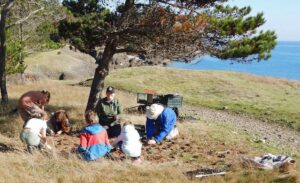
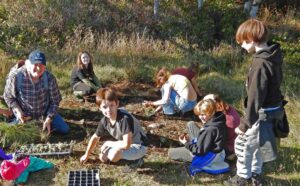
Caption 5. BC Parks conservation coordinator Stephanie Govier, Hornby Island Natural History Centre volunteer Bill Caywood, and Hornby Island Community School students replanted burn pile sites on October 14, 2023. Photo by Bonnie Zand.

Photo 6.


Caption 6. Over the last seven years, Neil Wilson and other Hornby Island Natural History Centre volunteers, and students from Hornby Island Community School helped to plant 25,000-30,000 native plants in Helliwell Provincial Park. Photo by Bonnie Zand.

Background Information

Taylor’s Checkerspot Butterfly (Euphydryas editha taylori)

  • Also known as Edith’s Checkerspot.
  • Historical range was Hornby Island, southeastern Vancouver Island, Puget Trough and to the Willamette Valley in Oregon. In B.C., they were once abundant at 10 sites in the Greater Victoria Area, one site each near Mill Bay and Comox, and sites on Hornby Island (including Helliwell Provincial Park).
  • They were thought to have been extirpated (became locally extinct) from Canada by 2000 when no Taylor’s Checkerspots could be found in their last known sites on Hornby Island despite intensive searches.  However, new populations were discovered on Denman Island in 2005 and near Campbell River in 2018.
  • It is federally listed as Endangered (COSEWIC, SARA Schedule 1), and is on the BC Red list of at-risk species.
  • Taylor’s Checkerspot butterflies need open sunny meadows where they can find suitable host plants (food for larvae and nectar producing flowers for adults), such as woolly sunflower, common camas, small-flowered blue-eyed Mary, wild strawberry, sea blush, and yarrow. 
  • Habitat loss, degradation and fragmentation are major factors in the species’ decline.  For example, the meadows along the coastal bluffs in Helliwell Provincial Park became less suitable for butterflies due to invasions of non-native plants and encroaching forests.
  • Habitat enhancement work (weeding, selective limbing +/or removal of conifers, re-planting and seeding with native species) has been ongoing in Helliwell Provincial Park for several years.

The Taylor’s Checkerspot Butterfly Recovery Project

The Taylor’s Checkerspot Butterfly Recovery Project is led by Jennifer Heron of the BC Ministry of Land, Water and Resource Stewardship and is guided by the Garry Oak Ecosystems Recovery Team’s Invertebrates at Risk Recovery Implementation Group. It is a collaborative effort to restore Taylor’s checkerspot populations in British Columbia through habitat enhancement, captive butterfly rearing and release, monitoring, public outreach, and other activities. 

Team Members 

Jennifer Heron (Chair), B.C. Ministry of Water, Land, and Resource Stewardship, Vancouver, B.C. 

Erika Bland and Andrew Fyson, Denman Island Conservancy Association, Denman Island, B.C. 

Deborah Bishop, Denman Island, B.C. 

Menita Prasad, Greater Vancouver Zoo, Aldergrove, B.C.

Eric Gross and Ross Vennesland, Canadian Wildlife Service, Environment and Climate Change Canada, Delta, B.C. 

Crispin Guppy, Entomologist, Whitehorse, Y.T. 

Molly Hudson and David Vey, Mosaic Forest Management, Nanaimo, B.C.

Chris Junck, Garry Oak Ecosystems Recovery Team and B.C. Conservation Foundation, Victoria, B.C.

Suzie Lavallee, University of British Columbia Faculty of Forestry, Vancouver, B.C. 

Patrick Lilley, Private Consultant, North Vancouver, B.C. 

Erica McClaren and Stephanie Govier, BC Parks, Black Creek, B.C. 

Kristen Miskelly, Satinflower Nurseries, Victoria, B.C. 

Derek Moore, Area Supervisor Von Donop Area, BC Parks, Black Creek, B.C. 

Nick Page, Raincoast Applied Ecology, Vancouver, B.C. 

Hazel Wheeler and Andrea Gielens, Wildlife Preservation Canada, Guelph, ON. 

Bonnie Zand, B.C. Conservation Foundation, Fanny Bay, B.C.

Supporters 

B.C. Conservation Foundation

B.C. Ministry of Environment and Climate Change Strategy

B.C. Ministry of Land, Water and Resource Stewardship

B. Parks

BC Parks License Plate Fund

Conservancy Hornby Island

Denman Conservancy Association

Environment Canada Habitat Stewardship Fund

Garry Oak Ecosystems Recovery Team

Greater Vancouver Zoo

Habitat Conservation Trust Foundation

Hornby Island Community School 

Hornby Island Co-op

Hornby Island Natural History Centre

Hornby Island Provincial Parks Committee

Mosaic Forest Management

Sea Breeze Lodge

University of British Columbia

Wildlife Preservation Canada

For more information about the Taylor’s Checkerspot Butterfly Recovery Project, visit: www.goert.ca/activities/taylors-checkerspot/

Or contact:

Project Lead/GOERT Invertebrates at Risk RIG Chair

Jennifer Heron

Provincial Invertebrate Conservation Specialist

B.C. Ministry of Water, Land, and Resource Stewardship 

Office: 778-572-2273

Jennifer.Heron@gov.bc.ca

Public Outreach Coordinator 

Taylor’s Checkerspot Recovery Project Team

Chris Junck

chris_junck@hotmail.com    

* More photos available by request

BC Parks

Erica McClaren

Conservation Specialist

Office: 250-331-9922

Erica.mcclaren@gov.bc.ca 

Climate Bytes: The Carbon Tax and Beyond

This is another note in a series about aspects of the climate crisis. 

THE CARBON TAX AND BEYOND

There has long been a public policy doctrine that governments should tax those things that are harmful to society and subsidize what is beneficial. Because CO2 is the root cause of global warming,  there has been support from scientists, economists and politicians for incentivizing switches from high to low or zero sources of carbon emissions. This was the rationale for creating Canada’s “carbon tax”. And, it has been working. Climate scientist James Hansen has repeatedly urged the introduction of a program he calls “carbon fee and dividend” and this, in its simplest terms, is what Canada’s  program is about. In Hansen’s idea, 100% of revenue from the “carbon fee” is shared equally as a “dividend” to the public. In Canada, almost 100% of revenue is returned as a rebate to the public and the remainder is spent on climate mitigation. Canada’s mistake has been to call it a tax rather than a fee and to omit words like dividend or rebate in the program title. Surveys show that, of the millions of Canadians who have received rebates, over half seem to be blind to that fact. Likewise, they are unaware that most rebate amounts have been greater than carbon tax payments they have made. Because of single-minded aversion to the word “tax”, many Canadians have been open to believing the misinformation being disseminated by opposition politicians and other opportunists. 

Canada’s version of James Hansen’s “carbon fee and dividend” has been acceptable to governments partly because it works more so because it does not otherwise disrupt “business as usual” and does not require abandonment of the prevailing economic world view. Economists, even Nobel Prize winners, have posited dangerous views such as that a 4oC Earth temperature rise would be economically beneficial. In contrast, climate scientists predict that even a 3oC world would be destabilizing at best and, at worst, civilization-ending. Such thinking by economists is a continuation of the long-time disconnect between conventional economics and the natural world and has a been used effectively by climate deniers and other magical thinkers and, of course, by the greedy fossil fuel industry. Following that path leads us to disaster.

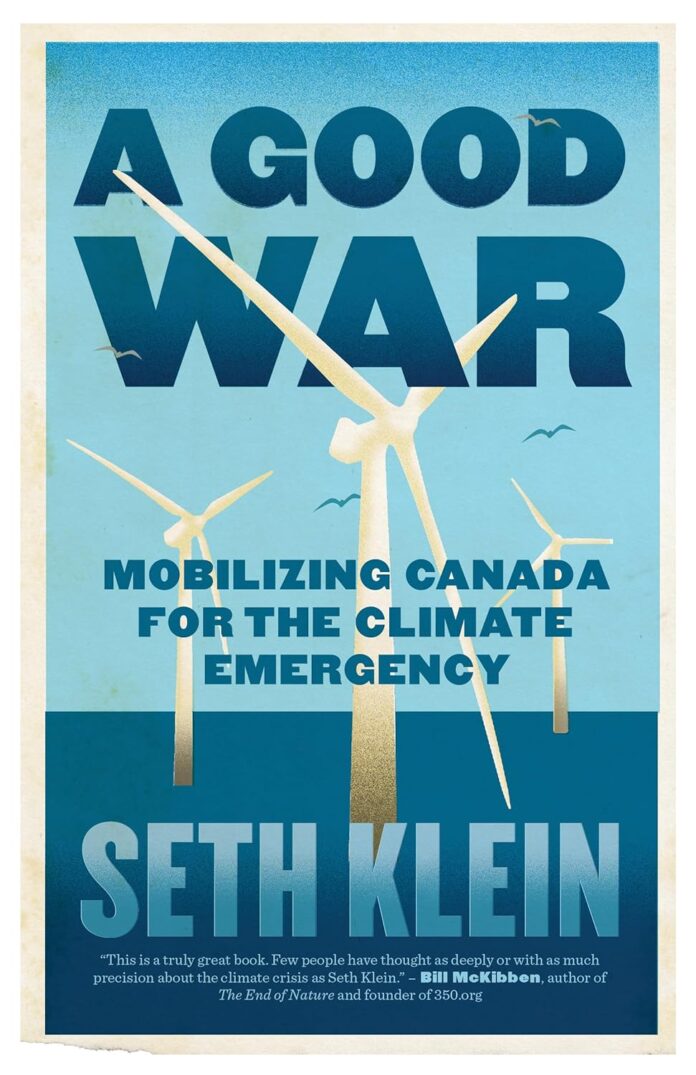
More than that, we need to restructure our economy. Seth Klein’s book [A GOOD WAR, Mobilizing Canada for the Climate Emergency] tells us that the scale of change that is needed to combat global warming has precedents. At one level, in response to calamitous events such as the 2008 financial crisis, 9-11 and, most recently, the COVID Pandemic, governments acted quickly if only to protect the status quo and the financial elite. But the closest we have come to an existential crisis such as we now face is Klein’s story of the early years of World War II. Then, almost overnight, entire  economies in Canada, Britain and the U.S. were transformed and manufacturing capacity was commanded to shift from producing cars and other consumer goods to producing military equipment and aircraft. Governments successfully convinced the citizenry that the enemy was at the gates and to accept willingly that rationing programs and other compulsory hardships and privation were a necessity. 

Once again, an enemy is at the gates. We must start accepting that truth and acting accordingly. Earth warming in 2023 was “off the charts” and climate scientists are dumbfounded and unable to explain what happened. This underlines our need not only for a carbon tax but also for the equivalent of Victory Gardens, Victory Bonds and dedicated use of all resources to the single end of survival. We can choose that route or we can continue the path we are on, a condition that is almost certainly  terminal. Nature, as it always has, is showing us who is in control.

Letter to the Editor – Helen Grond

The Trust is busted!

The Islands Trust has been trying to ban home-sharing on Hornby Island for decades.  No valid reasons have ever been given.   Gaslighting and fear-mongering have always replaced facts and data.  Hornby Island has survived this ongoing onslaught through the protection offered by our Official Community Plan (OCP).  Changing the OCP through the Advisory Planning Commission (APC) is the only way to stop home-sharing under current laws.  The APC is hand selected in secret by the Trustees.  They are required to be fair and unbiased but that wouldn’t have achieved the desired outcome in this case.  As early as 2016, plans were being made between the Trust and our local Trustees to “rig” the APC by excluding all community members who might have differing or unbiased views.  I have seen the FOIA (Freedom of Information Act) documents proving this.  

The newly appointed APC was drawn from a small but highly vocal group of anti-home-sharing advocates.  They had already spear-headed a smear campaign that promoted misinformation and succeeded in creating widespread negativity towards home-sharing in 2019.   They produced a report in March, 2022 that included no facts, data or evidence to support their recommendations, which were to change the OCP and remove the legal rights of the community.  Hornby home-owners were expected  to lose their livelihoods and privately supply the critical low-cost housing that the government has repeatedly failed to do. The community was misled to believe that banning home-shares would solve the housing crisis and alleviate congestion.  The report was not up for debate and it’s false conclusions were adopted without challenge by the Trustees and the community was ruthlessly bullied into silence on social media.  


Home-sharing is the cornerstone of Hornby’s economy and millions of dollars of direct and widespread benefits cannot be replaced.   The Trust’s plan was near completion when surprising new provincial laws were brought in last fall to abolish STVRs in communities over 10,000 people.  The province removed the right to “grandfather” and that took away the carrot the Trust was dangling in front of the community to entice them into giving away their rights.  Communities under 10,000 could choose to opt in to the new regulations and there was strong pressure from a tiny local group to do so.   An emergency March 22 Trust meeting was called to address the situation.  The Community hall was full of Islanders desperately seeking clarification.

It was icy cold in the Hall.  No heat was turned on to provide any comfort and there was no opportunity to speak.  This was not a meeting.  This was an exceptionally uncomfortable lecture.  With their futures hanging in the balance, the community had to sit through three long hours listening to the Trustees thoroughly prove how confused and biased they truly are.  The refusal, once again, to listen and dialogue with the community was disrespectful.  Alex Allen was in favour of opting in and Grant Scott advocated for a less punitive option.   What was agreed upon was a temporary “stay of execution”.  The only honest option would be to cancel the whole project and start fresh with a fair and unbiased approach.

The Trust operates in secret and has for many years. The only way to explore the Trust’s real agenda, is to seek freedom of information requests (FOIA) or hope that a staff member or a Trustee slips up.  Luckily for Hornby, Alex can usually be counted on to blurt something out that would normally be withheld.  It’s comical to watch the reactions from the other Trustees and the staff when he does it.  Grant often gets quite annoyed and frustrated when this happens.  The animosity between the Trustees played out in the tension filled meeting. 

Alex didn’t disappoint us.  He lamented that he “had” to go to the meeting and cut short his vacation in Tofino. I wonder what his accommodations were?  In his monologue, Alex admitted that banning home-sharing would unlikely provide any new rental accommodation.  He indicated he had his own personal reasons for wanting them gone.   He claims to love Hornby; apparently that love doesn’t extend to the hundreds of people trying to survive here.  He scoffed at the plea from families who had owned property on Hornby for generations and depended on a few weeks rental to help cover expenses.  “Why would they need the income – they should have paid off their mortgages by now”  That drew quite a gasp from the silenced crowd! 

What Alex reveals is that he doesn’t even believe the conclusions of the APC report himself in spite of his loud support for it.  True agendas are hard to hide.

The Trustees have aggressively targeted home-shares as being the main contributors to congestion, even though they only represent 7% of total island accommodation.  Why then, did they approve the high density controversial Thatch condo development?  Why didn’t they consider the problem with excessive campgrounds.  Tribune Bay campground, (the “Feed-lot”), hosts 500 people (10% to 15% of total) per day in our congested village centre.  If 500 people were no longer at Tribune Bay, the Coop and the Ferries, we wouldn’t even recognize Hornby in summer!  If I were queen for a day, I would turn the campground into a cosy neighbourhood of portable housing for locals. Tax payers bought it soooo……

The new Park acquisition of Tribune Bay campsite and the adjoining ten acres were secretly negotiated without community consultation. Why?  Our Trustees have been tight lipped throughout.  It’s worth considering that new tourist accommodation providers like the Thatch and the Park’s planned new resort would benefit significantly if competing, local family provided accommodation was gone!  Just sayin.

The Trustees have lost the confidence of many to make unbiased and evidence based decisions.  Their agenda is glaring.  They should resign before any more harm is done.

A Lament for Israel

Oh Israel, “You built your towers strong and tall, can’t you see they’ve gotta fall someday?“ (Townes Van Zandt) Israeli architect Eyal Weizman describes your fortress-like character, marked by towers and walls, as “an archipelago of enmity and alienation”. (Hollow Land: Israel’s Architecture of Occupation @ p.155.) You have ghettoized yourself, become the “tough Israeli” in service of “Never Again”; you have lost your bearings. You have blindly believed that you could somehow keep your boot on the neck of a population until they simply submitted and perhaps forgot they once had land and liberty. You have deluded yourself that your iron- clad military rule in the West Bank, your 17 year siege on Gaza, your 2019 “Nation-State Law”, your settler enforcers, would make you safe. You’d be fine with your imperial protectors, the UK & then the US. You could falsely teach your children that Jews have always been hated, take them to Auschwitz to keep the Holocaust trauma alive and the guilt going. You could silence criticism by shouting “antisemitism!”, and thumb your nose at the global community as represented by the UN. You have failed to listen to the brilliant Jewish philosophers, journalists, & artists who have lovingly warned that you are headed for disaster – Martin Buber, Albert Einstein, Hannah Arendt, Ilan Pappe, Gideon Levy, Marjorie Cohn, Norman Finkelstein, Amira Haas and so many more. In fact, you have tragically dismissed these caring critics as “self-hating Jews’”.

The world is not out to get you. The world does not hate you. The Palestinians are not going to “drive you in to the sea”. In fact, you did that to them in the 1948 Nakba (Catastrophe); the photos show it all. But in your fear, you are now conducting a “2nd Nakba” on Gaza, as one of your government ministers described it. But what about all the other Palestinians in Israel, in the West Bank, in the diaspora? Will you have to eradicate them as well to secure your Jewish- supremacist state on their traditional land? Will it ever be over?

It will be eventually over, in the sense of using the same violent approaches to accomplish your legitimate goals of security & safety. The global community won’t stand for it. You will have to do a deep reckoning and a reset.

For now, Big Brother, the US, is giving you cover for your genocidal actions in Gaza, for your use of starvation as a weapon of war. As Netanyahu bragged many years ago: “America is a thing that can be easily moved”. Yes indeed. You are in fact calling the shots, and the bumbling, flailing US politicians have become objects of shame and ridicule. The country itself has lost stature worldwide; people watched in utter disbelief videos of US missiles raining down on a ravaged Gaza at the same time as heavy, expensive bundles of US aid were dropped from the skies. Humanitarian aid actually killed 5 people by landing on them, when thousands of fully- supplied aid trucks wait just across the border with Egypt. Aid that could be driven in and distributed by those trained to do so, UNRWA workers. By not allowing that to happen, what are you thinking? Are you imagining the world is not watching? That the peoples of the world are not seriously distressed by witnessing suffering on an unprecedented scale? When you could stop the madness tomorrow?

Oh Israel, the days of “Exodus” are over. Your transfixing creation myth has been thoroughly exposed for the land grab and dispossession of a people it was. A people who did not cause your oppression, who are not to blame for the Holocaust, who had lived on that land for millennia. And who were promised a state by the British. Just as you were promised a state on the same land. Your state was specifically not to be created at the expense of the local indigenous population, but you forgot that part (Balfour Declaration, 1917).

The Western imperial powers have made many catastrophic mistakes with their hubris, their racism, their greed for resources. Their complicity in the creation of the State of Israel on Palestinian land was one of their greatest missteps. Zionism began not with Jews, but with early Christian Zionists in Britain, and in a time when antisemitism was common, creation of a State for the Jews seemed like a good idea. The problem was, as one early Zionist scout reported back to Theodore Hertzl (father of Jewish Zionism), after a visit to Palestine: “The bride is beautiful, but she’s married to another man”. Nonetheless, the arrogant settler-colonialist mindset got behind a traumatized Jewish population desperate for security and safety. The UN pushed through a fatal resolution in November, 1947, without consulting the Palestinians, who have never accepted their dispossession.

And now here we are. In an impassioned but devastatingly clear analysis, Columbia University Professor Jeffrey Sachs asserts the UN must immediately vote a Palestinian State into being. His compelling interview is really worth seeing. (The Bottom Line (Aljazeera, 17 March, 2024, https://youtu.be/krznHIAgwcY?si=Qnl2J83kBy6_UWL9) He says that only with international recognition on a State level (not simply “observer status”) will Palestinians have the bargaining power they need to create a just & equal society of two peoples sharing the land. Oh Israel, imagine truly becoming “a light unto nations”. The possibility is there.