Home Blog Page 146

The Amazing Origins of commonly used phrases

   Here is the essence of an amazing article on the origins of familiar English phrases written William Poulu . Most people in England get married in June because that was when they took their yearly bath. Brides carried a bouquet of flowers to hide their body odour. The order of taking that one yearly bath went from the man of the house to the last being the babies. Needless to say, the water was very dirty by then. Leading to the saying, “Don’t throw the baby out with the bathwater”.

                Houses had thatched roofs-thick straw, piled high with no wood underneath. It was the only place for animals to get warm, so, all the cats, dogs, mice etc climbed up there. When it rained, the straw would become slippery and the animals would slip and fall off the roof.- Hence the phrase, “It’s raining cats and dogs”.

                The floor of poor people’s houses was dirt. Leading to the phrase, “dirt poor”. The slightly more wealthy people put straw on their floors, which, over time piled up into “thresh”. They would then put a piece of wood across the base of the doorway to hold in the ‘thresh’. This became known as a ‘thresh hold”.

                Bread was divided according to status. Workers got the burned bottom of the bread. The family ate the middle of the bread and guests ate the upper crust. A phase that is now used to describe the wealthy.

                Lead cups were used to drink ale or whisky. The combination of lead and alcohol would, sometimes knock the imbibers out for a day or two. The imbiber would be laid out on the kitchen table and prepared for burial. The family would gather round and eat and drink and wait to see if the person would wake up, creating the custom of, “holding a wake” before burial.

                Urine was used to tan hides. Families would pee in a pot and sell the urine to a local tannery. Those who were too poor to own a pot were called people, “who did not have a pot to piss in.”

                England is old and small and, in the Middle Ages, they were running out of burial sites. People started digging up old coffins to reuse the site. Scratch marks were noticed inside some of the coffins, indicating that  these people had been buried alive.. They decided to attach a string to the hand of corpses and run it up to the surface, where it was attached to a bell. Someone would sit by the grave on the  first night after burial to listen, in case the bell rang. This was called the “graveyard shift” and someone might be “saved by the bell”.

                There we go, a small voyage into linguistic history. We have different problems today but, overall, I remain grateful to be alive in the 21st century and hope that we  can improve the wellbeing of all Canadians in the near future. Bring on the Federal and Provincial elections..

A Global Security System

A Global Security System Sally Campbell

Having touched upon the complex subject of “security” earlier this year, my ears have now become hyper-attuned to the words “security” and “safety”. It is troubling to think how far we have progressed as human societies on so many levels, and yet how poorly we have addressed our common universal need for security and safety. During the 20th century, we saw new beginnings, with the development of institutions such as the League of Nations which led to the founding of the UN. The 1928 Kellogg-Briand Pact outlawed war and has never been overturned. The Geneva Conventions, The International Court of Justice, and The Rome Statute which founded the International Criminal Court – these constitute a framework for international law and international humanitarian law. They clearly set out war crimes, especially respecting civilians, aid workers and war prisoners. The many arms limitation treaties represent society’s understanding of the lethal direction in which we’ve been headed for many decades now. Yet somehow people now feel (and are) less safe and secure than ever before.

Why is that and what can we do about it?

In my view, we are in the throes of “the end of empire” and no, it isn’t pleasant. Watching a tv series like The Fall of Civilizations is rather chilling as it shows in devastating detail how, time and again, our world has experienced horrific violence wrought in the name of imperialism and colonialism. And worse yet, settler-colonialism in places like the US, Canada, Australia, New Zealand and our most devastating recent example, Israel-Palestine.

Gideon Levy, senior journalist for Ha’aretz, the Israeli daily, said that Israel’s ongoing violence and dispossession of the Palestinian people rests upon 3 myths that Zionists have embraced to establish and maintain supremacy in Israel-Palestine:

  1. Jewish people are the chosen people.
  2. Jewish people are the eternal victims.
  3. Palestinian people are less than fully human.

(Levy at UVic, 2015, sponsored by Canadians for Justice & Peace in the Middle East, CJPME)

Variations on that theme can be seen in the mythology around the Canadian settler-colonialism context:

  1. Euro-Christian settlers had a superior culture to bring to this land.
  2. The Doctrine of Discovery gave explorers the right to claim “vacant land” in the name of their sovereign. Vacant land was that which was not populated by Christians.
  3. Indigenous peoples were uncivilized savages.

Behind these implanted false ideas, of course, was the desire for the land, for its resources, for control over the region at the expense of the indigenous people living there. Greed, ambition, ignorance, willful blindness – all these underlay the so-called brave and noble endeavours of the settlers. The people that my non-indigenous ancestors taught were heroes were actually usurpers and plunderers, bringing weapons, disease and entitlement. It seems to me that until we in the imperial West truly understand and account for our own settler-colonial violence, we will look the other way as others wreak havoc on indigenous populations. The massive outcry

over Israel’s killing of 6 Western foreign–aid workers (and 1 Palestinian) from World Central Kitchen last week, after about 200 innocent Palestinian aid workers have suffered the same fate with little condemnation of those war crimes, was a grim reminder of our devaluation of “the other”.

Right now, a huge challenge for non-indigenous peoples everywhere is to de-colonize our minds and hearts. I view this as a life-long learning and listening process. Part of the learning is to confront militarism and Canada’s role as loyal 1st lieutenant of first the UK and now the US, in sustaining empire. We have considered ourselves as “honest broker” in foreign policy, the “good guys”. Yves Engler offers a solid debunking of that myth in his recent blog post of April 1st, 2024. He shows Canada’s ongoing role in supporting Israel’s settler-colonial project on Palestinian land. As he says, “The honest broker construct is damaging for two reasons. It confuses people about Canada’s role in the world, undermining the critical consciousness required to seriously challenge Canadian foreign policy. It suggests Ottawa is a benevolent international actor rather than largely driven by the interests of empire and corporations.” (Italics mine.)

Canada has such an opportunity to recalibrate right now. We’re on the brink of purchasing armed drones (the 2 most favoured bids are from Israel & the US); we’ve not yet taken delivery of the F-35 fighter jets we’ve bought from the US because they don’t work. If Trump gets re- elected, he may reassert pressure on Canada (as per his November, 2019 letter) to increase our annual contribution to NATO to 2% of our GDP from its current 1.3%.

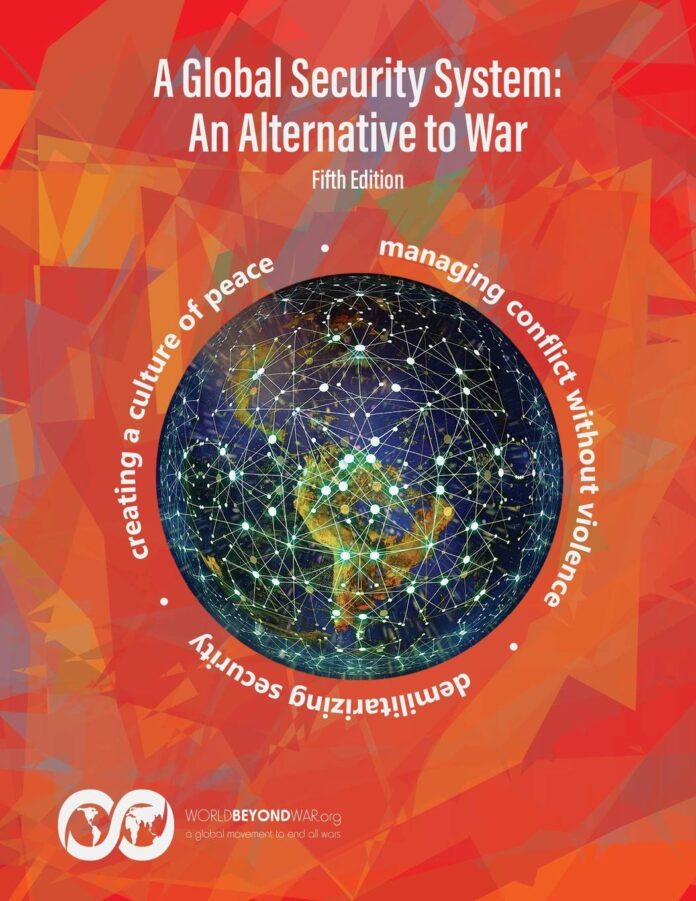
At the same time, all levels of government recognize our affordable housing crisis, the need to invest more deeply in our health care system, the need to make child care & education key priorities, to fairly fund our reconciliation process, and to reverse our shameful role in the climate crisis. To do this, we could start by freeing up funding from war/war-preparation rather than sliding into more spending. The latter course will be inevitable unless we reassess our stance in the world and move away from aggressive alliances such as NATO. The fact that international small arms sales have tripled since 2001 (A Global Security System: An Alternative to War, World Beyond War, 5th Edition, 2020 @ p.51) is a good indicator of the collision course our world is currently on. We need to shift from a war system to a system where we define peace by common human security rather than protection of national interests.

If not now, when?

Next week: more on A Global Security System.

Green Wizardries: A Safe and Happy Place

Green Wizardries, A Safe and Happy Place, by Maxine Rogers

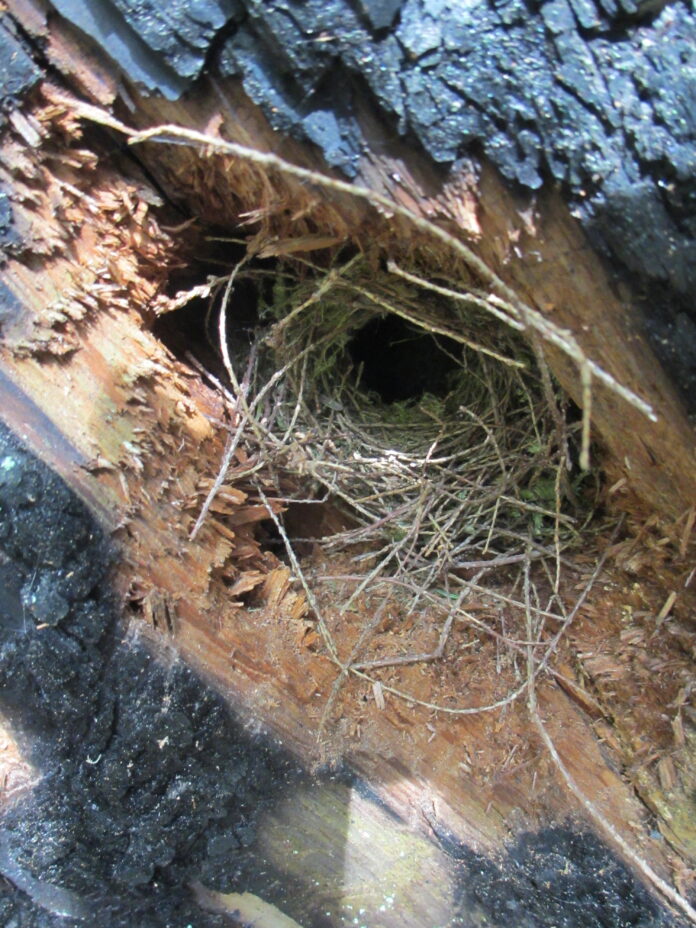
I was walking in the woods with some friends and we came across one of those huge old stumps that may well have been cut before the First World War.  The stump had been burned over and the pileated woodpeckers had been drilling holes in it over what looked to be many generations.  In one of the holes, one of my friends spotted a neat, little tiny nest.  It would have been the right size for a wren.  

That got me to thinking about how very lucky we all are to live on our tiny islands, away from it all.  Denman and Hornby got through the First World War with the loss of some of the young people but little real inconvenience to everyone here who was not doing military service.  The Second World War was much the same but we did have a Japanese-incendiary balloon land on Denman in a field.  I do not think it  did any damage. 

It feels to me that we have never been so close to a nuclear exchange between the great powers and be damned to the rest of us.  The Americans refuse to hold diplomatic talks with the Russians when what is most needed is a diplomatic solution and an end to hostilities.  

I found an interesting documentary on the Babushkas of Chernobyl.  A bunch of, mostly, women who were evacuated from villages inside the forbidden zone around the worst parts of nuclear contamination.  They missed their homes and way of life so much that they hiked back and dug under fences to get to their homes.  One old lady said that she was so hungry and tired when she got home that she ate a berry and said, “If I die, it is God’s will.”  She didn’t die and the old ladies all seemed quite healthy and spry.  

The wildlife is burgeoning in the forbidden zone.  Somehow buffalo, which they call bison, found their way to the zone, travelling through some very heavily populated country to get there where they met up with red deer, elk (which I suspect are the critters we call moose), horses that had gone wild, stray dogs, wild boar, wolves and heaps of birds and fish.  The forbidden zone is a kind of paradise where nature has taken back the land from human depredation and stocked it with an unbelievable richness of wildlife.  

A recent study on the wolves of Chernobyl, who are at the top of the food chain, found they have developed a resistance to cancer.  I suspect a lot of other creatures have also developed a surprising resistance to cancer.  The old ladies who returned to their homes in the forbidden zone keep chickens, geese and some pigs.  They have beautiful, lavish gardens.  They forage for wild herbs, berries and mushrooms.  Some of the mushrooms were very contaminated but the old ladies ate them and were very healthy and robust.  Yes, I am puzzled too but that is what happened.  

So, a limited nuclear exchange will not be the end of the world although it may well be the end of the more wasteful parts of our civilization such as consumer culture as I think such an exchange would cause a lot of what passes for normal to unravel.  

Our islands are like that tiny nest, tucked away in a hidden place.  I reckon that this is going to be a great year to learn to live locally and to garden intensively.  Gardening is soothing to the nerves and promotes good sleep and is inexpensive.  That is more than can be claimed for therapy.  

This spring is cold and this means you still have time to plant lettuce, spinach and peas.  We are trenching and filling the trenches half full of compost, then a seed potato, then more compost, wood ash and a layer of sand as our soil is a bit of a heavy clay.  It is essential to make the garden soil richer every year.  The more organic matter that you put in the soil, the better it holds water.  

I have my peas planted in pots in our polytunnel and the pots are sitting on hanging shelves so no mouse can get at them to eat the peas.  We do this with beans and corn too.  I have lots of tomato and pepper seedlings inside the house on shelves under LED lamps.  I also have seedlings of petunias, pansies and zinnias to delight the heart and feed the pollinators.

Other things to do to prepare for whatever might come include learning to knit, and work wool.  Learning to nurse family members through common illnesses at home.  You really want to stay out of our local hospitals as people go in for one thing but sometimes come out with a case of life-altering clostridium difficile, an infection of the colon.  Symptoms range from diarrhea to life-threatening damage to the colon.  This is due to inadequate hygiene in the hospitals.    

On that note, I will wish you happy gardening and good fortune.  

Conrad Campbell

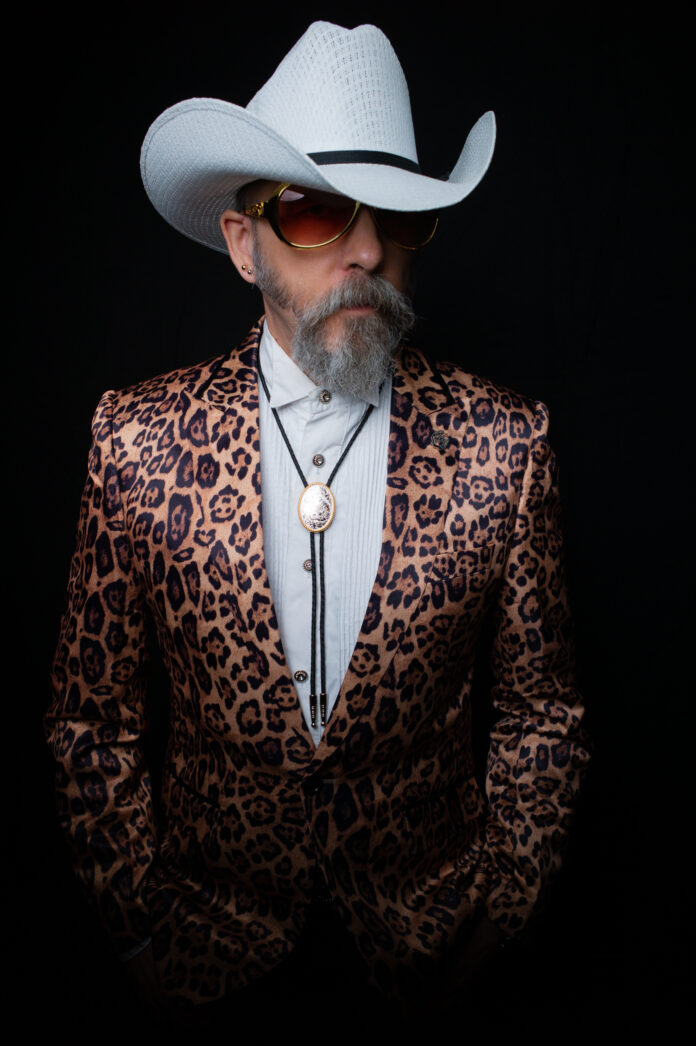
This week we are pleased to feature country music superstar and home organization specialist Conrad Campbell.

Why did you choose to make Denman Island your home?

In 1979 I fell in with a couple of A&W carhops that were involved in the production and distribution of illegal milkshakes they were making in an old Winnebago behind the mall in Victoria. Head Office caught wind of their scheme and they both moved to Denman Island to hide out. 35 years later one of them asked me to move in with her so I did.

What is your greatest fear?

Exiting my vehicle to use the washroom on the ferry in high winds and then my toupee blows off and gets entangled in the cables setting into motion a series of events that sees hundreds of commuters and school children hopelessly stranded in the middle of Baynes Sound while news helicopters circle overhead.

Have you always been a fan of country music?

Back in the mid 80’s I was working on a construction site and one of the roofing guys accidently dropped his nail gun and the hose looped around a rafter and it swung around and hit me in the back of the head and deposited a 4″ nail just behind my left ear. I spoke to my Doctor about it and he said it was better to leave it alone as trying to extract it was too risky. Ever since then I’ve liked country music.

What would you do if you won the lottery?

If I ever won the lottery I wouldn’t walk around with a smug sense of superiority and look down on poor people like I do now.

What would be your advice to the young people of today?

I would say to them that it’s more important to look good than feel good, and that it’s okay to laugh as long as you don’t point.

Letter to the Editor – Linda Armstrong


Disclaimer: this letter is a contrarian view in support of an author that does not believe that the consequences of burning fossil fuels is being accurately portrayed.

________________________________________________________________________

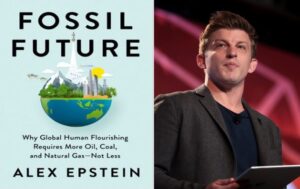
Recently I have become aware of author, Alex Epstein and his book titled : Why Human Flourishing Requires More Oil, Coal and Natural Gas- Not Less.  I am reading this excellent positive perspective and felt that others may be interested in these facts.

Here is the pre amble on the inner cover.

What if the “experts” have gotten everything about the future of energy wrong?

What if fossil fuels are the energy of the future–and that’s a good thing? 

   Over the past decade, philosopher and energy expert Alex Epstein has predicted that any negative impacts of fossil fuel use on our climate will be outweighed by the unique benefits of fossil fuels to human flourishing–including their unrivaled ability to provide low-cost, reliable  energy to billions of people around the world. 

  And contrary to what we hear from the media “experts”  about today’s renewable revolution and climate emergency, reality has proven Epstein right:

  • Fact: Fossil fuels are still the dominant source of energy around the world, while much-hyped renewables are causing skyrocketing electricity prices and increased blackouts.
  • Fact: Fossil fuel development has brought global poverty to a record low.
  • Fact: While fossil fuels have contributed to the 1 degree of warming in the past 170 years, climate-related deaths are at an all-time low.

          What does the future hold?  In  Fossil Future, Epstein applies his distinctive “human-flourishing framework” to the latest evidence and comes to the shocking conclusion that the benefits of fossil fuels will far outweigh their side-effects for generations to come.  The true path to global human flourishing is a combination of using more fossil fuels, getting better at climate mastery, and establishing energy freedom policies that allow nuclear energy and other promising alternatives to reach their long-term potential.

  Today’s pervasive claims of imminent climate catastrophe and renewable energy dominance are based on what Epstein calls the “anti-impact framework””–a set of faulty methods, false assumptions, and anti-human values that have caused the media’s designated experts to make wildly wrong predictions about fossil fuels.  Deeply researched and wide-ranging, this book will cause you to rethink everything you thought you knew about the future of our energy use, our environment and our climate.

ALEX EPSTEIN is an energy expert and founder of the Centre for Industrial Progress, which offers a positive, pro-human alternative to the Green Movement.  His New York Times best selling book, The Moral Case for Fossil Fuels, has been widely praised as the most persuasive argument ever made for our continuing use of fossil fuels, winning Epstein the “ Most Original Thinker of 2014″ award from The McLaughlin Group.

“At this strange time in history, with a mass movement demanding an end to the 80 percent of our energy provided by fossil fuels , Alex Epstein has the nerve to walk in the streets of New York City wearing a T-shirt that blares “I Love Fossil Fuels”  This book confirms the genius of his stance. 

 Net zero is suicide” –Patrick Moore, cofounder of Greenpeace and author of Fake Invisible Catastrophes and Threats of Doom.

  “In this book Alex Epstein champions a humanity-centric alternative to the anti-fossil fuel climate hysteria that is disturbingly pervasive among today’s elites.  Policymakers across the political spectrum should heed Epstein’s arguments and abandon the disastrous path we are on before it is too late.”-Chip Roy, U.S. Congressman(TX-21)

Check it out for your selves…(:  

 sincerely, Linda Armstrong 

I really appreciate the Islands Grapevine and look forward to its arrival in my mailbox on Hornby Island (:


before time was a flat circle

3 6 24 before time was a flat circle

They were warriors

before time was a flat circle

before the discovery of the edge of things

and sometimes I float there

on the backs of sea serpents

and tainted lilies

watching the reproduction of things past

in the sweat of jungles

and in the folds of giant lizards

while riding my big dingbat

until the neighbours yappy dogs wake me up.

CLIMATE BYTES: SOME THOUGHTS ON CLIMATE ADAPTATION

This is another in  a series of short notes about aspects of the climate crisis. 

What is mostly written about climate change is about its negative effects and how to mitigate them, about international conferences, about missed targets and doomsday scenarios. There is general agreement that the climate is in crisis and will likely get worse before it might get better. Given that trend, reason tells us that we should be thinking about how we as individuals, communities, nations and the world need to adapt to inevitable changes.

Of course, there are entire island and low-lying coastal states that may cease to exist because of sea level rise. There are also impoverished equatorial nations that are innocent victims of the excesses of wealthy northern hemisphere countries. Even in those countries, indeed in all countries, while the effects of climate change are global in scope, those effects are felt most harshly at the local level. All the threats from climate change such as shoreline destruction, sea level rise, drought, atmospheric rivers, hurricanes and typhoons, destruction of energy and public infrastructure affect local communities most acutely. And thus, most of the reactive and anticipatory adaptation to climate change happens locally.

Physical adaptation to these threats can be either reactive or anticipatory.  If any of those threats were to happen to our community now how would our community services react? We are fortunate that most of our communities have systems in place to deal with emergencies. But some of the threats may be historically new or may be new in frequency and intensity. It is therefore imperative that local governments should adopt the precautionary principle and anticipate the local implications of the high-impact-high-probability futures being presented by climate scientists. 

The flip side of human behaviour that causes climate change is the human reaction to that change. As humans have to face extreme temperatures we are having to adapt to behavioral changes such as more domestic violence, diminished problem-solving ability, and, for students, affected ability to learn. For many people, living through fires, floods and storms is enough to trigger post-traumatic stress disorder. Given all those affects, social programs, educational systems and treatment facilities are going to be even more stressed than they are now. 

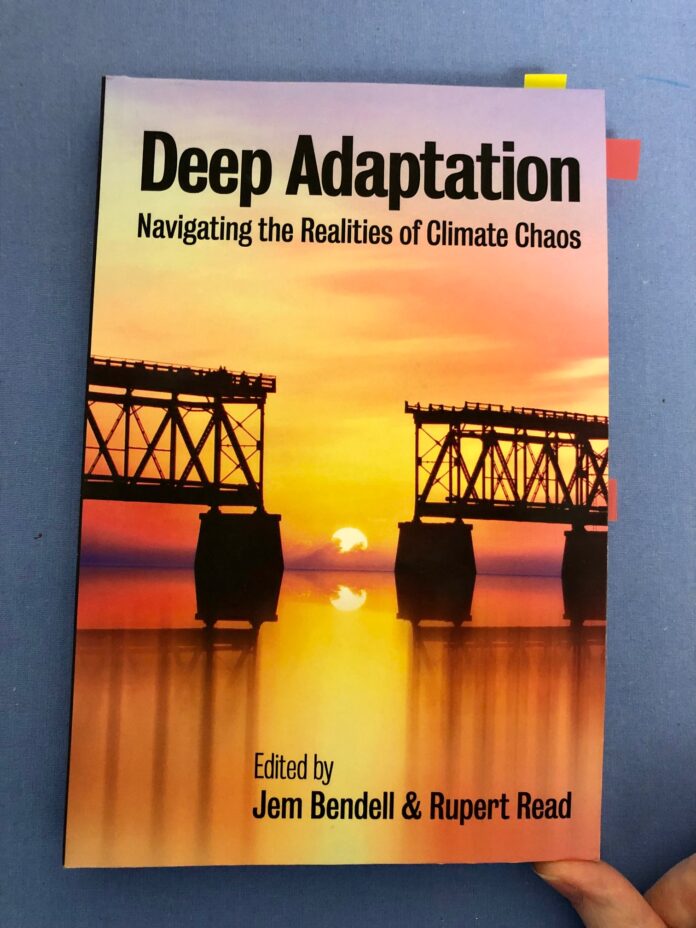
And then there are those who tend to believe that whatever we might do to mitigate climate change is too little too late and humanity is facing a threat to our civilization and perhaps our very existence. Some people are admit to feeling climate anxiety and fears of loss, suffering, death and the well-being of our children. How does one cope with such anxiety? A British professor of sustainability leadership (Jem Bendell) has developed a concept called Deep Adaptation which has grown into a social movement. Bendell believes that the disruptions caused by climate change will continue to intensify and ultimately will lead to an “unraveling of western industrial lifestyles”. While government has focused on mitigating climate change effects, Bendell is fixated on the need for strong adaptation measures. 

Bendell posits three Deep Adaptation approaches: resilience, “what are the valued norms and behaviours that human societies will wish to maintain as they seek to survive?”; relinquishment, “letting go of certain assets, behaviors and beliefs, where retaining them could make matters worse”; and restoration, “rediscovering attitudes and approaches to life and organization that our hydrocarbon-fuelled civilization eroded.”[as quoted in Wikipedia]. Some critics say that the underlying premises of Deep Adaptation are not justified by science. Others value that Deep Adaptation “provides a trusted compassionate space for sharing of grief  and loss”. 

The physical effects of climate change will continue to be felt mainly at the community level. But the anxiety and mental health effects will be felt mostly at the individual and family level. So, as we stumble along ways to mitigate climate change and to adapt to the physical changes it will bring, whether or not we embrace Deep Adaptation, we must give equal emphasis to helping individuals, families and communities come together to deal with the inner feelings that climate change has thrust on them. Are we prepared for that challenge?

Film Premiere: The People versus David and Collet Stephan

The People versus David and Collet Stephan is premiering on Denman Island this Thursday, April 4th.  The director, Todd Harris will be attending the presentation and will be happy to answer questions at the end of the screening in the Denman Community Hall.

               The film tells the story of David and Collet, who were charged with failure to provide the necessities of life after their son, Ezekiel died mysteriously  at the Children’s Hospital in Alberta. This film reveals the truth behind the nine-year attack on the Stephen’s family. 

               It would be great to have a large turnout for this last-minute event. Entrance will be by donation

Banana-date-coconut muffins

Banana-date-coconut muffins

Conflict is always around us, a part of life, and a challenge for us to meet and work with in creative ways. Lately though, there seems to be a lot of conflict amongst people on boards and in various organizations on our two islands, as well as the ubiquitous interpersonal struggles we all experience. My sense is that because we are a microcosm for what is going on in the larger global sphere, we’re acting out our anxiety & uncertainty on the local level. We need to keep this possibility in mind, that our entire world is interconnected and a “ripple” in one arena has unanticipated effects in another. So, back to the importance of nourishing, replenishing and taking care of ourselves during these intense times! Otherwise we can’t show up to deal with difficult issues, for focusing on what matters; we become emotionally and spiritually depleted.

Sometimes we just need to simplify, let go of what is not important, attend to what IS important in an integrative way, and be grateful that we have it as good as we do.

In that spirit, I offer another of my simple recipes for feel-good-food.

I like to bake things that can be eaten for breakfast, a snack or dessert, so that means

delicious but not too sweet, and things that taste like “real food”. Also, food that travels well for the ferry, the hike, the beach, the bike ride. So here is my recipe for Banana-date-coconut muffins, a favourite. They are like little power packets of nutrition and they are yummy. Makes 18-24 depending on what size you like them.

2-4 ripe bananas

3 ½ C organic whole wheat flour 1 ½ t. baking powder

1 t. salt

½  C butter

¼  C brown sugar

2 t. almond or vanilla extract 2-3 eggs

1 ½ C buttermilk

1 C (8) Palestinian dates

1 C coconut (coarse or finely shredded, your call)

1. Soften & then cream the butter with the sugar in one bowl. Add eggs & almond/vanilla extract. 2. Add buttermilk and mix ‘til all is smooth.

  1. Chop the dates & the bananas into smallish pieces; add them to dry ingredients, in a larger bowl.
  2. Gently mix just until it all comes together, and spoon into muffin cups.
  3. Bake @ 350 for 30 minutes or so, until golden brown on top and bottom. Cool on rack.

If (alas) you don’t have dates, you can use raisins, blueberries or dried cranberries.

If you don’t have buttermilk, you can use applesauce or even plain yoghurt, but I find buttermilk to be the best. I try to use all organic ingredients.

Enjoy! These muffins freeze really well too.