Gabriel Jeroschewitz, August 31st, 2026
Nobody Tells You Persephone Was a Willing Participant
I remained on the fractured mouth of a marble fountain in the tourist section of the underworld. A group of the newly dead was walking past Charon’s ticket booth. The smell of overpriced ambrosia-flavored gelato and sulfur filled the air. Somewhere, a lyre was tuned to a note that made even the stoic shade cringe. This was the afterlife, desperately attempting to be a theme park. And then there were the myths. The old, dusty tales, freshly updated with a dash of irony and gloss.
“Ladies and gentlemen,” I proclaimed, my voice bouncing off the crystal stalactites that drooped like chandeliers overhead. “Welcome to the Persephone Experience. Please keep your hands and feet in the chariot. What lies in the darkness inside oneself is very much real. It is fertile, and there is a complimentary pomegranate seed.”
There were accountants who looked tired, teenagers who seemed likely to rebel, and two philosophers decidedly missing their meditation retreat. They all murmured their agreement. I could see them thinking. If I’m going to be tortured for all eternity in this room, at least make it somewhat useful.
This story began not as a bard, but as a witness to the world. I had taken a microdose of psilocybin while reading both Foucault’s Discipline and Punish and Brave New World. Together, these two books ignited in me an understanding of myths not as pertaining to the gods in the myths, but rather as pertaining to how mythologies illustrate the common person’s navigation through the often bright and blinding expectations that are placed upon them (either by their mothers or by Instagram in the modern day).
While the earth opened beneath Persephone, she was not out harvesting daffodils in the meadow. No, Persephone had already begun the trench for herself. Her nails were covered with the dirt of her digging, and her hair was haloed with the sweat that had broken out from her digging such a trench. The bright sun over the hills of Olympus was the relentless spotlight of a director, constantly reminding Persephone who she was: daughter of the bright and nurturing mother also named Demeter.
“Mother,” Persephone said the next morning as she wiped mud from her cheek, “I think I need a little… darkness.”
The word persisted in the air, like a fig that had been half-eaten.
“How is it, sweetheart?” Demeter asked, surprised by the gravity in her daughter’s voice. “What darkness? The only darkness you need to know comes from a well‑behaved child after dinner – in the shadow of that.”
Persephone heard the howl of the abyss somewhere within her own bones. She recalled reading about the layers of the Earth. Beneath the crust that separated the earth from the world within was the heartbeat of the world. If she could find a tear in the earth’s crust… she could pass through. She had read this on a scroll behind the statue of Athena.
She dug.
There, first, was the obsidian. It shone with potential. There was the sound of chariot wheels in the stone – a wind of black horses rushing towards the horizon. The abyss was not to be explored or conquered. The abyss was a venue. She had purchased a ticket for the opening night.
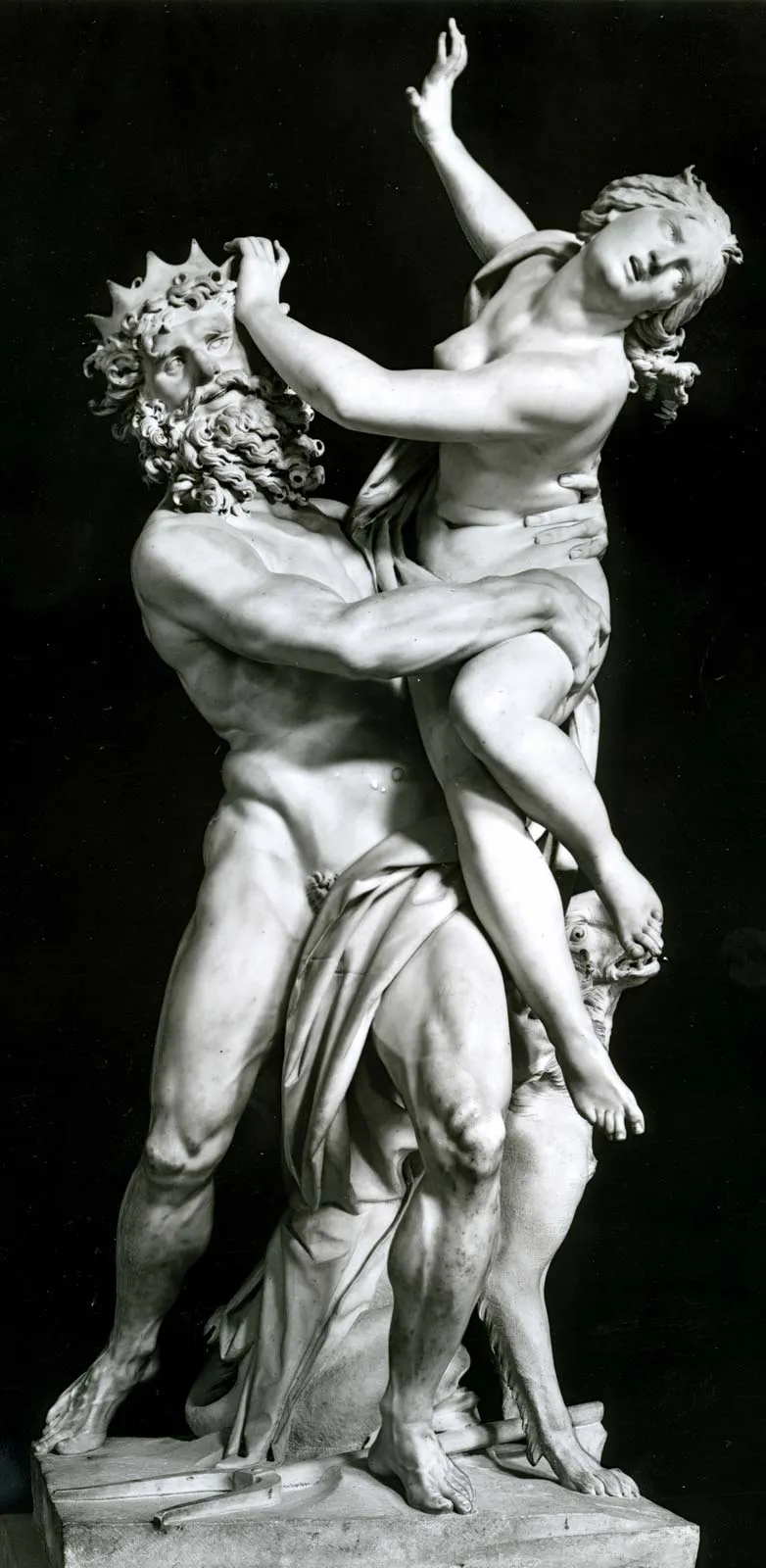
Finally, the earth cracked, and Hades stepped out of the abyss. His cloak extended like a tailor’s tape measure across the cave floor. He extended a hand before her. “You’ve been looking for me,” he said, his speech like the rumble of a basso continuo. “I’ve been looking for someone tired of being the sunshine.”
She took his hand. Not because she had to, but because she saw the same determination in his eyes that had compelled her to start digging. She smiled at him, and the flash of her teeth in the half-darkness was like a piece of black glass, and got into the chariot.
The ride was not as harsh as Persephone’s descent into the underworld, but there were definitely elements of a tour through the beautiful parts of the underworld. Singing rivers, fields of black roses that only opened to the whisper, and a cave full of jokes that she and Hades had apparently shared many years before. Hades was kind enough to give Persephone a pomegranate so red it seemed a protest against the rule of daytime.
She did not eat the seeds because she was duped. Rather, she consumed them because of the significance of each individual seed. The rich red of the juice stained her lips as a mark of significance. For that instant, the unbearable intensity of being daughter to mother broke and gave way to a red that contained both the intensity and the light within the same spectrum.
Though my sight was clear, I observed some tourists shifting in their seats at the notion of a goddess embracing darkness, rather than the self-help mantras they appear to recite when visiting a place like this. So if Persephone embraced the dark, what does that say about resistance to adversity?
“The myth says that Persephone spends half the year up in the sunlight and half the year down with Hades. The symmetry of the myth suggests that this is not a myth about Persephone being punished, nor about the goddess’s cycles through time, but about the cycles of life. Persephone is the equinox made flesh, the solstice made in lake, limb, and soul. She danced in the turning of the world because she knew that to know herself as light she must journey into the dark.”
“Which means I guess we each dig for our own cracks?” asked the woman in the front, wearing her glasses on her nose.
“Something like that,” I said, grinning at the sign of a great shroom‑induced epiphany. “Try regarding it as a spiritual DIY. Find a place where the world is maternal, shiny and polished, dig until you come across something that vibrates to you, and then invite the wild‑winded chariot for tea. There’s a chance that the darkness out there isn’t a monster to be devoured, but rather a collaborator in creating a more honest version of ourselves.”
There was a chuckle around the room. A release of conflicting emotions. Even the philosophers took a breath and contemplated the possibility of controlling this power over us. Or at least to get our hands dirty in creating it ourselves.
The tour then continued to the next location. A group of teenagers was attempting to take a selfie with the statue of Cerberus. Cerberus was the three-headed dog wearing a party hat and a sign that said “Good Boy.” The teenagers were laughing, and the sound echoed off the walls of the cavern. Below, the caverns continued to rumble and hum.
Thinking of Persephone brought me back again. Not only as the victim taken by Hades so passively, but also as the one who took the story seriously. Persephone took the beauty of spring, the growth of her mother’s fields, the goddess of agriculture. She used her inquisitiveness and her spade to carve out a space for herself as both daughter and goddess, shade and illumination, daughter and queen.
The story was never about abduction but about invitation. Acts of radical self-creation need the voice: “Yes, I’ll dig. Yes, I’ll descend. Yes, I’ll eat the forbidden fruit; only then can I understand the taste of my own light.”
I turned back to the fountain. Sunlight pierced a crack in the ceiling of the cavern and fell across the stones below in the shape of a rainbow. I lifted an imaginary glass of fermented pomegranate juice to Persephone, who had also discovered her darkness, and to everyone who discovered how to use a shovel during our midlife years.
“To Persephone,” I said, to no specific person, “grant us our cracks and keep our chariots sufficiently wild-winded to take us home.”
My words seemed to travel through the cavern into the mirth that came from the underworld. The underworld was no place of punishment for me. Rather, it was a comedy club with a recurring punchline: you are both the jester and the joke, and the only way to earn the laughter is to keep digging.