Gabriel Jeroschewitz, October 23rd, 2026 Inspired by James Joyce and short stories, don’t pay the mortgage or keep the trees from being cut down by greedy developers?
The Wind Between North and East 2
I saw the wind on a Tuesday; days in Clare are much like Mondays, but less likely to rain, and more like someone’s sheep have finally decided the fence isn’t a fence. The wind came down from the Bog of Allen with a hiss through the trees. Such thin air came to me, but before it ever reached my coat it rubbed along the inside of my sides. I spoke to myself half to myself and half to the hedge still clinging to the very edge of Mrs. O’Leary’s Garden. My coat, the tweed coat passed down three generations, now flew around me like an injured albatross. The threads were worn, and each subsequent gust seemed to make the garment whisper.
The grass was notably damp with dew—each blade made me shiver underfoot. They looked like tiny spears held taut. The daisies, those yellow blooms always pushing through the grazing cattle’s footprints, were all slightly bent. They looked as though they were waiting for something even worse than the farmer’s curse. A sting came behind one of my eyes, and a hot, salty tear appeared out of nowhere on my cheek, spreading onto the grass and directly into the very spears just inspected.
“O luckless youth to sorrow born / Shun son of poverty,” I said half laughing and half crying. The pastoral seems reduced to a joke. The landscape seems to be playing some game — an endless game of ‘who can put out the most miserable sigh’. The prize seems to be a lifetime spent having one’s memories trampled in the name of so-called ‘progress’.
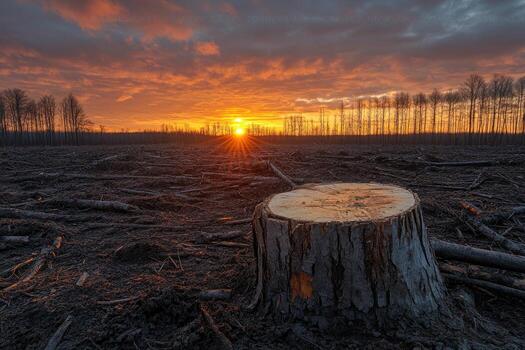
I stood in what had once been a common field, a green spot that saw hare-chasing adventures, May Day celebrations, and, from time to time, an errant piper trying to beat the wind with his tin whistle. The field was now scarred, deep furrows marked where big machinery had bitten into the ground. Mounds of broken stone looked much like ancient cairns. Then there were the saplings, all reduced to toothpicks, standing like a dead man’s finger pointing skyward.
“The land and the meadows are no more, the pastures too are gone,” I said, trying to keep my voice steady so I wouldn’t alarm the single crow on the oxidized part of the Pirelli Michelin tractor tire. The crow looked at me as though a tax inspector surveyed a man who’d finally gone bust on a napkin. Its eyes were black beads of judgment. I could nearly hear it thinking, “Well lad, you’ve certainly managed to turn a perfect idyll into the setting for a gothic novel.”
I kept on my way, but the loam in my Brunello Cucinelli boots seemed quite alive. I could smell both decaying vegetation and newly cut timber. The smell brought to mind my grandfather’s family stories of some ‘black mass’ rising from the bogs on a full moon night, with low whiskey. According to the stories — never trust the north-east wind. The wind bears the sighs of the displaced and the chuckles of those who profit from them.
A sharp gust tore through the gaunt remains of a hedge, sending a shower of dry leaves flying like confused moths. For a moment, I saw something that made my stomach flip, not in a bad way, but with that queasy feeling you get when slapstick goes wrong. The leaves eventually reassembled into the shape of a weeping woman, whose tears became tiny fish that flopped about before vanishing. The wind took the image of the weeping woman, leaving only the distant sound of an accordion playing a very sad version of ‘The Foggy Dew’, as if ‘The Foggy Dew’ were played on a broken concertina.
I then laughed, a short, sharp sound that made a rabbit leap into a zig-zag across the bare ground. “O hear my sorrows for my stream / You’ll find an equal there,” I said into emptiness, wishing the wind would answer. The wind came back with a swish of stalks and a moan of timber. This was after a lifetime of being blamed for every failed love, every ill-advised fight in a public bar that ended over the last slice of soda bread, every failed crop, and every lost love.
Further into the landscape, things took on an even more absurd turn. The last remnants of the area’s old trees and hawthorns—survivors of hundreds of years of wind and shepherd curses—stood as sentinels, mantled in lichen mourning. The wind had distorted their branches into crooked shapes. The branches formed natural arches, each looking disturbingly like the ribs of some giant leviathan buried deep in the ground. Passing through such an arch meant the sky could no longer be seen, but rather some scene in flux. Faceless men carried briefcases filled with little flames. The men marched in perfect unison across the field, ignoring the weeping daisies below. Their faces were as smooth as stone (though occasionally a twitch hinted at a contained smile).
“These are the fools of mine and thee / these all here ruined and planned,” I said with a ghastly chuckle, realizing this was no hallucination but a grotesque reflection of the men who’d ordered the woods felled. The briefcases didn’t contain contracts, but the souls of the trees they’d felled. Each spirit was a tiny shimmering ember, meaning whenever one briefcase touched another, the embers popped and crackled. The briefcases gave off no heat, only dark shadows—dancing like caricatures on a fairground wall.
I approached the stubborn willow that declined to give up its knowledge. The willow had been split down the middle, both halves leaning away from one another as if embarrassed. Thick, syrupy sap oozed from the wound, carrying a peculiar smell. I can almost smell elderflower and regret. Dipping my finger into the sap gave me a bittersweet taste and an immediate warmth in my chest. It seemed like tasting the first dram of whiskey after a long cold walk. At this point, the willow spoke to me, not with words but with feelings. I felt memories of children swinging from this very willow. I felt memories of couples carving their names into the willow. I felt memories of old men sitting below the willow, telling stories of the Great Famine while the wind outside sang tunes of loss.
“Although their aching hands did wield / The axe that gave the blow / It was not them that owned this field / Nor plant its overthrow,” I said out loud. The foolishness of what I’d just said sank in. Those who truly owned the land were certainly not the lumberjacks nor permit holders. The wind owned the land — the gust that carried the seeds of those very trees across the oceans. The wind which sang to seedlings until sleep. The wind, denied its due, exacted its revenge in a generalized melancholy that had penetrated every tear, every blade of grass, and every forced smile.
When the sun finally set over the land, the horizon began to bleed that pale orange. The sun looked worn out after the day’s events and sank behind a hill that slumped up in front of me like a grave. The shadows seemed to merge, and the broken field turned into an inkblot of dark humor and desolation. I became an observer of my own absurdity, and an odd lightness took hold of me. This is how it feels after a good long laugh until one’s lungs ache. But in this case, the giggle carried the knowledge that the joke was on everyone, and the punchline was part of the language of uprooted roots and silent, sobbing winds.
I laid me down upon all this whilst the wind within my coat seemed that of an impatient child looking for a story. While I walked away, though, I could catch the faintest reverberation of my own voice uttering the very first lines of the poem which had started such very macabre activity:
The wind between the north and east
Blew every chill and cold …
Somewhere outside beyond the reach of human ears, though the wind appeared to chuckle. It was a low, gravelly sound, like “Enjoy the joke, mortal.” The field is truly gone, but the joke, the joke, is forever.
I tipped my hat to the emptiness before giving a rather serious nod to the crow still perched on the aged part of the tractor tire. I then headed to the nearest pub, where I was told there would be a warm pint and perhaps an even better argument about whether the wind, or just a convenient excuse, was truly to blame. I think in such a sphere, where land can be wiped out with a wave of a hand and a smile, the best we have is a good, dry laugh and a very sturdy pair of boots, if you ask me.
The End