Ukraine: Yet Another War Based on Lies by Keith Porteous
The greatest lie of the Ukraine war is not the lie that Ukraine can still win, propagated by PM Mark Carney and the European leaders, but that this war was ever primarily about the well being of the Ukrainian people. The majority of people in Europe do not support the NATO proxy war in Ukraine.
For more than three decades following the Cold War, influential Western strategists viewed Ukraine as the decisive geopolitical battleground of the twenty-first century, a central piece in the vision to retain U.S. hegemony in a unipolar geopolitical world. As former U.S. National Security Advisor Zbigniew Brzezinski argued in 1997’s The Grand Chessboard, Russia without Ukraine would be fundamentally diminished as a Eurasian power. Ukraine was not merely another country, it was the geopolitical prize.
The objective was never openly described as the destruction of Russia. Instead, it was presented as the expansion of security and the rules-based international order, the same idea that PM Mark Carney described as a “pleasant fiction.” Beneath the rhetoric lay a strategic project that sought to extend the U.S./NATO influence ever closer to Russia’s borders while reducing Moscow’s capacity to re-emerge as an independent geopolitical pole. The fundamental assumptions underlying U.S./NATO policy have failed.
NATO expansion, over the repeated dismissal of Russian objections, and the transformation of Ukraine into a frontline state and Western proxy between East and West is not an accident or a mistake, it is a Russophobic policy certain to end in disaster. No Russian government, whether democratic or authoritarian, would passively accept the absorption of Ukraine into a U.S./NATO military sphere of influence. Warnings were treated as heresy by Western governments intoxicated by their own Cold War triumphalism.
The war was intended to weaken Russia, but instead Ukraine has suffered devastation on a historic scale while Russia remains intact. The war was intended to reinforce Western dominance, but instead it has accelerated global realignment away from it. The war was intended to demonstrate the effectiveness of economic sanctions, but instead it has revealed their limits. The war was intended to prove the superiority of the U.S./NATO alliance, but instead it exposed an imperialist project that is collapsing.
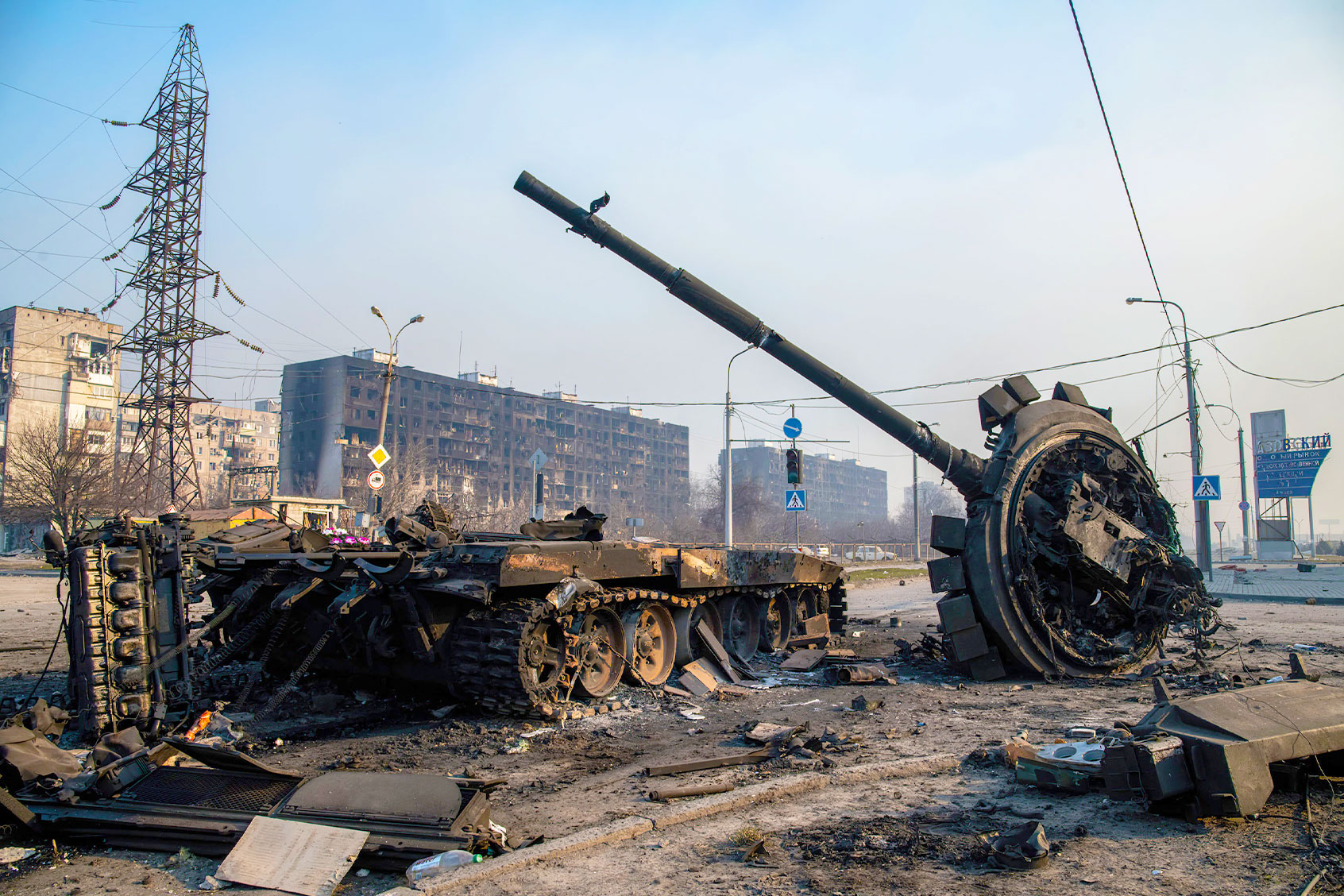
Yet despite these realities, Western governments continue to pursue the same failed course. Every military setback is followed by promises of eventual victory. Every failed prediction is replaced with a new prediction, while every escalation is presented as a solution to the failures of previous escalations. This logic resembles a drunken gambler doubling down after every loss. The tragedy is that Ukraine has become the table upon which the game is being played, with millions displaced, and much of Ukraine’s infrastructure shattered.
A generation of young Ukrainians has been sacrificed in a war that is an unwinnable war of attrition rather than the pathway to a U.S./NATO “victory.” Yet Western politicians, safely removed from the battlefield, continue to speak of perseverance and sacrifice, the sacrifice of other people’s sons and other people’s futures, while Ukraine is run by corrupt far-right and undemocratic elements hellbent on extracting more financial and military support from the West, while their own people do not support this war.
Meanwhile, uncomfortable questions remain carefully quarantined from public debate. Ukraine’s entrenched corruption did not disappear when the war began. Nor did the ethnonationalist and far-right movements that Western media outlets regularly discussed before 2022 and then abruptly treated as an awkward subject best left unexplored. These realities define Ukraine, but do not disappear simply because they complicate a preferred narrative. Currently, Ukrainians live under martial law with no press or other basic freedoms.
Convinced of their superiority and righteousness, and insulated from the consequences of their decisions, Western leaders have pursued a strategy that transformed Ukraine into the frontline of a geopolitical struggle and then expressed surprise when that struggle has produced catastrophe. Polls show the leaders of the U.K., France, and Germany holding well below 30% support of their citizens, with British Prime Minister Keir Starmer now forced to resign as a result.
As we move up the military escalation ladder, the world is now facing the possibility of a direct conflict between the world’s largest nuclear powers. History may judge the destruction of Ukraine not as an unavoidable tragedy, but as the predictable outcome of a project that mistook strategic ambition for wisdom, and propaganda for reality.