Russophobia and the Jungian Shadow by Keith Porteous
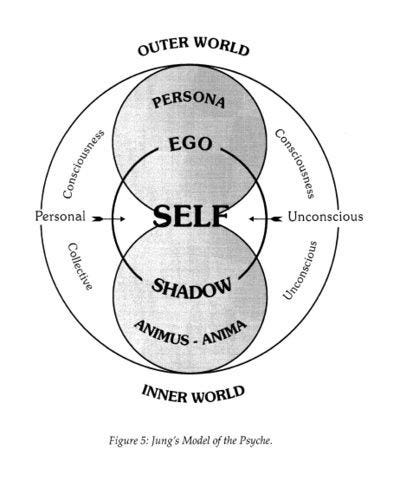
The Swiss psychiatrist Carl Jung argued that individuals often project their “shadow”, those aspects of themselves they find difficult to acknowledge, onto others. Rather than confronting their own aggression, fear, or desire for power, people may perceive these qualities as existing primarily in an external enemy. Jung believed this mechanism operates not only in individuals but also within groups and nations, where collective identities can be shaped through the projection of unwanted behavioural traits.
Viewed through this Jungian framework, contemporary Russophobia reflects more than a response to Russia’s policies alone. It also illustrates how political communities construct moral identities by projecting their own historical contradictions onto geopolitical rivals. This interpretation does not deny that states commit aggression or pursue imperial ambitions. Instead, it suggests that the language used to describe adversaries may also reveal unresolved truths within the societies making those accusations.
Throughout modern history, Western powers have participated in colonial expansion, military interventions, and regime-change operations across multiple continents. The United States and its allies have violently intervened with military aggression in numerous countries since the Second World War. A Jungian analysis would suggest that Western societies find it psychologically easier to locate imperialism entirely outside themselves than to confront their own behaviours, as in the current propaganda about the Russian leadership.
Accusations that Russia is inherently expansionist is such an example of projection. Jung emphasized that projections frequently attach themselves to “mirrored” characteristics of another person. Projection exaggerates or selectively emphasizes those characteristics while denying the same tendencies within oneself. Thus, a nation may perceive threatening behaviour from another state while hypocritically overlooking violent patterns in its own conduct. This is currently the basis for Russophobic propaganda.
This dynamic is reinforced by political narratives that divide the world into forces of good and evil. Jung warned against moral absolutism because it enables nations to identify with virtue while assigning vice exclusively to their opponents. Such polarization reduces the capacity for self-criticism and encourages escalating conflict. If one side claims itself to be purely defensive and the other as inherently aggressive, compromise becomes impossible because acknowledging complexity threatens the individual or nation’s moral identity.
Russophobia, from this perspective, may therefore function as more than prejudice against Russia or Russians. It can be understood as part of a broader psychological process in which fear, historical guilt, and anxieties about power are externalized. Political rhetoric portraying Russia as the tyrannical embodiment of violence or imperialism serves to reinforce a positive self-image for Western nations while reducing public attention to their own authoritarian behaviours and military interventions.
The value of Jung’s theory lies not in assigning blame but in encouraging self-reflection. Such awareness does not require moral equivalence between all actions. Instead, it requires intellectual honesty and a willingness to recognize that every political nation possesses a shadow. Rather than assuming that geopolitical conflicts arise solely from the inherent aggression of one side, this perspective invites examination of how historical memory, identity, fear, and projection shape public perceptions.
Ultimately, the Jungian concept of the shadow encourages a deeper understanding of international politics. It reminds us that psychological mechanisms influence collective identities as much as strategic interests do. Recognizing projection does not resolve geopolitical disputes, but it may reduce the tendency to transform political rivals into embodiments of absolute evil. Such recognition is a prerequisite for dialogue, self-criticism, and a more nuanced engagement with the complexities of global affairs.