Gabriel Jeroschewitz June 3rd, 2026
The Salty Dog. A Fishy Story
Arthur sat in the corner of “The Salty Dog,” a pub whose walls were adorned with the brown nicotine and regret of the North Sea’s sailors. Before him was a plate of fish and chips, the vinegar and salt tangs clashing with the newspaper lining the basket. Across from him sat Brother Koji, a man who had spent forty years in a monastery in Kyoto only to realize that the Absolute was manifested in a deep-fryer. Koji stared into his bowl of fish soup, dressed in a pair of vintage four-wheeled roller skates.
“Have you eaten your meal, Koji?” Arthur asked, nudging him with a limp chip.
“I have eaten,” Koji replied softly. “But I am still starving. To be full is to deny my hunger. To be empty is to deny the banquet that the Absolute presented to me. Therefore, I am both full and starving.” He gestured to the plastic vinegar bottle that sat beside Arthur’s plate.
Arthur sighed. He was fifty-two years old and had recently endured another failed marriage and an accounting error that had resulted in another quarter’s loss for his company. He wanted to escape to a place where time stood still – or better yet, stopped altogether – and he sought the Zen lifestyle from Brother Koji.
“Wash your bowl,” Arthur said, mimicking the ancient Zen master Joshu.
Koji’s laughter rang through the pub. “If I wash my bowl, I erase the history of my fish. If I do not wash my bowl, I succumb to the decay of my ego. The Absolute is the grease in the deep-fryer, Arthur. The grease is the filth and the purity that exists in the deep-fryer. It is the contradiction of existence, and it manifests in the grease in my spoon.”
With a creak and a clatter, Koji began to skate on his vintage skates. His outfit contrasted with the absurd act of skating in such a dark and salt-affected corner of the pub.
“You’re obsessed with finding the pattern in all of this, aren’t you?” Arthur asked, stabbing at a piece of cod with a fork.
“It amuses me how much you two are alike,” Koji said, eyes wandering to the ceiling. “You are wearing these skates to avoid the ground under your feet with your meals, just as I wear these skates to avoid the ground of your pub. You seek to escape from the same thing that I do.”
“And what,” Koji challenged, looking back at Arthur with a smirk, “is that thing that we both seek to avoid?”
“The fact that we are not the authors of our own lives,” Arthur noted.
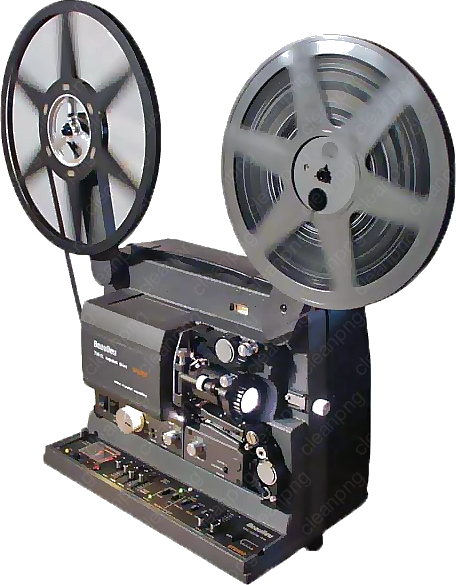
“We are the reels in the film projector of our lives, Brother Koji. We are the film strip of our existence—the moment the lens focuses on us is the moment the light of our existence consumes us. And then we are gone, swallowed whole by the dark bin of ‘what happened’ in our lives.”
Koji stood up straight and began to skate in a tight circle around the small pub table. The man in the faded robe and vintage roller skates was absurd in that corner of the pub at that moment in time. A few patrons glanced over and looked away from the holy man on wheels.
“If the Absolute manifests in dialetheism,” Koji shouted while skidding around the table, “then the contradiction manifests as the truth! I am skating but standing in place. I am eating but feeling hollow. The pattern does not define us, Arthur! Our belief that the pattern of our lives should be ‘fixed’ is the problem!”
Arthur could contain his dark humour. The absurdity of the situation—the holy man in roller skates circling the table—was the only honest thought Arthur had seen in years—the “extra” thought in a life defined by Zen.
“You’re going to fall,” Arthur noted.
“I have fallen,” Koji cried out sharply while skating on his skates. “I have been falling in this life since my birth. It is the only way that I have ever moved through this existence with purpose.”
The holy man suddenly hit a patch of spilled ale on the wooden floor. His legs shot out from under him as he crashed into the booth, his bowl of fish soup flying into the air before splattering onto Arthur’s plate.
Silence settled in the pub like a fog. The smell of vinegar was overpowering.
Koji lay face down on the floor. His legs continued to twitch within the vintage skates as his head turned to one side in profound enlightenment. He looked up at the ceiling of the pub, then to Arthur.
“Did you see that?” Koji asked in a whisper of awe.
“The bowl was the contradiction,” he murmured. “The soup was the Absolute. The table became the reality of my existence.”
Arthur looked at the remains of his meal. The salt had transformed the fish into a gray mass. The pattern of his existence began to take shape before him—as both a problem and a solution. He could not fix it. He could not change the pattern of his existence. He was both the man eating the meal as well as the man whose meal had been destroyed. He was both holy and a joke.
Joshu would have made Brother Koji finish the fish.
Koji struggled to stand on his skates. He did not unstrap them from his feet. “The meal is over when the film breaks,” he said, looking down at his plate. “The film is always breaking.”
Arthur chuckled. “You’re drunk.”
“I am,” Koji said, smiling sadly. “But I am also perfectly sober—in this very crowded space of existence.”
Arthur leaned back in his booth. The moth outside swayed against the overhead dim bulb. He thought of the pattern of his existence—the times he had sabotaged his own happiness and denied the life he had authored for himself. He had been waiting for the end of his existence for years—yet there was no backstage pass.
He was the soup on the table of his existence.
He was the man who had eaten too much.
He was both the author and the character of his existence. He was the problem and the solution to the contradictions in his life.
In that dying pub in the corner of town, Arthur realized he was okay with being the man that he was.
“Wash the bowl, Koji,” he said to the bartender.
“I can’t,” Koji said, staring at his plate. “I’m wearing the skates.”
“Then we’ll leave it,” Arthur said. “No need for anything extra.”
The two sat together in the dark of the dying pub. The film would play on in the mind of the holy man—and in the dying one of Arthur—but for the first time in his life, Arthur did not wish to end it.
He watched the film of his existence play out on the screen of his mind—frame by flickering frame—until the light in the pub went out altogether.