Gabriel Jeroschewitz, June 30th, 2026, inspired by Inappropriate Jazz. And Vessie, my girlfriend, in the summer of 1969
The Storm in the Dining Room
The chandeliers at the Whitmore Estate dazzled like frozen waterfalls—and the ballroom was filled with the typical kind of people who speak reverently of wine—and in whispers—of others. I knew I was hired for the evening as additional staffing for the gala celebrating Gerald Whitmore’s thirty-year reign as CEO of Whitmore Pharmaceuticals. It was supposed to be a simple job—the kind of assignment that required circulating with a tray of champagne, smiling when necessary, and pretending not to hear any discussions regarding company reports or summer homes in the Hamptons.
Then I saw her.
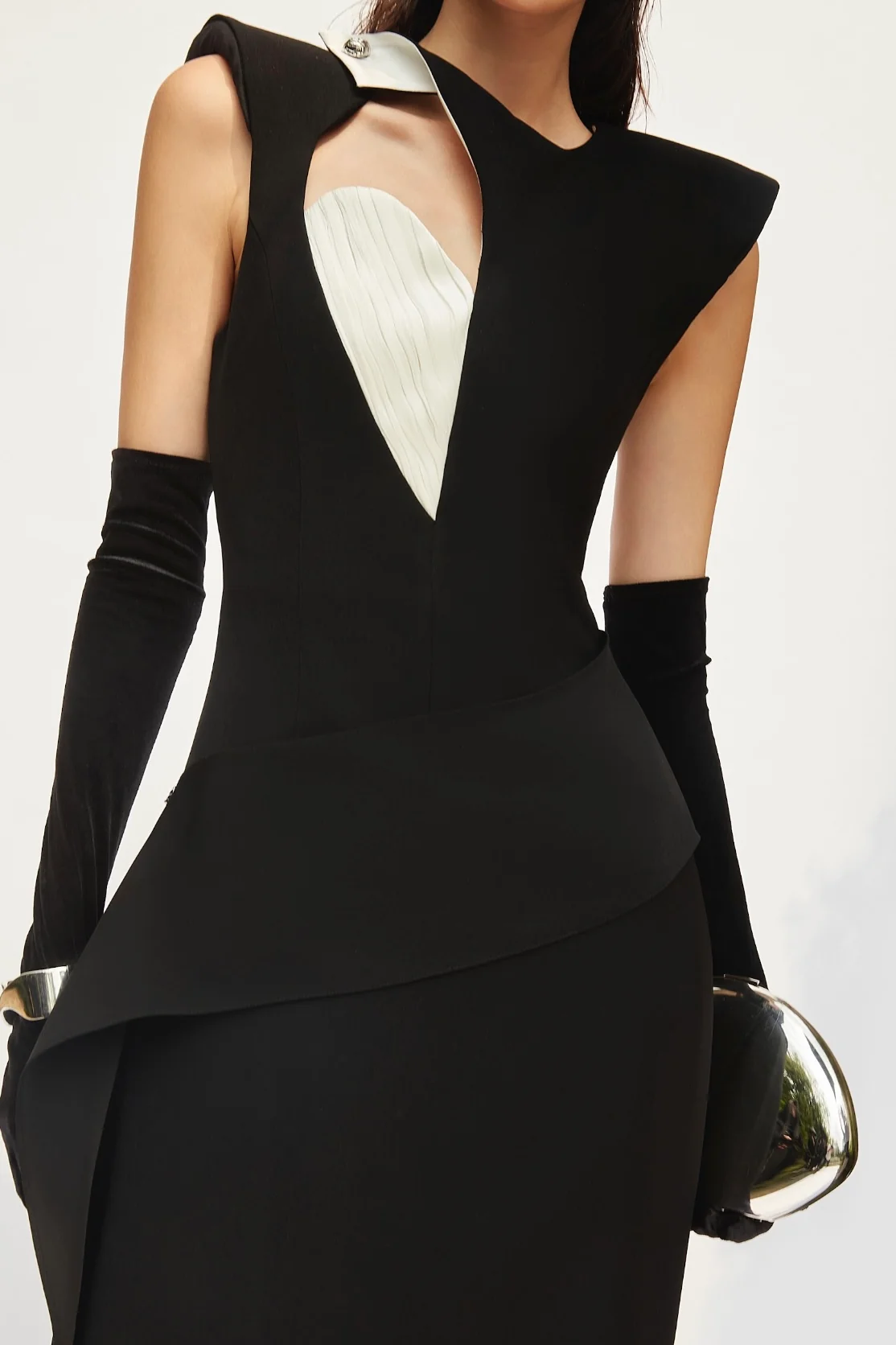
She walked into the ballroom like a disruption in the fabric of polite society—yet precisely what she was. The gown was black and architectural, with a design that did not ask for attention—but commanded it. Her legs—admitting this at my age—were extraordinary: long and graceful in a way that parted the crowd like a ship through water. Her face belonged in a museum alongside beauty born into worlds that made people forget the price of admission.
But it was her eyes—brown, sharp, and utterly unamused—that stopped me.
“Excuse me,” said a voice at my elbow. I looked to see Margaret Whitmore—the wife of Gerald—clutching her flute as though it were a weapon. She wore a smile that did not reach her eyes. “You can put that tray down for a moment,” she said. “I need you to witness something.”
I looked back toward the woman in black who had come to a halt just off the dance floor—surveying the room like a general of the battlefield.
“That’s Vanessa Reyes,” Margaret continued—with the particular venom of someone who had long since run out of polite conversation. “Gerald’s new head of research. Brilliant—Harvard Medical—pedigree with a publication in The Lancet before she turned thirty.” She took another sip of champagne. “Also…apparently incapable of putting on something that does not appear to have been stolen from a funeral.”
I didn’t respond—but was too busy watching the way two men in expensive suits approached Vanessa.
The taller figure was Gerald—by resemblance, if I had to guess. The shorter man broke into a loud, confident laugh—indicating he saw himself as very funny in that moment.
Vanessa didn’t change expression. Whatever she said caused the shorter man’s smile to falter. Gerald finally laid a hand upon her arm—a friendly gesture perhaps—but more of a warning.
“Watch,” Margaret said—with something close to satisfaction in her voice. “Gerald does not enjoy being contradicted—especially not by someone who strikes people like that.”
I should have looked away—but there was no easy alternative to pretending I did not see what happened next.
There are moments in life when witnessing events demands attention—an occurrence like this being one of them.
Gerald finally removed his hand. He said something sharp—yet distinct above the party music and conversations. Vanessa’s jaw set—and her chest rose and fell—physical signs of someone deliberately taking a breath to maintain composure.
Then she laughed.
Not politely—no more deferential than the alternatives. The laugh suggested: did you say that to me?
The exchange lasted perhaps two minutes—nothing unusual between three people at a party. But I saw how Vanessa straightened up—felt the way she tilted her head as if considering a particularly stupid worm. The shorter man had stepped away, confidence clearly deflated. Gerald’s expression altered from paternal concern to genuine irritation.
Vanessa turned—and walked away—her heels making a sound like a closing door against the marble floor.
I eventually found her on the terrace—alone—with her gaze directed toward the garden and the soft landscape lights.
The air was cool, and Vanessa had wrapped herself in an attempt to show strength—something wildly at odds with the fierce energy within the ballroom.
“They’re staring, aren’t they?” she said—not turning around. “The whole ballroom talking about the ice queen who does not know where she fits in.”
I didn’t bother denying it. “You’re not what they expected.”
“Expected?” She looked at me for the first time—and in the soft illumination she looked younger—tired. “They expected a face suited to such a party—and someone whose smile adorned others’ jokes. As soon as I opened my mouth to reveal a brain, something happened, and I became a problem.” She laughed—but no humour found in the sound she emitted. “I saw Gerald’s face when I presented the research proposal. He looked at my legs—then my face—then my legs again—trying to find some balance between the two.”
“That’s their loss,” I said.
Vanessa raised an eyebrow. “Are you paid to say that?”
“Free of charge.
She finally managed a smile—a real one—brief and genuine. “You’re kind—or possibly drunk. Can’t tell which at these things.”
“Neither,” I said. “Just an observer.”
“Observer,” she repeated—as though tasting the words.
“You know what I’ve realized?” she said softly. “People like to look at me—like to look. But the moment I start talking, they feel uncomfortable. The moment I enter thinking mode, they take exception—to what I offer: a face and body they never asked for—and intelligence that some might see as an insult to their own expectations.”
I leaned against the railing beside her.
“So what do you do about it?”
Vanessa looked back toward the ballroom—the glittering crowd—with Gerald holding court over investors who nodded at every word he spoke.
“I keep talking—thinking. I refuse to shrink myself into these pretty boxes,” she said—her gaze finding mine. Something inside me told me to stand a little straighter.
“The funniest thing in the world,” she said, “is that I did not ask for any of this. I did not ask to become so very beautiful and brilliant—as well as garner stares and whispers from those who think my attention deserves such placement. I only ever sought to do my job—well. Apparently that is too much to ask.”
The remainder of the evening went by in a blur of champagne and small talk. Vanessa crossed the ballroom as if she understood the fight against currents stronger than any ocean. She knew when to laugh—yet avoided the typical questions. When Gerald approached again, she excused herself in the most graceful way possible.
When the evening wound down, I saw her standing near the entrance—accepting handshakes and hollow compliments—yet with the poise of someone who had done such things a thousand times before.
Gerald finally caught her arm last. I was close enough to hear the very final words between them: “You could have been pleasant, you know. This would have made things easier on yourself.”
Vanessa smiled—a smile capable of cutting glass—and replied just loudly enough for those nearby to hear: “Gerald, darling—I’m doing my fucking best. If that’s not enough, then perhaps you should find yourself a porcelain doll on a shelf somewhere. But I suspect even she’d get tired of your shit.”
She moved out into that night—her heels clicking consistently against the driveway—and her head held high.
I never saw her again.
But in the months afterward, I learned that she left Whitmore Pharmaceuticals to start her own research firm—the paper was groundbreaking and led to her emergence as a major figure in medical circles. She’d married someone who admired her sharpness rather than seeing it as threatening.
Sometimes—in the late-night hours—I think of that woman on the terrace. Of what was placed upon her shoulders—the world’s effort to make her small. And I think of what she said: “I keep talking. I keep thinking. I refuse to shrink.”
For in a world demanding women be quiet, small, decorative—the most radical act may be to become—and to remain—oneself.
And if they can’t handle the storm?
Well—as Vanessa would say—they can get the fuck out of the pit.