Home Blog Page 80

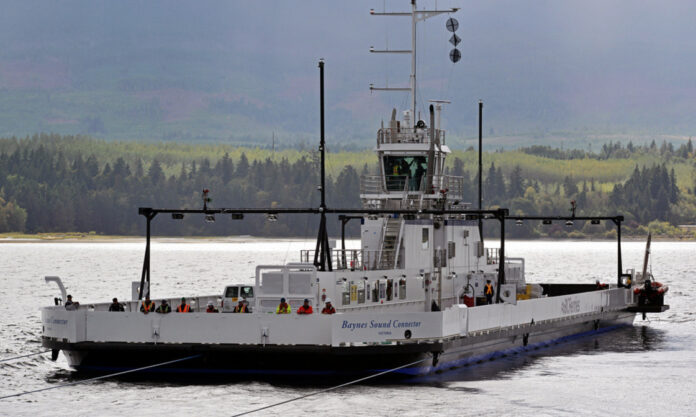
Call for Action – request audit of the BC Government’s administration of the cable ferry

Call for Action:  Please support my March 15 request to the Auditor General for an audit of the B.C. Government’s administration of the cable ferry by writing to bcauditor@bcauditor.com   The AG’s conclusions in his l999 audit of the fast ferries that the B.C. Government failed to provide adequate governance and risk management mirror those involving the cable ferry.  This audit, which the press characterized as the most scathing rebuke of government ever, triggered immediate action as the fast ferries are believed to be somewhere in Egypt now.  https://www.oag.bc.ca/a-review-of-the-fast-ferry-project-governance-and-risk-management/

________________________________________________________________________

Auditor General Appeal

I am appealing to the office of the Auditor General to examine the financial records of the B.C. Ferries Commissioner and Minister of Transportation with respect to their support of B.C. Ferries keeping an unsafe, unreliable, and costly Baynes Sound Connector cable ferry in iffy service.  Currently the B.C. Ombudsperson is conducting an investigation into the Commissioner’s failure to hold BCF accountable.   

The following gaps between BCF decision-making involving the cable ferry experiment in service and the evidence of the cost to taxpayers call also for an Auditor General investigation:

The gap between the anticipated cost of $230,000 annually for the Baynes Sound Connector operating expenses and the $5.9 million annual cost submitted in non published reports to the Commissioner.

The gap between BCF service reports indicating in 2023 that there were zero cancellations on Route 21 and evidence that the cable ferry is responsible for the most mechanical-related cancellations and repair costs in the fleet.  FOI data released from 2016 – 2019 includes thirty pages of cancellations that draw on tax dollars that are not recorded in posted annual reports to the Commissioner.

The 2023 Anderson Review, authorized by the Commissioner, lists the cable ferry’s unresolved design issues and much higher than anticipated operating costs. Each time the chaotic effect of lengthy cancellations is covered in the media, the corporation gaslights with claims that the cable ferry’s problems are being resolved and that its service record is the same as that of conventional vessels. Evidence of operating costs refute this view.   See media reports last May when a cable fell off on a windless day.  This service interruption created significant chaos, anguish and personal expenses for imany slanders. 

Although the Commissioner directed the corporation to report service interruptions transparently and promptly to all customers, the more than one month-long significant 30% reduction in service last December has yet to be acknowledged by either BCF or the Commissioner. Staff, moreover, were ordered to remain silent during this anxious period. Evidently this  reduction was due to BCF finally dealing with a sham fire suppression system. 

The gap between BCF’s claims that the cable ferry is safe and provides service on a par with conventional ferries and the evidence.  For example, a cable could fall off in winds higher than 39 knots and evidently is currently in service  without a  reliable fire suppression system that can be used when in operation. The threat of an electric vehicle catching fire remains a significant safety concern.  

https://www.bcferrycommission.ca/performance-reviews/

The gap between corporate claims that the mechanical problems were merely teething issues and the ongoing secrecy involving the frequent replacement of the cables. Replacing a set of cables is estimated at  $900M. The 2013 $250,000  estimate of anticipated annual operating expenses evidently did not include the regular replacement of the lead cable every three years or the numerous unanticipated full set replacements due to the cables bruising on the sea floor or other unanticipated mechanical reasons.  A retired master skipper estimated a few years ago that the cables had already been replaced sixteen times. Because they are replaced in secret and at night, the corporation will not provide emergency service to Route 21.  Early cable replacements were explained away as merely teething issues.  The fiscal evidence will show, however, that the teething issue is a chronic condition that costs taxpayers millions.

The gap between the laws regarding FOI requests and the Commissioner and Ministry of Transportation and Infrastructure’s pattern of ignoring requests. Currently there are thirty-four pending FOI requests to BCF for access to how much the cable ferry costs taxpayers.  The one recently released set of data from 2016 – 2019 was heavily redacted without an explanation, as required by the FOI Act. Neither the Commissioner nor Minister Farnworth has responded to my request, mailed over thirty days ago, for either a release of this data or an explanation as to why the data can’t be released. (BCF has apparently eliminated the department that formerly handled FOI requests.) 

The gap between how tax money provided to support the corporation’s legal directive to engage meaningfully with ferry dependent communities and evidence that this money supports a less expensive autocratic decision-making model. The report of the Denman/Hornby Ferry Advisory Committee chair on the recent “engagement” event provides supporting evidence that the corporation has failed to move beyond the gathering feedback and reporting stage of the engagement process to include community feedback in decision-making. (See on the Commissioner’s website re the failing grade the Ferry Advisory Committees gave BCF and the Commissioner’s prompt directive to BCF to improve community engagement by engaging more meaningfully with the FACs. 

 Instead of following her directive,  BCF axed the committees without any preliminary discussion by claiming their new digital engagement model would be more inclusive.The Commissioner has not responded to requests for an explanation re BCF’s violation of her directive.  Attached is the Denman/Hornby FAC chair’s report on the recent “engagement” events that provide evidence that the corporation is continuing to “engage” autocratically and not a more costly democratic model.

The gap between fiscal responsibility and irrational decision-making regarding BCF’s resolve to keep the cable ferry in service.  To date the corporation appears to be  considering stretching the cable ferry rather than replacing it.  BCF justifies this irrational costly decision on the fact that some money for stretching is included in the current budget. Given the increases in operating costs since 2020, the cost of stretching will be significantly more than anticipated.  In addition, since stretching involves installing a heavier engine and heavier cables, its current slow motion speed will be reduced even more and will necessitate using more fossil fuel. 

Denman and Hornby residents who have been stuck with unreliable ferry service for a decade  look forward to your response to this appeal for an  investigation into the BCF Commissioner and the Transportation Minister’s administrative practices with respect to the  Baynes Sound cable ferry.

Respectfully, 

Sharon Small,

On behalf of Denman and Hornby residents.

________________________________________________________________________________________________________________________________________________

March 29, 2025

Dear Honourable Transportation Minister Farnworth:

This follows up your February 26, 2025 response to my multiple requests for government action involving the unreliable Baynes Sound Connector.  Your response that you can only forward my appeals to CEO Jimenez confirms a continuing breakdown of governance that is strikingly similar to the conclusions drawn by the BC Auditor General in his 1999 A Review of the Fast Ferries: Governance and Risk Management.

The following similarities between BCF and government  actions involving the fast ferries and the Baynes Sound Connector confirm a need for stronger governance:

 Failure to thoroughly research feasibility:  in 2013 BCF and the provincial government rushed to pursue building a cable ferry based on the expectation of saving tax dollars.  Strong opposition from previous CEOs and government officials and from industry experts who predicted that a cable ferry could not do the job was ignored. BCF’s plans to stretch the cable ferry to accommodate increased need, indicate a continuing failure to thoroughly research feasibility.

 Failure to create a risk management plan:  rather than having a risk management plan in case the cable ferry experiment failed, BCF temporarily patches up unresolved mechanical  issues and then gaslights both government and the public that the problems are being resolved. BCF’s intent to stretch the vessel, characterized by industry experts as preposterous, suggests BCF has not created a risk management plan for stretching. 

Failure to thoroughly research operating costs: the cable ferry costs $5.9M annually to operate rather than the projected $230,000 that gained government approval for the vessel. This projected cost failed to include expenses for future capacity needs or anticipated and unanticipated cable replacements. Although BCF remains secretive about the expenses for and frequency of cable replacement, experts speculate that a set of three that are shipped from abroad costs $900,000 and that a few years ago the cables had been replaced sixteen times. Failure to anticipate increased costs for stretching and for heavier cables calls for thorough research.

Failure to release information: currently there are 34 pending FOI requests that BCF and the government have not released.  The released data for 2016- 2019 is confusing and so heavily redacted that the expenses for and the number of cable replacements are redacted. Withholding information is also indicated by the absence of evidence in annual cable ferry service reports to the Commissioner that contradicts the repeated claim that the vessel provides service on a par with conventional vessels.  In violation of a Commissioner directive, BCF refused to explain for over a month last December why  service was reduced on Route 21  or inform islanders when full service would resume. 

Failure to submit accurate records: the released FOI data for 2016 – 2019 includes thirty pages of cancellations due to mechanical breakdowns, but in reports to the Commissioner BCF under-reports cancellations and repeats claims about service that is contradicted by the evidence.  Although insiders claim that the cable ferry has the highest number of mechanical breakdowns and service reductions in the fleet, BCF recorded zero cancellations for Route 21 in the 2023 Annual Service Report to the Commissioner. 

Failure of governance:  the Commissioner and the Minister of Transportation publicly acknowledge their acceptance of BCF’s conflicting reports and claims.  Responses to nine years of evidence-based complaints from islanders, our FAC, and from industry experts have generally been silence or repeating BCF marketing slogans and claiming a lack of authority to compel BCF to replace the cable ferry. Evidently, the Commissioner has the legal authority to issue directives like dramatically improving collaboration with the Ferry Advisory Committees, but lacks enforcement authority.  Further, your support of BCF’s claim that a digital system will be more inclusive is not trusted by Islanders, the eighteen sacked FAC chairs who gave BCF a failing grade for meaningful engagement right before BCF sacked them, or those who reported that the February 2025 engagement events were disorganized and a waste of time.

Given this period of grave economic uncertainty, the staggering current and future expenses for transporting and replacing sets of steel cables from abroad each year, alone, should argue for improved governance and risk management planning.  Transportation Minister Farnworth, I ask again, “What can you do to improve governance so that Denman and Hornby islanders are assured safe and reliable ferry service on Route 21?”

Respectfully,

Sharon Small.

Phoenix Riting!

May 19th, 2025

There are so many important topics to talk about right now that I feel stuck choosing what to focus on. But sure, let’s talk about short-term rentals again, since it’s back up for discussion.
Yes, we should cap the number of permitted short-term vacation rentals.

We live on an island with limited resources, particularly water. That alone creates a natural limit on what our environment can support. If we don’t proactively manage our usage, we risk running out of the most essential resource for life. Nobody wants that. So we need to limit the number of vacation rentals.

We’re also seeing a rise in year-round residents, many of whom now work from home. A walk through Sandpiper, Whaling Station, or Galleon Beach in the winter makes this clear; lights are on, people are home. It’s a wonderful thing for our community, but it also adds pressure on our shared resources. At the same time, it’s understandable that people want to benefit from Hornby’s tradition of renting to visitors to help cover their mortgages.

But in the past, when there were fewer people, less was used. People lived closer to the land, with fewer luxuries. There were more ‘not to code’ homes: hand-built cabins, off-grid solutions, simple dwellings that made minimal demands on infrastructure. This allowed for flexibility and room for exceptions. But now, with a larger population and stricter regulations, that logic no longer applies. What once worked when only a few participated becomes unsustainable when everyone does it. That’s the tragedy of the commons.

Our current reality calls for a new approach, one that balances personal needs with collective responsibility so we don’t destroy the very things that make this island such a desirable place to live.

The trouble is, people used to come here for a rough, rugged, back-to-the-land lifestyle. Hand-built homes, water catchment systems, weekly baths, and gardens watered carefully, plant by plant. That way of life was once the norm. Now, million-dollar architect-designed homes are becoming more common. Regulations meant to ensure safety end up enforcing urban building standards that make community-led, affordable housing projects nearly impossible. No more cob houses, no more slowly built cabins with imperfect corners, no more artistic homes pieced together with salvaged materials.

Times have changed, and we have to change with them. We can mourn the old world, but we don’t get to have it back as it was. And these expensive dream homes are water hogs. Lush gardens filled with non-native flowers, ornamental trees, and thirsty landscaping draw heavily from our limited water supply. I’d love to see regulations that mandate native-only plantings and water-wise buildings. Maybe some already exist, and certainly there are builders and residents working on eco-conscious homes and catchment systems, but it’s not yet the norm. Most people pay lip service to water conservation without fully grasping what it really means.

We can’t dictate how people live in their homes, but we can regulate short-term rentals, which swell the population during the very months when water is scarcest. We can and should impose limits. In fact, it’s common for communities like ours to restrict short-term vacation rentals far more tightly than what’s being proposed here. Hornby has been the exception for a long time, but that can’t continue.

To minimize hardship, I’d like to see a path that allows those who’ve long relied on renting out their homes to continue doing so. But no new ones. That loophole needs to be closed. No more permits for new owners planning to finance homes they can’t afford through rentals that harm our island’s ecosystem.

Is that fair? It’s not about fair. It’s about what’s sustainable for our land, our water, and our future. It’s about recognizing the hard limits imposed by nature, and learning to live within them, together, as a community.

That’s what I think. What do you think? Email me at phoenixonhornby@gmail.com

Kugel would complain that time was behaving poorly.

Gabriel Jeroschewitz, May 4th, 2025.   Dedicated to my stepfather. And all the Humans and their families whose loved ones have had Dementia or Alzheimer’s 

Kugel would complain that time was behaving poorly.

The street was not so much a street as a misunderstanding between buildings. It curved upon itself without logic, presenting unexpected dead ends and sudden, pointless widenings where a few tired cobbles lay scattered like discarded teeth. Here lived people accustomed to the gentle, persistent pressure of the improbable nudging against the everyday. We, who watched from windows draped with lace yellowed by time rather than dust, had learned to see the world through a particular kind of lens, one that magnified the peculiar and allowed the merely ordinary to fade into a blurry background.

Our street, which had no name anyone bothered to remember consistently, housed, among other quiet marvels, the family of Mr. Kugel. Mr. Kugel, a man whose beard seemed less like hair and more like spun brass filings, was a retired watchmaker. But his retirement was not one of leisure; it was a deep, obsessive dive into the very fabric of time itself. He maintained a small, cluttered workshop at the back of his narrow house, its single window facing our row, often glowing late into the night with a weak oil lamp.

It began subtly. Mr. Kugel would complain that time was behaving poorly. It was, he insisted, unruly. Minutes lingered when they should have hurried. Hours vanished behind the back of the sun. He spoke of time not as a river, but as a capricious bird, prone to fluttering away or perching stubbornly where it wasn’t wanted. His initial efforts were conventional enough – regulating clocks, oiling gears. But these were merely skirmishes. He soon escalated to the full-blown war he waged daily against the temporal disorder he perceived.

His most ambitious project involved collecting what he termed “stray moments.” According to Mr. Kugel, time often detached itself from the general flow, particularly around old, neglected, or deeply thought-about objects. An antique armchair, for instance, could hold decades. A forgotten teacup might brim with a  Sunday afternoon from years past. He developed an intricate capture system, using nets woven from fine copper wire and jars of various sizes lined with velvet to cushion the fragile moments he trapped.

We, his neighbours, watched from our windows, initially with polite amusement, then with a growing, uneasy fascination. We would see Mr. Kugel stalking his small garden, net in hand, making sudden, awkward lunges at a particularly ancient rose bush or a discarded gardening boot. He would carefully transfer his invisible catch into a jar, screw the lid shut with a triumphant, if slightly breathless, flourish, and label it meticulously. Labels like “Fragment of Last Thursday’s Rain,” “Half an Hour Lost Near the Cistern,” or worryingly, “Unknown Moment, Possibly from the Early 1900s.”

The true comedy, however, began when Mr. Kugel started using these moments. He believed he could reintroduce them into the world and redistribute them for greater temporal harmony. If he felt a morning was dragging, he might open a jar labelled “Three Brisk Minutes from a Monday.” We would all experience a strange, sudden urge to hurry, a feeling of skipping a heartbeat in the day’s rhythm. If he deployed “A Leisurely Quarter Hour from a Sunday Nap,” the street would collectively yawn, and even the most diligent peddlers would find themselves leaning against walls, eyes glazed with unexpected drowsiness.

The memorable incident was with the “Lost Fortnight from Behind the Wardrobe.” Mr. Kugel had found this significant chunk of time lurking in the neglected corner of a large, dusty armoire. Convinced it was too valuable to waste, he released it slowly, adding a little to each day. The result was catastrophic. Our days became elongated, elastic things. The sun would take an eternity to cross the sky. Meals seemed to last for hours. Children forgot the day of the week, their games stretching into timeless, weary marathons. People developed an unsettling stillness, a tendency to pause mid-stride, mid-sentence, as if waiting for the borrowed fortnight to catch up. Mr. Kugel, oblivious in his workshop, merely noted that time felt “unusually viscous” and began brewing special teas he claimed would help the minutes flow more freely.

His relationship with objects deepened as well. Following his peculiar logic, he believed that objects didn’t just store time, but were sometimes repositories for other, more fundamental principles. For instance, a particular chair in his living room was not merely furniture; he declared it the essence of “waiting.” One could sit in it, but its purpose was to embody expectation. He would talk to it, asking how long it had been waiting, what exactly it was waiting for. The chair, naturally, offered no reply, but Mr. Kugel nodded sagely, interpreting its silence as profound.

His boots, scuffed and worn, were deemed by him to be “distilled journeys.” He would polish them with reverence, recalling every path they had taken, every puddle they had encountered. Sometimes, he claimed, if he listened closely, he could hear the echo of distant marketplaces or forest paths emanating from the soles. His wife, a weary woman who moved through their house like a sigh made visible, ironed pillowcases and pretended not to hear her husband’s conversations with footwear.

The most comical, and perhaps unsettling, phase came when Mr. Kugel decided that specific individuals on the street were not entirely themselves, but were somehow ‘composites’ of various materials and forgotten intentions. He peered at people with a critical eye, as if assessing the fabric quality or the spring’s tension. Old Mrs. Dresner, with her sharp angles and perpetually creased face, he declared was “mostly newspaper, with a binding of dried glue.” He would approach her cautiously, murmuring about print quality and the dangers of dampness. Young Josef, the baker’s boy, with his cheerful plumpness, was clearly “kneaded dough, still rising,” and Mr. Kugel once tried to pat him down, explaining the importance of even fermentation.

He concluded that his body was a complex mechanism prone to the usual ailments of flesh and bone and mechanical failures. A creak in his knee was a joint needing oiling, and a headache was a gear slipping. He developed a peculiar tick, where his head would jerk sideways every few seconds, like a clock resetting its pendulum. He insisted it was a vital function, keeping his internal time synchronized.

These were the times we found ourselves stifling laughter behind cupped hands, or turning quickly from the window lest he catch us watching. Yet, there was a strange dignity in Mr. Kugel’s madness. He pursued his theories with such earnest conviction, such meticulous, if misapplied, logic, that it lent his bizarre activities an unavoidable, undeniable reality within the confines of our street. His house became a temporal anomaly, its internal rhythm decoupled from the rest of the world. Visitors would leave feeling subtly jet-lagged, convinced they had arrived too early or late for their appointment.

The hourglass became a particularly potent symbol for him. He acquired several, placing them on every available surface. He didn’t see them as measuring time’s passage, but as miniaturized landscapes where time could be observed falling, grain by grain. He spent hours watching the sand, claiming to discern individual moments in their descent – tiny, shimmering specks of the past accumulating into the growing mound of the future. His fascination with the falling sand often made him forget practical matters, standing motionless for long stretches. At the same time, dinner burned, or a customer waited patiently for a clock repair that he would never begin.

Life on our street under the informal reign of Mr. Kugel’s temporal experiments was a constant negotiation with the absurd. We checked our watches exaggeratedly, trying to anchor ourselves to external time. We learned to interpret the sudden silences or bursts of activity on the street as indicators of which “moment jar” Mr. Kugel might have opened. We lived, in essence, under the sign of his peculiar hourglass, where reality was not a fixed quantity but a fluid, malleable substance, constantly being reformed by the strange, earnest hands of a retired watchmaker who saw the world not just as it was, but as it might be, if only time would behave itself. And in this bizarre, comic world, perhaps, we understood time and ourselves a little better than those who only lived in the measured, predictable flow. For in our street, the clock didn’t just tick; sometimes, if you listened carefully, it sighed.

Imagine If Gaza Was Jewish And The People Bombing It Were Muslims

Gaza just endured one of its worst days of bombing since the beginning of Israel’s genocidal onslaught, with the IDF ramping up aggressions as it prepares for the full military capture of the enclave.

On Thursday the United Nations rejected the US-Israeli plan for delivering aid to the besieged Palestinian territory. The plan has been slammed as a transparent attempt to use food to lure Gaza’s starving population southward into a concentrated area to prepare them for deportation, i.e. ethnic cleansing.

If Gaza was populated by Jews and the people massacring its inhabitants were Muslims, nobody would have any trouble calling this thing what it is. The words “genocide” and “Holocaust” would’ve been appearing in the news every single day for the last 19 months.

Except we all know it wouldn’t have gone on for 19 months. In the eyes of the western empire, there are some people who may be murdered with mass military violence, and others who may not be. There are some types of children who can be photographed with their ribcages sticking out because of deliberately inflicted starvation without causing much of a stir, and there are other types of children for whom such photographs would shake the earth.

In the eyes of the western empire, Jews are considered fully human, while Muslims and Arabs are not. A massacre of Jews is a terrible, unforgivable atrocity which cries out to the heavens for limitless vengeance, while Israel’s daily massacres of Palestinians merit nothing more than a footnote.

If Gaza was populated by Jews and the people conducting these daily massacres were Muslims, the western empire would have long ago intervened to stop this. Instead we get swamp monsters like Steve Witkoff recycling the bogus Biden administration line that “the Israeli government is a sovereign government; they can’t tell us what to do and we can’t tell them what to do,” and Secretary of State Marco Rubio saying he’s “concerned” about the humanitarian situation in Gaza but doesn’t see any alternatives — just like his predecessor Antony Blinken constantly did.

It’s so glaringly, painfully obvious what we’re looking at. So completely blatant and undisguised. The only thing keeping people from seeing this genocide for what it is and calling a spade a spade is the fact that its victims happen to belong to a religion and an ethnicity that has been systematically dehumanized for decades in order to justify the acts of mass military violence that have been aggressively normalized in our collective psychology. Westerners have been indoctrinated by domestic propagandainto seeing Arabs and Muslims as less than human, in much the same way Israelis themselves have been.

It’s so gross and uncomfortable to have to keep finding new ways to say “Imagine if this was happening to a population you actually care about,” but it seems like that’s the only way a lot of people are going to open their eyes and look at this thing. Until you begin to entertain the possibility that the people suffering in Gaza might actually be similar to you and the people you consider human, it’s just going to be a big blind spot for you.

It should not be necessary to do this. It should be obvious to all of us that humans are humans regardless of their race or religion or any other way they might show up as a bit different from us. We should all have been taught this as young children.

But that’s where we’re at as a civilization right now. A genocide happening right in front of us, and people like me going “Imagine if they belonged to a religion that you HAVEN’T been trained to fear and despise!”

It’s undignified, and it says ugly things about our society that this is still one of the most effective ways to get this message across. But we can only begin the journey toward a healthy world from where we are standing here and now.

________________

Caitlin’s Newsletter is a reader-supported publication. To receive new posts and support my work, consider becoming a free or paid subscriber.

My work is entirely reader-supported, so if you enjoyed this piece here are some options where you can toss some money into my tip jar if you want to. Click here for links for my mailing list, social media, books, merch, and audio/video versions of each article. All my work is free to bootleg and use in any way, shape or form; republish it, translate it, use it on merchandise; whatever you want. All works co-authored with my husband Tim Foley.

Bitcoin donations: 1Ac7PCQXoQoLA9Sh8fhAgiU3PHA2EX5Zm2

Feature image by UNRWA via Wikimedia Commons.

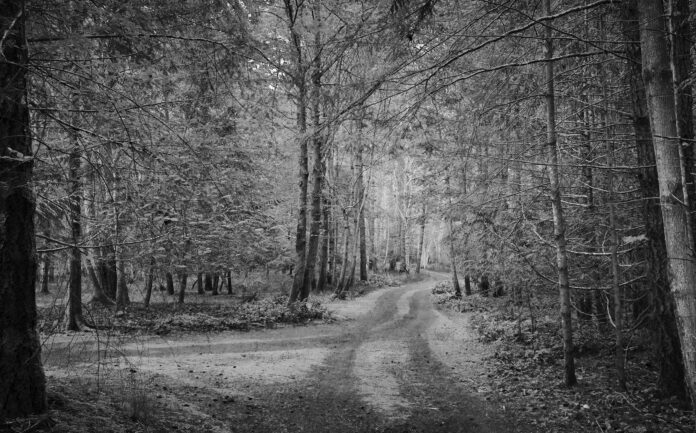
Returning on the Maple Park Trail

https://printartphotography.ca

Population Doubles

#1685

Inaugural JRSP Artist-Scholar Residency Announced for Fall 2025

Media Release

May 8, 2025

Sophie Ladd

JRSP Project Coordinator

University of Victoria

jrsppc@uvic.ca

Inaugural JRSP Artist-Scholar Residency Announced for Fall 2025

The University of Victoria (UVic), in partnership with the Jeffrey Rubinoff Sculpture Park (JRSP), is pleased to announce that Canadian artist Siobhan Humston has been selected as the inaugural recipient of the University of Victoria and Jeffrey Rubinoff Sculpture Park Artist-Scholar Residency for 2025-2026. During her time at the Rubinoff Sculpture Park on Hornby Island, she will develop new work combining themes involving music, synesthesia and humanity’s entanglement with the natural world. 

“I hope to tie together the circles of music and visual art, drawing what I refer to in my relationship to the beauty and mystery of nature as ‘poetics of place’,” says Humston, who has an international practice. “This residency will also allow me to reconnect to this area of Canada, putting fuel to fire for my deep love for the Canadian west coast.” 

Following an international call in late 2024, 57 people applied for the 6-week residency to be held annually at the Jeffrey Rubinoff Sculpture Park on Hornby Island, followed by a week at UVic. After her residency, Humston will present an exhibit of the work and offer a public talk in October 2025 at UVic [date to be announced]. 

“Jeffrey Rubinoff held that art was an existential necessity—an expression of mature conscience, evoking our innate sense of the sacred and the sublime. Far from diminishing individual conscience, such art elevates and inspires it,” says Karun Koernig, Curator of the Rubinoff Sculpture Park. “Humston’s work exemplifies this vision, quietly co-mingling distinct form-worlds—the natural and the human. In her hands, everyday materials sourced from the land sublimate into visual poetry. Particularly compelling for us was Humston’s ambition to integrate a soundscape into her residency, resonating deeply with Rubinoff’s profound connection to music.”  

Humston’s art has been exhibited in over 70 solo and group exhibitions in commercial, artist-run and public galleries, and is held in private and corporate collections in England, Europe, Australia and North America. She is the recipient of a Pollock Krasner Foundation Fellowship, a City of London arts bursary, Ontario Arts Council grants, a BC Arts Council education grant and, most recently, an Ontario Arts Council exhibition assistance grant for a 2024 solo exhibit. She has been featured on City TV Vancouver & Calgary, the Vancouver Sun and CBC Radio’s Arts Report. 


Originally from London, Ontario, she graduated with a BFA in printmaking and painting from Crawford College of Art & Design in Cork, Ireland, followed by an MFA with a distinction in Art & Environment from Falmouth University in Cornwall, England. She then held a series of international artist residencies, including two years at Marlborough College in Wiltshire, England and a month at Hugo Burge Foundation at Marchmont Estate, Scotland. She returned to Canada to set up a studio on the shores of Lake Huron, where her ongoing research about the connection between environmental art, nature, spirituality and science culminated with a solo exhibit, In the Garden of Exquisite Unknown, at the Judith & Norman Alix Art Gallery in Sarnia, Ontario.

See her work at siobhanhumstonart.com or on Instagram @siobhanhumstonart or  @siobhan.humston.artist.

Keep an eye out for updates on the residency and event dates at www.jrsp.uvic.ca, @uvic_rubinoff and https://finearts.uvic.ca/research/ and @uvicarts.

Claire Kennedy’s Inaugural Pottery Tour

The orb vases display small flowers beautifully.

Once a year since 1987 a group of potters on Denman Island get together to showcase their work via the Pottery Studio Tour. It’s an opportunity for visitors and locals to connect directly with the artists on the island and see their creations.


Some potters on the tour make their work available at other times of the year via markets or places like the Denman Island Craft Shop. There are others that use the Tour as a once-a-year event to showcase their art. 

This year, Claire Kennedy will be making her debut as a ceramic artist during the Victoria Day Long Weekend. Before now you had to be gifted one of her funky pieces directly.

Claire Kennedy with her dog, Hester.

As a part-time landscape designer, part-time potter it’s no surprise she is inspired by nature. She was first introduced to hand-building ten years ago and enjoys the perfect imperfections this method provides.

Her process involves rolling out the clay, forming it into asymmetrical shapes, and etching designs and patterns into the sides. Her vases and cups often appear oblong or rolled with an overlapping seam, highlighting the natural process of creation.

“I’ve been really enjoying making orb forms and putting them together on the table instead of a tall vase,” she says.

The orb vases display small flowers beautifully.

A fan of matte glazes and neutral tones like black, grays and whites, Claire’s work is highlighted with the occasional splash of turquoise and chartreuse.

With a tiny personal studio, Claire has opted to display her work alongside friend and fellow potter on the Tour, Jeanie Rogers of Gilded Petunia Pottery. Visit Stop #2 to see her quirky and contemporary work. 

The Pottery Studio Tour runs 10am-5pm Saturday, May 17 and Sunday, May 18. Maps and more information are available at denmanislandpotterystudiotour.com.

Binary Cultural History

Binary Cultural History

When, in 1968, I started programming computers we used room-sized machines, coding sheets, punch cards, magnetic tape storage and teleprinters to design and run our systems.  All were housed in huge air conditioned rooms and for the next 25 years there was no widespread market for personal computers, a fact my grandchildren find difficult to believe.  Computers cost millions of dollars to buy and run and so were available only to corporations.  We were at the mercy of Snow White and the Seven Dwarfs—a sexy IBM as Snow White followed by the dwarfs Burroughs, Control Data Corporation, General Electric, Honeywell, NCR, RCA, and UNIVAC.  At Northern Electric we used Snow White along with four of the dwarfs: Burroughs, Honeywell, NCR and UNIVAC.  The actual machines were housed in Bell Canada’s four storey, Pointe Claire processing centre.  We also used machines in London, UK and Stamford, Connecticut over telephone tie lines running real time programs across the Atlantic a decade or more before the Internet appeared.

Computer programs or apps are binary not only because of the zero/one nature of their storage hardware but also because of the conditional binary form of logic used throughout.  This is the logical ‘If/Then’ statement directing a process to be performed on the basis of a True/False test; statements are performed in strict linear order but can be directed to another portion of linear code.  If A is true then perform B and bypass C; if  A is false then perform C and bypass B.  B and C are differing processes which may add up figures, search out stored data, or display something on your screen, etc or may be further If/Then statements.  Indeed I was once given a program consisting of a single If/Then statement with 150 similar If/Then statements nested within it—a demonstration of the original programmer’s cleverness but no gift to the programmer having to maintain it.  As conditional binary statements multiply like rabbits programmers had to impose their own kind of triage.  You tried to identify a very limited number of the most common conditions to test; the untested ones you left out which resulted in most of those unintelligible error messages from Windows and Apple software.

Even our primitive AI relies on these binary choices; there are no maybes and no ambiguities in computer code.  You can stuff as many conditions as you want into the final result but that result will still be selected by a final exemplar of binary logic. But the user sees the results of computer processing almost immediately and the perception is one of surety of result; we cannot help feeling that the unseen process has exhausted all possible answers at near light speed and given us the single one that we were looking for.  Contrast this with an old-fashioned library card catalogue where, as you thumbed your way through dozens of cards, other associations of possible worth struck you.  Those associations are hidden by a computer search; indeed Facebook’s algorithms rely on this fact and invisibly eliminate everything that numerous binary choices deem is extraneous to your request and then supply you with only what you ‘need’ which usually contains several thousand results you don’t need.

Either/Or, True/False, Yes/No, Black/White, Right/Wrong.  What is the effect on our culture of a dominant diet lacking all ambiguity.  Opinion as fact?  Polarization?  Reluctance to question further?  Super-enhanced individually? Distrust of communal action?  Belief in conspiracies rather than culture?  To me this is a example of how our communal choice of technological gadgets unconsciously structures our culture—innovation built on the communal work of others with a belief in its usefulness.  This leads to other elements in the community promoting their use by marketing them or using them on a large scale by public entities.  We don’t need a conspiracy to set the goal posts for our culture but there is no doubt that certain groups of citizens will quite openly work to expand some of these new innovations.  Such work of promotion is never the result of a single individual although one individual may be seen as the spokesperson for the group.

We begin to ignore the ambiguity in life which is so much a part of everything we do; we force answers into a binary Procrustean bed.  One result is a distrust of  truth.  Truth is rarely amenable to black and white corroboration; it requires a matrix of the experience of others, logic, reason, and self assessment to reach a truth.  Truth is dependent on our state of knowledge and as that is increased the truth stemming from it may undergo modification.   Computers unconsciously shift us towards assessing everything on a binary basis; ambiguity and context fly out the window.  In discussing the numerous fake memoirs which have often become ‘bestsellers’ in the past few decades, Kevin Young in Bunk states ‘Gone is the idea that something made up, unreal or surreal, could move us.  Instead, readers insist that the thing that isn’t real is [real]: that if it affects them it can’t be affected; that they cannot have real feelings about made-up things’.  In short, if it is real it is true.  All we have to do is pass off lies as real and hey presto they become true.  Fiction is real, truth has no place in our appraisal of a work, and the literary justification for actual fiction is gone.  We have used a binary choice to eliminate truth and ambiguity.  Perhaps this explains why the AI poetry examples given by Phoenix Bee in the Grapevine of some weeks ago came up with only the simplest couplet (AA BB) scheme; in spite of massive language learning AI’s ‘intelligence’ seems unaware that poets use dozens of other rhyme schemes.

Oakley Rankin