Home Blog Page 79

The house

I wrote this metaphor for David, my close, dear friend for many years. May he rest in peace. March 3rd, 2025 /Gabriel Jeroschewitz. 

The house

 Stood on a promontory overlooking the churning Pacific, a stark silhouette against the perpetually bruised sky. It wasn’t just old; it felt ancient, imbued with a weight that pressed down on the soul. Locals whispered stories, half-truths and anxieties woven into tales of madness and despair that had clung to the property for generations. I, a detached observer, was drawn to it, not out of morbid curiosity. Still, something akin to a perverse fascination with the human capacity for self-destruction, a spectacle played out against the grand theater of existence.

The new owner, a reclusive artist named Alistair Finch, had arrived to find inspiration within its timeworn walls. He was obsessed with liminal spaces, where the veil between realities seemed thin. Like the mystics and quantum physicists, he believed that reality was a malleable construct shaped by consciousness and that the house was a nexus point. In this place, past and present energies converged with unnerving intensity.

Finch threw himself into the project with a fervor that bordered on mania. He spent his days wandering its labyrinthine corridors and his nights huddled over sketchbooks, his face illuminated by flickering candlelight. He spoke of whispers in the walls, shadows that danced beyond his peripheral vision, and sights and sounds that defied rational explanation. Others might have fled in terror, but Finch reveled in it, seeing it as proof of his theories and validation of his belief that the house was a crucible for the soul.

At first, his art reflected this newfound inspiration. His canvases were vibrant, chaotic expressions of raw emotion, pulsating with a life force that both captivated and disturbed. Critics hailed him as a visionary, a genius unbound by the constraints of conventional thinking. But as time wore on, a subtle shift began to occur. His paintings grew darker, more unsettling. The vibrant colours faded, replaced by shades of black and grey, and the swirling forms coalesced into grotesque figures, distorted and terrifying.

I observed from a distance, a silent witness to Finch’s descent. I saw him become increasingly isolated, consumed by his work, his eyes hollow, his face gaunt. He stopped answering my calls, and when I occasionally caught a glimpse of him through the grimy windows of the house, he appeared to be conversing with someone—or something—unseen.

I ventured closer one night, drawn by an inexplicable sense of dread. The house exuded an aura of palpable unease, the air thick with a chilling silence that seemed to stifle sound. The only light emanated from a single window on the top floor, casting long, skeletal shadows across the overgrown lawn. Hesitantly, I approached the front door, its wood warped and rotting, and pushed it open.

The interior was a chaotic tableau of decay and neglect. Dust motes danced in the moonlight filtering through the cracked windows, illuminating cobwebs that hung like macabre draperies. The air was heavy with the scent of mildew and something else, something acrid and vaguely metallic that made my stomach churn. I called out Finch’s name, swallowed by the oppressive silence.

Driven by a growing sense of urgency, I ascended the creaking staircase, each step a deafening echo in the stillness. As I neared the top floor, a low, guttural chanting reached my ears, its cadence hypnotic and disturbing. A wave of nausea washed over me, and I paused, momentarily paralyzed by a primal fear.

Gathering my courage, I continued onward, reaching the door to the room where the light still burned. It was slightly ajar, and I peered inside. What I saw in that room forever altered my perception of reality, shattering the carefully constructed edifice of my rational mind.

Finch stood before an easel, his back to me, his body swaying rhythmically. He was naked, his skin pale and clammy, and his head was shaved. The chanting emanated from his lips, a language I didn’t recognize but somehow understood, a litany of supplication and despair.

On the easel was a painting unlike anything I had ever seen. It was a swirling vortex of blackness punctuated by flashes of crimson and gold. Within its depths, I saw faces—countless faces, contorted in expressions of unimaginable agony, their eyes hollow pits of despair. They seemed to writhe and scream, trapped within the canvas, their torment echoing in the chanting that filled the room.

As I watched, mesmerized and terrified, Finch reached out and plunged his hand into the painting. He gasped, a look of ecstasy mingled with unbearable pain contorting his features. He began to writhe, his body convulsing, and the chanting grew louder, more frantic.

Then, something happened. The painting began to glow, emanating a blinding light that filled the room. The air crackled with energy, and the temperature dropped precipitously. I felt an ancient and malevolent presence fill the space, a force of unimaginable power that threatened to overwhelm me.

I wanted to scream, to run, but I was rooted to the spot, unable to move, trapped in the unfolding horror. Finch continued to chant, his body now levitating above the floor, his eyes wide and unseeing. Then, with a final, agonizing scream, he vanished.

The light faded, the chanting ceased, and the presence dissipated, leaving only an oppressive silence behind. I stumbled backward, coughing, my lungs burning, my mind reeling. The painting remained on the easel, but now it was blank, devoid of colour, a void staring back at me.

I fled the house, running unthinkingly through the darkness, the image of Finch’s final moments seared into my memory. I never looked back.

In the days that followed, I tried to rationalize what I had seen, to dismiss it as a hallucination, a product of stress and exhaustion. But I knew the truth. I had witnessed something beyond human comprehension that defied the laws of nature and the boundaries of reality.

In his relentless pursuit of the ineffable, Alistair Finch had opened a door that should have remained sealed. He had peered into the abyss and, in doing so, had become consumed by it. His legend was not one of fire but of shadow, a chilling reminder of the dangers of seeking forbidden knowledge and the fragility of the human soul when confronted with the unimaginable.

The house still stands on the promontory, a silent sentinel overlooking the sea. Locals avoid it; they fear a tangible force that keeps them at bay. I, too, avoid it, but not out of fear. My avoidance stems from a profound sorrow, a recognition of the terrible price Finch paid for his ambition, and a chilling understanding of the darkness that lies dormant within us all, waiting for the opportunity to consume us. The ouroboros had devoured him, the cycle of dissolution complete, leaving only an echo of terror in the windswept silence.

2 27 25 IF IT MAKES YOU HAPPY IT CAN’T BE THAT BAD

Willy had always liked the taste of metal. It was cold and hard and unchewable. He couldn’t remember when the notion came to him that there were special nutrients in the metal that he should eat, but once it took hold his urge to eat metal was overwhelming.

The first thing he swallowed was his father’s silver wrist watch. He swished it around in his mouth for some time while gathering saliva. Willy chewed it a bit out of habit before he attempted to swallow it. The watch got stuck in his oesophagus and he gagged until he turned blue and almost gave up until he found a chopstick in with the utensils and pushed it down.

That evening at dinner his father complained loudly, “Has anybody seen my wrist watch? I haven’t seen it for days.” Willy quietly laughed, “I’ve swallowed time,” he told himself.

Willy knew  it was probably a mistake to eat his mother’s wedding ring, but there it was by her bedside sitting in its little pink velvet box. It went down easy and traveled well through his twenty-two feet of intestine. 

Eventually he was able to fish the watch and the ring out of the toilet. He gave them a good rinse and then ate them again. 

He started eating silverware; mostly small forks and spoons. He tried a butter knife but it got stuck and he had a heck of a time retrieving it; there was some blood. 

He noticed that his stomach began to swell out like a pot bellied pig. He liked the feel of it, although it hurt, all of the time. He found that if he rubbed his belly he felt better, so he began to rub his belly constantly like it was Alladin’s lamp.

His only friend at school was a boy named Alphonso that nobody liked because he smelled terrible and had the sweatiest flesh you could imagine. Shaking Alphonso’s hand was like ringing out a dishcloth.

One day, out in the playground after he found a small nail from an adjacent construction site he decided to let Alphonso in on his secret. “Hey Alphonso, you probably don’t know this, but eating metal is good for you. There are an amazing amount of nutrients.”

“You talking crazy Willy, you eat metal it’s gonna kill you.”

“Nope, not true, I’ve been eating metal for some time and I feel great. I ate my Dad’s wrist watch and my mother’s wedding ring.”

“You are a crazy guy Willy.”

“Watch me eat this nail, Alphonso.”

“Don’t eat that Willy, that is a rusty nail.”

“Got to do it,” Willy swallowed the nail. It burned all the way down.

“Willy, you are a crazy person!” RING! RING! The school bell went.

“Don’t tell anybody Alphonso.”

“You eat a rusty nail Willy, you are a crazy person.”

After school Willy’s parents were in the parking lot sitting in the woody station wagon with the engine running. As Willy approached Willy’s Dad got out of the station wagon. “Get in Willy,” his Dad opened the back door. “But I usually take the bus home, Dad.” Off in the distance Willy could see Alphonso scurrying off of the school grounds towards the bus stop with his head down. 

“That rat fink,” Willy muttered and got in.

After he got his stomach pumped Willy ended up in the psych ward. He was the youngest person on the fourth floor. He met some interesting characters. His new best friend was a heavy set bald man named Sebastian who told Willy he had tried eating metal when he was younger and understood the urge but had switched from metal to an addiction to crack cocaine.

“I’d almost wish I’d stayed with metal Willy, because crack addiction is a terrible way to live but as soon as I get back out on the street I know I will go straight to it.”

“Why Sebastian?”

“It’s the only thing that makes me happy.”

“Eating metal makes me happy,” said Willy. A pimply-faced young woman with thick long strands of brown hair on her face named Claire Bush was eavesdropping on their conversation and gave them a big smile and began to sing, “If it makes you happy it can’t be that bad…” Together all three of them began to sing the popular song until they had the whole floor singing along.

Letter to the Editor – Helen Grond

The Art of the Deal

“A Self-Coup is said to take place when a leader, having come to power through legal means, tries to stay in power through illegal means.”

A potential self-coup may have reached an important milestone in Canada on Sunday, March 9 with the selection of Mark Carney as the imminent Prime Minister.  The action was initiated in the fall of 2024 when the Liberal Party of Canada formally appointed Carney, as the official financial advisor to the Trudeau government.  Carney was first brought on board as a Trudeau advisor in 2020 to help manage the globally controlled pandemic crisis.  No doubt he contributed to the destruction of approximately 100,000 small family owned businesses in Canada, by restricting shopping and services to largely multinational corporations (who made record profits). 

Many Canadians were unhappy with the direction Trudeau was heading when his plan was revealed in January.  Trudeau was facing a non confidence vote as his long-time ally, Jagmeet Singh had finally promised Canadians to stop propping up Trudeau’s despised minority government.  As soon as Trudeau announced his future resignation and the Liberal leadership campaign, it was clear that the former banker, Carney, was going to be coronated to replace him. 

Meanwhile, Parliament was prorogued for three months to give Trudeau plenty of time to “sell” Carney to Canadians, all while giving him freedom from parliamentary oversight.   With polls indicating that 77% of Canadians were desperate for an election, the New Westminster Parliamentary system proved to be a disaster for the country.  It left us extremely vulnerable.

The Carney campaign struggled from the beginning.  In spite of preferential treatment by the Canadian media, Carney continued to blunder at every turn.  Social media had a field day with Carney’s gaffs.  The most damaging, were the incorrect dates he reported, of his decision as Chair of Brookfield Asset Management, to move Brookfield’s head office from Toronto to New York City where Carney and his family apparently now reside (he owns multiple homes in different countries). 

In his attempt to cover up the suspicious timing, Carney openly lied at the English language leadership debate, claiming that the decision to move Brookfield’s head office to New York was made after his mid-January, 2025 departure from Brookfield.  It was actually made months before in October and was unanimous in favour of the move and he personally chaired the meeting!  He doesn’t seem to be motivated to address the fib to Canadians.  Why should he?  His coronation was already a done deal as his record win of 85% of the liberal party vote has proven.  The obvious question is whether the trade war with Trump was artificially escalated to boost Carney’s popularity as a loyal patriot and coincidentally give his corporation the advantage to flee Canada ahead of the inevitable economic hit that Canadian-based companies would take.  

I actually signed up for the Liberal Party, thinking it was my only chance to engage in the democratic process Canadians are promised.  Apparently, I was disqualified from the vote along with 250,000 other members.  Only 150,000 (0.3 % of Canadians) were allowed to vote in the entirely secretive process.  I guess my social credit score wasn’t up to snuff.  The deck was clearly pre-stacked for Carney and was anything but the transparent election Trudeau had promised.

One has to question how the Chair of Brookfield squares the hypocrisy of his business interests with his desire to be PM.  His multi-million dollar holdings (he has refused to disclose them) certainly support his open admission that he is an avowed globalist and elitist.  He is not the least bit apologetic that he is a proud member of the 1% and favoured Trustee of the WEF.  He has apparent cosy connections (public photos and family ties) to Gislaine Maxwell, who was Jeffery Epstein’s right hand gal.  Why do these people always seem to connect back to Epstein?

Clearly, he has benefitted politically from the drama-packed Trade War with Trump while quietly aligning himself with the US and its capitalist advantages.  I guess hypocrisy is the principle pre-requisite for successful politicians these days.  “Do as I say, and not as I do” couldn’t be more poignant than in Carney’s case.  

Trudeau’s decision to prorogue parliament in the middle of a trade crisis, so he could promote his own interests, was challenged in court.  The case was recently dismissed even though it was more egregious than a precedent setting case in Britain when Boris Johnson’s decision to prorogue was overturned during the Brexit crisis.  Many Canadians believe that Trudeau’s proroguing of parliament was illegal and faith in our justice and political systems are dwindling.

I have never witnessed such undemocratic behaviour as has been openly flaunted in our faces by “Governor” Trudeau.  I wonder if the whole ridiculous situation is a somewhat organized self-coup in collaboration with Carney and The Donald?  I feel like I’m watching a performance.  

If Canadians do not see a fair election called very soon, confidence in the government will rapidly deteriorate from already historic lows.  Let’s hope the Trade Wars don’t suddenly qualify as a “national emergency” and put elections on hold!  Carney has been very candid about using the emergency act to achieve his “goals”.  Chilling!  The 51st State option may grow on people in light of something like that.  Is this how the “art of the deal” is supposed to play out?

Helen Grond

We Are Duped Into Blaming Our Problems On Everyone Except Our Rulers

MAR 11, 2025


Listen to a reading of this article (reading by Tim Foley):

Muslims are not a threat to you.

Russia is not a threat to you.

China is not a threat to you.

Trans people are not a threat to you.

Immigrants are not a threat to you.

If you find yourself resisting anything I just said, that’s where they hooked you. That’s where your rulers duped you into blaming your problems on something other than them.

You will notice that I am not saying there are no enemies and nobody poses a threat to us; there absolutely are, and they absolutely do. It’s just that people are tricked and manipulated away from seeing the real enemies and the real threats where they are.

What poses a threat to you is the political status quo which robs your country of riches and resources to inflict military violence on innocent people overseas while strangling your civil rights and poisoning your planet. What poses a threat to you are the oligarchs and empire managers who uphold this status quo which is driving our species to authoritarian dystopia and extinction via environmental disaster or nuclear annihilation.

They want you blaming your problems on anyone else besides the actual source of your problems. They prefer to get you freaking out about their primary targets — the disobedient groups and nations they want to destroy to advance the interests of the empire — but if they can’t accomplish that then they’re happy to get you hating powerless groups who pose no real threat to you. Anything they can do to keep your eyes off your real oppressors: the billionaires, bankers, media barons, intelligence agencies, warmongers, ecocidal capitalists, military-industrial complex plutocrats, and all the empire lackeys in your official elected government.

They want us fighting each other, but we only pose a threat to each other if we buy into their bogus narratives of hostility and division. An immigrant is only threatened by a right winger because the right winger has been successfully duped into blaming his problems on the immigrant, and therefore elects empire lackeys who will make the immigrant’s life more difficult. But without that artificially manufactured enmity, it’s just two people being abused by the same pricks at the top.

Whenever I say stuff like this I’ll get people voicing objections like “No no Caitlin you don’t understand, we really truly ARE seriously dangerously threatened by The Trans Agenda” or whatever. But you’re not. That’s just you doing the thing I’m describing here. You’re just buying into the exact scam I’m talking about. You’re allowing your crosshairs to be moved from your oppressors to some irrelevant diversion in order to protect your oppressors.

At some point we need to stop falling for the scam. We need to wake up to the fact that we’re all just a bunch of normal people living in a highly abusive society, and that our abusers are benefiting immensely from our inability to see through their divide-and-conquer manipulations and unite against them.

Muslims are not a threat to you.

Russia is not a threat to you.

China is not a threat to you.

Trans people are not a threat to you.

Immigrants are not a threat to you.

The US empire is a threat to you.

Your own government is a threat to you.

Oligarchs are a threat to you.

Nuclear brinkmanship is a threat to you.

Ecocide is a threat to you.

War and militarism are a threat to you.

Tyranny is a threat to you.

Propaganda is a threat to you.

Your enemies are not in Moscow, Beijing and Tehran. Your enemies are in Washington, Virginia, New York and Los Angeles. Your enemies are in London, Paris, Brussels and Tel Aviv. Your abusers are not some far away nation your own government doesn’t like, nor are they some marginalized group your government doesn’t care about. Your abusers are your government itself, and all its allies and assets around the world, and the network of oligarchs and empire managers who call the shots in this globe-spanning power structure from behind the scenes.

The sooner we get this straight, the sooner we can sort out all these problems we’re currently being duped into blaming on the wrong people.

__________________

Caitlin’s Newsletter is a reader-supported publication. To receive new posts and support my work, consider becoming a free or paid subscriber.

My work is entirely reader-supported, so if you enjoyed this piece here are some options where you can toss some money into my tip jar if you want to. Go here to find video versions of my articles. If you’d prefer to listen to audio of these articles, you can subscribe to them on Spotify, Apple Podcasts, Soundcloud or YouTube. Go hereto buy paperback editions of my writings from month to month. All my work is free to bootleg and use in any way, shape or form; republish it, translate it, use it on merchandise; whatever you want. The best way to make sure you see the stuff I publish is to subscribe to the mailing list on Substack, which will get you an email notification for everything I publish. All works co-authored with my husband Tim Foley.


Bitcoin donations: 1Ac7PCQXoQoLA9Sh8fhAgiU3PHA2EX5Zm2

Featured image via Adobe Stock.

Hornby from Fillongly

https://printartphotography.ca

1675

Proposed Bylaws 248/249   [apology to Shakespeare!]

Proposed Bylaws 248/249

  [apology to Shakespeare!]

Double, double densities;

Trust mandate left in rubble.

Fillet of our OCP,

In Trust office boil and bake;

Aye of studies’ wordy fog,

Wool of bat and tongue of dog,

Consultants’ enticing croon.

Urban island coming soon,

Speculators sell and shuffle, 

For a harm of powerful trouble.

Bylaw, bylaw toil and trouble;

Public hearing token rumble,

Cool it with a rubber stamp,

Then the harm is firm and ramp.

                          Harlene Holm

Worm News

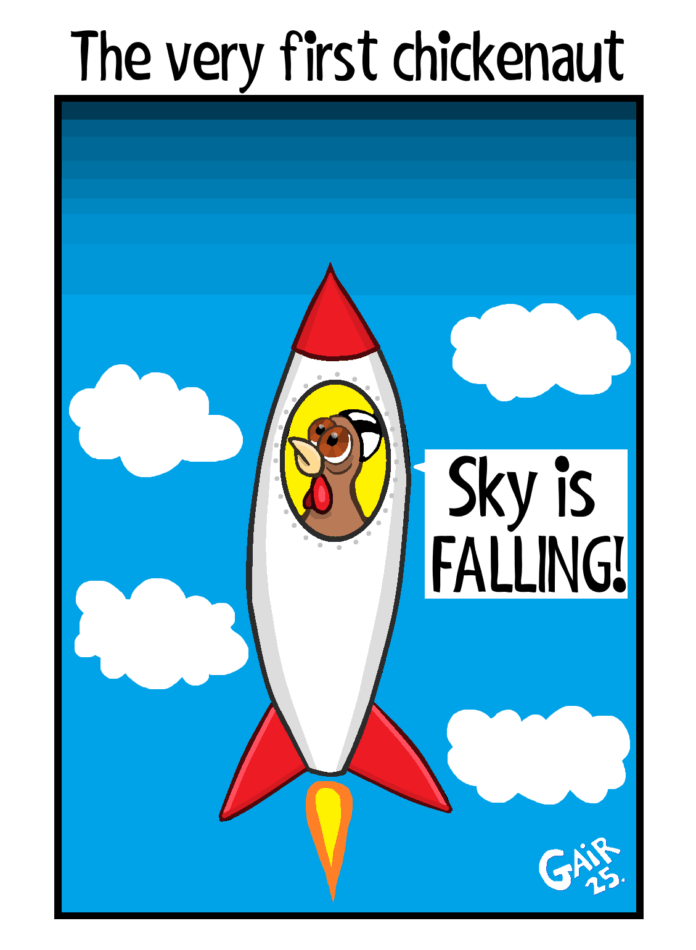
Check out Gair’s third book of toons, on sale now!!

Movie Night; Deep Rising & The future of our Oceans

Come join us on Friday March 7th, at the Front Hall. Doors open at 5:30PM.

Experience an eye-opening documentary that explores the hidden world of deep-sea mining and its impact on our planet.

Directed by Maya’s brother, Matthieu Rytz (Anote’s Ark, Sundance 2018), and narrated by Jason Momoa, Deep Rising reveals the geopolitical, scientific, and corporate intrigue behind deep-sea mining and its consequences for ocean ecosystems.This film mixes spectacular views of deep ocean life with a look at opposing sides in a largely under-the-radar international fight over whether to mine minerals from those hitherto unspoiled, barely-explored depths.

Doors open at 5:30 PM, with a short locally made documentary on herring “The Silver Highway” at 6:30pm

Deep Rising’s projection will begin at 7pm.

Enjoy a warm bowl of soup by donation. A shared dessert table will be available, bring a treat to share! Entry is donation-based.

This event is organized in partnership with ADIMS.

Funds raised will cover the cost of the event and the remainder will be donated to ADIMS

Don’t miss this opportunity to engage in an important conversation about the future of our oceans and our planet! www.deeprising.com

pastedGraphic.png

Shucking Oysters: Been There, Done That

They say mimicry is the sincerest form of flattery. If that’s the case, then we folks have been flattering our way through history for decades. Every new movie or song or fashion trend or art is just a copy of something else. Every movie is based off of a book, a remake of a foreign film, or a remake from 20 years ago. In fashion everything is 80s inspired or from some year that’s coming back in style. Even in music it seems like any new idea gets copied immediately. Why does it seem like everything has been done before? That everything is being copied and there are no more original moments? 

It’s well-known that how and what we perceive defines our reality. We’re influenced by what’s around us, picking up nuances from our friends, and social news media. Like durable sheets of paper towel, we are constantly absorbing new things, adding them to our personalities which again affects what we create. But can we do anything original anymore? Is everything a little of this and a little of that, influenced by this, inspired by that? Or, are we simply running out of ideas? 

Most films are franchises. The Marvel movies. Look at Disney, who either remakes a movie to be almost exactly like the original or takes the same concept and spins it into something new. Look at Broadway. Cabaret. Chicago. Hair. The Glass Menagerie. The Wiz. Sound familiar? Because they are. All have been revived more times than Donald Trump’s hair. It’s about staying with what works and what works is regurgitating.

In his book, Human Frontiers, Michael Bahskar argues that when it comes to innovation and big ideas, our culture has become a version of “Groundhog Day.” We are stuck on a repeat cycle, the same architectural motifs, the same music genres, the same athleisure fashion items, over and over again. Our culture rebellion has been “neutered, monetized and tamed for a global audience in a theme park version of public extremity.” Music is no longer the “heartland of a broiling subculture so much as an accessible, easily digestible menu to be sampled from at will.” Rather than an underground counterculture we have the mainstream blockbuster; think Ed Sheeran not David Bowie.

Since the 90s measures of creativity among US students have been steadily falling. These include such skills as original thinking and open-mindedness, which doesn’t bode well for the future. Globally, fewer students are majoring in art or creative subjects in university and there are less and less jobs for creative types like artists and musicians. Policy-makers, universities, and even entire nations are cutting out humanities and focusing instead on the almighty dollar. In her book, Not for Profit: Why Democracy Needs the Humanities, Martha Nussbaum warns that if we pull the plug on liberal arts, we no longer have the sort of people able to do the things required for democratic citizenship. We are sacrificing history, art and literature for science, economics and accounting. 

If all that matters is economic growth, then education for basic math and literacy is all we need. Nussbaum argues that a liberal arts education – philosophy in particular – is important for a meaningful life. We need philosophy to not only criticize and analyze, but also to help us make sense of our inner lives – our feelings and attitudes towards one another. Unfortunately, talk radio and internet culture blatantly encourage narrow-minded tribalism. We don’t listen to what we say, we just want to talk louder and win battles. Courses in humanities teach us to engage and listen to other people’s viewpoints, not shut them down.

Think of the realm of deep thought. Where are the sages, prophets, philosophers of our century? We have more academics than at any other time in history and yet no new major works of social theory have emerged in the last thirty-five years. There are no new versions of capitalism or liberalism or even anarchism. There are just “shades of grey, old, regurgitated political ideas.” Democracy as we know it is unravelling, yet we continue to awkwardly lurch on, comfortably stuck in our old ways. 

Instead of any radically new world concepts, we have authoritarianism, strongman tribalism, sectarianism and nationalist populism – hardly new or original. No one has tried to reinvent political theory. From policy to architecture, music to philosophy, big ideas have withered. Instead of being dynamic, we seem paralyzed from having any new thoughts. Bhaksar writes that “we are good at producing things, we are not nearly as good at thinking anew.” 

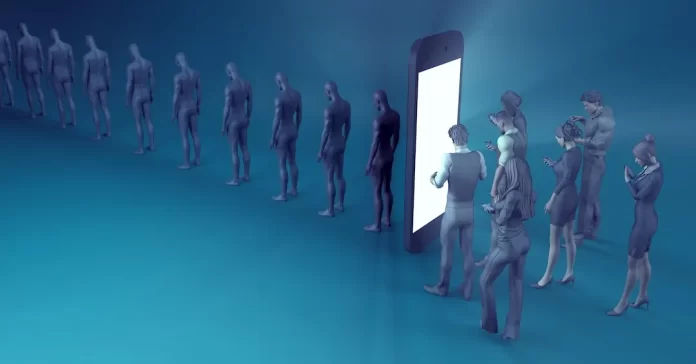
We all know that technology has enhanced our lives immensely – from instant information to global connections. But could it also kill our creativity? When our minds are free from constant input, they naturally start to wander, leading to bright and shiny ideas. With smartphones and endless loops of entertainment, we rarely have to confront boredom. Technology never allows space for daydreaming. Every lull has to be filled with scrolls, clicks and swipes. 

If anything, we need bold and ambitious thinking. We need to step outside. Wander far and free. Go where it feels uncomfortable. Try things that are unlikely to work and try again when they don’t. And then, we just might be able to answer the question: What’s the big idea?