Home Blog Page 75

Poor Jeb

Seedbeds of Liberation

A victorious Leonard Peltier, surrounded by family and friends, was released on Tuesday, February 18th from his 49 year term in a US maximum-security prison. He was in high spirits saying he will carry on the fight for justice and autonomy for Indigenous Peoples. Leonard, you are a faithful teacher of real resilience and deep wisdom.

“The Polyvagal Theory posits that co-regulation through social behavior is a biological imperative – a need as hard-wired into us as that for food or sleep….safe social behavior and playing with others makes us more resilient to trauma.” ” Stephen Porges, author of Our Polyvagal World
 
My grandson said to me recently: “You have always told me there is a difference between fun and play. I think I now understand; watching a movie can be fun but it clearly is not play.” And I replied: “Hip hip hippie hooray.” In these times of global trauma, upheaval and insecurity, we can reflect on the words of Joan Baez who said that action is the antidote to despair. Along with political and social action, I think we also need Wise Play. This is a name I am using to describe a wide spectrum of actions that children and other young mammals already understand and that contribute to interpersonal resilience, emotional healing and skillful self-care.
 
Wise Play is motivated by the innate instinctual need to express joy, happiness, curiosity, intimacy and awe. According to Stephen Porges, a professor of psychiatry who developed the Polyvagal Theory, the nervous systems of animals at play, flows between the parasympathetic aka Green state and the sympathetic aka the Yellow state. Green signifies a sense of safety. When we feel safe from inner and outer harm, we are able to relax, rest and digest. When we are in the Green state the brain produces oxytocin and we are able to engage in cooperative social engagement, creative thinking/art making and the nurturing of others using empathy and compassion. Notice that I’m not saying when you think you are safe but rather, when you FEEL safe. In order to play, the body and mind take turns dancing. The Yellow state occurs in between the Green and Red states (freezing due to life-threatening situations). The Yellow state mobilizes physical behaviors, pain tolerance, adrenaline production and defensive systems. In the Yellow state the fight and/or flight systems are activated. In the Red state, the brain and body are immobilized and there is a complete inability to engage in empathy, compassion and effective communication. Politicians, dictators and institutions actually want us to feel unsafe so that we will comply and conform. “For an authoritarian, convincing a large number of people that they are under threat is required to maintain power.” Porges writes extensively on manufactured dread in his book.
 
A close friend of mine has two grandsons whose lovely but busy working parents let them play video games from a very young age. At ages 20 and 23, neither one can hold down a job, live on their own, or maintain friendships. In other words, they do not have the emotional intelligence required to engage with the world. Trigger Warning: “no form of digital technology is a true substitute for face to face interaction. Video games superficially trigger the social nervous system without ever truly giving us the specific components of social interaction that our nervous systems are searching for.” Porges. Digital “social” media use must be balanced out with time with people and animals and nature.
 
Wise play exercises our nervous systems and rewires reactivity into seeing challenge as opportunity. “….while any form of art might be effective, theater may be a particular powerful pathway.” I will write about theatre next week.

Green Wizardries: Winter Work

For women, winter work used to involve a lot of textiles.  There was, and is, a lot of wool to be spun and garments knitted and mended.  People used to wear wool shirts and wool trousers as well as coats which would wear out and need to be darned.  In Victoria’s time, children were taught to knit, sew and darn in school or by a Governess.  

I have seen some beautiful framed examples of the darning from that era.  A student’s master work was so important that it was sometimes framed like a picture.  A master work involved being able to match the colours and textures of a piece of tweed fabric.  I darn a bit and from this experience, I know just how skilled people are who can mend in this way.  

My father taught me to darn.  He could really darn beautifully as he was a bachelor until late in life when he met my mother.  I have only taken up darning again in  the last few years as darning greatly extends the life of wool socks.  

I also have time in the winter to bring out my spinning wheel and spin up some of the roving I have.  Roving being carded and partly spun wool yarn that is very easy to spin.  I am a total amateur compared to the real shepherdesses of a generation and more ago.  I remember seeing a photo of a woman in Southern Italy spinning a fine, white thread from a greasy, uncarded fresh fleece.  That is magic!

A more modern set of circumstances see people making preserves in the middle of the winter rather than the much busier autumn.  We have some lovely Marion berries growing in the garden.  We got a huge harvest of fruit last summer.  I spread the freshly-picked berries on baking sheets and froze them.  Then, I put the berries in bags to process later or to eat fresh.  

I was explaining to a friend that we had recently bought a hand of bananas.  She asked why that was significant.  It is because we hardly ever buy fruit as we produce so much of it ourselves.  Marion berries, strawberries and cherries form the bulk of our winter fruit eating with plums entering the equation in more fortunate years.  

I have been using my Finnish steam juicer to process heaps of Marion berries.  The fruit is loaded into the top chamber, the juice drips into the middle chamber and the bottom chamber holds the boiling water.  Juice produced in this way is so much easier than the previous method of juicing which involved the mashing of the fruit by hand with a potato masher and then draining it overnight in a jelly bag.

To make Marion jelly, and there is no finer flavoured jelly in the world, I measured the remarkably-clear juice as I got it from the steam juicer and added 3/4s of a cup of sugar for each cup of juice.  Then, the juice and sugar is simmered until it comes to the jelling point.  I like to use the frozen saucer trick to find the jelling point.  

When I begin jelly or jam making, I put a small stack of saucers in the freezer.  I put a little spoonful of jam on a saucer and leave it in the freezer for two or three minutes.  After that, a finger, dragged through the syrup lets you know if the jelling point has been reached.  If the jelly has to cook more, the syrup will slide back together after you pass a finger through the syrup.  Once the jelly is done, the jelly will wrinkle up on each side and the syrup will not run back together.  It really is that simple.

That said, years ago, a friend as trying to make strawberry jam and the recipe said to boil it until it hit the jelling point.  My friend had cooked the strawberries for hours but she left the lid on the saucepan.  The point in boiling jams and jellies is to reduce the water content through evaporation.  You have to leave the pot uncovered.  

After the jelly, I processed another load of maybe 12 pounds of Marions through the steam juicer.  I sweetened the juice with a little honey and then canned it in pint jars.  We use juice like this to flavour soda water and it makes and excellent and refreshing drink.  

My next project is to steam even more Marion berries, probably two loads to get the juice for my husband to make Marion wine which is another delicacy.  Blackberry wine is very tasty and intoxicating, much more so than it alcohol content would suggest.  I expect the body simply becomes giddy from ingesting all those phytonutrients.

All this really to say how much I love that steam juicer and what an excellent piece of homesteading equipment is . 

Shucking Oysters: Stop the World, I Want to Get Off

Last year was Earth’s hottest year on record, and climate scientists say it is only going to get hotter, with even more extreme weather events. And so, while the world is unravelling, calling it a “scam,” Trump has quickly unravelled every climate change policy passed by the Biden administration. 

He pulled the United States out of the Paris climate agreement again, which means the US won’t be trying to meet emission reductions, nor have any financial commitments to the United Nations Framework Convention on Climate Change.

Declaring an “energy emergency” Trump opened up oil and gas expansion giving the government access to private land and resources unlocking what he called America’s “liquid gold.” “We will drill, baby, drill,” Trump said in his inauguration address. One section of the order states that the Endangered Species Act can no longer block any fossil fuel development. Numerous endangered species, including whales and sea turtles, are even more threatened beyond hope. Trump then opened up the pristine Arctic National Wildlife Refuge for drilling, which is not only critical home to bear and caribou, more than 200 species of birds flock each year to nest and rear their young.  

In his book, Shattered Earth: Approaching Extinction, Canadian Dr. Ian Prattis asks, what are we going to do now? Is there a future for our beautiful children and grandchildren? Beginning with a futuristic analysis of climate change, he then moves to the inevitable fate of the suicide pact engineered by corrupt corporations for most of humanity. It is not an uplifting account, even when it reverts to present time and reveals how unready we are with the climate emergency.

Prattis’ allegiance is to the truth, to our shattered planet writhing in agony. He paints a bleak portrait of today’s reality in which the corporate world uses its unbridled power and wealth to resist and denigrate ruthlessly any environmental movement in order to keep the privileged status quo for itself, regardless of the devastating consequences.

Shattered Earth shines the light on the urgency while offering a glimmer of hope before it is too late. If we want to survive, we need to unite, and attempt to reverse the human greed, callousness and cruelty inflicted upon Earth. 

When we look at issues like climate change, economic inequality, and social injustice, how can empathy motivate us to act? Kieran Setiya, in Life Is Hard: How Philosophy Can Help Us Find Our Way, writes that the difference between doing nothing and doing something is the key. We have to try to live up to the obligation to do something about the injustice we’re entangled with. 

But how do we overcome a sense of overwhelmingness when those problems can feel insurmountable? Setiya offers that when we look at what’s happening with the climate crisis there’s an inclination to say, “Should I be hopeful or should I despair?” – as if those are the only two options.

Nothing is just black-and-white anymore. We’re living in shades of grey, and that is not very comfortable for many. We are forced to ask ourselves, “Could I be doing something more? How much does the world demand of me?” If you are asking those questions, you’re in the right place. It’s a sign of what living well should look like where there is such grave injustice.

Everyone’s life is a mess of little successes and failures and attachments. We need to stop seeing ourselves through the lens of failure and success, and think instead of the journey that accompanies those particular achievements or failures. And what has this to do with saving the world, pray tell?

When we engage in protests we are never quite sure if it’s going to make a difference. But it’s not about the destination, Setiya writes, it’s about the journey. He argues that there’s still value in standing up against injustice and trying to make a difference, even if we fail. Projects fail, people fail; it’s life. It’s not about winners or losers. He warns, “don’t let the lure of the dramatic arc distract you from the digressive amplitude of being alive.”

You probably spent some time today on the internet, “doom surfing” as they say – skipping from headline to headline in a daze of horror (or fascination). Most of us click with a sense of guilt and shame. The superficiality of surfing deadens our emotions, as the scale of the world’s crises leaves us feeling overwhelmed. How many of us have quickly clicked something else, instead of looking at photos of starving polar bears or beached whales? 

To Trump, the embodiment of industrial greed, humans are not only separate from nature but above and beyond. Anywhere that contains something concentrated, unusual, precious is to be hunted down and exploited. Stephen Harrod Buhner, in Earth Grief, wrote: “the truth is that we can no longer continue to think of ourselves as isolated consciousnesses on an inanimate, insentient, meaningless ball of resources hurtling around the sun.” (Or nearly as bad: that we inhabit a kind of park that is here for our unlimited amusement.)

Reginald Putterwick

There I was, Reginald Putterwick, comfortably ensconced in my favourite armchair, a chipped porcelain mug of Earl Grey steaming gently in my hand and the dulcet tones of Radio 4 murmuring in the background. Life, one might say, was ticking along with the predictable rhythm of a grandfather clock in a perpetually quiet library. Then, of course, the world decided to throw a spanner, not just into the works, but directly into the Earl Grey.

It all started with the news, naturally. Not the gentle, reassuring news about badger sets and slightly damp village fetes, but the shouty, headline-grabbing stuff about… well, him. The chap with the… distinctive hair. The chap bore a passing resemblance to a startled marmoset that had just won the lottery. Yes, that one. President… Trumpet? Trumpernickel? No, Trump. President Trump. The American fella. It was like a scene from a particularly bizarre sitcom, but unfortunately, it was all too real.

Now, Im not a political animal, not in the slavering, foaming-at-the-jowls sense. My politics usually extend to fretting mildly about the state of the garden and whether the local council will finally fix that pothole on Sycamore Lane. But even I, Reginald Putterwick, a man whose life’s most thrilling event last week was finding a perfectly formed Victoria plum in my greengrocer’s, started to notice things—worrying things.

It began with the little things, the sort of things youd usually dismiss as just… well, odd. Like that business with naming himself chair of the Kennedy Centre by a unanimous” vote. Unanimous? In politics? It sounded about as likely as finding a sensible hat at a flamingo convention. Then, the reporter was barred from the White House for failing to use the appellation “Gulf of America.” Gulf of America! It sounded like something a slightly tipsy geography teacher would invent on a dull Tuesday.

Initially, my reaction was mild amusement. Oh, those Americans,” I chuckled to Mrs. Higgins over the garden fence, always so… dramatic.” Mrs. Higgins, a woman whose dramatic moments usually involved discovering a rogue snail in her prize-winning petunias, nodded sagely and muttered something about modern youth,” which, I suspected, had very little to do with the actual topic.

But then the news got… less amusing. The pronouncements became bolder, the threats a bit less veiled, a touch more… unhinged, perhaps? It was all about peace” talks without the actual participants, countries being locked out of things indefinitely, and talk of letting certain… less than savoury nations do whatever the hell they want.” That phrase, whatever the hell they want,” stuck in my craw like a rogue plum stone. It lacked a certain… statesmanship.

And thats when it hit me. Sitting there, halfway through my second digestive biscuit, it all clicked. The grandstanding, the self-righteousness, the way he seemed to…  dislike people who disagreed with him. It was all terribly… familiar. And then, with a jolt that nearly sent my Earl Grey flying, I realized who he reminded me of.

Hitler.

Yes, Hitler. Dont get me wrong, I know it sounds ridiculous. Ones a tangerine-toned chap with a penchant for gold-plated things, and the other was… well, Hitler. But hear me out. It wasn’t the moustache. It was… the style of it all. The bluster, the sense of grievance, the way he seemed to believe he, and only he, possessed the absolute truth of the matter.

I even started seeing parallels where, perhaps, none truly existed. Trump was a colon artist,” I mused, staring blankly at the news report about his latest golf outing. Hitler was a con artist.” Both are self-righteous and are rather keen on getting rid of people, metaphorically or otherwise. It was all… a bit much, really, for a Tuesday afternoon.

And then the Canadians came into it. Canada! Nice chaps, the Canadians. Fond of ice hockey and maple syrup and generally quite polite. There was no talk of… well, Mr. Trump seemed to be looking at Canada like a hungry Labrador looks at a particularly juicy bone. The article I was reading, with growing unease and a sense of disbelief, suggested he might want to… annex them. Annex Canada! It sounded like something from a far-fetched spy novel, not the 6 o’clock news.

The article went on, painting a rather bleak picture of an America that had decided to, shall we say, go rogue. No longer the steady hand on the tiller, the reliable ally. It was more like… a runaway speedboat piloted by a chimpanzee whod just discovered the throttle. And the democratic world, we were told, would have to get along without it. Maybe even… defend itself from it. The gravity of the situation was sinking in, and it was not a pleasant realization.

Defend ourselves from America? It sounded utterly preposterous. America, the land of apple pie and Hollywood and… well, whatever else Americans were famous for. Defending ourselves from them? It was like being told you might have to protect your prize-winning roses from your neighbours prize-winning Labrador – unthinkable, yet suddenly, unsettlingly plausible in this topsy-turvy world.

The article suggested NATO was, to put it delicately, defunct. Dead as a dodo. Europe, it seemed, was now on its own. And Canada, poor Canada, wedged between this renegade America and… well, Russia, was in a particularly sticky wicket. “Get some allies, fast,” the article urged. Allies? Did they mean like… France? Germany? Perhaps the Danes? I wasnt entirely sure who one allied with when facing down… well, America. It felt like asking the local cricket team to take on a tank battalion.

That evening at the village pub, The Dog and Trumpet” (the irony was not lost on me), the usual convivial chatter was replaced by a somewhat subdued murmur. Old Mr. Grimshaw, who usually held court about the iniquities of modern parking regulations, was unusually silent, nursing his pint of mild and looking profoundly troubled. Even young Timmy, the usually irrepressible barman, seemed a bit downcast.

Bit gloomy tonight, Timmy,” I ventured, ordering my usual half of bitter.

Timmy sighed, polishing a glass with unnecessary vigour. You saw the news, Mr. Putterwick?”

Indeed,” I said, accepting my pint. Quite… concerning, wouldnt you say?”

Concerning?” Timmy snorted. Concerning is finding a worm in your apple, Mr. Putterwick. This is… this is the end of the world as we know it!” He punctuated this with a flourish of the glass cloth, nearly knocking over a tray of crisps.

Now, now, Timmy,” I said, trying to inject some of my usual calm into the situation. Lets not get ahead of ourselves. Its probably just… a phase. These things come and go, you know. Like flared trousers and avocado-coloured bathroom suites.”

Timmy gave me a look that suggested he thought I was either incredibly naive or utterly bonkers. Possibly both. Flared trousers and avocado bathrooms didnt threaten to start World War Three, Mr. Putterwick.”

Of course, he had a point. While aesthetically questionable, avocado bathrooms had never plunged the world into a geopolitical crisis.

Over the next few weeks, the situation, if anything, worsened. The international summits started resembling pantomimes. Trade wars became daily occurrences, and the threats, oh, the threats! They seemed to be aimed at everyone and no one in particular, like a toddler wielding a water pistol filled with vinegar. The democratic world, meanwhile, reacted with a mixture of bewilderment, indignation, and a rather frantic scrabbling for… well, for something, anything, to do.

There were hushed meetings in Brussels, urgent phone calls between London and Paris, and even, I heard, a somewhat clandestine gathering of Scandinavian leaders in a remote fjord. It was like watching a very slow-motion car crash, except the car was the entire international order, and the driver appeared to be arguing with the steering wheel.

And me? Reginald Putterwick, the quiet observer of village life? I was glued to the news, not with my usual gentle curiosity, but with a growing sense of… dread. The world, it seemed, had become a relatively less comfortable place. My Earl Grey tasted slightly more bitter, and my digestive was less satisfying. Even the garden seemed to have lost some of its cheerful luminescence.

One afternoon, while weeding the petunias (Mrs. Higgins, naturally, was winning the neighbourhood petunia competition again), it struck me. This wasnt a comedy anymore. It started as a slightly absurd farce, a political pantomime. But now… now it felt like something else entirely. Something darker, more dangerous.

Maybe I was wrong to see it all as just… funny. Maybe mistaking Trump for Hitler, even metaphorically, wasn’t so ridiculous after all. Perhaps we had all underestimated the gravity of the situation. The democratic world might indeed have to get along without America and defend itself from America.

The thought was as heavy and unsettling as the scent of impending rain on a summer afternoon. And Reginald Putterwick, retired librarian, quiet observer of life, and connoisseur of okay Victoria plums, suddenly felt a chill that had nothing to do with the weather. The spanner in the works had landed well, and it looked like the Earl Grey, and indeed, the entire world was about to get considerably more complicated.

Nothing Happens…

Nothing Happens…

And nothing happens, then everything happens. I thought the story this month was going to be about our fabulous new dining room table and chairs that we found at the Re-Store for $150, six chairs included and made out of solid maple. I did research online and it’s the work of a Dutch immigrant furniture designer, Jan Kuyper, who worked from 1951-1960 with a mandate to update the colonial designs at an Ontario furniture company.) Fascinating stuff! We went out to dinner and when we came back my husband said, “All night I kept thinking, I wish I were sitting at our new table and chairs.” In his defence, we had had our old set for THIRTY years.

Then, a couple of days later, our youngest daughter decided to elope in Vancouver. As you can imagine, the dining set was suddenly small potatoes indeed. 

We had experienced all the highs (and lows) of a big wedding when our eldest daughter got married  eleven years ago, so we didn’t feel we’d been snubbed or left out, really. We saw the lovely photos online. The whole thing had been thrown together in exactly three hours. They had googled, “how to get married in Vancouver,” and taken it from there. 

The whole tone of the wedding was set by my grand-daughter. My girl and her fiancé had planned to marry in shorts and t-shirts and just sign the papers with the justice of the peace. (London Drugs sells a kit.) My young grand-daughter had made an entrance into the kitchen in one of her many ball gowns announcing, “This is what I shall be wearing to the wedding.”

A best man was rounded up. He brought a wonderful, classy black suit for the groom to wear. Akiko already had an engagement ring, so, that was a ring. The groom was handed a hand-carved wooden ring by a quickly enrolled bridesmaid. A smattering of friends dropped whatever they were doing on that Vancouver Wednesday night and dashed over in nice outfits, and at 8:30 the deed was done in the veggie garden, under an archway, appropriately. 

My daughter wore a borrowed white, flapper-inspired dress from her older sister and some really cute, blue flat shoes for something blue. (When you wear a size 6 really all shoes are cute.) 

They made a stunning pair on the photographs, handsome and pretty. All young people are of course beautiful, though they are oblivious to it. (Nora Ephron’s advice to any young woman that may have been reading her words was to “go put on a bikini and don’t take it off until you’re 35.” 

Everyone lined up for the throwing of the bouquet. There was an engaged couple there, but my granddaughter caught the bouquet. She had been over the moon during the whole prep and ceremony. When she caught the flowers she bit her lower lip, gazed down at the flowers, then, overcome with emotion, raced to her mom and buried her face in her lap. “I never thought I would be next,” she said in a whisper.

The reason for the elopement was not that they despised their respective families, or at least that’s not their story to us. Border guards wouldn’t let the fiancé into The States because they weren’t married. But, it’s not like she just went out on a few dates with some dude and married him. They’ve been living together for 3 years and we love him dearly. Just to clear that up. They will be dining out on how they pulled off a fantastic wedding in just three hours for the rest of their lives.

 So, to recap, what’s happened this past week, the old dining set was finally scrapped, my baby just got married and then, yesterday we had to have our old pony, Charlie put down at age forty-four. 

“That’s it, then.” I said to my husband as we stood over his grave. “I’d say we’re done.”

With his death, instantly the feeling on this land changed. No longer would we be harassed as we sat on the deck, trying to eat or drink something, or just plain relax. There would be no more nickering and requests for carrots. No more warning the grandkids not to go close to him with bare feet. It was the end of looking out the windows and seeing him ambling down the trails on his daily round of activities, walking to the pond for a drink, sunbathing in the front meadow, eating windfall apples behind the log cabin, shimmying on his back, legs in the air, to scratch himself on a bed of pine cones, on and on. 

We got Charlie from a lovely woman in Courtenay just after Christmas in 1987. We had been here for 6 months and getting a pony, although ostensibly for our 8 year old daughter, was actually the fulfillment of my childhood dream. 

So, Charlie has been inseparable from our stay on this piece of land. Twenty-six years is a long, long time.


He was a beautiful chestnut colour in his youth, or early middle-age, which is when we got him. I never knew horses went grey. I’d say in the end he was 60 percent grey, all over. His mane and tail were thick and luxurious. We had to trim his tail periodically so he didn’t step on it. It made quite a crunch in the scissors.

Our daughter remembers riding him bareback at full gallop down Denman Rd. just after it had rained. (Much less traffic in those days.) He hated puddles so he was zig-zagging to avoid them as she clung on for dear life. She swam in the ocean on his back, together with her friend on her pony, Frosty. (Sounds dangerous to me. I had no idea, this was recent revelation.)

It’s not been like that for a long time. Last year, the youngest grandson sat on his back for a couple of minutes.

We’re lulled into complacency by the routine of life and how nothing seems to change, or at least not very quickly. This seems to be a time of great change. I have to remind myself that it is an inevitable fact of life, and that just to have life is a blessing.   

Shapeshifting Carrots

Shapeshifting Carrots 

Kids are funny. One of my grandchildren wouldn’t dream of eating a carrot – raw, steamed, roasted, it doesn’t matter. Carrots are simply not his thing. Yet he loves to both help bake and to consume homemade carrot bars; somehow they’re in another category. Go figure!

So here’s my truly easy, not too sweet, recipe for Carrot Bars, another in my growing repertoire of real food that you can savour for a snack or dessert, start your day on, or have as part of your lunch.

3 C. organic whole wheat flour 1 t. baking soda

1 t. baking powder 1 t. salt

1 T. cinnamon

¼ C. organic brown sugar 2 t. vanilla

4 eggs

½ C. olive oil

1 C. organic shredded coconut 1 C. buttermilk or applesauce

1 C. raisins or Palestinian dates, chopped 3 C. shredded carrots

Grease a 13 x 9 inch baking dish, dust with flour, and preheat oven to 350. Mix the dry ingredients in one bowl and the liquid in another.

Make a well with the dry ingredients and combine the liquid. Mix until everything is well- blended. You want it to thickly pour into your baking dish, and not be runny, more like a cake batter. If you need more liquid, add more buttermilk or applesauce. The applesauce adds such a nice sweetness, especially if yours is homemade, and I love baking with buttermilk, so I often use both. It’s your call.

Bake at 350 for 40 or so minutes. Let cool and cut into squares. These freeze really well too. Enjoy!

Next week: Housing & Home, Part 3.

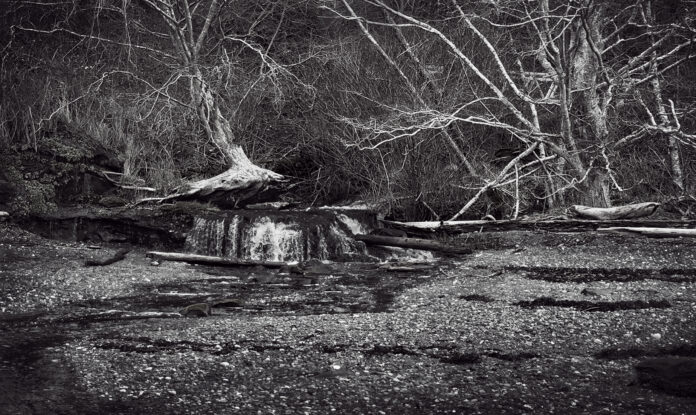
Texada from Morning Beach

https://printartphotography.ca

There Is No Antisemitism Crisis In Australia. It’s A Carefully Constructed Lie.

The Murdoch-owned Daily Telegraph has been caught trying to orchestrate what can only be described as a mass media psyop to inflame public hysteria about antisemitism in Australia.

In a project internally titled “UNDERCOVERJEW” supposedly designed to show “what it’s like being Jewish in Sydney”, a man wearing a Star of David hat and video glasses went around targeting Muslim and Arab businesses trying to instigate hostility from staff members trailed by a video producer and a Telegraph reporter.

The man, who is reportedly associated with the Australian Jewish Association, entered an Egyptian cafe called Cairo Takeaway and postured with his Star of David hatwithout getting any reaction from anyone. He then started making comments to cafe staff, who caught on to what he was doing and started recording him. Police were then called and it caused a big scandal.

It’s obvious that the intention here was to instigate something that could be framed as an “antisemitic incident” and provoke a national outcry and draw all the usual fiery denunciations from Australian officials, followed by arguments citing the incident as evidence that Australia needs even more aggressive speech laws to stomp out all criticism of the genocidal apartheid state of Israel.

And it should here be noted that The Daily Telegraph is owned by News Corp, the Murdoch media conglomerate which dominates the Australian press. Rupert Murdoch became the media giant he is with the help of his ties with the Ronald Reagan administration and US government agencies. Also noteworthy is that Murdoch is a board member and significant shareholder of Genie Energy, which holds a contract to drill for oil and gas in the Golan Heights — territory illegally occupied by Israel.

This is just the latest in a spate of incidents in which a narrative about an urgent epidemic of antisemitism in Australia is being marketed to the public based on false information. Just today we learned from The Sydney Morning Herald that the Dural caravan laden with explosive materials we were told a couple of weeks ago was intended for use in a “mass casualty event” targeting Jewish sites was not only full of unusable 40 year-old explosives with no detonator, but was involved in a scheme by underworld crime gangs to help negotiate reduced sentences with law enforcement.

The entire Australian political-media class lost their minds about this story when it first came out. The words “antisemitic” and “antisemitism” were rife throughout the Australian press. Prime Minister Anthony Albanese declared that “There’s zero tolerance in Australia for hatred and for antisemitism, and I want any perpetrators to be hunted down and locked up.” The federal government’s special envoy on antisemitism, Jillian Segal, called the incident a “chilling reminder that the same hatred that led to the murder of millions of Jews during the Holocaust still exists today”.

And it had nothing to do with antisemitism. At all.

We saw a similar incident earlier this month when headlines blared about an “antisemitic attack” at Bondi Beach involving eggs being thrown at a group of young women. A couple of days later it came out that the egging was perpetrated by two teenagers getting up to teenage mischief and had nothing to do with anyone hating Jews.

Right now we’re seeing an uproar over two Arab Australian nurses who were baited by an Israeli influencer into saying on the website Chatruletka that they would kill Israelis if they came into their hospital. The comments by the nurses were obviously extremely ill-advised and unethical, but a police investigation has so far found that they’ve never harmed anybody, and if you watch the extended footage of the exchange it’s clear the influencer went out of his way to inform them that he served in the Israeli military and killed Palestinians. One of the nurses has reportedly lost 70 family members to Israeli atrocities in Palestine.

Without defending the irresponsible comments of the nurses, I don’t think anyone would expect a Jewish person who came in contact with a Nazi soldier in the 1940s to maintain their cool and avoid violent speech, much less so if that person had lost family members in the Holocaust, and even less if they believed they were having a conversation in private. These chat roulette sites are not intended as mass public broadcast forums; people participating in them tend to interact on the assumption that they are having a private conversation, so the exchange should be viewed as angry words being hurled at a perceived abuser, not as a public declaration of intent to harm others. I don’t condone a healthcare provider saying she’d kill Israeli nationals in her hospital, even if she has lost scores of family members in the Gaza holocaust. But I also wouldn’t confuse what I was seeing with evidence of an antisemitism crisis in Australia.

There is a concerted effort to manufacture the illusion of an antisemitism crisis in Australia in order to protect Israeli information interests — and the call isn’t coming entirely from inside the house. Albanese has acknowledged that the perpetrators of a spate of allegedly antisemitic attacks in this country may have been paid actors working for foreign operatives. The prime minister refused to speculate as to which country might be sponsoring these incidents which just so happen to greatly benefit the interests of Israel, but you don’t exactly need to be Sherlock Holmes to narrow it down.

And some of these so-called “antisemitic” incidents are so obviously staged it hurts. When you see graffiti on a synagogue with “Free Palestine” written next to swastikas, it calls to mind the Mississippi man who notoriously claimed in 2015 that his driveway had been vandalized by black activists with graffiti that said “BLACKS RULE”.

Apparently we’re all supposed to take very seriously the idea that either (A) Nazis are spray painting the words “Free Palestine” next to their swastikas, or (B) that supporters of Palestinian rights are spray painting Nazi symbols next to their pro-Palestinian slogans. And we are never meant to consider the possibility that this incident was staged by Israel’s supporters or by paid actors working for foreign Zionists.

It is always okay to express skepticism about dubious incidents of “antisemitism” in today’s political environment. Israel’s supporters are shitty, evil people who support genocide, and faking antisemitic incidents is a standard hasbara tactic with a well-documented history.

There is no antisemitism crisis in Australia. There is an anti-Palestinian crisis in Australia. An anti-Arab crisis in Australia. A pro-genocide crisis in Australia. The fact that our politicians and media have been shrieking their lungs out 24/7/365 about a made-up epidemic of abuse against Jews while standing with Israel and its American sponsors as they demolish Gaza and prepare to ethnically cleanse a Palestinian territory shows that there is indeed something deeply and profoundly sick about our society — but that sickness has nothing to do with antisemitism.

There are of course people with hateful attitudes and superstitions toward Jews to be found in any country, but they are a small fringe group whose beliefs have far less meaningful impact on people’s lives than prejudices against Palestinians, immigrants, or Indigenous Australians. The average Australian spends very little time thinking about Jews and Jewishness one way or the other, and we’d spend far less if we weren’t constantly being bombarded with false messaging about how our country is full of dangerous Jew haters.

Antisemitism exists in the same way discrimination against divorced mothers exists; it used to be a major issue that did great harm, but in terms of how much it actually affects people’s lives in modern secular times it’s mostly just an obsolete relic of the past. As a divorced mother I might run into the occasional weirdo on the internet calling me a harlot if I mention my personal history, but life is infinitely easier for people like me than it was a century ago. Antisemitism is the same.

Generally when you hear people talking about incidents of antisemitism it falls into three separate categories which are too often conflated:

1. People conflating support for Palestinians and criticism of Israel with hatred of Jews. This is the most common category by an extremely massive margin.

2. People conflating October 7 with a Holocaust-like event in which Jews were murdered simply for being Jewish. In reality October 7 was an act of desperation by the oppressed inhabitants of a giant concentration camp, and they would have killed their oppressors regardless of their religion.

3. Real hatred of Jewish people and real attacks on Jews because they are Jewish. This, while relatively uncommon, is being made more common by Israel’s practice of committing genocide under a Star of David flag while claiming to represent all Jews.

Israel apologists always go out of their way to conflate these three categories. The Anti-Defamation League officially made this conflation a standard practice in 2023 by categorizing incidents of pro-Palestinian activism as antisemitic incidents. The Anti-Defamation League recently drew controversy by saying that Elon Musk’s infamous Nazi salute was not antisemitic, while we’re on the subject.

There is no antisemitism crisis in Australia. As The Daily Telegraph and their agent provocateur found out, antisemitism is one crisis we don’t have. They tried to provoke an antisemitic reaction, and they failed. No one cared.

The real crisis in Australia is that we are the kind of country that would sit and watch a live-streamed genocide without moving heaven and earth to stop it. We have a morality crisis. An apathy crisis. A crisis of our hearts, minds and souls. But what we do not have in this country, in any meaningful way, is an antisemitism crisis.

_________________

Caitlin’s Newsletter is a reader-supported publication. To receive new posts and support my work, consider becoming a free or paid subscriber.

My work is entirely reader-supported, so if you enjoyed this piece here are some options where you can toss some money into my tip jar if you want to. Go here to find video versions of my articles. If you’d prefer to listen to audio of these articles, you can subscribe to them on Spotify, Apple Podcasts, Soundcloud or YouTube. Go hereto buy paperback editions of my writings from month to month. All my work is free to bootleg and use in any way, shape or form; republish it, translate it, use it on merchandise; whatever you want. The best way to make sure you see the stuff I publish is to subscribe to the mailing list on Substack, which will get you an email notification for everything I publish. All works co-authored with my husband Tim Foley.


Bitcoin donations: 1Ac7PCQXoQoLA9Sh8fhAgiU3PHA2EX5Zm2

Featured image via Adobe Stock.

Nice

 Nice

The Canadian national identity is about being “nice.”

Nice means being agreeable, apologetic and compliant. 

Americans are better known for being brash, pushy and forward.

In other words, assertive, outspoken and direct.

Nice is way nicer.  Easier to be around, to nudge and to subjugate. 

We’re very proud of our niceness.

We come by it historically.  

We and the US all used to belong to the British Empire, 

before the revolutionary war.

The US fought hard for independence from Britain.

We chose permanent servitude to the Crown.

We didn’t want to be a free nation.

We’re still smug about it. 

As loyal subjects, our formal allegiance is to the King.

One has to maintain entrenched niceness to keep buying into that!

The US went on to become the most successful republic on earth.

Americans arguably have more constitutional rights than any other nation. 

They are fighting like hell to hang onto them in a Marxist leaning world.

They don’t have a lot of time to play nice.

Canada is currently undergoing the biggest 

constitutional crisis in our history.

We have no sitting government because the “Crown” 

sided with a traitorous guy who selfishly 

put his personal agenda ahead of all the citizens of his country.  

We politely accept being ruled by a medieval bloodline rather 

than by a government whose first loyalty is to us.

That’s awfully nice of us.

We are the nicest Commonwealth country. 

We like to be told what to do and are loathe to question authority.

There are some bold players that take advantage of that.

The Chinese Communist Party, for example, loves our niceness. 

We’ve made it very easy for them to gain powerful inroads into our country.

Maybe our brash, unruly neighbours are not comfortable with the situation?

It would be very wise to discuss our predicament openly and honestly.

We aren’t being allowed to, because that isn’t being nice.