Home Blog Page 142

Sandwich Summit

CS# 05943451

Date: March 27, 2007 10:25 AM

Topic: Sandwich Summit

To begin the day, Mr. Person informed me that my complaint about the lunches made it all the way into the morning’s C.O. briefing, sharing how a good laugh was had by all. As a matter of fact the Senior Corrections Officer, Mr. McClelland, he of the three stripes, came down for a formal inspection of our range after breakfast where, after completing his rounds, he sought me out regarding my complaint. Not to reprimand me for its cheekiness but to get further information on the state of the lunches. And here I elaborated further for him.

I did find it interesting that he appeared to have difficulty holding my gaze. Whether his shifting eyes revealed how weak of a leg he was standing on or spoke to undisclosed medical condition, I couldn’t quite say. He responded with the standard party line of “the manual says this…” and, “the allotted calorie counts are…” but his cutout explanations and stiffness in delivery left me unmoved. At this point he lurched into reminiscing on his days when he was in charge of the highways crew. Regaling me with how often they had hamburgers for lunch when I had touched on our preference for them despite not getting them all that frequently. I countered by telling him how when I first arrived on Crew#2 the presence of hamburgers in our lunch kit was more the norm than the exception to. Conversely, we’d had hamburgers just once in the last three weeks and that was only after we’d submitted our last barrage of complaints. What was a congenial discussion ended with McClelland saying that he, himself, would have a talk with the kitchen staff! Success? Hopefully. 

In the course of our chat I didn’t miss the chance to mention how highly productive our output on Crew #2 had been. Incidentally, C.O.’s Person & Cunningham had both been the main advocates behind the crew’s campaign of complaint letters. Not leaving them to dangle in the wind, I judiciously reeled both of them back to solid ground in sharing with McClelland that I believed they were only lobbying on our behalf because they were truly impressed with how hard we work. 

It was quite the opportunity to bend the ear of someone with pull around here. Best of all, it was through a candid conversation rather than the alternative of being summoned up to the presumably stuffy and official setting of the Senior Correction Officer’s lair. Mr. Person confided to me what a kick both he and C.O. Wight got from the letter, as it was Wight who I’d addressed it to. He followed by passing me the compliment, “you certainly have a way with words.“ I countered, “that may well be…” yet standing there in prison red as if to emphasize my point, I continued, “but it’s not as though they haven’t gotten me into trouble at times!”

Shucking Oysters: Stoned and Confused

Shucking Oysters: Stoned and Confused

By Alex Allen

Feeling anxious, anti-social and sometimes homicidal? You are not alone. Fish and other aquatic life are also displaying drug addiction behaviour. New research has found that pharmaceuticals are contaminating waterways and oceans everywhere. With around 275 million people worldwide using drugs each year, it’s no surprise, that what goes in, must come out. 

Antidepressants are the highest-documented drugs in US waterways, which has experts worried. The most vulnerable fish populations are those downstream of sewage treatment plants, where prescription drugs consistently show up in higher levels than in other waterways. Wildlife living in rivers and coastal waters where effluent is discharged are exposed to an array of chemical cocktails.

Anti-anxiety drugs like Valium can cause fish to become more active, less social and to take more risks, making them more likely to be eaten by predators. These effects of pharmaceuticals in the waters on fish are likely permanent, because changes in brain chemistry follow exposure. So if pharmaceuticals make a fish more skittish, the fish will always be skittish, even if the drugs are removed.

In one 2018 study, blood tests and tissue analysis were used to screen bone fish, a recreation fish off the south coast of Florida. The pharmaceuticals detected included antidepressants, antibiotics, heart medications, blood pressure medications and pain relievers. The same contaminants were also found in crab, shrimp and other small sea animals that the bone fish feed on, as well as in water and sediment. Contaminants were also found in bone fish tested in waters near the Caribbean, Bahamas, Puerto Rico, Mexico and Belize.

They identified 58 different pharmaceuticals in bone fish sampled along a 200-mile stretch of the coastline over a three-year period. The pharma detected in the fish included eight different antidepressants, at concentrations equal to as much as 300 times the amount prescribed for humans.  In one case, the researchers found 16 different drugs in a single fish taken from Biscayne Bay. The study also found concentrations of Parkinson’s drugs, antifungal drugs, stomach medications and opiates in the fish.  

A US study on exposure to fluoxetine, lovingly known as Prozac, had a bizarre effect on male fathead minnows. They ignored the females and spent more time under a tile. The doses of Prozac added to the fishes’ water were very low concentrations, at 1 part per billion. When the dose was increased, at levels found in some waste water, females produced fewer eggs and males became aggressive and killed females in some cases.

Researchers in the Czech Republic deliberately tried to get dozens of trout hooked on methamphetamine for a water pollution study. The methamphetamine-exposed fish preferred the water containing the drug, while no such preference was shown for the untreated fish. The researchers also found that during their withdrawal period, the methamphetamine-exposed trout appeared extremely sluggish for about 96 hours when moved to a clean tank. 

One of the signs of drug addiction is a loss of interest in other activities – even those that are usually highly motivated, such as eating or reproducing. It’s possible that fish might start to change their natural behaviour, causing problems with their feeding, breeding and, ultimately, their survival. Exposure to drugs not only affects the fish themselves, but their offspring. In fish, addiction can be inherited over several generations. This could have long-lasting implications for ecosystems, even if the problem was fixed now.

This is not the first study to find street drugs in aquatic life. In 2019, scientists in the UK reported cocaine in freshwater shrimp in all 15 rivers they sampled. Interestingly, they detected illegal drugs more often than some common pharmaceuticals. US scientists discovered traces of opioids in mussels off the coast of Washington in 2018. Canadian researchers also found traces of cocaine in the discharge from water treatment plants in southern Ontario in 2015. Sewage treatment plants don’t filter these things out – they were never designed to. 

And if that’s not enough, we have sharks hooked on cocaine. Florida is a major transit point for drugs entering the US from South America, and the region is a hot spot for floating cocaine bales which are often lost at sea or discarded by traffickers. Last summer, a research team in the Florida Keys, observed sharks displaying unusual behaviours. Researchers are speculating that sharks, driven by hunger and frenzy, might be consuming the packages off the coast of Florida.


A hammerhead, a species that would typically avoid humans, approached the divers directly, moving erratically. They also noticed a sandbar shark swimming in circles, fixated on an imaginary object. The researchers dropped dummy bales in the water, which many of the sharks bit into, and loaded balls of bait with highly concentrated fish powder to simulate cocaine. The effect, the researchers noted, was similar to the impact of catnip on cats.

Last month, the US Coast Guard announced the recovery of over $186 million of illegal narcotics from the waters of the Caribbean and southern Florida. Apparently, such seizures barely make a dent in an industry operating at record levels. 

It’s not just drugs in our waters. Plastics. Heavy metals. Chemicals. All our shit. We need to urgently take action to protect our oceans and the diverse life they support. Our actions on land have far-reaching consequences for the health of our oceans and waterways. Remember, as Paul Simon wrote, one man’s ceiling is another man’s floor.

Hornby Island LTC’s review of its STVR bylaw: a Response – Sharon Small

The following letter is a response to the Hornby Island LTC’s review of its bylaw on short-term rentals in which I provide research correlating the increase in tourist related vehicle volume with the proliferation of short-term rentals. I argue that the infrastructure (Denman’s terminal-to-terminal roads and limited ferry space) is severely overburdened. Given that the HI Economic Enhancement and HI short-term rental groups are campaigning for more short-term rentals throughout the remaining months of the year, this is the time for Denman islanders to communicate their views to the HI LTC.

The Hornby Economic Enhancement group’s (HICEEC) resolve to keep the short-term rental bylaw unchanged and expand into the remaining months of the year would significantly impact an already overburdened infrastructure— Denman terminal-to- terminal roads and the Baynes Sound Connector. Thus, most Denman residents would support the Advisory Planning Commission’s recommendations to reduce the months of operation from the current five to the original three and to require Temporary Use Permits. These changes would control and balance the number of economically valued short-term rentals with our shared preserve and protect mandate and Denman’s OCP transportation bylaw on minimizing negative traffic impacts.

The following rebuttal to the HICEEC Vice Chair’s claims illuminates the profound influence the present volume of Hornby tourist traffic has on the infrastructure.

The HICEEC Vice-Chair recommends keeping the OCP Bylaw on short-term rentals unchanged because self-regulation works.

Fact: The number of short-term rentals since the 2014 bylaw was approved has increased from 14 to estimates of between 80 and 120, with many others operating illegally throughout the year and without oversight. In response to a concern that more short-term rentals would affect affordable housing numbers, the Vice-Chair (and Consultant Patricia Mulroney) claim there’s no data linking short-term rentals with the affordable housing crisis. In fact, published university and B.C government research strongly contradict this view.

FACT: In 2019 Dr. David Wachsmuth, Canada Research Chair of Urban Governance at McGill University, contributed to the first comprehensive study correlating the rapid growth of short-term rentals to the decline in affordable housing. His research, which focused on Tofino and a number of other B.C. communities, concluded that too many short-term rentals are not licensed (one half, according to an Airbnb study); that they drive up rent; and that they are responsible for removing 19.1% housing rentals from the market (Sept. 21. 2023 Bloomberg). In addition to documenting the trend towards commercial operations, his data concluded that short-term rentals are increasing 17.8% each year and are responsible for renters paying 20% more for rent. In June of this year, he found that of 28,510 active listings,

16,810 were taken off the long-term rental market (CTVnews.ca September 21, 2023).

The Joint Union of B.C. Municipalities and the Province of B.C. Advisory Group on Short-Term Rentals Report concludes that short-term rentals have a “staggering” impact on affordable housing. This report confirms that short- term rentals removed more than 16,000 B.C. homes from the residential rental pool (UBCM.ca June 30, 2021). Cortes Island, with a population similar to Hornby’s, conducted a study that also directly links the decline in affordable housing and increases in rental instability to the growth of short-term rentals (CBC News, August 14, 2023). Anecdotal and circumstantial evidence on Hornby support these conclusions.

FACT: Given the dramatic effect short-term rentals have on the current housing crisis, the B.C. Minister of Housing is scheduled to introduce strong legislation this Fall implementing the Joint Advisory Group’s recommendations. Changes could include eliminating commercially run short-term rentals; requiring rental platforms like Airbnb to confirm business licences; and requiring communities to collect short-term rental data to be shared in a Provincial data base (June 30, 2021 Final Report of Priorities for Action UBCM.ca).

FACT: The above statistics strongly argue that the steady increase in Hornby tourist vehicles travelling across Denman since 2017 is connected to increases in legal and illegal short-term rentals. The BCF Annual Report to March 2023 states that of the short routes, only Routes 21 and 22 showed a significant revenue increase. Traffic statistics from 2017 to the present show steady increases of up to 9.91%. In May 2023, 13,100 vehicles represented a 17.88% increase from 2022 and in June, 15,114 vehicles represented a 9.34% increase. Once the traffic statistics for the last three months are posted, they should support what ferry staff and Denman residents experienced —that the number of tourist related vehicles keeps increasing.

FACT: The tens of thousands of vehicles and numerous service trucks supporting the Hornby tourist economy generally race back and forth across Denman. Unless you live on the Denman speedway between the ferry terminals, you cannot imagine the assault such high numbers of vehicles— in July 2022 18,147 and in August 19,625–have on our formerly tranquil community. Also, too many drivers engage in reckless driving to get ahead of the ferry line even when the two ferries at Denman West were running. Service vehicles that cannot manage the Denman Road hill and many racing Hornby drivers render the alternative multi-use Lacon/McFarland route treacherous for local drivers, walkers, and cyclists.

FACT: The problem Hornby traffic is creating for Denman is recorded on the BCF Denman Community Page. The major concern of the 170 residents who

attended the May 26 BCF facilitated roundtable event is safety and quality of life. A full summary and online survey of the experiences islanders shared about encounters with terminal-to-terminal recklessness, soon to be posted, will verify the frustration, anger, and despair Denman residents feel about an escalating problem that violates our preserve and protect mandate and OCP bylaw on transportation.

THE HICEEC Vice-Chair questions whether short-term rentals have an effect on ferry space.

FACT: This question could be easily answered with a credible up-to-date survey of how many illegal and legal short-term rentals are currently operating and what percentage of the total tourist traffic volume short-term rentals represent. What is known, however, is that too many tourist vehicles towing trailers and RVs and tourist industry service vehicles take up from two to even four ferry spaces and that the wait times are excessive. Residents moved to Denman because of a desire to live in a tranquil, rural environment with easy ferry access to off island jobs, schools, services, and hospitals. However, residents who live on the speedway to Hornby no longer enjoy a tranquil environment and Islanders no longer have assured ferry boarding at Buckley Bay or at Denman West without long wait times.

FACT: The backed up traffic forces many residents to avoid ferry travel when Hornby tourist traffic is expected to be high. Particularly frustrated, are off island workers and families with children going to school or participating in off island activities. One summer Sunday when covering a three hour shift at the Art Centre, I observed the major intersection into Denman Village frequently clogged with Hornby vehicles that often reached to Lacon Road. The single remaining lane cannot accommodate coming and going local and offloaded ferry traffic.

When traffic was moving, drivers continued to race through the Northwest intersection, violating the 30 mph speed limit. Most importantly, this backed up traffic and speeding creates peril for our ambulance and fire truck drivers, local drivers, and cyclists who are forced to use one single lane.

FACT: Businesses and artisans complain that excessive wait times at either Buckley Bay or Denman West have a strong negative effect on revenue. They are paying directly for increases in delivery and service costs and indirectly for wait times that cut into work time when making trips off island to pick up or deliver supplies. Excessive ferry wait time is also reducing day visitor revenue. Not so many years ago, large groups of senior cyclists regularly visited Denman in the high season to circumnavigate the island, visit craft studios, shop and eat. Most now avoid Denman as do many day visitors from the Comox Valley and Parksville area.

FACT: Since the round table meeting, BCF has made changes to mitigate the impact of Hornby tourist traffic on the infrastructure. They hired extra flaggers at the Denman West Terminal and often, but not consistently, monitor the flow of traffic so that it does not back up at both Denman terminals to gridlock major intersections. Although the two ferry system improved service during the week, it did not alter the traffic volume problems.

The Friends of Denman Forests, the group that galvanized community support around the traffic volume issue last winter, emphasize that changes to the Gravelly Bay Terminal cannot be made until the infrastructure issue is managed. They support, along with those who attended the May round table event, the need for a direct ferry to Hornby as the only long-term option for Denman (see the BCF Denman Community Page). In the meantime, both islands are saddled with a dysfunctional and inadequate cable ferry until the next budget cycle in four years.

Pulitzer Prize winner Wallace Stegner writes, “All sins are sins of excess.” Denman is suffering from an excess of Hornby tourist traffic. Approval of the Advisory Planning Commission’s recommendations, therefore, should result in fewer short-term rentals and a significant reduction of traffic volume. Also, by enforcing licensing, Hornby would be in compliance with other Trust islands, communities and cities across Canada, and the forthcoming B.C. Ministry of Housing legislation on short-term rentals.

Until there is strong oversight and regulation of Hornby short-term rentals, Denman’s preserve and protect mandate and OCP remain compromised and the infrastructure dramatically overburdened.

Respectfully, Sharon Small,

Denman Resident and Retired University Professor

Ukraine War: That Same Old Refrain

Ukraine War: That Same Old Refrain Sally Campbell

It is a continuing source of amazement to me that almost every mention of the war in Ukraine elicits a response to the tune of: “Well, we have to get rid of Putin and to end the war”. Or: “We can’t negotiate with Putin in power; he’s a madman”. Do people not see the pattern here? Were people not paying attention when the name was Saddam Hussein? Osama Bin Laden? Muammar Gadaffi? Bashar al-Assad? We can also examine the staggeringly long lists of US military interventions contained in David Swanson’s new book: The Monroe Doctrine at 200 and What to Replace it With (2023). It’s not only the idea of opposing the evil leader to justify yet another long and brutal war with no win for either side; lies are also told to motivate a compliant public to just keep quiet and focus on things closer to home. Lies like weapons of mass destruction (Iraq) and chemical warfare against one’s own people (Syria). Now the lie is that provocation by the US/NATO in stationing troops on Russia’s borders these last few years has nothing to do with the war. Or that the US- (and Canada-) assisted 2014 coup in Ukraine was all about democracy, and not about removing a democratically elected leader who tried to walk the line between Russia and the west. Or that NATO is not involved in placing the rest of us in peril of a nuclear war.

We need to understand that mainstream corporate media is not telling us how or why this war got started. We need to seek out independent sources to even find out that Jens Stoltenberg, NATO Secretary-General, on 7th September 2023, acknowledged that NATO provocation DID lead to the Russian invasion, saying: “First of all, it is historic that now Finland is member of the Alliance. And we have to remember the background. The background was that President Putin declared in the autumn of 2021, and actually sent a draft treaty that they wanted NATO to sign, to promise no more NATO enlargement. That was what he sent us. And was a pre-condition for not invade Ukraine (sic). Of course we didn’t sign that.” The Russian invasion occurred in February of 2022. Had NATO agreed to stop its encroachment on Russian borders, these countries might not be at war right now.

People cite the Crimean annexation as another reason for supporting this war. What most of us perhaps don’t remember (or even know, given mainstream media bias) is that Crimea was long part of Russia, only recently (collapse of USSR) made part of Ukraine by Yeltsin, and that the people of Crimea voted in a referendum to rejoin Russia after the 2014 coup deposing Ukraine’s president. Crimea, like the Donbass region in Eastern Ukraine, has a majority of Russian speakers who align with Russia. Do they want to fall under the grip of US world dominance?

We also conveniently forget the 2 Minsk Accords, which if implemented, could have prevented this ugly war. Why were they not implemented? They called for an autonomous Donbass region and a neutral Ukraine. What, to those of us who aren’t arms dealers, is problematic about a neutral Ukraine? We have past examples of Switzerland, Austria and Finland as neutral countries. This distributional thinking – that you need to be on one side or the other of nuclear armed states – is dangerous.

And we are clearly seeing western military presence in Asia as provocative and escalatory vis-à- vis China. Do we really need to poke that bear with whom we have had a healthy trading relationship?

For me, the most frustrating aspect of this entire way of thinking is our willful blindness of the fact that all wars eventually end. WW2 ended with negotiation after Hiroshima & Nagasaki. We know now that Japan was ready to surrender and that war could have ended without dropping nuclear bombs, but the bombs were dropped anyway. Stoltenberg also declared in his recent speech (above) that Europe is in its most precarious position since WW2. Why are we ignoring that?

We are also indoctrinated by media saying there must be a total victory. Total victory from the point of view of the west means Ukraine joins NATO; we know that is something Russia will never agree to. In realspeak that means keeping this war going for many more years, until Ukraine is utterly destroyed, and there is another war more important going on somewhere else.

We countries at the edge of nuclear-armed superpowers have to be able to get along with our nearest neighbours!

All wars end with negotiation after the fighting stops. First the fighting has to stop. We do not have to sanction any side but the side of life by pressuring for a ceasefire now. A ceasefire can happen overnight. A ceasefire gives breathing space and allows for people to create the conditions for negotiations (and compromise) to take place. Even Chair of US Joint Chiefs of Staff Mark Milley compared this war to WW1, (speech to Press Club November, 2022) calling it “unwinnable”, and saying that if you can negotiate, do it. He was ignored by the White House.

We in Canada ought to be lobbying hard for ceasefire now. Let’s be on the right side of history.

Vancouver

Vancouver

By Mr. Unknown

Lights are seen from afar

Canada’s third-largest city

Tall buildings loom

Pollution is a pity

Vancouver the city

Quite different from the island

Apartments replace trees

Expensive to live

Outer Vancouver includes

Coquitlam, Richmond and Surrey

Burnaby, White Rock, Delta

New Westminster, Maple Ridge and Langley

Yaletown, Granville Island

North Vancouver and Gastown

Each contributing to the name

Of Vancouver who was crowned

The man who “discovered” this land

These days we all frown

Downtown feels dark

Sunlight blocked by towers

Stores, offices and condos

Traffic slows by the hour

Ferries bring us here

To the big metro place

Swartz Bay to Tsawassen

Duke Point to Horseshoe Bay

Vancouver is a fun visit

For a day or two

But soon you may find

This escape is too much for me or you

Come see its landmarks

Come see its city views

Come Island people to Vancouver

Modern and new

Press Release – Victoria Cannabis Buyers Club

For Immediate Release

Friday, September 29, 2023

Victoria B.C.: A Lifetime Achievement Award is being presented to Victoria cannabis pioneer Ted Smith at the Grow Up Conference, held at the Victoria Conference Center on Sunday October 1, 2023.  With over 28 years working in the cannabis field, Ted has been an instrumental force in the cannabis scene long before it became a multibillion dollar industry.  The Grow Up Conference features leading experts in cannabis genetics, horticulture and law, with dozens of vendors and high-quality speaker panels. 

Ted is humbled to receive this award from a legal industry where he has long existed on the fringes. “It is a distinct honour to be recognized by the cannabis industry for my work advocating for patients and medical cannabis. For a long time I thought the legal industry didn’t care about my work, it makes me so thankful to see my advocacy work has left a lasting impression.”

The Grow Up Industry Awards Gala is a national annual event honouring cannabis professionals and companies and recognizing excellence and innovation in the cannabis industry. 

Green Wizardries with Maxine Rogers

Green Wizardries, The Harvest Now and the Harvest to Come   by Maxine Rogers

This year, we are having a very good harvest.  The tomato crop has been outstanding for all the gardeners I have talked to.  We are still harvesting tomatoes from our polytunnels.  I spent a large part of today making a batch of catsup.  One of my sisters insists I shouldn’t call it catsup because it is so very good and nothing like the commercial product.  However, I did use the tomato catsup recipe from The Joy of Cooking.  Like everything home made, it takes some time to cook and process it in a water-bath canner but it is vastly better than anything you can buy.

I also made a pint of elderberry syrup from our first crop of elderberries.  I think most gardeners on Hornby and Denman would benefit from growing some elderberry shrubs.  I bought ours three years ago and planted them in the garden.  The first year, we didn’t get many berries and the second year the same but as the bushes were two years old, I was able to prune them close to the ground and this year, they shot up aggressively and set huge bunches of berries.  

The flowers of the elder can be made into a very good sparkling wine.  They are medicinal and can be helpful in many preparations to reduce fever.  The flowers are also much valued by the pollinators and they smell sweet.  The blooms used to be picked and soaked in water overnight and used to wash the hands and face as a beauty treatment.  

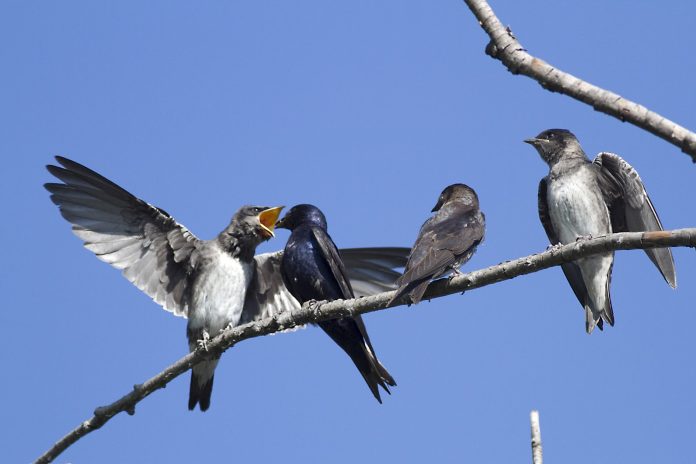
The berries were hugely popular with the birds and we produced a stunning crop of white-crowned sparrows on the berries we shared with them.  We even had one pair of white crowns nest in one of our elder bushes.  I did manage to secure some berries for us.  

I suppose these berries could be grown in a berry house to ensure you get all the berries but I am not that organized and the birds are very important to delight us and to keep the ecological balance of the garden.  White-crowned sparrows eat the seeds of weeds and grasses as well as a lot of insects and fruit, particularly elderberries and blackberries.  

Elderberries used to be made into jams, pies and wine.  They seem to have fallen out of favour but should make a comeback as they are so easy to propagate and produce a good crop of nutritious berries.    I grow mine to make a syrup from the berries that is a traditional remedy for colds and the flu.  

Before I grew my own, I bought dried elderberries from Harmonic Arts, a herb company in Cumberland.  They sourced their berries from Poland and Croatia and other foreign parts so it is much better to grow our own here.  The syrup made from fresh berries, ginger, cloves and honey is much more tasty than the syrup made from dried berries but both work well to help people get over colds.  

This January, I will prune my elder shrubs close to the ground and take a bunch of cuttings to give to friends and the Garden Club.  If you want to have some elder cuttings, please call me at 335-1088 to reserve some.  The little cuttings can be pushed into the ground where you want them to grow but they will not do well if they have to compete with grasses and weeds.  I prepare a planting hole by mixing in a couple of spades worth of compost and then I cover the area with maple leaves.  I stick the cutting directly into the soil and leave it.  They make great wildlife bushes even if you are not interested in harvesting the berries for your own use.  

Another crop that did well this year was plums.  A friend gave me a couple of flats of plums and they were so sweet and good I could not walk past them without eating one.  I made them into plum sauce with our own onions, garlic and hot peppers.  This sauce will go really well with chicken and rabbit dishes.  

The harvest to come is much on our minds too.  Today, my husband spent most of the day hauling compost out to the garden to mulch a huge bed for garlic.  Now is a good time to plant garlic.  I will go out and place the cloves of garlic on the surface of the beds.  This way, I can make sure my rows are straight and that I have left large enough paths between the beds.  Once sure of all that, I plant the garlic under the mulch.  To grow the best garlic, you have to lime the soil and give the garlic a lot of nutritious compost.  They love seaweed.  

It is also time to trim excess runners on the strawberry plants.  I will only leave one runner per plant but if you need a lot of new plants, you can leave two or even three runners.  Strawberries only produce well for three years so keep an eye on the age of your plants and if in doubt, lift the plants and throw away any plants that have black, straggly roots.  They are way too old.

Letter to the Editor – Helen Grond

Letter to the Editor

Helen Grond

“Never assume malice when incompetence will suffice as an explanation” -Hanlon’s Razor

“Sufficiently advanced incompetence is indistinguishable from malice” -Fred Clark’s Law

It has been shown that if government officials have been caught side stepping their own

legislated procedures, protocols and laws, the public is willing to forgive them if they promptly

take responsibility and appropriate action to correct the situation. Unfortunately, they typically

do the opposite. Governments normally double down on their mistakes, attempt to cover

them up or lay the blame on their chosen fall guy. This is how they lose public confidence.

This is exactly what happened in parliament on September 22 nd when the Trudeau government,

somehow, unbelievably invited a former Nazi SS veteran to be honoured by parliament. It’s

impossible to imagine how a world leader could make such a blunder. Trudeau refuses to take

personal responsibility and the reputation of our country (especially Trudeau) has been trashed

worldwide. Canadians of every stripe are unified in their shared horror. Right on cue, Trudeau

named speaker of the house, Anthony Rota as the fall guy to take the hit for his colossal failure.

In case you thought that government malfeasance was restricted to the Trudeau

administration, look no further than our local government – the Islands Trust. Concerned

residents are shocked at the behavior of Trust planners with respect to an ongoing debacle

regarding a proposed cell tower application by Rogers over the last 16 months. At every turn,

the Trust has avoided following due process. Those actions have potentially compromised our

Trustees and cast serious doubt on the fairness of our local elections held in 2022. The Trust

has been exposed providing advantages to the corporate interests of Rogers over the rights of

local residents. This has been substantiated by a recent Freedom of Information Act (FOIA)

release. A lawyer retained by concerned Hornby residents doesn’t hold back when she says the

whole thing stinks to high heaven.

If only the Trust would take responsibility for their actions! Instead, the seeds of a cover up

have already been planted with hints that a formerly employed junior planner may be poised to

take the hit. The Trust must take mature, decisive and corrective measures to avoid disgrace or

worse. Let’s hope they step up and do the right thing because the alternative means we do not

have a functional democracy!

Timeline of important dates in the Rogers application process

June 10, 2022 – Brian Gregg (Rogers’ agent) opens communications with Islands Trust.

August 17, 2022 – Rogers makes a formal application to install a tower on Hornby Island and the

Trustees are not informed.

September 9, 2022 – Local Trust Committee passes model strategy for cell tower placement on

Hornby Island.

October 15, 2022 – Trust elections take place with the community being kept in the dark during

the campaign about the August 17 th , tower application.

November 21, 2022 – The community and the Trustees first learn of the Rogers’ application in

local papers and the consultation process is advanced quickly through the holiday season.

January 13, 2023 – Rogers closes community consultation without carrying out a legally

required, in person public meeting on Hornby. The Trust seems to accept this and doesn’t press

for the required public meeting as of October 3 rd , 2023.

September 8, 2023 – A staff planner at an LTC meeting claims that the Trust planners were

unaware that the adoption of the more rigorous Model Strategy had occurred in a September

9, 2022 LTC meeting. The planning staff had full control over all meeting agendas, motions,

briefings and had themselves developed the model strategy.

Flowers for Mao – Jane Masutani

Flowers for Mao

I have taken this title from a Leonard Cohen poetry collection called “Flowers for Hitler” that I’ve had in my possession since 1970! I haven’t thought about Mao for many years. I have a little green hat with a red star on it that I picked up in Chinatown many years ago as a curiosity, but it goes without saying, I have never worn it except as a joke to show to friends. But I’ve always thought of Mao with fondness and admiration for having kicked the Western powers out of the country and regaining China’s sovereignty after a 100 years of humiliation under the Western yoke.

I watched a 25 minute BBC documentary last night on the life of Mao, apparently the best bio. doc. on him on the net, and I came away feeling enlightened but rather depressed about his legacy and what he had done for China.  The announcer spoke with just the right tone. He didn’t sound like he hated Mao or was hellbent on character assassination, or was angry. He was the BBC voice of reason. He was just giving us the facts. But something felt off, and I couldn’t put my finger on it.

I shared the video with my husband because he always has a more clear-eyed view on these things than I seem to. He remembers people’s names instantly as well, which is another cause for me looking up to him. He is basically the oracle. But before I share what he had to say about the documentary, let me tell you what I knew about Mao and the situation in China from the 1930s onward before watching this documentary. 

Mao was handsome and slim for only a brief time in his youth, like Churchill. He had four wives, the last one being an entertainer with the stage name Blue Apple. He could ride a horse. He swam across the Yangtze River in his early 70s to prove his virility (Although the fact he was with Blue Apple should have been enough!) He went on the “long march” to consolidate power. When he attained power in 1949 some of his policies didn’t work as planned. And that’s an understatement. He represented and fought for rural China, the peasants. He developed a culture of hero worship in the country. He gave China back its sovereignty.

Chiang Kai Shek was a slim, handsome man all his life. He could ride a horse. He married one of the wealthy Shanghai Soong sisters, renowned in the 1920s for their beauty. He had a nickname in the 1930s in Washington, “cash my cheque”. The United States were backing him, he was their man in China, and apparently always asking for more money. His army was 4 times the size of the Communist, Mao’s army, due to all that moola. And he still lost. He represented, apart from the hidden hand of the US, the Chinese moneyed class, landlords and business people in the cities. The desperately poor farmers in the countryside, 80 percent of the population, gave assistance to Mao’s communist troops in the form of a bed and food during the long march. They knew which side their bread was buttered on so they didn’t offer aid to Chiang KaiShek’s soldiers. When Chiang lost the long fight in 1949 he and his followers took much of the money and treasures of the country to Taiwan with them. 

When the dust of victory settled, Mao, Jou EnLai and other officials grappled with the language issue. Should they adopt the Roman alphabet? They had a 10 percent literacy rate. The characters were too difficult to learn. They decided to simplify them, to keep their connection with the past. But they simplified them so much that their ancient classics can only be read, ironically, by the Japanese, who have retained the original characters in their writing system. But, everyone can read and write in today’s China.

Another issue was what to do with the surviving, 46 year old, last Ching dynasty emperor, Pu Yi. I have a soft spot for this weedy little stereotype of a Chinese man with round black glasses and slightly buck teeth, and so did Mao and the people around him. They didn’t want him dead, they wanted him as a shining example of reform. He was put in a re-education camp for several years where he was bullied when it became known who he was and it became obvious that he was almost incapable of getting dressed by himself or carrying or serving food without spilling it, not having done these things before. He ended up as a park gardener in Beijing. They even arranged a partner for him. They said, after all, an emperor needs a consort. They chose somebody’s unmarried middle-aged sister, an office worker, and he lived out his remaining years quite happily  with her. But, what a roller-coaster ride of a life the poor man had! He spent his life yearning for the medieval palace splendor of his youth. His one true home. He told his jailers about his life in the palace, how from the age of 13 the eunuchs had brought a succession of palace maids to his room at night. When he found himself married off at 17 he left his bride sitting on the edge of the bed in her red dress and veil. She was a complete stranger, he said, the palace maids were his friends. But, he grew fond of his wife and in old age one of his happiest memories was riding around the streets of Beijing on a bicycle incognito with his beautiful bride on the back. But, enough about poor Pu Yi. 

Perhaps Mao was good at being a revolutionary but once he got into power he didn’t actually know how to pull off his idea of modernizing the country, bringing it into the modern world. His ideas often seemed to bring disaster and the people closest to him were perhaps too afraid to offer their ideas. Also, a revolution is a violent thing. During the French Revolution there were aristocratic heads being chopped off to a large clapping, appreciative audience for three years straight! That’s a lot of dehumanizing violence. You say you want a revolution…

Seems like Deng Hsiao Ping, the man who came after him, was the one to open up China to the modern world. The documentary ends by saying that China is communist in name only now. It may not be strictly communist in rule, but the common people do have their opinions heard on the local level and so the government is responsive to the will of the people. And there is the traditional communist long-term planning, with 5 year plans. Corporations do not run the country.

In the end, we’re left with the terrible truth of there being a ton of human suffering during a large part of Mao’s rule. Was it all worth it to break free from Western powers? What would China be like now if “cash my cheque” would have won? The Philippines?  Ultimately it doesn’t seem morally right (does it?) to have Caucasians running the entire world. Asia has a right to be Sovereign, as does Africa, The Middle East and everywhere else. The US encompasses 4.5 percent of the world’s population.

The documentary does say, and the modern psychoanalyzing was a nice touch and most likely true, we’re all human after all, that Mao was brutalized and traumatized by the intensity of the long-term violence thrown at him and his men by the West in their herculean efforts to keep control of China. He’d lost his wife and four year old son to the violence. That he was a different man at the end of it. 

By 1953 he had so built up the Chinese army that they were able to beat back American troops in Korea and the US had to draw a line across the country, freeze the fighting, and accept defeat. 

It was so many years ago now that I bought the Mao hat. I also bought “China Pictorial” on visits to Chinatown. It featured lovely images of pretty girls in the countryside smiling with rosy cheeks, picking cabbages . Now, even young people in China  laugh at those old propaganda magazines and Mao’s little red book, the faded slogans painted on old barns. Mao’s chubby face benevolently gazing out onto ghost town streets. 

The youth of China have left Mao behind. They’re interested in BTS and Korean dramas, like the rest of us.  Matsuki’s assessment of the documentary Is that ultimately, there should be credit where credit is due. The East is red, and that’s only because of Mao.

Outhouse Mites Disclaimer