
Home Blog Page 141

Phoenix Riting! – October 19th, 2023

Phoenix Riting!

As I hoped, I hit the sweet spot between wildfires and snow for my road trip to Edmonton. It was lovely, sunny and the fall colours were glorious; the rains began the day I returned. It’s wonderful to be home in the pouring rain! I timed it well.


I did attend the September 26th Community Engagement Session meeting at the Hall, and I found it hopeful and inspiring. We rotated through several tables, each one devoted to a different topic relevant to our future (ie environment, arts and culture, various forms of industry etc) and brainstormed our ideas and visions for the future as a community. I was impressed by how aligned we were as a group. Certainly, there was disagreement, but it seemed minor, at least at the tables I participated in. It felt good, and very productive. Our core values were reaffirmed, to honour our island’s natural limits, to seek to live harmoniously in our environment.


In particular, at every table we agreed as a community to valuing differences, and that disagreements are okay. Community resilience depends on being adaptable, hearing each other, and working toward solutions together. Sometimes, events on this island have a resonance of unity, as if a greater entity were working through us, and we are all simply voicing its needs. Maybe it was just the thrill of meeting in person after so many Zoom meetings, but I walked away feeling uplifted and full of optimism for our shared future. This feeling is everything to me, for though realistically we will always problems, our shared commitment to core values is holding steady. I look forward to the next session at the Hall on November 14th.


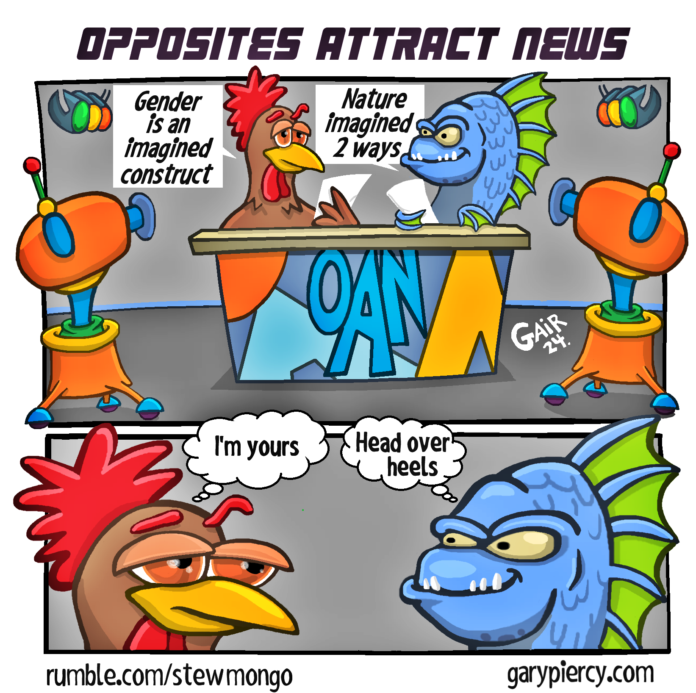
In contrast, the rest of the world seems to be going slightly insane. For example, the furor over my July 6th column apparently continues behind the scenes, as evidenced by last week’s editorial. After a whole summer of hearing nothing at all, I recently received a lengthy email from a prominent Denman Islander, explaining to me exactly why she believed my column was ‘transphobic.’ I did read the whole thing. The writer denied me permission to quote or reference what was said, so I won’t address it directly here at this time.


I very much appreciate the feedback. I found the email interesting and a little frustrating. It gave me much food for thought. While they affirmed their belief in my ‘transphobia,’ they did not, to my mind, in any way show how what I wrote could possibly contribute to hatred, disgust or violence toward trans people (the definition of transphobia). ‘Transphobia’ seems, now, to be a code word for something far more abstract and nebulous than the definition suggests.


I am told, in essence, that my opinion is dangerous and that I am selfish for expressing it, but not what the danger is. I have the sense that the writer and I speak different languages. It’s a tangle, and I will need to take more time to reread and digest what was said before I can formulate a response. The email was thoughtful, well written and the tone was non-attacking (though the underlying accusation is still there).


With that, I am tired. The world is going mad. Don’t even get me started on what is happening in Israel right now. My heart is both light and heavy at once. I feel oppressed and freed. Paradox! These are strange days indeed.


Many blessings to you all, as we plunge into the dark time. I’m going to the Hall on Saturday night to dance to Led Zeppelin tributes and oh wow. Few things can’t be cured with dancing, at least in my life. I’ll go dance it all out, and save the world in the process. I can’t wait! I’ll see you there.


That’s what I think. What do you think? Email me at phoenixonhornby@gmail.com 

Shucking Oysters: When is Enough Enough?

Shucking Oysters: When is Enough Enough

By Alex Allen

Trigger warning: The following article contains lots of numbers and dollar signs that could trigger math anxiety. 

Are you sitting down? Did you know that during the pandemic Ottawa paid out over $100 billion to Canadian businesses “struggling” to keep their employees on the payroll? But instead of payments going to individual workers, most of the Canada Emergency Wage Subsidy (CEWS)* money went to their bottom line. The almighty profit, which shouldn’t surprise anyone. As we all know, greed is a very powerful stimulant.

The 2020 financial statements of 53 public companies showed that they received more than $10 million in wage subsidies, and in just six months, they collectively dished out $2 billion to their shareholders. At least seven companies bought back shares while receiving the CEWS. In other words, tens of millions of dollars from the government’s pandemic aid package went to corporations whose profits went up, despite the colossal economic downturn in 2020. After all, maximizing profit is a moral imperative, people.

Much like a human psychology experiment, the behaviour of corporations that received CEWS payments varied widely. Many suspended or cut dividend payments and some introduced different forms of discretionary spending. Others, as humans do, spent lavishly on non-payroll expenses, which is perfectly legal under the emergency wage subsidy.

The Montreal-based trucking giant TFI International, for instance, received $63 million in wage subsidies, while also paying out $45 million in dividends amid rising profits and a soaring share price. As it laid off 1,600 workers, the company spent nearly $9 million buying back shares and then announced it was increasing its dividend by 12%.

“We are not ashamed,” about taking the wage subsidies, TFI CEO Alain Bédard told a Montreal newspaper. “Not taking it would be like refusing a tax exemption. It would be like saying ‘We’re more Catholic than the pope.'” During that time, Bédard sold stock options in TFI worth more than $20 million. 

Canada’s big three telecom companies collectively received more than $240 million in emergency subsidies. Bell received $122.9 million, Rogers $82.3 million and TELUS $38.6 million. BUT, the three companies continued to pay out regular dividends to shareholders; Bell and TELUS even announced increases to their annual payouts. Meanwhile both Bell and Rogers laid off workers at their “hard-hit” media divisions. Rogers paid out just over $1 billion in dividends while Bell paid shareholders close to $3 billion; and TELUS paid almost $1.5 billion.

Air Canada received the most in emergency funding … $656 million to “pay” its employees. They reported an operating loss of $3.776 billion in 2020 compared to an operating income of $1.650 billion in 2019. Yet the company paid its top executives and managers a combined $10 million in bonuses tied to the pandemic. The airline justified the bonuses and stock awards to shareholders by saying the senior executive team “reacted urgently, decisively and skillfully to mitigate the impact.” Those actions included slashing over 20,000 employees from Air Canada’s workforce, a reduction of more than 50%. 

The second-highest sum paid to a publicly traded company, a paltry $120 million next to Air Canada’s wad, went to Imperial Oil. The Calgary-based energy giant’s annual gross profit for 2020 was $2.648 billion, a 46.67% decline from 2019. And yet they still paid out $162 million to their shareholders during the pandemic. 

And then we have the brazen private “premier” Royal Ottawa Golf Club, who managed to build up a surplus thanks mostly to federal subsidies for workers’ wages. Faced with lockdown restrictions, the club asked for and received $1.019 million for just one season, and ending its 2020 fiscal year with an extra $825,000 — 19 times more than the $43,883 operating gain the club reported the year before. 

When you live in a world of pure money and greed, eventually you lose feeling for the real value of things. It’s called cognitive numbness. The question is, why do people who “have everything” (especially the three amigos, Elon, Jeff, and Mark) always seem to want more? Making money cannot be an end in itself — at least for anyone not suffering from an acute mental health disorder. To say that my purpose in life is to make more and more money is like saying that my aim in eating is to get fatter and fatter. 

As someone once said, a good definition of hell is having no choice but to tolerate the intolerable.

* There was also an additional pay out of $82 billion to individuals impacted by the pandemic through the Canadian Emergency Response Benefit. I affectionately called this group, the CERBians, young people aimlessly “nomading” in 1970s Winnebagos, 80s cargo vans, and questionable pick-up trucks. Some of them are still here.

Ark Chronicles, Mammoth

Open Letter to the Minister of Transportation – Sharon Small

Date:       October 12, 2023

To:           The Honourable Rob Fleming, Minister of Transportation and Infrastructure

From:       Sharon Small, Denman Island Resident

Subject:   Corporate Hubris Keeps a Failed Cable Ferry Experiment in Service

Dear Honourable Minister Fleming:

Fining B.C. Ferries (BCF) for cancellations due to staffing shortages has given Denman and Hornby islanders hope that you will compel the corporation to decommission the Baynes Sound Connector (BSC). With NDP oversight and CEO Jimenez at the helm, it was shocking to learn that Commissioner Hage, who is charged by the provincial government to oversee BCF, supports the myth that the cable ferry has exceeded corporate expectations. In fact, the cable ferry has been a predictable failure and a product of continuing corporate hubris.

The February 2023 Anderson Review (BCF Denman/Hornby Community Page) provides compelling evidence for decommissioning the BSC for the following reasons:

. Design and systems present unique technical challenges; 

. Mechanical reliability remains a concern;

. Hull fouling causes service speed reductions;

. Maintenance has been higher than anticipated;

. Costs remain above business case estimates;

. Issues remain unresolved.

The review fails to mention that a cable could fall off in winds higher than 39 knots. Should this occur when the vessel is running, BCF instructions are to proceed to dock because it can operate on the two remaining cables. As the BSC is the longest cable ferry in the world, afflicted with continuing mechanical issues, how can BCF possibly be confident that it is safe to proceed in high winds?   

The review also fails to address how islanders feel about being stuck with a failed experiment.  Their anguish, frustration, and mistrust of BCF can be read in the May community engagement summary and online survey comments posted on the Denman and Hornby Community Pages.  Parents of children going to school or participating in activities off island are especially fearful for their safety. They have been stranded overnight when sailings are cancelled due to mechanical failure or when winds exceed 39 knots. If winds rise when the ferry is heading to Buckley Bay, how long would the children be stranded or would the vessel even reach the dock? 

In a letter to Commissioner Hage, I provided a preponderance of evidence confirming that BCF systematically underreported the cable ferry’s performance in annual reports and failed to address islanders’ collective and sustained negative feedback in decision-making. These actions violate both BCF’s Code of Ethics to report accurately and the Coastal Ferry Act to include community feedback in decision-making.

The myth that the cable ferry exceeded corporate expectations began in the October 2015 Ferry Advisory Committee meeting when the ex-CEO passed on the views of the shipbuilder that it had “exceeded expectations, better than expected” (https://youtu.be/o234q_K3XkA?si=Ntu33dfZQjb8JOob). The former CEO predicted that it would save tax payer dollars by requiring fewer staff than conventional vessels; be good for the environment; and provide excellent service.

This myth has been repeated during its seven years of service. For example, in the 2023 Annual Performance Review of the BSC, VP Barabush stated,The BSC and cable ferry system has been a success. The vessel, similar to its predecessor, regularly provides service in excess of the core service levels…”  The Commissioner responded, “Despite an increase in the number of service interruptions recently, the BSC has been successful in providing a higher service level than its predecessor…. It operates on a par with other vessels in the fleet.” 

The expectation of saving money because the cable ferry would require fewer staff than a conventional vessel is questionable given the necessity of hiring more staff to run it and the Kahloke in the summer; to control traffic at terminals; and to fix the frequent mechanical problems. Expert critics speculate that cables have already been replaced around sixteen times at $250,000 a pop. Repeated attempts by the Hornby Ferry Discussion Group to obtain a copy of BSC expenses through freedom of information channels have failed.

In studies of corporate hubris, symptoms include failing to be transparent, altering statistics, and omitting or dismissing facts that expose flaws in the myth. Also, CEOs who make grandiose claims that cannot be delivered, garner support from their executives by handing out bonuses, as did the former CEO. The last stage of the corporate hubris cycle is faltering and falling. This stage is confirmed by the cascading problems facing BCF presently and the firing of the former CEO. To counter the perils of corporate hubris, CEOs are advised to return to providing long term essential service.

It is preposterous, therefore, that stretching the cable ferry to provide more vehicle space was again floated at the last BCF Ferry Advisory meeting. Given the vessel’s service history, how can a mechanically challenged, potentially dangerous, and costly stretched vessel even be imagined? Such a fantasy smacks of continuing corporate hubris when rather than taking a risk, executives play it safe to protect their positions. 

In the Youtube video of the 2015 Ferry Advisory Committee meeting, the ex-CEO dismissed criticism of the cable ferry by exclaiming, “At the end of the day, we are big bad guys and we can take it!”  Perhaps BCF executives can take it, but Denman and Hornby islanders are suffering. We look to the Ministry of Transportation, therefore, to hold BCF accountable to its Mission Statement by providing Route 21 with a reliable and safe conventional ferry that exceeds OUR expectations.

Respectfully, 

Sharon Small

Denman Island Resident 

Harbour Publishing Press Release – Local Author Wins Top Honour

pastedGraphic.png

For Immediate Release: October 11, 2023

BC authors Samantha Beynon, Philippa Joly, and Amanda Swinimer Awarded Top Honours in the 2023 Moonbeam Prize!

Gold Medal in the Cultural Experience Category

Oolichan Moon by Samantha Beynon, illustrated by Lucy Trimble

Gold Medal in the Activity Book: Educational, Science, History Category

The Science and Superpowers of Seaweed by Amanda Swinimer

Silver Medal in the Activity Book: Educational, Science, History Category

A Kid’s Guide to Plants of the Pacific Northwest by Philippa Joly

About the Moonbeam Prize

The Moonbeam Children’s Book Awards are intended to increase recognition of exemplary children’s books and their creators and support childhood literacy and life-long reading. The Moonbeam Awards recognize and reward the best of these books and bring them to the attention of booksellers, librarians, parents, and children.

The 2023 GOLD MEDAL winner of the Cultural Experience Award is Oolichan Moon. In the Activity Book: Educational, Science, History category, the winners are The Science and Superpowers of Seaweed (GOLD MEDAL) and A Kid’s Guide to Plants of the Pacific Northwest (SILVER MEDAL). All three titles are published by Harbour Publishing of Madeira Park, British Columbia.

Oolichan Moon by Samantha Beynon, illustrated by Lucy Trimble, is the recipient of the 2023 Moonbeam Prize Gold Medal in the Cultural Experience Category. Short-listed for the Indigenous Voices Award (2023) and long-listed for First Nations Communities Read (2023), Oolichan Moon is a beautifully illustrated children’s book about passing down traditional knowledge from Nisga’a Elders and the sacredness of traditional foods. A gorgeous celebration of Nisga’a language, history and

culture, Oolichan Moon also includes historical and cultural information about the oolichan fish and related Nisga’a vocabulary. A resident of Kxeen Island (Prince Rupert), Samantha Beynon’s diverse heritage includes Nisga’a, Ts’msyen, and European roots. Inspired by her great-grandfathers, William Beynon and Chief Clah, both writers and learners, Beynon is pursuing a Masters in Educational

Leadership at Vancouver Island University. Lucy Trimble hails from the Frog clan and has maternal roots in Gingolx, BC. Trimble works as an Indigenous Child and Youth Mental Health Clinician for coastal

Ts’msyen communities and is a student at the Freda Diesing School of Northwest Coast Art.

The Science and Superpowers of Seaweed by Amanda Swinimer is the recipient of the 2023 Moonbeam Prize Gold Medal in the Activity Book: Educational, Science, History Category. This colourful, activity- packed book is a middle-grade and family-friendly introduction to the enchanting world of seaweed.

Aimed at exploring the science and sustainable harvest of seaweed, this unique field guide features seaweeds from the Atlantic and Pacific oceans while showcasing the beautiful and vital ecosystems of the coasts. “This book is a fascinating guide to one of the world’s most important groups of species,” says academic and environmental activist David Suzuki. Amanda Swinimer lives on the west coast of Vancouver Island. She operates a sustainable business, Dakini Tidal Wilds, hand-harvesting wild seaweed from the beaches and kelp forests surrounding her home. She holds a bachelor of science degree from Dalhousie University with an advanced major in Marine Biology.

A Kid’s Guide to Plants of the Pacific Northwest by Philippa Joly is the recipient of the 2023 Moonbeam Prize Silver Medal in the Activity Book: Educational, Science, History Category. This middle-grade- friendly introduction to Pacific Northwest flora, with outdoor activities, games and quizzes, encourages children to engage with the natural environment. Drawing on her years of experience as a herbalist and outdoor educator, author Philippa Joly features more than fifty richly illustrated plant profiles, including information on identification and ecology, uses in Coastal Indigenous cultures, and fun activities—all in a way that is accessible and interesting to readers of all ages. Philippa Joly is a clinical and community herbalist, paramedic and outdoor educator based on Denman Island. She runs an outdoor school for kids and leads workshops on herbal medicine, plant identification, ethical wildcrafting, herbal first aid, local healing plants and anti-colonial approaches to wellness.


Oolichan Moon

By Samantha Beynon, illustrated by Lucy Trimble ISBN: 9781550179927 11 in x 8.5 in – 32 pp

Hardcover $24.95 Publication Date: 15/10/2022

The Science and Superpowers of Seaweed

By Amanda Swinimer

ISBN: 9781990776199 8.5 in x 8.5 in – 168 pp

Paperback $24.95  Publication Date: 06/05/2023

A Kid’s Guide to Plants of the Pacific Northwest

By Philippa Joly

ISBN: 9781990776212 8.5 in x 8.5 in – 232 pp

Paperback $26.95 Publication Date: 06/05/2023

Giving Thanks to All

Giving thanks to all:

by Mr. Unknown

A holiday last monday

A break time for family

Or any important person

In the life of you and me

A time to say thanks

To the people who were there

In times of happiness

Or times of despair

Serve up the turkey

Mash the the potatoes

Ladle cranberry sauce

Set the cheery table

Gather one, gather all

Give A compliment for the least

Hope for a return in thanks

Before beginning to feast

Gaza War 2023

Gaza War 2023 Sally Campbell

Gaza is a tiny slice of land, slightly larger than Texada Island. Whereas Texada’s population is about 1,200, Gaza has a population of 2,375,000. It’s one of the most densely populated regions on Earth. 70% of Gaza’s population are refugees or descendants of refugees from the 1948 war, dispossessed by Israel and never allowed to return to their homes and land. Gaza has been under Israeli occupation since 1967, and under a full-scale blockade for 16 years now.

Israel controls every aspect of Palestinian life in Gaza. No one is allowed to enter or leave Gaza without Israeli permission. They control the type and amount of food allowed inside Gaza, and put Gazans “on a diet” with impunity. Electricity is severely restricted and has been for years. Now Israel has said it will cut off all food, water, and power to Gaza.

There is a wire fence between Gaza and the rest of Israel-Palestine, with a buffer zone, also known as an “automated kill zone”, whose dimensions vary, enforced with live fire. Concrete towers with 50 calibre remote control machine guns line the fence at intervals. In actuality Gazans moving within 1.5km. of the fence are targeted (International Middle East Media Center), so this puts 17% of Gaza’s total territory and 35% of its agricultural land off-limits. Every few years Israel performs a major air attack on Gaza; they have been unable to rebuild due to Israeli control over building supplies. Much of the territory is in rubble. The sound of Israeli drones and surveillance planes overhead is a constant.

Every Friday for 18 months in 2018-19, Gazans protested their imprisonment during the non-violent Great March of Return. Israel’s response was to set up sniper positions: 214 were killed and 36,100 were injured, 8,800 of them children. Many became amputees. The world barely noticed. Gazans are human beings who have tried to let the world know of their plight for decades now, and the world has not paid attention. Israel has treated them worse than we treat dogs.

What will a dog do if you keep it caged for years on end, severely limit its water and food supply, beat it regularly, ruin its cage and kill its puppies? What does it have to lose by attacking its cruel keepers? In the case of the Palestinians in Gaza,

plenty. Yet Israel’s military occupation and well-documented apartheid have caused this tragic situation. Both need to end.

Why is the world not seeing that this latest war did not begin with Gazans’ breakout from their cage? Partly because, according to American–Israeli anthropologist Jeff Halper: “Israel has diplomatic relations with 157 countries, and virtually all the agreements and protocols Israel has signed with them contain military and security components” (Halper, War Against the People, 2015 @ 3).

This intersection keeps the world from naming Israeli settler-colonialism and apartheid for what it is, and from supporting Palestinians to end it. Halper shows in fascinating detail how Israel plays a pivotal role in enforcing control over populations and in suppressing human rights and dissent in many parts of the world, all in the name of “security”. Witness how Canada’s RCMP and Police Departments in Canadian cities issued statements supporting Israel on the Saturday of a long weekend! (Yves Engler, Canadian Foreign Policy Hour, 9 October, 2023)

Canada is deeply complicit, by its continual lip service to the Israeli State; its lopsided trade and security arrangements with Israel; its subsidization of illegal settlements in the West Bank through dozens of tax-free Canadian charities; its refusal to support the Palestinian call for non-violent boycott, divestment & sanctions (BDS); its support for the IHRA definition of anti-semitism – making criticism of Israel illegal – and its allowance of recruitment for the Israeli military in Canada. Along with the US, Canada has consistently opposed Palestinian appeals for justice to the UN and the International Court of Justice.

Many have spoken about the current warfare in words more powerful than mine:

“It is an undeniable truth that the time has come to change the situation. This region has endured too much pain, too much bloodshed, and too many tears. It is a moment for all parties involved to reflect on the senselessness of this continued conflict and to recognize the shared humanity that binds us all.” (Families Forum: Palestinian & Israeli Bereaved Families for Peace, 7 October, 2023)

“We talk about “normalization” with the UAE and now Saudi Arabia, while hoping the world will turn a blind eye to the open-air prison we built in our backyard.

Apart from the unfathomable violations of human rights, we’ve created a massive security liability for our own citizens… Israeli governments…talk about ‘security’, ‘deterrence’, ‘changing the equation’. All of these are code words for bombing the Gaza Strip to a pulp, always justified as targeting terrorists, yet always with heavy civilian casualties. In between these rounds of violence we make life impossible for Gazans, and then act surprised when it all boils over”.

(Avner Gvaryahu, Israeli Veteran, Director, Breaking the Silence, 8 October, 2023).

This violence is heartbreaking and from the look of it, more bloodshed and trauma are to come. Let it mean something. Let it engage us. Demand a ceasefire and an end to Israel’s occupation. No one will be safe until all the people in that troubled country know freedom, equality and justice.

First Report on Cannabis Act Released – Victoria Cannabis Buyers Club

FIRST REPORT ON CANNABIS ACT RELEASED

Oct 11, 2023

Victoria, B.C.:  The independent panel chosen by Health Canada has just released the LEGISLATIVE REVIEW OF THE CANNABIS ACT: WHAT WE HEARD REPORT, which will be followed shortly by recommendations to the federal Minister of Health and Minister of Mental Health and Addictions.  It is expected that Victoria Cannabis Buyers Club founder, Ted Smith, will again be given an opportunity to provide insight to the expert panel once again, after he and members of the compassion club were given opportunities to engage with the expert panel this time around.  The final report with recommendation will be presented to the House of Commons by March 2024.

The review covers the entire spectrum of issues that the legalization of cannabis impacts, including the medical use of cannabis.  In the report, the panel acknowledges that many patients are having difficulties with the legal medical cannabis program.  Some evidence suggests that 74% of people that use cannabis as medicine purchase from recreational sources.

Other issues in the report include: “the affordability of cannabis for medical purposes, noting that excise and sales taxes further compound the lack of affordability and that products from the non-medical market are often less expensive than those from the legal market.  Due to the varying needs of patients, stakeholders suggested the need for a greater diversity of cannabis products for medical purposes, including higher THC quantities.  They recommend more accessible methods to obtain cannabis for medical purposes, such as pharmacies and retail storefronts, to complement the existing mail delivery system.” (pg 10)

Many of the problems that are being experienced by patients in the legal medical cannabis system are not felt by the members of the VCBC because we are in non-compliance with restrictive regulations that would leave patients out in the cold.  Sadly, the VCBC is the only compassion club that engaged with the panel because there are no others left operating in Canada.  After hearing from our members in a zoom meeting, it seems clear the panel understands the value of storefront medical cannabis facilities like ours.

“Some stakeholders, especially those who work in harm reduction, noted that some patients still struggle to use the medical access program. They noted that those without access to a healthcare professional, without a fixed address, or who do not have access to the Internet or a credit card, face barriers. They noted that creative solutions, such as the incorporation of compassion clubs (organizations that provide cannabis for medical purposes) into the legal system, could address these gaps in access for marginalized populations.” (pg. 89)

A comprehensive analysis of the Cannabis Act was written by Jacq Kittel and Ted Smith in November of 2022 in an early stage of information gathering for this panel.  We worked extensively to produce a thorough policy analysis of the Act from the point of view of our patient centric non profit compassion club. Our review and answers to the Expert Review Panel’s questions is titled Cannabis Act Review 2022: Survey Responses from the VCBC, and is available on the Cannabis Digest website.

For more information contact Ted Smith at 250-415-1063 or hellovcbc@gmail.com.

Green Wizardries with Maxine Rogers

Green Wizardries, What Would You Save? by Maxine Rogers

I gave a little supper party for some friends and the topic of conversation turned to what would people most like to save from our civilization to send down into the future?  This is something Druids think about a lot.  I have been thinking about it for years and writing articles on organic gardening, food preservation and making medicines from locally-sourced plants because I think these skills are going to be more and more useful as the decline of industrial civilization picks up speed.

For those of you who think that as soon as we use up one resource, such as inexpensive to produce petroleum products, we can simply switch to another resource; I would say there is some validity in this.  I know for a fact that when the Russians who were trapped in Stalingrad in the Second World War ran out of food, they used other resources in place of food.  

They ate their wallpaper, leather goods, such as boots and shoes, they ate rats and when they got really hungry, they went to government-run butcher shops and got a piece of meat, nicely cut and wrapped and took the meat home to cook and eat it.  The meat was from humans.  So, there will always be other resources but they might not be as cheap, efficient, convenient or palatable as the resource that just ran out.  

There is no resource that will be able to replace petroleum for the inexpensive transportation of goods so we might just be going into a world where things are going to get a lot more local.  You may have noticed that the price of oil spiked to 90 plus dollars a barrel lately.  That is because the oil that remains is more expensive to produce than the light-sweet crude of yesteryear.  

Oil companies need high prices to stay in business but when the price of oil is high enough to support the oil industry, it wreaks havoc on the world’s economy.  The price of oil goes so high that demand is destroyed and the price of oil falls back to where it is no longer profitable to oil companies.    I expect that oil fields will end up being nationalized but that will not solve the problem. 

But, back to our supper party.  One of our guests was an electronics engineer and he spent a lot of his career working in the communications industry.  He would like to give the future a low-energy means of long-distance communication.  I suggested that he might want to teach young people how to build crystal-radio sets.  This used to be a popular pastime in the early twentieth century when people were excited by new technology and wanted to participate in it.  

I was out walking with a carpenter friend and asked him the same question, what would he want to pass down to the future?  He said he would have to give that some thought.  My friend is old enough that he began his career when hand tools were still much in use.  Now, most carpenters wouldn’t know what to do if they didn’t have an electrically-powered drill in their hand and a computer-controlled saw to do precision cuts.  

My father used to do good carpentry with just hand tools.  I remember watching him drill holes in wood with a hand drill.  The man had forearms like Popeye.  I hope the people who know how to use hand tools will try to pass these skills along to their younger friends and family members.  

I recently met a woman who was an Olympic-level dressage rider.   She now teaches dressage and I told her I think the skills she is sending into the future are really important.  We will have less and less petroleum as time goes by but we will always have horses.  Dressage looks pretty but it has a very practical application.  Dressage manoeuvres are how you train cavalry horses to fight in formation.  

There are all kinds of skills that used to be very common but have fallen out of favour.  I wish I knew how to sew, even to do small repairs.  My mother in law showed me photos of the wedding dresses she made and of the very smart coat she made my husband when he was little.  She used the cloth from her old coat to make him a new one.  All the girls in her family were taught to sew clothes to a very high standard.  

These skills may not seem relevant now when you can buy fast fashion made by enslaved children working in a locked shop under a single light bulb in Bangladesh.  But I ask you, do you really want to participate in such an exploitative exchange?  

What piece of our civilization would you like to send into the future and how are you going to do that?  If not you, then who?  If not now, then when?  

Mite Anus Trial