
Home Blog Page 130

The “Rules-Based International Order”


The “rules-based international order” has allowed the incineration of Gaza, and the bombing of Yemeni forces who are trying to stop it.

The “rules-based international order” allowed hundreds of thousands of people to be killed by western-backed Saudi atrocities in Yemen.

The “rules-based international order” allowed NATO powers to knowingly provoke a world-threatening proxy war in Ukraine.

The “rules-based international order” allowed western powers and their regional partners to plunge Syria into a horrific civil war by flooding the nation with heavily armed fascistic extremist factions.

The “rules-based international order” has allowed the US to invade and occupy a vast stretch of Syrian territory in order to control the nation’s natural resources and prevent reconstruction.

The “rules-based international order” allowed Libya to be turned into a chaotic hellscape after western-backed forces killed Gaddafi following a long-desired western regime change operation disguised as “humanitarian intervention”.

The “rules-based international order” allowed the invasion of Iraq to destabilize an entire region resulting in millions of deaths following a campaign of deliberate lies and propaganda.

The “rules-based international order” allowed the invasion of Afghanistan and a decades-long occupation sustained by lies and corruption.

The “rules-based international order” allowed the imprisonment of Julian Assange for journalistic activities exposing US war crimes.

The “rules-based international order” has allowed the planet to be circled by hundreds of US military bases, including in places where the people who live there vehemently oppose their presence like Okinawa, Iraq and Syria.

The “rules-based international order” has allowed the US and its allies to kill huge numbers of civilians with siege warfare tactics in nations like Yemen, Iraq and Venezuela.

The “rules-based international order” has allowed the US to interfere in scores of elections around the world at will and forcibly topple inconvenient governmentswhenever it wants to.

The “rules-based international order” has allowed China to be surrounded by a rapidly increasing amount of US military bases and war machinery in preparation for a future conflict of unimaginable horror.

The “rules-based international order” has allowed the US to plunge the world into a new cold war with rapidly-escalating brinkmanship against nuclear-armed Russia and China.

The “rules-based international order” has allowed our civilization to be controlled by the most powerful propaganda system ever devised, creating a mind-controlled dystopia of brainwashed gear-turners who are deceived into believing they are free.

The “rules-based international order” has allowed unfathomable amounts of government malfeasance to be hidden behind an increasingly opaque wall of government secrecy.

The “rules-based international order” has allowed the interests of ordinary human beings to be subordinated and subjected to the interests of billionaire corporations and sociopathic government agencies.

The “rules-based international order” has allowed the destruction of our ecosystem for the enrichment of powerful plutocrats.

The “rules-based international order” has allowed our planet to be dominated by an empire of extreme murderousness and depravity at the cost of nonstop bloodshed and ever-increasing tyranny.

If the “rules-based international order” has allowed all these things to happen, what kind of “rules” are we talking about exactly? And what kind of “order” do they sustain? 

If this is what the “rules-based international order” looks like, would we not, perhaps, be better off without it?

My work is entirely reader-supported, so if you enjoyed this piece here are some options where you can toss some money into my tip jar if you want to. Go here to buy paperback editions of my writings from month to month. All my work is free to bootleg and use in any way, shape or form; republish it, translate it, use it on merchandise; whatever you want. The best way to make sure you see the stuff I publish is to subscribe to the mailing list on Substack, which will get you an email notification for everything I publish. All works co-authored with my husband Tim Foley.


Bitcoin donations: 1Ac7PCQXoQoLA9Sh8fhAgiU3PHA2EX5Zm2

Llamas in the Lab

LLAMA ANTIBODY RESEARCH

              LLAMAS IN THE LAB

Camelids – Llamas, Alpacas, Guanacos, Vicuñas, and Camels are unique in that they have

specialized antibodies circulating in their blood. The 1989 discovery of a naturally small antibody in a camels blood has led to the development of new treatments to fight C. difficile,

hepatitis B, HIV, cancer and Alzheimer’s disease. 

Current research  being conducted by Dr. Jamshid Tanha’s antibody therapeutics group at the National Research Council Canada has revealed how antibodies derived from llamas may provide a new method for diagnosing and treating Alzheimer’s Disease.


Dr. Tanha has been involved in llama antibody therapeutics since 1997.  Scientists with the NRC,  in collaboration with the University of Calgary,  have shown how camelid antibodies recognize disease toxin proteins. This research is an important step towards developing specific ways to to treat very common and serious diseases. 

The NRC is based in Ottawa and has three integrated research and development divisions. The sectors – Emerging Technologies, Engineering, and Life Sciences, represent areas of economic

and scientific value for Canada. The Life Sciences sector develops human health technologies including vaccines, immunotherapeutics, and therapeutics that can cross the blood-brain barrier;  research involving anti-bodies derived from llamas. 


Llamas have normal antibodies like our own, as well as heavy chain antibodies from which single-domain antibodies are derived. These antibodies are ten times smaller than those  found in humans and can be more readily engineered into drug therapies.  Their small size enables them to reach places that our normal antibodies can’t. The single domain nature of these antibodies provide unique advantages which set them apart for research, diagnostic and therapeutic applications. 

The discovery of this antibody came about by chance. In 1989, students at the Free University 

of Brussels had identified what they thought were antibody fragments in a camel blood sample.

A professor at the university, Raymond Hamers, and his colleagues were intrigued, and demonstrated  that the antibodies found in camels, ( and other members of the camelid family),

consisted of two heavy chains, instead of two heavy and two light chains that make up the antibodies produced by humans.

According to Mehdi Arbabi Ghahroudi of the NCR, these unique antibodies account for 70 percent of the antibodies in a camel’s blood and 30 to 40 percent in a llama’s. As llamas are smaller, easier to work with, and more readily available than camels, companies that supply

the blood samples prefer to work with them.


HOW DO ANTIBODIES WORK? 

An antibody is a natural protein produced by white blood cells when mounting an immune response to a foreign substance (antigen) introduced into the body, such as bacteria or viruses. The antibody latches onto the antigen and either destroys it or makes it easier for white blood cells to eliminate the unwanted foreign substance. Vaccines help prepare the body, so it can

react faster and more effectively to a pathogen invasion.

ADVANTAGES OF LLAMA ANTIBODIES

The smaller size allows them to penetrate tissues, pass through the blood-brain barrier and bind epitopes that cannot be reached by conventional antibodies, making them excellent to use in immunohistochemistry.

Llama antibodies are capable of recognizing a variety of epitopes, (part of an antigen that the antibody recognizes and attaches to), located not only on the surface of a protein, but also in 

the clefts.

They have a high tolerance to extreme pH and temperature. They are more durable, capable

of withstanding temperatures of almost 200 degrees Fahrenheit.

They are easy to clone, hence a cheaper alternative for large scale production.

ALZHEIMER’S DISEASE: LLAMA ANTIBODIES DETECT CEREBRAL LESIONS

A number of research teams from around the world have been working with the NRC todevelop effective therapies and diagnostics involved with llama-derived antibody proteins.

The development of these “nanobodies” have important applications in Alzheimer’s disease.

These nanobodies are capable of crossing the blood-brain barrier, (which generally protects the brain from microbial attacks but also prevents potential therapeutic molecules from reaching it), and once in the brain can specifically mark and show amyloid plaques and neurofibrillary tangles, the two types of lesions that characterize Alzheimer’s disease. 

Amyloid beta peptide, naturally present in the brain, builds up over the years as a result of genetic and environmental factors until it forms amyloid plaques.  This build-up is toxic for nerve cells and leads to a loss of neuronal structure and to what is known as neurofibrillary tangles, which in turn results in cell death.

“The blood-brain barrier rejects many things, including drugs”, says Dr. Tanha. “We’ve developed single-domain antibodies that are ‘transcytotic’, which means they can get across

the cells of the brain’s protective layer.” 

Early detection of Alzheimer’s can lead to better treatment and better outcomes for peoplewith this brain disease. The scientists involved in this collaborative project  are working on 

MRI techniques to detect the lesions associated with Alzheimer’s disease. At present they are

using two-photon microscopy to detect signs of the disease in vivo in mice.  Human trials using llama antibodies in Alzheimer’s patients are predicted to get underway in the next few years.

With greater interest and involvement from the pharmaceutical and biotechnology companies

llama-derived antibodies may soon become a standard therapy in testing, diagnosing, and treating diseases in humans as well as animals. Dow Agro Sciences has licensed llama antibody technology for animal health and food safety applications. Texas Biomedical Research Institute is developing tests using llama-derived antibodies to detect hemorrhagic fever viruses, including Ebola and Marburg. 


EVOLUTIONARY ADVANTAGES OF THE CAMELID FAMILY ARE PROVING TO BE OUR NEW LINE OF DEFENCE – IN SO MANY WAYS

Llama antibodies can act as sensors to warn of dangerous microbes and chemicals in the event of a biological attack. Researchers at the U.S. Naval Research Laboratory in Washington were able to successfully engineer llama-derived antibodies that have the ability to detect cholera toxin, a smallpox virus surrogate, and ricin in the environment. Scientists at Southwest Foundation for Biomedical Research have developed tests using llama-derived antibody proteins to detect seven different types of  botulinum neurotoxins. Botulinum neurotoxins are about 100 billion times more toxic than cyanide, and should there be a bioterror threat, the ability to detect these toxins in our water supply or food-chain is critically important.  

CUSTOM ANTIBODIES

About a dozen Science and Technology companies are now offering single-domain antibody

services.  Using bioengineering techniques, the antibody genes from llama and alpaca blood samples are cloned. These “libraries” provide researchers with naive and immunized camelid antibodies from which they can conduct their research and develop new techniques to safeguard human health, target certain diseases, and discover new cures.

Most of us know llamas as providers of luxurious fleece, or for their athletic abilities as a

pack-animal, as therapy animals, companions, as well as guardians of livestock.   Their important contribution to science is yet another reason to appreciate our camelid friends.


Hot Sauce

That fiery feeling

For a fiery sauce

If you say no to this concoction

Then that’s your loss

Glob a lot on food

Do it with haste

Too much makes you breathe fire

Too little adds no flavour to taste

Although it is hard on some

Hard on salivary glands

After going down the gullet

You realise this was a choice that lands

Opposites Attract News pt.3

Phoenix Riting! – January 11th, 2024

What a year it has been, on Hornby as the rest of the world. Thankfully, Hornby is still a haven from the insanity ‘out there’ (provided we avoid the ubiquitous screens), at least in winter, but I wonder how long it will continue to be. Once upon a time, this was an island of refugees: recluses, artists, back-to-the-landers along with the farmers and fishers who grew up here. Folk who preferred the company of other fringe dwellers and independent country types, who sought to live without the intrusive conveniences of modernity.

I grew up in a backwater so far up the creek that it was but a trickle. My folks hunted and fished, drank and sang, struggled and lived their lives with mild contempt for the tenderfeet and greenhorns trapped in the rat race our ancestors had been wise enough to evade. Things have changed, oh my. The world has shrunk, modern culture with its contradictory, Nature-hating, dominating ethos has taken over everything. Of all mammals on Earth, 96% are livestock and humans, and only 4% are wild mammals. That is a stunning statistic.

Fewer and fewer wild creatures survive to roam the planet. Most mammals we see here, naturally (we’re an island), are marine mammals; sea lions, seals, otters, various cetaceans. On land, raccoons and squirrels were killed off, but their ecological niches are now occupied by possums and rats. A few small native rodents survive, at least until the rats eat them all. Deer of course proliferate, lacking natural predators (except humans), waiting their turn to leap randomly in front of cars. Diversity is ever shrinking. As a kid, regular gas station stops to clean off spattered tiny (some not so tiny) insects was necessary in order to keep driving. The last time I drove up North in summer, I didn’t have to clean my windshield once. It was fine. Sure. Fine.

Yeah, not to worry. Bees? Who needs ’em! We can make perfectly good flying nanobots to pollinate plants. Honey, meh… we can synthesize perfectly good substitutes. Everything is cut and paste. Synthetics and substitutes are ‘even better than the real thing’. 

As a rabid sci-fi fan growing up, I never read about a future quite as weird as the one we currently occupy. In some ways, things have turned out opposite to the worst of the dystopian visions of the past. Instead of a giant world-spanning computer that occupies the planet, now everyone carries a tiny (and much smarter) computer in their pockets. With these, they can video themselves with drones, risking death (sometimes dying–more views that way) skiing down formerly-inaccessible mountain peaks. Instead of (or in addition to) Big Brother watching us from a huge wall screen, we have become Big Brother: we follow each other obsessively on our tiny screens, scrutinizing and criticizing, envying and emulating the intimate lives of those who have become famous for being famous. ‘Influencers,’ they are called. It’s all very circular–like water swirling as it flushes down the toilet.

There is no escape from constant connectivity, except in the woods, where we can take a break from the world. At least until they blanket the woods with cellular signal, which will allow us all the freedom to livestream on Insta while we get in our 10,000 steps on the trails. Utopia!

Where do back-to-the-landers go now? The fringes are being swamped by the mainstream, now a rising tide that threatens to drown us all. Hang on! It’s only getting weirder. This next year is going to bring shocking changes (all the changes now are shocking, have you noticed?) and nobody can predict what they’ll be, not even we fortune tellers. It seems God does play dice, with great enjoyment. Maybe George Carlin was right, when he said: “People who see life as anything more than pure entertainment are missing the point.” Perhaps the ultimate reality series is reality itself.

I intend to keep breathing, keep my feet on the ground and focus my attention inside my skin. The very place I once struggled in vain to escape (because trauma) has become my solace, my refuge and my salvation. Let’s maintain our perspective, tend our precious ground and protect it from the invasive culture that grows ever more toxic for as long as we can. If we can’t? Well, we’ll surf the waves of the absurd together. To quote another famous dead comic, Bill Hicks, “It’s just a ride.”

Finally, remember: when you’re going through hell, keep going. Persevere.

That’s what I think. What do you think? email me at phoenixonhornby@gmail.com

Shucking Oysters: Breaking Records

Kimberly performing her world record burp

Trigger warning: Bodily functions described in Rabelaisian detail.

When I think about Guinness World Records, I think of such feats as the tallest building, the shortest man, or the most tattooed person. As their website attests, the record title must be measurable, breakable, standardisable, verifiable, and truly the best in the world. All new record titles are assessed on values of integrity, respect, inclusiveness and passion. Breaking records is a very serious business. 

Let’s start with the record for loudest female burp. In 2023, Kimberly “Kimycola” Winter of Maryland, released a belch that was measured at a whopping 107 decibels – about as loud as a chainsaw at full throttle. Winter told Guinness World Records she had coffee and beer with her breakfast to ensure maximum volume, which was just short of the 112.7-decibel male burp record. 

And the other end? In 2016, a 46-year-old Welshman named Chris Chittick farted on the set of Guinness World Records at an ear-splitting 160 decibels – louder than a Boeing jet engine. The fart was “induced” by drinking three litres of beer. 

The longest-working flatulist, Mr. Methane (Paul Oldfield), of Cheshire, UK, started his illustrious “controlled anus voicing” back in 1991. He discovered his superpower as a teenager doing some yoga exercises with his sister and realized that he could inhale and exhale through both orifices while doing the Full Lotus. Like any teenager, the next day Paul shared his newly-discovered talent with his classmates and let loose twenty rapid-fire farts in under a minute. 

Oldfield eventually became a train driver, but soon decided there was more to life than waking up at 3:00 am to drive a train, and went into the methane business full time. Indeed, passing gas can be a lucrative career path. He has performed his “fart artistry” at the world’s top comedy festivals in Montreal, Melbourne and Edinburgh, and at many public and private shows. Mr. Methane has also showcased his “performance farting” on TV and radio and even on Broadway during his explosive career.

You definitely have to have a cheeky sense of humour when you are in this line of business and Oldfield does not hold back. There was the time he crashed the auditions of Britain’s Got Talent, fulfilling a lifelong dream of aiming his rear end at host Simon Cowell while farting out a rendition of “The Blue Danube.” In the 90s, Mr. Methane performed a parody of Phil Collins’ song “In the Air Tonight” titled “Curry In the Air Tonight.” Tony Smith, Collins’ business manager, was not amused.

He’s very prolific. You can purchase (among other things) online, “Mr. Methane’s Fart in a Jar” with a signed certificate of authentication. Perfect gift for those who have everything. It even includes a short video of Mr. Methane doing the deed into your personalized jar before sealing it! Only £74.95 ($127.37 C) with “colon coughs guaranteed 100% genuine”! 

Fartists, flatulists, or farteurs have been around as early as the 12th century. The most notable, include Roland le Petour, also known as Roulandus le Fartere, from the court of English King Henry II. A court jester, Roland’s feat was simply to deliver daily, a jump, a whistle, and a fart, and for this he was rewarded with a manor and 30 acres in Suffolk. France’s Le Pétomane (“gas maniac”), shot jets of water from his posterior aperture as part of his “rectal breathing and musical anus” act. From 1887 to 1914 , the farteur amused audiences blowing out candles, playing the flute, and “smoking” cigarettes. 

In 2018, Mr. Methane contacted Guinness World Records and asked to have his attempt at the most farts in one minute be recorded. He aimed for 50, but reportedly managed 86 instead. This wasn’t his first try at getting his skill into the record book. He contacted them in 1990 as well, but back then this superhero ability wasn’t something Guinness exactly wanted to be associated with.

It’s all about acoustics. The perfect fart acoustically contains lots of “low-frequency, resonant gas released into a reverberant environment – like a tiled bathroom.” While everyone farts, some like Mr. Methane, have perfected the art of super-loud flatulence through diligent practice and absolute control over their gas flow and sphincter. By moving his buttock cheeks, the entertainer has learned to alter the tone and pitch of his flatulence, allowing him to perform his Rabelaisian musical repertoire.

Ready to break a wind record? Just remember that gas quantity and pressure create louder volumes and a tighter seal boosts velocity. 

The Camels of Ellesmere Island

3.5 million years ago, during a global warming spell, giant camels lived in the boreal forest of Ellesmere Island. These large, shaggy coated camels, with their iconic humps, (which store fat), were able to survive the long, cold Arctic winters.

Ellesmere Island, Nunavut, is located in the Canadian Arctic. This is where the remains of         a giant ancient camel were uncovered – the first camel ever found in the High Arctic. This amazing discovery was made by Dr. Natalia Rybczynski, a paleontologist at the Canadian Museum of Nature.  

An analysis of protein found in the bones suggest that the evolutionary history of modern camels can be traced back to  the lineage of these giants. Most closely related are the dromedaries, (camels with one hump). The camels that we are familiar with in current times share evolutionary characteristics that enabled the giant camels of Ellesmere Island to thrive in the High Arctic. Dr. Rybczynski suggests that perhaps some specializations seen in modern camels, such as their wide flat feet, large eyes, and humps for fat, are adaptations derived from living in a polar environment,

Previous to the discovery on Ellesmere Island, the most northerly evidence of camels was in the Yukon, over 2,000 kilometers away. Mike Buckley at the University of Manchester in England was able to determine through “collagen fingerprinting” that the Ellesmere camel was from the same line as the ancient camel remains unearthed years ago in the Yukon.

Dr.John Goose at Dalhousie University determined an accurate age of the site on Ellesmere by using a sophisticated technique that involves dating the sands found associated with the bone fragments. This is significant, as it corresponds to a time period when the Earth was two to three degrees warmer than today. The Arctic was 14 degrees C to 22 degrees C warmer.

The Ellesmere Camel inhabited the High Arctic during the mid-Pliocene warm period when the area was forested and the broad channels of the western Canadian Arctic Archipelago were filled with sediment, forming a wide land bridge. Animal species moved freely across this open land connection, allowing the camel line of Camelidae to migrate into Asia to continue it’s evolutionary process.

Other fossil finds at the site, (wood, leaves, and other plant material), suggest that during this global warm phase these camels lived in a boreal-type forest dominated by Larch trees, and had plenty to eat. There was 24 hour sunshine in the summer, and months of darkness in the snowy winter. The camels grew heavy coats and survived on fats stored in their humps during the long winter months.

Camels originated in North America some 45 million years ago.  Todays camels are known from arid regions that extend from northern Africa to the Asian interior. Their nearest living relatives are llamas, alpacas, vicuñas and guanacos.

The Ellesmere Island camel fossil specimen is housed at the Canadian Museum of Nature’s research and collections facility in Gatineau, Quebec. The specimen forms part of the lateral surface of a large tibia, (the main lower leg-bone in mammals). The Ellesmere tibia is estimated to have been approximately 30% larger than that of modern camels. This ancient camel would have measured 9 feet, at the shoulder and weighed in at about 900 kilograms. (2,000 pounds). Other fossil remains found on Ellesmere Island were those of ancient black bears, a three-toed horse, beaver, deerlet and badger. 

The Canadian Museum of Nature is Canada’s national museum of natural history and natural sciences. It promotes awareness of Canada’s natural heritage through traveling exhibitions, public education programs and scientific research. They provide the maintenance for a 10.5 million-specimen collection. The museum’s legacy of Arctic research dates back 100 years to the first Canadian Arctic Expedition of 1913.

About the Author

Rosemary and her husband Bruce own and operate Spring Valley Farms Llamas and Alpacas on Denman Island, British Columbia. She is currently actively involved with the Vancouver Island Llama and Alpaca Club. Visit Rosemary at llamapackingtours@gmail.com

How important is International Law?

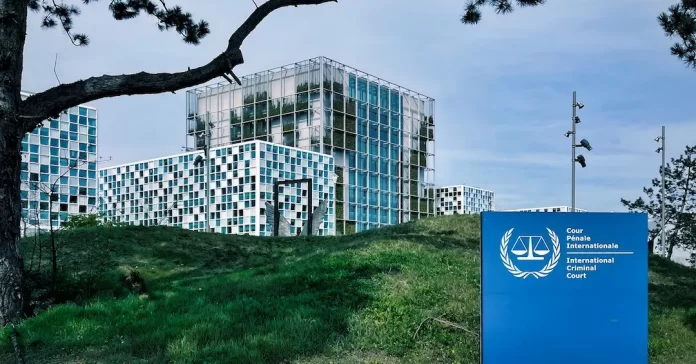
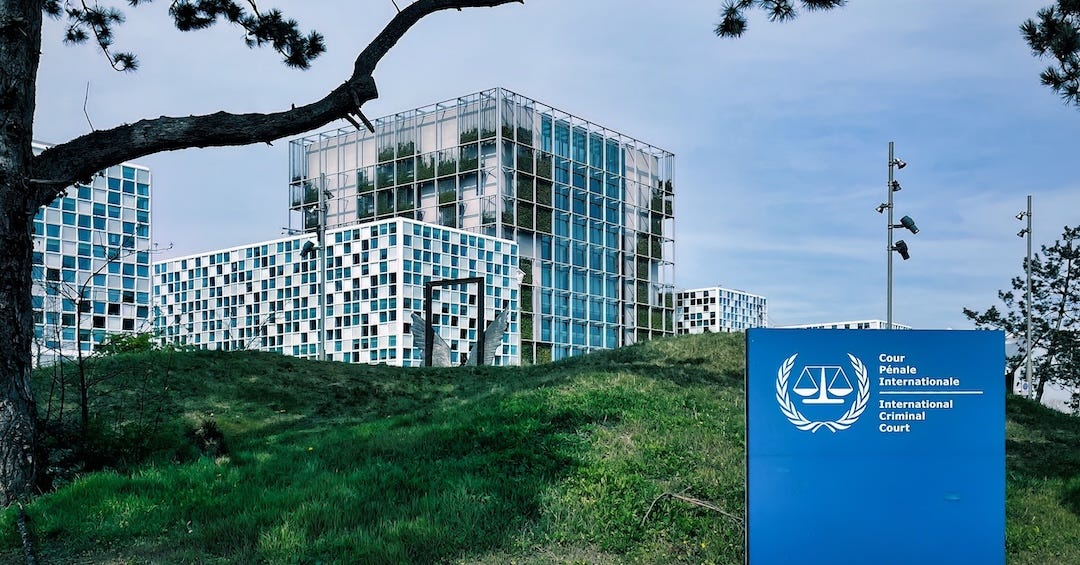
Judges enter the International Court of Justice, or World Court, in The Hague, Netherlands, Wednesday, Oct. 3, 2018, where they ruled on an Iranian request to order Washington to suspend U.S. sanctions against Tehran. (AP Photo/Peter Dejong)

South Africa has filed a complaint against Israel to the International Court of Justice under the Genocide Convention, which came into force January, 1951.  153 States are parties to the Convention, including Israel. The purpose of such a complaint to the world’s highest court is to prevent a genocide before it happens or before it is complete.  The case will be made at The Hague Thursday, January 11th, with Israel responding Friday, the 12th. South Africa’s 84 page brief is available online and is a very informative read. Progressive International has prepared a 15 page summary of the complaint which can be found at info@progressive.international.  

Westerners Have An Absolutely Psychotic View Of Airstrikes


Jan 8, 2024

Canadian online outlet The Breach has published a letter by CBC’s senior manager of journalistic standards Nancy Waugh which highlights perfectly the bizarre psychological relationship that westerners have with bombs and airstrikes in foreign countries.

In response to multiple complaints from a retired Humber College professor about the wildly biased language that Canada’s state broadcaster has been using to describe Israel’s war on Gaza, Waugh acknowledged that the CBC routinely uses words like “murderous,” “vicious,” “brutal,” “massacre,” and “slaughter” to refer to the October 7 Hamas attack while using far less emotionally charged words like “intensive,” “unrelenting,” and “punishing” to describe Israel’s actions in Gaza over the last three months. 

Waugh defended this extreme discrepancy by saying that Israel’s attacks in Gaza differ from the Hamas attack on Israelis in that Israel’s killings are done “remotely”.

“Different words are used because although both result in death and injury, the events they describe are very different,” Waugh wrote. “The raid saw Hamas gunmen stream through the border fence and attack Israelis directly with firearms, knives and explosives. Gunmen chased down festival goers, assaulted kibbutzniks then shot them, fought hand to hand, and threw grenades. The attack was brutal, often vicious, and certainly murderous.”

“Bombs dropped from thousands of feet and artillery shells lofted into Gaza from kilometers away result in death and destruction on a massive scale, but it is carried out remotely,” Waugh continued. “The deadly results are unseen by those who caused them and the source unseen by those [who] suffer and die.”


I’ve written a number of essays trying to point at the baseless and irrational way westerners view military explosives as a far more civilized and humane way of killing human beings than bullets or blades, but I’ve never written anything that sums it up as clearly as this frank admission by the Canadian Broadcasting Corporation’s senior manager of journalistic standards.

Military explosives rip human bodies apart. They burn people alive. They trap them under rubble where they die excruciatingly slowly in one of the most horrifying ways imaginable. They leave people without limbs. They dismember and disfigure children for life. Many of the most agonizing deaths in human history have been caused by bombs.

There are thousands of Gazans who have yet to be counted among the dead because their bodies are still buried under the rubble of fallen buildings. Many of them would not have died instantly. Some are still alive, waiting for days in a state terror and searing pain for a rescue that will never come. 

A UNICEF report released last month said that more than a thousand children had had one or both legs amputated since October 7 as a result of damage received by US-sponsored Israeli airstrikes, a number which would be significantly higher by now. We know that many such amputations have occurred without anaesthesia, because Israeli siege warfare has cut off Gaza’s healthcare system from the necessary supplies.

If this is not vicious, then nothing is vicious. If this is not brutal, then nothing is brutal. If this is not murderous, then nothing is murderous. But it doesn’t get labeled as such by the western press, because it is being done “remotely”.

The belief that these attacks should be considered less vicious and brutal because they are launched from a distance by people who won’t see their effects is as psychologically immature as a little girl who believes you can’t see her because she has covered her own eyes. An attack which kills and maims and tortures doesn’t cease to be brutal and vicious just because it looks like a blip on a screen to you. Human suffering isn’t made less acute or less significant by being far away.

But this is how most westerners see the use of military explosives these days. We’re so used to hearing about our government and its allies raining bombs upon the middle east and Africa that we’ve developed a kind of immunity to the psychological impact of exactly what that means in reality. The typical western mind has come to view bombings more like a weather event that simply occurs in those places, like how south Asian countries experience monsoons.

In reality, bombings are no less savage than attacks by guns, grenades, knives or machetes. In fact they actually allow for more savagery to take place, because they kill so much more efficiently, and because the troops who use them can keep killing and killing without losing morale and accumulating mental trauma from the horrors they have been inflicting upon their fellow human beings. 

Dead is dead. Dismembered is dismembered. Pain is pain. Anguish is anguish. The unexamined assumption that the western empire’s prefered methods of killing are less brutal and murderous than those of an impoverished militant group is a psychological defense mechanism we have put in place to shelter ourselves from knowledge of our own brutality and murderousness.

In truth if you look at all the death, destruction, suffering and pain that Israel has inflicted on Gaza since October 7, there is no question that Israel is vastly more vicious, brutal and murderous than Hamas has ever been, and so are its allies who are supporting its actions. The only way to believe otherwise would be to psychologically hide away from the reality of what’s actually happening, which is as truth-based and mature as the kid with her hands over her eyes saying “Now you can’t see me!”

Letter to the Editor – Sandy Laurie

In reference to Bob Whitehouse’s letter to the editor, I too would like to throw my support behind Dr. Jody Taylor… when my husband was dying she went above and beyond, and responded with kindness and true compassion.

In my opinion we are very fortunate to have her here as our island’s doctor.

Thank you

Sandy Laurie