Home Blog Page 131

Shucking Oysters: Tit for Tat

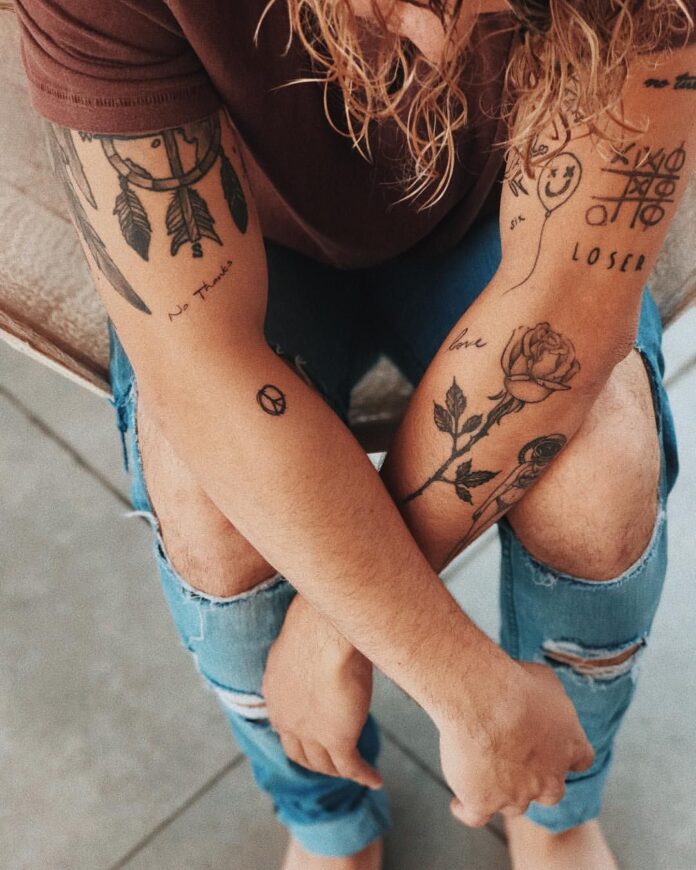
In the summer time, we are not only exposed to harsher heat we are also exposed to more fleshy protuberances, in all shapes and sizes. This year, I am amazed at the sheer volume of tattoos on people’s bodies. It’s well, staggering. We’re not talking about a hummingbird here and a yin yang there. Entire arms, shoulders, and legs are enveloped in ink. So, what’s the story with tattoos? 

Well, that’s the thing. Tattoos now symbolize a life story, from a loss of a family member or favourite pet to a milestone, like the wolf you encountered with a flower bouquet on its head. People with tattoos report that they feel more attractive, stronger and more self-confident. For some, tattoos seem to go deeper than just beneath the skin. One writer gushed: “Whether it is a means of self-expression, fashion statement, therapeutic outlet, and cultural homage, tattoos empower individuals to take ownership of their bodies and communicate their stories with the world.” From scorpions to elephants, each tat symbolizes a part of their individuality and self-discovery. 

Around 2016 to 2018 tattoos really took off, and today, it seems like everyone under 30 now has more than one tattoo. The need to imprint a mark, quote, name and symbol is rampant. Once you get one, apparently, you want more. As someone wrote, you can say tattoos are a reward for all to see, or a punishment for all to judge. A recent survey performed by the Pew Research Center revealed that 32% of Americans have inked their bodies and 22% have more than one tattoo. And what’s more, 59% of women have tattoos compared to 41% of men. 

We’re surrounded by walking picture books. No need to have a conversation, now we can simply “read” about how much they loved their ferret, the word “kinky” and ramen noodles. “Excuse me, can you lift your arm, I’m trying to see whether you are lost or does the lighthouse signify hope and resilience?”

Many celebrities, like David Beckham, Rihanna, and so many more, have tattoos that can be seen from the nosebleed section in arenas. Celebrities have become tattoo culture’s walking billboards. I remember first really noticing tattoos on celebrity chefs. Isaac Fitzgerald, author of Knives & Ink: Chefs and the Stories Behind Their Tattoos, interviewed over 65 chefs about their tattoos, garnering a wealth of anecdotal data on why they got inked. 

“We’re kind of like the tattoo generation. I think everybody has one,” says Chris Lam, chef and owner of Vancouver’s Straight and Marrow, who has full tat sleeves on both arms. For Lam, tattoos are also an indication of the culture in general. “You have to have a certain personality to be able to survive and thrive in the restaurant industry. Most of us [chefs] are pretty rebellious in nature, and a lot are very creative,” he says. 

One curious set of findings, was that while men see tattooed women as less attractive, they also see them as more promiscuous. A study in France, revealed that when women displayed a temporary butterfly tattoo on their lower back while lying on a beach in a swimsuit, they were more likely to be approached by men 24% of the time, but when the same women didn’t wear tattoos they were solicited just 10% of the time. Men also made faster contact with the women who had a tattoo than with women who didn’t, an average of 23 and 35 minutes, respectively. 

With women on the other hand, it’s confusing. For example, a study conducted by a Scottish University found that women rated men with tattoos as being more attractive and masculine than those without tattoos. However, a study conducted by a university in Florida found that women rated men with tattoos as being less attractive and less healthy than those without tattoos. Women’s views on tats also depended on the type, location, number, and style of the tattoo. (And possibly the size of the body displaying them.)

I’m not a big tattoo fan, myself. As one participant in a South African tattoo study opined: “I wouldn’t get one. Would you put a bumper sticker on a Ferrari?” Those participants who were not keen on tattoos felt particularly strong about the number, size and location. One shared: “I must admit, I tend to be skeptical of someone who has an arm/leg/back full of tattoos – in my opinion, there is something as too many tattoos. However, if someone had tattoos which meant something to them (a name of a person who has passed on or a logo symbolizing an important event in their lives) that’s perfectly fine.” 

For the uninitiated, the tattoo needle punctures your skin 50 to 3000 times a minute. Joey Keogh explained: “I think it feels like constant finger pricks and a hot rubber band snapping against your skin. You may get a little numb after a while, and the pain can subside after your adrenaline kicks in. I’ve never cried while getting a tattoo, but a lot of people I know have. Others may scream.” 

One final warning: Never tattoo a partner’s name on your left buttock, no matter the length of the relationship because life is often messy. Remember how Johnny got lucky when he changed “Winona Forever” to “Wino Forever”?
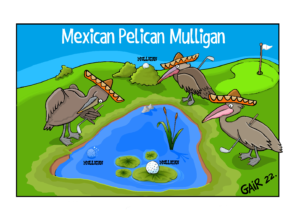
Mexican Pelican Mulligan

Exciting news at Spectra Health, your local rehabilitation and wellness centre

Exciting news at Spectra Health,

your local rehabilitation and wellness centre

Welcoming back Christopher Mainella, RPT both on Denman Island and Hornby:

After a few years away, Christopher Mainella, a Registered Physiotherapist (RPT), is returning to Denman Island and joining the team. He will be providing Physiotherapy on Denman Island every Tuesday and Hornby Island every Thursday beginning mid September. This greatly increases Spectra Health’s capacity to serve you during your rehabilitation needs and will significantly cut down on wait times for assessment and follow up.

No more waiting for physio! Pass it on!

Christopher studied Physiotherapy at McGill University and graduated in 2007. Since then he has worked in private practices, with sports teams, with community based homecare organizations and was the head Physiotherapist on Haida Gwaii; managing outpatient clinics, inpatient care and long term care clientele. From 2021-2023 he worked as a Physiotherapist on Denman Island and Hornby Island and also at Parksville Physiotherapy Clinic. He was most currently working as a Physiotherapist in Switzerland, and has now returned to Canada, to live on Denman Island. We are very fortunate to have Christopher join our team, he brings over a decade of experience leading with patient centred care. Christopher’s approach is holistic in nature and uses a variety of approaches and techniques including: Active rehabilitation and therapeutic exercises, Myofascial release, Manual therapy, Mulligan’s mobilization with movement, McKenzie approach, Cranio-sacral release, vestibular rehabilitation, lymphatic drainage, trigger point releases, and Acupressure.

Osteopathic Practitioner Rebecca Halls, DOMP on Denman Island

Some of you may have already met Rebecca Halls, the Osteopathic Practitioner that joined me at Spectra Health late in the fall of last year. She completed the 5 year Diploma in Osteopathic Manual Practice (DOMP) at the Canadian School of Osteopathy in Vancouver. Rebecca currently practices Osteopathy on Denman Island one Friday per month as well as in Cumberland in her own clinic Unfolding Body. Osteopathy provides many benefits including: pain relief, increased range of motion, increased circulation, trauma healing, decreased stress and tension as well as postural correction. Osteopathy can also be a wonderful complement to a woman’s prenatal and postpartum journey. Not only can an Osteopathic Practitioner help ease tension from the changing body as it grows to accommodate the growing foetus, Rebecca can help you to prepare for birth, and help to restore lines of gravity and rebalance pressures in the postpartum period. With excellent scar techniques, Osteopathy can also help after a c-section. In addition to supporting mothers and birthing parents, Osteopathy is a valuable resource for babies.

Core and Pelvic stability

what does it mean and why is it so important

For those of you who have had the chance to take advantage of Spectra Health and the rehabilitation services we now have on Denman and Hornby, it is very likely you’ve heard me talk about the importance of core stability and the stability through the pelvis. This is a very big topic, but given that it is such a common issue I thought it would be useful to introduce it and give some to context to it’s importance.

Walking on two legs, quite a feet

As bipeds it’s easy to take for granted how much needs to occur for us to transfer load with every step, with every reach, with every item we cary or lift, and basically any movement we make.

Our centre of gravity will land between our feet at the midline. Our pelvis is the lever running horizontally connecting our two legs to our trunk. When transferring weight to one leg many muscles need to work in harmony to keep the horizontal lever level and parallel to the ground, to keep the plum line through the femur knee ankle and foot evenly.

If you pinch one end of a pen between your fingers, add pressure downward and upward and see what happens to the free end of the pen: it drops or lifts. It requires specific pressure to keep the pen parallel to the ground when held only by one extremity.

This is a very similar dynamic to our pelvis. However we don’t only need to lift one leg up, we also need to propel ourselves forward, transfer weight from foot to foot, hold the pelvis steady while reaching for objects etc… So there are muscles all the way around the head of our femur (the thigh bone) connecting to the pelvis at different angles to be able to do just that. They work with multiple abdominal muscles that can provide stability to the pelvis from above. The abdominal muscles will also stabilize the lower back as movements are occurring through the lower limbs and pelvis.

And this is the simple version! There’s a lot going on! I haven’t even gotten to rotation yet. But lets keep it simple for now.

So, we’re on two feet, we have a pelvis running parallel to the ground and muscles balancing this lever to help keep our centre of gravity in the middle where it needs to be to keep the load occurring in the joints, right in the middle.

However if you take a moment to look at yourself in the mirror you will likely notice we are rarely symmetrical. Over the years we develop a “strong side”, habits in standing and sitting, where we lean or twist to one side. Jobs that require unilateral tasks (tasks repeatedly on one side), carrying children, writing, driving, most tasks are rarely dividing load equally in both extremities. Therefore certain muscles get strong, others get weak, some lengthen, some shorten. All of a sudden that pen you were holding parallel to the ground by one extremity, is no longer parallel. The pelvis drops, twists, hikes up, rotates. Our amazing bodies find ways to compensate, pull a little here, push a little there by contracting certain muscles in an attempt to keep us on our feet.

But over time what this begins to look like clinically is that weight is no longer evenly distributed landing directly between the feet at an equal distance with a nice level pelvis. If it’s not level then there is, inevitably, a portion of a joint, or many joints carrying more load, more load means

prone to wear and tear, and ultimately, a more vulnerable joint altogether. Perhaps your back begins to twist, perhaps your femur roles inward which means part of your knee is carrying much more weight, perhaps your arch collapses in your foot. So you may come to me with shoulder pain and foot pain, but it turns out for years it was perfect storm slowly building leading to pain far away from the origin of the problem.

Before your eyes glaze over, overwhelmed by too much information, lets go over one simple step. Look down at your body right now. How are you sitting? Are you leaning to one side? Are you crossing your legs? Are your shoulders up around your ears? Just observe, do some areas feel tight? Do some areas feel soggy, boggy and floppy?

Gently place both feet on the ground, hips and knees at 90 degrees (you may have to get onto a firm dinning room chair). Sit upright without leaning on the backrest. Gently tuck your chin down ever so slightly, giving yourself a subtle double chin. Let your arms rest at your sides.

This may not feel comfortable, especially if you have some muscles on one side that have had to work hard to keep you upright. That’s ok just observe it. Don’t push through discomfort, keep it gentle.

Take a deep belly breath, that means breathing into your tummy letting your tummy fill with air like a balloon to the count of three through your nose. Now breath out all the way, emptying your tummy bringing your belly button to your spine, getting every last drop of air out of your lungs all… the……way…… good and breath in again into your belly.

Now shake it out.

Excellent. That was the very first step. It begins with the breath and awareness.

When the core and pelvis stabilizers have weakened over time our joints pay the price: hips, knees, ankles and feet, even our shoulders and necks. With years of load in the joints this can lead to arthritis, or can make existing arthritic pain much worse. You can prevent and treat this kind of discomfort by balancing and strengthening your stabilizing muscles. Figuring out exactly where the imbalance is and what combination of releasing and strengthening you need is where we can help.

Summer is well under way, a time when many of us are itching to get outside and get busy. Feel free to reach out. You can come in for an assessment and we can come up with a plan to keep you active.

To book with one of the therapists and read more about the variety of modalities offered visit: www.spectrahealth.net or call the Denman Medical Clinic at 250-335-2260

Written by Carmen Bedard-Gautrais,

Registered Physiotherapist and Traditional Chinese Medicine Practitioner, owner of Spectra Health.

The Meanest Man In Town

I grew up in a small prairie town in the seventies. At the end of our street lived a man we only knew as Mr. Johnson. Everyone said he was the meanest man in town. He would never say Hi to anyone and drove this scary old truck. We were all terrified of him. One fall, we decided to have some fun so we picked some crabapples and headed off to Mr. Johnson’s house. We snuck closer and closer and when the time was right we began to lob our apples at his windows. Our laughter soon turned to fear as an angry Mr. Johnson came out after us. We scattered in all directions, and as I ran in terror I stepped on a rotten board that covered an old well. The board gave way, and I plummeted into the inky darkness. I cried for help but all of my friends had abandoned me. My grasp on the ledge began to slip. I would surely die here. Just then I felt a firm grip on my shoulder. “Hang on son, I’ve got you!”. It was old Mr. Johnson! He pulled me to safety and brushed me off. “That was a close one! We better get you inside and clean you up!”. He brought me into his house and while my wet clothes hung by the fire he gave me a bowl of hot soup and some milk. Then he drove me home and as he left I remember thinking how wrong I had been about him all these years. That was until the next day. The miserable old prick had spiked my soup with a powerful horse laxative and I spent the next three weeks glued to the toilet. And after that whenever Mr. Johnson saw me in the store or at the market he would laugh and say, “Hey, looks like this little asshole could use a bowl of soup!!”. He really was the meanest man in town… 

Green Wizardries: The Garlic Harvest

We grew an enormous bed of garlic this year.  We are growing for three families and the other families age growing other field crops to share with us and each other.   Garlic is an easy crop if you do a few things right.  

First off, garlic likes the soil to be amended with lots of organic matter.  This is good for the garden as garlic has to be strictly rotated on a four-year cycle.  Failure to rotate garlic leads to a build up of diseases and the loss of your crop.  The necessity of digging in compost to garlic beds improves the garden soil for the next crop.  

It is a good idea to use a garden fork to dig up the garlic.  They are really too deep to just pull.  Once the crop is up all the dirt must be brushed off the garlic bulbs and the crop must be hung up to dry for two weeks.  After that, the stems and roots should be cut off and the outer papers rubbed off.  Then, the garlic can just go in a burlap sack, hung up somewhere with a bit of airflow and away from the frost.  We hang our garlic in an unheated, insulated porch over the winter and it keeps really well.

When I am cutting off the stems and roots, I look at each crown critically and keep the finest, largest crowns for seed.  I only use the largest cloves for planting and my garlic has increased in size over the years.  Garlic cloves should be planted in a fresh, well composted bed in late August or early September.  They also love a mulch of seaweed which can be harvested responsibly from our many beaches.  Just don’t drive on the beaches and don’t take all the seaweed.  

Of course, we have started eating the fresh garlic already and it is a wonderful treat.  The garlic is so crisp and flavourful right now.  I am sure it is at its most potent.  The time for scapes is past this year.  The scapes are the flower stalks that come up from the middle of the plant and must be snapped off to prevent energy going into the flower that should be going into the bulb.  

The scapes can be chopped up and frozen, pickled or dried for winter use.  A lot of people like to make garlic scape pesto and that is very tasty.  They also make very good dill pickles and can be used in all the recipes that garlic is use for.  

Once you have the garlic dug up, brushed off and hung up, it is time to do something with the empty garlic bed.  This is a good time to plant some winter lettuce but what I favour is to plant field peas, buckwheat, oats and kale.  The peas and buckwheat create a flush of flowers which are very beneficial to the pollinators.  The oats send down deep roots that will aerate the soil and add carbon to the soil once the cover crops die.  All the cover crops can be cut and fed to hens, rabbits, ducks and sheep.  Don’t cut too much off as the soil microbes need it for food in the winter.

It is important to cover the soil.  The sun has a very bad effect on soil which is why soil is almost always covered up in nature.  Healthy soils are always covered.  The sun heats bare soils very quickly and this had a drying effect.  Soil microbes need food, water and shelter, just like any other animal.  

The peas, oats and other cover crops will grow roots that hold the soil together and protect it from rain.  The top growth protects the soil from becoming too hot and dry.  The cover crops will be killed by the winter weather.  The dead residue will protect the soils and provide food for the soil organisms.  The crop residue will act as a mulch over the winter to spring and prevent weeds popping up.  The crop residue is also food for the soil organisms who are so important to the structure and the fertility of the soil.  Cover crops are a very easy and clever way of improving garden soils.  In the spring, just turn the crop residue under before planting a new crop.  This too enriches your soil.

Crop rotation is very important.  This year’s garlic bed may not be planted with any onions, garlic, chives or leeks for at least three more years.    I have a field garden which is divided into four quarters an each year, I plant in the following bed.  Potatoes must be rotated and they are a greedy crop so I always like to follow them the next year with beans which fix nitrogen and enrich the soil.  

Garlic is an important crop, both as a flavouring vegetable and as a herbal remedy especially for colds and flu’s.  Happy gardening!

What difference does it make?

Your children haven’t been in school since October 8th last year, when the bombing started. Soon after, you all had to leave your homes because of it. Like your grandparents who came to Gaza in ‘48, you left with only the clothes on your back. You brought your cell, but it was useless without any place to charge it. You went south according to directions because Rafah in the south was said by Israel to be a “safe zone”. It was a walk of 25 miles because you live in the north of tiny Gaza and Rafah is on the southern border with Egypt.

You walked with many thousands of others – in fact, 2 million of Gaza’s 2.3 million population are now displaced from their homes – so it was chaotic and terrifying with your young children in tow, not knowing what to expect or when and if you’d be able to get back home. The incessant sound of drones, the bombs dropping, and missiles raining down seemed never- ending.

Eventually, you and most of your family made it to Rafah. Others went missing or you learned were killed in the bombing. You were provided a tent in a UN camp, but Israel then did bomb Rafah and a huge fire erupted in your tent camp, burning people alive and killing many.

Netanyahu first described it as a “terrible mistake”; now Israel’s giving some other reason.

You have to leave the Rafah camp and are now on your way back to your former home. The roads you walk are littered with rotting corpses, the stench is over-powering. You just got your period but there are no stores anymore, so you can’t get supplies. Besides, the banks have been bombed, so you can’t get any money. Your husband has not been able to work, but then the school he taught in has been bombed, so there is no school anymore.

Everyone is hungry all the time. Several of your children need medical attention. They have the distended stomachs of the malnourished, but there are no hospitals or clinics anymore. They have all been razed to the ground. There is no clean water, no sanitation, almost no food, no electricity, no shelter to speak of, no way of knowing which of your neighbours and relatives are alive or buried under the rubble. It is very hot in Gaza right now. Your children are not sleeping very well and they are tired all the time (and so are you), they cry a lot and they want answers from you. You have no answers to give them. You are living an ongoing nightmare.

You eventually get back to the area of your home and find that there is no home anymore. In fact, there is no neighbourhood; it has all been flattened by bombs. Where will you go? How will you survive?

You heard someone said that the World Court is going to decide if you have a right to be free from Genocide. Apparently it would be misleading to suggest they will rule on whether or not a Genocide is actually being committed. Does that mean that Palestinians in Gaza actually might not have a right to be free from Genocide?

How do those words matter? What difference does it make?

We Need Both Outer Work And Inner Work To Truly Free Ourselves

pastedGraphic.png

CAITLIN JOHNSTONE

JUL 22, 2024

Whenever I talk about the importance of inner work with this stuff I’ll get people dismissing it as self-indulgent navel gazing nonsense and a distraction from the outer work of actually changing our material circumstances, but really nothing could be further from the truth. To have a consistent discipline of inner work is to take responsibility for your own psychological bullshit instead of spreading it around in ways that hurt the people near you and make the world a worse place.

It is absolutely true that the world and the cruel systems which guide it urgently need to change, and it is absolutely true that much of the suffering and mental illness we see in our society is due to the material, financial and psychological stress that people are placed under in this sick capitalist dystopia we find ourselves in. But that doesn’t mean you get to shirk your own adult responsibility to do the hard work necessary to bring the unconscious mechanisms of your own suffering and dysfunction into consciousness where they can be healed.

The truth is that even if you could snap your fingers and magically transport us into a socialist utopia where we are no longer ruled by tyrants and everyone has what they need, people would still find ways to make themselves miserable and would still act out their unconscious woundedness on the folks around them, because that’s just what the human mind does at this point in our development as a species. You see evidence of this all the time in the self-destructive behaviors and abusiveness of the rich and famous despite their having all their material needs taken care of.

So, as well as it might play in some circles, it’s just not good enough to blame all our suffering on the system. Doing so just encourages people to keep masturbating their inner wounds on everyone around them instead of growing up and doing the hard, uncomfortable work of becoming a conscious human being. 

And conscious human beings are what we’re going to need if we’re going to win this thing. We’re never going to be able to bring about the actions necessary to topple the empire and create a healthy world if we’re still being whipped about by unconscious forces within us caused by early childhood trauma, maladaptive coping mechanisms, unhealthy belief systems and inaccurate assumptions about our reality and our experience, like the overwhelming majority of humanity is right now. Hell, if we were handed a perfect utopia today we’d destroy it in a matter of weeks just out of our own internal chaos and restlessness.

It’s actually often the people most interested in fighting the world’s evils who are most in need of inner work and discipline. It’s just an unfortunate fact that activists are frequently some of the most unconscious and irresponsible people you’ll ever meet, often using their rightful opposition to injustice and systemic abuses to hide all varieties of inner dysfunction and act out their inner demons on the people within their own faction. Most of the internal feuding you see on the western left is nothing other than garden variety drama addiction, trauma reenactment and attention/approval-seeking masquerading as Very Important Discourse about a hot social justice issue or the correct understanding of Marx or whatever.

Just as we all have a responsibility to help create a healthy and truth-based world, we also all have a responsibility to develop healthy and truth-based minds. We can make up any number of excuses for our failure to do so, or we can suck it up and do the work. This gives us the necessary inner stability to directly face the empire’s cruelty even in nightmarish hellscapes like Gaza, and it lets us move far more effectively in the world because we’re being guided by truth and compassion instead of flying blind guided by nothing but our own inner wounds.

I won’t tell you what kinds of inner work you should do because only you can know what will work best for you, but I will tell you that becoming a conscious person with a serene and harmonious mind takes a lot of work, a lot of consistent dedication, and a lot of courage. What matters is your intention to uproot any untruth and disharmony within yourself, and a sincere curiosity about where such things might exist within you.

As individuals none of us have the ability to single-handedly uproot all the unkindness and falsehood in our world, but we can each as individuals uproot the unkindness and falsehood within ourselves. And by doing so we make the world a kinder and more truthful place by just that much, because we tended the little plot of land we were given—our own personal slice of the human plight—with care and responsibility.

_____________________________________________________________________

My work is entirely reader-supported, so if you enjoyed this piece here are some options where you can toss some money into my tip jar if you want to. Go here to find video versions of my articles. Go here to buy paperback editions of my writings from month to month. All my work is free to bootleg and use in any way, shape or form; republish it, translate it, use it on merchandise; whatever you want. The best way to make sure you see the stuff I publish is to subscribe to the mailing list on Substack, which will get you an email notification for everything I publish. All works co-authored with my husband Tim Foley.


Bitcoin donations: 1Ac7PCQXoQoLA9Sh8fhAgiU3PHA2EX5Zm2

Featured image via Adobe Stock.

Waldo the Walrus

Waldo the Walrus (this is part of a series of short stories based on a fictional supportive housing building)

Alvin looked at his computer screen while he worked at a sleeve of skinny French fries and took random bites from a filet of fish and swigs from a fountain pop. Alvin knew this food wasn’t good for him but it did fill an emotional hole in his psyche taking him back to all the times his old man took him to McDonalds after Alvin got in trouble at school and later with the law.

As Alvin downed the last mouthful his reverie was interrupted by a booming voice.

“BY ODIN’S LEFT EYE I AM A WARRIOR AND I AM MORE THAN WILLING TO DIE ON THE BATTLEFIELD AND BE LIFTED UP TO VALHALLA WHERE VIKINGS WHO DIE IN BATTLE GO. I WILL CHOP MY ENEMIES DOWN LIKE AN OLD OAK TREE!” 

It was his tenant Waldo, going into one of his rants. He took one more sip of pop and slipped out from behind his desk with his work cell phone and keys and went to investigate. 

“BY THE HAMMER OF THOR, GOD OF THUNDER I TOO STRIKE THE FEAR OF DEATH INTO ANY UNFORTUNATE FOOL WHO WOULD DARE OPPOSE ME AS I AM WALDO THE WALRUS, I AM WALDO THE WALRUS, KOO, KOO, KA CHOO, KOO, KOO, KA CHOO!” 

Alvin followed the noise to George Road, where he could see Waldo splayed out, his back on the boulevard, his arms and legs moving as if he were trying to make a snow angel out of the patchy grass while he railed. 

 “Waldo, you can’t be yelling out here like this.” Waldo stopped moving and turned his large head to see where Alvin was. 

“Squire Alvin, what can I do for you?”

“Stop yelling.”

“But I am channelling my Viking family and the Norse gods, my people.”

“Sure Waldo, but you scare the crap out of people when you do this and people call the police. Remember the last time you started this chanting stuff on a city bus and they took you to jail?”

“Yes, I recall that sad day when I upset the peasants.”

“Exactly, we don’t want to upset the peasants.”

“But they are only peasants.”

“Waldo, you know we don’t want to upset our neighbours here. There is nothing they want more than to get rid of us. This is the kind of thing they bring up at town hall meetings. Can you please get off of the boulevard and come back to the Jolly Rancher?”

“Okay…” Waldo stood up and dusted himself off.

“Did you know Alvin that Dr. Dick has assigned this new mental health team to come and clean my suite tomorrow. Apparently they do not want me there while they molest my personal effects.”

“I had forgotten all about that Waldo, is the thought of them in your place causing you stress?”

“Immensely.” Waldo nodded while twiddling his thick puffy dirty fingers on his broad chest.

“Are things still really bad in there Waldo?” Waldo was silent. “Do you still have an infestation of bed bugs and cockroaches? Did you ever use any of the bug sprays I gave you?” Waldo hung his head down. “You haven’t brought home any more dead things have you? No more fish or raccoons?” Waldo smiled and appeared to be amused by the question.

“I was convinced I could bring that catfish back to life.”

“I will be honest with you Waldo, I know I should help you clean but I can’t handle the smell of your place and frankly I’m terrified of somehow bringing parasitic insects home. My wife would kill me.” Waldo grinned. Alvin followed Waldo to his apartment. Waldo opened the door. The stench of garbage and rot caused Alvin to stagger backward. “SNORT!” Alvin snorted hard and choked as a small amount of filet of fish rose in his throat in the form of boiling hot acid reflux. He attempted to hold his breath as he entered. They were greeted by a giant replica of Darth Vader, who had a small army of dolls behind him. There was Thor with his hammer, Spiderman, Batman, Superman, Medusa with her head of snakes, a number of well dressed Barbie dolls, a couple of Ken dolls, a four foot Ronald McDonald and a wide variety of garden gnomes that Alvin suspected Waldo may have stolen from people’s lawns. Waldo’s window sills were thick with the carcasses of dead brown German cockroaches.  Roaches scrambled along the yellow stained walls. The door was open and Alvin could see the bathtub was covered in a dark brown film of dust. A halo of drain flies twirled in a timeless circle above the tub. “Ahhh…” Alvin jumped when a large cockroach fell from the ceiling above him and bounced off of his left cheek. He watched in awe as it scuttled under a battered old dresser.  “Okay, that’s enough for me Waldo.” Alvin put his hand over his mouth and marched back to the office.

Alvin fretted about the state of Waldo’s apartment while he sat behind the desk. He knew he would be blamed, even though he’d had no training in how to clean up such a biohazard. He believed someone as ill as Waldo should probably be in a hospital setting but that was true of most of the Jolly Ranchers. He’d read that in Finland, a country rated as the happiest in the world year after year, a supportive housing unit of comparable size would have a doctor, a nurse, a social worker, maintenance staff and would adhere to the four pillars of harm reduction. But he wasn’t in Finland. He didn’t look forward to the mental health team that was showing up to deal with Waldo’s place and was concerned with being judged. He’d book off sick but he was out of paid sick leave and he needed money to pay off an infinite number of debts including his giant mortgage.

At eight the next morning Alvin observed a white government health authority sport utility vehicle pull into the parking lot of the Jolly Rancher. Four people got out of the vehicle each holding disposable coffee cups. They made their way towards his office door. Alvin trotted to the door to greet them and flung it open. “Good morning!”

“Good morning, we are here to check on our client, Waldo Anders,” replied a tall thick boned woman with shiny waxy pocked skin and dyed blond hair. “I’m Noreen, that’s Trish, Lisa, and Noel.” Everybody smiled. Alvin realised he had left the office door unlocked as Emma McGrath came marching in. “I really needs a coffee now!” The coffee pot huffed away on a table. “You know we don’t open until nine, Emma.” Alvin tapped the imaginary watch on his wrist. “You let these fuckers in,” she sneered.

“Emma, you have to go.”

“This is bullshit!” She slammed the door. Alvin rushed over to lock it. 

“She’s a bit of a grump,”  said the smiling young woman named Trish. “Yes, Emma can be challenging.” Alvin gave a nervous smile. “What can we expect?” Asked Noel. He had streaks of flaming red in his mop of fuzzy white hair which made Alvin think of Cherry Garcia ice cream. He was a mildly plump man and had very small soft reddish hands sticking out the sleeves of his thick blue turtleneck sweater. Alvin detected a British accent. “Waldo is a dumpster diver who collects things from dumpsters while he gathers containers to recycle for deposit.”

“A binner,” said Trish, her excited grin showing a fine set of healthy white teeth.

“Yes, that’s how he makes some extra coins but he’s also been known to bring home dead animals, once he even dragged home an enormous catfish. He also has bed bugs and cockroaches.”

“How did you let this happen?” Noel sneered. Alvin bristled.

“We can’t stop him from bringing home whatever he likes. He has his own entrance and it is independent housing. Waldo is under the tenancy act and has all the rights and freedoms that go with that.”

“Does Waldo have a substance abuse issue?” The dark short portly woman named Lisa asked. “No substance abuse issue that I am aware of which is very unusual for most of the Jolly Ranchers. Just about everybody who lives here has a dual diagnosis.”

“Dr. Dyck had Waldo Anders sign a waiver that gives us complete freedom to toss whatever we feel should be tossed.” Noreen waved a blue piece of paper at Alvin who smiled and nodded. “He’s the suite on the corner of the building?” She asked. Alvin nodded. “Let’s do this team.” 

Alvin watched them don their hazmat suits out in the parking lot. They were laughing and high fiving. He observed them on surveillance cameras as they entered Waldo’s suite. Waldo left shortly thereafter carrying garbage bags over his thick shoulders. 

After about ten minutes Alvin watched as the entire mental health team came from Waldo’s suite. Trish was twirling wildly while trying to peel off her hazmat suit. Noreen and Lisa were trying to help her. “THERE ARE FUCKING COCKROACHES EVERYWHERE IN MY SUIT! THEY’RE CRAWLING ALL OVER ME! GET IT OFF! GET IT OFF! GET IT OFF!”  Tears were running down her face. Noel was vomiting into a white bucket.

 The office door was open, in case the team wanted to check in on their way out, but Alvin was greatly relieved when he saw them drive away.

A month later Waldo was evicted. He’s been homeless ever since.

Shucking Oysters: Watch Your Step

[Trigger Warning: The following may cause Blunt Word Trauma injury.]

From the obligatory safety announcement on the ferry to written warnings on literally everything, we are obsessed with safety. “Stay off the rocks.” Highways of safety cones. “Loose gravel.” Trucks with pulsating lights. Every institution claims safety as one of its core values. Perversely, this obsession with safety makes people feel more insecure, not less. How much safer are you really? And how much safer do you feel? 

Frank Furedi wrote in The Paradox of Our Safety Addiction, that “paradoxically the achievement of unprecedented levels of physical safety has coincided with a heightened sense of insecurity.” What started out as liability issues are now insecurity complexes. The constant pursuit of a Utopian vision of a harm-free world does little to help people feel secure. 

This safety fetish makes us less aware, less alert, less sharp and lazy in body and mind. It convinces us that safety must always be the top priority – the almighty first principle. We are continually warned about the physical dangers that lurk everywhere. And that risks and unknowns are always bad things – stifling exploration, creativity, discovery, and the beauty of getting lost. Being this safety obsessed is not healthy. Furedi eloquently wrote that “it is not the actual fear of death but rather the fear of life that preoccupies the 21st-century Western imagination.” 

And if that’s not all, we have emotional injury, that can leave a person “damaged for life.” Yes, sticks and stones may break our bones, but words can really hurt us. Emotional harm is limited only by the imagination, and as everyone knows, the imagination can come up with pretty much anything to make a point. 

But what kind of danger and harm are we talking about? When a warning is real like “this plastic bag is not a toy” for instance, we can all agree on the danger. The real problem, is when the dangers are imagined, or exaggerated, or fabricated, or manipulated.

In The Coddling of the American Mind, Jonathan Haidt and Greg Lukianoff discuss the unintended consequences of “safetyism” – the idea that people need to be protected, rather than exposed to challenges. What began as a focus on physical safety has evolved into hyper protection from everything, including emotional safety which doesn’t tolerate anything that could trigger psychological trauma. 

Atlantic staff writer, Jill Filipovic, wrote on her blog that a piece of conservative legislation was “so awful it made me want to throw up.” A commenter asked for an eating-disorder trigger warning. Filipovic posted a link to a funny photo compilation, another commenter said it needed a trigger warning because the “pictures of cats attacking dogs looked like domestic violence.” 

We should all be driving with “Big Baby on Board” stickers and wearing ear muffs. Actually, stay off the road, it’s dangerous out there. As Furedi wrote, “our society has become infantilized, with fewer people having much experience or concept of real physical dangers and many now convinced that safety extends to their thoughts and feelings, which must not be infringed.” 

In 2015, a feminist college student group in the UK, banned clapping at their conferences. The group claimed that the act of clapping could “trigger some people’s anxiety.” The alternative? Jazz hands –  wave your hands silently in the air – to show approval and create “a more inclusive atmosphere.” Today, you never know what might trigger anxiety. Knitting? Coughing? It’s all about YOU not IT.

We are constantly walking on free-range eggshells, afraid of saying the wrong thing, out of fear we will be called out by the unruly local mob on social media. Anything and everything can be misconstrued regardless of intent. Haidt and Lukianoff warn that “in today’s culture of safetyism, intent no longer matters, only perceived impact does, and thanks to concept creep, just about anything can be perceived as having a harmful – even violent – impact.” 

I am not saying emotional safety is bad, keeping others safe from harm is virtuous, but, as Haidt and Lukianoff wrote, “virtues can become vices when carried to extremes.” Have we evolved in a good way because of this? Adults now need safe spaces and trigger warnings in case words and ideas put them in danger, stifling any hope of real dialogue. Conceptions of trauma and safety are used to justify the incessant helicoptering and coddling of children; brainwashed to be afraid of everything (except those f*cking gadgets). 

Kids need to fall on their heads and bump into things. It’s part of childhood. And then they become less fearful and coddled adults. We can not gentrify our existence. We can not homogenize ourselves. How do we learn anything if our crucial life experiences are being withheld or hidden from us in the name of safety? 

Ben Simpson wrote that there “is a difference between throwing someone a life preserver when they are in danger of drowning and barring them from getting into the pool at all.’’ What if we shifted the conversation from the risk of doing things, to asking what the risk is of not doing those things?

Polly