



Spontaneous Combustion to play the Back Hall
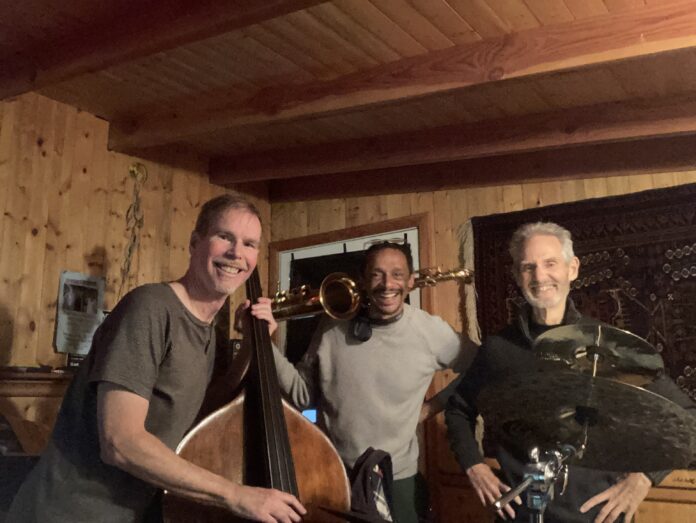
Spontaneous Combustion with Wally Petersen, bass, Tony Morrison, sax/flute and Roger Baird, drums will tear it up at the Back Hall on Friday, August 30, playing some jazz standards, originals and more. The theme is Concert for World Peace.
Doors open at 7 p.m. and the music begins at 7:30. Advance tickets, $15, are available at Abraxas Books and the D.I General Store. At the door: $20.
Green Wizardries: The Peach Harvest
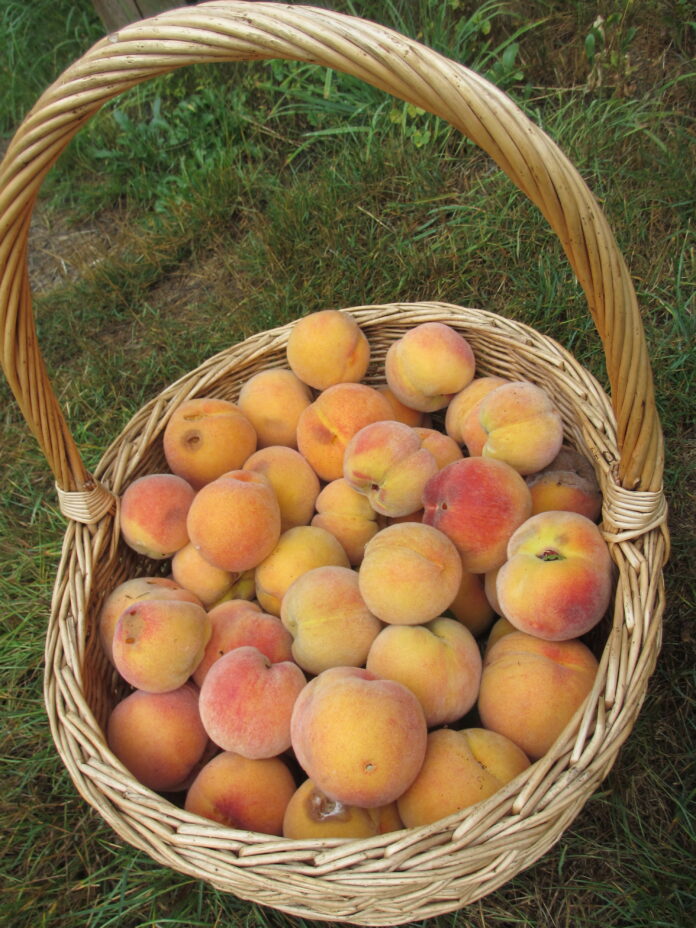
Green Wizardries, The Peach Harvest by Maxine Rogers
Denman and Hornby Islands stand alone against the great peach failure of 2024. The entire Okanagan Valley was wiped out of peaches, plums and nectarines when a huge cold snap froze the trees that had not hardened off properly due to a very warm autumn. I know for a fact that some Denman peaches were exported to the Okanagan and caused a minor stir when a person carelessly let it slip that they were canning peaches in Osoyoos. People wanted to know where the peaches had come from and if they could get any.
We have a couple of Frost peaches which we bought from Beulah Creek Nursery on Hornby. These trees have provided us with a good harvest of peaches this year. I had just finished canning the first batch when a very kind friend called up and asked if we would like some more peaches. Our friend wanted to give us the peaches for nothing but eventually accepted a loaf of my home-made raisin bread and that I would make six pints of peach jam for him.
We went to pick the peaches in his greenhouse that he has cleverly pruned to follow the roof of the greenhouse in an arc, to maximize growing space. It smelt like heaven should smell in that greenhouse. The fruit were puzzlingly small this year, but so sweet and full of flavour. We picked box after box until the European paper wasps became upset and started to buzz around angrily. Our host graciously said he would get rid of the wasps and pick the rest of the fruit for us. This in a time of peach famine is not a small favour.
The first thing I did when we got home was to wash a box of the little peaches and slice them in two and pop them cut side up into the dehydrator. I had just emptied a load of dehydrated zucchinis and tomatoes from the dehydrator. From late summer on, the dehydrator is in constant use here. Dehydrated peaches make excellent candy, are shelf stable and can be rehydrated if someone wants to bake a peach pie or cobbler in the winter.
To rehydrate dried fruit, put the fruit in a bowl and cover it with boiling water. I put a small bowl on top to hold the fruit down under the water. After abut 15 minutes, the fruit is ready to work with. To add extra flavour, you can use hot juice and even add a shot of rum or brandy to the fluid.
I will also be canning more peaches in a honey syrup which we like much better than sugar syrup. I make the syrup with four quarts of water and two cups of honey which is heated on the stove. I can fruit the old-fashioned way which I learned from Linda Gilkeson, the garden writer.
Linda explained to me that when she was little, everyone peeled the peaches, dipped them in some lemon water to stop them discolouring and packed them in the jars. Next, hot syrup was poured over the fruit, hot lids were applied and the whole shebang was popped into the boiling water-bath canner. When the water began to boil again, the timer would be set for twenty-five minutes for pints and thirty minutes for quarts.
The modern way is much more difficult as the new advice calls for the peaches to be boiled in syrup before being packed into the jars, covered with more syrup and then put in the water-bath canner. I have yet to figure out how to do this without getting burned and having the first few boiled peaches splat into the bottom of the jar. I have been canning fruit the old-fashioned way for years now with very good results but I urge all of my readers to follow the new procedures even if they make no sense and the product is not as good.
The time for planting trees is in November and I can highly recommend the Frost peach as a good outdoor peach for this area. The Frost seems immune to peach-leaf curl which is caused by the leaves getting wet. Other varieties of peach should be grown under a shelter.
Our generous friend who gave us the free-stone peaches (the stones just pop out of the peach with little effort) mentioned he grew his two indoor peach trees from seed and they grew true to type. I am going to save some of those peach stones and pot them up and leave them in the winter rains on the porch and see what we get. We have space for a couple of small trees in our greenhouse. Having your own peaches is a great way to add resiliency to your household as well as a great deal of pleasure.
The dreaded peach famine underscores the lesson that we don’t need to preserve all the produce we will need in the coming year: we need to preserve enough produce to have a two or three year supply to cover occasions like the peach famine.
Cowboy Corner: Clete Fowler-Roving Reporter

Here’s the story…
The people have spoken. Hornby Islanders have voted unanimously to rename Denman Island to Jan Brady Island following a raucous town hall meeting. “We’ve always been Marsha, everybody loves us and wants to be like us”, said longtime Hornby resident Zenovia Wickerchair Thompson. “We’re prettier and more popular, always have been, always will be. It’s about time Denman just accepted it”.
As the final results were read a group of four men who were living all together (although unconfirmed sources say they were all alone) stood draped in possum skins while repeatedly beating their walking stickings against makeshift shields chanting “Marsha Marsha Marsha!!”
These sentiments were echoed by Penelope Nutloaf, who runs a $900 dollar per night B & B out of a diapitated tool shed on her property. “People only use Denman to get to us, nobody likes them and all they ever do over there is whine about stuff like how much they want to be like us and other stuff”. “This is long overdue”, she added, “I’ve lived on Hornby for over forty years and have raised three very lovely girls, all with hair of gold, just like their mother”.
Denman Island Mayor Frowzy Frazzlebottom was unavailable for comment as he was busy with three boys of his own.
Shucking Oysters: The Divided States of America

Shucking Oysters: The Divided States of America
By Alex Allen
American politics have always fascinated me. Watching the Democrat National Convention was, dare I say it, more entertaining and exciting than the Oscars. Hillary. Bill. Barack. Michelle. Oprah. Ben. Dave. Julia. One democrat after another came out on the stage and kicked ass. Trump’s to be specific. Between chant’s of “we’re not going back” and the word “joy” repeated over and over, the feeling of hope was palpable. It was joyful. It was full of love.
The kicks began with Hillary Clinton: “Kamala locked up murderers and drug traffickers…Donald Trump fell asleep at his own trial – and when he woke up, he made his own kind of history: the first person to run for president with 34 felony convictions.”
Barack Obama, known for his flowing discourse, described Trump as “a 78-year-old billionaire who hasn’t stopped whining…who sees power as a means to his end, put ‘other’ people in their place – an act that has gotten pretty stale.” He even made a dick joke, then got serious: “We do not need four more years of bluster and bumbling and chaos. We have seen that movie before, and we all know the sequel is usually worse. America is ready for a better story.”
Michelle Obama didn’t hold back either, calling Trump an entitled grifter who “demeans and cheapens our politics, demonizing others,” which “only makes us small.” “Who’s going to tell him the job he’s currently seeking might just be one of those ‘Black jobs’?” she taunted.
It couldn’t get worse for “Lord Little Hands,” a man who has issues with humiliation and not being adored, in other words, a narcissist. Trump responded during his rally in North Carolina, “Did you see Barack Hussein Obama last night? He was taking shots at your president. And so was Michelle.” On Fox News, in response to hearing Harris “having some success” with women, Hispanic and Black voters, the “Vulgar Talking Yam” objected. “She’s not having success; I’m having success,” he said. “I’m doing great with the Hispanic voters, doing great with Black men, I’m doing great with women.”
Before hand-on-heart, running mate Minnesota Governor Tim Walz left the convention stage, he looked straight at his family in the audience and declared, “Hope, Gus and Gwen, you are my entire world, and I love you” while his tearful 17-year-old son Gus, overcome with emotion, stood up and shouted, “That’s my dad!” It was a deeply moving moment. But to the Republicans, it was “pathetic,” “embarrassing,” to see his “stupid crying son” and “blubbering bitch boy” honour his father. From I Heart radio host Jay Weber: “If the Walz’s represent today’s American man, this country is screwed.” And single and childless, “puckered and petulant” Ann Coulter, “Talk about weird…”
Talk about disgusting. Some apologized, slightly, once they learned that Walz had openly talked about Gus having a nonverbal learning disability, which affects a person’s spatial-visual skills. Radio host Weber was fired even after issuing a pathetic apology. But it was too late to even remotely redeem themselves. “I can see why a child loving their parents would feel foreign to you,” former Republican strategist, Rick Wilson, told Coulter, adding that she “will die alone, and forensic pathologists will discover her withered corpse is nothing but Marlboro reds and box wine.” Ouch.
During Harris’s 38-minute speech, the “Orange Cheato” fired off more than 50 posts on his Truth Social account. From the top, he immediately criticized how Harris approached the podium, saying “too many ‘Thank yous,’ too rapidly said, what’s going on with her?” A minute later he shared that her running mate “was an ASSISTANT Coach, not a COACH.” Later, “She talked about the Rule of Law but, as Border Czar, she allowed 20 Million people into our Country, many of them Criminals, who are MAIMING and KILLING our people!” The “Tangerine Tinted Trash-Can Fire” ended his staccato tweets with: “There will be no future under Comrade Kamala Harris, because she will take us into a Nuclear World War III! She will never be respected by the Tyrants of the World!”
Yes, Kamala still gratuitously smiles at one and all, but I also witnessed the tough prosecutor, something I have not seen before. “Just imagine Donald Trump with no guard rails and how he would use the immense powers of the presidency of the United States,” she told the DNC. “Not to improve your life, not to strengthen our national security, but to serve the only client he has ever had: himself.” One pundit gushed, “People watching were like, where has that amazing person been for the last couple of years?”
In recent days, the “Angry Creamsicle” has taken to social `media to label Harris a “communist” and a “crooked radical left political” figure, accusing her of leading the country toward what he describes as a “Communist, Crime Ridden Garbage Dump.” But, the biggest news for “Sir Liesalot” had less to do with him and more to do with Robert Kennedy Jr, the controversial independent who ended his campaign and endorsed Trump, right after the convention.
Two days later, business as usual, “Sphincter Mouth” tweeted: “Who is negotiating for us in the Middle East? Bombs are dropping all over the place! Sleepy Joe is sleeping on a Beach in California, viciously Exiled by the Democrats, and Comrade Kamala is doing a campaign bus tour with Tampon Tim, her really bad V.P.” (Last year Walz signed a bill that gives public school students in Minnesota access to free menstrual products, like tampons and pads.)
And JD Vance? As a reporter wondered, how does he make room in his mouth for so many feet?
the system

the system by thomas p. hunterson
the system is working
with a few bad apples
a few tweaks needed
it’s the lesser of evils
the system is working
it’s never been better
the system, it’s working
we’re free on our phones
the system is working
we’re free and alone
no conflict or complaint
the system is working
we’ve so many things
and free from concern
THE SYSTEM, it’s working
Voting Explained
Prisoners: Hey, let us out of this prison! We didn’t do anything wrong!
Prison guard: Oh my god, you think you’re in prison?? You’re all free! You can leave whenever you want!
Prisoners: Okay well let us out then!
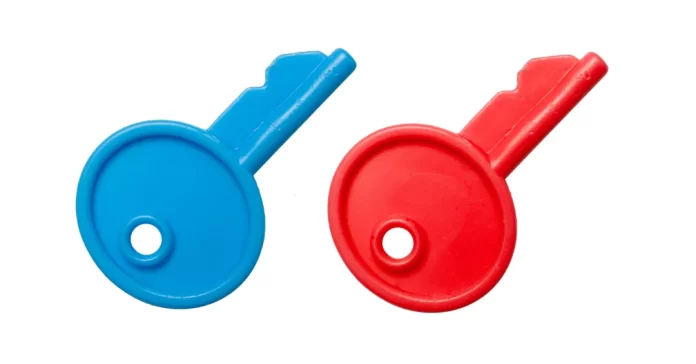
Prison guard: Sure thing! There are some keys hanging up next to the door. Should be a red one and a blue one.
[Long pause]
Prisoners: This key isn’t working! It’s made of plastic and it’s completely the wrong size. It’s clearly not designed to open this lock.
Prison guard: Which key did you try?
Prisoners: The red one.
Prison guard: Ohh, that must be the wrong one. Try the blue one.
[Long pause]
Prisoners: The blue key doesn’t work either! It’s also a fake plastic toy that isn’t built for this lock, just like the red one!
Prison guard: You must not be doing it right. You’ve got to try harder. Really jam them in there and wiggle them around a bit.
[Very long pause]
Prisoners: It’s not working!
Prison guard: Try harder!
Prisoners: We’ve been trying as hard as we can! We keep switching back and forth between the red key and the blue key and trying every different approach we can think of, and we’ve come nowhere close! These plastic keys are just fake children’s toys designed to distract us and keep us preoccupied so we’ll stay locked up! Give us the real keys!
Prison guard [sighs]: Okay, well, we don’t like to encourage this, but there is a third key handing on the wall to your left.
Prisoners: This giant green one?
Prison guard: That’s the one!
Prisoners: This thing’s four feet long and made of styrofoam! There’s not a chance in hell it can open that lock!
Prison guard: Okay well maybe just stick with the red and blue ones then.
Prisoner 1: I say we try the blue one!
Prisoner 2: Idiot! The red one is way better!
Prisoner 1: Blue one!
Prisoner 2: Red one!
Prisoner 1: Okay, well, let’s ask everyone here. Everyone who thinks we should keep trying the blue one come over here onto this side of the prison, and everyone who thinks we should try the red one go over there with him.
Prisoner 3: Uhh, guys? That door doesn’t look very thick. There are a whole lot of us, and there’s only one prison guard. I’m pretty sure if we all team up we could knock this door down and tie him up.
Prisoner 1: What are you, nuts??
Prisoner 2: Why go to all that trouble when we’ve got this perfectly good red key right here?
Prisoner 1: Blue key!
Prisoner 2: Red key!
Prisoner 1: Blue Key!
Prisoner 2: Red key!
Prison guard [leaning back and chuckling]: Gets ’em every time.
Somewhat Clafoutis
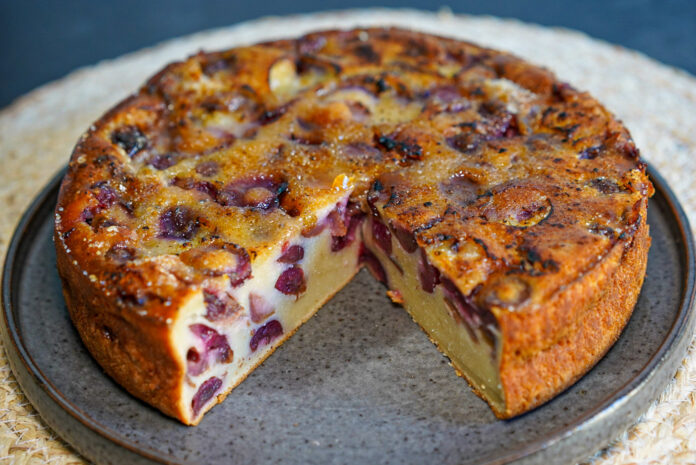
Somewhat Clafoutis
My husband’s daughter recently asked for my Clafoutis recipe and for that I am
most grateful. I had forgotten how utterly simple and delicious this wonderful dish is, so I am back on it. As you may have discovered, dear Reader, I am especially drawn to baking things that can serve as breakfast, a snack, “travel on the ferry” food, or dessert. Clafoutis is eaten most easily with a fork, but in a pinch it can travel because, like quiche, it is delicious warm or cold and can be sliced and carried if need be.
Clafoutis is a country dish originating in the Limousin region of southern-central France. The word clafoutis comes from “clafir” which means “to fill”, and I think of it as very simply filling a pie dish with fresh and local ingredients – eggs, fruit, milk – and baking them. The result is a somewhat custardy, fruity, deep dish concoction.
Here’s my recipe, adapted in so many ways that purists may well object to my even calling it clafoutis. I use fruit other than the traditional cherries, reduce the amount of sugar, and omit the orange liqueur and icing sugar. You can adapt as you like, using fresh, canned or frozen fruit. It’s fun to experiment with this one and very hard to go wrong!
1 C organic flour (I use whole wheat or red fife) 1 C buttermilk
6 eggs, beaten
¼ C brown sugar
1 T vanilla or almond extract pinch of salt
2 – 3 C fruit – I use plums, nectarines or peaches, pitted, together with blueberries, for a deluxe mix.
Preheat oven to 425.
Mix the 1st six ingredients together and pour them into a buttered deep dish pie plate. Float the fruit on top and gently press it into the base layer.
Bake for ½ hour or until golden brown on top and it passes the toothpick test. Let cool 15-20 minutes.
Top with plain or vanilla yoghurt. Some top with whipping cream or ice cream, your call. Enjoy any time of day or night!
Letter to the Editor – Doug Rennpferd

Dear Grapevine.
I have read in these last weeks a series of articles by Caitlin Johnstone about the Israel/Palestine conflict. Others may be satisfied by torrents of reportage which are overloaded at times with vitriol. But I will test my courage to bring up something that may colour the conversation…
“Then the Lord said to Moses, “Why are you crying out to me? Tell the sons of Israel to go forward. And as for you, lift up your staff and stretch out your hand over the sea and divide it, and the sons of Israel shall go through the midst of the sea on dry land” … And the sons of Israel went through the midst of the sea on dry land, and the waters were like a wall to them on their right hand and their left.”
Beginning in the 1970’s a series of discoveries were made in the eastern Sinai on the Red Sea. A granite pillar was found dating to the time of King Solomon commemorating the Red Sea crossing. Its counterpart was found across the water on the Saudi coast; this has lately been hidden. In the water on both sides of the crossing were found huge amounts metal and also human remains, evidence of Pharoah’s drowned army. Chariot wheel designs were dated back to the 18th Dynasty. This crossing is 3000 feet deep…
Further on that exodus route have been found petroglyphs made by Israelites, representing the golden calf they worshipped. Also the graves of those Israelites.
Further still, there are two massive rocks, once one, where water erosion marks show that a great stream flowed between them and down the slope.
And then: The Mountain of Moses, the top of which is thoroughly burned, unaccountably as it is not a volcanic peak.
People are often resistant to facts. They become exasperated. It is easy to ask too much of the rational mind; after all, I believe this mind is only rarely responsible for our views and decisions. A person might say, ‘What does it all mean??!’.
I believe that whatever the Israeli/Palestinian situation means only God knows, but that it cannot possibly exceed Jesus’ last command which was, ‘Love one another’. Also, even stone and bone evidence of a God of history will only lead to senselessness and despair without that historical road leading inevitably to the sacrifice a resurrected saviour, Jesus Christ.
Doug Rennpferd