
Gabriel Jeroschewitz, November. 9th 2026, dedicated to Samuel Beckett and James Joyce
Worse than the sound of the wind in the chimney when the house is empty.
He didn’t knock. There would have been a reply, but the man inside was no longer in the business of replying. The observer stood on the cottage threshold on the timeworn stone path and watched through the smudged window as the Atlantic wind swept across the grey grass and the rain came in that particular Irish manner, slanting insistently as if the heavens themselves tried to speak through the slate.
The room was not empty. This was the first thing the observer noted, and it would remain the only. The cottage was full, but there was only one table, one lamp, one man, and several papers that had increased during the night.
The old man sat at the kitchen table. A fountain pen lay before him, its tip faintly reflecting the lamp’s light. The ink had dried hours, or perhaps days, ago. The man repeatedly inscribed a name on the paper with the dry pen, as if the pressure of the metal could engrave the name into the paper and, by extension, into the world. Since when? Since the brother had sailed west, perhaps? Since the woman had gone. Since the clocks had stopped measuring days and started measuring years.
In the corner stood a tall case clock. The brass hands were covered by a thin film of coastal moisture. The pendulum swung without the emotion of a heart that had forgotten how to beat. Each tick represented a year. Each tock denoted a tear. Outside, the rain knocked on the window, imitating tears that would not fall or had already fallen too far into the past to be acknowledged. The observer was aware of the rain and of the clock and of the fact that both were marking time for the same silent burial.
On the table there rested a stack of crisp white paper that had not been disturbed except by the aged hands of the man. Near the cold stove, where there was no fire, there rested the papers like patients in a hospital. They were unsent apologies. They marked the dark. Each piece of paper was carefully folded by the man. A crease was made by the pad of the thumb. A seal was applied in wax that was the colour of dried blood. The sealed letters were placed by the door where they had accumulated like leaves and like unclaimed remains. They made a life completely lived in parentheses.
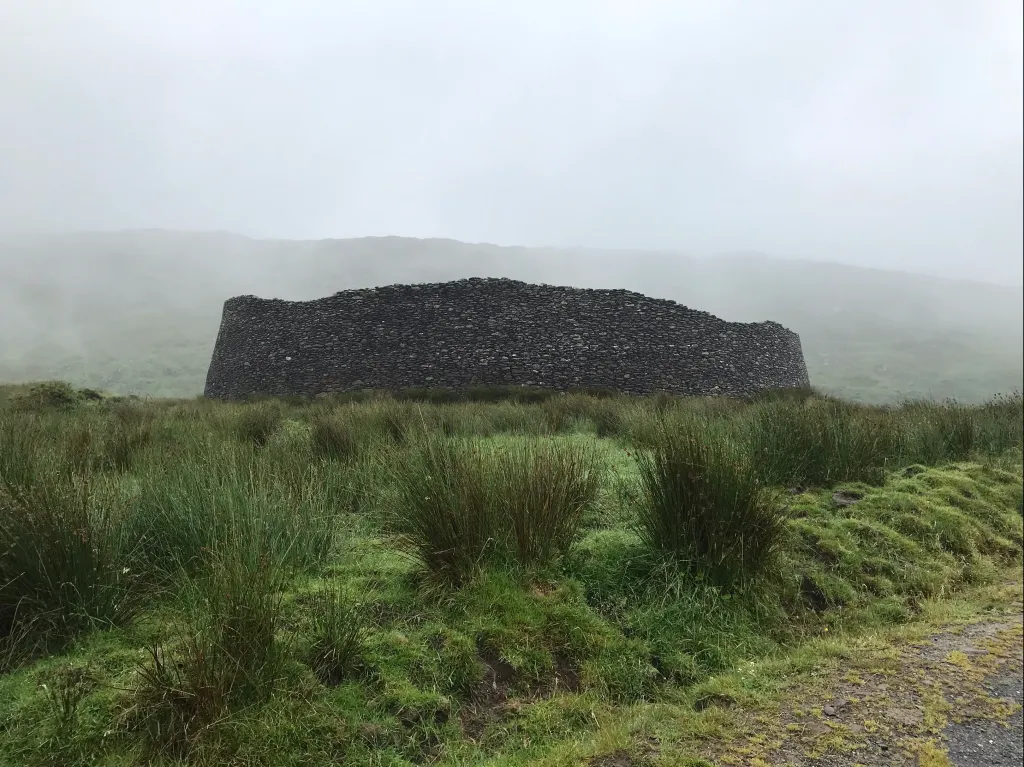
There was a letter addressed to Cormac. He had sailed to the West some number of years ago and had not sent a word back since. Not since the spring when the ports were full of ghosts, and the sea was colder than the grave. The West. Not just a direction but an old direction older than maps. It was the direction in which the sun dies. It was the coast where the Irish Celts had stood, watching the sea long before they had words for sorrow or sea. The observer thought of the ring forts at the top of the hill above the village. Of the circular silence of the forts. Of the ancestors who had interred their people facing west, towards the setting sun, towards Tír na nóg, and towards nothing at all.
There was another letter addressed to Aoife or to the idea of her or to the woman who had not been loved in the best way. Her dresses remained in the wardrobe upstairs. The key to the wardrobe had been misplaced or had been cast into the well. The dresses remained there. No one could find them, but the observer believed they did exist. Yellowed and moth-eaten to the colour of old bone and sea foam. Once he had called her mo anam cara and she had laughed and he had not laughed since. The failure was not in leaving or in marrying but in loving her in the best way. In loving her as one should and as the poets and the priests had advised and as the heart, if not armoured, might have done.
It was not the walls that caused him to be alone. The observer knew this because the walls were thin and the wind passed easily through them. It was not the dreams. Those muddled youth memories had seeped like sugar in weak tea. It was the stillness that settled into the bones and caused a living man to become a specter in the gaps left by what once could have been.
His mouth moved. Names of the dead, names of the saints, explanations, apologies appeared in the form of words, yet no sound came from them. He was shouting on paper. He was calling across time. He hoped the silence would respond to his rhyme.
On the table there was a Claddagh ring. The observer noticed this. The heart was in the center of the ring and covered beneath the fingers. The old woman said that if you left the ring open to the wrong sort of attention, then the devil could attach himself to it. This ring was closed. It was safe. It was useless. The man held a song that he could not sing. He held a song without words and words without a song. He held a love without a mouth to speak that love. Once, the man had thought that if he could run from the pain, he would be safe. A heart kept in armour creates a barren space, and that armour had grown into his ribs long ago.
The observer thought of Beckett and the man in the room. A jar and a whisper. The observer thought of Joyce and Dublin and how an entire life could be contained in one street, an entire betrayal and an entire unfinished song. There was something absurd about the scene. The dry pen, the wax seals, the accumulation of the letters by the door, the idea that if the letters were folded with sufficient care they might cross the Atlantic and rise from the grave and find the woman wherever she now resided and find the brother wherever the western sea had taken him.
The fire in the stove had died to grey ash. Shadows extended across the room from the corner towards the table as if the hands of the dead reached for the living. The man did not light another brick of peat. He did not get up. He sat while the observer stood and they occupied the silence.
The sound of silence is something terrible. Worse than the sound of a shriek at the window. Worse than the sound of the wind in the chimney when the house is empty, and you are certain someone is standing just behind you. Worse than the devil and his ring. The man held a song he could not sing.
But then there was a shift. Not an epiphany. Not a sudden illumination. Joyce might have called it an epiphany, but this was smaller and quieter and more Beckett than Joyce. The man lifted his pen. He dipped the tip into the inkwell. But the ink was dry. There was nothing to lift. He made the motion. He wrote a final line or perhaps only imagined writing it. The dry tip made a soundless mark on the paper. The observer noticed the man’s shoulders relax slightly. A shift occurred — not an upward movement but a transfer of weight. The ghosts in the corner. Cormac, Aoife, the Celts beneath the forts, the unborn children, and the unspoken apologies turned towards the door. They seemed ready to leave.
The observer realized that the man was shouting and screaming on paper, but no one could hear it with their ears. He was calling across time. At this moment, the observer realized that silence was listening.
The ink was dry. The letters remained by the door. Unposted. Unread. Unanswered. The fire was out. The rain fell. The clock ticked. The man sat at the table in the dark, learning to walk in the quiet, one step at a time, one unspoken word at a time, in the cottage by the sea where the Celts had once stood and where now silence stood with the man, patient, terrible and kind.
The observer turned from the window and left the man to his paper, to his dry pen and to his song that he could not sing and to the silence that was at last listening.