
Being Stuck in our own Minds
By Sally Campbell
We are living in big times, eh? Times that call for us to stand up, take a stand for each other and humanity in general, recognize cracks in the system, and take action for what is important. And of course we have our own conflict; that is part of living in a messy society, a society where it is ok to be and to feel differently about things. That can cause difficult tension, particularly if we don’t have the tools to talk about it. We inhabit a society that allows its people to speak up and out, but less often encourages and equips us to work through it. This is a time to put aside petty differences, and to tackle the big issues––climate crisis, militarism, poverty, housing, education & health care for all–– if we are going to leave a positive legacy for those who follow us.
I like the idea of asking “Is this situation life-threatening?” when I get myself all wrapped up in some position or grievance I’m carrying. When I manage to move away from that position and open up to what else may be going on, it is so liberating! It offers up so many more choices and frees me from the dictates of my critical mind.
Similarly, when I give myself the opportunity to reflect and look for patterns in my life that might possibly be re-activating, the results can be startling. It is hard to unearth our unconscious behaviours. Often a long-standing friend and ally can help us with this work, as they have seen us play out these old coping patterns time and again. But generally we have to ask for their help, for their insight, or for that of a counsellor or trusted guide. Knowing how I resist receiving insight into my own unhelpful thinking, until I ask for it, I can understand how others do the same. Offering my view to a friend who is suffering and hasn’t requested my input, even when that input is well-intentioned, can be disastrous.
An assertion––stating in a clear and (hopefully) kind way, what you see going on––can generate an angry, hostile response if the person is not ready to hear it. This is called a “defensive kickback” in conflict resolution parlance. This defensive kickback is always a possibility with assertion, part of the risk of speaking honestly, of saying what is not being said. Sometimes we take that risk because we are just so tired of avoidance and denial, but it can have a cost. It helps to anticipate that, so then we can decide if it’s worth it. If non-communication, self-censorship or avoidance gets in the way of relationship, part of caring for and holding onto one another is finding ways to talk about the hard stuff. But we can only really change ourselves, no one else, and each one of us has frailties. We could ask: is this difference fundamental or can I let it be?
Other wisdom that has been helpful to me lately: “Unharness yourself from your weary stories.” (Maria Popova, the Marginalian.) Our minds seem quite attuned to replaying the same old tropes, revisiting our old injuries, slights, resentments. Why is negative thinking often easier than thinking positively? For me it is always helpful to remember the sage advice to “not believe everything I am thinking.” Especially when it comes to fears and negativity. These are, after all, merely thoughts, perceptions, habits. That’s why Byron Katie had such breakthrough success with her fundamental question: “Do you know that to be true?” When I explore my thinking with curiosity such as she suggests, things become more nuanced. This “mining of our minds” is ongoing work, never completed once and for all.
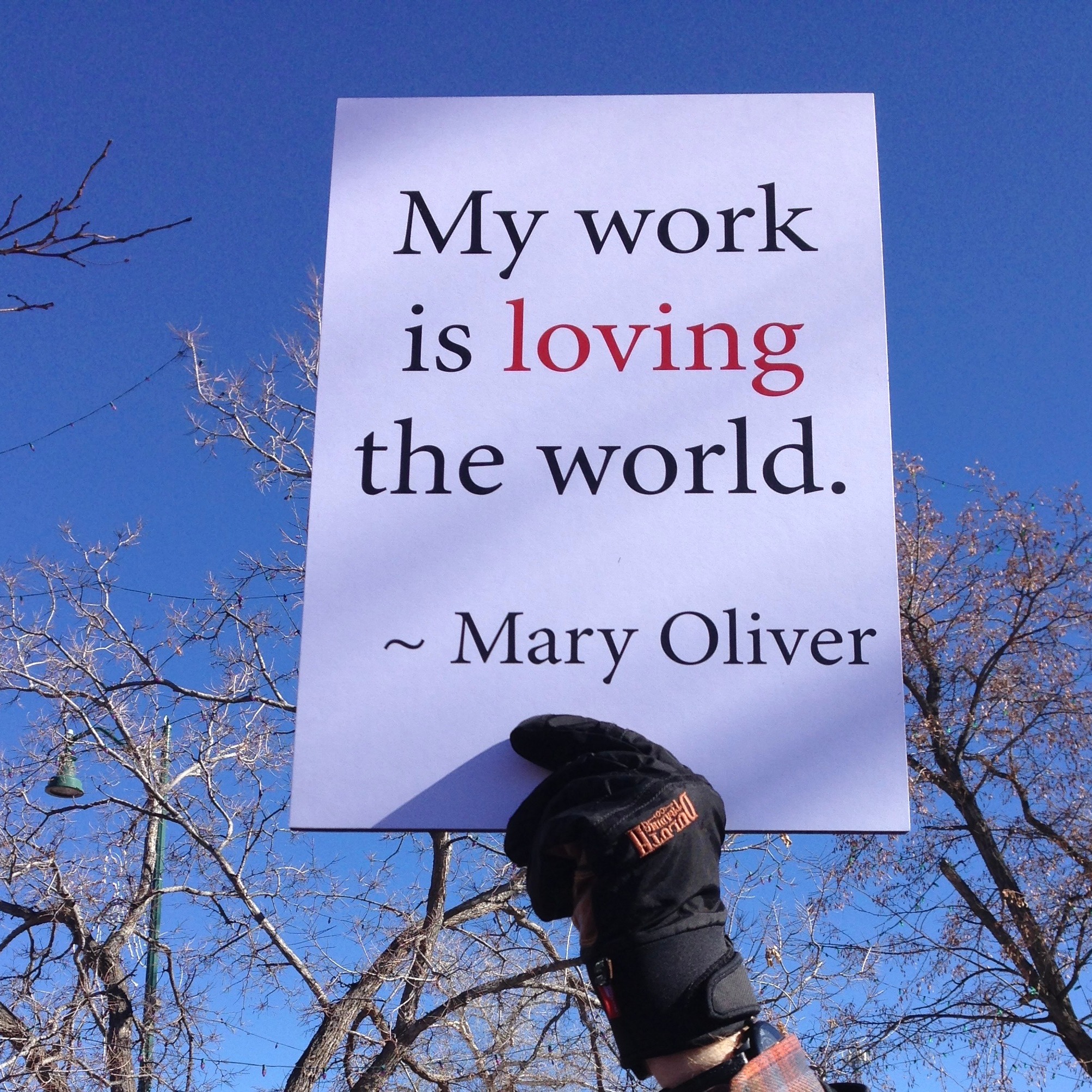
Finally, here’s some simple, grounded inspiration from Mary Oliver, one of our time’s most beloved poets: “My work is loving the world.” After all, it is the only one we have.