


CityWest Announces Expansion of Denman Island Project

March 5th, 2025
CityWest Announces Expansion of Denman Island Project
DENMAN ISLAND – Today, CityWest is proud to announce that more homes and businesses on Denman Island will receive fibre-optic services through a $2.1 million increase to the current project’s budget. The investment represents 238 additional homes to be added to the scope of the project. The Government of British Columbia will invest $1.7 million, administered by Northern Development Initiative Trust, with the remaining costs to be covered by CityWest.
Civil construction on Denman Island began in the spring of 2022. Since then, CityWest has worked with the project funding partners to increase the footprint of the project. The initial scope of the project left
several areas of the island without fibre-optic services. This additional funding will materially cover the majority of the remaining homes and businesses in the community with fibre-optic services.
“Reliable access to high-speed internet is essential for daily life, from running a business to accessing
vital government services and staying connected with family and friends,” said George Chow, Minister of Citizens’ Services. “The expansion of the Denman Island project means more people will be able to access the tools they need to work, study and engage with the digital world and brings our government closer to ensuring every household in British Columbia has access to high-speed internet.”
To date, CityWest’s newly built network has brought fibre-optic connectivity to 759 properties in the community. Today’s announcement will bring that total number to 997, representing 95% of occupied properties on Denman Island.
A total of 47 homes were not included in the project’s increased scope due to various geological and construction restraints. These 47 properties will be contacted directly by CityWest with more information on next steps. CityWest will be sending technicians to further evaluate custom plans for these properties.
Fibre-optic services are being delivered on Denman Island through a partnership with the Comox Valley Regional District. The initial project, which covers both Denman and Hornby Islands was strongly supported at the local level, with 94% of residents between the two islands voting in favour of the last- mile build. The partnership will see a portion of the profits from Internet, TV, and phone services go
directly back into the Comox Valley Regional District for grants and other forms of assistance that benefit residents and community organizations.
“We’re thrilled to bring improved services to even more homes and businesses on Denman Island. By increasing the scale of this project, we’re able to ensure that more rural B.C. residents receive the same urban-level connectivity that you find in major cities,” said Stefan Woloszyn, CEO of CityWest. “We are
grateful for our partnership with the Comox Valley Regional District and look forward to serving Denman Island for years to come.”
Today, hundreds of Denman Island homes are benefiting from improved connectivity through CityWest fibre-optic services. This expansion of the current project will ensure that even more homes and businesses have access to the best technology available.
Teams will soon begin preliminary permitting and planning work for the newly announced areas of Denman Island.
Additional Quotes
Karen Ross, Denman/Hornby Islands Internet Committee
“Our communities are very appreciative that CityWest is providing superior fiber optic internet service to our Islands. And pleased that City West and the Province will provide the needed additional funding to complete the installation on Denman Island.”
Daniel Arbour, Comox Valley Regional District Area A Director
“We are thankful to the Province of BC for ensuring that 95% of Denman residents will receive high speed internet connectivity. I also want to thank CityWest for persevering and overcoming challenges as we work to connect Hornby and Denman Island residents. This is a good day.”
Increased Tipping Fees at CSWM Facilities

Increased Tipping Fees at CSWM Facilities
Published On
March 11, 2025
The Comox Strathcona Waste Management (CSWM) Board has approved targeted tipping fee increases to align their long term financial strategy to follow a user-pay model, where those who generate waste contribute fairly to the cost of managing it.
Effective April 1, 2025, tipping fees on specific categories are increasing at both the Comox Valley and Campbell River Waste Management Centres:
- Industrial, Commercial, Institutional (ICI): $155 per tonne to $165 per tonne
- Household Municipal Solid Waste (MSW): $155 per tonne to $165 per tonne
- Drywall: $275 per tonne to $285 per tonne
- Clean Fill: $40 per tonne to $60 per tonne
- Construction Waste: $155 per tonne to $205 per tonne
To help businesses plan ahead, a separate increase for Construction Waste, from $155 per tonne to $205 per tonne, will not take effect until October 1, 2025. This phased approach allows time for adjustments ahead of peak construction season.
Construction waste accounts for a significant portion of landfill waste each year. To reduce the amount entering the landfills and taking up unnecessary space, there is a larger fee increase for this category, as contractors and businesses are encouraged to sort materials and recycle usable components rather than sending them with general waste.
“We understand that increased costs for residents and businesses are never ideal,” explains Vivian Schau, Senior Manager of CSWM Services. “To keep up with rising costs to balance the solid waste budget, this needs to be a shared responsibility to keep waste costs down and support further waste diversion programs.”
These increases will maintain a stable tax rate over the next three years, while also supporting operational needs of the CSWM service.
To help manage costs, customers are encouraged to sort materials before arriving at the landfill and divert recyclables, which can reduce tipping fees and save both time and money.
For more information on what you can recycle and keep away from the landfill, visit www.cswm.ca/diversion.
For details on updated pricing and how these changes may affect you, visit www.cswm.ca/fees.
For information on CSWM board meetings and to watch previous discussions, visit www.comoxvalleyrd.ca/meetings.
What is a “Refusenik”?

I’ve never heard the term outside of Israel, and the slightly derogatory “nik” fits with the old 60’s negative inferences about “beatniks” and “peaceniks”, but I really like the “refuse” part of it as it has much more agency than the putdown implied by “draft dodger”. To me those brave souls who reject their country’s militarism are heroes; the act of refusing to participate in state- sanctioned war/war preparation takes courage. These people are war resisters who are willing to take a moral stance against harming, oppressing and killing other people. We will soon have the chance to meet and hear from two young Israeli refuseniks, Einat Gerlitz and Tal Mitnick, who are coming to Denman Monday, March 24th, 11:30-1pm, Seniors’ Museum, as part of a cross-Canada tour co-sponsored by Independent Jewish Voices (IJV) and Mesarvot. They have both served time in Israeli prison as a result of their decision not to fight in the Israeli military.
People have always resisted war, and have been criticized, marginalized, ostracized and punished by the State for doing so. Many have engaged in the demanding process of becoming a conscientious objector (CO); others have gone to jail; many have made the wrenching decision to leave their country; others have deserted from the armed forces; others have committed suicide.
In researching CO’s and war resisters for this article, I revisited Yves Engler’s revelatory 2021 book: Stand on Guard for Whom? A People’s History of the Canadian Military (www.blackrosebooks.com). As much as we might like to preserve the myth of ourselves as “peacekeepers”, Yves calls the military “the institutional embodiment of Canadian toxic masculinity”. He points to the big increase in far-right activists joining the military the five years preceding publication of his book, citing an attraction to an authoritarian institution as one motivation. He reminds us that Canada’s military had a stated policy of whites only – “pure European descent” until WW2. We learn that Department of National Defence (DND) is the largest institution in Canada, with a 2020 budget of $24 Billion, 15 times larger than our budget for the environment. Our military manages 2 million hectares of Canadian land, ½ the size of Switzerland. 59% of government emissions in 2019 were from the military. And lest we forget, military emissions are excluded from our government’s “net zero” plan. The Royal Military College (RMC) has the only Federal government degree-granting program, and DND operates over 2 dozen learning institutions. Why do we hear little to no criticism of our military or its spending? DND has approximately (as of 2021) 600 people working fulltime in PR, in 50 offices across the country.
Our military of course, has its roots in the British military. RMC (note the name) was founded in 1876 to train “proper white gentlemen” to be officers of British imperialism. Canadians were sent to the colonies to repress dissent – to Ghana, Nigeria, Afghanistan, India, Sudan, South Africa, the Caribbean, to name a few – to assist in the extension and continuation of British colonial rule. They were used in Canada to repress labour strikes, a tool of the bosses, and most egregiously, formed into militias to dispossess indigenous people. According to Yves, their work between 1867-1933 was all about class rule.
There have always been conscientious objectors to war, first showing up in the West with the “peace religions” who were forbidden the use of arms in war – the Quakers, Mennonites, Doukhobours – and were guaranteed exemption from fighting for over 200 years pre-WWI in what became Canada. Also exempt in Canada were farmers, miners and others in essential services. In 1917, when voluntary enrollment wasn’t producing enough soldiers for WWI, the government enacted the Conscription Act. A stunning 93% of those conscripted claimed an exemption! That led to the removal of exemptions in 1918, fortunately just when that devastating war was ending.
During WWII, Prime Minister Mackenzie King’s Liberal government vetoed conscription for overseas service; only volunteers could be sent overseas. Others served by training and home guard duties. How humane! Those refusing service were required to perform 4 months’ alternative duty (same time as for military training), mostly infrastructure projects in such places as National Parks, where they lived in supervised work camps. In 1945, the government refused to let the last CO go home until the last soldier returned from overseas.
Canadian CO’s were sometimes put down as cowardly by the media, one Banff paper charging that “conchies” used pacifism “simply as a cute method of saving their yellow hides”. It doesn’t seem as if they endured the same levels of ridicule, hostility and abuse inflicted on their neighbor CO’s across the border during WWs I & 2, but I haven’t researched it deeply.
One million Canadians fought in WW2, and post-war, Canada moved seamlessly to becoming an arm of the US empire. US, Britain and Canada organized secret meetings to start NATO. Lester Pearson, Prime Minister from 1963-68, called NATO the foundation of Canadian foreign policy. (NATO, NORAD & NUKES: Canada’s Relationship to Militarism webinar, Engler, 12 January, 2022). As I’ve written before, NATO’s purpose was described by its 1st Secretary General, Lord Hastings Lionel Ismay, as being to: “Keep the Americans in Europe, the Russians out, and the Germans down”. Is this the best and highest role for Canadian military? Or might we be better served with a strong civilian defence force such as they have in Finland and Switzerland? NATO, always run by the US, has now become a belligerent arms-trading coop spreading its reach to the edges of China.
We don’t have conscription in Canada as they do in Israel. If we did, how many of those who oppose war would have the courage of a refusenik?
PSYCHIATRIC JERKY II
PSYCHIATRIC JERKY II
The conventional “Medical Model” approach to treating people experiencing extreme states of consciousness, the so-called “mentally ill”, is that of diagnostic labels from the Diagnostic Statistical Manual 5 (DSM) that stigmatizes people and puts them at risk of harm by others or themselves. The present model says that one’s neurological rmakeup is not “normal” if it doesn’t function in specific areas of the brain like everyone else’s does. Therefore, you have a disorder, an illness to be treated by the administration of medication, or even electro shock or some other invasive technique, that can sometimes be helpful or lead to lasting mental or physiological damage.
However, given that the medication today is not that of the past where the side effects were substantially debilitating, one can perhaps find that many of the psychiatricmedications of today work at relieving or settling down specific symptoms that are detrimental to the individual without horrible side effects. So yes, there can be a time and place for using Psychmeds to relieve someone’s intense suffering and allow one to be able to participate in non-invasive therapeutic sessions.
Also, there is no room in which neurodiversity can be looked at as an important contribution to a healthy diverse heterogeneous population where it should be, at times, embraced. Science has demonstrated that diversity within populations whether human, plant or animal is very healthy in ensuring the survival of the species.
The Medical Model premises neurological dysfunctions as the cause of a variety of mentaldisorders is suspect as many scientific studies have resulted in inclusive results. Especially, because there is difficulty discerning if a “neurological dysfunction” is a causation vs consequence of a particular “disorder”. Such as, are the high dopamine levels seen in people labeled as Schizophrenic a consequence of having the so-called disorder or is it the cause of it?
Regardless of causes and consequences and whether your brain has been pathologized because it’s not doing the same thing as everyone else’s, mentaldiversity should not be labelled as an illness, because is that really the case? Hmmm, interestingly people labelled as Schizophrenic, a diagnosis that many people are extremely afraid of having assigned to them or are equally afraid of someone that has Schizophrenia, are seen as unpredictable and dangerous thanks to the stigma forwarded by the new media, Hollywood and the medical community. When actually it has been demonstrated that people labelled as such, are in fact less risky to the general public then the average “normal” white male is.
Intriguing, in our culture “strange behaviors’ ‘, hearing voices and having hallucinations are symptoms that have been pathologized and given a grim prognosis with labels such as, psychosis and schizophrenia. Whereas, in some cultures these are signs that spiritual enlightenment is occurring or a new shaumn has presented themselves and, thus the person is embraced by the community and taken in by other shaumns that guide the person to become a powerful healer or visionary for their community. Or community care is given to people in mentaldistress by simply being there with them, or performing rituals guiding them through difficult times.
But what remains scary about the conventional androcentric psychiatric treatment world is that more often than not, if your behavior is at a point that it crosses social norms or your deemed a threat to one’s self or others, the police are called in usually they will restrain you and arrest you under the Mental Health Act. Which is then followed by hospital incarceration, forced medication and other possible problematic treatments if you don’t comply with the doctors orders. What’s missing from the treatment program is the need to understand and to address the root causes, such as family disfunction and abuse, and the social/political environment that contributes to the origins of trauma. An equally important factor that accounts for the number of repeat psychiatricward stays for many people, is that after a period of hospitalization and the administration of meds, people are spit back out into the dysfunctional society that impacted one’s mental wellbeing in the first place…so the cycle continues and return trips to the psych ward usually means new meds are administered or there are increased dosages of the current ones that the person is on.
To be continued in the next issue.
Shucking Oysters: Deviled Eggs

Breaking News! US egg prices have skyrocketed at over $8 a dozen! Consumers are in an uproar! Say what? In Canada, we’ve been paying $9 or more for eggs at the groceries for years. You don’t hear a peep from us. But then, we’ve always paid more than the US in practically everything. Consider the egg. The oval shell is so Zen. Eggs are the quintessential perfect design of nature. And yet, we treat the whole laying process with such utter cruelty. Many, in fact, consider eggs the cruellest animal product of all.
Those of us who live outside urban areas know what a real egg looks and tastes like. In the grocery coolers it’s a whole different story. At first, our choices were white eggs, big ones and even bigger ones. Then brown ones, free-run, free-range, omega three, and organic. And now, we have from Burnbrae Farms, “nestlaid,” “nature’s best,” and…“solar free-range” eggs.
Let’s unpack these cartons, shall we? Perhaps the biggest confusion and fraud are the terms “free-run” and “free-range.” Forget about happy flocks of chickens running wild and free. Free-run laying hens are crammed by the thousands in open-style barns with not even a perch – and the required minimum space is ONLY one square foot per hen. The birds never leave the barn, cannot adequately roam, forage or move freely. Free-range hens are like free-run hens in solitary confinement – they get to have an “unspecified amount of time” for outdoor access in “weather appropriate conditions.”
Nestlaid eggs sound so warm and cozy. Who wouldn’t want to have one of those in the morning? Let’s take a peek. These eggs come from hens raised in “enriched colony housing.” The hens live in “small social groups and are free to perch, scratch and lay their eggs in a nesting area in a furnished cage environment.” I’m having problems visualizing this breakthrough in factory farming. A “furnished cage environment”? Wicker love seats surrounded by metal bars?
Don’t be fooled – enriched furnished cages are still indoor wire cages that are barely distinguishable from a conventional battery cage. Six to eight hens are kept in cramped, wire cages, stacked by the thousands on top of each other inside warehouses without any fresh air or sunlight. Hens can’t stretch their wings, forage, move and or even leave their cages. Enriched cages are battery cages that have a perch that they can barely reach.
Sounding like a business pitch on Dragon’s Den, we have solar free-range eggs produced by free-range birds that have access to the outdoors, “weather and environmental conditions permitting.” Note the word “permitting” which probably means never. The hens may live in solar-powered open-concept barns equipped with nests, perches, and dust-bathing areas; it’s still the same morally cruel environment. An energy-efficient solar-powered egg. What next? Wind-powered eggs and turbine omelettes?
On their first day of life, considered expendable, male chicks are ground alive or suffocated. In the US alone, more than 260 million male chicks are killed every year; that’s 30,000 newborn chicks killed every hour for eggs. But, hey, most veterinarians consider grinding male chicks a legal form of euthanasia. Female chicks are worse off. On their first day, they have their beaks seared without anaesthetic, causing horrible pain and distress and then have to live in an infested, crowded, and diseased cage for two years. That’s their life span (thankfully). Happy chickens? They can live up to 15 years.
Burnbrae Factory Farms is Canada’s largest egg supplier; it’s also its cruellest. In April 2024, Animal Justice conducted a massive investigation in Canada, at dozens of Burnbrae egg farms in BC and Quebec. Footage showed caged hens forced to live in filthy, crowded conditions, both in conventional and enriched battery cages, where the ammonia-filled air burns their skin and eyes. Many hens had missing feathers, and were frequently forced to live next to the rotting carcasses of their dead cage mates.
Despite all this, 83% of Canada’s laying hens continue to be housed in battery cages. While the rest of the world is abolishing cages, Canada has committed only to transitioning to enriched cages by 2036, which is like saying you’re going to quit smoking cigarettes by switching to menthol. Hens will still be condemned to a lifetime of suffering.
There are more than 1,200 egg farms across Canada, housing an estimated 25 million laying hens who produce more than nine billion eggs each year. Locally, in BC we have over three million laying hens on 145 farms, with the average flock size at 22,274 hens.
Last week, in the US, more than 4 million chickens in Iowa were killed after a case of bird flu was detected. That’s 4.2 million chickens at ONE factory farm. Fun fact: Three-quarters of US egg-laying hens are raised on only 347 factory farms.
The response, as always, to every farm outbreak has been the same: kill infected animals and continue business as usual. Animal activist, Michael Corthell writes: “A true solution must address the root cause – industrial animal agriculture itself.” Scientists have been warning us for years: the next pandemic will come from a factory farm. Coincidentally, last month in February, Burnbrae Farms initiated a voluntary recall for eggs from their Manitoba farm due to possible Salmonella contamination.
I’ll leave you with these reassuring words: “At Burnbrae Farms, the passion for delivering premium eggs is palpable in every aspect of their operation. From their meticulous farming practices to their state-of-the-art facilities, each egg is a testament to their unwavering commitment to excellence. Embracing a farm-to-table approach, this supplier ensures that every egg reaching your plate is not just a product but a symbol of their respect for nature and dedication to providing wholesome goodness.”
Seedbeds of Liberation

“The ideal subject of totalitarianism is not the Nazi or the Communist but people for whom the distinction between fact and fiction…between true and false no longer exist…. The masses’ escape from reality is a verdict against a world in which they are forced to live.” Hannah Arendt
Hannah Arendt has been described as one of the greatest Western political theorists. Being Jewish, she escaped Nazi Germany in 1933 and fled to the USA in 1941. She had already earned a PhD in philosophy at the age of 22, a woman ahead of her time. She describes the raw material of totalitarianism as a world full of loneliness, without friendship, without compassion; created by inhumane, oppressive systems. Before totalitarianism takes hold, it first ruins peoples’ relationship with themselves and others (and I might add the natural world) by making them skeptical and cynical. They no longer rely upon their own judgement, their values, their ancestral wisdom. “What makes loneliness so unbearable is the loss of one’s own self, which can only be confirmed in TRUSTING and TRUSTWORTHY company of EQUALS.” (My emphasis) She identifies how unmet needs for community and meaning create “furious individuals with nothing in common except for their contempt for the present order…….while the elite class are good at spotting hatred…using hate to whip up a mob.” When she witnessed Nazi war criminal Adolph Eichmann in a 1961 courtroom, she realized he was totally unable to to think from another’s standpoint, to have empathy for anyone but himself. She refused to see him as “inwardly” evil but rather a reflection of ‘the fearsome, word and thought-defying banality of evil.” In 1975 she wrote:” U.S politics is marketing, is P.R….Big Lies.” She claimed that totalitarianism invents outrageous sexist, racist, homophobic, simplistic lies and repeats them until desperate, cynical, hateful people fall prey to these lies.
At the Non-Violent Communication, aka, Compassionate Communication workshop over the International Womens’ day weekend, there was much talk of systemic oppression and how minorities get caught in the cross-fire of societal and political fear-mongering. The inspiring element in these kinds of gatherings is the gentle contradiction of being held in a container of safety, intimacy and vulnerability. Co-creating a caring community is on-going liberation work. Thanks to Eileen and Erin O’Brien, and all the intrepid organizers! Instead of colluding with the ramping up of recent tribal nationalism, let us trust our shared humanity, even when our strategies for meeting our needs may clash. As Martin Luther King, Jr, said: “Through violence you may murder a hater, but you cannot murder hate through violence. Darkness cannot put out darkness, only light can do that. Hate is too great a burden to bear. I have decided to love.”
The house

I wrote this metaphor for David, my close, dear friend for many years. May he rest in peace. March 3rd, 2025 /Gabriel Jeroschewitz.
The house
Stood on a promontory overlooking the churning Pacific, a stark silhouette against the perpetually bruised sky. It wasn’t just old; it felt ancient, imbued with a weight that pressed down on the soul. Locals whispered stories, half-truths and anxieties woven into tales of madness and despair that had clung to the property for generations. I, a detached observer, was drawn to it, not out of morbid curiosity. Still, something akin to a perverse fascination with the human capacity for self-destruction, a spectacle played out against the grand theater of existence.
The new owner, a reclusive artist named Alistair Finch, had arrived to find inspiration within its timeworn walls. He was obsessed with liminal spaces, where the veil between realities seemed thin. Like the mystics and quantum physicists, he believed that reality was a malleable construct shaped by consciousness and that the house was a nexus point. In this place, past and present energies converged with unnerving intensity.
Finch threw himself into the project with a fervor that bordered on mania. He spent his days wandering its labyrinthine corridors and his nights huddled over sketchbooks, his face illuminated by flickering candlelight. He spoke of whispers in the walls, shadows that danced beyond his peripheral vision, and sights and sounds that defied rational explanation. Others might have fled in terror, but Finch reveled in it, seeing it as proof of his theories and validation of his belief that the house was a crucible for the soul.
At first, his art reflected this newfound inspiration. His canvases were vibrant, chaotic expressions of raw emotion, pulsating with a life force that both captivated and disturbed. Critics hailed him as a visionary, a genius unbound by the constraints of conventional thinking. But as time wore on, a subtle shift began to occur. His paintings grew darker, more unsettling. The vibrant colours faded, replaced by shades of black and grey, and the swirling forms coalesced into grotesque figures, distorted and terrifying.
I observed from a distance, a silent witness to Finch’s descent. I saw him become increasingly isolated, consumed by his work, his eyes hollow, his face gaunt. He stopped answering my calls, and when I occasionally caught a glimpse of him through the grimy windows of the house, he appeared to be conversing with someone—or something—unseen.
I ventured closer one night, drawn by an inexplicable sense of dread. The house exuded an aura of palpable unease, the air thick with a chilling silence that seemed to stifle sound. The only light emanated from a single window on the top floor, casting long, skeletal shadows across the overgrown lawn. Hesitantly, I approached the front door, its wood warped and rotting, and pushed it open.
The interior was a chaotic tableau of decay and neglect. Dust motes danced in the moonlight filtering through the cracked windows, illuminating cobwebs that hung like macabre draperies. The air was heavy with the scent of mildew and something else, something acrid and vaguely metallic that made my stomach churn. I called out Finch’s name, swallowed by the oppressive silence.
Driven by a growing sense of urgency, I ascended the creaking staircase, each step a deafening echo in the stillness. As I neared the top floor, a low, guttural chanting reached my ears, its cadence hypnotic and disturbing. A wave of nausea washed over me, and I paused, momentarily paralyzed by a primal fear.
Gathering my courage, I continued onward, reaching the door to the room where the light still burned. It was slightly ajar, and I peered inside. What I saw in that room forever altered my perception of reality, shattering the carefully constructed edifice of my rational mind.
Finch stood before an easel, his back to me, his body swaying rhythmically. He was naked, his skin pale and clammy, and his head was shaved. The chanting emanated from his lips, a language I didn’t recognize but somehow understood, a litany of supplication and despair.
On the easel was a painting unlike anything I had ever seen. It was a swirling vortex of blackness punctuated by flashes of crimson and gold. Within its depths, I saw faces—countless faces, contorted in expressions of unimaginable agony, their eyes hollow pits of despair. They seemed to writhe and scream, trapped within the canvas, their torment echoing in the chanting that filled the room.
As I watched, mesmerized and terrified, Finch reached out and plunged his hand into the painting. He gasped, a look of ecstasy mingled with unbearable pain contorting his features. He began to writhe, his body convulsing, and the chanting grew louder, more frantic.
Then, something happened. The painting began to glow, emanating a blinding light that filled the room. The air crackled with energy, and the temperature dropped precipitously. I felt an ancient and malevolent presence fill the space, a force of unimaginable power that threatened to overwhelm me.
I wanted to scream, to run, but I was rooted to the spot, unable to move, trapped in the unfolding horror. Finch continued to chant, his body now levitating above the floor, his eyes wide and unseeing. Then, with a final, agonizing scream, he vanished.
The light faded, the chanting ceased, and the presence dissipated, leaving only an oppressive silence behind. I stumbled backward, coughing, my lungs burning, my mind reeling. The painting remained on the easel, but now it was blank, devoid of colour, a void staring back at me.
I fled the house, running unthinkingly through the darkness, the image of Finch’s final moments seared into my memory. I never looked back.
In the days that followed, I tried to rationalize what I had seen, to dismiss it as a hallucination, a product of stress and exhaustion. But I knew the truth. I had witnessed something beyond human comprehension that defied the laws of nature and the boundaries of reality.
In his relentless pursuit of the ineffable, Alistair Finch had opened a door that should have remained sealed. He had peered into the abyss and, in doing so, had become consumed by it. His legend was not one of fire but of shadow, a chilling reminder of the dangers of seeking forbidden knowledge and the fragility of the human soul when confronted with the unimaginable.
The house still stands on the promontory, a silent sentinel overlooking the sea. Locals avoid it; they fear a tangible force that keeps them at bay. I, too, avoid it, but not out of fear. My avoidance stems from a profound sorrow, a recognition of the terrible price Finch paid for his ambition, and a chilling understanding of the darkness that lies dormant within us all, waiting for the opportunity to consume us. The ouroboros had devoured him, the cycle of dissolution complete, leaving only an echo of terror in the windswept silence.
2 27 25 IF IT MAKES YOU HAPPY IT CAN’T BE THAT BAD
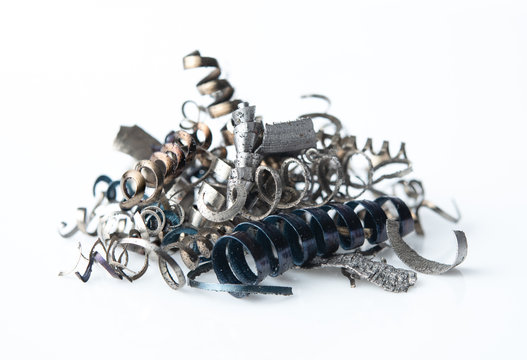
Willy had always liked the taste of metal. It was cold and hard and unchewable. He couldn’t remember when the notion came to him that there were special nutrients in the metal that he should eat, but once it took hold his urge to eat metal was overwhelming.
The first thing he swallowed was his father’s silver wrist watch. He swished it around in his mouth for some time while gathering saliva. Willy chewed it a bit out of habit before he attempted to swallow it. The watch got stuck in his oesophagus and he gagged until he turned blue and almost gave up until he found a chopstick in with the utensils and pushed it down.
That evening at dinner his father complained loudly, “Has anybody seen my wrist watch? I haven’t seen it for days.” Willy quietly laughed, “I’ve swallowed time,” he told himself.
Willy knew it was probably a mistake to eat his mother’s wedding ring, but there it was by her bedside sitting in its little pink velvet box. It went down easy and traveled well through his twenty-two feet of intestine.
Eventually he was able to fish the watch and the ring out of the toilet. He gave them a good rinse and then ate them again.
He started eating silverware; mostly small forks and spoons. He tried a butter knife but it got stuck and he had a heck of a time retrieving it; there was some blood.
He noticed that his stomach began to swell out like a pot bellied pig. He liked the feel of it, although it hurt, all of the time. He found that if he rubbed his belly he felt better, so he began to rub his belly constantly like it was Alladin’s lamp.
His only friend at school was a boy named Alphonso that nobody liked because he smelled terrible and had the sweatiest flesh you could imagine. Shaking Alphonso’s hand was like ringing out a dishcloth.
One day, out in the playground after he found a small nail from an adjacent construction site he decided to let Alphonso in on his secret. “Hey Alphonso, you probably don’t know this, but eating metal is good for you. There are an amazing amount of nutrients.”
“You talking crazy Willy, you eat metal it’s gonna kill you.”
“Nope, not true, I’ve been eating metal for some time and I feel great. I ate my Dad’s wrist watch and my mother’s wedding ring.”
“You are a crazy guy Willy.”
“Watch me eat this nail, Alphonso.”
“Don’t eat that Willy, that is a rusty nail.”
“Got to do it,” Willy swallowed the nail. It burned all the way down.
“Willy, you are a crazy person!” RING! RING! The school bell went.
“Don’t tell anybody Alphonso.”
“You eat a rusty nail Willy, you are a crazy person.”
After school Willy’s parents were in the parking lot sitting in the woody station wagon with the engine running. As Willy approached Willy’s Dad got out of the station wagon. “Get in Willy,” his Dad opened the back door. “But I usually take the bus home, Dad.” Off in the distance Willy could see Alphonso scurrying off of the school grounds towards the bus stop with his head down.
“That rat fink,” Willy muttered and got in.
After he got his stomach pumped Willy ended up in the psych ward. He was the youngest person on the fourth floor. He met some interesting characters. His new best friend was a heavy set bald man named Sebastian who told Willy he had tried eating metal when he was younger and understood the urge but had switched from metal to an addiction to crack cocaine.
“I’d almost wish I’d stayed with metal Willy, because crack addiction is a terrible way to live but as soon as I get back out on the street I know I will go straight to it.”
“Why Sebastian?”
“It’s the only thing that makes me happy.”
“Eating metal makes me happy,” said Willy. A pimply-faced young woman with thick long strands of brown hair on her face named Claire Bush was eavesdropping on their conversation and gave them a big smile and began to sing, “If it makes you happy it can’t be that bad…” Together all three of them began to sing the popular song until they had the whole floor singing along.