Home Blog Page 82

Letter to the Editor – Mark Prior

Letter to the editor:

About Gronk

I am indebted to Dennis Forsyth for the following:

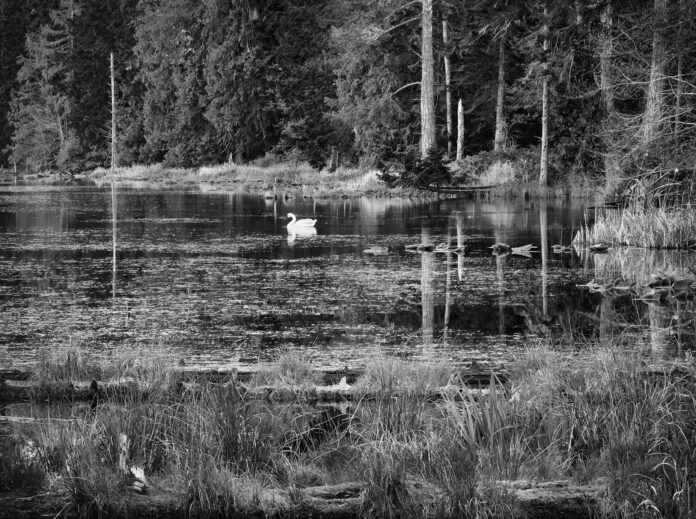
This swan was born on the marsh at Bob and Velda Parsons farm between 1998 and 2000.  Making it at least 25 years old which is getting up there for a swan.  In ’97 I was part of a team who were censusing Canada Geese and Swans as we tried to assess how successful population recovery programs on Vancouver Island had been.  In that winter a Mute Swan suddenly appeared on Windy Marsh.  Obviously an escape from somewhere as they are not native here.  This swan moved in with a half-dozen Trumpeters who hung out there.  In the spring it bonded with one of the Trumpeters and when the Trumpeters left for their northern breeding ground it and its new mate stayed here.  Mutes don’t migrate. The Mute turned out to be a female and nested on the marsh.  To our consternation she and her mate produced two babies.  We assumed that they would be sterile as hybrids and that seems to have been the case.  In the next two years they produced five more young.  Some of them fell victim to predation and some of them left here and moved to Deep Bay.  The Mute female was killed by something on the marsh in late 2000 and her Trumpeter mate resumed migrating with the next batch of Trumpeters.  The one remaining hybrid has been here ever since.   For most of the year it keeps company with the ducks and geese on Morrison south of the road, when there are Trumpeters around it will join them temporarily.  Of course we don’t know this swan’s gender. Its voice is somewhere between the minimal hissing sounds of a Mute and the clarion song of a Trumpeter. A raspy, hoarse sort of honk.  This led Velda Parsons to name it Gronk.  A strange story and since Gronk seems perfectly healthy right now, one that may continue for another few years.

Left, Trumpeter style; Right, Mute style: Photo – Dennis Forsyth

Mark Prior

Letter to the Editor – Ian Thomson

To the Editor, The Island Grapevine

Dear Sir

Re: Capping Short-Term Rentals on Hornby Island

As stated by the late Pat Carney, politician, social commentator and long-time resident of Saturna, one working definition of a Gulf Island is ‘a controversy entirely surrounded by water’.  For Hornby Island the perennial issue of short-term rental housing is heading for something of a showdown at the upcoming Islands Trust meeting on May 16, 2025.  While HISTRA (a formal grouping of short-term rental property owners) considers the regulation of rentals reasonable and good for Hornby (Islands Grapevine No 1682, May 1, 2025, page 6), the focus of their concern has turned to a proposal from the two Hornby Island Tustees to limit the number of permitted rental units.  Unsurprisingly, (this is a Gulf Island) there is an alternative point of view alive on Hornby that strongly endorses the concept of reducing and capping the number of short-term rentals.

Both sides in this conversation use arguments to support their opinions based largely on economic and environmental impacts (both positive and negative).  Both have clear personal concerns.  Property owners are vested economically in various ways.  Residents describe their personal space as invaded and/or degraded by the presence of short-term rental properties.  This can, and sometimes does, pit neighbor against neighbor.

Trustee Alex Allen has described short-term rentals as the elephant in the room, the 800lb gorilla on Hornby Island (First Edition, May 2025, page 29), and has outlined his perspective on the positions adopted by the main parties involved.  He also tackles the question of capping how many short term vacation rentals should be allowed on Hornby by looking at the situation on Orcas and Lopez in the San Juan Islands, Pender and Gabriola in the BC Gulf Islands, and, by way of interest, in the city of Nelson, each of which attracts a number of tourists each year.  This approach links rental cap imposed in each of these jurisdictions with the land area involved and apparently is the basis for the Trustees suggestion that rentals be capped at 67 on Hornby.  

From a social practitioner perspective, the Trustees have applied an environmental approach, of relative intensity of rental units within the landscape, which is relevant to such considerations as fresh water availability and use and management of waste water.  On the other hand, the short-term rental is, behind the economic and environmental arguments put forward by proponents and opponents, very much a social issue.  As such, social indicators should provide a greater insight to the reasons for the controversy, its persistence and perhaps offer a solution. 

One social indicator (there are others but this one is easy to assemble with publicly available data and similarly easy to understand) is the relationship between the number of short-term rental units and the size of the permanent resident population.  This can be expressed as a ratio, 1:X, where X is the number of permanent residents present for each short-term rental unit. The result is a number that can be related to the experience of the resident population.  The higher the ration number defined by X the presence of rental units become progressively more diffuse and diluted with respect to the permanent resident population. Conversely, the smaller the ration number defined by X, the more concentrated and proximate to the permanent resident population.

Applying this formula to the examples quoted by Alex Allen (and using population census data from Wikipedia) yields the following relationships. Orcas Island – permanent population 5387, rental cap 211, ratio 1 rental unit :25 permanent residents.  Lopez Island – population 3156, rental cap 135, ratio 1:23.  Pender Island (North and South), population 2250, rental cap 10, ratio 1:225.  Gabriola Island – population 4500, rental cap 10, ratio 1:450.  City of Nelson – population 11,198, rental cap 110, ration 1:102.

Applying the same approach to Hornby Island’s permanent population of 1225 (2021 census) is made complicated by the lack of agreement as to how many short-term rental properties are presently active on the Island.  However, using the numbers most commonly quoted yields the following pattens. 165 rentals – ratio 1:7; 135 rentals (the number quoted by HISTRA) – ratio 1:9; 67 rentals (number proposed by the Trustees) – ratio 1:18.  

The data are revealing.  The low ratios of 1:7 and 1:9 under the current situation (regardless of absolute numbers) show that permanent residents are highly exposed to the presence of short-term rental properties.   Residents perceptions (both positive and negative) are backed by physical proximity and probable frequency of interaction.  There is reasonable suspicion that the ratio would be  smaller (lower number), indicative of even closer and greater frequency of interaction, if the calculation were based on the number of permanent households, which is normally lower than the total number of residents in a population. The proposal of capping rentals at 67 and shifting the ratio up to 1:18 reduces this exposure and potentially at least some of the associated social tension.

For the sake of argument (we are on a Gulf Island and this is a cultural norm) it is informative to see how the Hornby picture would change if we use the rental cap ratios applied at other locations.  For example, what if the situation on Orcas and Lopez were applied to Hornby? – a not unreasonable idea given that, just like Hornby, Lopez is a tourist destination community with a tourism-based economy dependent on a seasonally fluctuating population of visitors. If Hornby were a San Juan Island, the rental cap would be 50 for a ratio of 1:24.5.  Moving along, apply the Pender and Gabriola numbers and you get rental caps on Hornby of 6 and 3 respectively.  Apply the Nelson ratio and a Hornby rental cap would be set at 12.

Food for thought and input to the conversation ahead over the ‘right’ numbers for Hornby Island.

Yours truly.

Ian Thomson

Hornby Island

Gronk, Morrison Marsh

https://printartphotography.ca

Peckish

#1683

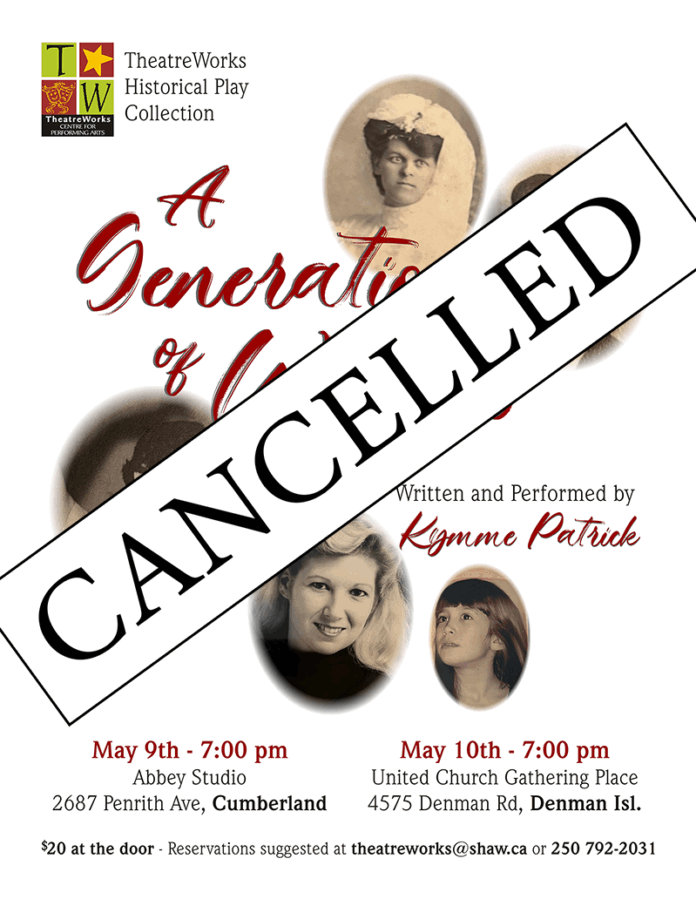
A Generation Of Women

A Generation Of Women – **CANCELLED due to emergency health issues**

The play A Generation Of Women evolved from a single monologue written twenty-five years ago into a saga spanning a century with five different storytelling descendants. As the writer and performer Theatreworks’ Kymme Patrick tells humorous and insightful stories of five generations of women who helped shape our community with their dreams, with obstacles overcome and achievements for women in workplaces formerly dominated by men.


Creating A Generation Of Women began with an historic look at women on Vancouver Island, incorporating facts about the mining town of Cumberland in 1910, the docks of Comox in the 1920s, the Campbell River logging activities in the 1930s and a variety of local areas with details that depict the changing times and challenges. Whether Maggie is escaping the coal pits of Wales to journey to a better life in Canada, or Lillian is cooking meals for the loggers while dreaming of faraway places that the steamship travels, or Florence is building airplanes during wartime while pining for romance and peace, or Lulu is having a moment of clarity while enjoying free love and pesticide-free farming life, they each add a colourful thread to the tapestry of women’s experience throughout the twentieth century.

“In this play I explore how women have struggled during their times with issues of poverty, prejudice and deadly working conditions. I became fascinated by the changing roles of women and of the working class in the Comox Valley and surrounding area.” 

Kymme Patrick is a well-known actor, director and writer of dozens of plays, winning awards from Theatre BC in all areas of theatre production. After much deliberation she decided to perform the piece as a one-woman show. “I don’t leave the stage between characters,” she explains. “because I dress in layers to make quick transitions. A new look, a different voice, I’m ready to go!” Although Patrick has performed A Generation Of Women several times any thought of retiring this piece has been met with another request. “Women like to watch it,” she says, “with their mothers, daughters, sisters and friends.”  

So come out to celebrate the sisterhood of women and bring your mothers, daughters, sisters and all those who love them. A Generation Of Women will be presented at the following dates, times and venues: 

Showtimes are May 9,  7:00 pm at the Abbey Studios  in Cumberland and  May 10, 7:00 pm at the Gathering Place, United Church on Denman Island.

 Tickets are $20 at the door – reservations are recommended at  theatreworks@shaw.ca or call  250 792-2031. 

Updates to the Tribune Bay Park Recreation Enhancements Project

FOR IMMEDIATE RELEASE

Updates to the Tribune Bay Park Recreation Enhancements Project

Site layout, upgrades and timeline released

HORNBY ISLAND, BC (APRIL 25, 2024) – PROJECT UPDATE – SPRING 2025

BC Parks is excited to welcome campers back to Tribune Bay Campground this Spring. Since acquiring two properties to expand Tribune Bay Park, BC Parks has been creating a long-term plan to make improvements and add new park areas that protect and enhance natural, cultural, and recreational values. Following its designation as a provincial park in 2024, all regulations of the Park Act now apply.

Some improvements have already been made since last season including a new septic system and updates to the campground road.

There won’t be many visible changes for the 2025 camping season, but there are more improvements coming and the campground will look different in Summer 2026. Here’s what is going on:

New Layout and Camping Options

A complete redesign of the current campground is underway to better align with the experience visitors expect from BC Parks. A variety of site options and sizes will be available including park- beside sites, pull-through sites, and small, basic cabins with more space and privacy between sites. A variety of electrified and non-electrified sites will be offered, as well as new pit toilets and shower building.

Reduced campsite density

BC Parks will take a phased approach to construction. Phase One will be built on the original campground footprint and will include a short-term, temporary reduction of approximately 40 campsites. BC Parks is committed to providing a similar number of campsites to the original campground. Locations for the remaining sites are currently being considered, and will be added back in Phase Two. Construction for Phase Two is anticipated in Fall and Winter of 2026/27.

Enhancing visitors’ experience

Other improvements include enhanced access from the campground to the beach, a new playground, and accessibility improvements such as compact gravel campsites and roads, and universally accessible showers. To support healthier air and reduce wildfire risk, wood-burning fires will be prohibited, with propane fires permitted. There will also be an extra vehicle fee for second vehicles at a campsite where space is available.

For project updates and to view the new campground layout, visit: helpshapebc.gov.bc.ca/tribune

Does Capping the number of Vacation Rentals Now Make Sense for Hornby?

(Paid Promotional)

Does Capping the number of Vacation Rentals Now Make Sense for Hornby?

We at HISTRA believe the Temporary Use Permit (TUP) bylaw requirements proposed for managing Vacation Rentals are reasonable and good for Hornby.

The Hornby community benefits from well-managed Vacation Rentals adhering to established water and ecological standards while at the same time supporting hundreds of our workers, artists,

businesses and families. Unfettered growth is not healthy for the island and a reasonable cap will help protect what we all hold dear.

At the March 21st Local Trust Committee (LTC) meeting, our two Hornby Trustees proposed setting a cap on Vacation Rentals at 67, half of the 135 Vacation Rentals they estimate are currently

operating on the Island. Trustee Scott said it was a number for the community to discuss.

We believe the current Vacation Rentals are stable and sustainable. Reducing them, let alone by half, is detrimental for Hornby as a whole. For many, renting their homes is how they afford to remain a part of the Hornby community. The guests they bring are an important lifeblood to the artists, artisans, businesses, workers, cleaners and tradespeople of Hornby.

With required Provincial Registration by May 1st, in the next month we will finally know how many Vacation Rentals we actually have.

So, what DO we know?

  1. Most Vacation Rental owners have long and deep roots on Hornby, many being second or third generation islanders. Many bought on the island after years of visiting, making memories and

building connections.

  1. We are not investors — and investors are not a part of Hornby’s Vacation Rentals.
  2. Vacation Rentals do not all operate simultaneously or consecutively over the summer. Many owners enjoy their Hornby homes several weeks during the season.
  3. Our information suggests the number of Vacation Rentals has been stable for several years.
  4. We estimate around 400 Vacation Rental guests come to Hornby each summer week.
  5. That’s compared to 2,400 part time owners, family and friends, another 1,000 at campsites and our other paid accommodations and 500 visiting full time residents.
    • Cutting 200 from 4,300 weekly visitors won’t make much difference to lines, ferries or the popularity of Hornby as a destination. It will hurt a lot of locals though.
  1. Every year Vacation Rentals spend the average annual income of 70-75 workers on Hornby — that’s over 15% of the local labour force. That’s not rental fees, that’s what is spent by guests and owners in our community. That would be cut in half.
  2. Vacation Rentals pay 75% of the Municipal and Regional District Tax (MRDT—aka the “pillow tax”) for Hornby, currently $65-75K each year, goes towards workforce housing on Hornby.
    • Since 2022 HICEEC has collected approximately $200,000 of MRDT funds in a GIC, dedicated to workforce housing, $150,000 coming directly from Vacation Rentals.
  1. A long-held argument against Vacation Rentals is the belief they would otherwise provide long term housing on Hornby. The reality is this simply isn’t the case. Our own families are in their homes many times throughout the year making them unavailable for long term residency. They would also be unaffordable — what Hornby needs is more housing that costs below $1,000 a month, housing the MRDT funds can support.

In short, reducing the number of Hornby’s Vacation Rentals will negatively affect many, while providing little benefit or any real change. What it will do is cut the MRDT funds Vacation Rentals contribute to HICEEC’s workforce housing initiative. It will reduce the incomes of many islanders

and upend the lives of all the families who will struggle to keep their family properties and with no positive impact on housing or appreciable difference in visitors.

Reducing the number of Vacation Rentals doesn’t seem to help anyone or anything. What we, and we hope you, support as these changes are implemented:

    • Every Vacation Rental that is legally operating, meets the TUP requirements, is provincially registered and paying the MRDT can apply for and receive a TUP.
    • Once those TUPs are granted, the need for and size of a cap should be decided in a community process, not by the Trustees alone.
    • If the cap is set below the number of TUPs that have been granted, then no new Vacation Rentals would be added until the number falls below the cap.
    • To provide certainty for the community, our Trustees can formally confirm, at the May 16th LTC meeting, that, once in place, they will approve all TUPs for provincially registered active

Vacation Rentals that follow the bylaws, meet the TUP requirements and pay MRDT. If you think this is reasonable, please let the Trustees know by email or over coffee.

We believe the Trustees want to make changes the community supports but they must hear from you to know what that is.

Here are the emails:

Sincerely, Your Friends and Neighbours, The HISTRA Board and our Members

If you have questions about this information, please reach out to hornbyshortterm@gmail.com, we are happy to have a conversation with you.

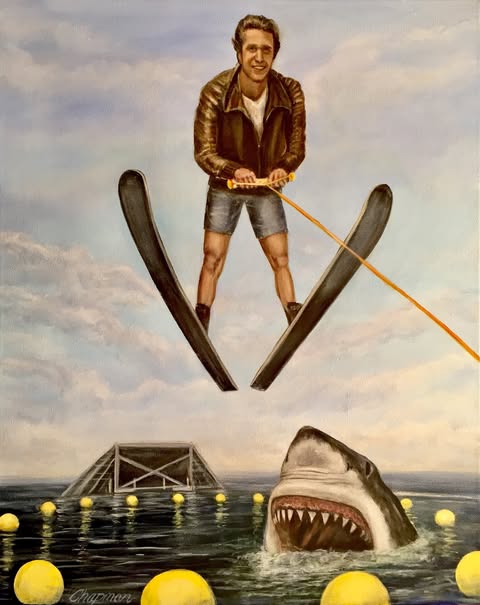
The DIBB Has Jumped The Shark

The DIBB Has Jumped The Shark

Book Magoo, Roving Reporter

Well the iconic Facebook stalwart ‘Denman Island Bulletin Board’ has jumped the shark. It’s the end of an era folks. Like the once great ancient Rome, it now lies in ruins and all that remains are scant remnants of its former stateliness. It’s become as palatable as a steaming bowl of raw sewage. The intellectual equivalent to being tied to a chair and kicked down a flight of stairs. The DIBB is akin to the neighborhood bar that used to be a good place to go visit once in a while but then it got taken over by a bunch of unlikeable surly regulars that are there 24/7 and just try to pick fights with anybody that says anything that rubs them the wrong way. It’s an intellectual cul-de-sac littered with laughing emojis and snide remarks from thoroughly unlikable keyboard combatants who constantly feel driven to sate their appetite for shittiness and tell the whole world what they think about everything and anything that comes across their radar. The new and improved DIBB comes complete with public shaming courtesy of would be climate change “activists” who address the need to voice their displeasure every time someone idles their car for more than four seconds after its driver slaps it in park, along with long-winded rambling political screeds that read like one of those computer software licensing agreements where those on board skim the first two sentences then scroll to the bottom and hit “Agree”. And then there’s the “I’m so done with this shit” crowd who defiantly make a post announcing their departure from the whole sordid mess. “Hey, just letting everybody know that I’m leaving Facebook…you can find me over at Bluesky!” then within two weeks they’re back to sneaking in a like here and there and before too long they’ve full on reappeared like a persistent untreatable rectal itch and more unbearable than ever. I think when covid hit a few select people decided to uncork themselves and release their inner asshole loose upon the community. I could see things going in that direction before the “pandemic” but holy shit in a hat 2020 was like a pedal to the floor for some high octane assholery. The Pandora’s Box was open and as Grandma used to say “You can’t put shit back in a donkey”. Was it ever any good to begin with? Or am I just viewing this through a rose colored lens that clouds my perception of reality? Like that old movie you used to love, then you watch it again years later and find that time has been quite unkind to it. But the movie’s no different, it’s the same as it’s always been…

Shucking Oysters: Selling Your Soul

Shucking Oysters: Selling Your Soul

By Alex Allen

Celebrities have always been around. We used to call them musical artists. Movie stars. Politicians. Newscasters. Models. Poet Laureates. Philosophers. The print media followed their every move and we devoured every morsel, from Silver Screen and Movie Star magazines to People and Vanity Fair. We humans need someone to follow and worship. 

Famous faces have always had a way of grabbing our attention. And then a moment of brilliance, celebrity endorsements. Who wouldn’t want to have Gordon Ramsay’s HexClad hybrid nonstick 7-Inch frying pan? Or be “toasty warm” in Reba McEntire’s battery-operated Ororo heated vest? For decades, brands have been using famous faces as a means of advertising. But there has been a huge shift, with brands turning their focus to influencer marketing. Now we all can be worshipped; we can all be an “influencing” celebrity. Find your niche. Vegan Photography. Oyster Baiting. 

Except, the tides have changed lately. Instead of being adored and mimicked, many are being vilified and abandoned for their utter crassness. Not only are people sick of being made to feel bad about themselves by those who, more likely than not, have more sordid lives than the average person, the greatest currency in media today is authenticity. As Chadwick Moore recently wrote, “Social media audiences haven’t only caught on to rented Birkin bags and phony housewives agonizing over, say, their child’s artisanal packed lunch featuring a gold-dusted bento box, political influencers are feeling the backlash, too.” 

From their distasteful antics, these narcissistic rude people do seem to go out of their way to advertise their stupidity – it appears that there is little they won’t do for a few likes on Instagram. Instagrammer Natalie Schlater posted a picture of herself in a bikini in front of a rice paddy, just like her other uploads. But it was the caption that caused an uproar: “Thinking about how different my life is from the man picking in the rice field every morning.” Wow. Schlater came across as shallow and entitled but she claims that the whole thing was a “big misunderstanding.” As Moore, added, “Perhaps if these influencers didn’t feel the need to accompany these ‘deep and meaningful’ thoughts with pictures of their asses, people might not find them quite so ridiculous.”

Society has a way of reining in bad influencers, however, and the current trend of “shaming” those who go too far seems to be working. How low can the bar of an Instagram influencer’s self-obsession go? For many online creators, however, negative attention, can also get them more likes. You can grow a career out of enraging viewers and many creators have reached huge audiences by doing just that: being extremely controversial. 

A 2023 survey found 56% of Generation Zeds wanted to pursue influencing as a career. Compare that with another study where the same number of Chinese kids considered being an astronaut as their dream job. Influencers shamelessly promote unnecessary products in exchange for $$$, perpetuating a culture of mindless consumerism that’s destroying our planet. With every sponsored post, they’re basically saying, “Hey, buy this crap you don’t need, because I got paid to tell you to!” “Just sitting here being a beigeomaniac with my @imago_a Plis tote & happy to share my -20% code SISSY20…”

These so-called influencers may have thousands, even millions of followers, but how many genuine connections can one person really have? Do they care about their “fans”? Or the number of followers that boost their ego and their bank accounts? It’s all about who has the biggest following, not who has the most skill or knowledge. Their success is built on botox and luck, not hard work and merit. Yet, they all seem to act like they’re entitled to the fame and fortune they’ve stumbled on to. 

Influencers are the epitome of narcissism (think Meghan Markle). Their posts scream “look at me, look at what I’m doing, look at what I’m wearing!” They also tap into people’s deepest insecurities, making them feel like they’re missing out if they don’t have the latest products or experiences they’re blatantly pushing. 

Remember when friendships were based on shared experiences and trust? Well, not anymore. Now it’s all about networking and leveraging connections for personal gain. Influencers have turned human relationships into commodities. It’s about flashy cars, luxury vacations, and designer clothes – a hedonistic lifestyle that’s unsustainable and sad.

One individual on Reddit, eloquently commented, “With every vapid post, they’re contributing to the collective dumbing down of our society. Instead of promoting critical thinking, self-improvement, or meaningful content, they’re just adding to the mindless noise we’re all drowning in.” They’re the embodiment of everything that’s wrong with the hedonistic, consumer-driven society we’ve become. 

Another had issues with the term influencer. “Like bro you literally sit in your bedroom all day and dance to copyrighted music on TikTok, what are you influencing people to do? You literally make fake prank videos or vlogs flexing how rich you are, again, what are you influencing people to do? We glorify the biggest idiots on the planet and then proceed to call them influencers. Real influencers are people like activists, actors, musicians, athletes, and artists. Not some annoying person in their teens or 20s doing dumb shit on the Internet for clout or playing video games all day.”


No matter how you look at them, they are get-rich-quick schemes so many are hoping to get in on. Micro versions of being a Kardashian. That’s right! You too can be useless and make money inspiring people to be useless while making money!