

Farm 2 Family Feast

Denman Island is pleased to again welcome the University of Victoria’s Environmental Studies Field School students who will live and learn on Denman Island for two weeks in August.
Denman’s non-profit Farm to Family Meals Services Society is excited to partner with the Field School to provide meals for the students. Farm to Family will also provide support to the Field School’s wonderful Community Feast on August 24th.
We are reaching out to the community to ask for produce donations from your abundant gardens to contribute to the students’ meals and to the feast.
We are interested in anything fresh from your gardens,…or your henhouses! Eggs would be wonderful! (Save your zucchinis for the Blackberry Fair Zucchini Race)
Your generous produce donations will allow Farm to Family raise funds to help support our many community programs, such as our Elder Meals Program, Families Program, Intergenerational Dinners and the upcoming Musical Luncheons.
Can you help? We would be so grateful for your support.
If you are able to help us, please contact Bee Balm at bee.farmtofamily@gmail.com (Or on FB) with your offerings.
Shucking Oysters: Lord Help Us

Shucking Oysters: Lord Help Us
By Alex Allen
“So many people have asked me over the last week why we would go to a place like Canada. My answer is simple: We are called to worship in the places needing the greatest breakthrough. God is sending us and now is the time for us to bring revival north to Canada! May God move this weekend and awaken a nation that DESPERATELY needs revival!” – Sean Feucht
Sean Feucht, the 41-year-old far-right US Christian singer-songwriter and preacher, is trying to spread his gospel across Canada with his “Let Us Worship: Revive in ’25 Tour.” The tour, however, has not been without controversy. Feucht, among other things, is a passionate supporter of Donald Trump and shares the same “Christian” values on abortion, gender, and the LGBTQIA2-S community.
While Feucht has said he believes in Black Lives Matter, he has publicly called the movement “shady” and a “fraud,” and that “we can’t let our God-given empathy get hijacked by a dark movement with hidden agendas.” Last year, Feucht referred to Pride Month as a time to discover “which people, businesses, influencers, corporations and ministries have sold their soul to a demonic agenda seeking to destroy our culture and pervert our children.”
Feucht’s divine family kingdom encompasses: Burn 24-7, a worship and prayer movement; Light A Candle, a missions and compassion “movement bringing light, hope, healing, and tangible love to the hardest, darkest, and most isolated places of the earth;” Hold the Line, “a movement seeking to engage the church and young people to inform, educate, and inspire the next generation of leaders to stand for what is right in the governmental arena;” and Let Us Worship, a movement across America (and Canada) gathering believers to worship and pray boldly for revival.
Halifax, Charlottetown, Quebec City, Moncton, Gatineau and Vaughn all cancelled Feucht’s shows due to concerns over public safety. Yet, that did not stop organizers finding other locations: a farmer’s field outside Halifax and a Spanish evangelical church in Montreal (the city later levied a $2,500 fine against the church for not having the required permit). Meanwhile, Saskatoon is on the fence and Edmonton is reviewing their application. West Kelowna and what was to be the finale August 24 in Abbotsford, have now been cancelled.
In less than 10 years since signing a music recording deal with Bethel Music, a multi-million-dollar nonprofit Christian music label, Feucht, with flowing Robert Plant locks, is perhaps the greatest success story to come out of the Bethel machine when it comes to, not only his rise to stardom, but also the way he has transformed himself into a money machine.
Married to his high school sweetheart, Kate, with four children: Keturah, Malachi, Ezra, and Zion, Feucht’s “lifelong quest and dream is to witness a generation of burning hearts arise across the nations of the world with renewed faith, vision, and sacrificial pursuit of the Presence of God.” Shawn Schwaller noted, “as it turns out, working for God, in Sean Feucht’s world, means making a lot of cash and becoming a real estate tycoon.” It’s the prosperity gospel. Forget about faith. If you have lots of money, then God has blessed you, and if God has blessed you, then you are living a Godly life.
Feucht “personally” owns over 10 properties in California, Montana and Pennsylvania. Three are worth more than $4 million. One in Redding, has a deluxe two-story man-cave outbuilding filled with thousands of dollars’ worth of trophy game animals Feucht has killed around the world. The other seven properties in Pennsylvania, operate as rentals and are estimated at over $5 million. He also owns two Airbnb cabins – both double the going rate – in Bigfork, Montana, one renting at $750 a night and the other $600 a night.
Sean Feucht Ministries Inc., the “business,” owns properties in California and DC that are classified as tax-exempt “parsonages.” One on Capitol Hill known as “Camp Elah,” was purchased for $1 million in 2022 and another in San Juan Capistrano, California was purchased for over $3 million in 2024.
Like so many right-wing Christian organizations, money and godliness soon become corrupt. Last month, five of Feucht’s employees called for an independent investigation into their boss’s financial indiscretions. They allege that he has continually underpaid staff, and diverted donations to his own properties. They also claim he has “longstanding patterns of manipulation, exaggeration, control, lying, gas lighting, and spiritual and emotional abuse.” Feucht apparently regularly used business credit cards for personal expenses, diverted donations to his accounts, and even used ministry funds to rent his cabin in Montana for a ministry board meeting. Sound familiar?
Back in Canada, BC Conservative politicians are questioning civic actions. Chilliwack North MLA Heather Maahs said the cancellation of the show in Abbotsford raises “serious concerns” around freedom of expression. She said that expressing perspectives based on faith, even if unpopular for some, does not constitute hate speech. Langley-Abbotsford MLA Harman Bhangu wrote in a letter to the mayor and council, calling their “public safety” justification “troubling.” His sentiments were shared by the very questionable OneBC party, MLAs Dallas Brodie and Tara Armstrong, who launched a petition calling for the permit to be reinstated, with Armstrong sharing that “Christianity is not a crime.”
Federal Conservatives have also chimed in, with MP Jamil Jivani sending a motion to the House of Commons heritage committee to study freedom to worship in Canada. Some civil liberties legal advocacy groups have said they are preparing actions to back Feucht over the cancellations.
James Turk, Director of the Centre for Free Expression at Toronto Metropolitan University, perhaps said it best: “The price of democracy is we’re always exposed to divergent views, some of which we love, some of which we hate.” Whether we need salvation or not, Feucht will continue building his wealth, all made possible through mindless donations, myriad tax loopholes, and, of course, good old Christian values. Hallelujah.
This entry made me put the diary down. My God, she was living it.
Gabriel Jeroschewitz, July 17th, 2025. Dedicated to my grandmother, Nora
My name is Gabriel. I’m the author of this sad little history, pieced together from my mother’s stories and the heavy, ghost-laden objects my grandmother left behind. My mother always said I had Nora’s eyes, which I took as a compliment, though I knew it was meant as a warning. Nora von Puttkamer, my grandmother, was a woman who saw the world through a different kind of lens, one that shimmered at the edges with things the rest of us pretend aren’t there.
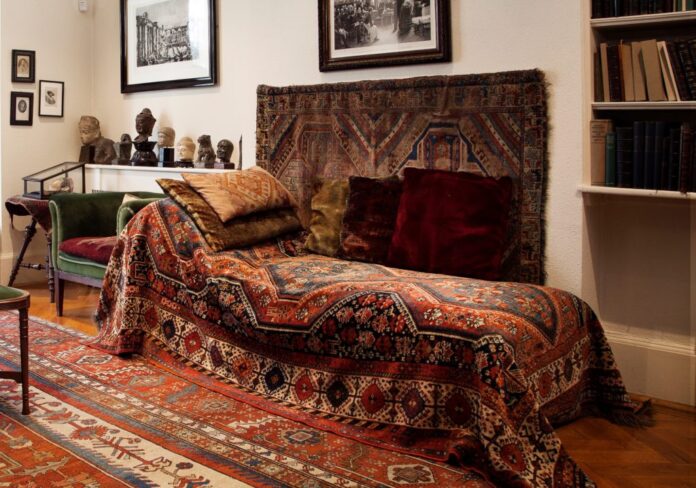
In the late 1920s, beleaguered by a malady the family diagnosed as “nerves” but which I suspect was the chaotic blossoming of a profound soul, she was sent to Vienna. To Sigmund Freud. And for fuck’s sake, that was the greatest tragedy of them all. My mother told me stories of Freud’s office, and Carl Jung’s—both bohemian dens of intellectual ferment, cluttered with artifacts and antiquities, smelling of old paper and ambition. But where Jung’s collection pointed toward a universal, mythic human story, Freud’s, I’ve always imagined, was a museum of pathologies, each statue and relic a testament to a neatly labelled neurosis.
The most famous family story, the one trotted out after the second glass of wine, was about the slap. One day, my mother would recount with a grim satisfaction that Freud had gotten a little “fresh” with Nora. His clinical observations had strayed into the personal, the physical. So she gave him a good smack across the face, gathered her things, and walked out of Berggasse 19 forever. That’s why it would have been better if she’d gone to see Carl Jung. He would have understood. He wouldn’t have needed to touch the body to know the soul was on fire.
After Nora died, I inherited a large, sea-worn trunk. It wasn’t filled with jewels or deeds, but with the sediment of her life: pressed flowers brittle as moth wings, scarves that still held the faint scent of L’Heure Bleue and anxiety, and a single, leather-bound diary. It is from this diary that the true horror of her Viennese excursion unfolds. It’s not a horror of ghouls or goblins, but of a soul undergoing a sacred, terrifying process, being observed by a man with the wrong map.
October 19, 1928, Vienna is a city of ghosts. They cling to the damp coats of the living. Dr. F’s office is warm, but it is a sterile warmth. He watches me from behind his desk, a little god behind a mahogany altar. He has artifacts, yes, but they feel like captured animals. Lifeless. He asks about my dreams of the flooded ballroom. He says the water is a symbol of latent desire. I tried to explain that it wasn’t a symbol. The water was real. I could feel its cold silk on my ankles and see the chandeliers glittering beneath the surface like trapped stars. The water wasn’t desired; it was memory. Not my memory, but the world’s.
Here, reading in my dusty study decades later, I felt a familiar chill. Jung understood this. He understood that you can’t have depth psychology without history, without the “deep history” that flows through us all. Nora wasn’t dreaming of her repressed psyche; she was tapping into something vast, an archetypal flood. But Freud, with his psychology of consciousness, could only see the individual, the immediate, the sexual. He was a brilliant cartographer of a single, small island, utterly blind to the ocean that surrounded it.
November 2, 1928. Today, I told him about the wood grain. On his desk. When he speaks, his voice is dry, and the grain of the wood begins to flow. It moves like a slow river, the dark lines swirling into eddies and whirlpools. I told him it frightens me, that the solid world feels… porous. He lit a cigar, the smoke a foul cloud between us. He said I was projecting my fluid nature, my “hysteria,” onto the inanimate object. He used the word ‘inanimate.’ But it isn’t. I see the spirit in it. The tree’s life is still trapped and dreaming in the wood. It is not me. It is the wood itself.
This entry made me put the diary down. My God, she was living it. The unus mundus. The unity of psyche and matter that the alchemists sought, that Jung revered. There was no division between the inner mind and outer matter for them. Nora was experiencing this unity not as a philosophical concept, but as a raw, terrifying reality. The walls between her soul and the world were dissolving. She was in the nigredo, the alchemical opus’s blackening, dissolution stage. She needed a guide, an alchemist, to help her contain the process and move toward the albedo, the whitening, and the purification. Instead, she got a clinician who told her she was sick.
The alchemists knew their work was oriented toward a goal: the creation of the Stone, the integration of the self. It was a transformative process, not a cyclical sickness, which Freud saw only.
November 28, 1928, He speaks of my father. Always my father. He believes he cast every shadow in my heart. Today, as I described the feeling of my skin turning to silver dust in the sunlight, of seeing the golden veins in the marble floor pulse with a faint light, he fell silent. Then he leaned forward, his eyes small and wet. He spoke of sublimation, of transmuting carnal urges into these… fantasies. He believes my soul’s work is a gilded cage for my unspent passion.
He does not understand its simplicity—the res simplex—the simple, impossible thing. That the gold in the stone is the same in my spirit is not a metaphor. He thinks I am building elaborate castles of the mind to hide from a simple truth. But he is the one who is blind. He lives in a complex world of theory and diagnosis, and he cannot see the simplest thing: everything is one.
The final entry before the slap is brief, the handwriting a frantic scrawl.
On December 5, 1928, He tried to illustrate his point today. As he spoke of the body’s base desires, the root of my ‘condition,’ his hand fell upon my knee. It was not a gesture of comfort. It was an act of… reduction. He was trying to pin my soaring, terrifying soul to a simple piece of flesh. To prove his point. To say, ‘See? It all comes down to this.’ In that moment, the river of the wood grain, the gold in the marble, and the ghost-water in the ballroom all rushed into my arm. It was the world’s anger, not mine. I struck him. The sound was like a book falling shut. The spell was broken. I saw him, a small, frightened man, amidst his dead idols.
She never wrote in it again. She left Vienna, but the alchemical process was interrupted and misdiagnosed, and she never completed its work. It curdled inside her. She didn’t find the Philosopher’s Stone; she didn’t achieve the psychic totality that Jung knew was an unreachable ideal but a worthy goal. She was left in the chaos of the dissolution, her parts scattered. She spent the rest of her life as a woman haunted not by ghosts, but by the shimmering potential of a world she could no longer bear to see, its unity a source of terror rather than wholeness.
The horror of Nora von Puttkamer’s story is not the slap, nor the “freshness” of a famous doctor. It is the horror of being seen, but not understood. It is the terror of a sacred transformation being labelled a sickness. For all his genius, Freud was deaf to the music of deep history. He saw a broken machine and sought to fix it. Jung would have seen a crucible and known how to tend the fire. For my grandmother, that difference was everything. She was an adept whose opus was ruined because the laboratory master believed gold was just a shiny yellow metal. He could not grasp the simple, terrible truth: it was also her soul’s substance.
HIROSHIMA 80th Anniversary August 6, 1945
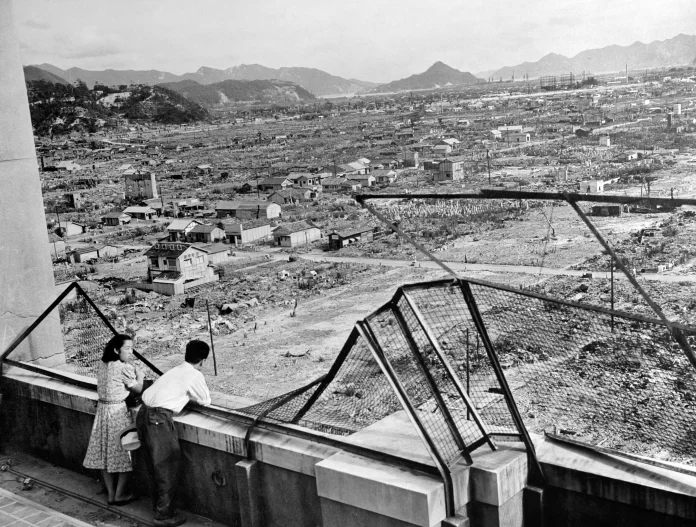

HIROSHIMA
80th Anniversary
August 6, 1945
“Let all the souls here rest in peace;
for we shall not repeat the evil.”
Inscription on the cenotaph –
Peace Memorial Park in Hiroshima.
As the spectre of nuclear war looms ever larger,
that pledge should be the guiding star.
Canada Post

If you believe Canada Post should be terminated or privatized you might consider the following.
- Canada Post is mandated by the Federal Government to serve every address in Canada. Private companies are not. Because of this mandate the Crown Corporation has always been seen as a public service. The USPS and all EU postal services are similarly mandated.
- Canada Post was reorganized by the Liberal government in 1981 as a Crown Corporation and must, by Federal law, stand profitably on its own. The legislation mandates service to all Canadians and a monopoly on letter mail. Canada Post receives NO tax payer money in subsidies; unlike most Crown Corporations it exists on profits alone. It can, if necessary, apply for up to 500 million dollars in Federal repayable loan financing; it first did in January, 2025.
- The monopoly on letter mail generated enough money to keep the Corporation afloat for the first couple of decades. Remember ‘stamps’? But when e-mail decimated letter post and couriers siphoned off much parcel post, our government did nothing to help Canada Post maintain the universal mandate; private companies were free to cherry pick profitable Canada Post delivery areas.
- Canada Post is losing money. When you are competing against private delivery services who pick and choose profitable communities to serve and you are by law forced to service hundreds of small, unprofitable communities how could you make money other than charging outrageous fees?
- Canada Post costs too much. CBC has interviewed a dozen or so small business owners who all have the same complaint: without Canada Post their delivery costs have shot up and eaten into their profits.
- Canada Post collective bargaining. Who is really responsible for the lack of agreement after well over a year of bargaining? Is it the Union who has no power to compel an agreement? Or is it the management who knows full well that they just have to wait out the Union until the government forces them back to work?
- Canada Post delivery on Hornby. Where are our daily private delivery trucks? Could it be that we, along with the 20% of rural Canadians are deemed unprofitable by private delivery services? Yes, I am aware that private delivery vehicles have been coming occasionally to Hornby over the past year or two but I wager the Post Office still handles the bulk of parcel deliveries. We do know that private companies offload a lot of parcels onto Canada Post when they reach a major centre such as Nanaimo.
And now the union has rejected management’s last offer leaving us once again with a Canada Post in limbo. Of course all the vocal free market privateers are calling for privatization of the service perhaps not realizing that it has been operating as a private corporation since 1981 while having its hands and feet tied by Federal legislation. Even free enterprise voices from the U.S. are suggesting privatization as the only possible way to fix the problems while at the same time their own USPS operates under similar legal restraints.
To address this problem our Federal Government has some options:
- They could mandate that all delivery companies, private or public, must service the entire nation. This would level the playing field. We would soon find out how willing Fedex, UPS, DHL (owned by the German Post Office!) and the rest of the private delivery world are interested in servicing the 20% of non-profitable rural Canada. They might close up shop and disappear leaving Canada Post alone.
- The Federal government could accept that mail and parcel delivery is, as it has been for over a century, a public service and give up on the neo-conservative nonsense of making government services profit centres on the private model.
- They could privatize the service.
The first solution is unlikely.
The second is workable as we know that public services can be quite efficient: most Canadians get their power from Crown Corporations at relatively low rates compared to rest of the world; most of us got a decent education from public schools because private ones were expensive and uninterested in students who couldn’t pay; and that by all measures countries with national health services have better outcomes for all citizens than the one country that doesn’t. Canada Post should not have to stand on its own and turn a profit as long as it is universally mandated to service all citizens. The cost of a universal public service should be borne by all citizens.
The third solution pretty well guarantees that delivery charges for small rural communities will sky rocket if indeed private companies don’t choose to ignore them entirely. I once took a Fedex parcel to the Post Office to see what they would charge to ship it the same distance it had already come: Fedex $42; Canada Post $21. Amazon has given us a clear example of private interest; they have been refusing to deliver to the Hornby Post office even though Canada Post is still operating with no strike and only an overtime ban—a ban set off by management’s change of rules to allow cheaper part-time workers to perform overtime services.
At any rate the knot to be untied does not lie in the hands of either the workers or management; it lies with the Federal government who must either rescind universality or take it seriously and support the system with subsidies as it does in large part for education, health, and power. If we want universal services they must be supported by taxation. If we live in a culture that no longer wants any universality for agreed on services then we must be prepared for large sections of our citizenry to do without those services.
In This Dystopia


In this dystopia we party downstream from the abuses of the empire like the ravers dancing by the concentration camp on October 7.
We have Jerry Springer-style shows where people who are upset about genocide shout back and forth with people who are enthusiastic about genocide.
We plug our ears into streaming services to drown out the screams and eat snacks to drown out the smell from the black smoke stacks.
We scroll on screens through alternating images of skeletal children and algorithmically boosted celebrity gossip and mutilated bodies and AI art.
We exchange meaningless inanities at social events and fight off the urge to clutch each other tightly and whisper about the terrifying things that are happening to our ecosystem.
We stare at western officials saying peace is preferable but both sides both sides both sides while masturbating furiously behind their podiums.
We stare at pundits saying sure children deserve to eat but Hamas Hamas do you condemn Hamas.
We go to demonstrations and take selfies and hold up signs which say “I oppose this so long as it doesn’t disrupt my lifestyle in any meaningful way”.
We watch the lights go out in Gaza and watch the light go out in ourselves.
We pray to gods we don’t believe in for a future we don’t deserve.
We dance by the concentration camp absolutely certain that this is entirely sustainable.
In this dystopia we drift along with the current and ignore the growing roar up ahead.
_______________
The best way to make sure you see everything I write is to get on my free mailing list. My work is entirely reader-supported, so if you enjoyed this piece here are some options where you can toss some money into my tip jar if you want to. Click here for links for my social media, books, merch, and audio/video versions of each article. All my work is free to bootleg and use in any way, shape or form; republish it, translate it, use it on merchandise; whatever you want. All works co-authored with my husband Tim Foley.
Bitcoin donations: 1Ac7PCQXoQoLA9Sh8fhAgiU3PHA2EX5Zm2