
KAIMERATA CHAMBER MUSIC FESTIVAL 2025: FRENCH MUSIC

KAIMERATA CHAMBER MUSIC FESTIVAL 2025: FRENCH MUSIC
In this year’s edition of the Kaimerata Festival, Canadian violinist Kai Gleusteen and French pianist Catherine Ordronneau are back with a selection of masterpieces from the arguably the most glorious era of classical music in France. The time span is between 1875 and the Second World War. Kai and Catherine will be joined by American/Canadian cellist Beth Root Sandvoss, Canadian violist Reg Quiring and American clarinettist, Sean Osborn. They will perform three different programs August 6th, 7th, and 8th.
For those unfamiliar with this festival, this is the 14th edition on the island! Kai and Catherine, the heart of the ensemble, have been performing together world-wide for the last 25 years. They are based in Barcelona, where they put on the same series of concerts during the winter months. Here on Denman Island, they are joined by top notch musicians from the West Coast. Local hosts and billets generously receive them during their week of rehearsals and concerts on the island, making if for an unforgettable experience for the musicians as well.
The programs are magnificent. Kai Gleusteen, the creator of the festival, takes pride and joy in explaining the works beforehand to heighten the understanding and appreciation of the compositions. The Community Hall has an excellent acoustic and one of the best pianos on Vancouver Island. The concerts are varied and delightful.
Among this year’s selection of compositions, the musicians will perform the magnificent Piano Trio by Maurice Ravel, the ultra-Romantic Piano Quartet by Gabriel Fauré, and the profound and striking Quartet for the End of Time by Olivier Messiaen. They will also include many French “bonbons,” including the Swan from Saint-Saëns’ Carnaval of the Animals, the Meditation from the Opera Thaïs by Massenet and the ever-so-beautiful Clair de Lune by Claude Debussy. Attending all three concerts will give one a wonderful overview of the pre-impressionist, impressionist, and post-impressionist music of France.
Tickets for individual concerts are $25 (students $12). A Pass for three concerts is $70 and a Supporter’s Pass which includes reserved seating and access to rehearsals is $120. Tickets and more information at kaimerata.com. Tickets are also available at the door (cash only). Supporter’s Pass holders have the privilege of witnessing from close-up the actual work involved in the preparation of the works, the discussions about interpretation, and the interaction between the musicians.
Local rugby Talent off to New Zealand!

In what’s been a whirlwind week for Denman local, Chantelle Lambert, I managed to sit down for a brief chat with the budding rugby star to keep GV sports fans up to speed with her rapidly evolving career as she’s about to embark on its next chapter.

Islanders can be forgiven for any deja vu they may be sensing. 15 year old Chantelle happens to be the younger sister to multi sport phenom, Sebastian Lambert. And as any GV sports fan will attest, Sebastian, has a litany of accolades and awards to a career that now sees him playing rugby with UBC.
B“TM”M: “How did you come to get involved in rugby?”
CL: “My older brother played before me, he played a couple of years before and he really wanted me to start playing but I wasn’t really a big fan of the idea. I was doing dance at the time. He kept pestering me from Fall through to the Spring when the rugby season starts, “You have to play, you have to play!” He’d insist. And I kept saying “No.” Then my best friend, Poet, she told me that she was going to try it out so that also kinda helped me and I decided to give it a try and I liked it way more than I thought I would.”
B“TM”M: What was it that you liked about it?
CL: “I feel like the teammates… everybody is really inclusive and friendly.”
Then Chantelle’s voice picks up, “I like the contact.” Bringing laughter from her mom, Rachel, and a tear to ol’ Buckster’s eye.
B“TM”M: “I can tell from your photos that you like it!”


She continues, “I don’t know, just the whole thing. I just really love it.”
From Vanier on to Rapids Rugby out of Comox, Chantelle found her stride. This led to appearances in special tournaments with Tsunami Rugby representing North Vancouver Island.

“And from there I found Thunder Rugby.” A province wide indigenous rugby program affiliated with BC Rugby. “I‘d only done a couple of things with them so far, just a couple of camps and stuff but then I got invited to come on the trip to New Zealand. “
That momentous phone call in November touched off a flurry of planning and fundraising in anticipation of the August trip. In total 40 boys and girls selected from across the province plus supporting staff are NZ bound as most islanders read this article.
With only a brief chance to meet new faces and practise prior to boarding the plane, Chantelle says she’s not sure what to anticipate. In a little under 3 weeks she and her cohorts will play 4 games against various local clubs and school teams.
Rachel offers, “even though it’s Winter down under the locals will probably take their guests for a swim in the ocean once or twice because they think that Canadians are hardier.”
She adds, “Apart from the rugby everyone will be staying in Marea’s, a communal or sacred place that serves religious and social purposes in Polynesian societies. Important ceremonies, and prayer and large feasts. Entrance by invite only.” She concludes saying, “one of Sebastian’s friends is an alumni of this program from a couple of years back and he said that the best part of the trip was learning about the Maori culture.”
And to Buck’s ears, this sounds like Thunder Rugby is achieving its stated goal, ‘aiming to develop Indigenous athletes and foster cultural pride through rugby.’
And the folks at Courtenay Nissan clearly agree. So much so they’ve teamed with Thunder Rugby to sponsor the Car Wash Sticker Fundraiser. A $20 Thunder Rugby sticker on your car (you know, the one with the brown Denman racing stripe?) will grant you free car washes for life at Courtenay Nissan! I repeat, FREE CAR WASHES FOR LIFE!

I know what you’re all thinking. “If they are 20 bucks, Buck, then those washes ain’t free!”
Yeah, well, technically you may have a point. But I’d counter that it’s a rather petty one to make. I mean, is a freshly washed car really all that bad? Don’’t tell me you’re anti-wax?! Have you ever considered how much a clean car can raise a house’s curb value (Jordan McDonald or Donna Tuele could probably answer that one)? And if it happens to be negligible well then just think of the value to an initiative providing such fantastic opportunities to young indigenous athletes. 200 tickets were produced and there are still a few remaining. This fundraiser will continue until they are all gone.
Alright, I can sense you’re a tough sell. “I wash it, it gets dirty,. I wash it again, it gets dirty again…”
This is why the Grapevine has acquired 5 ‘Free Car Wash stickers’ to give away. We’re looking for the answer to the skill testing question: “How many points are awarded for scoring a try?”
The first 5 respondents make off with the spoils.
Email your answer to: theislandsgrapevine@gmail.com
You’re Invited to a Community Feast!

You’re Invited to a Community Feast!
This August, seventeen keen University of Victoria students will be participating in a field school here on Denman. Students will visit various visionaries and mentors around the island, camp for two weeks, and discuss themes such as mutual aid, subsistence, and collective decision-making.
Part of the students’ learning experience involves coordinating a big community feast on August 24th at 6:00pm at the Community Hall. This year we are excited to partner with Farm to Family, who will be helping to cook and source local food for the feast and for the students while they’re here. We will be accepting donations and all proceeds will be split between Farm to Family and an organization of the students’ choosing. All are welcome at this family-friendly event, and no one will be turned away for lack of funds (if you can’t afford to donate, please come eat!). There will be gluten-free, dairy-free and vegan options available.

This will be our fourth feast, and in previous years we’ve had 250-300 people in attendance so we’re expecting similar numbers this year. Please bring your own plate, bowl, cup, and cutlery.
We could use your help!
- Volunteer: we are seeking volunteers again this year to help with serving food (starting at 5:30) and with cleanup (starting at 6:30-7 until there are no more dishes and the hall is clean!). Please email denmancommunityfeast@gmail.com to volunteer
- Bake: if you like, bring a dessert to share, along with an ingredient list so that folks can avoid allergens. Ideally bring it in a compostable container, so that you don’t have to wait around for your dish and it doesn’t get misplaced;
- Spread the word: tell folks about the feast, especially those who might not have access to local food and community!
- Donate: bring cash to support Farm to Family and the organization chosen by students
The students of the field school will be using consensus decision-making and cooking with fresh, local ingredients from various Denman Island farms. This is an exciting opportunity for the students to meet the wonderful weirdos of Denman, and to get a sense of what island community life is all about. We hope you will join us for an evening of festivity and celebrating our growers and producers!
Hope to see you there,
Nick Montgomery
Help someone who helps others – Albini Lapierre
Help someone who helps others – Albini Lapierre
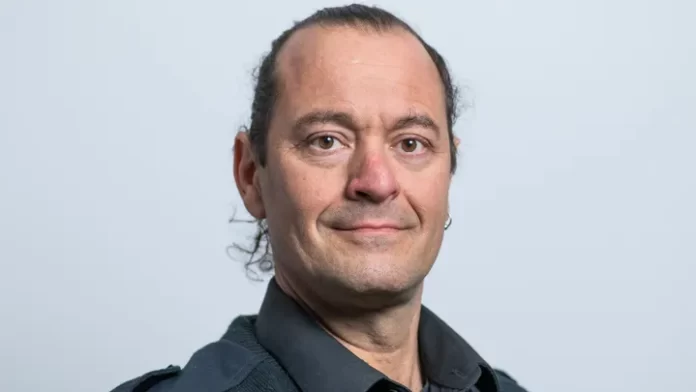
Albini Lapierre, with nearly two decades of selfless service in our fire/rescue service, has dedicated his life on Hornby Island to protecting our community. There’s a good chance he’s been there for you or someone you know in a time of crisis, a reassuring presence amidst chaos. Now, he faces his own battle – a fight against cancer.
This GoFundMe is to help ease the burden of frequent hospital trips for scans and treatments, allowing him to focus on his recovery without the added stress of travel expenses. Albini has had to give up a significant portion of his income to attend the many appointments each week. Every contribution, no matter how small, will make a significant difference in supporting a true hero who has always been there for us.
Join Hornby Island Fire Rescue by helping to show him the same unwavering support he’s shown us for almost 20 years.
https://www.gofundme.com/f/help-someone-who-helps-others-albini-lapierre
A message from Albini:
Chelka and I want to express our huge gratitude to all who gave so generously to the GoFundMe started for me by the Hornby Island Fire department last Thursday. We’ve been blown away by the response. And not just the money but also so many heart warming messages. Your kind words have filled me with hope. We feel so lucky to be part of such an amazing community.
This incredible show of support from Hornby residents, Denman residents, and so many others from coast to coast, has been very uplifting, and has indeed pushed aside all financial worries I had prior and will allow me to afford the time to heal.
I have surgery scheduled for the end of August and we’re not sure what further courses of treatment will be needed after that but now we can focus all our energy in a positive direction without the monetary constraints we were facing and for this we are forever grateful.
Shucking Oysters: Canoodling 101

Shucking Oysters: Canoodling 101
By Alex Allen
Two words. Coldplay and Jumbotron. If you have no idea, I congratulate you on your blissfulness. The operative word is cheating. Why break up when you can do a bit of canoodling on the side? Except it’s not the heady 80s anymore where you can sneak off to some motel and not get caught. Today, we’re surrounded by gadgets ready to record indiscretions, lapses in judgment, and any incident containing a hint of drama.
The first rule for not getting caught in an extramarital affair by a seven-time Grammy winner on a Jumbotron screen in front of 66,000 people is, of course, to not engage in an extramarital affair that can then be called out by a seven-time Grammy winner on a Jumbotron screen in front of 66,000 people.
Some say if the cheating couple didn’t react the way they did, nobody would have noticed and exposed who they were, the now infamous Andy Byron, CEO of Astronomer and HR lady Kristen Cabot. Byron, who is married, with two children, dodged off camera. Cabot, who is not his wife, spun to face away and hid her face in her hands. But, of course, it was already too late for them to stop the scene from spreading, especially after Chris Martin, the lead singer of Coldplay, observed from the stage, “Oooh, look at these two! Alright, come on, you’re okay. Uh-oh, what? Either they’re having an affair, or they’re just very shy.” A lip reader reportedly revealed what the CEO reportedly said to Cabot in the viral clip: “F***ing hell, it’s me!”
The clip captured by concertgoer Grace Springer, of course, instantly took off on social and traditional media. Springer said that she posted the clip because she thought it was an “interesting reaction” to seeing yourself on the screen. “A part of me feels bad for turning these people’s lives upside down, but play stupid games…win stupid prizes.” Justin Murphy said it best: “The dramatic effect of the video derives in part from Andy Byron’s lack of the one virtue that even the worst rakes in history have generally mustered: discretion.”
Did he think he would be on Jumbotron with the HR lady? Of course not, that’s like a freak accident, but he could’ve been seen with her in the lineup and that’s a risk he and she were willing to take. When you go in public having an affair, chances are that you will be caught.
Like a row of dominoes, day one, Byron deleted his LinkedIn profile, and his wife, Megan Kerrigan Byron, removed her husband’s last name from her display name on Facebook, then deleted her account altogether. Cabot who is thrice-divorced, also deleted her LinkedIn profile, which showed her “area of expertise” in “employee engagement” and “leadership transitions.” Day three, Astronomer announced on LinkedIn that Byron had resigned and Cabot had been put on leave. “Our leaders are expected to set the standard in both conduct and accountability, and recently, that standard was not met,” the company said. “While awareness of our company may have changed overnight, our product and our work for our customers have not.”
Pete DeJoy, interim Astronomer CEO, posted somewhat ironically on his LinkedIn: “The spotlight has been unusual and surreal for our team and, while I would never have wished for it to happen like this, Astronomer is now a household name.” Really? How many of its new followers are really in need of an “orchestration-first DataOps platform built on Apache Airflow”?
The reason Byron has attracted such extreme mockery, it seems, is his physical response to the spotlight. As an anthropological matter, Murphy adds, “it is among the most pathetic instances of physical theatre produced by an adult man in the smartphone era. How is an observer of public culture not to comment upon such an artifact? Here we are presented with a man whose authentic instinct was to hide like a cornered rodent. This is an economically successful man, the leader of a successful company. And yet his fully developed adult nature is so craven that he weaseled away to hide – from the world, his wife, and himself. That’s the central meaning of this short film, which is not in the genre of comedy but horror.”
Evan Light, an expert in privacy and surveillance technology and co-ordinator of critical information policy studies at the University of Toronto, says the incident is “an interesting analogy for life online in general” and the tension between private and public life.
“I think many still had the assumption that if we go into a show like these two people did, and you’re among tens of thousands of people, that maybe you can relish in some anonymity, the way that we might think that we do online,” he said. “In reality we don’t, necessarily. The Jumbotron can capture you and dramatically change your life.” Forever.
So, for damage control who are you going to call? Gwyneth Paltrow, the former Mrs. Chris Martin, mother of his children, has been hired by Astronomer to step in as the fresh face of “let’s move on and rebrand.” As one commenter wrote, because when your “company gets memed into oblivion after a stadium-wide soft launch of an alleged office romance,” your only real option is to hire Gwyneth. If anyone knows how to bounce back from public drama with polished cheekbones and vagina scented candles, it’s Gwyneth.
She slides onto the stool next to me, a faint scent of ozone and desperation trailing behind her.

Gabriel Jeroschewitz, July 2nd, 2025, Dedicated to Robert, Edler von Musil. PG has a few naughty words.
She slides onto the stool next to me, a faint scent of ozone and desperation trailing behind her.
Picture this: I’m sitting in a dimly lit bar, all chipped mahogany and questionable stains. The air’s thick with the ghosts of bad decisions and stale beer. I’m nursing a bourbon, neat – gotta keep the palate clean for what’s coming. Then, she walks in. She’s not just any stranger, but a figure from my past, a friend I haven’t seen in years.
Not an entrance, mind you, more like a goddamn apparition. Short black dress, the kind that screams, “I’m here to collect your soul, and I’m doing it in style.” Red stilettos, six inches of pure, unadulterated fuck you to gravity. And the face… well, the face is surprisingly… human. Beautiful, even if you could ignore the glint in her eyes that says she knows exactly how many grains of sand are left in your hourglass. It’s ironic how someone who looks so put together can be in such an existential crisis.
She slides onto the stool next to me, a faint scent of ozone and desperation trailing behind her. “Whiskey,” she barks at the bartender, not bothering to make eye contact. “And make it snappy, I haven’t got all eternity.”
I take a long swig of my bourbon. “Let me guess,” I say, the words slurring just a tad, “You’re here to tell me I’m… overdue?”
She turns, and that glint in her eye sharpens. “Overdue? Darling, you haven’t even lived yet. You’ve been sleepwalking through existence, mouthing platitudes like a goddamn parrot. Overdue implies you had something to deliver. You’re just… behind.”
Her whiskey arrives, and she downs it in one go. “Look,” she says, wiping her mouth with the back of her hand, “Call me… Mort. Look, I’ve been reading this book, right? This goddamn brick by Musil. The Man Without Qualities. Ever heard of it?”
I nod slowly, trying to keep up with the hairpin turns of this conversation. “A philosopher friend once joked that reading it is like having a long, elegant conversation with a ghost who insists you sit still until the world makes sense.”
Mort snaps her fingers. “Exactly! Bloody brilliant. Except, Musil’s ghost is wearing sensible brogues and a tweed jacket. I figured I could spice things up a bit.” She gestures to her outfit with a flourish. “Gotta keep the clientele entertained, you know? Especially the ones on the existential edge.”
I raise an eyebrow. “So, you’re… Grim Reaper goes Gonzo?”
She laughs, a sharp, brittle sound. “Something like that. See, this Ulrich guy, right? This ‘man without qualities’? He’s got it pegged. The world’s falling apart, empires are crumbling, and everyone’s running around trying to find meaning in… what? Political rallies? Love affairs? Charity bazaars? Pathetic.”
“And you think Musil skewers it all?”
“Skewer? He eviscerates! He takes the piss out of every single pompous, self-important windbag who thinks they’ve got the answers. Diotima, Arnheim, and bloody General Stumm are all just case studies in human delusion! And Ulrich? He’s just standing there, watching it all burn, because he refuses to play along. He’s a goddamn rebel!”
She orders another whiskey. “The thing is,” she continues, leaning closer, her voice dropping to a conspiratorial whisper, “I’m starting to feel it, too. This… this emptiness. I used to think it was just the job. You know, escorting souls to the afterlife, a bit like being a high-end concierge for the dead. But now… now I’m questioning everything. What’s the point? What’s the point of any of it? I’m not just questioning the purpose of my job, but the purpose of life itself.”
I take another sip of my bourbon. “Sounds like an existential crisis, Mort.”
“Crisis? Please! It’s a goddamn meltdown! I’m starting to understand Ulrich’s refusal to commit. To anything! Politics, love, belief – it’s all a bunch of bullshit designed to distract us from the fact that we’re all just hurtling towards oblivion! Musil understands that. He gets it! It’s all about possibility, not conclusion. It’s all about the journey, not the destination.”
She pauses, staring into her whiskey. “And that sister of his – Agathe? Don’t even get me started. That taboo-tinged relationship? That yearning for something real, something beyond the intellectual masturbation of the Viennese elite? It’s heartbreaking! It’s a tragedy, a poignant portrayal of searching for intimacy in a world destined for disintegration.”
“So, you’re finding solace in a book about the disintegration of everything?”
“Solace? No! Recognition! Musil doesn’t give you answers; he gives you better questions. He throws you into a maze of ideas, a labyrinth of doubt. And in each room, you catch a glimpse of something… real. The beauty of uncertainty, the dignity of complexity.”
She sighs, running a hand through her perfectly coiffed hair. “And the unfinished nature of it all… It’s perfect! Life’s unfinished. A constant interruption. Musil gets it!
She looks at me, her eyes suddenly clear and focused. “Reading this book is like walking through a city you thought you knew, only to find unfamiliar doors on every street. It forces you to confront your bullshit, to question your own so-called beliefs. It’s not a book for everyone, I’ll grant you that, but for the ones willing to meet it on its terms, it’s a goddamn companion. A difficult one, sure, but a necessary one! You know, in times when certainty feels dishonest, and simplicity feels like betrayal.”
She finishes her whiskey and stands up, towering over me in ridiculous heels. “Anyway,” she says, a wry smile on her lips. “I’ve got souls to collect. And maybe, just maybe, I’ll suggest they read The Man Without Qualities on their way to the other side. Might give them something to think about.”
She turns to leave, her short black dress swaying with each step. As she reaches the door, she pauses and looks back at me. “Remember,” she says, her voice barely a whisper, “a life examined is rarely tidy, but it can still be luminous, even in its incompleteness. With that, she disappears into the night, leaving me with my bourbon and a lot to think about. I drain my glass, the liquor burning a path down my throat. Maybe she’s right. Perhaps we’re all just sleepwalking. But maybe, just maybe, there’s still time to wake up. Even if the Grim Reaper has to dress like Hunter S. Thompson or Kate Moss to get the message across.
It Shouldn’t Have Taken This Much For Mainstream Voices To Start Speaking Up About Gaza

JUL 28, 2025
Listen to a reading of this article (reading by Tim Foley):
Israel’s top human rights group B’Tselem has finally declared that Israel is committing genocide, as has the Israel-based Physicians for Human Rights. The Israeli organizations join Amnesty International, Human Rights Watch, UN human rights experts, and the overwhelming majority of leading authorities on the subject of genocide in their conclusion.
The debate is over. The Israel apologists lost. And we are seeing this reflected in mainstream discourse.
Pop megastar Ariana Grande has started speaking out in support of Gaza, telling her social media followers that “starving people to death is a red line.” This is a new threshold. Opposing Israel’s genocide is now the most mainstream as it has ever been.
MSNBC just ran a piece explicitly titled “Israel is starving Gaza. And the U.S. is complicit.”, featuring a segment with the virulently pro-Israel Morning Joe slamming the mass atrocity. CNN’s Wolf Blitzer, himself a former AIPAC employee, has done a 180 and is now raking Israel over the coals on the air for its deliberately engineered starvation campaign. The New York Times finally overcame its phobia of the g-wordwith an op-ed titled “I’m a Genocide Scholar. I Know It When I See It.”
We’re now seeing notoriously Zionist swamp monsters in the Democratic Party like Barack Obama, Hakeem Jeffries, Cory Booker and Amy Klobuchar changing their tune and attacking Netanyahu and Trump for their joint genocide project in Gaza, with increasingly forceful pushback from some on the right like Marjorie Taylor Greene as well.

As western pundits, politicians and celebrities suddenly pivot to denouncing Israel’s genocidal atrocities after two years of silence, it’s hard to believe that just a few weeks ago we were being told that saying “death to the IDF” is a hate crime.
People who’ve been staring at this genocide from the beginning have been asking the entire time, what is it going to take? What will it take for our society to stop sleepwalking through inane trivialities and vapid distractions and start opposing the holocaust of our day?
Raining military explosives on a giant concentration camp packed full of children wasn’t enough.
Burning children alive wasn’t enough.
Systematically destroying Gaza’s entire healthcare infrastructure — up to and including entering hospitals they’ve attacked and destroying individual pieces of medical equipment one by one — wasn’t enough.
Killing more journalists than were killed in both World Wars plus the US Civil War, the Korean War, the Vietnam War, the Yugoslav Wars, the War in Afghanistan, and the ongoing war in Ukraine wasn’t enough.
The systemic rape and torture of prisoners wasn’t enough.

IDF soldiers routinely sharing photos and videos of themselves mockingly dressing in the clothes of dead and displaced Palestinian women and playing with the toys of dead and displaced Palestinian children wasn’t enough.
Israeli officials openly expressing genocidal intent for the people of Gaza wasn’t enough.
The US president and Israeli prime minister openly declaring their goal of the complete ethnic cleansing of a Palestinian territory wasn’t enough.
Field testing new weapons of war on Palestinians like they’re guinea pigs in a laboratory wasn’t enough.
Leaving countless civilians to slowly suffocate or die of dehydration trapped under the rubble of bombed buildings wasn’t enough.
Creating an AI system to ensure that suspected Hamas fighters are bombed when they’re at home with their children and naming it “Where’s Daddy?” wasn’t enough.
Using Palestinians as human shields wasn’t enough.
Burying injured civilians alive with bulldozers wasn’t enough.

The IDF admitting to running a popular Telegram channel called “72 Virgins” which posted extremely gory and sadistic snuff films of people in Gaza being butchered by Israeli forces wasn’t enough.
IDF snipers routinely shooting children in the head and chest throughout the Gaza Strip wasn’t enough.
The IDF flying drones which play the sounds of crying babies at night in order to lure out hiding civilians to murder them wasn’t enough.
IDF troops telling the Israeli press that they’re being ordered to massacre starving civilians seeking food from aid sites wasn’t enough.
Israeli snipers targeting different body parts of starving civilians on designated days — leg day, head day, genitals day, etc — wasn’t enough.
Far right Israeli citizens setting up blockades to stop aid trucks from entering Gaza while they enjoyed parties and barbecues at the blockade sites wasn’t enough.

Using lies and propaganda to dismantle the aid system for bringing essential food and life-supporting supplies into Gaza, to replace it with a US/Israeli op where aid seekers are massacred every single day, wasn’t enough.
Using siege warfare to deliberately starve Gaza for the previous 22 months wasn’t enough.
But now that starvation has hit a critical point and deaths from malnutrition are skyrocketing, now that images of dead skeletal children are filling our screens, now that the damage to organs and brains from starvation will be irreversible in many cases — now it’s enough.
That was the line, apparently. That’s what mainstream western consciousness has decided is too much. Everything up until that line was fine, but now it’s not fine anymore.
And the killing is still going on. The sudden awakening of conscience hasn’t translated into any material actions or changes at all yet. If it had come in October or November 2023 like it should have we might be seeing that opposition translate into actually saving Gaza by now, but the light has only just been switched on. It’s not even guaranteed that those who are speaking up will continue to do so.

I’m glad people are waking up to the cruel reality of this nightmare. I’m grateful to each and every influential voice who uses their platform to speak out, even at this late date. I truly am.
But I also think we need to take a very hard, very uncomfortable look at ourselves as a society right now. If all those monstrous abuses were tolerable for us over these last two years, there’s something deeply and profoundly sick about our civilization.
We are not living right. We are not thinking right. We are not feeling right. We are warped and twisted. The information we consume and the norms we’ve been conditioned to accept have corrupted our souls.
We have been made into something bad. Something ugly. Something shameful. Something we need to do everything in our power to change.
We need to rescue ourselves from what we have become. We need to transform, deeply and radically, into something that could never again allow something like this to occur.

The way things are clearly isn’t working. The mainstream worldview is clearly a lie. Everything we’ve been taught to believe about our society, our nation, our government and our world was clearly false.
We need to fight our way through the cognitive dissonance of recognizing that our entire way of looking at things as a collective has failed, and we need to find a new way of being.
Otherwise we’re going to keep being smashed in the face with increasingly horrifying reminders of what we have allowed ourselves to become.
The lessons will repeat until they are learned.
We had better start learning them.
___________________
The best way to make sure you see everything I write is to get on my free mailing list. My work is entirely reader-supported, so if you enjoyed this piece here are some options where you can toss some money into my tip jar if you want to. Click here for links for my social media, books, merch, and audio/video versions of each article. All my work is free to bootleg and use in any way, shape or form; republish it, translate it, use it on merchandise; whatever you want. All works co-authored with my husband Tim Foley.
Bitcoin donations: 1Ac7PCQXoQoLA9Sh8fhAgiU3PHA2EX5Zm2