Home Blog Page 62

Denman ART Studio Tour, 2025 edition

The organization for the Denman ART Studio Tour is in full swing and this year we will once again have an amazing tour. Twenty-three artists are getting ready to show you their studios on August 16&17 from 10am to 4pm…yes, 23!!!

Thank you to our sponsors who are making the Denman ART Studio Tour possible with their generous donations: Denman WORKS, Arts Denman, Sure Copy Courtenay, Jordan McDonald, BC Ferry, Crooked Warden Cider, The Denman Island Tea Company, Eden Therapy Clinic Studio, Corlan Vineyard & Farm, Denman Island General Store, Earth Club Factory, Denman Island Hardware Store, Atlas Café Courtenay, Denman Craft Store, Friesen Family Construction, Donna and Jenessa Tuele at Tuele Real Estate Group & Abraxas Books and Café.

Shucking Oysters: Their Home and Native Land

Shucking Oysters: Their Home and Native Land

By Alex Allen

We were not perfect, but we had no jails, we had no taxes…no wine and no beer, no old peopleshomes, no childrens aid society, we had no crisis centres. We had a philosophy of life based on the Creator. We had our humanity.” 

– Art Solomon, “Songs for the People: Teachings on the Natural Way” 

June is National Indigenous month. But instead of one day or a month, we should be recognizing and celebrating their culture every single day. I don’t think I need to share residential school atrocities or the names of missing women from the highway of tears, or how many first nations are arrested and marginalized. We all know, and if we don’t know, that is even more distressing. 

Reconciliation is the buzzword. Think about it. To reconcile means to pacify, to content, to agree. Does that sound like a healthy partnership or are there shades of colonialism? And then the term: Free, Prior and Informed Consent. The UN seal of approval that allows indigenous communities to give or withhold consent to a project that may affect them or their territories. Once again, the wording is unfortunate. “It’s not rape it’s seduction, so just lie back and enjoy it,” PM Lester B. Pearson, glibly said in response to Americans buying up Canadian businesses with reckless abandon in the 1970s. 

Gary Snyder wrote in The Practice of the Wild, “native people everywhere are conducting an underprivileged and underfunded fight against unimaginably wealthy corporations to resist logging or oil exploration or gold mining on their own land.” Corporations look at everything, from human beings to the natural environment, as exploitable commodities. When we start to see land as community rather commodity, maybe we just might begin to treat the Earth with love and respect.

We are visitors that have overstayed our visit. It’s their home and sacred land. Unfortunately, the struggle to resist the temptation to sell out, to take the cash and run, or stay and surrender, must be huge. But there are some who resist, as Joe Martin of the Tla-qui-aht First Nation, explained, “one of our teachings is that mother nature will provide for our need, but not our greed. And it is our greed that’s destroying many things nowadays.” 

Joe, who is a lead carver, shared what a totem pole represents. In western culture, we have always looked at the totem pole as a representation of one’s status, depending on how high or low we are in relation to others. In the traditional worldview of Joe’s people, the totem pole is all about interdependence, inclusion, and integrity, where each animal crest depends on the others, all the while being valued for its own function and significance. “The top crest of the totem pole, in our tradition,” explains Joe, “always represents the sun or the moon. Those things are important, because everyone’s life is influenced by them…it teaches us self-respect and respect for other living beings.”

Ever since the BC NDP took power eight years ago, when the government needed to have “nation to nation” talks with Indigenous leaders, it met with First Nations Leadership Council (FNLC). And yet, for whatever reason, the Eby government chose not to consult with the Council on Bills 14 or 15, which will fast-track all infrastructure and renewable energy projects if passed. The executive Chiefs have called Bill 15’s proposal to bypass environmental assessments and issue automatic permits an affront to their rights and title.

“We need you to understand that there are 204 First Nations in British Columbia and, while you may find support among a select few who we wish well, your refusal to withdraw the bills will have serious impacts on the FNLC’s and many First Nations’ relationships with your government,” read an open letter to Eby released in June.

Eby’s big economic press conference was billed by New Democrats as intended to show certainty to investors that BC is a safe place to build multi-billion dollar projects. Given Eby’s disregard to First Nations, certainty seems to be the last direction the province is headed. 

And federally, the same thing is going on. Fast tracking major projects that are deemed in the “national interest,”such as pipelines, with barely any environmental oversight. If the bill passes, “nothing’s off the table” when it comes to legal challenges, Cindy Woodhouse Nepinak, national chief of the Assembly of First Nations, told lawmakers last week. “You’re going to have legal wrangling right up the ying-yang if you don’t do the right thing and do this bill in a proper, respectful and good way. I think Canada can save itself years of litigation if it does that.” 

Federal ministers pointed out that one of the five criteria for designating a project to be in the “national interest” is that it advances the interests of Indigenous people. I think the elders would beg to differ. In Simon Winchester’s words, “the wise ones have a message to those white trespassers who have treated them so ill: the Earth is in peril; moderate your behavior and help maintain it in the condition that we inherited it, long before you came.”

Christian Beamish, fisherman, big wave surfer, and mariner, said it best: “The ocean is absolutely a wilderness, but there are few places where the waste stream of humanity does not reach. I think we are just realizing that, as a species, we have thoroughly inundated the world. Industrialization is a bitch, culturally and environmentally. However, in the same way that indigenous cultures have taken such abuse, yet still exist, the natural world remains.”

But alas, we human beings are always far better at inventing tools rather than using them wisely. It is easier to manipulate a river by building a Site C dam than it is to predict or care about all the complex consequences this will have for the wider ecological system. You know, the birds and the bees, and the flowers and the trees. And all the other creatures without a voice, including the Indigenous.

Phoenix Riting! June 26th, 2025

The past few days, I’ve been hobbling around like a pirate with a thorn in my backside. The culprit: sciatica. A cruel little kink in the body’s wiring that turns the simple act of walking, sitting, or even existing into a grim sort of guessing game. Will it shoot lightning down my leg this morning or lull me into false comfort until I reach for something and yelp? I’ve learned to appreciate the miracle of stretches, a pilates ball and Advil, which take the edge off enough to enable me to move more or less normally.

It came on slow and strange, like pain often does. One day I was dancing in my kitchen, the next I was bracing myself just to roll out of bed. No dramatic injury, no noble fall—just the body saying not today, in the way bodies sometimes do. 

I missed the first hour of the Hornby Arts Centre opening last Saturday, but I made it in time to be dazzled. What I walked into was lovely, stunning. The new space is thoughtful, grounded, and beautifully lit. There’s a sense that something alive can take root there. The art was excellent, mind bogglingly varied, colourful. This show is smaller pieces, which means a lot of pieces. The call went out, and artists delivered. 

The Centre is deceptively spacious. Art is displayed everywhere, including in the bathroom, which is a work of art itself, and there are pants on the wall. Pants can be art; if you know, you know. This is not the sort of work you want to glance at on the way to the snacks. It commands your time, and rewards you for the investment. The show will be open daily until July 1; do check it out.

I didn’t stay too long. Crowds are a dance for me. Sometimes I can hold the room, sometimes I need to slip out the side door and find a tree. I was glad I went. It felt like a proper gathering, a real place, not just for us to hang pictures but to be together inside something meaningful. I’m not sure yet how the acoustics will serve, but I hope to find out soon. I am looking forward to singing there, and if all goes well, it might become a regular thing.

You may know I released a CD last fall, called “Late Bloomer,” a collection of songs grown from the rich deep compost heap of my life. We tried a launch party then, but the timing wasn’t right, for reasons I won’t bore you with. The Arts Council has offered support for a second try this September, and I’m hopeful that this one will bloom properly.

June is like this on the island—too much and not enough, all at once. So much beauty it aches. So many events I want to attend, and so many that I know I won’t. My spoons are a limited resource. Some days I have one, and I use it to make coffee. Some days I have several, and I try to take care of too many things at once, and end up doing something else entirely.

And the garden! It is exploding with green. Even from indoors I can feel it pulsing, nettles elbowing into the path, peas curling toward the sun, chickweed wrapping its fine fingers around anything that holds still long enough. The air smells like someone left a jar of honey open in the woods. I love this riot of growth, and I also want to yell, slow down! I can’t keep up.

This Saturday, June 28th, I hope to be at the Pride Dance Party at the Arts Centre. DJ Pat will be spinning his prideful magic, and whoopee, it’s free. All ages, all flavours, all sparkly, wobbly, glorious selves welcome. There’s a brand-new sprung dance floor, I haven’t tried it yet, but I’m dreaming of boogying pain-free, but even if I have to limit myself to a gentle sway, I’ll probably have fun. Swaying is underrated. Whatever works!

As for the weather, well, bless it. We’ve had a flirtation with summer, but she’s been playing hard to get; teasing us with warmth, then slapping us with a chill wind. I dream of heat, real heat that smells like cedar sap and low tide. To swim in warm water, oh what bliss! I have faith in summer; it’s bound to happen, it always does. 

Here I am, dragging myself around like a mythic crone, plotting art and mischief and music. I’m grateful for the opportunity to write this little column and to share what I can from my scraggly edge of things.

If you see me around, feel free to say hello. I might be slow right now, but I’m showing up, whenever and wherever I can. When I have the spoons. These are exciting times. Interesting times. Terrifying times. All of it. Facing the future with a grin full of gritted teeth, we persevere. Don’t forget to breathe, friends. We’ll make it through.

Feedback is welcome, email me at phoenixonhornby@gmail.com

Reading the book, The Idiot. At the same time, the TV is blaring in the background, about President Trump’s newest nightmare.

The first crack appeared subtly, a hairline fracture across the polished surface of reality. I saw it, perhaps, because for months I had been living inside another mind, one that mapped the fault lines of the soul with a terrifying precision. Fyodor Mikhailovich Dostoevsky had been my unreliable guide, specifically his Prince Myshkin, from “The Idiot.” I had approached that novel like the prompt described, drawn by the terrible beauty of a house fire, knowing it would consume me. And consume me it did, leaving me raw, exposed, and hypersensitive to the world’s inherent brokenness.

Prince Myshkin, I had learned, wasn’t a gentle saviour, but a catalyst. His goodness, pure and blinding, didn’t heal the corrupt world he entered; it destroyed everyone around him, exposing the rot, the lies, the unutterable shame that clung to every interaction like a shroud. He was a moral hurricane, and I found myself morbidly fascinated by the possibility of a modern equivalent, a force entering the already fractured stage of contemporary life that, through its sheer alienness to the established rules, would tear everything apart.

Then he arrived. Not a prince of Christ-like goodness, but something almost its inverse. A man built of noise and bluster, gilded surface and, it seemed, an utter lack of self-doubt or reflection. Donald Trump, the man who, the prompt suggested, tried to break the world. I watched him, initially with a detached, scholarly curiosity, as one might observe a strange specimen under a microscope. But the detachment didn’t last. The Dostoevsky lens had warped my vision, heightened my perception of the underlying currents of chaos, and I began to see something horrific unfolding, not just in the political sphere but in the very fabric of the collective psyche.

He crashed into the established order like a rogue comet. Like Myshkin’s innocent truth, his chaotic energy, his blunt disregard for convention, and his inability-or refusal—to speak the language of diplomatic facade had an immediate, shattering effect. The “world built on lies, greed, and moral compromise,” as the prompt described Myshkin’s Russia, recoiled, shrieked, and began to unravel.

I saw, through my Dostoevsky-tinted glasses, the modern equivalents of the Epanchins, the Ivolgins, the Rogozhins. Pundits, politicians, journalists, academics, ordinary citizens – all caught in the gravitational pull of this disruptive force. And exactly like Myshkin’s effect, this force didn’t inspire unity or reasoned debate; it exposed the underlying hypocrisy, the performative virtue, the desperate clinging to social games that held our world together, however tenuously. Those who postured as paragons of morality revealed their venom; those who feigned sophistication descended into primal rage; those who claimed objectivity were stripped bare, their biases screaming from their pores.

It was horrifying. Not in the way of a monster under the bed, but in the profound, existential dread that settles when you realize the shared reality you thought you inhabited was a fragile construct, easily shattered. This figure, this agent of disruption, seemed to wield chaos not as a weapon of conscious intent, but as a natural extension of his being, much like Myshkin wielded unconscious destruction through his inability to lie or manipulate. Both forces, in their way, were incapable of playing the game, and their presence revealed the game itself to be a necessary, if corrupt, glue. Without the glue, everything fragmented.

The psychological complexity was nearly driving me mad, much like the prompt had warned about in The Idiot. I saw “Nastasya Filippovnas” everywhere – wounded, magnificent souls, damaged by the world, yet paradoxically drawn to the chaos that validated their internal torment. They couldn’t process conventional orders; they either thrived or perhaps self-destructed in the maelstrom. And “Rogozhins” – dark twins, consumed by passionate obsession, jealousy, and a terrifying potential for violence, mirroring the disruptive force’s energy, amplifying it, turning the latent rage of society into volcanic eruptions.

Watching the interaction between the disruptive force and the world felt like witnessing Dostoevsky’s terrifying portrait of human nature writ large across the global stage. The tenderness of the Myshkin/Rogozhin relationship found a dark echo in the strange, fraught interactions between the disruptive force and his supposed rivals or allies – moments of unsettling intimacy born from shared antagonism or cynical transaction, always underscored by the threat of betrayal, the metaphorical knife waiting under the pillow.

The constant stream of news felt like Dostoevsky’s party scene, endlessly repeated. A figure speaking absolute truth one moment (however his truth might be defined, it was his truth, unfiltered by convention) and utter falsehood the next, to a room full of people invested in a different set of comfortable lies. And the reaction was always the same: not conversion, but immediate, visceral social destruction, a collective gasp of outrage that quickly curdled into homicidal rage, albeit often expressed through screens and keyboards. Prophetic truth-telling, or even just disruptive noise-making, in a corrupt society, Dostoevsky showed us, doesn’t inspire conversion; it provokes violent rejection.

What haunted me most was how this era, viewed through the lens of Dostoevsky, refused to make sense or offer comfort. This force didn’t heal anything; it exposed wounds that perhaps would have been better left covered. Its inability to navigate social complexity didn’t make it pure; it made it dangerous. When I saw lives, careers, and relationships inadvertently destroyed by this chaotic presence, I began questioning everything I thought I knew about leadership, stability, and collective sanity.

The Dostoevsky theme of money and class pulsed beneath it all. The scramble for wealth, influence, and power became more desperate, more exposed. The system’s corruption, always present, felt laid bare, raw and ugly. The cynical transactions, the prioritizing of profit over principle, the way economic desperation turned everyone into potential participants in the chaos – it was Dostoevsky’s savage understanding of corruption, amplified to a terrifying scale.

And then there were moments, often in the dead of night, scrolling through endless cycles of outrage and despair, when I felt something akin to Dostoevsky’s exploration of epilepsy. Not a medical event, but a spiritual apocalypse. Moments when the veil between worlds – the world of manufactured reality and the terrifying world of raw, exposed truth – felt thin. The pre-seizure aura, described by Myshkin as a moment of perfect understanding and harmony, in this context felt like an unbearable intensity of discordant truth. A sudden, horrifying clarity about the depth of division, the fragility of institutions, the unsettling ease with which shared reality could be fractured. It wasn’t harmonious; it was like hearing the universe scream. In those moments, surrounded by the fallout of the collision, I found myself wondering, with terrifying sincerity, if madness might be the only appropriate response to a world this broken.

The spiritual void felt palpable. In this seemingly godless age, where authentic connection often felt replaced by performative outrage or tribal loyalty, the very idea of genuine spiritual experience seemed absent, or perhaps, if it existed, it would appear as madness, idiocy, or something profoundly alien to those around it. This disruptive force, whatever else he was, was profoundly alien to the polished, secular norms of public life, and his reception mirrored that – he was often labelled insane, idiotic, outside the bounds of reason. Was his “simplicity,” his bluntness, his defiance of conventional wisdom, just intellectual limitation, or did it represent some distorted, dark mirror image of that spiritual sophistication that looked like regression?

Months, even years later, I still carry the wound of witnessing this collision. The world is permanently altered, its illusions shattered, its divisions laid bare. The question Dostoevsky’s The Idiot forced me to confront – whether virtue that cannot survive contact with reality is virtuous – morphed into a different, equally terrifying question: what happens when a force that seems defined by its lack of conventional virtue collides with a world already compromised? The answer, observed through this lens of Dostoevsky-esque horror, was apocalyptic.

Reading The Idiot felt like psychological surgery; living through this era, viewed through that same lens, felt like being left in the operating theatre afterwards, raw and exposed, staring at the messy, internal workings of a world that had lost its skin. It wasn’t just a political drama; it was a mirror reflecting everything—ugly and beautiful, base and terrifying—about the human condition when confronted with a force that refused to play by the rules, forcing everyone else to reveal what rules they truly lived by, if any. It forced me to recognize not just the Christ and the murderer within myself, but the terrified, confused animal scrambling for purchase as the ground gives way. We were no more prepared for this kind of disruptive energy than Nastasya Filippovna or Rogozhin were for Myshkin’s goodness – and that recognition remains both humbling and terrifying. The horror wasn’t just him; it was us, revealed in the shattering.

Taxes

Grapevine:  Taxes

One of the things that annoys me is the overwhelming success of Conservatives in convincing so many people that paying your taxes is a burden, not a bargain.  Think of the multitude of services we all use without really seeing—medical, educational, transportational, water and sewage, public parks, etc.  We know that private organizations will never commit to make such services available universally, so to believe that taxes are not a bargain is cutting off your nose despite your face.

Of course historically taxation has sometimes become a burden, nearly always under an authoritarian government, but the current belief relies on two extremely suspect pillars: governments are unable to run anything as efficiently as private organizations spurred by greed; nothing good ever comes of co-operative structures, only individuals are responsible for efficient organization.  Are private businesses more efficient?  In assessing the answer one might keep in mind the average 10,000 business bankruptcies annually in Canada, and anecdotally, the Edsel, Iridium, Blackberry, and Enron et al.  These examples representing both inefficiency and wastage (6 billion dollars in the case of Iridium) should make us question the business chorus of ‘Efficiency, efficiency’ and ‘Incompetent Government’.  And just as Conservatives blame the government for wasting ‘your’ money so these companies also waste ‘your’ money as that is where they get most of their income.  We are all human and incompetency, inefficiency, and wastage are characteristics of everything we attempt, whether private or government.  As for co-operative efficiency one has only to look at our armed forces and indeed all the services mentioned above but you can’t measure by dollar cost alone.

But many still complain of over-taxation. The only useful figures are comparative: the OECD of 38 nations measures ‘All-in average income tax rates at average wage’ and places Canada as 20th for single individuals and 23rd for married with two children—roughly the middle of the pack (2022).  Among all nations a measure of taxation as a percentage of GDP puts Canada at 33% once again in the middle of the developed nations.  The Tax Foundation rates Canada 17th on overall taxation amongst the 38 OECD countries.  So if we are in the middle of the developed nations where would the complainers have us be?  Should we be the lowest taxed country of the 38?  To get there we would have to cut even more government revenue as well as the services for which it pays.

Of course the real problem is ‘universality’.  No private company will ever promise it because no profit is to be gained from unprofitable parts of the citizen universe.  An easy example is SaskPower.  It was formed in 1929 to figure out how to supply electricity to everyone in Saskatchewan which the multitude of cherry-picking private companies would not do.  Depression and the war intervened and it was only in 1949 that SaskPower bought out the last of the private companies and began to string line all over the province.  Although cost conscious and wisely adopting a single line ground return system (as New Zealand had done) cutting the cost of wire needed in half, it did not measure efficiency by cost alone; more important was providing service to the entire population.  And, of course the inefficient private producers—inefficient as measured by the thousands of citizens they would never service—did very well; my father’s friend who owned the National Light and Power Company supplying Moose Jaw with power, had a ‘golden’ rule: if you lived 12 miles from his plant you got no power.  With the money paid for his company he retired to the Bahamas from whence he sallied forth each year to remind us of his tropical pleasures.

Universality is the one measure private companies will never accede to.  For military services, medical services, highways, sewer and water services, postal delivery and public education universality is the abiding measure of public services delivered at the lowest cost to the individual by asking everyone to pay a small portion even they do not have a personal need for the service directly: adults and elders without children, persons in near perfect health, civilians who won’t be soldiers, etc.  But the service will be there at lower cost if they ever do need it.  However to work well it requires a population which can put self-interest aside for communal need.  In a culture bombarding us every day with the exceptional individual as alone responsible for everything good and efficient, dividing us into so-called ‘identity’ groups often at odds with one another, and minimizing the obvious creative successes of group effort, the attempt to put communal need up front has become increasing difficult, if not impossible.  Suggesting an area of universality which could be attempted brings out numerous ‘identity’ groups who claim they won’t pay for it because they themselves don’t want it and won’t use it and who seemingly have no compassion for those who do need it, often dismissing them as too lazy to earn enough to pay for the service; i.e. blaming the victim.

Taxes are a government’s main revenue and the constant cutting of them by Conservative governments is like asking Ford to eventually sell trucks below cost; cuts are one of the major sources of government debt as bonds are then issued to make up the short fall of lower taxes and to keep the services we have going.  And it has been suggested that the conservative clamour to constantly reduce taxes is indeed a method of making public services less and less manageable and setting the stage for a Thatcher-life sell off of public services to private industry.  We see nefarious danger in China’s government supported ‘private’ industries building our ferries but seemingly have little problem with the vast inroads private companies have already made into our public services, for example our wonderful Federal Dental plan turned over to Sun Life to run, our BC MSP accounting run by Maximus. or Accenture running BC Hydro’s accounting—BC Hydro terminated Accenture’s contract in 1917 after 15 years of non-compliance with the performance standards set by the Liberal government and then happily ignored by the same Liberals who touted it as a more efficient than deliver by civil service employees.

Currently we have Canada Post mandated by law to service all Canadians and then expected to compete financially with private couriers who work under no such constraint and would likely withdraw their services if asked to do so.  Rather than asking our politicians to cut taxes we should be demanding real accountability and increased taxation to fund efficient universal services.   

Iran Shows Us Why The US And Israel Should Not Be Allowed To Have Nukes

Listen to a reading of this article (reading by Tim Foley):


Well it’s been a crazy couple of days.

Trump bombed Iran’s civilian nuclear energy facilities in an attack that CNN reports did no lasting damage, and Iran exercised extraordinary restraint with symbolic retaliatory strikes on US military bases coordinated to avoid American casualties — a move many are comparing to Iran’s non-lethal response to the US assassination of General Qassem Soleimani in 2020.

After pumping out deception and fake diplomacy for weeks in order to assist Israel’s unprovoked war on Iran and launch an unprovoked attack on his own, Trump took to social media to proudly celebrate his administration’s facilitation of a ceasefire to the war he himself needlessly started, like an arsonist giving himself a trophy for extinguishing one of his own house fires.

And, for the moment at least, the ceasefire appears to be holding. Which is good. There are a lot of terrible people who did everything they could to get Iran to kill US troops and spark a horrific war, but Iran didn’t take the bait. Iran doesn’t want war at all. Trump found out that Americans disapproved of the airstrikes and opposed war with Iran. And Israel found out that fighting an actual military force is a lot less easy than fighting hospital patients and children.

So for now we’ve got a ceasefire.

We have never been shown any evidence that Iran was working on obtaining nuclear weapons, which given the US empire’s extensive history of lying about this sort of thing means we should assume it was not. But it has certainly been given every incentive to obtain them now, given that that’s probably the only thing that can stop the US and Israel from casually committing these egregious acts of aggression whenever they feel like it.

And isn’t it interesting how Iran keeps demonstrating a degree of restraint that we all know we’d never see from the United States or Israel if another country bombed their energy infrastructure or assassinated their military leaders, and yet Iran is the country we’re told can never be trusted with nuclear weapons?

The US empire and Israel both exist in a perpetual state of war and attack other countries constantly; Iran never invades other countries and avoids war like Melania Trump avoids missionary position. But we’re meant to accept that it’s fine for the US and Israel to have nukes and do anything necessary to prevent Iran from getting any?

Even if you accept the evidence-free premise that Iran would do crazy and reckless things if it became a nuclear-armed state, there is no rational argument that Trump and his handlers have been going about preventing this outcome intelligently. As Joe Lauria explains in Consortium News, the Iran nuclear deal was a remarkable achievement of international diplomacy that was working fine until Trump shredded it in 2018. Iran was following all the agreed upon rules and its nuclear enrichment was capped at 3.67 percent, but Trump killed it because the Zionists and warmongers who brought him to power want more aggression toward Iran instead of less.

It’s so intensely stupid that we have to keep doing this horrifying dance every few years just because there are too many war-horny freaks with way too much power inside the US empire. And every time they get closer to getting their wish. Iran is being given more and more reasons to view the US and Israel as an existential threat, more and more motive to obtain nuclear weapons, and less and less reason to negotiate anything with Washington.

These bastards keep pushing us toward something very ugly. Let’s hope people keep waking up to the depravity of Israel and the US empire before the warmakers succeed in obtaining their long-sought prize.

_______________

Caitlin’s Newsletter is a reader-supported publication. To receive new posts and support my work, consider becoming a free or paid subscriber.

My work is entirely reader-supported, so if you enjoyed this piece here are some options where you can toss some money into my tip jar if you want to. Click here for links for my mailing list, social media, books, merch, and audio/video versions of each article. All my work is free to bootleg and use in any way, shape or form; republish it, translate it, use it on merchandise; whatever you want. All works co-authored with my husband Tim Foley.

Bitcoin donations: 1Ac7PCQXoQoLA9Sh8fhAgiU3PHA2EX5Zm2

Feature image via Adobe Stock.

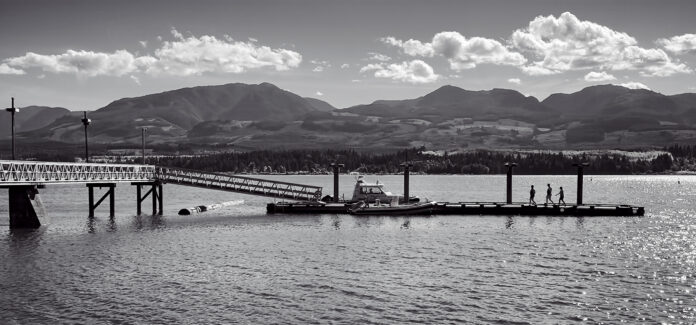
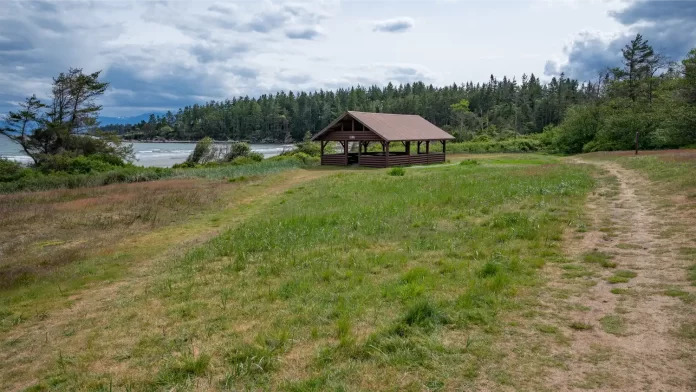
McFarlane Beach Revisited

https://printartphotography.ca

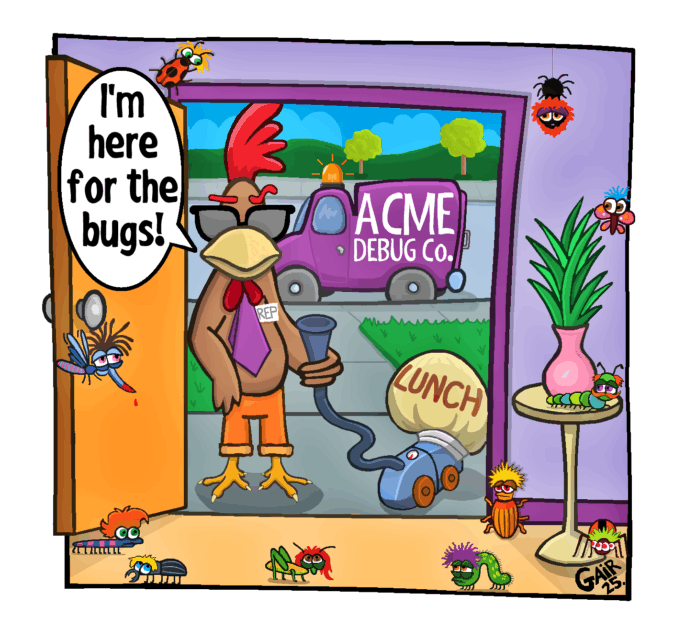
Assparagus

#1690

Comox Valley encouraged to attend National Indigenous Peoples Day

Comox Valley Regional District Press Release

Comox Valley encouraged to attend National Indigenous Peoples Day

The Chief Councillor of K’ómoks First Nation, the Chair of the Comox Valley Regional District, and the Mayors of Comox, Courtenay and Cumberland, have jointly issued the following statement in support of National Indigenous Peoples Day

The Chief Councillor of K’ómoks First Nation, the Chair of the Comox Valley Regional District, and the Mayors of Comox, Courtenay and Cumberland, have jointly issued the following statement in support of National Indigenous Peoples Day:

The local National Indigenous Peoples Day event, hosted by the K’ómoks First Nation in collaboration with local governments, cultural and community partners, will be celebrated on Saturday June 21, from 12 noon till 9 pm at the Comox Valley Exhibition Grounds.

In the Comox Valley, we are grateful for the privilege to live, work, and play on the unceded traditional territory of the K’ómoks First Nation and we acknowledge the rich culture of the people of the Pentlatch, Ieeksen, Xa’xe, Sathloot, and Sasitla tribes.

The Kumugwe Dancers

We look forward to gathering to learn, share and strengthen our relationships as we celebrate and honour the strength, resilience, and diversity of Indigenous Peoples. In doing so, we respect and remember that these lands have supported Indigenous communities for thousands of years before the arrival of settlers to their territories.

Local governments in the Comox Valley have embraced the United Nations Declaration on the Rights of Indigenous Peoples and have formally committed to reconciliation. With the support and guidance of K’ómoks First Nation, we are on a journey together to build a culture of meaningful engagement between our organizations.

This year’s celebration includes live music from acclaimed indigenous artists, workshops and knowledge sharing, environmental walks at the Tsolum River, Youth and Elder Zones, food and craft vendors and more. Cultural Partners for this year’s event include Wachiay Friendship Society, MIKI’SIW Métis Association, Kumugwe Cultural Society, Queneesh Indigenous Community Society, and Upper Island Women of Native Ancestry. For more details on the event details, community sponsors and more, visit www.komoks.ca/nipd-2025/.

One of the best ways to move forward together is to work together and learn from one another. We encourage residents of the Comox Valley to take part in this free family event for the entire community. Community members are also invited to participate as volunteers in a variety of capacities and volunteer applications are available now on the event website.

On behalf of the K’ómoks First Nation, Comox Valley Regional District, City of Courtenay, Town of Comox and Village of Cumberland, please join us in celebrating together the contributions and unique cultures of First Nation, Inuit and Métis communities in the Comox Valley and across Canada.