
Home Blog Page 154

Phoenix Riting! – September 28th, 2023

Phoenix Riting!

What is it about winter on the island? It happens right after Equinox, or, like last year, holds off until nearly Hallowe’en, but it’s always sudden. We leap from summer’s heat and abundance to a sudden damp chill that I forget to anticipate. Daylight time is noticeably shorter than dark time. The garden stops growing. Market season ends, with indoor markets to come. Speaking of that, the Thanksgiving market will be Saturday October at the Hall from 10am to 1pm.


These seasonal cycles happen every year, and I’m never ready. Part of me never quite believes in winter, no matter how many times it comes around. It doesn’t get as cold here as it does up North, but it’s plenty cold enough to suffer or die of exposure without warmth and shelter. I am grateful for the warmth and shelter I am privileged to enjoy. I wish this for all, while I am keenly aware that too many people in our community (and everywhere) suffer for the lack of adequate or secure homes.


I’m encouraged by some initiatives I’ve seen set in motion to make housing available, and daunted by how long they are taking, how much time is spent talking about it rather than doing something about it. In some cases, it’s hard to discern motion at all. People require housing; it’s a basic human right. And we try and try. Yet still vulnerable people, including children, shiver in the cold in winter, or occupy couches or car seats or other uncomfortable and unsustainable temporary shelters. Demanding that things change is important, and in addition, we need to be real about what the actual problem here is.


We struggle to comply with bureaucratic regulations that do not allow communities any degree of internal autonomy when it comes to defining their own housing needs and standards. What used to be called ISLA here on Hornby, “Islanders Secure Land Association,” now included with Elder Housing under the umbrella of the Hornby Housing Society, has tried hard for years. Volunteers exhausted themselves exploring every possible path forward. The best of intentions fizzled out over years and years of frustration dealing with bureaucracy, so that eventually once-unacceptable compromises were reluctantly accepted, previous momentum stalled into apparent immobility and now what?


There is another series of public engagement meetings this fall that might, maybe, open something up (I’m being optimistic but you have to hope). HICEEC has received funding from the Island Coastal Economic Trust to have consultants help us to build on and develop our Economic Development Strategy to meet our unique needs, to update the 2015 Economic Action Plan for Hornby Island. We really must ensure that housing for workers and marginalized islanders is made a priority.


About the consultants from Wellesley (quoted from HICEEC mailout):


5 members of WCG
s team will be attending September 26th’s Community Engagement Session for the Economic Development Strategy: https://www.wellesleyconsulting.ca/team/

Ross Birchall, Lyn Hall, Allan Lingwood, Kathleen Soltis, and Ian Wells. 

They have extensive backgrounds in community engagement, municipal government (both elected leaders and senior management positions), business management, and all aspects affecting local economies. 

The consultants have clearly stated that they are seeking our input and engagement and are at the behest of the community to create meaningful objectives and action items for the next 5 years in the key areas affecting residents and business owners alike. The first sessions are engaging with the public on these areas, hearing all opinions from all walks of life no matter what they are, so that they can accurately identify the priorities of our local community. They will return a month later to engage with the public again to make sure they got it right. Following that they will deliver a report and strategy to the community that identifies these areas of action and who is responsible, and what can be done to reach the goals of the community, and that strategy can then be used to raise funds as needed and build capacity to take further action in those areas. They have committed to walking us through this process.

The team is interested in action, not studying and putting a report on a shelf, and acknowledges that the community has been subjected to many studies and consultations in the past that, for some, have perhaps missed the mark or not met the needs of the community. They have reviewed what studies, plans and strategies have been made available to them and are thankful for the participation and context those have provided. In order to maximize the impact of this work, attendance is critical no matter what the stance is on the local economy. They are encouraging attendees to trust in the process, and be prepared to “roll up their sleeves” to engage and share ideas.


That sounds hopeful, right? There are to be a total of four meetings: two in person at the Hall, and two on Zoom. The first meeting is in person Tuesday September 26th; if you didn’t go to that, you’ll have missed it. I plan to be there; I’ll let you all know how it goes. The next meeting will be on Zoom on October 2nd. Following meetings will be in November. You can register online and get more information here: https://www.wellesleyconsulting.ca/team/. I hope as many people as possible will engage with this process and add your voice to help guide us on a good path.


That’s what I think. What do you think? email me at phoenixonhornby@gmail.com

Ol’ Texan

Ol’ Texan

by Mr Unknown

There was an Ol’ Texan named Hank

He lived in a house quite dank

So he left his home

went out on his own

Ain’t there someone to say bye to?

There ain’t.

Green Wizardries with Maxine Rogers

Green Wizardries, Passum and Priapus by Maxine Rogers

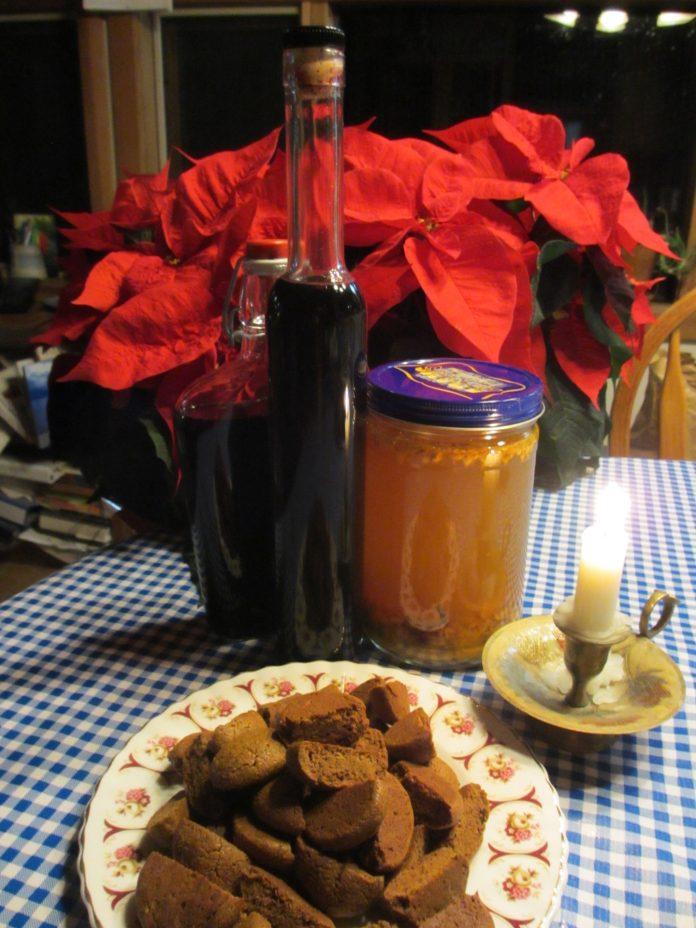
I am back at work after two weeks of holiday.  Before I left, we started a batch of wine.  My husband stayed home to to take care of our tiny farm.  That is an occupational hazard of having such a complicated homestead; one of us has to stay behind to manage all the projects while the other goes off, usually in the name of family duty.  

The first step in making wine is to grow the grapes and then pick them when the grapes are good and sweet.  Picking grapes is a fun job that we two do together.  We pile the bunches of grapes into wicker baskets and take them into the house where we crush the grapes and remove the stems which have a bitter flavour.  

The juice and crushed fruit are poured into nylon bags in the primary fermenting vessel.  In our case, this is a large plastic bucket-shaped vessel with a tight fitting lid.  Now, grapes have the right sugar and acid balance to become wine, along with the right sort of yeast naturally present on their skins.  My husband is the wine maker and he adds water and sugar according to some mysterious formula that I really should learn one day.    He also adds wine yeast to get a more predictable fermentation.  

After some days of primary fermentation, he removes the nylon bags of crushed fruit and moves the wine into a secondary fermenter which is, in our case, a very large glass vessel with a airlock on top to keep the wine clean and free from the attentions of fruit flies who’s fondest desire in life is to contaminate wine with bacteria that would cause the wine to spoil.  

I take the wine to the next stage when it is almost finished fermenting.  We like to make the wine into
Passum which is a dessert wine the ancient Romans used to make.  The finished product tastes a lot like

Sherry or Marsala wine and is a considerable improvement n the way the wine tastes without being made into Passum.   

I recently tried an Italian white wine that I believe is the direct descendant of Passum.  It is called Passito di Pantelleria and comes from the island of Pantelleria which is located between Sicily and Tunisia.  It is made with dried (passito) grapes of Muscat of Alexandria grapes.  

The ancient recipe for Passum calls for the wine to be almost finished fermenting and then add another quantity of grapes that have been allowed to shrivel and dry on the vine.  These grapes are on their way to becoming raisins.  The addition of more sweet grapes starts the fermentation again and the yeast is killed by the alcohol when it reaches about 14%.  The recipe then calls for the wine to sit and age with the shrivelled grapes in it and this makes the wine sweeter, stronger and more full bodied.

The Italian Passito wine made in this manner is a good deal less strong and sweet than the Passum I usually make.  Ancient recipes usually say something like, “ add a good quantity of…” so a lot of experimentation is necessary and one must also keep good notes.

We do not have a climate that is conducive to getting grapes to shrivel on the vines and our birds would scarcely allow us to keep any grapes left out for their delectation, so I buy organically-produced raisins and we use those instead.

It is vastly important to use organic raisins as the conventionally-produced sort are adulterated with mineral oil and sulphites.  Sulphites kill the yeast so you would not get the second fermentation.  I plan to keep very detailed notes, this year, on the weight of raisins used in each batch of Passum.  This way, I will be able to see how much variation I can achieve in this year’s vintage and then take notes on which vintage we like best.  I imagine this technique could be used with berry wines or apple wine as well.

The fellow in the photo is the God Priapus and he is one of the most ancient of the Roman Gods.  Priapus is a God of fertility and he is a very gentle fellow who enjoys being offered fruit and flowers.  The lore states that his statues must be made of wood and this statue was made by one of my talented nieces who gathered driftwood off the beach here to make this statue for me.  

Priapus is a God well worth worshipping as he is not only a fertility God but is also a protector of bees.  I guess you may be thinking you don’t believe in the Immortal Gods but that is no hindrance as they require worship, not belief.  It is only the God of the monotheists (Christians, Muslims and Jews) who requires belief.  The other Gods are, perhaps, more self assured. Appropriate offerings for the Lord Priapus include prayers which should be short, to the point and not grovel-y, lit candles, frankincense plus the fruit and flowers previously mentioned. 

I can tell you that we have been worshipping Priapus for years now and have received benefits from his kindness.  This year, we had so much produce, we had to give away tomatoes, cucumbers and even grapes to our friends.  

Outhouse Mites

Sports Report – Buck ‘The Man’ Manly

As a lifelong Canucks fan I carry pain. I wouldn’t say it’s debilitating but there have been moments where it becomes unbearable (insert your own Canucks tale of heartbreak here).

For this reason my chosen method of pain management is a slow and steady drip feed of skepticism that provides insulation from swelling expectation and swooning disappointment. 52 seasons of fandom has taxed this heart to such a degree that the ol’ Buckster simply mustn’t ride the emotional rollercoaster ever again. Besides, as beat writer for local darlings of the slo-pitch diamond, your Denman Hashers, my winter months are already largely spent in therapy.

Why do I tell you this? Well, if at any point in the hockey season there could possibly be hope for this franchise it is before it even starts, right? The person who coined the phrase, ‘Hope springs eternal,’ I’m willing to bet wasn’t a sports fan. And for the Canuck fan well, ‘hope’ has a very narrow window. And this narrow window is presently wide open to the possibilities!

With a new coach and management team touting a plan of ‘changing the culture,’ I managed to resist the temptation to rip the IV from my arm and scheduled an extra therapy session. Because deep down ‘The Man’ knows changing the culture of the ‘Nucks requires something more than white boards and whistles and ‘holding one another to account.’ Something more like voodoo, perhaps.

To prove my point, lets check in on the squad as they kicked off their preseason against division rivals, the Calgary Flames:

Rick Tocchet buries his own players after ugly preseason performance.

The head coach of the Vancouver Canucks did not mince words during his post game media availability.

Jonathan Larrivee/HockeyFeed

It is the National Hockey League preseason and the games technically do not matter in the grand scheme of things, but that did little to diminish the embarrassment Vancouver Canucks head coach Rick Tocchet felt on Sunday night.

Tocchet stood behind the Canucks bench as his team put out one of the worst performances we have seen so far in the preseason during a blowout against the Calgary Flames, one that mercifully ended after the Flames put up 10 unanswered goals. That’s right, the final tally when it was all said and done was 10 – 0 in favour of the Flames.

Needless to say Tocchet was not very happy with what he saw on the ice, and following the game he let members of the assembled media and his players know exactly how he felt.

“If I have one goal for this our 53rd season, aside from the team scoring one obviously, is that I’m still gainfully employed by Christmas. Now if you’ll excuse me, I have much digging to do.”

I rest my case sports fans.

If the Grapevine is going to bring you the Canucks coverage you expect and deserve, Buck ‘The Man’ Manly is not the man for this job. So as I refasten my IV, I’d like to announce the Grapevine’s new Sports Bureau signing, Orland Kurtenbangs.

Shucking Oysters: So, Who Wants to be a Billionaire?

Shucking Oysters: So, Who Wants to be a Billionaire?

Alex Allen

According to the 2023 Bloomberg Billionaires Index, once again the usuals are among the top three. Musk saw his net worth jump $99 billion to $236 billion, crowning him as the world’s richest person. Zuckerberg ranked No. 2 with a $61.9 billion increase to $108 billion, and Jeff Bezos followed, adding $46.5 billion to his worth. And these boys are not alone.

No surprise that the US has the highest number of billionaires, 735 members with a combined net worth of $4.5 trillion. On a global scale, there are a staggering 2,640 billionaires worth over $9 trillion. To put that into perspective, in 1987, when Forbes produced the first list of the world’s billionaires, there were only 140 individuals. 

Global Citizen estimated that for less than $10 billion, billionaires could fully fund the UN’s refugee programs. And for $35 billion annually, billionaires could close the global funding gap for education, ensuring that every child can go to school. But hey, there’s better stuff to spend money on.

Billionaires love to buy huge swaths of land. They also love remote islands for their lavish villas and estates. Many billionaires seem to think the world is doomed and spend vast sums of money buying properties in remote parts of the world to escape the looming apocalypse. They also like to build underground bunkers and stock them with tons of food, water, and really expensive toys to amuse themselves. Sometimes, they dispossess communities and harm the environment in the process. But oh, well. Billionaires also love to burn fossil fuels. Whether it’s through their private planes, mega yachts, or convoy of cars, they burn a lot to get from A to B. An analysis by researchers at Indiana University noted that billionaires have carbon footprints thousands of times greater than the average person.


For billionaires like Jeff Bezos, Elon Musk, and Richard Branson, who have poured billions of dollars into personal space flight programs, the sight of a clear night sky is apparently not good enough either. Bezos spent a mere $5.5 billion for four minutes in suborbital space aboard his Blue Origin vessel. 

But are they happy? At a certain level, the next million isn’t going to suddenly revolutionize their lifestyle. Another million dollars doesn’t make anything newly affordable. That’s when other motivations take over. Michael Norton, a Harvard Business School professor, says there are two central questions that people ask themselves when determining whether they’re satisfied: “Am I doing better than I was before?” and “Am I doing better than other people?” This applies to wealth, but it can also relate to attractiveness, height, and other things that people obsess about.

Norton asked more than 2,000 people who had a net worth of at least $1 million (including many who had more) how happy they were on a scale of one to 10, and then how much more money they would need to get to 10. “All the way up the income-wealth spectrum,” Norton said, “basically everyone says [they’d need] two or three times as much” to be perfectly happy.

Jeffrey Winters, a professor of political science at Northwestern University and the author of Oligarchy, said that in addition to social comparison, really rich people are often motivated to acquire more and more money by the sheer thrill that comes with multiplying one’s fortune. “For those of us who make wages and have expenditures that we are trying to meet—a mortgage, pay our health insurance, food, whatever happens to be our kid’s tuition—we link the making of money to our expenses,” he says. Meanwhile, many ultra-wealthy people “use their money to make money,” he says—an exciting, status-enhancing process. It’s different if the goal is to keep accumulating, in which case “there’s no number at which you have enough,” Winters says. He adds, “Every billionaire I’ve spoken to, and I’ve spoken to quite a number of them, is extremely excited by each additional increment of money they make.”

Brooke Harrington, a professor at the Copenhagen Business School wrote, “the sensation of ‘being well-off’ is not about fulfilling a childhood dream of buying a sailboat or something; feeling wealthy is about comparison with others in your reference group. So the question is not what individuals want to buy, but what they feel they must buy in order to keep up their status.”

Psychologist Elizabeth Lombardo—who studied high-net-worth families for her book, From Entitlement to Intention: Raising Purpose-Driven Children—explains that “We think external things we buy will bring us happiness, but then we get them and we wonder ‘what’s next?” “That [next thing] has to be bigger and better” than what we had before and than what other people around us have, she adds. 

So, you still want to be a billionaire? You’ll fly private jets, yes. You’ll eat gourmet cuisine all the time, you’ll have a massage therapist, a life coach and staff who will save you time. The problem is, the novelty will wear off. Even the private jet doesn’t cut it, because you’ll be comparing it unfavourably to other private planes you’ve flown on. And the mega yacht; not big enough. The hedonic treadmill. The reality, of course, is that plenty of research shows that most material possessions don’t make us happier—instead, it’s things like experiences and having more time to do things we love—and spend time with people we love—that drive happiness. 

Sigmund Freud is said to have confided that if he had to choose between a rich patient and a poor patient, he’d choose the rich one any day. Why? Because the rich patient already knows that money is not the answer to his problems. 

But What About Me?

BUT WHAT ABOUT ME? Sally Campbell

A favourite cartoon of ours shows a woman in her recliner, on the phone declaring: “I’m trying to look at it from my point of view”. Such a good reminder of how we actually see the world. When I commented recently to a friend that “individualism in our culture has run amok”, she informed me I needed to write about it. This is a huge topic, so here are a few starting points to consider.

Differences in cultural values lead to differing beliefs about how to orient ourselves in the world, how to deal with conflict, how to be a full person. Intercultural researchers have consistently identified several “value frameworks” that can help us understand cultural difference without judging those different from us. One of these value frameworks is: individualism-collectivism.

The cultural pattern of collectivism is found in approximately 2/3 of the world’s population: it is common in Asia, Africa, the Middle East (West Asia), Latin America, the Pacific Islands and amongst the world’s indigenous peoples. Collectivism emphasizes group values and identity over those of the individual. There is a focus on interdependence and maintaining group harmony.

There are also religious groups that have a strong orientation to collectivism, such as Mennonites.

The cultural pattern of individualism is found in the other 1/3 of the population: it is common in what is generally called the “West”, which includes northern & western Europe, Canada, the US, Australia and New Zealand (not including these nations’ indigenous populations). The value patterns in individualistic cultures emphasize personal goals and identity rather than group identity; there is a focus on independence and individual rights over group responsibilities.

It’s important to remember that within-culture variations exist within all cultural groups. There are people who behave like individualists within collectivist cultures and vice versa. As well, personal attributes, conflict norms in the larger community, and situational factors such as recency of immigration, affect how people will act. We are all “ethnocentric” to a certain extent, meaning that we interpret the behaviour of others (of different cultures) using our own cultural standards.

Individualism can show up in our struggles with our identity, our desire to “get ahead”, all the many influences encouraging us to realize ourselves. These are not bad things in themselves. This value pattern expects a child to become more and more independent with the years.

Autonomy is considered a sign of maturity. Moving out is a good thing. People from more collectivist worldviews generally don’t strive for or promote independence; they recognize and value their interdependence. They may sometimes complain about the pressure for conformity, expectations from their families and communities, even the lack of privacy, but their sense of belonging is intact. They are not expected to grow up and leave. They are expected to grow up and contribute to the well-being of the whole.

Mediators encourage people to recognize the value of relationship and the inescapable fact of our interdependence. We need to connect with others for our well-being. So many people struggle with loneliness, a sense of isolation or even alienation, yet remain extremely reluctant to acknowledge they need others. After all, a “mature” person is autonomous, right? They have what it takes to go it alone. The song “My way” is telling in its tone of pride and dramatic braggadocio. A loss of face for the individualist is personal. It’s not about others, it’s all about me. For the collectivist culture, a loss of face is much broader. One person’s bad action reflects on the whole community; that accounts for the protocols, the hierarchical nature and the deeply ingrained expectations of many such communities.

I see individualism as driving the difficulty people in our general culture seem to have in imagining the larger human community as our community. We have great loyalty and willingness to serve those close to us – in our family, in our neighbourhood, in our community even, but somehow those who are “different” from us don’t matter as much. Mostly this is kept quiet; it is simply understood.

Some of the work of aging into true elderhood involves expanding that sense of who our community is. And yet, many older people do just the reverse – they close off from the world, narrow their vision, and retreat to the imagined safety of their small universe. Yes, we are in deeply troubling times, but maybe older people have always thought the world was easier and simpler “before”. Things do become more complicated as we age! And yet, it seems to me the challenge is to expand our hearts, not close or harden them. We can learn from the collectivist orientation that each and all of us matter, and we matter equally. We really aren’t separate from others; we are one part of a living, breathing whole organism and we all belong to each other. That’s what indigenous people mean by “All my relations”.

(next time: Part 2)

Drifting Off

Drifting off:

by Mr. Unknown

That moment of quietness

That still, peaceful place

A day is put behind you

Gone, without a trace.

Laying cozily in your bed

Your eyes begin to close

Now you see only darkness

Just like out the windows.

The next moment is history

When morning comes around

For, drifting off into your dreams

Feels safe and sound.

Phoenix Riting! – September 21st, 2023

Phoenix Riting!

The Fall Faire was cold! Windy! Brrrr! I set up my tent to do readings, but abandoned it because there was no point, the wind would blow the cards away. Confession: I didn’t want to work! I have never had the opportunity to enjoy the Faire, browse the vendor stalls (I bought a bucket of basil for drying), hear the music, explore the exhibits, and visit with friends.


Best of all I watched Zucchinigeddon, the amazing hi-tech zucchini races that happen every year. Excitement! Thrills! Tension! It was so much fun, and I entered fully into the spirit. My favourite zucchini, a fanciful armoured creation that was much faster than it seemed it ought to be (created by Beatrix), won! I did wonder why the White Rabbit (bus zucchini with flashing lights) didn’t race; was it just for show?


Island children (with maybe a little help from parents) made forty different fantastical vehicles from zucchinis. Some were truly massive, some quite tiny, some elaborate sculptures and some stripped down and practical. It was great fun, helped by a very kind gentleman in front of me who voluntarily stepped back to offer my 5′ self a clear view.


Despite the cold, a very large crowd showed up. The field was jammed full of parking, more than I’d ever seen at that venue. The lineup of cars crawling to turn into the Farm went nearly to Strachan Road – nobody wanted to miss the parade.


There were a couple elements missing at this year’s parade, but with other elements added… bagpipes instead of the marimba band, for example. Also missing was Queen Ben this year, who traditionally led the parade. Amani Marimba, a many-years staple at the Faire, wasn’t able to make it, so a bagpiper led the parade, and it was really quite stirring–I enjoy a good bag of pipes. Well done. The floats were fun–the Dragon Boat(less) crew were having an especially great time!


The theme this year was ‘Friends and Allies.’ The only parade element I saw that specifically spoke to that theme (aside from the fact of being friends and allies) was a large orange pumpkin person twined with beans and corn–the Three Sisters. Clever Reina!


Of course, there was music–including yours truly. But so cold! It made guitar more of a challenge than usual, as my fingers stiffen up in the cold, but I think I pulled it off, and no one else seemed to have difficulty. It was a very fun day for all, despite blue lips and shivers on the part of some in the audience. Those who had the foresight to bundle up were much better off.


And that winds up another frantic busy summer season on Hornby–now begins our slow descent into winter. I will be taking another road trip during the first couple weeks of October, to be back in time for another recording session at the Barn. I hope to hit that brief sweet spot for travel, between wildfires and snow.


I hope you are all prepared for the season’s change; be well.


That’s what I think. What do you think? email me at phoenixonhornby@gmail.com


The Flash of Real – Helen Grond

The Flash of Real

We are so much more 

than the words we speak.

Without uttering a sound,

a universe of information 

emanates from us.

We have ears to hear

and eyes to see.

We also have a subconscious 

that gathers every detail

without prejudice.

When we are confronted with fake,

we must rely on our inner mind to 

sift through the details,

our conscious mind can’t see.

The true intent becomes clear,

as we get to peer behind the mask.

The flash of real is blinding.

We cannot unsee what we just saw.

We cannot unhear what we just heard.

We cannot unfeel what we just felt.