



Hell, Maybe ANYTHING Is Possible

Listen to a reading of this article (reading by Tim Foley):
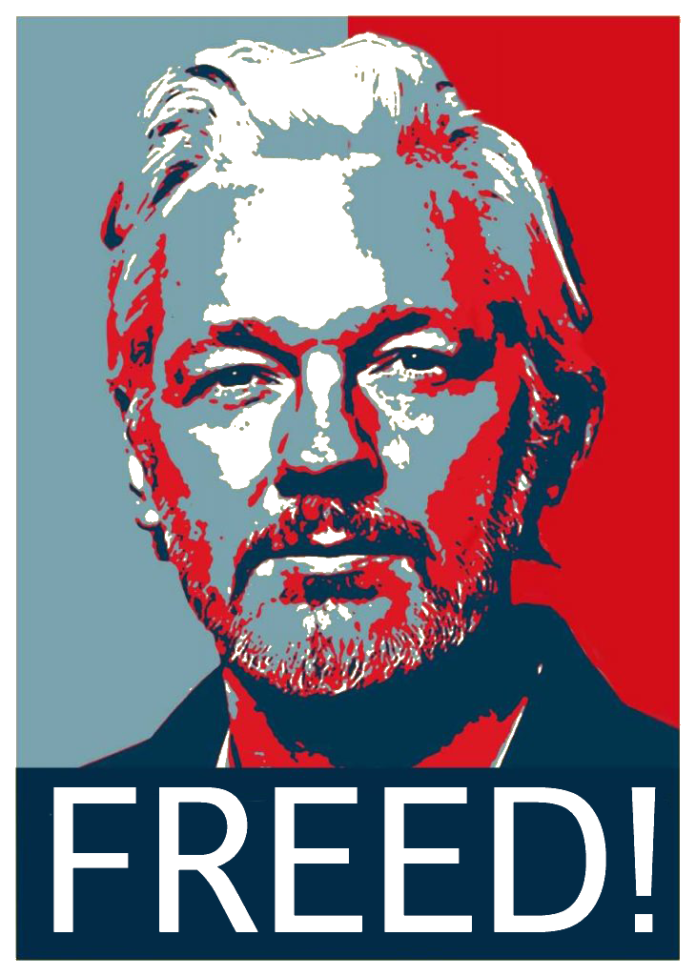
The thing that stands out for me the most when watching the deeply moving footage of Julian Assange arriving home to Australia is how impossible this all felt until it happened.
If you’ve been following this case for a while, you know what I’m talking about. This was the moment you’d dream of in your quiet, private moments, but could never fully allow yourself to believe would actually happen.
It was very easy to imagine Assange dying in a prison cell, either in the near future at Belmarsh or further along the timeline in some US hellhole. It was possible to imagine him getting out many years from now, his children fully grown and half his life stolen away from him. It was even possible to imagine him getting out one day on some legal technicality or whatever and living out the rest of his life in a nation that has an oppositional relationship with Washington like Edward Snowden, maybe. But coming home, to Australia?? No chance.
And yet there he is. It happened.
It’s easy to get so lost in all the emotion and controversy and discussion about the details of Assange’s case and his plea bargain that you forget to appreciate the fact that an impossible thing just happened. That this was a historic event which very few of us believed was ever going to occur — until it did.
And I don’t know about you but I personally find this all rather humbling. I never voiced my dark pessimism about the future of Assange’s plight publicly because it’s important to push hard for victory even when the odds appear stacked against you, but I honestly did not believe what just happened was going to happen. And I was completely wrong.
Which makes me wonder, what else have I been doing that with? What other battles that feel almost futile right now will one day make a fool of me by yielding an unexpected victory?
Hell, maybe anything is possible. Maybe what just happened with Assange can happen with any of the other injustices and abuses we see in our world today. Maybe it can happen with Palestine. Or with the build-up to war with Russia and China. Or with the corruption, opacity and malfeasance of our own governments. Or with the empire itself. Or with capitalism entirely.

Maybe we really do win this thing. Maybe that’s not a pipe dream after all. As with the Assange case it might not happen in the most grand and egoically satisfying way we’d want it to, but what does? This isn’t a Hollywood movie, it’s real life. Real life doesn’t move the way Hollywood conditions us to expect it to. Real life produces anticlimactic victories and mundane miracles. And it moves in ways that the ego cannot anticipate.
It’s comfortable to be jaded and pessimistic. You feel less vulnerable. You look cooler. You don’t have to deal with the emotional work of disappointment. And admittedly, you are very often proven right. That is, until you’re not.
And maybe that’s not the most authentic way to come at this thing. Maybe it’s better to throw ourselves into this fight not just believing we might win, but knowing that we will. Maybe all that pessimism and reservedness is holding us back from really swinging for the fences and leaving it all in the ring. And maybe it’s based on completely false assumptions about what we’re actually capable of anyway.
Assange has been freed. Maybe all of humanity can be.
______________

Bitcoin donations: 1Ac7PCQXoQoLA9Sh8fhAgiU3PHA2EX5Zm2
A Kid’s Guide to Plants of the Pacific Northwest by Philippa Joly: A Finalist for the 2023 SWCC Book Awards!

Philippa Joly has been declared a finalist for the Child and Youth category of the Science Writers and Communicators of Canada 2023 Book Awards for kid’s nonfiction book, A Kid’s Guide to Plants of the Pacific Northwest. The SWCC has been recognizing and honouring outstanding contributions to science writing for over 20 years. The winners will be announced on the SWCC website during Science Literacy Week in September 2024. Harbour Publishing’s Amanda Swinimer was also recognized on the longlist for her book, The Science and Superpowers of Seaweed: A Guide for Kids.
A Kid’s Guide to Plants of the Pacific Northwest is a middle-grade-friendly introduction to Pacific Northwest flora, with outdoor activities, games and quizzes that make learning about nature fun. With the increasing intrusion of technology into daily life, and the challenges of climate chaos, it has never been more essential for parents and educators to encourage kids to engage with the natural environment. The book contains plants from the forest to urban areas where parks, empty lots and backyards can offer the opportunity to learn from and connect to nature, increasing children’s self-confidence, independence, attention span and physical well-being, while fostering care for the environment. The book was awarded the Silver Medal in the Moonbeam Children’s Book Awards (2023), and longlisted for the AAAS/Subaru SB&F Prize for Excellence in Science Books (2024).
Philippa Joly is a clinical and community herbalist, paramedic and outdoor educator. She runs an outdoor school for kids and leads workshops on herbal medicine, plant identification, ethical wildcrafting, herbal first aid, local healing plants and anticolonial approaches to wellness. She lives on Denman Island, BC with her plant-savvy daughter, Breah and their grey cat.
Spontaneous Combustion to play the Denman Back Hall
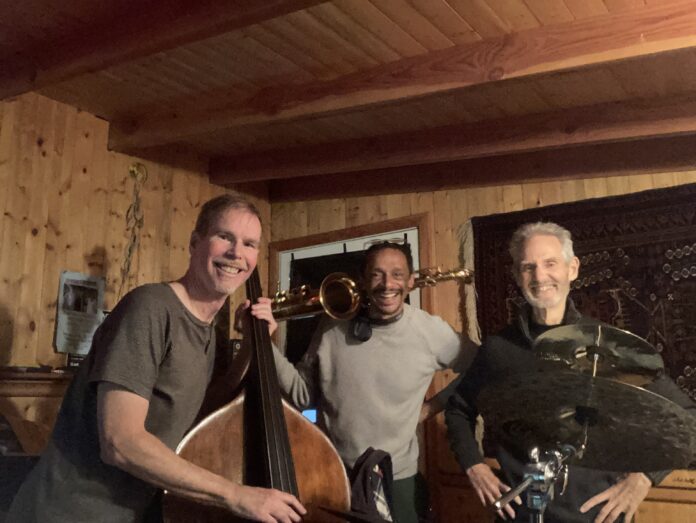
Spontaneous Combustion is a trio composed of Wally Petersen, bass, Tony Morrison, sax/flute and Roger Baird, drums. Wally and Roger are familiar faces from a few years back at Jazz Nights at the D.I. Guesthouse and Tony is a familiar face to many in the Comox Valley having played in many and varied groups. Spontaneous Combustion will appear at the Back Hall on Saturday, July 6th playing some jazz standards, originals and more. The theme is Concert for a Brighter Tomorrow/Peace, Love and Fellowship.
Doors open at 7 p.m. and the music begins at 7:30. Advance tickets, $15, are available at Abraxas Books and the D.I General Store. At the door: $20.
Cowboy Corner with Conrad Campbell: Daisy

Daisy
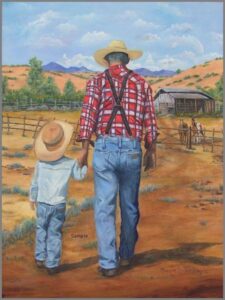 I have a lot of really fond memories from growing up on the old farm, but one night in particular stands out in my mind more than any other. A night that I learned a valuable lesson that would take me in my journey of life from a boy to a young man.
Daisy had always been my favorite cow. When she was little I would feed her handfuls of green grass through the fence and I’d always make sure she had an extra bale of straw at night so she wouldn’t get cold. A morning after a chilly rain would find me at Daisy’s side, drying her off and giving her a good combing.
In the spring of 1976, Daisy had grown to be a fine young girl. I would put a harness on her and take her for walks up the lane and back. She was always well behaved and happy. But one day before our walk, Daisy began to act strangely. She didn’t want to go out and was sweating a lot. I got pretty scared and took her back to the barn and led her into the big stable. She slumped down on her side right away, and seemed frightened and confused. I remember staying with her for hours, patting her soft head and letting her know everything would be okay. Suddenly I felt a hand on my shoulder. It was Dad. “There’s nothing wrong with Daisy”, he said. “You see, she’s a big girl now and she’s going to have a calf of her own. I know you want to help, but it’s best you come inside and let nature take its course. She’ll be fine son, trust me”. And with that I reluctantly went into the house with Dad.
Mum was at the stove stirring a large pot and said, “Oh, you must be starving! Sit down, I just made a nice stew”.
“No thanks Mum,” I replied, “I’m worried about Daisy. I think I’ll go up to bed. Thanks anyway”.
I lay in my room for what seemed like hours before I drifted off to sleep. Suddenly, I was awakened by a loud clamour from the barn. I could hear loud cries and moans from the stable. I raced down the stairs in my pajamas and threw on some old boots and sped off as fast as my feet could carry me. As I neared the barn the sounds grew louder, and, as I threw open the big door, I couldn’t believe my eyes! There on the stable floor, right in front of me, was my drunken Uncle Mike having sex with the lady who drove the school bus when the regular bus driver couldn’t do it.
The very next day I bought a guitar and a silk shirt with super fancy embroidered butterflies on it and headed out on my journey to become a booze runnin’ motor gunnin’ law breakin’ love makin’ rebel.
The End
Phoenix Riting!

Hey Hornby, it’s summer! It’s also kinda cool and damp, and that is a wonderful thing. Every morning I turn the heat on indoors, I celebrate. When it rains, I whoo hoo! It makes me so happy after the dry heat of the past few summers, and the gardens love it. It would be great to get through a whole summer without a fire ban, as we did back in 2018. By this time last year, fires were already verboten. Now, the island is damp, lush and sweet, and that’s glorious.
Life is full here–there are so many happenings it can be overwhelming! When it’s not overwhelming, it’s still quite whelming. The further we get into summer, the more I am whelmed. This weekend is our Pride parade, and I will have to miss it, as I am leaving the island for a few days. This timeof year, there simply isn’t a convenient time to leave without missing something fun, important or amazing. The lesson is this: you can’t do all the things. At least, I can’t. Some people seem to be everywhere, in every photo of every event. Who are these supernatural beings?
A couple of recent highlights: Phil Harrison’s work at the Hall last weekend, organized by his daughter Emily Harrison, was an journey into primary colours, form and movement. Some of the paintings were so big you could walk into them. Some were small, precise drawings made with a pen with a tip so fine it was stunning. There were intricately crafted wooden ships with working engines, and much more. It was a beautiful tribute to a lovely and talented human who sadly left us in 2022. It was also the first art opening of the season. Art openings are my favourite thing about summer (among other favourite things, too many to list).
Speaking of beautiful tributes, filmmaker Hollie McGowan premiered her documentary about Tempest Grace Gale, “Calling All People,” at the Hall a few weeks ago. It was unspeakably moving and so well crafted. I was one of those interviewed for the film, and when you are interviewed, you tend to talk and talk. I tend to talk without thinking and some of what I said was bound to be inappropriate. There was none of that; the editing was sensitively done, I was happy with what she left in. Also, I had a perfect suntan. Nice. The other interviews were all well crafted and presented. We all showed up as a wise, caring and generally awesome bunch. I am proud to have been included; my big screen debut!
The spirit of Tempest, her passion for life, her irrepressible effervescence, her inspiring effect on the world around her, came through without distortion, her story framed and presented so well, it was like she was in the room with us, and she was pleased it was so well done. This project has been a long time coming and we are all proud of what Holly has accomplished. The film has been showed in a few festivals with hopefully more to come. If there is any justice in this world, it will be seen and lauded by many. This story needed to be told, and she took up the torch and said it very well. Wonderful. Tears were shed.
Hornby has changed greatly since Tempest first stilt-walked and declaimed her poems at the market, and so have we. Many more changes are coming to this island, not all of them wonderful. The Co-op’s rebuild, for example, will lack a downstairs and the hardware selection will be drastically reduced. How can we live without the downstairs hardware store? Noo! I protest! Alas, I shall adapt. I suppose over time I’ll come around. Maybe it will be an improvement in the end. I sincerely hope the building will not look like a soulless box. Please make it Hornby.
The changes being made, and planned, to Big Tribune Provincial Park are way less acceptable. The raised-highway effect of the gravel pathways are a shock to the system, though they do make the park more accessible for wheelchair users. But heaven forbid they go through with this current plan of trucking in hundreds of truckloads of gravel crush to create 40 campsites in an environmentally sensitive wetland. These are described as ‘walk in sites’ and were supposed to be low impact. The plan we are being presented now with is far from low impact. It will include a new parking lot as well as 40 campsites with raised raised-gravel beds. This is certain to be devastating to the forest ecology.
I don’t remember any public consultation about this, do you? Shame on you, BC Parks. There is a letter writing campaign underway, you can find more information about that in the current First Edition, in Hornby Community Connections and other places as well.
I’ve got my Farm pass for the Festival this year, and I’m looking forward to that in the first week of August, always a fabulous time with great music. And there is so much more, I can’t possibly mention all the things in a single column! I’ll check back into these pages now and then, with thanks to the Grapevine for welcoming my intermittent presence.
As for me, my CD arrives this Friday (finally!) so I will have them in hand and available if anyone wants one. Honestly, I have no idea what my next steps will be. I made the thing, and now I need to figure out how to get a grant to make another one. I very much want to keep recording, it’s about the most satisfying thing I can imagine. I would love to perform as well, but I haven’t done anything about organizing that. I am way too whelmed. I regretfully turned down their kind offer to play again at Hornby Heart Vineyard this summer; it wasn’t the right venue for my sort of thing. I would prefer something intimate, like my living room. Or yours. Who knows? I’m open to possibilities and opportunities but not pushing it. Music is for fun and happy-making, not stress.
I’m writing on my Substack, and having a great time with that, at https://phoenixbee.substack.com/. You can subscribe for free and columns will be sent to your email address, no effort required. You can, if you choose, pay to subscribe, like a couple folks have (thank you!), but you don’t have to. Substack is an eclectic and talented community of writers, artists, podcasters and all sorts. I have a friend in Hungary who regularly posts videos of his art there. I spend more time there than on Facebook these days.
If you would like to hear my album without having to buy a CD, or if you don’t have a player (most people don’t, these days, including me), you can find it at https://phoenixbee.bandcamp.com/ or on Apple, Spotify and YouTube, just look up “Phoenix Bee Late Bloomer.”
That’s what I think. What do you think? email me at phoenixonhornby@gmail.com.
Our Propagandized Society Is Like A Sick Man Who Doesn’t Know He’s Sick

I write a lot more about the problems our society faces than I do about solutions. I do this because we are so far from being able to implement real solutions that most people don’t even really know the problems exist yet.
I could spend my time talking about the need for a giant people’s revolution to dismantle the US-centralized empire, end capitalism and replace the competition-based systems which are driving us to our doom with collaboration-based systems where all of humanity cooperates with each other and with our ecosystem, but those solutions aren’t going to emerge anytime soon because public consent for the status quo order is still being manufactured with a very high degree of success. At this point in history’s unfolding I may as well say we should solve all our problems by inventing free energy and living in the sky like the Jetsons.
Right now our society is like a sick man who (A) doesn’t know he’s sick, (B) refuses to believe he is sick, (C) believes the medicine is poison, (D) has no health insurance and can’t afford the medicine anyway, and (E) also has no means of transportation to get to the doctor. The very first step in that long list of obstacles to his health is to get him to understand that he is sick. That’s why I spend so much energy showing evidence that the media are lying to us, that we are ruled by psychopaths, and that our status quo systems are driving us toward annihilation.
Westerners who spend their time posturing as brave revolutionaries online and talking about how ready they are to set up the guillotines and take up arms against the ruling class always remind me of LARPers, because they’re talking about something that has exactly zero chance of becoming a reality as things stand right now. They’re role playing as revolutionary militants like other people role play as warriors and wizards in an imaginary fantasy realm. They’ve got no skin in the game; their play-acting has no weight and carries with it no real material risk. Many who talk tough in their fantasy land would run like rabbits the instant things got real.
Before those postures have any meaning, you must first create the world in which they could become meaningful. This is done by awakening other westerners to the reality of the abusive mind-controlled dystopia we live in.
We’re in a burning house, and the people inside don’t believe it’s on fire and think you’re a crazy crackpot for saying it is. There are a whole lot of necessary solutions to that problem that are going to have to follow from that point like getting everyone outside, getting the fire extinguished, finding a place to stay, getting the house rebuilt, replacing all the stuff that you lost, and getting everyone’s life back to normal. But the very first order of business is pointing to the flames and the smoke until people believe you. Everything else follows from there.
Getting people to see the fire is the first step, and it’s also the hardest. The biggest obstacle to our freedom is people’s belief that they are already free. The biggest obstacle to a functional society is the widespread belief that we are already living in one. The empire’s single strongest weapon is its ability to dissuade the masses from revolution by psychologically manipulating them away from the ability to see that revolution is necessary.
If we can get past that one primary obstacle, all the other obstacles will be relatively easy to overcome, in the same way a giant who realizes he’s been enslaved by an insect would quickly overcome the obstacles to his freedom after his eyes have been opened to the reality of his situation. But we need to get those eyes open first.
We get the eyes open by spreading awareness, which is always the first step to solving any problem. No problem ever gets solved by people until people are aware that the problem exists. Next they must come to understand the problem, then they must think up solutions, then they must create the necessary conditions to make those solutions feasible, then they must put those solutions into action.
We spread awareness of the problems by using every means at our disposal to show people the truth. The truth about their nation, their government, their media, and their world. Helping someone realize that everything they’ve been indoctrinated into believing about the world has been a lie is no small task — ask anyone who’s ever escaped from a cult or helped someone who has. The vast majority of people in our society are deeply indoctrinated by imperial propaganda, and we can’t start moving toward solutions until that changes.
But again, once that obstacle’s dealt with the rest will be comparatively easy — and even that obstacle will get easier and easier to deal with as more people open their eyes, because the more people see this thing the more people there will be to help shake others awake. And the more people there are looking at the problems, the more human ingenuity will be dedicated to coming up with viable solutions. Once things start moving we could go from awareness to solutions fairly rapidly, like someone quickly moving from a dream world to their bathroom in the morning to start their day.
But those eyes need to open first.
_____________________
My work is entirely reader-supported, so if you enjoyed this piece here are some options where you can toss some money into my tip jar if you want to. Go here to find video versions of my articles. Go here to buy paperback editions of my writings from month to month. All my work is free to bootleg and use in any way, shape or form; republish it, translate it, use it on merchandise; whatever you want. The best way to make sure you see the stuff I publish is to subscribe to the mailing list on Substack, which will get you an email notification for everything I publish. All works co-authored with my husband Tim Foley.

Bitcoin donations: 1Ac7PCQXoQoLA9Sh8fhAgiU3PHA2EX5Zm2
Featured image via Adobe Stock.
Sleeping Beauty Pancakes
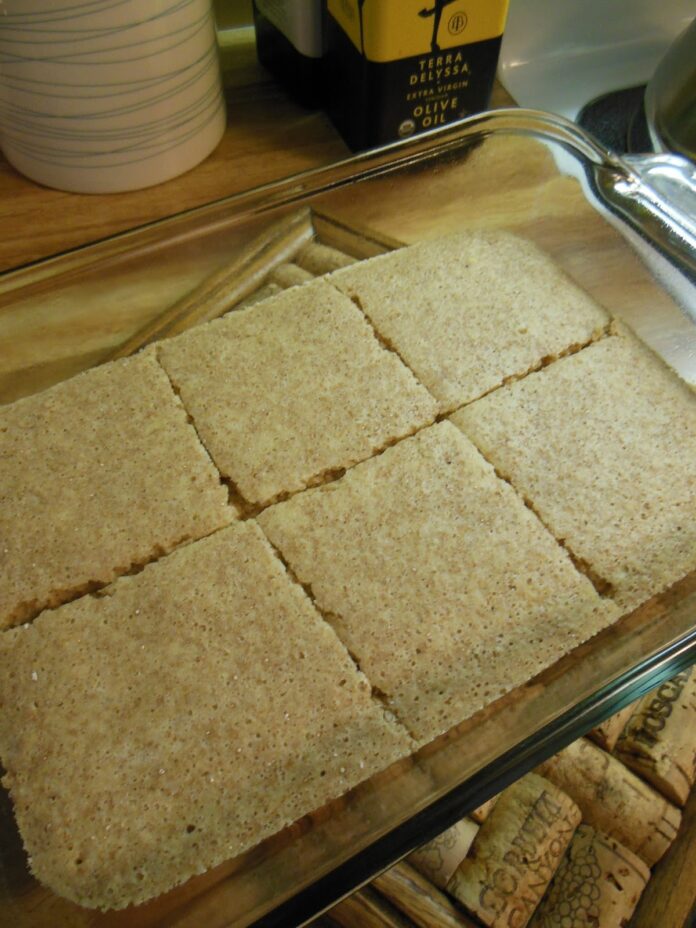
These are a real crowd-pleaser and something you can make with little people. It’s a great way to introduce them to baking. Little kids love to help and we all know that they learn best how food actually gets made by doing it themselves. They learn what’s involved for food preparers, and how we make food with love and attention and have fun in the process. In our demanding, over-the-top busy world, young children may not all have this more direct experience. So if you have some wee visitors this summer, and they’re not seasoned bakers, go for it! Because they may want to all get in there at once, this is a pretty easy one to break down into separate tasks.
I love this recipe (from the Victoria restaurant Nourish) because it is utterly simple. Here’s it is: Soak 1 C organic rolled oats in 2 C buttermilk overnight in fridge. (That’s the sleeping part.)
The next morning, start with hand-washing and the setting up of stools so everyone can reach the counter.
Grease large baking dish. I use a 23 x 33 cm. dish. (Perfect task for the littlest one)
Break 2 eggs into a bowl and stir until blended. (We keep the eggs separate from other ingredients, so shells can more easily be fished out until egg-breaking competency is reached.) Melt 1/3-1/2 C butter
Mix together 1 C organic flour (I use whole wheat or red fife) with:
1 tsp. baking powder
1 tsp. salt (Little ones love the mixing & measuring, and learn really quickly how to be accurate.)
Mix all the ingredients together in some fashion in a large bowl, and gently stir, only until everything is smoothly combined.
Roll it all into the greased dish with a spatula, smooth it out, and bake in a 350 oven for 30-40 minutes. Cool for a bit, then serve in squares. Double the recipe for a group larger than 5. You can also cook the batter on a skillet, traditional “pancake-style”, your choice.
Serve with syrup, strawberries, blueberries, any fresh fruit at all, yoghurt and love!
Green Wizardries: Bare Survival?
Now, a couple of old girlfriends have said to me very pointedly that they love my gardening columns but don’t like it when I write about politics. As these friends are older than me, I have no choice but to abide by their wishes. That said, I expect they haven’t read my column in about a year as I have given up writing about politics for at least that long.
It is not that I think things are fine. Far from it! I think the time to warn people to take constructive action to protect themselves from the ravages we will be experiencing has passed. The American Empire is tottering around like an old, sick, drunken, circus bear and all their enemies are sharpening knives to cut pieces off the poor creature. In fact, the USA today reminds me of Turkey, the Sick Man of Europe before the First World War.
By the end of that war, Turkey lay stripped of its huge Empire and they were broke. The Gods sent the Turks a hero, in the form of Kemal Ataturk, to pull them together but they still had a very tough time of it. When Ataturk needed to defend Turkey from Allied invasion, he said to his soldiers, “I do not ask you to fight. I ask you to die.” And they did. They died in droves for Turkey and for Ataturk. They fought like lions and never gave an inch. If the Americans are very lucky, they too will have a hero to pull them together but that is a story for the future.
I expect an interesting and increasingly difficult thirty years ahead for Canada and Canadians, tied, as we are, to the shirt tails of the American Imperium. The years after that may well be even more challenging; however, I will not be around to suffer through them so I don’t much concern myself with the really long view.
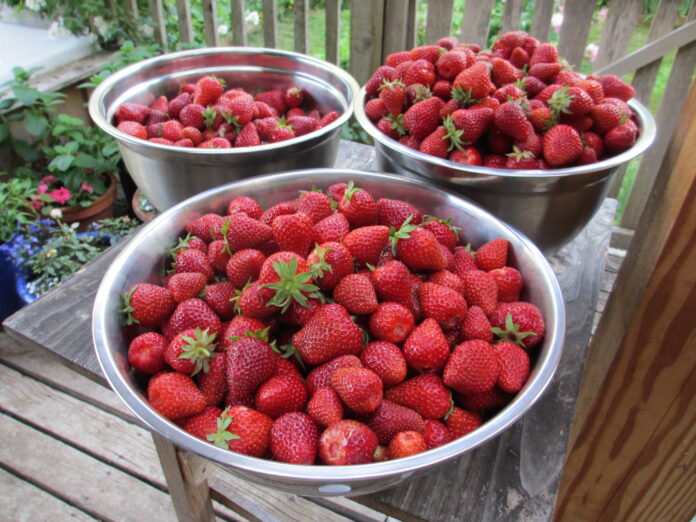
No, what concerns me these days is the strawberry harvest which is very good this year. I feel like a penitent Catholic as I spent much of this evening, shuffling around on my knees, not to show humility to the Gods which is where this practise comes from; it is an Ancient Roman custom absorbed by the new Christian faith that sprang up in the ruins of their Empire. No, we have many beds of strawberries in the orchard and they must be approached with deference and humility on one’s knees because that is where the berries are.
We slide the stainless-steel mixing bowls along the ground and lean over the beds, picking only the ripest berries until the huge bowels are full. The berries are an old-fashioned June bearing variety we have propagated for years. The berries are soft when fully ripe and so juicy. Their flavour would make an atheist believe in the divine. Then comes the slow task of cutting the green tops off and arranging the berries on cookie sheets to be placed in the freezer. The next day, we scoop the frozen berries in ziplock bags and place them, reverently, in the freezers.
We also do this later in the summer with Marion berries, a type of blackberry from Marion County in Oregon. These blackberries are earlier than the wild-growing Himalayan blackberries which are also very good. The Marions are a six way cross of assorted blackberries and one of their ancestors was a raspberry so their flavour is brighter and more intense than any other blackberry that I have tried. Later still, we harvest a large portion of the grapes and treat them the same way. A fruit salad of assorted berries and grapes in the winter really is a spectacular treat.
An even more decadent treat is to make fruit ice cream. We do this by putting coconut cream (you can use any sort of milk you like or even fruit juice to make a fruit sorbet) into the blender and then dropping frozen berries in one by one until the ice cream is as stiff as we want it. I have never known this ice cream to fail to please!
Over the course of a year, we usually buy a couple of small boxes of mandarin oranges for the Winter Solstice and one or two hands of organic bananas. Producing our own fruit saves us more than money. It saves us exposure to dangerous agricultural chemicals. It also saves us from burning oil by the barrel in order to eat fruit from foreign parts.
A new crop that I am experimenting with this year is the walking onion. This is an odd looking perennial onion that grows very long leaves with little onion bulbils growing at the top of the stock. They are certainly easy to cultivate and if you want more, you just let the onion stalk fall down and the bulbils will root, creating an additional clump of scallions.