


Fanfarra Cinemática presents ‘Music for The General’

A unique opportunity is coming to Denman Island when the wind ensemble Fanfarra Cinemática presents an evening of live music and silent film. Buster Keaton’s masterpiece of silent movies, ‘The General,’ will be paired with veteran composer Gregg Moore’s innovative, entertaining, and eclectic score.
Moore, an accomplished wind, horn, and string musician, passed the greater part of his career in Europe where this score was originally commissioned by the Cine Clube de Covilha in Portugal. Together with production manager Ruthie Tilston, Moore has assembled a six-person multi-generational ensemble of talented musicians including a trumpeter, a clarinetist, a percussionist, and two saxophonists. This sextet guarantees to entertain with a thrilling combination of cartoon music, circus mayhem and 19th century parlor music.
This diverse music provides the perfect backdrop to Keaton’s silent movie, ‘The General’, widely considered to be the pinnacle of the early years of cinema. Keaton upended convention by setting a comedy in the American Civil War and portraying the Southern cause as the ‘good guys’ in a love story of a plucky railway engineer saving his beloved train as well as his heroine. Throughout the movie, Keaton displays his signature physical theater and storytelling genius.
Best thought of as a concert of music with visual accompaniment, the sum provides a rollicking good time for all ages!
When: Saturday, August 17th
Showtime: 7:30pm
Where: Denman United Church
Tickets: $15. Available at the door (cash or e-transfer).
*Children under 12 free.
Please email Ruthie Tilston at ruthietilston@yahoo.ca for reservations and any further information.
Community Feast August 27th

Community Feast August 27th
 The FREE Community Feast is back for its third year! We had an incredible turnout last year (nearly 400 people!), and the Uvic Students are gearing up to offer another evening of scrumptious local food and community connection to islanders.
What: a free community feast, featuring a range of local meats and vegetables. There will be gluten free and vegan options available. All are welcome.
When: Tuesday August 27th
Time: 6:30pm dinner will be served
Where: Community Hall
There are a few important changes we are making this year:
– Please bring your own plate, cutlery and cup.
– We are seeking volunteers to help serve food! (please email Teesh at: teeshy@gmail.com).
– There will be two buffet lines to help alleviate the length of time it takes to get your food.
Some of you may remember from last year, but for those of you who haven’t been to the feast before here is some explanation of why this event exists!
There will be 19 Students camping on Denman for the last two weeks of August through a course named “Cultivating Alternatives to the Dominant Order” through the department of Environmental Studies at the University of Victoria. Nick Montgomery is the instructor, and Teesh Gardner and Emily Guinane will be helping run the field school (along with a TA named Julia Weder who comes all the way from Haida Gwaii).
The program gives students a glimpse into the many ways people on Denman are creatively responding to the challenging political, spiritual, emotional and economic times we are living in. From visiting a local land cooperative, to learning about off-grid power systems, all the way up to uncovering the concept of attention liberation through bird language- the students will have the opportunity to see a snippet into the weird wonderfulness that exists on this tiny island.
Through the course the students learn how to use consensus decision making, and ultimately the feast is their opportunity to practice these skills. The students will spend many hours preparing for the feast and creating a system of cooking and cleaning that works for everyone involved, and that uses the local ingredients we’ve sourced.
Ultimately, the feast is a gift back to the community for the hospitality and rich learning experiences the students will carry with them, as well as an opportunity to support local growers and producers on the island. Not only this, but the feast is yet another opportunity for the students to see the incredible social fabric that exists on this little island, and the unique culture that has been cultivated through many generations of resistance, bravery and creativity.
We hope you will join us, and please share the word with your neighbours!
Teesh, Emily, Nick & Julia
(the field school crew)
Letter to the Editor – William Thomas

ROGERS CELL TOWER APPLICATION DENIED
A 20-month campaign by concerned residents to stop Rogers Communications from erecting a constantly radiating, 210 to 250-foot, seven-antenna cell tower in the centre of Hornby Island has ended with the Local Trust Committee delivering an emphatic thumbs down to the monster telco from Toronto.
The disturbingly delayed decision came after a legal opinion by barrister & solicitor, Carla Conkin — an Islands Trust procedural expert retained by the Concerned Residents of Hornby Island (CRHI) — found that an Islands Trust planner had improperly blocked trustee Alex Allen’s original call for nonconcurrence in September 2023.
Allen was vindicated 10 months later, when he notified this reporter on July 11:
We just passed this at an RWM : “That the Hornby
Island Local Trust Committee does not concur with
the proposed location for the Rogers Communication
Inc. tower on Provincial Crown land on the west side
of Central Road across from the fire hall, Hornby
Island.”
Finally, it’s over.
Or is it?
Can this decision by Hornby’s LTC be overturned by federal regulators? Or the province, whose ruling is expected within weeks?
Technically yes.
In practice, no.
ISED (formerly Industry Canada) did not overrule the Hornby LTC’s vote against the Telus tower. To do so now would contravene the industry’s own guidelines, which defer to local government decisions, while risking a firestorm of adverse publicity.
On the provincial level, affordable housing remains a top priority. Which complicates the situation for Rogers, because, after two years of bureaucratic box-checking, the Hornby Island Economic Enhancement Committee has formally applied for permission to build critically needed community housing on this same elevated parcel of Crown Land.
It’s been a long and unfair fight. As the “Preserve and Protect” smokescreen begins to clear, what lessons can be learned from this latest Islands Trust debacle?
“We got to this place because our LTC refused to uphold our community plan,” charges Helen Grond. “The application should never have been considered in the first place because it directly contravenes our OCP.”
Is she right?
Although Rogers rep Brain Gregg publicly boasted that his client’s tower would also serve “boaters” and nearby islands, Section 5.5.4 of Hornby’s Official Community Plan stipulates: “All public service and utility installations on the Island should be for servicing Hornby Island only.”
Trust corporate planners “always deferred to Rogers, never to the community,” Grond continues. “They put us thorough hell. We spent thousands of dollars to fight this. The ordeal we were put through trying to protect our island is completely unacceptable on all levels.”
This longtime Hornby resident wants to “remind” Trust officials that not only are cell towers inappropriate for Hornby Island, “it’s enough that cell towers are disallowed in our community plan.”
Speaking for many, she warns Trust officials: “Don’t think for an instant that you can come at this again.”
William Thomas
Green Wizardries: Summer Colds

I keep hearing my friends and neighbours complaining about a spectacular summer cold. A lot of them think it is Covid 19 but as they have not been tested, I think we can accept this as speculation. Indeed, the testing method for Covid 19 is deeply flawed with many false positives and false negatives. The cold, whatever its cause, is a bad one leaving people feeling quite weak, fatigued and with a terrible cough.
A dear old friend complained to me that she had Covid and I said, “You can’t have Covid. You had all those shots!” She either gave me a sardonic smile or simply bared her teeth at me. I found it peculiar that everyone who was telling me they had a bad cold was a person I knew to have taken multiple Covid 19 vaccinations. To check how the unvaccinated population was doing, I went to a beach party with my friends in the unvaccinated community.
You would never believe the way people reacted to old friends and family members during the Covid 19 flap, refusing to see them and in some cases, demanding their relatives take the untested gene-therapy shots to be able to see their grandchildren. Yes, some people behaved very badly.
So, some of the loveliest people I know got together and created a social club for the persecuted unvaccinated people on Denman and Hornby Islands. We have been meeting regularly and even though the overt persecution of people who wanted to make their own medical choices (my body, my choice, remember?) is largely over, we still like to get together and party.
So, I asked about twenty people if they had experienced a bad cold in the last six months. “I haven’t had a bad cold in the last five years,” was a typical response. Everyone was quite healthy until I came to one of the older ladies who had indeed had the bad cold for about three weeks and complained that sometimes, she was coughing so hard, she could not catch her breath.
We had a little chat and it turns out she was not taking any extra vitamin D. She thought she would be getting enough in the summer being outside and working on her gardens. Well, that is not quite true. As people age, they stop being able to generate vitamin D so well through exposure to the sun. I was astonished to hear an Israeli Doctor who was not above fifty, and who swam several kilometres in the sea daily, find he was deficient in vitamin D.
I take vitamin D in drops every day of between 5000 and 10,000 IUs. I never got sick during the pandemic and neither did my friends in the unvaccinated community. In fact, not only did we not get colds, we also did not have heart attacks, strokes or turbo cancer while a lot of our vaccinated friends and neighbours did get these devastating conditions. Vitamin D is really essential for good overall health.
I am mentioning how ineffective the Covid 19 gene therapy shots were to prevent catching and transmitting the virus, not to rub anyone’s nose in it but to ask people to think about novel medical procedures that are untested and unproven. We heard a lot about the Covid 19 injectables being safe and effective. How could big pharma possibly have known they were either safe or effective if they had never been tested for safety or efficacy?
People took the shots to be protected from a devastating illness that might kill them. I understand that a lot of people were afraid. We, who did not want to rush in to taking an untested drug, were told that we would get so sick that we would destroy Canada’s hospital system. Well, we did not get sick and we did not go to hospital. One of my neighbours, had to get all the shots because his employer insisted. He has had one terribly bad cold after the other and his health is quite spoiled. He had robust good health before he got the shots and is now unable to work. If you got the shots and are still healthy, good for you but a lot of people were harmed by the shots.
So, next time you are being inundated with fear porn and herded like a bunch of panicked sheep into taking some novel and untested drug, perhaps you will remember how things went last time. There is a joke in the States that the Amish didn’t get Covid 19 because they didn’t have televisions. They also refused the shots and they insisted on going to church and taking communion together. Their rate of mortality in Lancaster County Pennsylvania was the same as it was for their vaxxed up neighbours. But, I suspect their overall health is much better, just like ours is in the unvaccinated community here.
Shucking Oysters: Chuck You Farley

Feeling a little bit irritable? Restless? Frustrated? Sensitive? Impatient? Aggressive? Do you find yourself getting increasingly angry during the summer months? There’s a name for it: Summer Rage (as opposed to Summer Mcintosh, three-time Canadian Olympic swimming medallist). Hot and bothered is a more common term.
In the summertime, the living is not easy. Our baggage gets challenged and compromised. For those who thrive on structure and routine, the summertime can disrupt regular schedules. We all know the frustration of getting on and off the ferry, after a simple town appointment. And on a hot day, with no shade in sight, waiting for two hours or more is not fun, no matter how many cold beverages you may have.
Family dynamics can be particularly challenging. Increased time spent with the kin, especially if there are unresolved conflicts or strained relationships, can amplify tensions. I certainly see this magnified 200X with visitors in the summer. It’s disconcerting witnessing mother’s yelling aggressively at their child at some minor infraction. Men verbally abusing their wives for misdirecting the camper trailer in the parking lot. Even their dogs are treated with disrespect. Wow. If this is what you are like on holiday, I don’t even want to imagine what you are like at home.
Air rage, road rage, inanimate object rage, passive rage, narcissistic rage, summer rage. According to Gallup’s Global Emotions report, negative emotions remained at their highest level in 2023. Anger is a piece of this data, and it remains near an all-time high worldwide. Why are we so angry? We’re tired. We’re overwhelmed. We’re afraid. And we’re hot. Seneca called anger “a temporary form of insanity.”
“As a general rule, I think all of us clinicians especially agree that there is a really interesting demonstrable relationship between heat and a whole cluster of interpersonally antisocial behaviour,” said Kim Gorgens, clinical professor in the Graduate School of Professional Psychology at the University of Denver. “So, irritability, hostility, aggression, being discourteous – not necessarily criminal behaviour, although there’s an association there, too, but a much bigger bucket.”
Studies show that violent crimes like murder and aggravated assault are much more likely to happen when the temperatures are high. Even in prisons, a 2021 study found an 18% increase in violence between inmates on really hot days. Two studies in 2021 and 2022, found that mental health-related hospital admissions and emergency department visits for conditions like anxiety, depression, schizophrenia, and others increased with high temperatures.
A 2021 study in the Lancet warned that “interpersonal violence in hot weather is likely to continue and increase in the future with increasing temperature due to climate change.” In other words, the hotter the world, the hotter we will become. Fun.
Everyone gets frustrated, upset and angry. But some people can get out of control. Are we getting angrier as a society or are we just less inhibited about acting out? We’ve all seen some form of rage at least once. Joe Kita wrote on WebMD: “I used to think these people were just jerks, but it turns out these angry outbursts may be caused by a little-known psychological condition called intermittent explosive disorder, or IED.”
In the most recent version of the Diagnostic and Statistical Manual of Mental Disorders, there’s a whole section on IED. (The fact that it shares an acronym with an improvised explosive device was coincidental.)
Michael McCloskey, professor of psychology and neuroscience at Temple University explained: “if someone tries to punch you and you punch them back, that’s not IED. But if someone says they don’t like what you’re wearing and you punch them, that could be indicative.”
People with IED don’t plan their outbursts. They just happen. They snap. Not surprisingly, IED tends to be more common in men. Males are typically more physically aggressive, while women are more verbally aggressive. Those in their teens, 20s, and 30s, are more likely to have IED, after which it gradually eases with age, although the threat of an outburst is always lurking.
And in this mad, mad world, we have rage and anger rooms. Places where you can go and, for a fee, destroy computers, furniture, mannequins, or just about anything you’d like. The theory is that venting your anger in a controlled setting is better and safer than letting it out in the real world. The sessions can range from 15 to 30 minutes and they provide you with inanimate objects, or you can bring your own plates, cups, glasses, beer cans, wine bottles, jars, picture frames, ceramics, ornaments, old candle jars, and mason jars. But not aerosol cans, propane tanks, explosives or toilets.
In Richmond, there’s the Anger Room, “a place where you can bring all of life’s frustrations and let loose to your heart’s content.” Helmets and gloves are provided, but they do recommend that you wear “something thick as a secondary layer as there is always a chance of debris flying or ricocheting.”
“If you don’t have an aggression problem, it’s probably just good fun,” said McCloskey. “But if you do, then it’s unlikely that it’ll be an effective strategy for managing it. All it’s doing is reinforcing the way to approach a problem is to act out aggressively.”
The next time you do find yourself getting irritable on a hot day, feel free to blame the heat. It’s the rage.
Letter to the Editor – Kris Christensen

“Easy now fellow islanders”
Regarding the back up for cars waiting along East Road in line for the Hornby ferry I would suggest that people irate about this situation take a deep breath and calm down.
There is no panic and nobody’s is being run over etc.
I live on East Road close to the ferry terminal ( 28 years ) and watch the proceedings daily and generally speaking there is absolutely no reason to hit the panic button. A little patience and some general goodwill towards other people on the road is all it takes. Inconvenient from time to time yes, but no big problem.
My driveway has on occasion been blocked but when I leave with my boat in tow heading for Bill Mee boat launch visitors to Hornby will gladly make room if needed. Usually it is not even necessary.. As for passing the line up in the “wrong” lane same thing.
My advise. Take it slow, give them a little smile and it all works out.
Remember to look out for the little ones and their pet dogs.
As for the emergency vehicles etc. yesterday I watched the ambulance pass a long line up driving in the “wrong “ lane without any problem. The driver was courteous and very slow with lights on.
So please tone down the rhetoric, take it easy and let us not get into police/tickets ( for what btw, being on the road ? ) ragging on BC ferries, traffic controllers etc.
We live on an island and can surely take an extra 15 seconds delay as a minor inconvenience.
Be patient. And kind.
Kris Christensen,
5315 East Road
ICJ: Occupation Illegal

ICJ: Occupation Illegal

Part 2: Scope of the World Court advisory opinion
It was quite an eye-opener to learn the scope of the World Court’s July 19th ruling on the Israeli occupation of Palestinian territories. It is unfortunate that this ruling did not come a half century ago when the occupation began, but I attribute that to Israeli “exceptionalism”, which is what the world community has been applying to Israeli policies and practices for decades.
The standard response has been “It’s complicated”, and because there has been so little clarity and detailing of Israeli practices respecting the occupation, so much obfuscation, people have looked the other way. I did too, for many, many years, until 9/11 created the impulse to investigate its causes. The implicit and explicit message from the west has always been: “don’t compare Israel to other situations of oppression and inequality, or to universal principles such as equality under the law irrespective of race, religion, ethnicity, etc. You have to look at Israel differently because of the Holocaust, so therefore, park your principles of equality at the door.”
So now at last, the world’s highest court is indeed applying universally recognized principles of international law to the little rogue state, and its ruling is unequivocal. This is not a “conflict” where both sides have a “narrative” and both sides are entrenched and refuse to find peace. The Court has declared that it is a very long-standing illegal occupation which must end, and which state’s parties and the UN must endeavor to bring to an end as quickly as possible.
The Court stated that Israel’s policies and practices of:
- annexing land (East Jerusalem for starters)
- confiscation of Palestinian land & property
- exploitation of natural resources
- discriminatory legal regimes
- settlement/transfer of its own population into occupied territories
- restrictions on movement of Palestinians
- punitive demolition of Palestinian property in the West Bank & East Jerusalem
- frustration of the Palestinian right to self-determination
- violation of Palestinians’ economic, cultural and social rights
- racial segregation and apartheid (yes, it named it as such)
are all in violation of international law, including international humanitarian law and international human rights law.
The Court then very clearly set down the obligations of Israel, states parties and the UN in light of this ruling, which I will describe next week in a piece on implications. It will be a preliminary understanding of the implications from an observer; much more is to come from the UN which will help us absorb the immense scope of this advisory opinion.
“The UN and especially the General Assembly which requested this opinion, and the Security Council, should consider the precise modalities and further action required to bring to an end
as rapidly as possible the unlawful presence of the State of Israel in the occupied Palestinian territories” said the Court. The UN Commission on the oPt was mandated by the UN Human Rights Commission on 27 May, 2021. It brought the request to the UN General Assembly to seek an advisory opinion of the ICJ, which the UNGA approved in December, 2022. The Commission on the oPt will now report on the implications of this ruling, so we can expect a very specific and detailed report on what this looks like for the 193 countries, including Canada, who are automatically parties to the ICJ’s Statute under Article 93 of the UN Charter, by reason of being members of the United Nations. Canada has committed on the record to abide by ICJ decisions, and we will soon learn what our responsibilities will be in light of this very significant ruling.
(Next week: What are some implications of the ruling?)
The Wedding
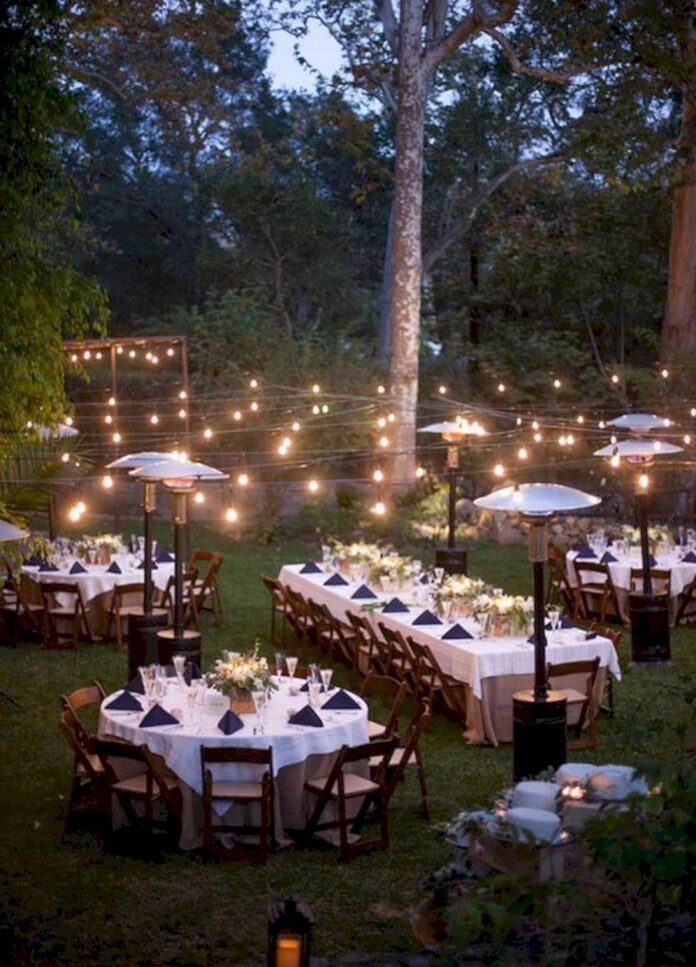
The Wedding
What do you imagine
Our wedding to be.
Would it be on a gently hilled island,
Abounding with trees and sea.
Perhaps on a homestead,
Where two kindly elders,
Had coaxed the love and bounty
From the land.
Who welcomed our family and friends,
As if they were coming home.
There would be music and song,
In the warm afternoon sun.
Lights that dance from tree to tree,
As darkness nears.
Carpets and sofas,
Tucked in shady nooks,
To offer calm and respite,
Amidst celebrations domain.
I imagine you by my side,
Telling you of my love,
As you speak your heart,
To mine.
Our loved ones all gathered round,
We are held in their smiles,
Washed in their tears of joy.
I imagine dancing through the night,
The sky and wind and earth,
Whispering, sighing.
We dance and twirl,
Moving as one,
As we dance our dance,
Of love,
With so many.
coffee machine down

coffee machine down
a hot cuppa Joe
so creamy and slow
the day starts to flow
my ideas can grow
morning brew calamity
inspiring insanity
I’m feeling the gravity
and revealing my vanity
I’ll pray to the gods
but I don’t like the odds
these second rate frauds
can’t compare to my pods
thomas p. hunterson