
CORRECTION!!

It seems someone was asleep at the controls and didn’t update the Crossword’s ‘DOWN’ clues in this week’s (Sept.26th) issue. Not quite clueless given last week’s clues have joined this week’s puzzle. One of those ‘no cigar’ moments.
HERE are the correct clues for this week’s crossword, with apologies for the inconvenience:
Down
1. Chem. rooms
2. Barn neighbor
3. Descend
4. Pert
5. A lot of land
6. Barn dweller’s query
7. A Crosby
8. Actress Bancroft
9. Classroom sound
11. Group of fish
12. Gave hands
13. Burnt tree
14. Tribute
21. Batter ingredient
23. Fraternity characters
25. Catchall site
26. Housing unit
27. Clan emblem
28. Daffy
29. Nordic rugs
30. Balaam’s ride
31. Big vessel
32. Arrest
33. Carpentry or printing
35. Out of play
38. Caravansary
41. Falsely ingratiating
43. Partner of to
44. In recession
46. Ace, when not eleven
47. Peptic problem
49. Like some breath
50. Courted a ticket
51. Type of organic compound
52. Bagel or bialy
53. Far Eastern money
54. Deliver from peril
56. Diamond Head island
57. Dad’s day gifts
58. Helm position
61. Allow
How Much is a Frog Worth?

Beaufort Watershed Stewards
HOW MUCH IS A FROG WORTH?
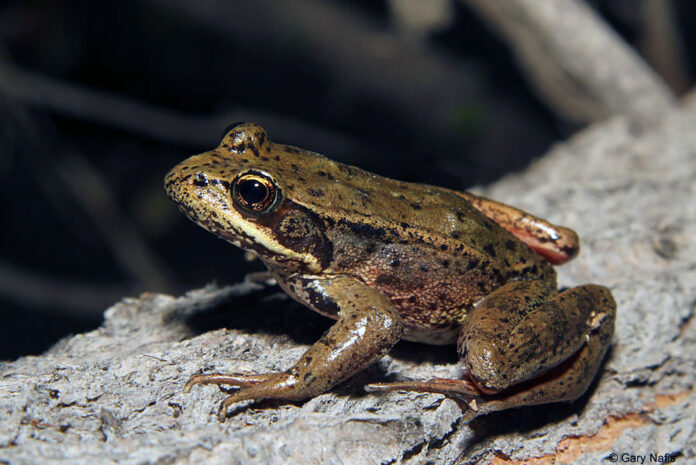
The little Northern Red-Legged frog that plopped into the water as we approached Hart Creek for our weekly water sampling was certainly a valuable addition to our morning. Growing up on the edges of suburbia my days were often spent catching frogs and snakes and interesting bugs. But now I rarely see a frog. This day was richer for having seen our amphibious friend, but I could never attach a dollar amount to that brief encounter.
We all believe that nature has value. But we’re referring to a philosophical value, not the kind of value that an accountant can enter into a spreadsheet. But there is a growing movement among urban planners and city managers to do just that: to put a dollar value
on certain aspects of nature and then enter that value into a spreadsheet. This approach, referred to as Natural Asset Management, was pioneered by the Town of Gibsons on B.C.’s Sunshine Coast and treats certain aspects of the natural world as capital assets. According to the Gibsons website their municipal asset management policy:
“Explicitly defines and recognizes natural assets as an asset class”
but more importantly
“Creates specific obligations to operate, maintain and replace natural assets alongside traditional capital assets. These obligations include having well-defined natural asset management strategies in place, as well asthe financial resources to maintain them.”
There is a good, local example of these ideas just a few kilometres to the south of us. In 2017, the City of Nanaimo, together with the Municipal Natural Assets Initiative (MNAI), began a study of the Buttertubs Marsh Conservation Area, an area of reclaimed wetland. The wetland had been restored to provide the public with recreational and educational opportunities, but as a side benefit the marsh also provided the Millstone River with flood protection, giving excess water somewhere to go other than the streets of Nanaimo. They estimated the costs of replacing that flood protection with engineered stormwater management ponds. What they found was that it would cost almost $5 million dollars to build equivalent protection to what the wetland was already providing. This doesn’t include the cost of purchasing land on which to build the ponds. If the effects of climate change were considered, the costs jumped as high as $8 million dollars.
As a thought experiment we might apply these ideas to the value of our local aquifer. What would it cost to replace it? We might start by imagining each household installing cisterns for storing rainwater. If cisterns ran dry too soon, we might imagine adding in the cost of buying truckloads of water. Providing water for firefighting might involve large community storage tanks and associated infrastructure. Even without actually putting numbers to these ideas it should be quite clear that our aquifer is a very valuable financial asset. I’m sure our friend, the Northern Red-Legged frog would agree that it’s worth protecting.
Mike Mesford
Director.tech@beaufortwater.org
250.702.5900
Is the Lone Soldier the Lone Ranger?
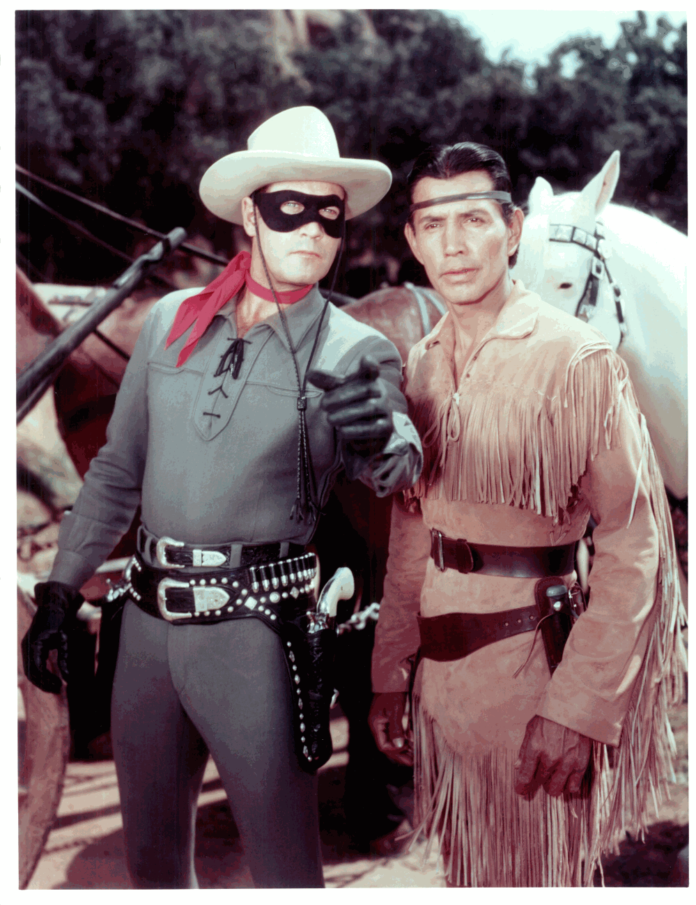
Everyone of my generation knows of the Lone Ranger. He was a really good guy, always coming to the rescue of poor settlers in trouble – brave, strong, principled, only fighting “bad guys”. His mysterious nature, with his white hat, black face mask and self-containment only added to the allure. In actuality the Lone Ranger was never alone, always accompanied by the resourceful but definitely subservient indigenous “Tonto”, who always addressed him as “Kemosabe”. A Mexican friend of mine, well-versed in the ways of settler-colonialism and white male dominance, said that what Tonto was really calling the Lone Ranger, in the subversive way of those so dominated, was “Quien no sabe” – he who does not know. To us children unaware of the necessary script of settler-colonialism, the Lone Ranger was always a hero, and he always came out on top.
Now what about the “Lone Soldier”? How many of you, dear Readers, have heard of him/her/them? This is the name given to those who go from other countries, non-Israelis, to fight in the Israeli army. As Heather Reisman, owner of Indigo, sympathetically describes them, these are soldiers “without families in Israel”. We would do well to learn more about them however, because we give them enormous support every year through our tax system. Every person who pays taxes to the Canadian government supports “lone soldiers”, with money that incentivizes young people to go to Israel and join the military, by providing numerous benefits such as a university education upon their return. In fact, it is very likely that we taxpayers have supported Reisman’s “lone soldiers” project to the tune of about $180 million in the last 20 years.
Here’s how it works: Billionaires Heather Reisman and her husband, Gerry Schwartz, establish a foundation called Heseg Foundation for Lone Soliders, and contribute large sums of money to that foundation every year, for which they get a significant tax receipt. Because they are in such a high income bracket, a much larger percentage of their donations gets written off by CRA than the average person’s charitable donation, as much as 80-90% in their case. This means that for the approximately $200 million they have “donated” to Heseg since 2005, only about
$20 million is their own money. They get back the rest of that money in charitable tax receipts. (Yves Engler, 3 September, 2024)
Here is another mystery. How do they get away with this, given that it is illegal under Canadian tax law to give money to a foreign military? Hmmmm. It seems to me Reisman & Schwartz ought to be able to do whatever they want with their excess money, but why should the rest of us be subsidizing their illegal choices?
Now that Jewish National Fund and the Ne’eman Foundation have lost their charitable status with CRA, we may see CRA responding to complaints about such brazen misuse of our taxpayer money by revoking the charitable status of Heseg Foundation. A formal complaint has been filed by Just Peace Advocates and it is likely that more attention will be given such complaints with public input to CRA by the average taxpayer.
Max Blumberg is a charity law expert in Canada. He says there are a thousand “Jewish charities” in Canada, and Yves Engler, who has been investigating the charitable status of Zionist organizations like the Jewish National Fund for the last 15 years, says it is safe to assume that while many have little to do with Israel, most of those charities have an Israel element. “According to Blumberg, the 1,000 registered “Jewish charities” have a whopping $12 billion in assets. Supposed to donate, not accumulate assets, these groups must be raising two to three billion dollars a year. Just how much of the money supporting Israel are all Canadians covering?” (Engler, 3 September, 2024)
Jewish Currents has a wonderful comic/graphic essay by Solomon Brager, their director of community engagement (When Settler Becomes Native, JD Brager, 2021), which they have republished in this week’s edition (newsletter@jewishcurrents.org. 23 September,2024). It is really worth viewing! In examining the Jewish claims of indigeneity in Israel, the idea is that Jews share common ancestry with the historical inhabitants of Israel and therefore have a claim to exclusive sovereignty over the land of Israel. These claims have the effect of positioning Israel as a de-colonial movement, despite the fact that early Zionist leaders, such as Theodor Herzl, known as “the father of Zionism”, openly recognized that theirs was a colonial enterprise. Brager quotes Herzl’s 1899 address to the first Zionist Federation conference in London: “The Zionist idea, which is a colonizing plan, should be easily and quickly grasped in England.” And indeed it was. Brager’s comic-form essay helps explain the allure Israel may have for many a young Jewish Canadian “lone soldier” in search of a meaningful identity in a secular and divided world. Saying that all Jews are indigenous to Israel ignites a saviour reflex and alleviates the guilt of displacing and killing Palestinians who’ve been continuously resident on the land and are, by all modern understandings of indigeneity, truly the indigenous people of that area.
So, as young idealists travel to Israel lone ranger style, to ride into the fray and dispel the bad guys (the “terrorists”), we Canadians call them “Lone Soldiers” and share complicity in their violence against the Palestinians through our taxpayer subsidies. This is something we can actually refuse to support. The lines are open to CRA.
Letter to the Editor – Bruce Holden

Thank you Grapevine for giving us all the information you do. Caitlin Johnstone is a very brave woman and she is doing us a service. I hope she doesn’t stop or get stopped. People who don’t want to know what she has to say don’t need to read it.
I look forward to each Grapevine to read Sally Campbell’s informed offerings, Maxine Rogers gardening and food information, as well as Alex Allen’s writings. I know we’ve gone through some divisive times and people are afraid to speak their minds.
Eartha Muirhead’s article was very good too. Thank you for hanging in there Grapevine.
Bruce Holden
Cowboy Corner: The Cat Dentist

 I started out as a cat dentist quite by accident….you see, one day I was at the bank and made a joke about how a Vet was going to charge me over six hundred bucks to get this rotten tooth pulled out of my cat’s head. The exact wording of the conversation escapes me, but the general gist of the banter was that although it wouldn’t put me in the poorhouse, I felt the fee to be excessive so I created a hypothetical situation in which I would get the cat really drunk on Lemon Gin and pull out the offending fang with needle nose pliers. We all had a good laugh and that was the end of that.
Or so I thought….
Later that evening, as I was right in the middle of my nightly ritual of getting drunk and wallowing in self pity, I heard a loud commotion outside. I peered through the drapes to ensure that it wasn’t some escaped mental patient with a history of violence, then ascertained it was one of the girls that worked at the bank. She was playing a set of bagpipes right beneath my window. Then I realized that it was not a set of bagpipes at all, but a fighting and screaming cat confined in a ratty old pillowcase. I hastily donned my purple polyester pantsuit with the big white vinyl belt and slid down the banister like a jaunty pirate and unlatched the door.
She wanted to know if she could pay me two hundred bucks cash to pull out the animal’s tooth, no questions asked.
So I looked around and said,”Yeah, okay, c’mon in”.
And that’s how I met my first wife.
Green Wizardries: Apple Pressing
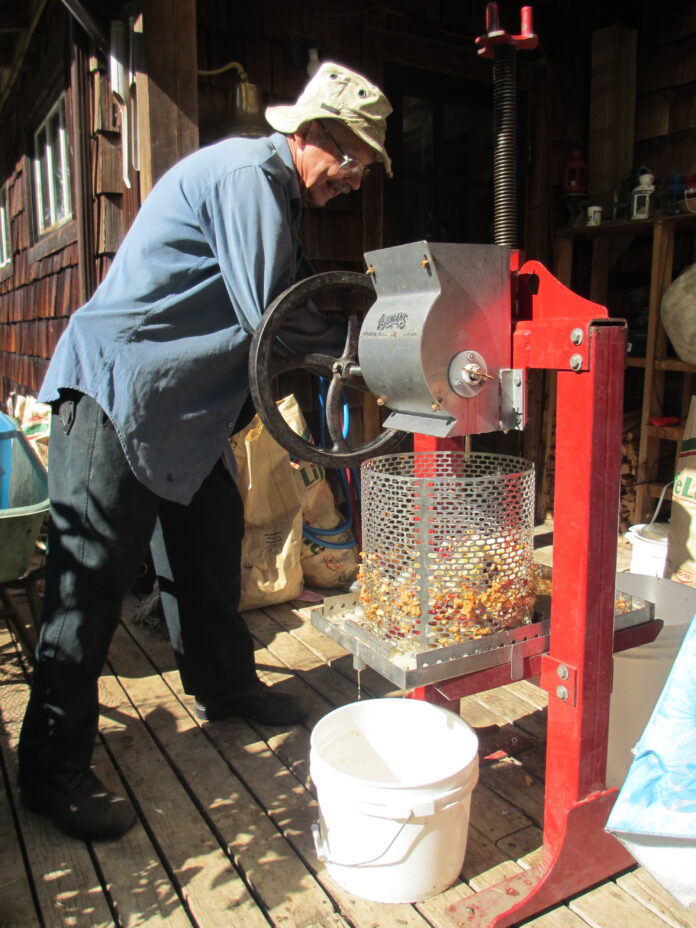
We just finished. For the last two mornings, we have been pressing all the apples we could scrape together from our orchard, a friend’s orchard and a tree growing on the road allowance. We borrowed the apple press from the Growers and Producers Association.
It is a grand old press very solidly made in the States. We bolted it to our deck and had all the feed bags of apples lined up. The first job is to grind the apples. The press has an integral grinder. I would throw in apples one or two at a time and my husband would spin the wheel that turned the grinder and the little chips of apples would fall into a bottomless metal basket.
Once the basket was full, we would put a heavy metal plate on top and then turn the screw driving it down and down to press the apples until the glorious, clear juice ran out into a bucket. Once we had all the juice we could squeeze from a batch of apples, we undid the screw and emptied all the apple chips into plastic tote boxes. We use this to feed livestock. There is far too much for our little farm so we gave some of it away to farming friends.
This apple pomace, for that is what it is called, is a delicacy enjoyed by horses, cows, sheep, pigs, chickens and rabbits. If you don’t have any livestock, then the critters in the compost bin will love this for sure.
We haven’t pressed our own apples for a long time and buy juice from a local supplier who does a great job with her automated apple-pressing facility. This year, she said she might not be able to get all the apples she needed but assured us of one carbouy of juice. That is 21 litres. So, we ran around and picked like the dickens and got the GPA’s press.
Annual GPA membership for a household costs $20. The equipment is free for the use of members. Their list of equipment to aid farmers and gardeners is impressive. There is the apple press of course, a seed thresher for corn, beans and grains, apple picking pole and picking bags which are a Godsend when you are working to harvest tall trees, a walk-behind rototiller, a tincture herb press, an oat roller and GF mill, seeder, hoop-house pipe bender, really nice stainless-steel food dehydrator, a canbro cooler, oxalic atomizer for cleaning beehives, a thresher, sheep shears, a honey extractor, a nut cracker and a soil sampling probe. That is a lot of expensive and useful gear for $20!
The apple press alone saved us heaps of money. An inexpensive wine kit costs about $75 and makes about 30 bottles of wine. The cost per bottle is approximately $2.50. A carbouy of fresh, organic apple juice costs just the $20 membership fee and the pleasant time it takes to pick and process the apples. My husband worked out that using our own apples and the GPA’s apple press, he can make apple wine for .33 cents a bottle. The wine is lovely stuff and a big hit with our visitors from the city.
The GPA has a high-functioning web site where you can speedily purchase your membership as there is still lots of time to pick and press apples and use the other equipment. The GPA is holding a seed cleaning demonstration at the Old School on Saturday 12 October from 9:30 onward. I will be taking a bunch of seeds up to be cleaned and I recommend this to anyone who needs their seed crop cleaning.
The GPA also hosts Seedy Saturday which is a fun event to be held next year in January and there will be workshops, local seed vendors and a seed exchange where I get a great deal of the seed I use every year. Make sure you have some packaged seeds from your garden to bring to Seedy Saturday as you get to pick a package of seeds for every package you donate.
If you have read this far, I have a sweet treat for you. Apple crumble is an easy dessert to make and much beloved of all but here we have an apple crumble with a twist. This is Apple Custard Crumble. Peel core and slice about 8 apples and lay the slices in an 8” by 8” glass baking pan. Whisk 1/4 cup of sugar, 2 Tbsp of flour, 1 Tsp cinnamon, 2 eggs and one cup of milk. Pour it over the apples. Make the crumble of 2/3 cup of rolled oats, 1/2 cup brown sugar, 1/4 cup flour, 2 Tsp cinnamon, 1/4 Tsp nutmeg, 3 TBSP butter and a pinch of salt. Mix that all up until it is crumbly. Sprinkle it over the apples and bake at 350 for about 50 minutes until the crumble if golden. Serve warm or cold.
Letter to the Editor – Oakley Rankin
Caitlin Johnstone. Oakley Rankin
Checking in on the Grapevine’s chosen cultural analyst, Caitlin Johnstone, some of you may already discovered who she is and what her background is but for those who haven’t, here is her own very limited overview.
Caitlin is an Australian living outside Melbourne with her American partner, Tim Foley. She writes of herself on Medium: ‘I am Australian, lived in Melbourne nearly all of my life, two kids, twice married and once divorced. I got a journalism degree in 2003 but figured out long before completing the course that the media deck is stacked so far against truth that I wouldn’t be able to do the kind of work I wanted to do, so I did some environmental activism while paying the bills with corporate work. I had a bunch of transformative personal experiences during that time period, then in 2016 I got a job at a self-publishing news outlet where I quickly gained an audience for my opinion articles about the Bernie Sanders movement (which arose from a commentary void I’d noticed needed filling while I was participating in Bernie Facebook groups)’.
She notes on her website that she ‘. . . became a fully crowd-funded writer who is answerable to no one, a privileged position I exploit to its fullest in saying things I think need to be said regardless of the taboos against saying them.’
Although she insists that her partner does not write her articles, she is ‘joined at the hip’ with him and her ‘work is the product of two minds, not one’. Johnstone styles herself as a ‘socialist’ but nowhere can I find an explanation of events that led her to believe in either socialism or in a stacked media deck—information which would be useful in assessing her articles.
Now I always believed that although a single name usually appears on a piece of investigative journalism or cultural analysis, behind the author is a collaborative structure of researchers, lawyers, proof readers, and an editor, often demanding two or more sources to corroborate claims made—in short, good investigative journalism relies on a team of persons even if the writer gets all the glory. What we can infer from the little information she gives us is that she believes the teamwork of responsible journalists only gets in the way of truth—truth which can only be found by an individual in a ‘privileged position’.
So what does she give us, the readers, from her privileged position? The same angry list of cultural demons, some common to all of us and some her own particular ones, over and over again. I can detect no critical reasoning about any of her particular bête noires, she never takes one of her claims and attempts to account for it in critical detail. Her blanket answer to motivation and process for all her claims is a ‘profoundly sophisticated propaganda machine’ (The Island Grapevine. Feb. 22, 2024). Her most egregious claim that millions of us are ‘brainwashed’ dupes of some exterior agent insults her readers and exempts her from any critical explanation of how events and actions in our culture come about. When she attempts to answer the question as to what she would propose to do about these demons she can only come up with ‘change yourself’. (The Island Grapevine. Sept 12, 2024). People do, of course, change but they are helped along by cultural attitudes including some enshrined in government legislation; think seat belts, healthcare, highways, public schools, next to non-existent capital gains taxes, lower taxes for unearned income, corporations as persons, etc.
But if you would like a comparison of the real critical thinking that Johnstone encourages but never demonstrates, there are plenty of examples; a particularly good one is a short book entitled ‘The Asset Economy’ by Lisa Adkins, Melinda Cooper and Martijn Konings. Of course, you should park your bias and use a bit of your own critical thinking in reading the book but it demonstrates a clear, detailed analysis of a few of those demons—inequality, the 1%, home ownership. The authors provide these familiar cultural observations with a framework of analysis that makes sense of their process and effects. There are, of course, other critical frameworks on the same problems which the authors responsibly acknowledge in some detail as critical reasoning demands. Taken together such efforts can lead us towards truth.
Johnstone exemplifies the ethos Susan Faludi writes of, an ethos ‘pervasive in so much of contemporary reporting—that the personal can save us from the political, that the world of objectivity will be humanized by the “authentic” feelings and sleeve-worn convictions of its chroniclers—has proved corrosive to journalism’s fundamental purpose: to examine “the system” and hold it accountable’. (NYRB. August 15, 2024. p. 50). Johnstone never really examines “the system” and along with dozens of similar contemporary ‘reporters’ leads us to a place where opinion has become a source of ‘truth’ and ‘feeling’ always trumps critical reasoning. Such an emphasis on the ‘truth’ of opinion is rationalized on the basis that all of us are ‘biased’ and our efforts to overcome bias have never worked. Social media enables anyone to broadcast their opinions to the world without critique of any sort and, within a matter of hours if not minutes, a large number of people can then pick it up as their own truth. This ‘crowd sourcing’ works to kill legitimate criticism and when enough people take up an idea quickly it lends a specious verisimilitude of truth to the idea and becomes the critique—if all those people believe it it must be true.
If the Grapevine’s intention is to inform rather than inflame it remains a mystery to me why Gwynne Dyer, a internationally acclaimed investigative journalist, Middle Eastern specialist, and professional historian, was replaced in the Grapevine by a relatively unknown agitprop artist who brooks no criticism of her extraordinarily biased ranting on our culture. And mind you, I am not talking of perfection here; Dyer is an honest cultural reporter using the best means we have devised for minimising bias. Johnstone prefers to give her emotive bias full rein over any critical reasoning. Her unpleasant attempt to emulate Jonathon Swift (The Island Grapevine. Sept. 19, 2024) only drives home both her irrationality and her dispiriting writing style. As a child in the forties and fifties we were often exhorted to put on our thinking caps; Johnstone has never found hers.
Editor’s note: Gwynne Dyer’s regular appearance in TIG has not been “replaced” by Caitlin Johnstone. A former contributor to TIG had a paid subscription to Dyer’s work that included permission to reprint his material. Mr. Rankin’s ad hominem attack of Johnstone is ironic in that it projects his own biases toward corporate legacy reporting that can be found everywhere else.
To Be An Authentic Person Is To Stare Deeply Into The Face Of Uncomfortable Truths

SEP 23, 2024
To be an authentic person is to stare deeply into the face of uncomfortable truths.
It’s to experience all the footage of shredded bodies in Gaza with a visceral understanding that these are real things happening to real people whose lives mattered just as much as your own.
To come to terms with the reality that the power structure you were raised to trust and the political party you were raised to side with are responsible for some of the worst things that have ever happened in our world, and that their depravity must be fought tooth and claw.
To stare unblinking into the very real possibility that the madness of our rulers could cause total human extinction by nuclear war or environmental destruction within your own lifetime.
To admit that your previous understanding of an issue was a misguided perception caused by propaganda, and to be fully open to the possibility that this is also true of your current understanding of other issues as well.
To deeply recognize the ways your own delusion and dysfunction have played a role in the delusion and dysfunction of humanity as a whole, and to cease viewing yourself as separate or separable from the self-destructive patterning of our species.
To be honest with yourself about the circumstances of your birth and the ways in which you have it better than other people in different circumstances and in other parts of the world — often at the expense of those very populations.
To be honest with yourself about the ways in which your actions harm others, and take any steps necessary to rectify this wherever you can.
To be honest with yourself about the ways in which you have been harmed — your traumas and wounded self-beliefs and your maladaptive coping mechanisms ensuing therefrom — and do the work necessary to heal them.
To be honest with yourself about how little you really know about this boundless mystery called life, and to be humble in your position as a clueless member of a young species in a universe that none of us understand.
To explore with sincere curiosity the possibility that all our assumptions about the reality we are experiencing have been wrong this whole time, right down to our beliefs about things as fundamental as thought, perception, and the existence of a self or a separate outer world.
To to be an authentic person is to constantly plunge headlong into the uncomfortable, the unfamiliar, the unknown and the unpredictable, even when doing so feels like a kind of death, for no other reason than because that’s where the truth is.
It’s to always welcome the truth with open arms, even when it is unpleasant, embarrassing, inconvenient or downright terrifying, come what may.
________________________________________________________________________
My work is entirely reader-supported, so if you enjoyed this piece here are some options where you can toss some money into my tip jar if you want to. Go here to find video versions of my articles. If you’d prefer to listen to audio of these articles, you can subscribe to them on Spotify, Apple Podcasts, Soundcloud or YouTube. Go hereto buy paperback editions of my writings from month to month. All my work is free to bootleg and use in any way, shape or form; republish it, translate it, use it on merchandise; whatever you want. The best way to make sure you see the stuff I publish is to subscribe to the mailing list on Substack, which will get you an email notification for everything I publish. All works co-authored with my husband Tim Foley.

Bitcoin donations: 1Ac7PCQXoQoLA9Sh8fhAgiU3PHA2EX5Zm2
Featured image via Adobe Stock.
WHAT’S UP WITH HARRY?

WHAT’S UP WITH HARRY?
Everyone wanted Harry. Surrounded by a sparkling inland sea, this tiny island paradise attracted beach and forest pilgrims from the planet ‘round.
But across murmuring nighttime waters, Van Hoover’s inclined sprawl glowed like the campfires of follow-on armies. If Harry’s stewards did not remain vigilant, the fate awaiting this much-coveted isle was plain to see.
Storm clouds were gathering. Before implementing remote virtual control, unelected Plan Errs occasionally parachuted onto Harry’s fair flanks. Inspired by powerful industries and a shared mission to “preserve and protect” corporate profits, their ill-considered ethics and edicts sought to bring condos, cell towers, cabanas and chaos to a rural sanctuary held sacred by its first seasonal visitors.
Oddly, the impulse driving those who most coveted Harry was to replicate what they were fleeing. Apparently unfamiliar with the concepts of karma, courtesy, common sense and community respect, Islands Bust Inc. green-lighted the inadvertent (though much forewarned) exhuming of the Cro’mox Nation’s ancestral bones.
“Shame! Shame! Shame!” scolded three ravens.
Resistance was growing. Early one morning, local defenders armed with their Official Community Plan, Local Government Act, Canadian Charter and Harry’s Vibe approached the snag atop which their jeering tormentors commanded and cowered.
“On me!” the leaders shouted. But when they turned, only a few stalwarts had followed.
“Where the heck is everybody?” someone cried out.
“They must still be asleep,” came a suggestion.
“That roost looks pretty high.”
“What will my neighbours say?” fretted a voice in back.
Just when all seemed lost, a rustling in the forest grew into an exuberant roar as Harry’s wild inhabitants burst from the trees!
Cows mooed. Crows cawed. Bees buzzed. Gulls squawked. Eagles cried. Salmon leapt. Orcas spouted close inshore and an astonished fawn looked on with wide unblinking eyes as hundreds of islanders began arriving on foot, horseback, ebikes and old pickups waving the petitions they’d signed.
“We love Harry!” everyone shouted in unison, accompanied by joyously honking geese. “Be nice to Harry!”
“Hoooot! Hoooot!” Owl hollered for attention. “All attend to Harry’s Code of Right Conduct.”
“Tell it,” a human voice called out.
“Ahem!” Owl said, adjusting his spectacles to read, not from Pooh but a scroll that kept trying to retract.
“Corporate predators are not welcome here. Ahem! Newcomers addicted to making commotion and demands are asked to reconsider whether they’ve caught the wrong ferry. Whether arriving via channel crossings, birth canals, hatchings or sprouting, the Way to be welcomed into this special place where so many interdependent creatures reside is to embrace the Spirit of Harry.”
Roosters crowed. Goats began cavorting with the horses. Soon, mothers, sons, dads and daughters were dancing too.
“What’s all that racket?” the overseers called down from their precarious perch. “Our avaricious predilection is to leave nothing alone — least of all, Harry. So get over it. We may know or care nothing about you, your lives and aspirations. But we do know what’s best for us. Er… you.”
“How do you figure that makes any sense?” hailed a sailor from the Cove.
“Our distant urban planning relies on Toronto’s best models and ChatGPT,” the over-developers boasted. “And we never suffer the consequence of our mistakes. If Nature is their own nature before all, leave your children’s impoverishment to us and go home.”
“We are home!” shouted every animal in unison, humans included. “We’re here to reclaim Harry!”
The flummoxed Plan Errs nearly dropped their personal distraction devices. “What are your demands?” they nervously demanded. Though they didn’t really want to know.
“Simple,” came the reply. “Leave us alone.”
“But how will you govern without us?”
“Like we used to,” rat-tat-tatted a red-crested woodpecker. “Much bet-bet-bet-betta.”
“Only after every voice is considered will we decide together what’s bestest for all the Fuzzy, Finned and Feathery peoples,” chortled baby Emma at her mother’s teat. “And all those walking on two legs,” her father contributed. “Or four,” added her mom, burping Emma.
The would-be usurpers grew alarmed.
“You must be joking if you think that, along with local woods and water spirits, the millennia-old representation of critters, elders, children, mothers and warriors in Village Councils has any relevance to godless digital-wireless rule,” they spluttered, appalled by the real world feedbacks needed to achieve harmony and Not Screw Up.
“We’re not impressed by your city ways,” riposted an otter, shaking slogans, soundbites and seawater from its back. “We’ve seen what happens when a few outside rule-makers disregard community wishes and values, local knowledge, and the innate wisdom of Place.”
“The mentality you want us to emulate cut me down,” a grandfather arbutus chimed in. “And thanks to your procrastination, Tribune’s trailside woodlands remain at risk.”
“Progress! Profits! Power!” the unrepresentatives chanted to reweave the spell they’d cast over themselves. “More Inappropriate Development Now!”
“Not on the backs of our kids,” said the woodpecker. And chopped that snag down.