
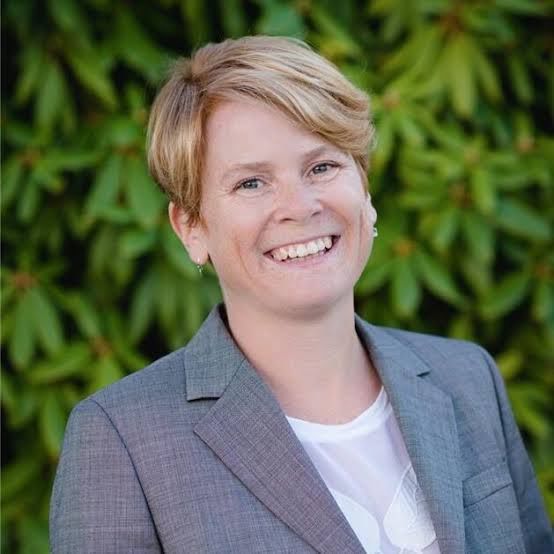
My Interview With Josie Osborne, NDP MLA for Mid Island Pacific-Rim
By Keith Porteous
I had contacted MLA Josie Osborne’s office requesting an interview, then attended her open house event at the Denman Activity Centre Lounge last week. I’m not a member of the B.C. NDP, but I am strongly opposed to the B.C. Conservatives, whom I view as dangerously far-right and racist. When I spoke briefly to Josie following the open house, she recognized me from my interview request, and agreed to speak to me by phone. Here’s the transcript of that call:
KP: You came to the Denman Island Activity Centre Lounge to have a conversation with residents, and the day before you were interviewed by CHFR community radio on Hornby Island. What did you hear from our Hornby and Denman Island residents as their top concerns and priorities?
Josie: First of all, I always appreciate the opportunity to be able to have these conversations with people on Hornby and Denman Islands, as I’ve always believed that the best way to represent people is spending time in the communities I serve to listen carefully and to build relationships. There are themes that have come up consistently over the 6 years that I’ve been the MLA, so it was no surprise to me when I was there for the election campaign that I heard a lot about affordable housing, about the impact of short-term rentals, about access to healthcare, about emergency responder services, protecting the natural environment that makes these islands very special, the governance structure of the islands, and why people care so deeply about these two islands, And that’s why it’s so important for me to hear from their perspective and what they are seeing and feeling, and what we can do better.
KP: The cost of living and the housing crisis are usually at the top of the list of local resident’s concerns, along with climate change, and the protection of our marine environment. Please share how your NDP government is different from the Conservatives on these issues.
Josie: There are very clear differences, both in our priorities, and what we’re prepared to do. On housing, the B.C. NDP believes that governments of all levels have important roles in making homes more affordable. That means investing in non-market housing. For example, 42% of all non-market housing in the last 5 years in Canada has been done here in B.C.. It means supporting community housing organizations. It means protecting renters and taking action against speculation that for far too long was left unchecked and drove housing prices up.
The B.C. Conservatives, and their predecessors B.C.United and the B.C. Liberals before them have consistently voted against the actions that we’re taking to curb speculation and support renters, and to better work with local governments to increase the supply of housing. And on Denman and Hornby we know that the conventional housing market doesn’t necessarily deliver the homes that people need, so that’s why partnerships with community organizations and non-profit housing providers are so important.
On the environmental side, I think the contrast is equally clear. Before entering politics I worked as a fisheries biologist on the West Coast, and protecting salmon, watersheds, and our marine environment is not a new interest for me, it’s absolutely part of who I am. And our environmental commitments include $30Million annually for watershed protection, $50Million to help permanently protect rare old growth forests, working towards protecting 30% of B.C’s land by 2030. and enacting the regulations and rules we’ve seen that help sustain and keep our environment in a condition to support us.
We’re also investing in clean electricity, helping people transition to more affordable lower carbon technologies, while the Conservatives have opposed important clean energy and conservation policies, and they oppose our nature protection goals. I know that as a government that we have not solved every problem. Housing remains too expensive and climate change is an enormous challenge before us.
But the choice is really clear. We either keep building on solutions, or we actually will see the dismantling of tools that helped us make the progress we’ve made so far. The B.C. Conservatives would no doubt take us backwards. I really believe we can protect the environment and we can create good jobs, and we can also make life more affordable and we don’t have to choose just one thing.
Working as a fisheries biologist on the West Coast of Vancouver Island I saw first hand what kind of difference First Nations and people made in advocacy to the Federal government and ensuring that we were listening to the science, and local and indigenous knowledge about herring stocks and the way we need to ensure fisheries are sustainable. It’s not just a decision we make across the coast, but we need to consider what local herring stocks are, and how we sustain them. Herring are a really important part of the marine food chain, they are food for salmon, they are food for whales. I really commend the advocacy we’ve seen from Gulf Islands communities for better herring management policy from the Federal government.
KP: I interviewed Federal NDP MP Gord Johns, and we spoke at length about unregulated ship-breaking and abandoned hulls on our coast, something that resonates deeply with local residents. Gord mentioned both you and CVRD Area A Director Daniel Arbour as part of a working group on this issue. Can you give us your perspective and a progress report?
Josie: This is an issue that I really care about deeply, and I’m thrilled with the partnership that Gord Johns and I have developed, and Daniel Arbour has been a very clear and consistent advocate in shutting down the illegal operations at Union Bay and pushing forward the kind of protections that we need to see because this is a serious problem on the coast. We have 100s of vessels approaching the end of their useful life, but we don’t have adequate facilities in B.C. to dismantle and recycle larger ships safely.
It creates environmental risks, particularly in sensitive marine ecosystems like Baynes Sound, but it also means we’re missing a huge economic opportunity. So that’s why Gord and I helped establish the Ship Recycling Leadership Group in Port Alberni last year. It brings together First Nations, local government, industry, labour, environmental organizations and other partners. The purpose of the group is to explore the potential to establish a world class ship recycling industry in the Alberni Valley with the highest environmental and labour standards, and we definitely have made progress.
This group has established two different work streams. One of them is looking at the regulatory requirements and the other is developing the business case. The Province has provided funding for the business case and is actively working with the Federal government around the regulatory framework that’s required to ensure that we protect the environment. One of the principles we’ve agreed to, and it’s important to emphasize, is that Indigenous leadership in decision making has to be central to this work. We need strong environmental safeguards.
We need community support and social licence, and we’ll need investment from the government and the private sector. If this is done properly, it can create skilled jobs, it can support marine industries, and it can help recover valuable materials and prevent pollution. The bottom line is that we should be able to protect our coast and build a sustainable marine industry at the same time. Those are the foundational principles that all coastal economic development should follow.
KP: Hereditary Wet’suwet’en and Gitxsan Chiefs have expressed that they oppose the Coastal GasLink Phase 2 expansions through their traditional territories. The government’s report on the RCMP’s surveillance and excessive force used on non-violent indigenous land and water defenders, has been delayed until after the election. What is your best guess for when we will see the full report?
Josie: First of all, this came up at the open house on Denman Island, and to me when an issue like this comes up it really is a sign about how much people care, not just about the world immediately around them on the island, but are thinking much more broadly about the Province and the directions that we’re headed. And I do understand why people are frustrated by the delay.
These are serious allegations that involve indigenous land defenders and policing and fundamental rights. And they really do deserve a very thorough and transparent examination. That investigation is being conducted by the Civilian Review and Complaints Commission for the RCMP, and that’s an independent Federal oversight body.
It’s my understanding that the report is complete, but there’ve been delays associated with the Commission’s leadership and the process that is required to finalize and release its findings. I cannot, obviously, speak on behalf of the Commission, so I don’t have a confirmed publication date, and I can’t speculate or give people an assurance that I can’t substantiate, but I do think that the report should be released as soon as the process permits.
And the public deserves to see the findings and any recommendations that come from it need to be taken very seriously because accountability and transparency are essential to public confidence in policing and that’s really important when we’re talking about indigenous rights and people’s freedoms to peacefully express their opposition to government or to industrial projects.
KP: To follow up, this also relates to the non-violent resistance to old growth logging at Fairy Creek and in the Walbran Valley and elsewhere. Can we count on the B.C. NDP to defend our right to free assembly and other Charter Rights on these issues, and an end to the RCMP and government committees’ coordinated surveillance of grassroots movements that oppose old growth logging and resource mega-projects?
Josie: People can absolutely depend on the defense of the right to peace assembly, to freedom of expression, and the right to challenge government decisions. These are things that are fundamental to our democracy, and they are rights that have to apply even when people are protesting decisions that are made by the government of the day. I’ve been involved in environmental issues and conservation work for much of my life.
I have seen firsthand and I understand just how strongly people feel about protecting old growth forests, about protecting watersheds and indigenous territories, and I also recognize there are legitimate and serious concerns about the way that some protests have been policed, and particularly involving indigenous land defenders. Police have the responsibility to protect public safety, and to uphold the law. But those responsibilities always have to be exercised within the Charter, and they have to have the appropriate oversight and proportionality and accountability.
My view is that peaceful environmental advocacy is not a threat to democracy, it’s actually a part of democracy. I don’t think people should be subjected to inappropriate surveillance just because they oppose an industrial project or a government policy, and where we see credible allegations of unlawful surveillance or excessive force they have to be independently investigated and addressed.
It’s really important to remember that indigenous rights involve more than the Charter. We have a Constitutional obligation to recognize and respect aboriginal and treaty rights, and I really want to see us move forward to an approach where we resolve difficult issues through genuine engagement and respect for indigenous decision making in our land use planning, rather than confrontation and Courts.
KP: There is a massive expansion of raw resource export mega-projects that create value added jobs elsewhere, but leaves B.C. with the environmental degradation as a subsidy to foreign owned corporations, and without the diversification of the economy that is desirable. How do we break this endless pattern?
Josie: This is one of the most important economic questions. For far too long we’ve relied on a model where we extract resources and we export them with relatively little processing, and then we buy back the finished products at a much higher price. It’s just not right. It means that we’re leaving those jobs and the skills and the economic value on the table, rather than benefiting from it.
I spent years working in fisheries and resource management and I’ve seen how resource dependent communities can experience those environmental impacts without receiving a fair share of long term economic benefits, or without having a strong enough voice to prevent some of the environmental harm that we’ve seen. I really want B.C. to be a place where we don’t just produce those raw materials. We take advantage of the strengths that we have and the natural resources that we have, but we need to make more of those finished products too.
That means supporting more value added wood manufacturing, supporting marine construction and repair, sustainable ship recycling that we’ve talked about, and food processing, clean tech and advanced manufacturing. Fundamental to this is building a stronger clean energy economy. Our electricity is something that gives us a tremendous economic advantage, a competitive advantage here in B.C., especially when there are businesses in countries around the world that are looking to reduce their emissions.
We have to make sure in this work that First Nations are genuine economic partners, and that they have all the opportunity that everyone else does in ownership and revenue sharing and in decision making. I think a lot about the importance of diversifying the economy. I don’t think that means abandoning our natural resource industries, but I do think it means getting much more value from them, processing more here at home, making sure B.C. receives the lasting benefits.
KP: The Islands Trust mandate is to preserve and protect the unique amenities and environment for the benefit of Trust Area residents and all BC residents (emphasis added.) Why does the Province of B.C. not provide direct funding to support Islands Trust, with its modest budget raised only from taxing Trust Area residents?
Josie: That’s a fair question. The Province does provide some funding to the Islands Trust annual budget, some grants, but it is a relatively small portion of the overall budget. I think it’s just under 2%. I mean honestly, that is a pittance. The vast majority, like you said, of the operating revenue, is almost $12Million a year in terms of local property taxes.
This, I think, creates a real challenge for island residents because of the costs of providing these services and responding to the increasingly complex planning and environmental issues that we have before us. Those costs continue to grow. That’s why I think there’s a very legitimate question here. Does the funding model adequately reflect the Provincial interest in protecting the Trust Area?
The Islands Trust has a unique mandate in British Columbia, and Canada, and as a Vancouver Island resident, as a former Minister of Municipal Affairs, I can absolutely and honestly say that far too few people in B.C. know about the Islands Trust Act and its mandate, established to preserve and protect the environment and amenities of the Trust Area, not just for island residents but for all of British Columbia, and that’s the really important distinction. The benefits of protecting these incredible islands extend well beyond the people who live here year round, and I think we have to recognize the important work that the Trust undertakes on issues like freshwater sustainability, on land conservation, on reconciliation and land use planning.
The rest of B.C. can learn a lot from what the Islands Trust is doing. It’s reasonable to ask the question, is the balance right between Provincial funding and local property taxation, and is it appropriate for an organization to accept the distinctive Provincial mandate? I really welcome this conversation with Islands Trust leadership and with my colleagues in government about what a more effective partnership might look like. I think that protecting the islands is a responsibility that we all share, and I will certainly continue to advocate, as I did back when I was Minister of Municipal Affairs, for a fresh look at this because I think it’s the right thing to do.
KP: MP Gord Johns has been mounting a Fair Ferry Funding campaign, and he was recently here to rally support. The East Coast ferries receive vastly more Federal funding per passenger as compared to B.C.. As the newly appointed B.C. Minister of Finance, what are your thoughts, and do you think B.C. can leverage higher Federal funding levels for B.C. Ferries?
Josie: First I’ll say just how strongly I support Gord’s efforts on this. He has identified a genuine inequity in the way that transportation is funded across Canada, and I know that people who live on Denman and Hornby Islands know that ferries are not just a luxury, they are part of an essential transportation network, part of a coastal highway just like regular asphalt highways and bridges.
B.C. doesn’t receive anything close to the level of Federal operational support that’s provided to some of the ferry services in Atlantic Canada. Gord’s campaign estimates Federal funding at approximately $291 per ferry passenger in Atlantic Canada compared to $1.26 here in B.C..That’s a major disparity. I think the principle here, and it’s very sound, is that people in coastal B.C. are Canadian taxpayers too and we deserve fair treatment.
I also see the issue through another lens and that is that ferry services involve enormous ongoing operating costs, and also major capital investments. We have an aging fleet here in B.C. and we have growing demand for the service so obviously these costs aren’t going away. Fair Federal participation could help relieve pressure on fares, a huge issue, in this affordability crisis that we’re experiencing, and really help us with strengthening the reliability that we need to see so that ferry dependent communities aren’t carrying an unfair share of the burden.
Our Minister of Transportation and Transit, Mike Farnworth, has been working with and speaking to the Federal government about these issues. A lot of that conversation happened just before the election was called, and we’ll see what happens with the Federal government’s Fall economic statement. I think there’s a very strong case here for Federal investment and I’ll keep working with Gord and with other coastal representatives to advance it. This is where we should be working together as Provincial and Federal governments, regardless of our political differences, and to do something that’s right for people.
KP: Do you think B.C. Ferries has improved as a result of its conversion from a Crown agency to an entirely publicly owned private corporation? And further, given the extensive government discussions relating to domestic shipbuilding, can we expect that ferries will ever be built in B.C. again?
Josie: That’s a great question. I think it’s very fair to question whether the current governance model has delivered everything that British Columbians need. I’m sure your readers will recall that B.C.Ferries was changed from a Crown Corporation to an independently operated commercial company way back in 2003 under the former B.C. Liberal government. The argument at that time was that the change would support more stable investment and that it would remove some of the political uncertainty around long term decisions.
Here we are more than 20 years later, and people in ferry dependent communities are still dealing with unreliable sailings, and with affordability concerns. They’re looking at the constraints of the fleet in terms of its capacity, and have a lot of serious questions about the future of the service. I’m not sure we should judge the model by its corporate structure. We need to judge it by whether it’s delivering the reliable, affordable ferry transportation that people need. It’s obvious that there’s room for improvement.
As far as shipbuilding goes, we have to see more of that work happening here in B.C., and David Eby has been very clear about that too. I know that there’s been a ton of frustration surrounding the decision to build the 4 new major ferries overseas and we’ve heard B.C. Ferries explain issues around shipyard capacity and technical requirements and price and delivery schedules, and those are very real considerations.
But the jobs and the industrial capacity that are needed here at home are also serious considerations. We do have talented trades people and shipyard and marine engineers. We have a strong maritime history, and David has made that commitment. To build ferries here in B.C. we need to build, and we will build, that industrial capacity to make us a competitive and reliable option here. It’s an economic development opportunity and it’s incredible jobs for people, and something that B.C. has to do.
KP: Can the future B.C. NDP expand its voter base with a return to a more openly democratic socialist platform, with a stronger green agenda, or are more centrist policies the Provincial NDP’s preferred position, believing it’s a strategic bulwark against the Conservatives?
Josie: I have always believed that the NDP is at its best when we are grounded in our values and that we’re focused on making a real difference in people’s lives. For me, and the reasons why I’ve chosen to run with the B.C. NDP, these values are straightforward. It’s about fairness, equality of opportunity, strong public services, environmental stewardship, reconciliation, and ensuring that working people, average everyday people of this Province share in the prosperity of our Province. Those are our progressive values and I don’t think we should ever shy away from them, and we should never apologize for them, but I’m also a practical person.
I believe strongly in the importance of being practical and getting things done, and I didn’t enter politics because I wanted to spend a ton of my time debating ideological labels. For example, I came here because I really want to make positive changes for people in their lives, and to help protect the environment for future generations. Throughout my career, whether I was the Mayor of Tofino, or serving as a Provincial Minister, I have really found that the most enduring and lasting progress comes from bringing people together and building those partnerships and turning the values that we have and that we share into action.
We need to be ambitious, especially when it comes to the environment. Climate change and biodiversity loss are not abstract concerns, they affect our communities right now. At the same time, we need to bring workers and businesses and First Nations and resource communities along in the transition that we’re experiencing as a society. I don’t think that having a strong economy and having a fairer society are opposing objectives, and I’ll always go to the mat to defend public healthcare, affordable housing, quality public education, and environmental protection, because these are planks that are fundamental to the kind of productive and healthy economy that we need to raise our families in.
I don’t want to frame this or see this as a choice between being progressive and being electable. I am very alive to the democratic system that we have and the way that it operates, for good and for bad at times. I think our task will always be to be really ambitious in those values and be practical with solutions and then be held accountable for our results.
Here we are in an election and this is the time to have that conversation about accountability and I want to keep building that broad coalition of British Columbians that we need, and we need under the B.C. NDP to help keep moving our Province forward. I don’t think that the NDP wins by trying to become a slightly different version of the Conservatives. We win by demonstrating that progressive governments can deliver better lives for people and a healthier environment.