
When Deer Become Too Numerous: The Hidden Ecological Crisis on B.C.’s Gulf Islands By Keith Porteous
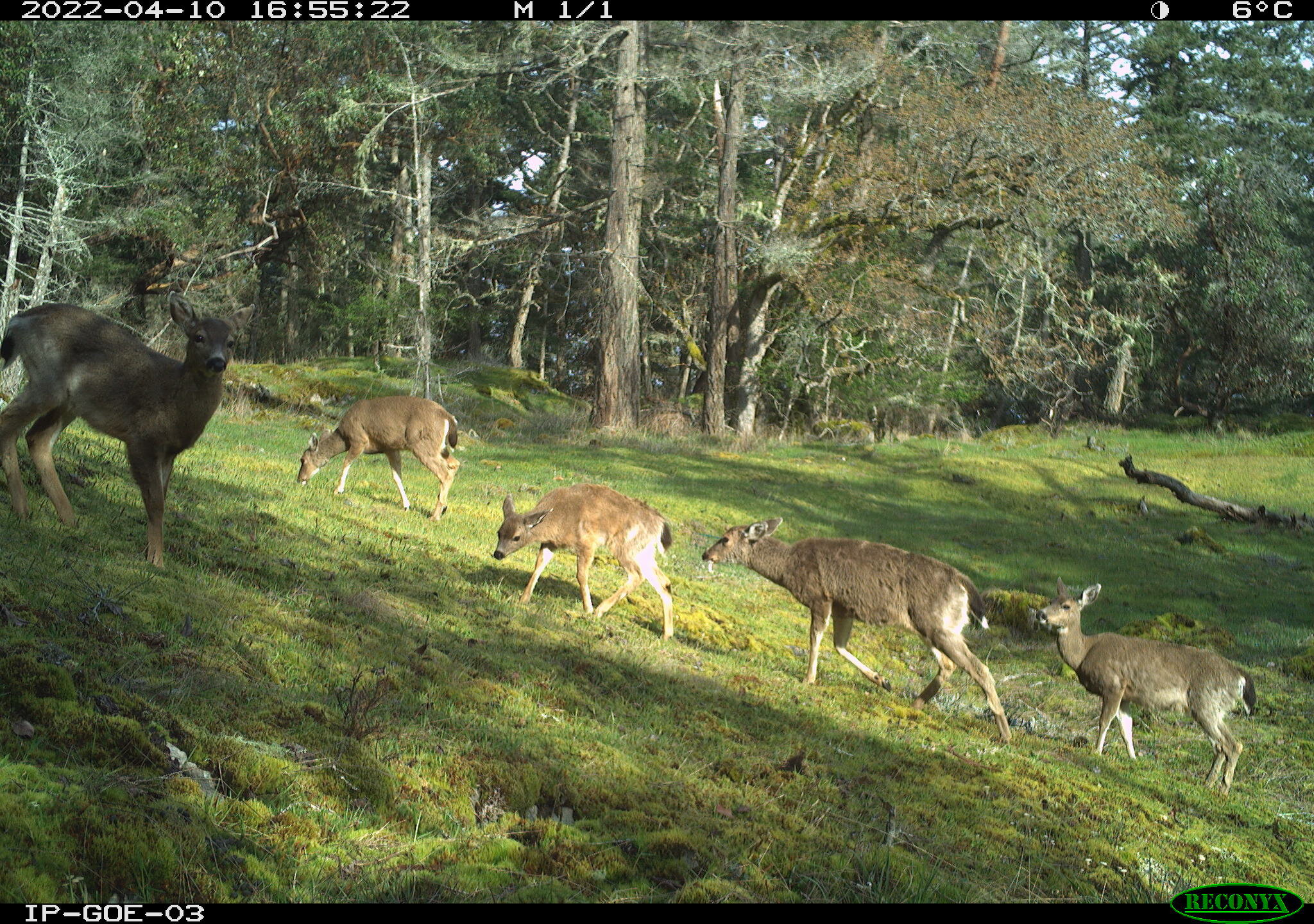
Black-tailed deer are a familiar sight across British Columbia’s Gulf Islands, where their presence is regarded as an emblem of the natural world. But research led by Dr. Tara Martin of the University of British Columbia suggests that a “hyper-abundance” of deer conceals a serious ecological crisis.
Martin’s research has found that black-tailed deer populations on the Gulf Islands have increased dramatically, with estimates suggesting they are up to ten times more numerous than a century ago. Reduced hunting, the loss of natural predators and human changes to the landscape have created conditions in which deer populations grow beyond what local ecosystems can sustain.
The consequences extend far beyond gardens and roadside vegetation. Intensive browsing prevents young trees and shrubs from regenerating, reduces native wildflowers and alters the habitat available to other wildlife. A 2022 study co-authored by Martin found that hyper-abundant deer were associated with declines in flowering plants, particularly native species, and indirect negative effects on female bumblebees.
The findings reveal an ecological chain reaction, where fewer flowers mean fewer resources for pollinators, with serious implications for the wider web of life. Among the most vulnerable habitats are the endangered Garry oak ecosystems, whose meadows once supported rich communities of native plants. When deer consume vegetation faster than it can recover, protecting land from development alone will not be enough to restore its ecological health.
Martin’s more recent research, conducted with Coast Salish Nations and other collaborators, points toward Indigenous-led hunting as a particularly effective and cost-efficient approach to managing deer numbers while supporting cultural relationships with the land. The research emphasizes that meaningful conservation requires both ecological evidence and Indigenous knowledge.
The uncomfortable lesson is that a landscape can look green, peaceful and abundant while quietly losing its biodiversity. Deer are not villains, they are native animals responding to conditions that settlers have created. The responsibility for addressing the imbalance therefore rests with settler communities.
Dr. Martin has worked with indigenous led groups and Islands Trust on pilot projects to study and restore the “understory” of Gulf Island forests. Locally, the Denman Conservancy Association has initiated a controlled study of the impact of hyper-abundant deer. Indigenous led workshops are contemplated for Denman.
The question facing the Gulf Islands is no longer simply how to protect deer, and restore their numbers to health, but how to restore a balance in which deer, native plants, pollinators and forests can thrive together. Doing nothing is also a management decision, and one with severe and lasting negative consequences.