Gabriel Jeroschewitz, September 8th, 2026, dedicated to Joe Cocker and the rest of us who suffer from outrageous panic and anxiety attacks. From the memory I had from a conversation with Sylvia Tyson in their kitchen. Late one evening, early in 72
Was it really Joe?
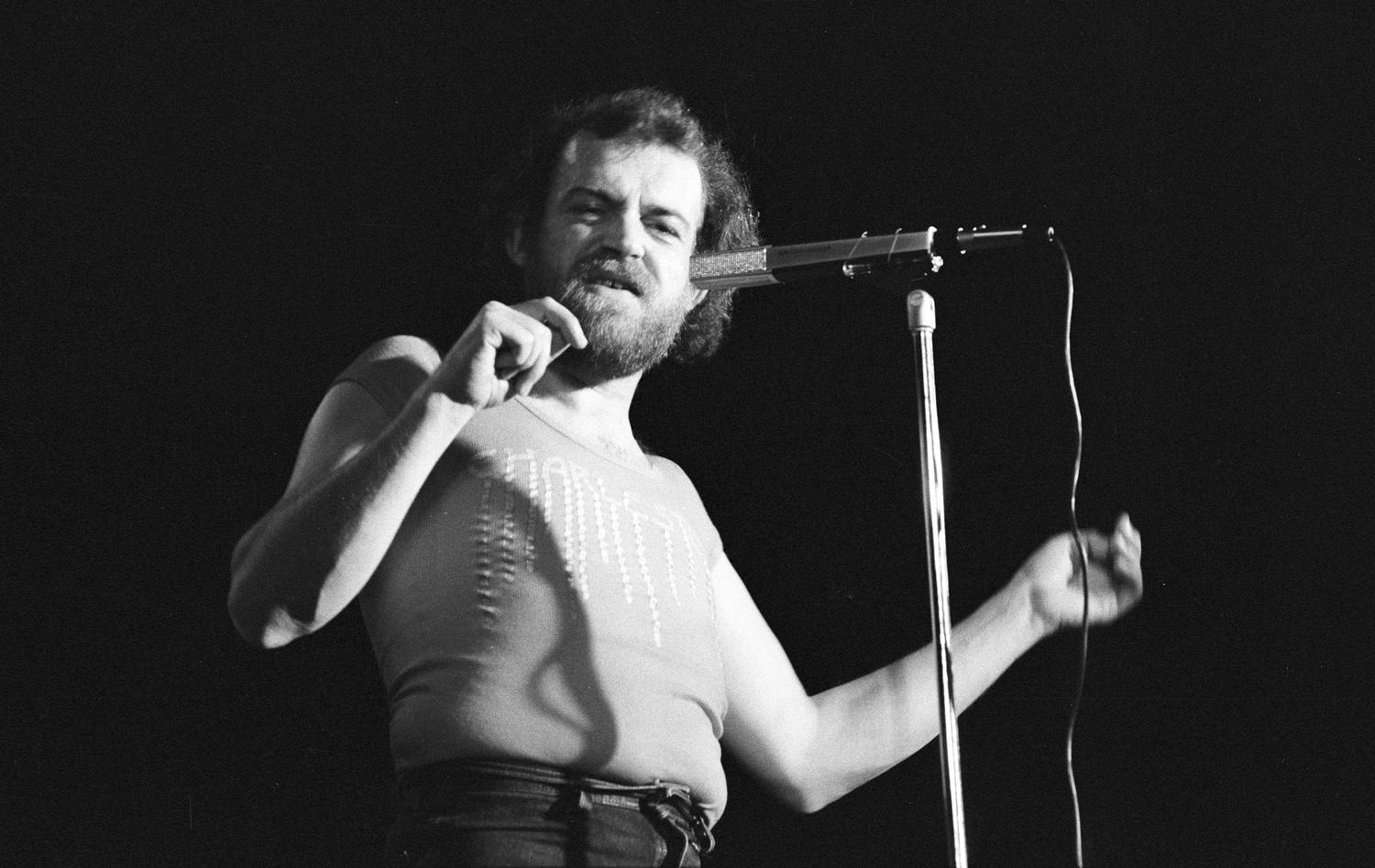
The spotlight wasn’t a light; it was a biopsy lamp. Sitting in the back of Madison Square Garden in ’72, beholding Joe Cocker performing With a Little Help From My Friends as if he was extracting it from his very soul with a wet dishrag. There were twenty thousand people in the stands, roaring like a tsunami of support. On the back of the stage, Joe was trembling and sweating. His fingertips were white at the edge of the soundboard. His eyes were closed not in ecstasy but in the effort not to disappear. He did not appear like a rock star at all. He appeared more like someone trying to recite Shakespeare during a colonoscopy. The roar reached him, and for three glorious and frightening minutes he became the song. A raw and shattered thing channeling all of the suffering and grit of decades from Sheffield into the song. Then the final note stopped, and the roar did not accompany him off stage. Instead, it met a concrete wall and perished. What remained was the terrifying silence of what was left of the man.
I’d been his part-time sound man, not because I was particularly skilled at anything, but because I was able to tie a cable without it getting knotted up, and I never asked too many questions about the “vitamin B shots” that the tour manager gave Joe prior to each performance that appeared to be the same stuff used in hospitals for morphine. The problem was not that the treatment was worse than the illness, but that they were treating the illness as the performance. Joe’s crippling shyness and sense that his singing voice was an attempt at deception were not a problem that needed solving. It was the engine. The gritty quality of his voice and the physical reaction to a high note in his singing were not part of the performance. It was fear. The audience took this physical reaction as soul. They did not notice the panic attack in progress behind the sound technician’s monitor. You could see the tightness in his grip on the monitor as he bit his fingernails into crescents in the metal. He was holding his breath in hopes that he wouldn’t choke up during the middle of a lyric. The pressure of stardom did not alleviate his fear; instead, he employed a group of clowns wielding chainsaws as he attempted to sing lullabies.
The clowns were helpful. Oh, they were helpful. Following a night in Detroit ’74 that was shaky at best, Joe came off stage in a state of white as sheet music and began vomiting into the trash can behind the amp rack. No water. No comfort. Instead the tour manager handed Joe a small vial. For the nerves. Keeps you sharp. Joe stared at the vial, then at his own hands beginning to shake. He gulped the contents like holy communion. The following night, Joe was fiery. Twisting his hips, he uses the mic as if it were a guitar. The fans embraced this new energy. Some months later, I saw Joe at a show. His jaw was clenched and I thought it might break from the tension. He was staring into the image provided by a blacked out monitor. He was not seeing the performer but rather the person that the drugs had borrowed his body for one hour. The enablers were not the problem. They were fulfilling their role. Keep the product on stage. The person? The person could wait or break. Whichever happened first.
Into the late seventies things were not a hint off the rails but a foghorn. Tie my own shoes with the only thing that kept the internal scream in his head at bay was heroin. He would fall asleep in the middle of a sentence in a limo. He would wake up in a hotel room in Vegas at 3 AM, shaking, with a racing heart from fear of withdrawal and the threat posed by the performance the following day. The money in the bank, the gold records collecting dust in never-opened cabinets – none of this was protection. It was an anvil. Every award added to the cacophony: You fooled them once more. How long before they catch on to the con? The stage was not there to highlight his ability but rather to highlight his fear. Every stumble, every incorrect note, every moment he needed to regain composure prior to performing was an admission of insecurity under the bright lights.
And then there was Pam. No groupie. No hanger on. No one who wanted backstage access to the star. A landscape architect from Boulder who had walked into a small club in Denver where Joe was playing a low-key benefit. His voice was cracked but true. She saw him after the show. The man, hunched in the back booth, shoulders attempting to retreat into the softness of his leather jacket, head lowered and hands clenching a soda water in both hands as if it were a crutch. She asked about the pie. She did not ask for a signature. He looked at her, surprised. “Nah. Tastes akin to regret.” She laughed freely and sat in the booth. She related how her roses were tenacious and the Colorado wind attempted to crush them each year. He related how his hands would shake so much that he often could not even hold a teacup. No one had ever asked about the teacup.
Love wasn’t like a car fix. It was more methodical. It was Pam refusing him the keys when he was too glassy to drive. It was Pam making him tea at 4 AM during nightmares, not a problem with his hands as he reached for the tea. It was Pam pushing them to leave LA that night after he nearly drowned in his own vomit while back on stage in ’79. They moved to a run down ranch outside of Telluride. No bus. No studio. Just dirt and dogs that didn’t care about his good or bad and a piece of land that declined to be ignored.
I went to see them once two years in. This wasn’t Joe Cocker, Rock Legend. This was Joe. This was the man who rose with the sun to feed the chickens; the man who could struggle out of the mud with his tractor; the man who taught Pam how to trim the apple trees with a gentleness that left me breathless. His tomatoes were so sweet they caused tears from the eyes. He had his old dog, Blue, and walked the farm with him, chatting with the pines and the rocks as if they were long time chums. I saw him one afternoon kneeling in the vegetable garden, not singing, not performing, but softly coaxing a resistance from a carrot in the ground. His hands were strong, dirty but still. I approached and instead of going into performance, he simply wiped the sweat from his forehead with a dirty hand and said, “Hell of a thing, ain’t it? I’ve known dirt for fifty years and it never lies.” He didn’t need the roar to be authentic. The silence was the proof. The adoration he’d been after all these years was not in the screams of the fans but in the calm certainty of Pam’s hand in his at the kitchen door, or in Blue thumping his tail against Joe’s boot as he sat on the porch at dusk for the first, first time in peace.
He went back to music not by necessity but by choice. His voice was still there, weathered but intact, singing from the ground now rather than for the throne. He recorded in a converted barn while Pam cooked soup in the kitchen. No shots, no enablers. Just the sound of a man who had stopped fighting himself long enough to catch the note.
Joe died peacefully at home in 2014. He was surrounded by the women who saw him and the dogs that he adored. There was no last show or last tour. He finally let go of the burden of performance. He took his deep breath and passed quietly.
When Joe died they reported that great musicians came to greet him. Not only the rock stars, but the Bedouin singers under the desert nights, the blues singers who turned their pain into mud in Mississippi, Ludwig van Beethoven beating his deaf piano, Mozart writing by candle light, and thousands of angels playing harps in A-flat. But Joe did not stand in their presence and ask for recognition with his hat in his hand. Instead, he sat with Muddy Waters on a sun warmed piece of rock. Muddy handed Joe a jug of smoky liquor and said, “Son, you finally stopped shaking long enough to hear the groove.” Joe drank from the jug and voiced a low baritone note into the wind of Colorado. This was not a request for recognition. This was a dirty, beautiful note of thanks to the universe for allowing him to be. The shout that Joe chased throughout his life was not the answer. Quiet was. And for the first time, it was enough.