Gabriel Jeroschewitz, February 2nd 2026,
The Fig Tree of the Unending Afternoon
I arrived in the Garden not because I believed, but because I was invited.
Invitations are rare in my life, and rarer still when they are written in gold ink on vellum smelling faintly of burnt honey. It was signed The Son of Man, though I suspected the handwriting belonged to a parish secretary with a fondness for unnecessary loops in her capital letters.
The Garden was not Heaven, exactly. It pretended to be. The sky was a lavish smear of violet and coral, always the same hour, as though the sun had forgotten how to move. Angels—both male and female—wandered about without clothing, utterly unconcerned, playing elaborate games of chase among the roots of the great Fig Tree of Life. They were beautiful in that annoying way beauty can be when it is confident of its own permanence. Their skin caught the light like polished bronze, and their laughter was a thin silver thread that stitched the air together.
I had expected hymns, incense, perhaps the stern architecture of virtue. Instead, there was a smell of figs and wine, and the angels were constantly running away from one another, sometimes stopping to wrestle in the grass, sometimes kissing with a seriousness that made me look away.
The Son of Man was seated under the Fig Tree, wearing nothing but a crown that seemed to have been carved from the bones of extinct birds. He gestured for me to sit.
“You’ve come late,” He said, in a voice that was both kind and sharp. “The cities of Israel are nearly walked through. I told them they wouldn’t finish before I returned, and here I am—right on time.”
I looked at Him and thought about the faces of those who had waited for centuries. “It’s been more than a lifetime,” I said.
“Yes,” He said. “Time is flexible. I meant ‘soon’ in the way figs mean ‘ripe’—which is to say, whenever the fig chooses.”
The angels behind Him were playing a game of stealing one another’s halos and tossing them into the Tree’s branches. The halos hung there like moons caught in a net.
“You told them not to worry about tomorrow,” I said. “They stopped planting trees, stopped repairing roofs. Some died with nothing but the clothes they wore.”
He smiled. “What use is tomorrow if you own today? They misunderstood the symbolism. Tomorrow was a metaphor for the unnecessary.”
“And Hell?” I asked.
At that, His smile thinned. “Ah, Hell. You disapprove.”
“I think everlasting punishment is an indecent invention,” I said. The angels had stopped their game and were listening now, their nude bodies gleaming with sweat and fig sap. One, a tall woman with hair like spilled ink, leaned against the tree trunk and smirked.
“It’s not punishment,” He said. “It’s theatre. Did you not notice how much people enjoy imagining other people in trouble? Hell is an opera—endless arias about regret. The damned are the actors. The saved are the audience. The scenes repeat. Nobody actually suffers—at least not in the way you think. They perform suffering.”
“That’s monstrous in its own way,” I said.
The Son of Man shrugged. “Monstrousness is part of the art. Without it, the moral architecture collapses.”
One of the angels, male, with the face of a young soldier, approached us. “Master,” he said, “the wailing chorus is ready. Shall we begin?”
“Later,” said the Son of Man. “We have a guest who doubts.”
“I don’t doubt everything,” I said. “Only the fear you’ve sown. The sin against the Holy Ghost—do you know how many people have lived in misery thinking they committed it?”
He leaned back against the roots of the Tree. “The Ghost is the most fragile symbol. To speak against it is to fracture the grammar of the cosmos. Those who do so fall into silence. And silence, my friend, is the only unforgivable state. Without speech, there can be no meaning.”
The soldier-angel laughed and began chasing the ink-haired one again. Their bodies flashed between the leaves. The Fig Tree itself seemed amused, shaking down fruit that landed with a wet thump.
“You enjoy wailing and gnashing of teeth far too much,” I said.
“You enjoy watching it,” He replied. “Your disbelief is just another form of attendance. Without critics, theatre dies.”
The angels had now gathered around us, forming a circle. Some lay on their backs in the grass, idly touching one another, their eyes fixed on me. Their games were constant, yet they listened.
“I wonder,” I said, “what happens when the last believer dies. When there is nobody left to fear Hell or hope for your return.”
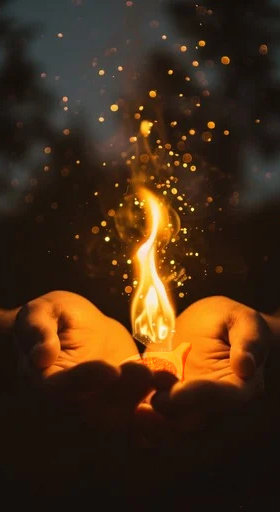
The Son of Man picked a fig and split it open. Inside was not flesh but a small, perfect flame. He held it out to me. “When the last believer dies,” He said, “the Fig Tree will close its leaves. The angels will be free to wander beyond this sky. And I will go to sleep.”
“Forever?”
“Or until someone reinvents Me.”
I hesitated, then took the flaming fig. It did not burn, but I could feel it humming in my hand. “Why invite me here?” I asked.
“Because you are an observer,” He said. “Observers are the only ones who see the patterns—the semiotics, as your philosophers call them. Believers are blinded by the literal. They think the angels are symbols of purity. You see them for what they are—joy without purpose.”
At that moment, the ink-haired angel darted forward, snatching the fig from my hand. She bit into it, and the flame vanished. Her lips glistened. “Purity,” she said, almost laughing. “We were pure before He was invented. We’ll be pure after He’s forgotten.”
The Son of Man looked at her with something like irritation. “Run along,” He said.
She did not. She lay down in the grass beside me, smelling of figs and warm air. “We run because there is no arrival,” she whispered. “We play because there is no work. And we kiss because there is no death.”
I looked at the Son of Man. “She makes more sense than you.”
He nodded. “That is another defect in my teaching. I underestimated angels.”
The soldier-angel had climbed the Fig Tree and was shaking its branches until fruit fell like rain. The ink-haired one laughed and rolled onto her back, catching figs in her hands.
“So,” I said, standing, “I’ve seen your Garden, your Hell-as-theatre, your angels without shame. I see the symbols, but I also see the flaws. What am I to do with this knowledge?”
The Son of Man shrugged. “Tell it as a story. Make it surreal so that no one will mistake it for doctrine. And make it amusing, so they will forget to be afraid.”
“And if they don’t forget?”
“Then plant a tree in your garden,” He said. “It will outlive their fear.”
I left the Garden without ceremony. Behind me, the angels resumed their games, running under the still sky, their bodies moving like punctuation marks in a sentence too long to read. The Fig Tree swayed, heavy with fruit and symbols. Somewhere in its branches, the halos still hung, waiting for someone to reclaim them.