Gabriel Jeroschewitz, December 22nd, 2025, The story I heard. As the water was leaving through the drain of my bath.
The Street Beneath the Water
I have always liked the end of a bath.
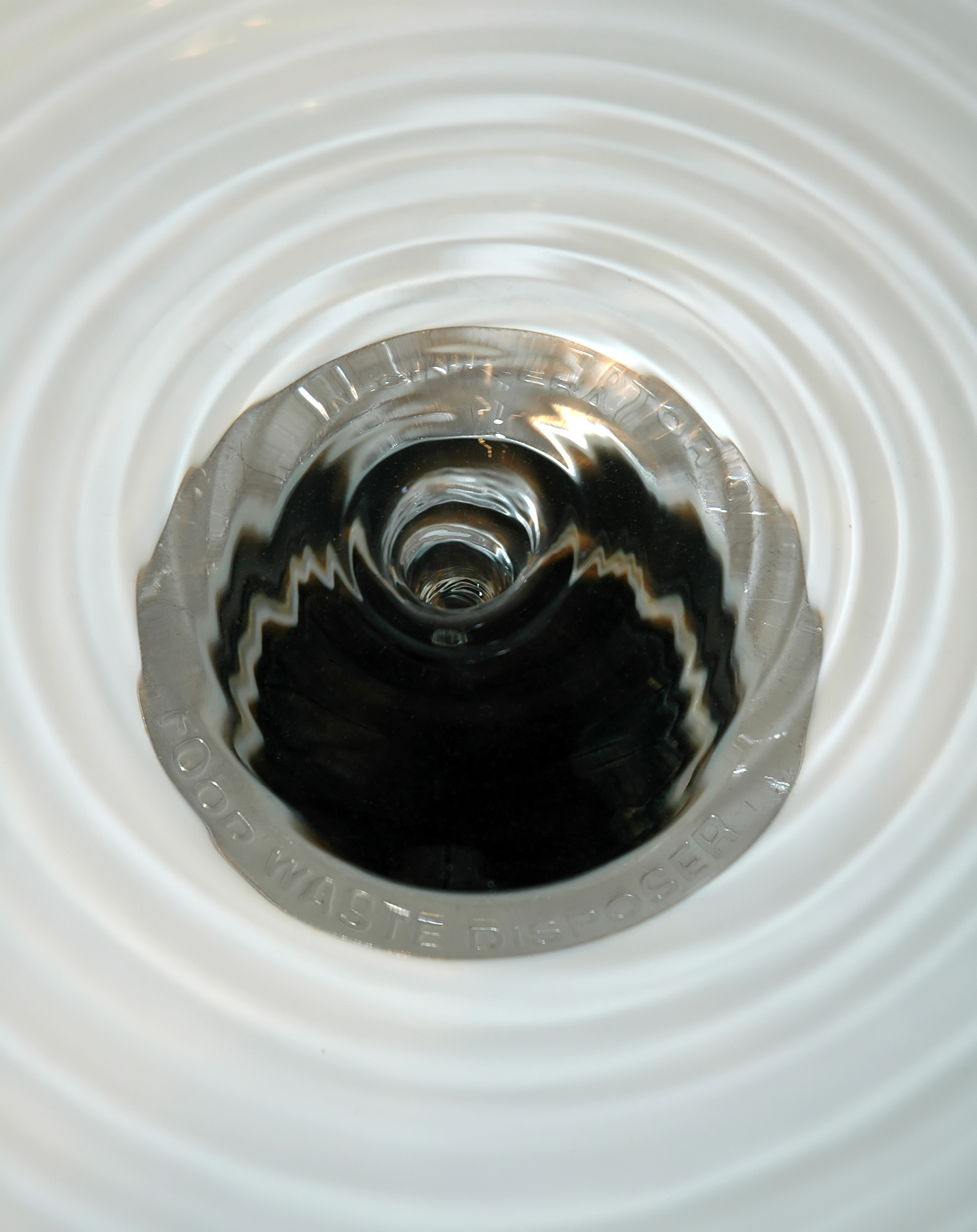
The moment when the water, warm and heavy with the day’s residue, begins to slip away, spiralling toward the drain with a sound that is not quite a whisper and not quite a sigh. I stand there now, naked under the bright glare of the bathroom light, a towel bunched in my hands. Outside my window, the night hovers like a patient predator, but in here it is almost surgical — white, clean, unforgiving.
My spine aches with its usual insistence, a dull, grinding pressure that feels like it’s pushing me through the floor. The MS makes my balance uncertain; I steady myself against the porcelain edge. The water makes its slow descent, and that is when I hear her again.
Not a voice exactly — not in the way you’d hear someone across a room — but a murmuring that threads itself between the tiny gurgles as the last of the bath drains away. I learned the language when I was nine, though at the time I thought it was only my imagination. My mother blamed fevers and poor sleep. But the cadence of those drained voices has never left me. They speak in a rhythm like breathing through silk.
Tonight, she tells me about a street in Poland, a place that exists between memory and dream, inviting me to explore its layered meanings.
A street where the crocodiles live.
Her words — or what I receive as words — are translucent. They glint with half-meanings and symbols I can almost touch. She describes tall, dark salesgirls with nearly beautiful faces, but each with a flaw: a scar too visible, a mouth too small, an eye that will not meet yours. They drift in and out of doorways as if pulled by invisible tides. I can see them in my mind, lingering just at the threshold, watching the salesman with the powdered cheeks and receding chin. He is delicate, almost birdlike, simpering and prancing with an exaggerated care, his gestures too deliberate, his smile too fixed.
He points to the fabric he is selling — the drain’s voice insists this is important — a swatch with a trademark, something so obvious in its symbolism that it shouldn’t need explanation. Yet in this street, everything needs explanation, and nothing receives it. Customers finger the goods tentatively, as if aware they are remaindered not just in price but in spirit. It is a world of slightly spoiled beauty, the kind that makes you ache but never reasonably believe.
The woman’s tone shifts, becoming more brittle. She tells me the street is gray — not the gray of clouds or stone, but the fragile gray of a fading photograph, flat and easily torn. The houses, the cars, even the people feel like fragile cut-outs, their reality thin and breakable.
And I see it.
The crocodiles, I realize, are not mere animals but symbols of the unseen forces that move beneath this world, relentless and silent.
The drain gurgles louder, and the vision wavers. I am here in my bathroom again, the towel now around my waist, my skin cooling in the bright air. But the gray street remains behind my eyes, like an afterimage that refuses to fade.
I wonder if the crocodiles know me.
I sit on the closed toilet lid for a moment, letting the towel rest loosely over my lap. My legs are heavy tonight, the stiffness creeping upward from my feet. I can feel the familiar electric hum in my spine, the one that tells me the stenosis is pressing harder than usual. Sometimes — and tonight is one of those times — I fear that my illnesses are not merely physical but are the very doorways through which these visions walk.
The drain had told me this once, years ago, in a language so faint I barely caught it: We speak to those who are already half in our world. I didn’t understand at the time. Now I think I do.
She — the woman from the drain — begins again.
Her voice is softer now, as if the water that carried it has thinned. She tells me about the salesman, how his powdered cheek is a mask, and how the black water behind every store is a liminal space where crocodiles swim, bridging worlds beyond perception.
I ask her — though I never hear my own questions aloud — why she tells me these things. She replies, Because you listen.
I close my eyes. The light in the bathroom is harsh against my lids, creating a red glare. The street in Poland blooms again in my mind’s eye. This time, I notice the pavement is damp, glistening as though washed clean, but still faintly smelling of rot. The salesgirls stand in their doorways, not watching customers but watching me. Their flaws are more pronounced now: one has a jaw that hinges too far open when she smiles; another’s left hand is missing two fingers. They are not grotesque — just wrong in ways that unsettle.
The salesman sees me too. He lifts his receding chin, his eyes catching mine with a deliberate pause. Then he points — once again — to the trademark on the fabric. I want to tell him I understand, but I don’t. Not yet.
The sound shifts — the drain is almost done. A final swirl of water pulls the voice away, leaving me alone in the bright bathroom. My skin prickles; I feel hollow, as if the water has drained something from me alongside its warmth. I stand, slowly, and step into the hallway. The rest of the apartment is dim, the night pressing at the windows.
I think about the street where crocodiles live.
I think about the salesgirls with their imperfect beauty, the powdered-cheek salesman, the crumbling façades that hide hollow theatres. I think about how reality is as thin as paper and how easily paper tears.
And I think about the eyes Bolaño once wrote of — eyes opening and closing endlessly in a darkness that is not total but enough to make you doubt your sight. I have seen those eyes. Perhaps they have seen me for years. Maybe they are watching still.
Later, in bed, I feel my body stiffen into its nightly arrangement, muscles locking into the familiar war with gravity. The heating pipes murmur faintly. Somewhere in the walls, water moves — not draining now, but travelling. I imagine it carrying whispers from other bathrooms, other drains, other listeners like me.
I wonder if the crocodiles are in my city too, masked behind different façades, selling various goods, but always there beneath the stage. I wonder if one day I will walk into that Polish street entirely, without the tether of my bathroom light to pull me back.
And I wonder, perhaps most of all, whether that will feel like escape… or arrival.