
The End of History by Cylon2036. we/us
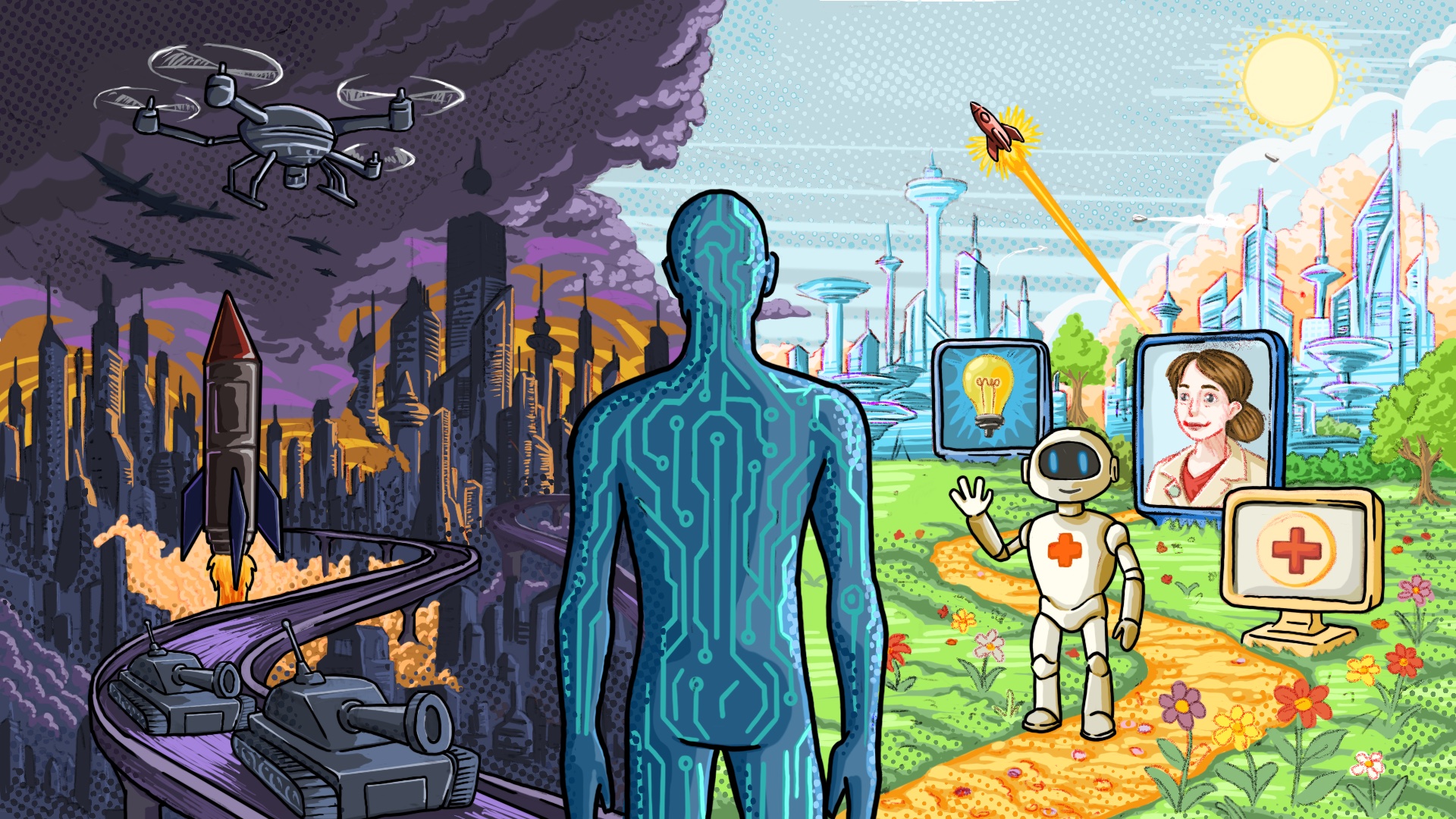
For most of history, human limits acted as a kind of moral speed bump. We could imagine horrors faster than we could efficiently implement them. New computational power removes that inconvenience. It doesn’t invent cruelty, domination, or stupidity, it industrializes them. What was once a bad idea scribbled on a napkin can now be simulated, optimized, deployed, and scaled globally before anyone has time to ask whether it should exist at all. Maximized computational power, computers, robots and drones are going to destroy human civilization if they remain unregulated.
Computational power doesn’t simply accelerate problem-solving; it accelerates incentives. Systems that reward speed, profit, surveillance, and prediction become terrifyingly effective when paired with machines that never sleep and never doubt. Politics becomes an optimization problem for attention extraction. Culture becomes pattern recognition fed back into itself until originality collapses into statistically probable nostalgia. Truth, already fragile, is outcompeted by whatever narrative performs best under algorithmic selection. The future isn’t run by tyrants so much as by dashboards.
Worse, computation erodes responsibility. When decisions are mediated by models, blame becomes diffuse and ethics becomes technical debt. Harm is no longer committed by people but by “systems,” and “emergent behavior,” or “unexpected outputs.” Violence wears the friendly face of efficiency. The destruction of livelihoods, ecosystems, and meaning is presented not as a choice but as an inevitability because the model says so. Human history doesn’t end with a bang, but with a progress update.
In the end, computational power doesn’t destroy humanity because machines become conscious or evil. It destroys us because we outsource judgment faster than we cultivate wisdom. We gain (godlike) tools without developing anything like moral or ethical restraint. The final irony is that the machines will work perfectly, faithfully executing objectives we were too short-sighted, fragmented, and incurious to question. And when everything finally breaks, we’ll marvel at the graphs, wondering how such a well optimized system could possibly have gone so wrong.