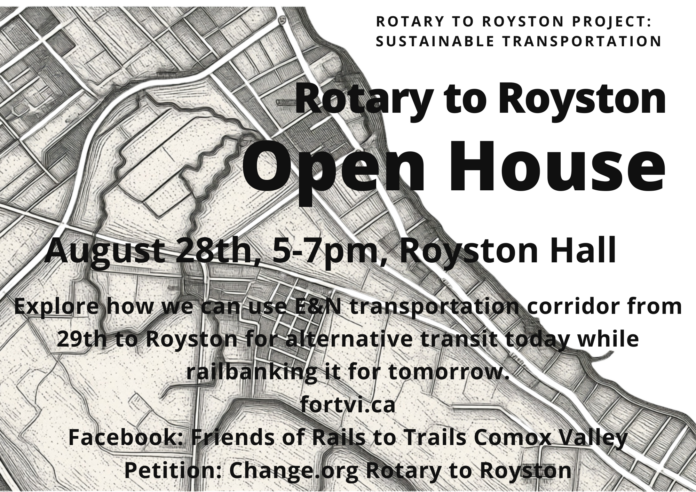
ADIMS Annual Denman Island Beach Cleanup

Denman Community Choir’s Spring Concert
It’s springtime, and the Denman Island Community Choir is back! We’ve been happily gathering since February, preparing to share our voices with you at our annual spring concert on Sunday, April 26 at 2:30 pm at the Community Hall.
Under the direction of Bethany Ireland, the choir will perform songs by Van Morrison, The Beatles, Bruce Cockburn, Harry Belafonte, and Joni Mitchell, along with a few feel-good surprises. The concert will also feature special performances by choir members Brian Miles and deNeen Baldwin, the FourTune Cookies (a local a cappella octet), and several talented young Denmanites. Gabi Karsten will sing and play guitar, while Tim Hayward and Quinn Ireland will accompany the choir on guitar and bongos for a couple of numbers. With family members joining together on stage, including Tim’s grandfather David and Quinn’s parents Bethany and Steve, the show is sure to be a heartfelt celebration of community and a shared love of music across generations.
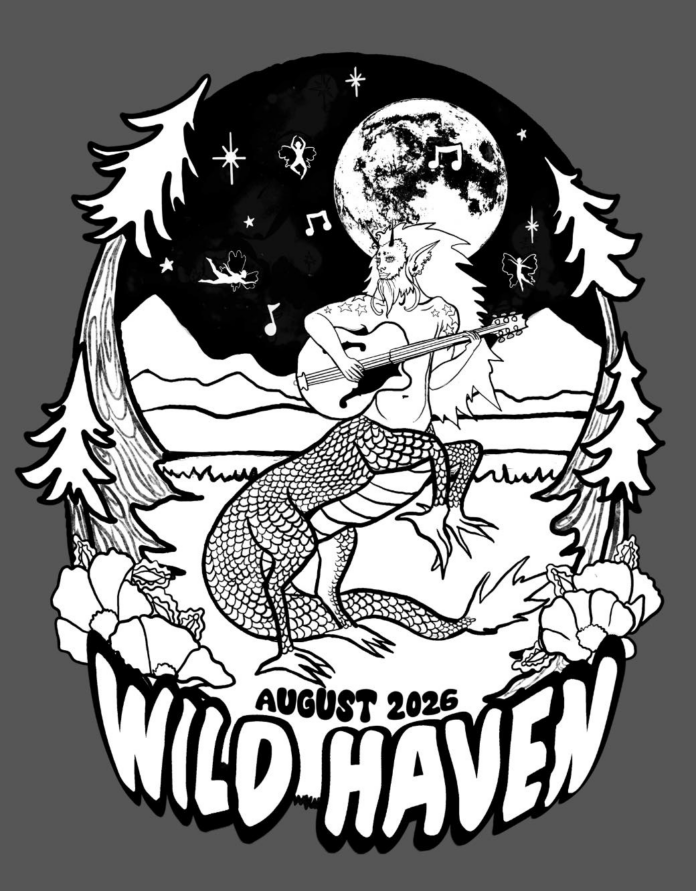
We hope you’ll join us for this uplifting afternoon of song. Entry is by donation, with proceeds benefiting WildHaven, a week-long music and dance camp hosted at Camp Denman (formerly Elkhaven) at the end of August. Now in its second year, WildHaven culminates in a memorable performance at the hall, showcasing the talent of Denman youth and the islanders who bring WildHaven to life. The choir is proud to support the continuation of this uniquely Denman experience.
Comox Valley Regional District amends civil claim against Deep Water Recovery
Reprinted with permission from allthingsunionbay.com
Date: April 12, 2026
In a continued effort to halt a company’s shipbreaking operations in the region, the Comox Valley Regional District has amended its civil claim with the Supreme Court of B.C. against Deep Water Recovery Ltd. and Union Bay Industries Ltd.
Deep Water Recovery (DWR) has been breaking down or dismantling end-of-life ships in Union Bay since 2020. But the company’s lack of compliance to environmental regulations has put DWR under a spotlight.
It’s garnered complaints from concerned citizens and has received over two dozen non-compliance notices from the Ministry of Environment under the Environmental Management Act.
The CVRD’s latest amendment filed on March 25, 2026 builds on its initial claim filed in 2022 stating as the company’s operation at the property are not allowed according to the district’s Industrial Marine (IM) Zoning requirements for land use.
The district filed in court after receiving several complaints on the Deep Water Recovery’s ship recycling operations at 5084 Island Highway in Union Bay.
On Thursday, Alana Mullaly, CVRD’s general manager of planning and development services made the public aware of the amended filing saying “the environmental health of the Baynes Sound is important to the district and our community.”
However, few details were provided as it is an active matter before the court.
“Since the case is ongoing, the CVRD is limited in what information can be shared publicly and cannot comment on the specific details of the proceedings,” the CVRD said in a release.
Province cites lack of compliance and enviromental stewardship, cancels Crown lease
In the summer of 2025, the province cancelled the company’s Crown lease saying its operations were polluting Baynes Sound. It said company lacked the regulatory compliance, operational responsibility, or environmental stewardship required to justify entrusting the use of Crown land to manage and dismantle end-of-life vessels.
Leading up to the cancelled lease, the province says the company failed to comply with the a Pollution Abatement Order (PAO) issued by the Ministry of Environment in 2024 and later amended in May 2025.
This order comes after a series of onsite environmental inspections by ministry staff initiated back in 2022.
During that time, reports showed a lack of proper drainage and treatment systems resulting in various effluent draining directly to the marine environment.
In August 2022, staff reported “wood debris; steel scrap; unusable rusted material; septic system discharge; recreational vehicle effluent and surface water effluent. It was also confirmed at this time that there were no treatment systems connected to the Sumps, which are designed to discharge directly to the marine environment when full.”
There were also later tests that showed exceeding levels of copper, lead, zinc and cadmium under the BC Water Quality Guidelines Aquatic Life – Marine.
After issuing the cancelled lease notice, Deep Water Recovery Ltd. was given 60 days to vacate the site and no longer access its upland operation. That 60 days expired in September 2025.
The cancelled Crown lease relates to the foreshore or water, not the land. Its land operations are under the jurisdiction of the Comox Valley Regional District.
Deep Water Recovery’s operations have garnered attention from all levels of government as well as environmental groups and concerned citizens.
The district says it “will provide factual updates as permitted.”
–With files from Dean Stoltz and Kendal Hanso
CVRD News: K’omoks Treaty will benefit the entire Comox Valley

April 14, 2026
The Comox Valley Regional District (CVRD) is voicing its strong support of the Treaty and Constitution that were ratified by K’ómoks members on March 8, 2025. Provincial ratification is the next important step in the approval process, which pending federal government passage, will enable the implementation of the Treaty and result in greater certainty, economic opportunities and prosperity for the Nation and the Comox Valley as a whole.
The Vice-Chair of the CVRD and members of the board were in the BC Legislature to witness the tabling of the legislation that will enable provincial ratification of the historic agreement.
“The CVRD recognizes the profound significance of this historic achievement and the decades of dedication, negotiation, trust building and community engagement that it has taken to get here,” said Chair Will Cole-Hamilton. “As a local government we stand with K’ómoks as a partner and ally as we embark together with the Nation, as a community, down this exciting new path.”
“The Treaty will provide certainty over land ownership and title in the Comox Valley now and in the future, allowing our communities to move forward without the uncertainty that exists in many parts of British Columbia,” explained Cole-Hamilton. “This will allow us to live together with clarity and confidence, so that we can focus our efforts on the positive benefits for our entire community including job creation, investment, economic development, housing, tourism and new infrastructure.”
The treaty will provide the basis for a revitalized relationship between K’ómoks and all levels of government by fostering shared understanding about K’ómoks’ rights and delivering economic predictability in the region. CVRD Director Doug Hillian was invited to the Treaty table as an observer, representing local government and attending meetings throughout the many years of negotiations as a show of support and to witness the process.
“It has taken the dedication and leadership of the K’ómoks Treaty Team, K’ómoks Council, Hereditary Chiefs, Elders, past Chief Councillors, provincial and federal negotiators, and many others who have contributed to this enormous effort,” said Hillian. “I have been fortunate to witness this historic process as an invited guest at the Table, and I am grateful for the experience and learnings. I am very moved by what has been accomplished and encourage all Comox Valley residents to embrace the bright future of prosperity and possibility that this process will bring.”
For more information on the K’ómoks Treaty visit: https://engage.gov.bc.ca/govtogetherbc/engagement/komoks-treaty/
The Comox Valley Regional District is a partnership of three electoral areas and three municipalities operating on the unceded traditional territory of the K’ómoks First Nation, the traditional keepers of the land. The members of the regional district work collaboratively on providing sustainable services for the benefit of the diverse urban and rural areas of the Comox Valley.
Media Contact:
Will Cole-Hamilton
CVRD Board Chair
T: 778-992-0102
Local Aquifers: What Our Data Reveals
Fanny Bay Community Centre
7793 Island Highway South, Vancouver Island
2-4 pm, doors open at 1:30 pm
The Beaufort Watershed Stewards (BWS) is pleased to present a town hall to discuss “Local aquifers: What Our Data Reveal.” On Vancouver Island, aquifers provide over 70% of drinking water. As with much of BC, our local aquifers are poorly characterized due to their small size, complex geology, and limited funding for study. This leaves many communities without essential information about their only water source. Our hope is that this town hall will give a ‘deeper’ understanding of local groundwater basics.
There will be four guest speakers. Mike Wei, a retired Physical Hydrologist. With 40 years’ work on groundwater management in BC, Mike will use a physical model to demonstrate aquifer function and explain what variables affect water levels within aquifers.
Mark Lake, retired Geophysicist, is responsible for Beaufort Watershed Stewards’ Aquifer Mapping Program. He will present a summary of the group’s findings to date.
Kate MacMillan is a current Honours student at the University of Victoria, School of Earth & Ocean Sciences. In September 2025 she collected data from 40 wells in Fanny Bay, all of which are associated with Aquifer 419. Under Mike Wei’s supervision, she used these data points to estimate the extractable groundwater limits of the aquifer and the risk of stream flow depletion from well pumping. She will be presenting the results of that project.
Mike Mesford, who is responsible for our Ground Water and Surface Water programs, will discuss the cumulative implications of the presentations, and what the next steps are for Beaufort Watershed Stewards.
For more information visit us at: www.beaufortwater.org.
Because Water is Critical
Shucking Oysters: All Creatures Great and Small
By Alex Allen
Next week is Earth Day, April 22. This year’s theme is “Our Power, Our Planet,” which sounds like some corporate tagline and not a call for action. Here we are 56 years later. Have we changed for the better? I can hear the Earth sighing audibly at the folly of us human beings. When will we ever get it? The Earth is in crisis and yet we continue abusing, pillaging, and taking this sacred Planet for granted. Our activities are now so pervasive, so profound in their consequences that they affect us all both great and small.
Earth Day is not just about climate disasters and pollution, it’s about respect for all species. Humanity’s biggest error is with our interactions with the other inhabitant’s – our fellow beasts. Why should we pause before we mine another ecosystem or build bigger ports to move more crap back and forth? We should be alarmed, first by the fact that we have unthinkingly done this to ourselves, and secondly by “our willful blindness to the horrors which we are condemning future generations to endure.”
Keggie Carew wrote: “These days, the whole of nature has become a last-minute add-on in the disembodied, faceless, colourless, lifeless catch-all: Biodiversity. It sounds like soap powder. Biodiversity. Easy to rinse away. Why would we care about it?” In her book, Beastly, Carew soberly writes on the moving and troubled connections we have with our Earth mates, the other animals.
It took nearly four billion years to build a Rhino, a River Dolphin, a Pink-toed Mussel, a Passenger Pigeon, and only a few decades to obliterate them. Forever. And then we started playing God. We selected useful characteristics: meatiness, hardiness, wooliness, adaptability, docility. Forget about speed or agility, we want them slower and fatter. If a sheep falls over, we not only hear it, we may have to help her get up.
And then there are those who try to deny reality, the crudest form of cognitive dissonance. Cognitive dissonance is really just a name for the discomfort we feel when we both know something and avoid knowing it. Like where meat comes from. A mechanism of death so grisly, so gruesome, and so huge that it has already changed the face of Earth almost beyond recognition. If we can miss several billion deaths without raising an eyebrow, what else has been hidden in plain sight?
Chicken processing plants run line speeds from 175 to 200 bpm (birds per minute) in a single plant. That amounts to 12,000 birds per hour, or 96,000 birds in an eight-hour day. It’s absurd that we have been raised to believe that we are above the “barbarism of beasts.” Our clinical methods of food production are horrifying and cruel.
British writer and political activist, George Monbiot said it best, “What madness of our times will revolt our descendants? There are plenty to choose from. But one of them, I believe, will be the mass incarceration of animals, to enable us to eat their flesh or eggs or drink their milk. While we call ourselves animal lovers, and lavish kindness on our dogs and cats, we inflict brutal deprivationson billions of animals that are just as capable of suffering. The hypocrisy is so rank that future generations will marvel at how we could have failed to see it.”
We are not separate from nature. What we do to the world, we do to ourselves. Everything seems to come from some kind of derangement in our society. The perception of separation from nature and from each other, upon which all our systems of money, technology, industry and so forth are built. Charles Eisenstein wondered presciently, “Could it be that the sun is recoiling in pain from the ingratitude and violence humanity is perpetuating on Earth? That it will ultimately mirror our own derangement?”
Can you imagine if politicians and corporate executives acted from compassion rather than calculation? Imagine what the world would be, if we could channel that tremendous pent-up life-force toward something worth caring about, like Earth? What exactly, do we want to sustain? Is the purpose of life merely to survive? Or is money the key to fulfillment? Our insatiable appetite for consumption should be more alarming than too many people on Earth.
How do we run the world on enough instead of more? We need to get rid of our cravings, that for some reason we’ve couched as virtues: greed disguised as ambition; selfishness disguised as freedom; inequality described as opportunity. When will we consume enough? When will corporate profits and stock prices be enough? When will we have all the technology we need? Why is more and more always better if it can never be enough?
As Farley Mowatt wrote: “We’re under some gross misconception that we’re a good species, going somewhere important, and that at the last minute we’ll correct our errors and God will smile on us. It’s delusion.”
I woke up in the forest of words
Gabriel Jeroschewitz, March 24th, 2026, from a dream I had the other night. Being stuck in a bookstore. and ending up in a forest. Abridged.
I woke up in the forest of words.
I woke in a forest, warm and tranquil among the trees. The air resonated with the syrupy peace of late morning. For a moment, I reasonably believed I had died and arrived in a writer’s heaven: part bookstore, part mossy library, every page faintly scented with coffee.
Then I noticed I was naked. Entirely naked. Bare, unprotected in my pale, middle-aged glory, standing among oaks and redwoods like a misplaced yard statue.
“Well,” I uttered, attempting dignity as a beetle inspected my ankle, “this is new.”
Uncertain whether to be embarrassed without clothing or impressed by nature’s dramatic reintroduction, I considered whether this was a metaphor. Writers love metaphors.
I laid my hand against the bark of a nearby oak. The roughness felt startlingly real. Each ridge pressed its indentation upon my fingertips. The grass underneath my feet prickled and whispered. The sunlight, warm and buttery, rested on me—an unfamiliar, gentle approval, as if from someone hopeful but unsure.
It was all too vivid to be a dream.
And yet—how else had I arrived here? The last detail I remembered was falling asleep at my desk, half a mug of cold tea nearby, my computer screen covered with the remains of a paragraph that had fought me to a stalemate. Then this.
A forest. A naked me. And a storm on the horizon.
I could smell the sharp metallic bite of lightning not yet born, the light sweetness of rain, and the fragrance of earth, trying to remember. But I could see no clouds, only blue sky and the restless leaves shifting in the wind.
“Well, if this is a metaphor,” I said to no one, “it’s doing an excellent job of foreshadowing.”
I checked myself for tools, survival gear, or any sign of civilization—a watch, a wallet, maybe a pocketknife. Nothing. Only skin, goose bumps, and slight existential confusion.
Then I observed something stranger: the air gleamed.
Not the sort of shimmer born of heat or light but one made of words.
The words floated between the trees, glowing quietly like slow fireflies within a classroom. A few came closer. One word, “Ephemeral,” popped against my nose like a soap bubble. Another, “Melancholy,” twirled toward my ear, as if wanting to be part of a sentence.
“Oh no,” I said in a whisper. “Not again.”
This happens more than I’d admit. Sometimes, words appear: falling from trees, trailing behind bumblebees, clinging to squirrels’ fur. Other times, they arrive at night, filling my dreams until my bedsheets turn into tangled paragraphs.
It’s both a blessing and a mess.
Once, I rose to find the word “serendipity” stuck to my tea mug for three days, refusing to let go until I used it correctly.
So this floating forest of words was familiar—except for the unwanted nudity.
I followed a narrow path through the trees, my bare feet rustling over leaves that murmured tiny adjectives while I stepped on them. Crinkly. Itchy. Disconte. The more deeply I went, the thicker the words grew. Fog made of vocabulary crowded me. Some drifted near my face, tickling my nose. Others fell upon my shoulders—weighty with Importance.
I tried to catch one. It wriggled and fluttered before sinking into my open palm. When it touched me, an idea bloomed—half story, half nonsense: a romance between a fern and a thundercloud.
“Noted,” I said aloud. “I’ll file that under ‘possibly genius, probably unpublishable.’”
I recognized other words—some I’d written, others I couldn’t recall inventing. “Wistful,” a favourite, floated by a puddle. “Taxidermy,” which I never liked, always appeared unexpectedly.
I walked naked through a world full of language.
It should have been terrifying, but it felt like home. The storm grew closer—thunder growling loudly through the sky. I looked for shelter. An old hollow tree accepted me with patience, as if it had seen many summers. I crouched inside, huddling against the moist wood, and watched through the gap as lightning turned the forest silver.
In the brief illuminations, I saw movement.
At first, I thought it was my imagination, but then a form appeared—a slender and glittering creature with the body of a dragonfly and the head of a librarian. It drifted above the ground, holding a pen made of lightning.
“Oh, you again,” I sighed.
The creature chirped in a high, papery voice. “You dropped your plot.”
“I do that often,” I said. “Where was it this time?”
“It rolled under a metaphor about three miles back.”
“Typical.”
The creature tutted, fluttering its wings impatiently. “You can’t finish the story without your plot.”
“Tell that to the modernists,” I spoke softly.
A second figure manifested—a short, plump being of punctuation: commas serving as arms, question marks for legs, a semicolon for a nose. It shuffled up, eyed my nakedness, and handed me a cloak formed from old drafts.
“Wear this,” it grumbled. “You’re making the adjectives nervous.”
I wrapped the cloak around me, grateful, though it had the scent of failed metaphors and unedited dialogue.
The storm burst overhead, drumming on the leaves. Raindrops began to pour—only they weren’t raindrops. They were letters, thousands of them, cascading down in a typographic deluge. Within minutes, the forest floor was coated in words. Puddles of sentences formed, rippling when touched.
“Marvellous,” I said. “A downpour of vocabulary.”
“Don’t let the verbs get in your eyes,” warned the punctuation creature.
Thought, and language— wind, clouds, and rain transforming the world—so after the rain, it felt as if words clung to every surface in the woods, from the branches and moss to my own skin. I pulled one off my arm: “Remember.” Another word held onto my foot: “home.”
Sadness overcame me. I briefly missed my disorganized desk, unfinished manuscripts, and the comfort of a kettle boiling while struggling with meaning.
“Is this a dream?” I asked the dragonfly librarian.
“Of course,” it said. “But that doesn’t make it untrue.”
“Words always say that,” I said under my breath.
“You could wake now, if you wished,” it continued. “Or you could stay, and help rebuild the dictionary. It was washed away last week by a flood of clichés.”
I laughed. “Tempting, but I think I’ve had enough naked existentialism for one morning.”
The dragonfly bowed. “Then catch one last word before you go.”
A single glowing word floated down, hovering between us. It was small, simple, and perfect: “Write.”
I put forth my hand and caught it. The forest melted away around me.
When I opened my eyes, I was seated back in my chair, clothed, my keyboard shining dimly. My screen was blank but for a flashing cursor.
Outside, thunder murmured in the distance, as though the storm had followed me home.
And then—it began again. Thousands of words seemed to appear on the screen all at once, as if they emerged without conscious effort, reminiscent of the dynamic, creative thought processes observed in participants as they generated metaphors. Sentences formed and collapsed. Characters introduced themselves with impeccable timing. I just sat there, barely more than a conduit, letting the forest flow across me.
I didn’t question where the mystery came from. I never really do.
After all, maybe every writer has their own forest—some wild, green place in the mind where words grow on trees and stories fall like rain, where you wake up naked sometimes because that’s what honesty looks like.
I happen to dream mine more literally.
When morning comes, I brush dried words from my sheets, gather a few good ones, and return to the page—barefoot, bewildered, and quietly delighted that the words still choose me.
Even if they occasionally make me lose my clothes.
Phoenix Riting!
Hey all, it’s spring, my favourite time of year. There is simply nothing I don’t love about it! Flowers, scenting the warming air. Cycling, birdsong, green popping out everywhere. Happy sigh. I hope you are loving it as much as I am.
Last week, I wrote about this show coming up tomorrow, the “tomorrow” after this edition of the Grapevine comes out. I told you about the songs, my history of a cappella singing, my relationship with the guitar, and all the changes there.
This week, I’d like to share some background on the art project I’ll be presenting.
I’ll be projecting a slideshow onto the big screen at the Arts Centre. Each image will remain for thirty seconds before fading into the next. There are 38 images in total, so they should cycle through three or four times, though not always in exactly the same order.
This project began in 2009, when I committed to a two year daily practice. Every morning, I took a selfie, making faces at the camera: a grimace, a smile, a serene gaze, whatever my impulse of the moment called for. Then, throughout the day, I photographed anything that caught my attention, mosses, animals, sky, flowers, textiles, everything and anything.
At the end of each day, I layered two or three of those images with my face and blended them in Photoshop until something resonant emerged. I didn’t view them as self portraits. I used my own face because it was the only one I had on hand. Convenient. I wanted to create something archetypal, for each image to evoke a specific mood or feeling.
After two years, I had built quite a library. Many of the images were forgettable, but a surprising number turned out well, and I always intended to do something with them. I uploaded some to Facebook and many to Flickr, and then forgot them to move on to other things.
Two years ago, while searching for images for the inside fold of my CD case, I remembered the project. To my horror, I discovered the external hard drive I had stored them on had died. But there they were on Flickr, so I downloaded them all to my iPad. I chose a joyful yellow flower face and, with the help of a graphic designer, submitted it, only to be told the resolution was not high enough.
Stumped, I had an idea. I imported the image into a Procreate canvas set to the correct dimensions and resolution. I stretched it to fit, then, working on a single layer with a small blending brush, I carefully painted it. It worked beautifully. That image became the inside fold of the CD and was also used for the posters for my release party.
I loved the process so much that I began working on the others. This time, instead of limiting myself to CD sized dimensions, I created the largest canvases my iPad Pro could handle. When my older iPad started crashing and would not recover, even after a factory reset, I bought a new one specifically to continue this work. The new device could accommodate canvases up to 33 × 46 inches, so that became my standard size.
I became completely absorbed in the project. Some images were incredibly complex, taking months of daily work, often for hours at a time. Others came together in just a few days. Every piece was painted on a single layer in Procreate, using a fine tipped digital blending brush. No AI was involved. The process was deeply relaxing and pleasurable. I listened to audiobooks and painted every day.
I am still working on these pieces. There are dozens more I love and hope to include eventually. What I have now is just the beginning, though at 38 large images, it has already become a substantial body of work. I am thrilled to be sharing them for the first time.
With the exception of the two images used for the event poster and the CD itself, none of these have been shared on social media or anywhere online. This will be their first public showing.
If anyone falls in love with any of these images, I can certainly have them printed on large canvases. (Just thought I’d mention that.) In the meantime, they only exist in digital form on my iPad. One day, I may create an online gallery where they can be viewed, but for now, this is an exclusive opportunity to see what I’ve been doing.
It will be less a performance than an experience. Next week, I promise I will come up with something else to write about, but right now this is my consuming obsession. I hope to see you there, Hornby and Denman alike! Friday is, after all, late ferry day.
Friday the 17th of April, doors at 7pm, show starts at 7:30.
That’s what I think! What do you think? Feedback and comments are welcome. Thanks to those who have commented so far—it makes me want to do this more! Email me at phoenixonhornby@gmail.com
The Pseudopod Reviews Mark Carney’s Book
The Pseudopod Reviews Mark Carney’s Book.
By Cylon2036 We/Us
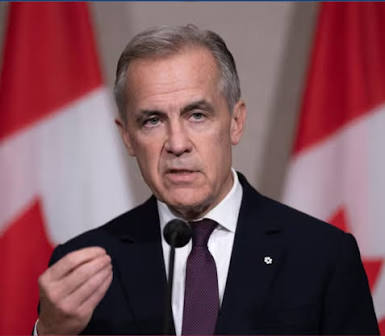
There was a time, brief and shimmering, when Prime Minister Mark Carney strode forth as the philosopher-king of late capitalism, clutching his book “Values” like a stone tablet freshly descended from the mountain of Davos.
In its pages, we were told that markets must be guided by moral purpose, that society must reclaim its soul from the cold calculus of profit, and that finance, like a repentant sinner, should finally learn to feel.
And then, having delivered this sermon on ethical transcendence, he immediately got to work doing the exact opposite.
The central thesis of Values is that markets have come to price everything and value nothing. As Prime Minister, Carney has taken this as a personal challenge, not to correct it, but to perfect it. Why merely lament the commodification of human life when you can streamline it? Why agonize over inequality when you can optimize it?
Under his stewardship, austerity is no longer presented as a grim necessity but a moral exercise, but for the social contract. Public services fail, not because of cuts, but because they have achieved a higher state of fiscal enlightenment. Social programs crumble not from neglect, but from an excess of values, having absorbed so much moral purpose they simply dissolve into the ether.
Carney’s genius lies in this alchemy which transforms the language of compassion into the machinery of restraint. Every budget cut is framed as an act of ethical clarity. Every privatization becomes a pilgrimage toward efficiency. The public sector is not being dismantled. It is being liberated from the burden of existing.
Indeed, the gap between Values and policy is not a contradiction, it is a feature. It is the negative space in which true leadership emerges. Anyone can govern according to their stated principles, but it takes a rare kind of visionary to write a book about moral capitalism and then govern as if it were a cautionary tale.
Critics have accused Carney of hypocrisy, but this misses the point. Hypocrisy implies inconsistency, whereas Carney’s project is one of perfect harmony, just not between words and actions. Rather, the harmony exists between rhetoric and its utility. Values are not meant to be implemented, they are meant to be deployed, like a tasteful font or a reassuring logo.
In this sense, Values is less a manifesto than a user manual, as a guide to speaking the language of social good while ensuring that nothing materially interferes with the primacy of markets. It teaches us that the true function of values is not to constrain power, but to accessorize it.
And so we arrive at the Carney Doctrine, where the best way to preserve the legitimacy of neoliberal austerity is to wrap it in the warm, comforting glow of moral concern. Cuts feel less like cuts when they are accompanied by a gentle reminder that we all share a collective responsibility to tighten our belts, especially those who were already wearing rope.
In the end, Carney has resolved the tension at the heart of modern capitalism. Markets no longer need to discover values, because values themselves have been fully integrated and priced into the market, tradable, flexible, and entirely non-binding, except of course, the tripling of Canada’s military budget.
It is a triumph of synthesis and a masterpiece of alignment. A world where everything is valued, nothing is sacred, and the gap between principle and practice is not a problem to be solved, but a space to be managed, preferably by a central banker and hedge fund manager with excellent prose.