Home Blog Page 44

8 25 25 I lost a large man

8 25 25 I lost a large man

I

lost

a large

man recently,

Harv was

six and one

half feet

and at one time

had weighed 

as much as

four hundred

and fifty pounds

with ankles

bigger than my

thighs,

we visited

the big man

for the last

time in Sudbury

in the cool

expanse of his

basement suite

home

and we talked

politics and

unions like

we always have

but he was

sick and blue

not knowing

that he had 

less than 

a month to live

riddled with the

murderous force

of cancer

throughout all

of his vital

organs

and when we

left the big man’s

suite he threw

his arms around

me tucking me

into his warm

girth for the 

last time

as I didn’t have

the guts to say

good bye on the

way back through

as he lay dying

in the hospital

instead wandering

the parking lot

with my old crusty

dog while ducking

parking lot attendants

with some vehicle 

shuffling until my 

wife emerged

somewhat broken

from the hospitals

hallowed doors

and we got back

on the road with

no rest until

we were hunkered

down somewhere

near the pink stones

of Lake Superior.

Celebrities Should Have Been Calling Out The Gaza Holocaust This Entire Time

Caitlin Johnstone's avatar

Notes From The Edge Of The Narrative Matrix


Listen to a reading of this article (reading by Tim Foley):

“Hacks” costar Hannah Einbinder said “Free Palestine” during her acceptance speech for Best Supporting Actress at the Emmys on Sunday. Questioned by the press afterward, Einbinder said she has friends in Gaza, adding, “I feel like it is my obligation as a Jewish person to distinguish Jews from the state of Israel, because our religion and our culture is such an important and longstanding institution that is really separate to this sort of ethnonationalist state.”

I’ve followed Einbinder on Instagram for a long time because she’s been one of the few people in Hollywood consistently using their influential voice to oppose this genocide, and it is very good that she said these things. Hopefully we see much more of this.

But right now I can’t help thinking about how unforgivable it is that all the other Hollywood celebrities haven’t been using their platforms at these events to call for an end to the Gaza holocaust this entire time. For two years this nightmare has been normalized in the eyes of the public with the assistance of the vast conspiracy of silence between all the people with the largest and most influential voices in our society.

I’ve been seeing a lot of people talking about how hypocritical it is of Trumpers to be going around trying to get people ostracized or fired for speaking ill of Charlie Kirk after his assassination.

One of the most boring political observations you can make about Republicans orDemocrats is that they are “hypocrites” who say one thing and do another. That stops being interesting when you realize their words are never actually saying anything about their real principles and values; they’re always just making empty noises to advance whatever agendas they’re trying to push in a given instance.

Of course Republicans pretend to care about free speech and then support the suppression of the speech of their political enemies; their lip service to “free speech” was just something they said to attack the Democrats. Of course Democrats pretended to care about racism and injustice and then threw their support behind a live-streamed genocide; their lip service to justice and equality was only ever empty noise they were making to attack Republicans.

The interesting thing about these contradictions isn’t that they show “hypocrisy”, it’s that these people don’t actually stand for anything. It’s that they’re just a bunch of babbling human livestock mindlessly regurgitating whatever noises they’re conditioned to regurgitate in order for their team to win.

This unthinking lateral feuding benefits nobody but the powerful. The empire managers are always happy to see a white hot culture war sucking all the oxygen away from the kind of dissident thinking that could give rise to a revolutionary class war. The more Americans are fixated on empty partisan feuding with no real content, the less inclined they will be to do anything real. The more their gaze is fixed horizontally, the less likely they are to look up at those who are pulling their strings.

When rightists talk about people who “celebrated” Charlie Kirk’s death they’re talking about literally anyone who didn’t give him the respect and reverence they feel he was due. For days they’ve been falsely claiming I celebrated and cheered his assassination because I didn’t act like Jesus Himself had been shot.

Go ahead and search through my articles. Search my tweets. You’ll find me saying he was a genocide apologist, you’ll see me saying his life wasn’t worth more than the lives of the people being murdered in Gaza as we speak, you’ll see me calling him a GOP swamp creature, you’ll see me calling rightists a bunch of mindless NPCs for uncritically swallowing every narrative they’ve been fed about this thing, but you won’t find me celebrating, expressing joy at his death, mocking or making jokes about his death, justifying his death, or saying he deserved to die.

They’re just lying and claiming people celebrated his death whose only real offense was declining to participate in the efforts to posthumously beatify this asshole and pretend he was a wonderful, saintly person.

“Don’t criticize the behavior of a dead political operative” is not a legitimate position to have. Grow the fuck up.

______________

Caitlin’s Newsletter is a reader-supported publication. To receive new posts and support my work, consider becoming a free or paid subscriber.

The best way to make sure you see everything I write is to get on my free mailing list. My work is entirely reader-supported, so if you enjoyed this piece here are some options where you can toss some money into my tip jar if you want to. Click here for links for my social media, books, merch, and audio/video versions of each article. All my work is free to bootleg and use in any way, shape or form; republish it, translate it, use it on merchandise; whatever you want. All works co-authored with my husband Tim Foley.

Bitcoin donations: 1Ac7PCQXoQoLA9Sh8fhAgiU3PHA2EX5Zm2

Feature image is a screen grab from Television Academy (Fair Use).

Early Spring, McFarlane Beach

https://printartphotograhy.ca

fake news

#1701

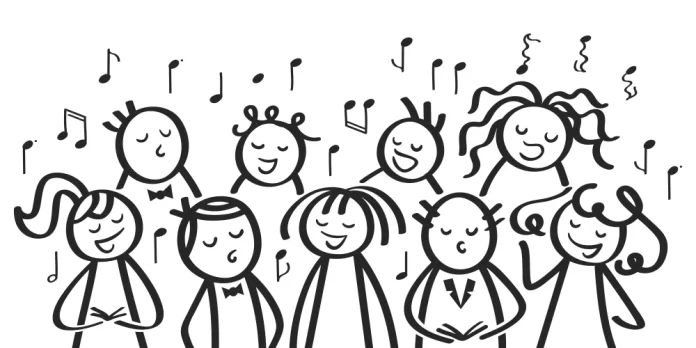
Community Choir Starting Thursday Sept 18 2:30 

Community Choir Starting Thursday Sept 18 2:30 

Yahoo we are getting back to singing together.  Old choir members can stop reading now and get back to their fall chores, because we know just how wonderful choirs is.  But if you are new here you need to read on.

We are very fortunate to have a wonderful choir director here on Denman.  Bethany Ireland is a Uvic Music graduate, a great pianist and an inspired choir director. She brings youthful enthusiasm to every session and she is never critical.  Her latest triumph was working with a group of teens for a week this summer, teaching them how to play and sing together in a band.

You are welcome to come for 2 weeks before you pay you choir fee just to check us out.

We meet at the Community Hall in the Back Hall.  We sing 4 part harmony, and all voices are welcome.  You do not have to read music to sing with us. If you would like more info, call Kathy Rieder 250 335 0559 or kathyrieder@telus.net. Cost is sliding scale $120.00 to $140.00 for 11 sessions and a concert. Arts Denman members (membership $10) are eligible for a grant of $150.00 per year for musical education. 

Denman Island Garden Society News

The Denman Island Garden Society (DIGS) extends a warm thanks to organizer Shirley Ward, the great volunteers, the participants and spectators who helped with the Show What You Grow portion of the Fall Fair this year.  We hope it inspired you to think about your own entries for next year.  The scarecrow competition was fun and we hope to see many more of those next year, too.  The winner, in case you missed it, was the scarecrow family and second was the teddy bear, but they were all great.

DIGS will kick off another season of activity with a meeting on Wednesday September 17 at 1 pm at the Gathering Place at the United Church.  The theme will be (Garden) Bed Talks and they will feature The Poor Man’s Root Cellar (Joan Donaghey), Denman Island’s Million Dollar Melon (Max Rogers) and Growing Vegetables in Space (Mark Benard).  New members and drop-ins welcome.

Shucking Oysters: More, More, More

Shucking Oysters: More, More, More

By Alex Allen

Big yachts. Fast cars. Private jets. The island in the Bahamas. The villa in France. For most of us, living like this is about as likely as getting off the Bayne Sound Connector in the same order that we boarded. Our days are spent commuting to work, struggling with the cost of living, and maybe feeling that sometimes the good things in life are passing us by. Compared to billionaires and rock stars, our lives can seem as exciting as a bivalve mollusk. 

On Hornby recently, Vegas billionaire Lorenzo Fertitta, former Ultimate Fighting Championship CEO, had his 285-foot super yacht Lonian anchored at Tribune Bay. Fertitta also brought along a second megayacht, the 215-foot Hodor, a catamaran-style companion vessel that carried his big boy toys, like his jet skis, motorcycles, Peloton bikes, personal submarine, and helicopter.  

George Monbiot wrote that great wealth flattens the world. “If you can go anywhere and do anything, everything is over the horizon…Place has no meaning, other than as a setting that might impress the friends you no longer trust.” There’s also a connection between speed, noise and ego. Monbiot unapologetically noted: “There must be something unresolved about a person who feels the need to fill the sky with noise and capture the attention of everyone he passes, whether he is on the road or the water.” 

Making money – chunks of it – seems to be the only way to have a meaningful life, apparently. We live in a culture that prioritizes excessive pursuits of self-interest and competitiveness. Over 20 years ago, John de Graaf, David Wann, and Thomas H. Naylor observed that a “powerful virus has infected American society, threatening our wallets, our friendships, our families, our communities, and our environment.” In their book, Affluenza: The All-Consuming Epidemic, they define this affliction as “a painful, contagious, socially transmitted condition of overload, debt, anxiety, and waste resulting from the dogged pursuit of more.”

It’s the desire to be more wealthy, more successful, more better. Affluenza is also defined as the inability of an individual to understand the consequences of their actions because of their social status or economic privilege. People said to be suffering from this virus are in a constant state of dissatisfaction because they always want more than what they already have. Not much has changed today. In fact, it’s probably worse.

In our society of growing income inequality, those with financial privilege are more likely to sequester themselves from the riff raff at large. Unfortunately, this phenomenon fosters a sense of entitlement that can be self-perpetuating: the wealthy feel they have earned their way into an elite class with superior intellect and talent. As a result, they believe the rules of society do not apply to them.

Christopher Ryan asked in his book, Civilized To Death: The Price of Progress: What if the cold-heartedness so often associated with the rich isn’t the result of “having been raised by a parade of resentful nannies, too many sailing lessons, or repeated caviar overdoses, but the compounded disappointment of being lucky but still feeling unfulfilled?” 

In an essay called “Extreme Wealth is Bad for Everyone – Especially the Wealthy,” Michael Lewis observed: “It is beginning to seem that the problem isn’t that the kind of people who wind up on the pleasant side of inequality suffer from some moral disability that gives them a market edge. The problem is caused by the inequality itself: It triggers a chemical reaction in the privileged few. It tilts their brains. It causes them to be less likely to care about anyone but themselves or to experience the moral sentiments needed to be a decent citizen.”

It’s not so much that being rich makes you less generous. Wealth creates a social distance between the haves and the have nots. The us-versus-them mentality applies to physical space, too. Ryan points out how money affords certain comforts which create physical distance between those who can afford isolating luxuries and those who can’t. “We use money to insulate ourselves from the risk, noise, inconvenience,” Ryan wrote.

According to one study, over the course of seven experiments, wealthy individuals were more likely to break the law while driving, make a habit of unethical decision-making, take valued goods from others, lie in a negotiation, cheat to increase their chances of winning a prize, and endorse unethical behaviour at work than lower-class folks. “While having money doesn’t necessarily make anybody anything, the rich are way more likely to prioritize their own self-interests above the interests of other people. It makes them more likely to exhibit characteristics that we would stereo-typically associate with, say, assholes,” Paul Piff, Associate Professor of Psychology, University of California, Berkeley told New York magazine.

Of course, there are exceptions. There are a few rich people who have a sense of decorum when navigating the “difficult currents their good fortune generates without succumbing to Rich Asshole Syndrome.”

So, yes, little grasshopper, there’s more to life than the endless pursuit of private luxury. It’s the vitality of our community, the health of our environment, and the ins and outs of everyday existence that makes us rich, not a $160 million yacht that costs $15 million a year to maintain and operate. 

The Tyranny of “Normal”  by Keith Porteous

The Tyranny of “Normal”  by Keith Porteous

Several years ago, I learned that a friend who worked in music and television was experiencing a degenerative loss of their hearing, something that would be devastating to most anyone, and especially someone who worked with and loved sound so dearly. With the loss of their hearing, they were able to re-acquire some of their auditory capacities with the aid of a technological and biomedical procedure involving Cochlear devices, a neurological prosthesis surgically implanted. I remember getting a message from my friend following their recovery process, telling me they could hear the sound of rain on the roof. I was teary eyed upon receiving this joyful news.

Medical research and technology has moved to purposes and places only previously dreamed of in science fiction. Literally millions of people’s lives are improved and extended as a result. Replacing heart valves and installing stents to open arteries are commonplace examples of technological “miracles.” The cutting edge of technological research into helping those stricken with mobility issues and impaired sight, and a myriad of other maladies, seems a hopeful frontier of possibilities in improving our human experience. It appears as though we are on the threshold of advancing these technologies to where we will be able to repair, alter, and enhance our physiologies in some even more astonishing ways. This is often referred to as morphological freedom.

Morphological freedom suggests that our current human evolutionary status may be further evolved in a self-directed manner. At its core is the principle of bodily autonomy. As these technologies advance, our capacity increases to choose what kind of alterations and enhancements to our bodies we desire, and to what extent. Many of these alterations are cosmetic, but many more are intended as a repair or enhancement, some even improving on the body and mind we were born with, or at least that is one of its stated and primary aims. With the speed of technological breakthroughs and advances in artificial intelligence, how far can this go? How far will it go?

One of the streams of research in this field is the so-called “neurolink” technology, popularized by the deplorable Elon Musk. Is it inevitable that we shall have the ability to implant a device linked to the human brain that will rewire our capacities? This is often imagined to benefit those with mobility impairments, or repairing neurological damages from disease or stroke. The possibilities seem only contained by the limits of imagination. But as we cross the Rubicon of technological capability, it would be a very good time to take pause to contemplate where there is a need for some ethical, political, and philosophical concern to be expressed in relation to morphological freedom and the concept of Transhumanism.

Transhumanism is defined as a philosophical movement that advocates for the enhancement of humanity through artificial intelligence and converging technologies, with the goal of overcoming biological limitations. It suggests that morphological freedom will lead to a proliferation of radically different forms; enhanced humans, cyborgs, and genetically divergent lineages. Shared vulnerability and embodiment have historically grounded empathy and human rights, and without them, mutuality will fray. Morphological freedom promises emancipation, but risks shifting into coercion, inequality, commodification, and fragmentation. What is sold as freedom can become a new form of domination, unless tightly coupled with safeguards for equity, dignity, and shared humanity. Transhumanism creates the illusion of pure autonomy.

While morphological freedom is framed as individual choice, choices are never made in a vacuum. Market forces, social pressures, and cultural ideals will shape what “freedom” really looks like. For instance, if enhancement technologies become tied to employability, healthcare access, or social status, the supposed freedom could become coercion in disguise. You may not “choose” to enhance so much as submit to necessity. This can only lead to further entrenchment of inequalities. Enhancement technologies are expensive and will likely remain so. A freedom that can only be exercised by the wealthy ceases to be freedom in practice. Instead, morphological freedom risks embedding class divides into literal biological castes, where the rich become healthier, longer-lived, and cognitively sharper, while the poor remain “unaltered.” This can be described as a tyranny of “norms.”

Cultural standards of beauty, ability, and performance already exert intense pressure. If morphological modification becomes more normalized, what begins as freedom could become an obligation. Those who remain unmodified, whether for reasons of poverty, conviction, or health, will be stigmatized, marginalized, or excluded. Is this the next step in the full commodification of the human body? Treating the human body as a modifiable product risks collapsing distinctions between human dignity and market value. Cosmetic and performance modifications will become an extension of consumer capitalism, where bodies are branded, optimized, and marketed, further reducing identity to a purchasable commodity.

Transhumanism is a reduction of the human condition, treating humanity as a set of biological limitations to be solved, reducing human life to an engineering problem rather than acknowledging its complexity, unpredictability, and existential depth.