Home Blog Page 45

lunkfast club

#1707

Shucking Oysters: How Nobel of You

Shucking Oysters: How Nobel of You

By Alex Allen

Nitroglycerine, dynamite, ballistite. These are just some of the more famous inventions of Alfred Nobel, who held 355 patents during his lifetime. Nobel pursued many successful business ventures with his family, but what he is best known today for is the veritable Nobel Prize foundation. 

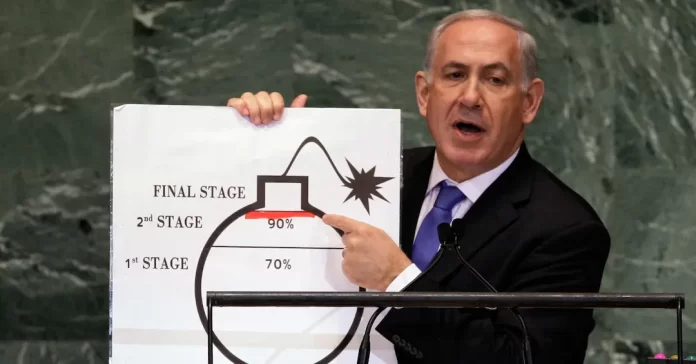
Awarded annually, the prize categories are in: physics, chemistry, physiology or medicine, literature and peace. But few awards in the world command as much prestige or controversy as the Nobel Peace Prize. This prize is the most coveted of them all, particularly with world leaders. And no more so than with Donald Trump, who’s pursuit of the award borders on the obsessive. 

Trump’s entire worldview seems predicated on a notion that life is unfair, Dave Schilling wrote in The Guardian. The system is rigged and he alone can balance the scales back toward justice. “This all makes sense as a rhetorical strategy, and it has proved popular in an age in which most people deem the American government to be about as straight as a bowl of chicken noodle soup. But it doesn’t play so well when his grievances are focused almost exclusively on himself and his own personal gripes.” 

Maureen Dowd wrote in the New York Times that Trump’s “longing is partly inspired by his jealousy of Barack Obama, who absurdly got a Nobel Peace Prize after only eight months in office for just being a cool dude.” Expanding the US military’s domestic role and sending the National Guard to blue cities is basically declaring war on his own country. “Even if he says he should have won the Nobel five times over for his work solving foreign conflicts, he is creating conflicts in America, concocting perilous crises in American cities.” 

Trump’s “conception of peace is performative and transactional, driven by media spectacles, symbolic agreements, and coercive diplomacy,” wrote Ihsan Faruk Kılavuz. The rise of performative peace underscores the urgent need to distinguish image from substance. Trump may understand the Peace Prize better than most, however, “as an award that too often rewards power over principle.” 

The Nobel Peace Prize needs to return to its founding values: “recognizing those who pursue peace not as a political strategy but as a principled mission rooted in justice, nonviolence, and human dignity.” The first Peace Prize in 1901 was shared by Jean Henry Dunant of Switzerland and Frédéric Passy of France. Dunant was recognized “for his humanitarian efforts to help wounded soldiers and create international understanding” in founding the Red Cross and creating the Geneva Conventions. Passy was honoured “for his lifelong work for international peace conferences, diplomacy and arbitration.” 

Peace does not come from drone strikes, dramatic threats of war, or being a bully. It comes from “genuine reconciliation, human rights protection, and long-term social transformation.” US Defence Secretary Pete Hegseth glibly said “those who long for peace must prepare for war.” From Russia’s invasion of Ukraine and everything that has happened in that war until now, we see what “peace through strength” looks like. And it’s not pretty.

Minoo Khaleghi wrote in the International that the Nobel Peace Prize selection criteria has become increasingly political and power-driven and the winners have more often “legitimized radical, politicized, and even militaristic actions than celebrated genuine and institutionalized peace.” 

There are countless examples of this contradiction between the award of peace and the actions of those who received the prize. When Henry Kissinger won the Nobel Peace Prize in 1973 the announcement provoked outrage. How can he win for helping end the Vietnam War he started? Two Nobel Committee members resigned in protest. North Vietnamese leader Le Duc Tho, who was jointly awarded the prize with Kissinger, refused to accept it, for obvious reasons. 

Barack Obama’s 2009 Nobel Peace award, after less than a year in office, was described as an “advance prize” granted for his “extraordinary efforts to strengthen international diplomacy and cooperation between peoples.” Yet Barack’s government led more military operations since Bush Junior, “proving that his peaceful rhetoric and real-world actions were profoundly at odds.” Even Obama himself admitted to confusion over the honour, stating years later that he was unsure why he received it. 

This year in October, the 2025 Nobel Peace Prize was awarded to María Corina Machado, leader of the right-wing opposition party in Venezuela, who was praised “as one of the most extraordinary examples of civilian courage in Latin America in recent times.” Machado, in hiding, dedicated the award to the “suffering people of Venezuela” and to Donald Trump “for his decisive support of our cause.” 

Machado joins the US administration in calling Venezuelan President Nicolás Maduro the leader of a “criminal narco-terrorism structure” and has asked Trump for more help in unseating Maduro from power. She even asked Israeli Prime Minister Benjamin Netanyahu to help “liberate” Venezuela with bombs. What is concerning is the massive deployment of US military force in the region, with over 10,000 US troops and dozens of aircraft and ships. The administration claims it is a counter-drug and counter-terrorism mission, but US officials have privately made it clear that the intent is to drive Maduro from power. 

Faramarz Kouhpayeh wrote that Trump and Machado are “cut from the same right-wing authoritarian cloth,” which in part explains why Trump quickly congratulated her, and why Machado, in turn, dedicated her award to him. Khaleghi warned that in awarding the prize to Machado, the Nobel Committee has provided an open invitation for Trump to continue, and even “escalate, military intervention and gunboat diplomacy in Latin America.” 

As Kılavuz sadly wrote: “In a world where Mahatma Gandhi once stood as the emblem of peace and non-violent resistance, we have reached a point where international arsonists portray themselves as peace icons and hide their atrocities beneath the shadow of the Nobel Peace Prize.” 

Venezuelan activist Michelle Ellner said of María Corina Machado: “Anyone who knows what she stands for knows there’s nothing remotely peaceful about her politics.” The Nobel Peace Prize has a credibility problem; it needs to rise above the very forces it was created to challenge, otherwise it will continually be awarded to mediocre individuals whose chief qualities are greed, ego and a talent for manipulation.

Phoenix Riting! – October 23rd, 2025

I had a teacher in Grade 12 who told us, “Everything you will ever know, you already know now. Once people hit the age of nineteen, their minds start to rigidify, and after that, nothing more can change.”

I don’t know where he got that very wrong opinion from, but he stuck to it like glue. Now we understand things differently. Neuroplasticity is real. Brains change, heal, adapt, make new synaptic connections. The more we learn, the more we can learn.

Opinions are easy to hold onto. What’s trickier is to listen, to expand our point of view, to hear others, and to see if maybe our opinions can change or evolve. We can change and grow right up until the day we die.

If that’s true, what does it say about our cultural obsession with youth? To this day, if you’re not famous by thirty, the story goes, you’re probably never going to be. And if you can’t be famous, who even are you? You may as well put yourself out to pasture, take a seat on the “obsolete” pile with all the other never-weres and used-to-wannabes.

The 60s and 70s started the trend of youth worship, although back then, the thinkers and pundits were universally grey-haired white men. Not that that was better. Now we turn instead to toned yoga teachers with YouTube and Instagram accounts, and massive-thewed gym bros who host podcasts.

They’re called “influencers.” They influence people, but only if they’re young, fresh, dewy-eyed, and good to look at. Because they look good, shiny-toothed and glowing with health, it’s assumed that they must be smarter or wiser than average. But when you really listen, they have nothing real to say.

What madness is this? Everything feels backwards these days. Maybe we’re a bunch of Dorian Greys, old and weary-eyed as children, bearing the weight of the world; then, as elders, we grow lighthearted, humming, breathing deeply through our days, learning to look at life through the eyes of innocence. We learn to be present. But we do not influence the culture.

If you listen to today’s influencers, you’ll come away with the impression that what really matters in life is how good you look on screen. Image must be managed. Some edit their images with Facetune and Photoshop; others “looksmaxx” by hitting the gym or mastering contouring with makeup–men and women alike.

Scratch a little deeper and you’ll find that what really matters is how much money you make. The more money you have, the more you matter, and the more influence you can wield. If you don’t have money, it doesn’t matter what you’ve learned from your past mistakes or how wise you are. 

And yet time bestows upon us such wild and unique gifts: creativity, insight, poetic expression, our own angle of view.

The most interesting people, the ones with the most to say, say it right here, to my face, where no one else is around to listen. What a ridiculous blessing it is to be surrounded by wise, funny, experienced, self-educated, mature humans of all ages, and to have that wealth all to ourselves. No filming, no like button, just life happening right here. Just for us.

It’s not about age, youth versus elders. The people I value most have opted out of the cultural obsession with image and disposable income. I’m not othering anyone here; it’s not even about income or wealth. It’s about priorities. It’s about attitude. Do we really see and hear the people in front of us? Or are they filtered through a lens of status relative to our own?

If you live on Hornby, I suggest you necessarily pay more attention to who people are and less to how they seem. We simply don’t have the population to afford us the luxury of picking and choosing between classes of people. Each person here is a class of their own. What a privilege that is.

I am endlessly fascinated by the things people say, the wit and wisdom they drop so casually right there in the produce department, over a head of endive or a bell pepper. It makes me think. It makes me smile. It makes life excellent. Too bad there’s no “share” button.

Thats what I think. What do you think? Email me at phoenixonhornby@gmail.com for feedback and for more information about the Songwriter Circle that meets at 7 p.m. every Friday evening at the Hornby Arts Centre.
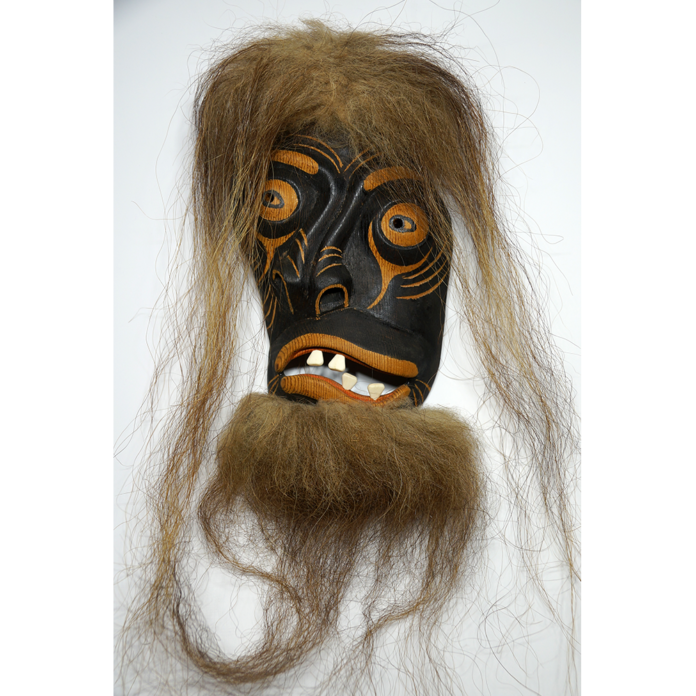
The Stones Remember

Gabriel Jeroschewitz, September 30th, 2025, dedicated to my high school teachers and our ancestors abridged

The Stones Remember

The past does not only whisper; it tolls like a bell that no hand rings, and on certain nights when the winds rise over the Borders, I can hear it still. Its sound is not in the ear alone but in the bones, a sorrow that rattles like thin reeds in winter water. They call such sensations memory, but let me tell you plainly—some memories belong not to us, but to the land itself. And when men are foolish enough to lean too close, the land sometimes comes awake.

In my boyhood, in those truant afternoons stolen from the blackboard and its chalk-dust tyrannies, I first tasted what I can only now call the dissolution of paper. I had taken some clerkly volume from the back shelf of the school library, a heap of dog-eared authorities no one read except out of punishment. Its subject was the high and far-off times, recounted in a dead tongue, blotted with pedantry. Yet the text began to breathe in the July field where I lay reading, sunlight freckling the grass. Letters blurred with heat, figures of Saxon axe-men and Norman butchers dissolved into streams and reformed as faces of the living earth—faces that looked back at me with neither kindness nor hostility, only recognition.

It was as if the air leaned close and whispered: You are not the first.

From that instant, a restlessness entered me. It has never left. All my life, I have wandered the winding ways of this island—its rivers, ruined churches, long barrows gnawed by sheep, half-forgotten forts perched on hills like broken teeth. And always, beneath the clamour of history with its trumpets and treaties, I have heard a deeper voice, lamenting.

The tale of Britain since the Flood is written in war, as every schoolchild knows. War that gouged the heart high, spilt jewels both red and white, and left brother to kill brother in salt seas brimming with tears. Caesars came with lawful butchers; Saxons with flame for thatch; Vikings with rune-cut axes; Normans with ropes and iron laws. Centuries later, priests jingled threats of Hell while gorging on roasted meat. I don’t need to belabour it. You know the litany. Blood, fire, famine, plague—a fame that soaked away and left only scars.

But what struck me in boyhood and still in grey age is that all this bloodshed was but an echo. The stone remembers older sorrows. Long before English or Scot and Babel cracked our tongues, some people stood among the standing stones and shaped them, not for war but for conversing with something we no longer name. They left no parchment, coin, or crown—only the granite, chalk, and earth patterns.

And this is where the horror begins.

For one August some years ago, I returned to the Borders, to that very place where Powsail Burn joins the Tweed. The riverbanks hummed with bees. A brown bull grazed in the far meadows—a seeming peace. I carried with me a notebook, intent on tracing again those patterns of stone and water that had haunted me for half a century.

But peace is a veil, thin as mist.

As dusk fell, I saw the salmon leap against the weir, flashing silver in the gloom. And in their arc, I thought I glimpsed the outline of a man—antlered, leaf-crowned, half-submerged. Call him Green Man, call him what you will. He vanished, but the river stirred as though it had drawn breath. And then the air pressed close again, whispering: You are not the first.

I confess I grew frightened. My hand shook so that my notes blurred. The evening bells from a village church tolled across the fields, dull and mournful, like the wound-horn of some forgotten battle. With each toll, visions pressed upon me—quick, bleeding visions.

I saw men of the first tribes, beehived and coracled, their skins daubed not with barbarous paint but with bright spirals, intricate as stars. They laughed, gossiped, stole, and feasted. They lived. But then—I saw them undone. Not by Saxon or Roman blade, for these people long predated such invaders. No, their undoing came by something older, a wave without an ebb, flooding the land from beneath.

It was not water. It was forgetting.

A plague of forgetting, thick as fog, rolling in silence. They lost their own names. They lost the words with which they had conversed with stone and river. Children stood beside their parents and did not know them. Lovers lie down together as strangers. All vision was maimed. All amethyst turned adamant. I heard their cries, and in the reeds I heard lamentation, like wind rushing through hollow bone.

The horror of it was not death. It was erasure.

And it spread. What are the endless wars of later age, if not the staggering of blind men who no longer remember themselves? Brothers are killing each other because both have forgotten they are brothers. History itself is an aftershock of this first forgetting.

By nightfall, I was near mad with dread. I stumbled from the river toward the old stone circle on the ridge. The moon rose behind it, pale and pitiless, outlining each stone like a black tooth against a silver sky. I dropped my notebook. The paper was already dissolving beneath my hand—the ink spilling away like water, as it had in childhood. Nothing written would hold.

And then I saw him.

Merlin, they call him, though the name is poor and ill-fitting. A shadow stood among the stones, a man with hair wild as roots, eyes drowned in centuries. He lifted his hand, and I knew it was not to bless but to warn. His lips moved soundlessly, yet I understood: The wound is still open. It bleeds in every age. It will never heal while men forget themselves.

I tried to speak, but my voice was lost to the tolling of some unseen bell. I ran, half-falling down the slope, branches scratching my face. Behind me, I heard the bees hum louder, a droning like the unceasing murmur of graves. I did not look back until I reached the bull in the meadow. Strange comfort, that creature—its breath rising in the cool night, steady, indifferent to men and their madness. Only then did I dare turn.

The circle was empty—stones and nothing more.

Yet I do not mistake. What I saw was true. The land does not lie.

Now, years later, I write this, though I know it will invite mockery. But mockery is a thin thing compared to silence. I must speak if only to bear witness, though my words dissolve even as I set them down. For what am I but nothingness set a-wandering, restless in life and seeking no peace in death, compelled to breathe the ages into the air lest they vanish utterly?

Do you understand?

The stones remain, from China to the Americas, India to Ireland. They are patterned, patient, and immutable. They are the last testimony of our unwritten forebears, those clean and cunning ones we slander as savages. Their presence hints in every human word, and though history lies, beauty endures—an impossible beauty reared by hands now nameless.

But it is fragile. Already, I feel it slipping again. I fear one day it will be gone entirely, and we will be left alone with only our wars, our roasted meat, our pedants prating of Hell. Alone in the garden, restless, unable to die.

And so I leave you this tale, if it endures on paper. Scan it before it fades. Listen—not with your ears, but with your bones. Do not fear the silence between words. For in that silence, the forgotten speak.

And if you find yourself upon some soft summer’s day by the Tweed or any river where stones stand long in field or wood, cup the water in your hands. Look within.

If the salmon leaps, the bees hum, the wind bends reeds into lamentation—know this: Memory is not merely yours. It also belongs to the land; one day, it may call you home.

But beware, for the land remembers not only beauty. It remembers forgetting. And that is a blessing from which no man returns whole..

US Politics Is Just Nonstop Fake Revolutions Now

It’s so silly how American politics is just nonstop fake revolutions now.

Millions flooded the US streets for the “No Kings” protests over the weekend to oppose a monarchy which does not exist without making a single tangible demand. Power was not challenged in any meaningful way. The status quo wasn’t disrupted in the slightest. People held up some signs saying the president is orange and that if Kamala were president they would be at brunch, and then went home.

The whole thing was just one big pep rally for the Democratic Party, designed to accomplish nothing beyond getting American liberals excited about the prospect of someday voting for Gavin Newsom. A bunch of boomers showed up to dance aroundand hold signs and feel as though they are fighting the power in their feely bits, while drumming up support for the same status quo which gave rise to Trump in the first place.

You see the same fake revolutionary astroturf zeitgeist on the Republican side. American rightists are constantly pretending they’re fighting some kind of populist rebellion against an oppressive establishment even while their party controls every branch of the US government. They act like Trump is ending the wars and fighting the Deep State even as he stomps out free speech on behalf of Israel, rolls out a Palantir surveillance system, pours weapons into facilitating Israel’s genocidal atrocities, bombs Iran and Yemen, ramps up for war with Venezuela, and perpetuates the horrific proxy war in Ukraine.

It’s two plutocrat-owned warmongering imperialist parties whipping their respective bases into the mass delusion that they are participating in a heroic act of revolutionary defiance by voting Democrat or Republican. They get everyone fighting a fake revolution so that nobody thinks about fighting a real one.

It didn’t used to be this way, for the record. The US has been a murderous and tyrannical oligarchic bloodbath for its entire existence as a nation, but up until fairly recently its politics looked more or less like the politics of other western nations. Politicians had campaigns where they’d try to argue that they have the best policies, there’d be an election, and then they’d spend their time in office philandering and pretending to make themselves useful. There wasn’t this constant LARPing about how voting for one of the two mainstream parties is participating some kind of a courageous insurgency against monarchy or communism or the Deep State or whatever.

That’s changing because public discontent with the status quo is soaring to all-time highs as Americans get poorer and everything gets shittier. The establishment order is no longer accepted and people are starting to push for real change, so their outrage needs to be harnessed and corralled into politically safe directions.

Donald Trump’s entire political career has been all about this. He introduced a new WWE-style kayfabe theatrics into American politics where both Democrats and Republicans feel as though they are fighting the power in a very important and relevant way — Republicans because they believe Trump is a populist rebel and Democrats because they believe Trump is an unprecedented threat to freedom and democracy. Really his whole thing is about protecting the status quo of the US empire, but both mainstream factions are duped into seeing the exact opposite.

Now you’ve got the two main strands of American political thought falling all over themselves to be the first in line to support the establishment, all while being told that they are fighting the power. They remain mollified because they think they are doing something, and the powerful get to keep everything they’ve stolen.

It’s truly a brilliant scam. Evil, destructive and tyrannical, to be sure, but you’ve got to admire the skill with which this psyop has been pulled off.

______________

Caitlin’s Newsletter is a reader-supported publication. To receive new posts and support my work, consider becoming a free or paid subscriber.

The best way to make sure you see everything I write is to get on my free mailing list. My work is entirely reader-supported, so if you enjoyed this piece here are some options where you can toss some money into my tip jar if you want to. Click here for links for my social media, books, merch, and audio/video versions of each article. All my work is free to bootleg and use in any way, shape or form; republish it, translate it, use it on merchandise; whatever you want. All works co-authored with my husband Tim Foley.

Bitcoin donations: 1Ac7PCQXoQoLA9Sh8fhAgiU3PHA2EX5Zm2

Searching for Symmetry

facebook.com/markprior.images](http://facebook.com/markprior.images)

Seagull

#1706