Home Blog Page 136

Indigenous Rights Are NOT “On the Table” for Komas Ranch/Islands Trust Rezoning

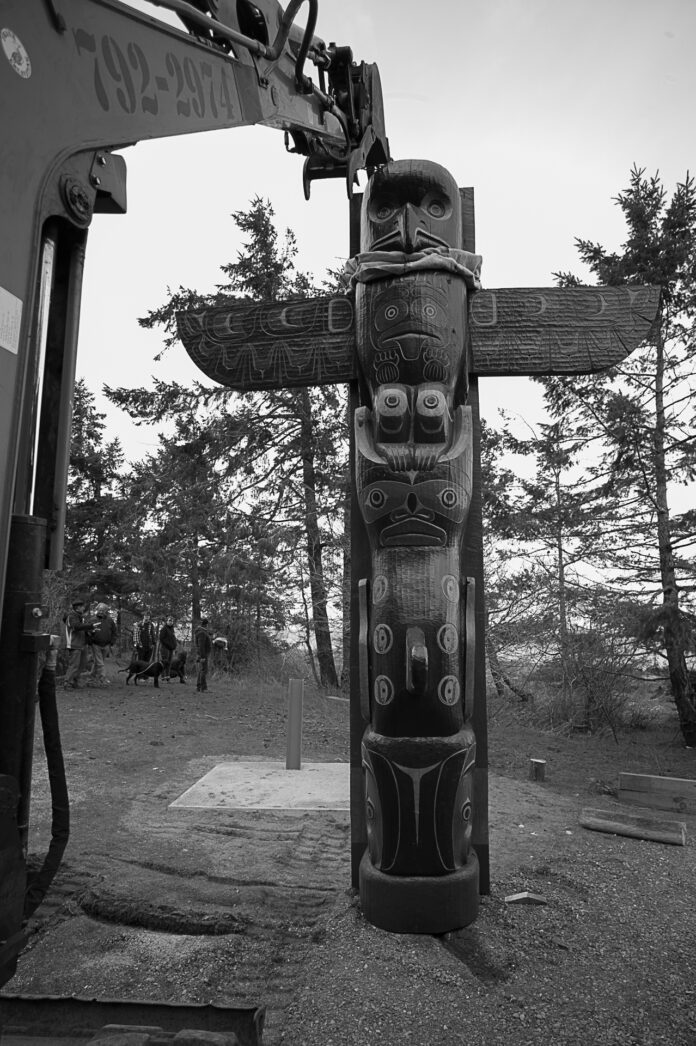
Pole Raising Mar.25th 2018

Indigenous Rights Are NOT “On the Table” for Komas Ranch/Islands Trust Rezoning

On October 18, 2018, there was a 200 person assembly at The Activity Centre on Denman Island where then Chief Nicole Rempel and K’omoks First Nation elders spoke of their desires relating to significant historical and archeological sites that exist here, and specifically the middens, including those that exist on the beachheads and foreshores surrounding the area known as Komas Ranch. These middens, along with their recorded sedimentary history, are also large burial grounds for the fallen from two waves of smallpox, decimating the indigenous population of taystayič (Denman) and other coastal indigenous communities.

The K’omoks leadership told attendees that they are interested in learning more about their history, but were emphatic that they had no plans for territorial “land back” claims on Denman Island, assuring current occupants of these unceded lands that they should not feel any threat of expropriation through their processes of settling land claims and territorial rights through the treaty process with the Provincial Crown. This is an extraordinarily generous position held by the K’omoks people given colonial history.

Recently, local residents have learned of an expiring Comox Valley Regional District (CVRD) land use contract with the current owners of Komas Ranch, and discussions of creating a public access trail to these sensitive archeological sites, something that seems counterintuitive if they are to be preserved and protected. Creating easy public access to these sites would create more foot traffic and more potential to disturb and disrupt their archeological value. 

The expiring land use contract is a separate issue from creating access to the significant historical sites for the K’omoks and other First Nations who hold legal territorial rights on Denman Island. Curiously, a Local Trustee has been publicly quoted as seeing the coming land use bylaw changes as an opportunity to “set the tone for the future” of lands that were “essentially stolen,” while adopting the Islands Trust “staff recommendations, including requirements for the current owners to work with K’omoks First Nation.”

The Islands Trust has limited agency to “require” anyone to work with any First Nation, other than in consultation, as that is the legal jurisdiction of the Provincial Crown, while the Province must surely insist that the owners of Komas Ranch do indeed accommodate K’omoks First Nation in assuring their lawful territorial rights are fully respected. Access to these very significant archeological sites is a primary concern when it comes to First Nations’ dealings with the ranch owners. 

A public access trail is a separate issue to be discussed in the Islands Trust rezoning process, in consultation with the K’omoks about the sensitivity of the area, and specifically in regard to securing their quest to protect their heritage. In this case, using the situational change of an expiring CVRD land use contract to gain a public access trail to the area seems at cross purposes of both reconciliation and of “preserving and protecting” an extremely sensitive historical and ecological area.

“Recognize that “unique amenities” includes cultural heritage and protected heritage sites;

Educate islanders and the general public on the illegality of damaging, looting, and possessing Indigenous cultural heritage and artefacts;

Ensure all agencies and ministries conform to heritage protection and conservation policies and principles as outlined by the Islands Trust and First Nations governments; 

Develop Trust wide heritage preservation overlays to ensure the preservation and protection of cultural heritage, heritage buildings, and cultural sites.”

 https://islandstrust.bc.ca/document/first-nations-engagement-phase-1-summary-report/.      
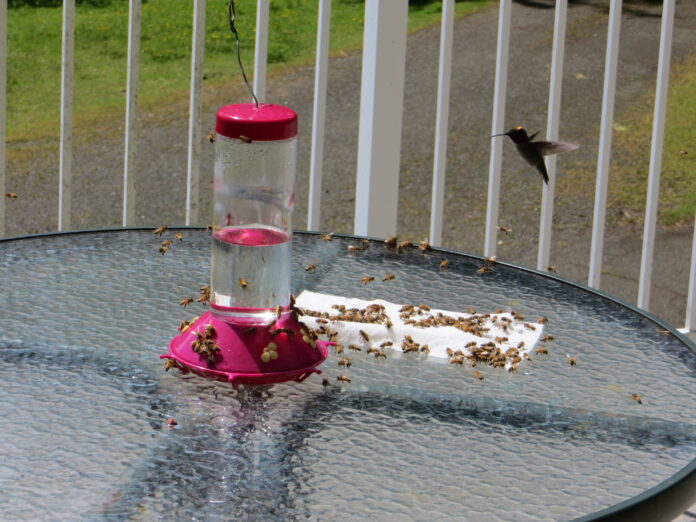
Green Wizardries, Summer Solstice 2024

I want to wish all my readers a very happy Summer Solstice.  This year, the Summer Solstice falls on the twentieth of June.  Druid teachers say it is okay to celebrate one of the Eight Great Festivals the day before, the day of or the day after.  Druids love threes.  In fact, if you feel like it, I am sure it would be fine to celebrate all three days.

This has been a very chilly spring.  I have never before had a fire in the house in June and we have worn wool toques some mornings.  I expect the weather will improve as we move into July.  If not, we just have to make the best of the weather the Gods give us.  

A good way to celebrate the Summer Solstice might be to plant some flowers for our poor struggling pollinators.  A friend from South Denman sent me a message that honey bees have been swarming her hummingbird feeder.  When she spilled some syrup, a great crowd of them came for a drink.  

I have heaps of flowers at my place but when it is too cold, most insects cannot fly.  It may be worth our while to set out some saucers of hummingbird syrup (1 cup of sugar boiled in 4 cups of water, no red dye) for the pollinators.  

The strawberry crop is coming in gangbusters this year.  Strawberries do not mind the cold.  I think a nice bowl of strawberries with some cream or a cake baked, cooled, split open horizontally with a knife and loaded with strawberries and cream would be an excellent addition to the dessert table for the celebration.  

This is the longest day of the year so I plan on getting into the garden and planting at least a couple of beds of carrots.  They make a great salad vegetable in the winter and after the Summer Solstice, the world turns away from the sun a little every day until we are in the dark, cold days of winter.  

I plant my carrots in rows instead of drifts because I learned from Bernard Moore, Joan Vinnedge’s favourite garden writer, that if you hill up carrots so their shoulders are buried, the carrot rust fly will not be able to attack them.  Carrot rust flies need to lay their eggs on the shoulders of a carrot or parsnip to infect the root.  

A good way of celebrating the Summer Solstice is to make some rose jam to give as presents for the Winter Solstice.  Make sure your roses have not been sprayed and use good fragrant roses such as rugosas. 

I have used this recipe for ages and have never had any trouble with it.  One lady on Denman told me she only makes rose jelly, which is very good, because her rose petals bleach out when she tries to make jam.  I hope people will try this recipe.  I have never had any trouble with my petals bleaching.

The recipe calls for 8 oz fresh rose petals, two cups of white sugar divided, the juice of two lemons, 3 cups of water and one 1.75oz package powdered fruit pectin.  Toss the rose petals, lemon juice and one cup of sugar in a bowl until the petals are coated.  Let them stand, covered, at room temperature overnight.  

The next day, bring the water to a boil over medium-high heat.  Stir in the rose petals and one cup of sugar.  Stir until the sugar has dissolved.  Reduce the heat and simmer, stirring frequently, for about twenty minutes.  Increase the heat and boil for five minutes.  Stir in the pectin and boil for one minute. 

Pour the jam into 4 half-pint jars, seal with lids and rings and process in a water-bath canner for ten minutes.  Store the jam in a dark pantry to keep the beautiful colour.  

Rose gin is another nice product to make on the Summer Solstice to preserve the sweetness of this time of the year.  Take a quart of vodka or moonshine and place it in a large jar.  Add several handfuls of rose petals, the peel of one citrus fruit, 2 bay leaves, 4 split cardamom pods, 3 allspice berries and 2 tablespoons of juniper berries.  Leave this in the pantry for about two weeks to infuse and strain out the solids.  Bottle and impress your friends with this lovely, refreshing gin.  The rose petals can be replaced with blackberries, sour cherries or, best of all, dried pears.  

We have invited some friends over for a feast to celebrate the season and will have a roast leg of lamb with seasonal vegetables and new potatoes.  This is the time of year to be grateful for all we have but especially our good friends and neighbours.   

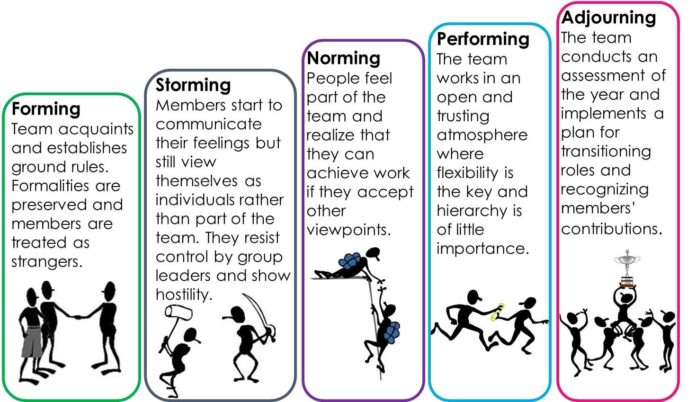
Mediative Approaches & Group Work (Part 2)

Mediative Approaches & Group Work (Part 2) 

  1. Mutual gains problem-solving mindset

Viewing the group’s work as a challenge to be addressed in a way that works for everyone removes the win-lose aspect of adversarial conflict and helps people save face. Face-saving, a key piece of restorative practice, is especially important in small communities, where people may spend much of their lives together. Even though it may take more time up front, a mutual gains approach promotes resolution and problem-solving sooner rather than later. Too often, time is spent in repair or fallout from a decision made too quickly. Ask instead: “What is most important here? What are we missing? What is the downside of this idea? What else needs to be addressed before agreement is possible?”

Sometimes small agreements, next steps, are the way to go. Begin with what is possible now. What options can everyone live with? (This is a good way to manage an inability to reach full consensus. Some may not be perfectly satisfied with every detail, but can they live with this arrangement/agreement? This approach invites a realistic assessment of options. If they can’t “live with it”, then more exploration/fine-tuning is needed.) Compromise may well be part of the way forward; ideally, the goal is to address as many of people’s key interests as possible, to look for mutual gains wherever they may be found.

  1. Common ground

Finding and naming common ground is an important and often overlooked aspect of group problem-solving. Anyone in the group can do this; it is not only the facilitator or leader’s task. Look for and say what people in the group have in common, even if it is only the need to get matters settled and end the stalled state, or the need to reduce tensions within the group. Damage to morale from a lack of a common sense of purpose or approach leads to resignations from community groups. People immersed in interpersonal conflict can’t see that they have anything in common with the other side. A facilitative group member can assist by finding and naming commonality for them. This is done as a kind of offering to the group (“It seems to me we all want to…..”), not expressed as an authoritative statement.

Often someone will then add to this statement, building more common ground.

  1. Maximizing the moment

Groups making tough decisions can benefit from recognition that what they are doing right this very moment is important and valuable. As in a mediation or a circle process, the moment can be likened to a “meeting at the crossroads”. The opportunity to make a good decision, to craft an elegant agreement, presents a moment that can truly be a turning point. Quietly emphasizing its significance can help disputants recognize the event as an opportunity for change, progress and closure. They then have the choice to accept the challenge (or not – sometimes people are simply not ready). Be sure to build in enough

time for people to absorb/adjust to changes that may be coming. Rushing or pressuring people to closure can create a backlash, and the group’s hard-won progress disappears.

  1. Creating & holding the container

Often people struggling with conflict in a group or organization benefit from knowing there is a “place” that can contain the conflict. If you are the Chair, the Board, the Head, you may well be that place, when you are engaged with parties in working on a particular task or goal. This does not mean becoming immersed in other’s people’s issues and taking on their problems as your own. It means providing the space, the ear, the questions, and the assistance needed while the group addresses its concerns and disagreements. On boards and committees, there is often an expectation that the Chair will be the “fixer”. The general culture however, is moving to the flattening out of hierarchies, so leaders need to model more adaptive, collaborative approaches. Empowerment and shared decision-making lead to increased creativity, greater buy-in, and renewed purpose. “Holding the container” may mean setting a time to revisit agreements reached, to fine-tune or adjust as needed, testing ideas in a pilot-like program with review built in, or other forms of oversight. These arrangements provide a safety-valve and recognize that during implementation, agreements/plans often need to be tweaked in some manner.

  1. Self-awareness

Finally, we can be aware of what kind of energy we each bring to a group’s work and be mindful of the fact that we project our disappointments, unfinished business, frustrations, and the like on those around us. Group work can be challenging and it’s important to try to bring our best selves to the group. The contributions volunteer community groups make to the well-being of a whole community are immeasurable. Kudos to all who engage in this way!

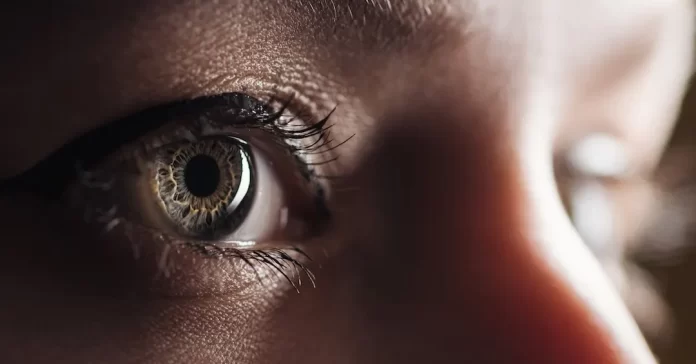
Behold The World Gently

The dead children don’t affect me like they used to.

The images. The videos. They still disturb and horrify, but not like they did in the beginning. Not anywhere close.

And, honestly, I hate it. I hate that that part of me has been stolen.

As much as I hated having my heart kicked around all day and having nightmares all night, I’d rather have that than this decreased sensitivity.

People should not become desensitized to such horrors. People should not become accustomed to decapitated babies and small, mangled bodies. To corpses run over by tanks. To body parts carried in plastic bags by loved ones.

These things should jar you. They should rattle you to your core. But they don’t anymore. Not here.

I held onto it for as long as I could. It felt like a solemn duty, to hold on to that part of me that still screamed with an appropriate mixture of grief and outrage at the latest tiny shredded body. But desensitization sets in whether you want it to or not. That’s how they create soldiers, after all.

I hate that these pricks have amputated that part of me, and I hate that I know it will never grow back. I have been permanently disfigured inside, mutated by atrocities, all the way down here safe in the Melbourne suburbs.

And I hate that this is happening all around the world to everyone else who’s kept their gaze fixed on Gaza. All around the world humanity is being mutated. All around the world something sacred is being stolen from the hearts of good people. All around the world people are finding callouses where there used to be tenderness.

And I want my tenderness back, god damn it. I want my tenderness back.

Give me back the nightmares. Give me back the tears. Give me back the dry retching over the toilet, and the shaking under the blankets. Give me back the collapsing onto the couch and not moving for several hours until my system can recover from what my eyes just saw.

I’ll take it. I’ll take it all back again. Just give me back that soft, tender part of myself that has been withered to dust by a live-streamed genocide.

I will take good care of it. I will feed it good things. I’ll give it plenty of sunshine, cupping it delicately in my hands by the window. I will take it for walks, and let it rejoice at the children running and playing, with their parts all together and their insides on the inside.

Don’t leave me hardened and darkened like a soldier. Give me back that soft, sacred part of myself that weeps at the corpses of children, so I can behold the world gently again.

___________________


My work is entirely reader-supported, so if you enjoyed this piece here are some options where you can toss some money into my tip jar if you want to. Go here to find video versions of my articles. Go here to buy paperback editions of my writings from month to month. All my work is free to bootleg and use in any way, shape or form; republish it, translate it, use it on merchandise; whatever you want. The best way to make sure you see the stuff I publish is to subscribe to the mailing list on Substack, which will get you an email notification for everything I publish. All works co-authored with my husband Tim Foley.


Bitcoin donations: 1Ac7PCQXoQoLA9Sh8fhAgiU3PHA2EX5Zm2

Letter to the Editor – Perri Gorrara

      I want to thank Yvon Raoul for his brilliant article, “Who to Believe? Questioning the News”. The article raised the very disconcerting issue of our “bought and paid for” mainstream media. It described, in painful detail, the one-sided approach to the two major conflicts on the day; Ukraine and Gaza and the search we all have to go through if we wish to find balanced reporting on issues of importance. As always, my gratitude goes out to The Islands Grapevine for its integrity and willingness to publish all points-of view. I would add one last news source that may be worth looking at, RT Live.

                Cheers, Perri Gorrara

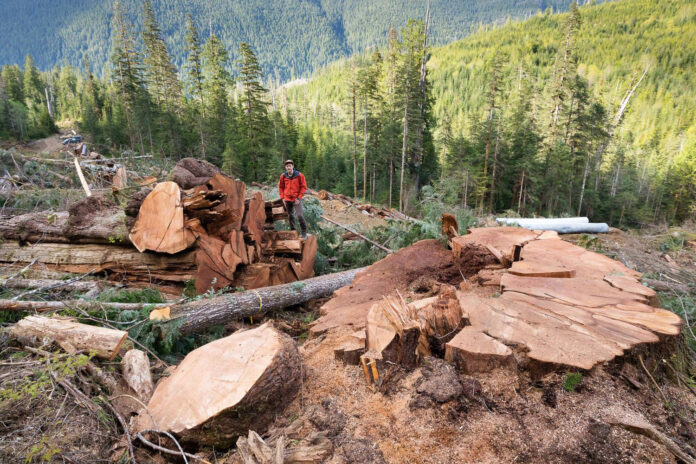
Nahmint Watershed under attack

Find attached a letter I wrote to BC Timber Sales and wonder if you will publish it, along with this introduction.
 
Two hours southwest of here lies the beautiful Nahmint Valley full of mountains, lakes, rivers, and many red and blue-listed at-risk plant and bird species amidst the few remaining patches of Old-Growth forests. BCTS thinks it has the right to auction off 4 cutblocks of the forest, to the highest bidder, with almost no oversight into what the logging companies are actually doing on the ground. One cutblock was auctioned off this February and according to the Ministry of Forests and BCTS personnel, who I have been hounding since February, there is nothing that can stop their ecocidal business plans. This cutblock was designated by the government, in the Vancouver Island Land Use Plan, as containing 82% Big Tree Old-Growth, 88% Marbled Murrelet habitat and is on an excessively steeply sloped mountainside. I keep asking them why it was not deferred and they continue to ignore me.
 
I have registered a formal complaint to the Forest Professionals of BC against Norm Kempe, the District Manager who allowed this cutblock to be auctioned off.
 
If you want to know more, please attend the DI Climate Action Network’s letter-writing cafe this Saturday, June 20th, from 10 til 1, outside at The Guesthouse.


Dear Professional Foresters, BCTS

It has come to the attention of Vancouver Island Forest Focus (VIFF) that a Public Engagement Plan was prepared by BCTS for the S. Elphinstone Watershed on the Sunshine Coast.  This Plan included a Watershed Assessment, a Terrain Stability Assessment and a period for public input.  Given the high level of public interest in the protection and management of the fisheries in the Nahmint Watershed on Vancouver Island, VIFF would like to know what Public Engagement has been undertaken or will be undertaken in the Nahmint Watershed..

Watershed Assessment for the S. Elphinstone Watershed carried out by Polar GeoScience under contract with BCTS resulted in the reduction in the size of cut blocks based on the equivalent clearcut area (ECA). However we do not think that ECA alone is a sufficient indicator of watershed recovery.  Therefore we ask that BCTS conduct a full watershed assessment using the probabilistic watershed model, as set out by Dr. Younes Alila (Department of Forestry, UBC).  

Since the Nahmint is a sensitive fisheries watershed it must also  be managed with the health and integrity of the salmon habitat as the highest value. Therefore BCTS must demonstrate that any planned logging and road building will not result in any further negative cumulative effect to fisheries values. To that end, we ask that all assessments dealing with the possible impacts on the fishery in the Nahmint Watershed be made available to local First Nations, DFO, local StreamKeepers, regional government and the public. 

Until this assessment is done, including peer review and revisions necessary to address issues raised during  the public comment period, no blocks should go forward to auction. 

Anything less, can be seen as wilful disregard of standard professional planning processes. 

We are poised to make a formal complaint to the Forest Professionals BC body that abides by the FPBC’s Code of Ethical and Professional Conduct: Sections 22 and 57, which states “all registrants are responsible to hold paramount the safety, health and welfare of the public and the protection of the environment.” 

We anticipate a timely response to this critical issue. 

Best Regards,

www.for.gov.bc.ca – /ftp/TCH/external/!publish/InformationSharing/Mt_Elphinstone_South_Watershed_Assessment/

https://www.for.gov.bc.ca/ftp/TCH/external/!publish/InformationSharing/Mt_Elphinstone_South_Watershed_Assessment/

Letter to the Editor – Edi Johnston

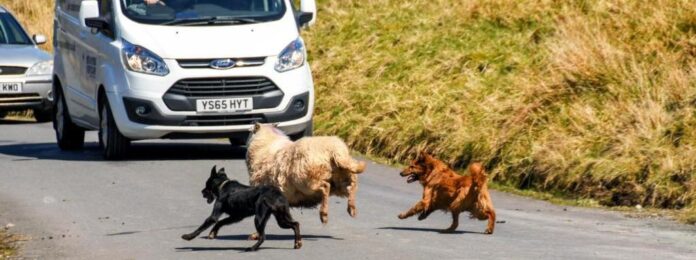
Dear Editor, there is a serious disconnect here and elsewhere when it comes to caring for our canine companions.

Dogs are Denman’s number 1 predator yet some caregivers could care less when their dogs take off. They think that posting a description and giving contact information suffices as being responsible. Its NOT!

These dogs are out hunting and are capable of inflicting horrible, life threatening injuries and even death to wild or domesticated animals. They are not to blame- the caregivers are! Even a small dog can chase a deer into the ocean where it will drown.

Also needing to accept some of the responsibility are those who keep farm animals and do not provide adequate protection. A 4 ft. high fence is not sufficient and are the defenseless farm animals supervised 24/7 with a plan in place to  quickly intervene?

Lastly, why isn’t there more community outrage when dogs are running “at large”. Its not okay and we all need to speak up even if the irresponsible owners are family, friends or neighbours.

If you’ve ever heard a deer scream when its guts are being ripped out, you can never forget it and when you’ve seen the  aftermath of the  damage your cuddly fur baby is  capable of,  you can never unsee it.

If you’re not willing to be a responsible dog owner – don’t have one!

Edi Johnston 

future butterfly

Blackberry Lane Children’s Centre – Notice of Annual General Meeting 2024

The 2024 Blackberry Lane Annual General Meeting (AGM) is scheduled for June 23rd from 2 to 3pm, and will be held at the Center. 

All parents, caregivers and community members with an interest in the well-being and growth of the Blackberry Lane Children’s Center are welcome to attend.

Event Details

Date: Sunday, June 23rd

Time: 2 – 4 pm

Location: Blackberry Lane Children’s Center, 1100B Northwest Rd, Denman Island

What’s On the Agenda?

Election of the Board

Financial Audit Review

Anyone interested in attending the 2024 AGM is invited to contact the center at denmanislandchildcare@gmail.com

Childcare will be provided 

As part of our Bylaws requirements, we will be holding Board of Director elections during the AGM.  The Board of Directors is responsible for governance, policy development and the financial stability of BBL.  Members are expected to attend monthly meetings, except for July and August (commitment of approximately 3-4 hours a month) and participate in committee work of the Board if possible.  An orientation is provided to all new members and child care is available during meetings. 


We are looking for volunteers who are committed to supporting BBL’s strategic plan and supporting BBL in its mission to be the very best child care center.  All skills and volunteers are welcome!!   Individuals with experience in non-profit governance, fundraising, or the child care industry would be valuable. 

BBL members who are interested in becoming a member of the Board or holding a specific position on the board are asked to contact the Center Manager at denmanislandchildcare@gmail.com

The Board of Directors is also seeking individuals to work on committees such as fundraising and community outreach. If you have any questions regarding becoming a member of the board or any of the committees please contact the Center at denmanislandchildcare@gmail.com or 250-335-1029

See you at the AGM!

Denman Island Garden Society’s Hats and Gloves Party

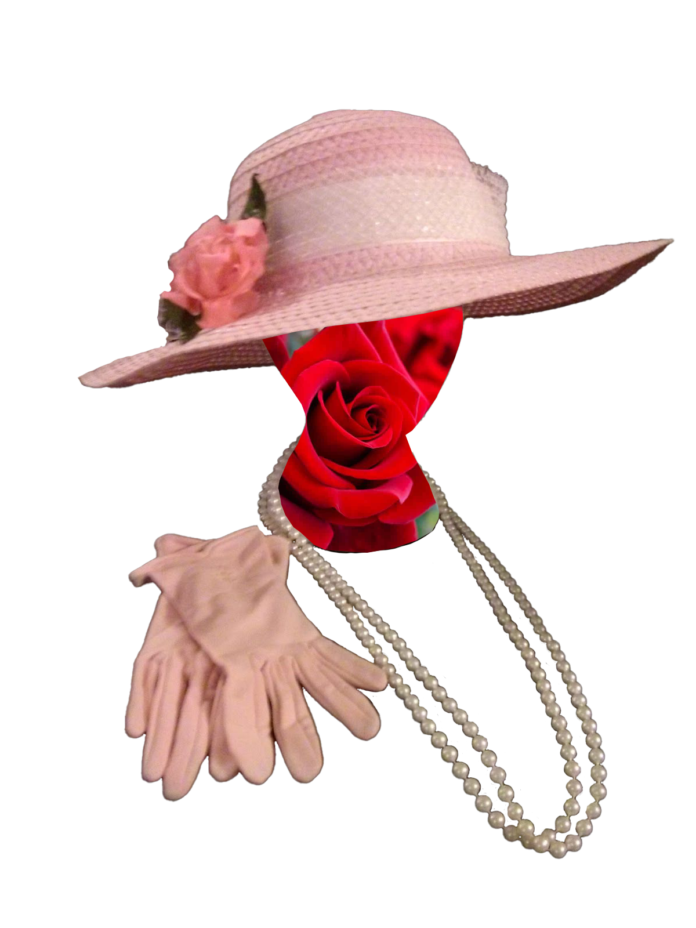
DIGS’ annual Hats and Gloves Party will be held at Liz Johnston’s fabulous rose garden (2621 Northwest Road) on June 19th, from 2 – 4 pm.  


The idea is to come wearing garden gloves and a garden hat that you have decorated with greenery, ferns, salal, flowers (especially roses).  This is a fun and whimsical event, so if you want to come in a hat decorated with tiny farm animals, birds or garden gnomes that will be fine.  All are welcome, with or without a hat.


Please bring finger food for a potluck picnic.  Gluten free and vegan dishes are really appreciated but there is plenty of room for traditional cakes and sandwiches.  Please bring a list of ingredients for the benefit of those with special diets or allergies.  


There will be a hat judging contest carried out by Liz, with prizes for the best hats.  Liz’s garden is full of fabulous roses and they will be for sale on the day so only bring enough money to get into a little trouble.