
Home Blog Page 123

Urgent Call for Action: Immediate Shutdown of Hazardous Shipbreaking Site in Union Bay

Urgent Call for Action: Immediate Shutdown of Hazardous Shipbreaking Site in Union Bay
 
Dear Government Officials,

We, the undersigned, are reaching out with deep concern for the health and safety of our families, the well-being of our community, and the preservation of the marine environment in Baynes Sound. It has come to our attention that the operations at the shipbreaking site adjacent to our residential community are not only hazardous but are in blatant violation of both national and international environmental and safety standards. 

 
Evidence of Hazardous Practices and Environmental Violations:
  • Government tests have confirmed the presence of known toxins such as lead and cadmium at concentrations 20 times above the Provincial maximum allowable limits, as detailed in records of the Ministry of the Environment. https://nrced.gov.bc.ca/records;keywords=5084
  • Asbestos, a recognized carcinogen, has been confirmed on the premises, notably within the structure of the USA Miller Freeman, with a high probability existing in the larger USA NOASS Surveyor.
  • A petroleum spill from the Miller Freeman, documented and available for public viewing here, poses a significant risk to the local ecosystem.
  • These hazardous materials, as defined under the Hazardous Waste Regulation, are being mishandled, exposing workers, the surrounding community, and the environment to severe risks. The practice of shipbreaking on bare ground, using cutting torches without containment measures, mirrors the dangerous and unregulated conditions found in less developed countries.
  • Despite the BC Province rejecting the operator’s application to discharge effluent into the ocean in December 2023, evidence suggests that these discharges continue unabated, as per the documentation available here.https://j200.gov.bc.ca/pub/ams/download.aspx…
Legal and International Standards Ignored:
The Basel Convention, ratified by Canada in 1992, clearly defines end-of-life vessels as hazardous waste, yet this site operates without regard to this classification.
The NGO Shipbreaking Platform and the International Labor Organization highlight the global consensus on the dangers of shipbreaking, underscoring the gross negligence at the Union Bay site.
The lack of community consultation and the disregard for minimum setback requirements betray a profound disrespect for the well-being of our community and environmental integrity.
For Example:
  • BC Landfill minimum setback requirements to sensitive areas (residences, regional parks, is 500m.
  • Alberta minimum setback requirements for Hazardous Waste facilities is 450m.
  • DFO (Area 14.28) prohibits shellfish harvesting within 400m of this shipbreaking site.
  • The BC Province likes to call this a Recycling Operation – even their own recycling legislation identifies the toxins found at this site as hazardous waste.
Our Demands:
  • Given the clear evidence of hazardous operations and the violation of legal and ethical standards, we demand the following immediate actions:
  • Shutdown of the Current Shipbreaking Site: Cease all operations at the site to prevent further environmental damage and health risks.
  • Comprehensive Site Remediation: Implement a thorough cleanup of all hazardous materials and pollutants released into the environment.
  • Regulatory Compliance Review: BC/ Canada to ratify the Hong Kong Convention for the safe recycling of ships and not allow the beaching of vessels or ship recycling in an ecological sensitive area.
We acknowledge the necessity of shipbreaking as a part of maritime operations but insist it be conducted in facilities equipped with proper containment (dry dock) and safety measures, far removed from residential areas and sensitive marine ecosystems.
The health, safety, and environmental risks currently posed by the shipbreaking operations in Union Bay are unacceptable. We urge you to take immediate action and shutdown this hazardous waste site to protect our community, our environment, and the integrity of Baynes Sound.
We look forward to your prompt response and are open to discussing this matter further. Please consider this letter a call for urgent action and accountability.
Sincerely,
CCOBS
ccobs.society@gmail.com

Purple Martin News 

Purple Martin News 

You may be wondering what happened to the purple martin nest boxes at the Denman community dock.  They were recently taken down for replacement while the Purple martins winter in the warmer climes of Brazil. We anticipate their return in late April-to-May. 

Of the 17 boxes removed and inspected by a team of volunteers on February 3, we determined that a total of 14 nestboxes were occupied in 2023 and 3 were either used in previous years or not at all. We subsequently learned about two pairs with nests at other locations. Human constructed nest boxes have been instrumental in the increase of purple martins along the coast of Vancouver Island and Denman for decades, as natural habitats have been lost due to various forest management practices and/or competition from other birds. Replacement of the nest boxes will be done using heavier boards about 1 inch thick for better insulation and longevity, as well as to break the cycle of parasite overwintering. Over 120 board-feet of Western red cedar was milled for the nest boxes by a volunteer using dying trees on his property. The pieces for new nest boxes have been cut and will be assembled and mounted by early April. 

The other good news is that a Denman Island Western Purple Martin Project has just been fledged under the wings (pun intended) of the Parks Committee of DIRA.  The project mandate states: “To sustain a viable breeding colony of Western Purple Martins on Denman Island, BC into the future”.

The Project Team is comprised of volunteers focused on two components: Administration and Construction. Caryn Rea (CRea) will serve as the Administration Project Leader, assisted by Val Hammell, Ben Jones, Joan Scruton, and Peter Karsten. Dean Heyland will be our Construction Project Leader, responsible for managing construction and deployment of the refurbished nest boxes with a team of experienced volunteers. Embedding the Project within DIRA was necessary to ensure continuity and support for sustaining the purple martin project for years to come.  

We look forward to providing updates about our Project with the community, and hope to see you enjoying our aerial acrobats with us this spring!

…. C Rea & Peter Karsten

Shucking Oysters: Aroma Therapy

Shucking Oysters: Aroma Therapy
By Alex Allen

Whenever I encounter someone wearing cologne or perfume, it’s a blast from the past. And it’s never subtle. Those who like to hide themselves under a veil of patchouli or cedarwood seem to have lost their sense of smell and mindfulness. It’s not a veil; it’s a burlap bag. Did you dip yourself in the liquid or did you marinate in it over night?

Today, the world of colognes and perfumes is all about branding yourself. From fuzzy pink, white and gold hues to bold, solid black and gray tones, the receptacles are the most telling. The women’s are usually curvy, sensual, and see-through. In the men’s section, the colognes look like gadgets to grip onto in a manly way. So, where to start?

No matter what your mood, gentlemen, Hugo Boss Elixir Parfum, will cover it. The five stages of man. Need to chop wood and hookup? Fresh and Masculine, is your go-to with an apple, cinnamon, and woods scent. Want to feel like you had a cold morning swim? Fresh and Vigorating, of course, with an apple, madarine, and sandalwood scent. Invited to an art show opening? Fresh and Refined is so your choice, with a scent of apple, cardamon, and vetiver. Or maybe you have a date with the local librarian, then Warm and Sophisticated is the one, with orris, cedarwood, and vegetal leather. And finally, I’ll let you set the tone, Rich and Charismatic, with an incense, vetiver and cedarwood scent and nary a hint of Elon Musk. Vegetal leather? 

Awkwardly named, there’s Invictus Victory Elixir by Paco Rabanne. Like a musical arrangement, the top notes are lavender, cardamom and black pepper; the middle notes, incense and patchouli; and the base notes, vanilla pod and tonka bean. A backstory may help. While recovering in an infirmary, after one leg was amputated, and almost the other, Victorian era British poet William Ernest Henley was moved to write a poem “Invictus.” In a trophy bottle, Invictus is the “place where vibrancy meets muscle, where success meets the quotidian” and where you may get close enough to touch Harry and Meghan. (Maybe this is what Taylor Swift’s boyfriend wore at the Superbowl.) 

If a grenade and the Oscar statuette had sex, Le Male Elixir by Jean Paul Gaultier, would be their love child. The description is as sexually tense as a romance novel: “Radiant at first sight, glowing with masculinity, more fiery than ever. The torso is bursting with muscles, the skin is bathed in copper color by the sinking sun … Finely chiseled grooves stand out on its muscles dipped in gold and merge with the amber stripes of the sailor shirt, which plays with transparency effects in a highly sexy way.” But wait there’s more. “In this breath of fresh air, dashing lavender quickly takes on lusty proportions, enhanced by the balsamic richness of benzoin with syrupy vanilla accents.” Excuse me, while I get some air. 

For women, we have Burberry Her Elixir de Parfum. This bold and sensual fragrance is the latest chapter in the intensifying story of Burberry Her. Are you a free-spirited woman seeking the excitement of your next adventure? Then look no more, Burberry knows who you are: “sensual, irresistible, and not held back by boundaries” and ominously, “possesses an addictive persona.” Her Elixir de Parfum offers “signature fruity gourmand notes alongside a daring burst of dark red berries with jasmine, rounded with sensual and addictive vanilla and amber.” The pink bottle with an opaque finish represents “the intensity of the fragrance inside and its confident and sensual nature.” Be forewarned.

Or perhaps, some women would prefer to smell like a Mojito, with hints of lime, mint and the jasmine-like scent of the Mariposa lily, the national flower of Cuba. Packaged in a yellow and pink ombre glass bottle, Brisa Cubana by Escada, is a new citrus floral fragrance inspired by the “Cuban Breeze” of the butterfly lily. Now, you can smell like a tropical cocktail before someone spills one on you. 

Bored and dissatisfied? In a cherry purple bottle, Party Love Eau de Parfum by Escada, is the one, “where dreams and desires burst into life and an out-of-this-world party with friends is only the beginning.” The fragrance “captures the essence of femininity through an accord of mesmerizing dark cherry and airy whipped cream over a velvety vanilla cupcake. The perfectly scented touch of gourmet sweetness before partying with your girl crew.” Smelling like a cherry cupcake will transport you “into an enchanted realm of joy, dance, and irresistible sweetness”? What happened to Ecstasy?


What is going on here? They’re not fragrances, they’re scented promises. Will every woman wearing a floral scent evoke a sense of grace and tenderness? Will every man come across as sophisticated and confident just because he’s wearing a woody cologne? How about your natural scent? Does it leave a memorable trail wherever you go?

NAVIGATING ANGER (part 1)

NAVIGATING ANGER (part 1) Sally Campbell

The thing about anger is that we all experience it. It is a normal aspect of being human. You might think of it as a sign of being fully alive. People who say they’r e never angry are not in tune with their feelings. Anger is consider ed to be a secondary emotion because there are other emotions beneath it that the anger is masking. They could be frustration, fear, sadness, hurt, embarrassment – any number of emotions which expose our vulnerability when we express them. So instead, it comes out as anger. When we can figure out the

trigger to our anger and what lies beneath it, we have a much better chance of managing or avoiding an angry response altogether.

Anger can be thought of as an informant; it tells us that something isn’t working, something has to change. Often what has to change is our own mind-set, the way we look at something. Other times it’s external – an aspect of relationship, our habits, our ways of doing and being in the world. It’s not anger in itself that is a problem; it’s how we express and work with our anger.

Most of us learned how to express and respond to anger (or not) by our parents’ example, well before we were aware of what was happening. We take this unquestioned imprinting through life, most often never examining it. Inability to work effectively with anger can have devastating results and lead to many a broken or troubled relationship.

I’d like to offer some practical ways to improve that effectiveness. You may find something you can apply in your interpersonal communications, or you may find validation for your existing ways of working with anger. Many of these ideas are simple common sense. They can be hard to apply though, when we are rattled by what someone just said or did. These ideas are offered for contexts where personal safety is not at risk. Anytime that is the case, safety is paramount.

With any formidable life challenge, it helps to have a wide variety of tools in the “tool kit”. You don’t want a hammer to be your only option. Anger is no exception. So here are some ways to work with it. I’ve learned these ways through experience – working as a mediator for many years, often in contexts of intense anger – and also through untold hours of training in service of my career and as a lifelong learner. The work is never over in this sphere; if we think we have these tools “mastered” we’re usually deluding ourselves, setting ourselves up for a big, humbling crash. Plus, this whole arena of communication is really more about attitude than skills. We can acquire all the skills in the world, and if we relate to others with arrogance or aggression, all that training is for naught.

Anger is a healthy form of resistance. Anger expressed poorly, in the wrong place or at the wrong time, creates resistance & defensiveness.

Although angry expression tempts the recipient to react defensively by either responding in kind or backing off, working with anger involves bringing energy toward the angry one, by trying to understand what is behind the anger. In Justice Institute BC terminology, this involves moving into resistance, resistance being defined as “the negative expression of an unmet need”. There

are many different ways to find out what’s fuelling resistance. An honest curiosity can make a huge difference. What is going on for this person right now?

Questioning

Asking a question of the speaker that can’t be answered by “yes” or “no” (an open question) can:

  • help the speaker clarify intent,
  • give you more information, and
  • defuse the speaker’s anger.

How you say something is as important as what you say. Your tone of voice will say more about the genuineness of your intent to listen & learn than the content of your words. This means that you must manage your own emotion first (more on this coming). If you can’t muster a curious, non-threatening tone of voice, you are not yet ready for this conversation. Timing is really critical and it’s a challenge, as the temptation to react in the heat of the moment (or the slight) is strong. Who hasn’t been there, wishing we’d just kept our mouths shut? So, giving ourselves time to let our emotions settle to a calmer place is a critical aspect of navigating anger.

When the time feels right, we can always start with an inquiry. Open-ended questions (beginning with how or what, or when you said…, what did you mean? for example) are important, as they invite the speaker to give their own perspective rather than simply respond to your lead. In the world of legal speak, “leading questions” are so named for a reason!

Next week: Part 2

You Only Need To Cage A Bird If It Knows That It Can Fly

FEB 19, 2024

Listen to a reading of this article (reading by Tim Foley):

One point I keep trying to drive home here in as many ways as I can is that this is the dystopia we were warned about. The main difference between this mind-controlled dystopia and the fictional dystopias in novels like 1984 is that in 1984 people knew they weren’t living in a free society, whereas in this dystopia the people believe they are free.

In Orwell’s dystopia people knew they weren’t free and had to use doublethink to stay out of trouble with their rulers. In this dystopia people have no idea how pervasively they’re being dominated by their rulers; they think they came up with their ideas, worldview and political positions on their own, when in reality those belief systems were constructed inside their skulls by a profoundly sophisticated propaganda machine without their even knowing it.

All mainstream and semi-mainstream political factions are owned and operated by the powerful, and propaganda is used to get the public subscribing to them to advance the interests of the powerful. Because the overwhelming majority of us have been manipulated into espousing one of these power-serving belief systems (they give you multiple choices depending on your ideological disposition), the more overtly totalitarian measures described by dystopian novelists are unnecessary. You only need to cage a bird if it knows that it can fly.

But make no mistake: our society is no more free than those in the dark futures imagined by storytellers. If our minds are not free, then we are not free. If we’re being successfully manipulated into thinking, speaking, acting, voting, working and consuming in accordance with the wishes of the powerful, then we’re just as locked down as we would be if we had chains around our necks. Collectively we could not be any more aligned with the will of the powerful than we already are, even if our brains were replaced with computer chips.

There is no more need for dystopian fiction, because the dystopia has already arrived. It’s here. In fact, dystopian fiction is actually destructive because it causes people to imagine that dystopia is a threat that exists somewhere off in the future instead of right here and now all around us.

We don’t need dystopian fiction for the same reason we wouldn’t need imaginary swords-and-sorcery fantasy novels if we we lived in a world of wizards and dragons. People living in dystopian societies do not need dystopian fiction, they need dystopian facts. Dystopian journalism. Dystopian documentaries. Dystopian polemics. We just need true information and reality-based ideas to counter the lies and manipulation we’re inundated with from day to day.

We cannot be free until we have used the power of our numbers to shrug off the control of our dystopian overlords, and we’ll never do that as long as a critical majority of us are unable to see how profoundly unfree we really are. There’s no escaping the mind control matrix of imperial propaganda until you can see the lines of code it is made of.

Our most important task then, at this point in history, is to keep pointing out those lines of code for as many people as possible, in as many ways as we can think of. The one advantage to this type of dystopia is that our rulers need to maintain their nice-guy free society image in order to preserve the illusion that we are free, so they can’t just come out and start imprisoning everyone who spotlights the myriad ways we are enslaved by lies and propaganda. They’ll never grant us a major mainstream platform on which to do this, but we can operate within the margins, waking up one person at a time to the reality of what’s going on.

So go around spreading the truth. Fighting the propaganda. Weakening public trust in the mass media and the political constructs it manufactures consent for. Highlighting the depravity and murderousness of the empire. Use any and all media and forums you find to be effective. 

Everything you do on this front makes a difference, and don’t ever let anyone tell you otherwise. The propaganda machine is the linchpin of their power. It’s what holds the empire together. Without the ability to manipulate the public at mass scale, our rulers cannot rule.

Once people are no longer buying into power-serving narratives, we will gain the ability to begin working toward the creation of a truth-based society that works for everyone. But this will never happen as long as we are being successfully manipulated into believing that this model for human civilization is acceptable and serves our interests. The very first step is un-jacking our brains from the propaganda matrix.

______________

Caitlin’s Newsletter is a reader-supported publication. To receive new posts and support my work, consider becoming a free or paid subscriber.

My work is entirely reader-supported, so if you enjoyed this piece here are some options where you can toss some money into my tip jar if you want to. Go here to buy paperback editions of my writings from month to month. All my work is free to bootleg and use in any way, shape or form; republish it, translate it, use it on merchandise; whatever you want. The best way to make sure you see the stuff I publish is to subscribe to the mailing list on Substack, which will get you an email notification for everything I publish. All works co-authored with my husband Tim Foley.


Bitcoin donations: 1Ac7PCQXoQoLA9Sh8fhAgiU3PHA2EX5Zm2

March 12-14, 2024, Islands Trust Council Meeting Program Announced

Lək̓ ʷəŋən, METULIYE/Victoria, B.C. – Islands Trust Council invites the public to participate in its next business meeting being held in Nanaimo at the Coast Bastion Hotel, 11 Bastion Street, March 12-14, 2024. There will be multiple options for participating in, or viewing the meeting. The public are able to attend in-person and are welcome to listen and participate by telephone, join the meeting by computer or smartphone, or simply watch the meeting on a computer or smartphone.

Trust Council meets quarterly to make decisions about matters that apply to the Islands Trust Area and Islands Trust operations. Trust Council receives, discusses, and makes decisions about policies, finances, and proposed work for the coming quarter.

Featured Sessions

Delegations and Public Comment Session – Present as a delegation to Trust Council or speak at the Public Comments portion of the meeting on matters affecting the Trust Area. 

Anyone wishing to present as a delegation is required to submit this form along with your complete presentation by the February 20, 2024 deadline. Visit https://islandstrust.bc.ca/contact-us/share-your-views/ for more details. 

The final meeting schedule and agenda package will be posted to the meeting page on the Islands Trust website by March 4, 2024.

Trust Council works to preserve and protect over 450 islands and their surrounding waters in the Salish Sea and, welcomes input, comments, ideas, and feedback on topics related to the jurisdiction of the Islands Trust.

About Islands Trust
Islands Trust is a federation of special-purpose government bodies representing over 30,000 people living within the Islands Trust Area and another 10,000 non-resident property owners. The Islands Trust Area is located within Coast Salish territory and is the homeland to over 28,000 Coast Salish Peoples who have called this place home since time immemorial. Islands Trust is responsible for preserving and protecting the Islands Trust Area’s unique environment and amenities by planning and regulating land use, development management, education, cooperation with other agencies, and land conservation. The area covers the islands and waters between the British Columbia mainland and southern Vancouver Island. It includes 13 major islands and more than 450 smaller islands covering 5,200 square kilometres.

Contact:    
Peter Luckham, Chair, Islands Trust Council 250.210.2553
Russ Hotsenpiller, Chief Administrative Officer, Islands Trust, via Clare Frater, Director, Trust Area Services  250.405.5192

Jesus walked up to a roadside kiosk…

Not even Easter Sunday forgets about those of us locked away from the world. Jesus may have risen from the dead and dislodged the boulder that hemmed in his cave but we mere mortals in purgatory-red lack the strength or resolve to achieve a similar feat. Perhaps it has something to do with our diet. Our morning breakfast was but a cold muffin and coffee. I’m told that such a special day as this will be commemorated with a brunch at 11:00 am. Waffles, I’m informed. My only question is, ‘how will they fit them into a styrofoam cup. It should be a feat proportional to that of Jesus’ improbable accomplishment. One thing’s for certain. The body temperature of the resurrected saviour will be far warmer than the brunch we are to savour! 

As we have all had three straight days off heading into our fourth this morning, sleeping patterns are becoming erratic. This is of little concern  to the on-duty C.O. however. Being Easter long weekend, all of the heads with any sort of tenure are away with their families or the easter bunny. This leaves us with all of the rookies. Low end of the totem pole types such as this are ridiculously by the book. Today’s plebe made his rounds of the range with a regularity not often seen around here. Most everyone was stirred at 6:00 am from their slumber by the invasive flicker of the C.O.’s trusty flashlight. The protocol for making rounds is something like every 20-30 minutes. Unannounced entrances into our rooms to see that we aren’t smoking lint or fixing to hang ourselves for having nothing to smoke but lint, I assume. More relaxed C.O.’s will keep to doing rounds every couple of hours. But on this weekend and more particularly this morning, such irritation began at 6:00 am sharp, and has continued through to present. Sitting around awake at 6:30 am with nothing to do but wait on an 8:00 am coffee and muffin. Ah, holidays! Methinks that the dust bunnies have a greater likelihood of being combusted once stirred from our sleep, as opposed to when lolling about in dream. Given that this place is more rehab centre than jail, I suppose that the rude awakening by torchlight stalled out many a dream of smoking substances far more potent and addictive than lint! 

So now with a cold muffin and coffee settling on my belly, I sit in wait of my scheduled visit with Ted and Gail. They’ve seen fit to set aside some of their time on Easter Sunday to come see me. Such kind and sweet friends! I wonder if Jesus craved something on his belly after three days of death? Perhaps there was a roadside kiosk nearby his cave. “A latte and muffin if you please. And yes, I would like the muffin heated up for I am certainly no heathen… nor Campbell House inmate.”

Green Wizardries: Going Around in Circles

Green Wizardries, Going Around in Circles, by Maxine Rogers

Our culture is an odd one that imagines going in straight lines from the past to the future or from a primitive state to constant progress.  In nature and history, if you bother to look, you will see far more  going in circles than straight lines.  

In nature, a tree seed sprouts and thrusts up a tiny shoot.  With good luck, good rain and not too many browsings by herbivores, the sprout will become a sapling and then a young tree, an old tree and then a dead tree.  To accomplish all this, the tree takes in atmospheric carbon and by the miracle of photosynthesis turns the carbon with water and some trace nutrients into wood, bark, buds and leaves.  

Once the tree dies, the material of the tree either burns or decomposes, releasing the stored carbon back into the atmosphere where other plants can ingest it and put it back to work growing plants.  I keep reading fallacious statements that people are paying to have trees planted to store carbon in the trees. People seem unable to see that trees are not a store of carbon for very long.  

In nature, carbon does not need to be stored.  Carbon needs to go in circles.  I admit that burning all these fossil fuels and polluting the Living Earth is far from a good idea and think it a fine thing to plant trees but the trees will not store the fossil fuel-carbon we so thoughtlessly burn.  

There is even a remarkable, unintentionally funny, article going about saying that backyard gardens produce food with five times the carbon footprint of industrially-produced food.  The article describes making compost as a process that releases carbon into the atmosphere.  Well, if you do not compost garden waste, grass clippings, spoiled hay and animal wastes to make an excellent soil amendment, they will decompose over time in any case and release their carbon back into the atmosphere.  Compost is carbon neutral.  

Conventional food, produced by one of the stupidest forms of agriculture ever to be seen on this, once glorious, planet is fed with synthetic fertilizers made from petrochemicals such as natural gas.  This fertilizer burns up and releases soil carbon into the atmosphere while making the soil more acidic and less hospitable to plants.  You need to use more fertilizer every year just to get the same amount of production.  The food so produced also has to be shipped, and sometimes refrigerated, long distances by burning fossil fuels.

We are also running short of cheap hydrocarbons to make fertilizers with.  This is straight-line agriculture with dead soil, ruined waterways, extirpated wild animals and plants and soil erosion as a result.  This is progress!  Progress only means carrying on in one direction.  

Civilizations also have cycles, they start out as small sprouts, with some luck, they grow into vigorous young civilizations, grow older and more flabby and finally die.  Once a large old civilization is dead, it allows new seedling civilizations to spring up and try new ideas and forms of living.  Of course, when a civilization becomes very old and doddery, that civilization begins to show signs of senility.  I certainly see that in the collective known as the West. 

What can a person trapped in a senile civilization do to protect themselves and to make their life more beautiful?  I would say, learn from nature that a declining civilization is not a problem that can be solved.  It is simply a stage in the life of the civilization.  I would also give up taking any statements of the senile elites very seriously.  In fact, I would say, pay them no attention at all and start building a bridge to the next seedling civilization that may take root here.  

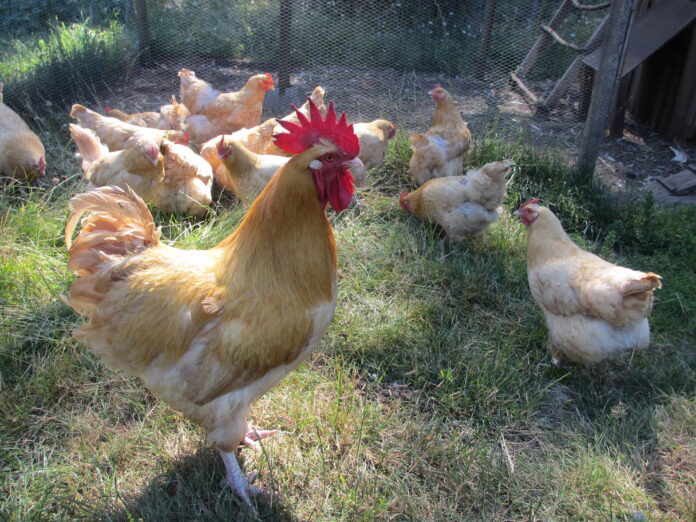
Start looking for the circles.  When we get eggs from our hens, we burn the shells in the fireplace.  We also burn bones from the meat we eat.  This calcium-rich ash is put back on the pasture and on garden beds to give leafy greens a meal of calcium that they so love which we then eat and feed to the hens in a virtuous cycle.  

The soiled bedding from the hens is composted and made into a valuable soil amendment.  This is used to grow squash which is fed to the hens, making their eggs fabulously nutritious.  There is no waste where you keep hens.  Any food scraps from our meals are mixed into the hens’ morning mash and turned into delicious eggs.  Elderberries grown in compost from the hen house are cooked and made into syrup and the solids fed back to the hens who attack them with gusto.  

One of the best ways to improve one’s life and civilization is to spend more time in the garden.  Oh yes, and get some hens too.  

Safely Home

1 13 24 safely home

The water was up to my waist.

I stood in the street

and watched people try to function.

I saw my sister leaving church.

She was up on the steps gabbing with a homeless man

and telling him she had no money,

that she was on a fixed income and was poor just like him.

She had on her candy cane tights

and the red and white rings went around her skinny legs

in endless circles.

Her ball cap had a picture of the late Queen E.

She loved and admired the Queen.

I pushed my way towards her through the water.

If nothing else I would get her safely home.

worm hole