
From Moratorium to Treaty Challenge: Why the Herring Story Matters on Denman Island
By Dorrie Woodward and Brad Hornick
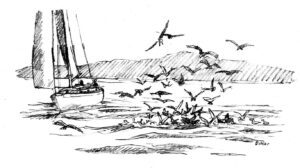
For those of us living on Denman Island, Pacific herring are not an abstraction. Each spring their return transforms the waters around Denman and Hornby into one of the most extraordinary ecological events on the coast. Sea lions gather, seabirds descend, eagles line the shoreline and the water itself changes colour with milt.
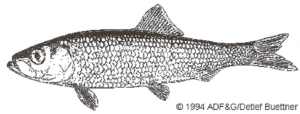
Herring are small fish, but they occupy an outsized place in the marine food web. They convert plankton into a rich source of food for salmon, seabirds, marine mammals and many other species. Around Denman and Hornby, we happen to live beside one of the most important remaining herring spawning areas on the B.C. coast.
In November 2024, W̱SÁNEĆ Hereditary Chiefs issued a declaration calling for a moratorium on commercial herring fishing in the Strait of Georgia and for the restoration of herring throughout their traditional territory. Their concern is ecological, but also cultural, economic and legal. Herring once supported W̱SÁNEĆ communities around the Saanich Peninsula as an important food and economic resource. The chiefs argue that the disappearance of herring from traditional harvesting areas has breached their Douglas Treaty right to “carry on fisheries as formerly.”
What began as another call for a moratorium is now developing into something considerably more consequential: a potential treaty rights challenge to the way Canada manages Pacific herring.
In December 2025, the W̱SÁNEĆ Hereditary Chiefs received a legal opinion from Ratcliff LLP. According to the Herring Conservation & Restoration Society, the opinion concluded that the chiefs could potentially bring an action against Fisheries and Oceans Canada in B.C. Supreme Court, arguing that their treaty fishing right has been significantly diminished, at least partly because of the commercial fishery. The legal challenge would require evidence that herring have been substantially reduced within traditional W̱SÁNEĆ harvesting areas and that commercial fishing contributed to that decline.
That distinction is important because DFO sees the situation differently. For the 2025–26 season, DFO forecasts Strait of Georgia spawning biomass at approximately 102,791 tons above its established biological reference points, and has authorised commercial fisheries at a 14 per cent harvest rate, to a maximum of 14,390 tons. From DFO’s perspective, the Strait of Georgia stock can sustain that level of fishing.
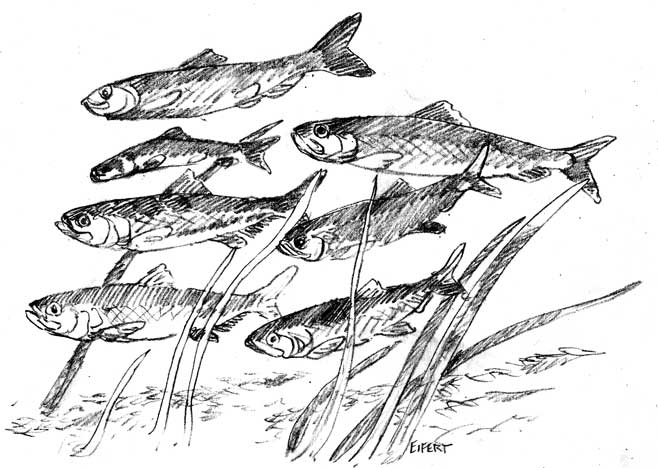
The W̱SÁNEĆ challenge raises a different question: do the commercial fishery practices, which consistently remove the older, larger fish from the stocks in the Strait of Georgia, account for herring disappearing from particular bays, inlets and traditional harvesting grounds? That question is becoming the heart of the case as scientists learn that these fish hold the memory of the spawning ground locations, and the younger fish, without their leaders, abandon these sites. This understanding has been part of Indigenous Traditional Ecological Knowledge on the coast for many years, so the new science is corroborated by traditional sources.
Through 2026, W̱SÁNEĆ knowledge keepers, lawyers and researchers from the University of Victoria have been assembling historical, ecological and oral-history evidence. Their work includes interviews with Elders, research into historical abundance and spawning locations, and investigation of what researchers describe as “finer scale changes” in spawning patterns, herring distribution and possible sub-stock structure within the Strait of Georgia. More than $130,000 has been dedicated to related research.
A legal letter was sent to DFO on June 10, followed by further correspondence. The DFO responded on July 31 and agreed to another meeting. The W̱SÁNEĆ team has indicated that if the department does not pause the fishery while this evidence is considered, the chiefs are prepared to pursue the legal option. There are high level consultations taking place between the parties at this time. The campaign has now expanded, through Herring Rising, a partnership involving the W̱SÁNEĆ Hereditary Chiefs, the Herring Conservation & Restoration Society and Georgia Strait Alliance.
There is a significant Denman Island history here as well.
In 2019, Islands Trust Council formally called on the federal government to impose a moratorium on the Strait of Georgia herring fishery until an ecosystem-based management plan was established that considered climate change and impacts on predator species, particularly Chinook salmon and Southern Resident killer whales. The only later herring-specific formal correspondence currently listed in the Trust’s advocacy archive is a February 2022 letter to then Fisheries Minister Joyce Murray following her decision to reduce the Strait of Georgia herring harvest rate.
Seven years after the Trust’s moratorium request, the W̱SÁNEĆ initiative presents a timely reason for island communities to revisit the issue. The Islands Trust does not manage fisheries, as that authority rests with the federal government, but advocacy to other levels of government on matters affecting the marine environment is an established part of its “preserve and protect” role. The question of whether Trust Council should renew its involvement as the W̱SÁNEĆ case develops is therefore a legitimate local one.
Denman residents have already been participating. In March, the Association for Denman Island Marine Stewards (ADIMS) held a community fundraiser supporting the W̱SÁNEĆ legal initiative, and ADIMS continues to work with the Herring Conservation & Restoration Society and other organisations seeking a pause in the commercial fishery.
There will be another opportunity to bring these issues before the community on Tuesday, October 13 at 1 pm, when the afternoon presentation by Wade Davis at Denman Hall opens with a new five-minute Pacific Wild film about Pacific herring and the W̱SÁNEĆ challenge. A portion of the proceeds from the Denman Island Readers & Writers Festival event will go toward supporting the W̱SÁNEĆ legal initiative. Personal donations to this campaign will also be encouraged.
The film is only five minutes. But behind it is a much larger question about how we understand abundance, whose knowledge informs decisions about the sea, and what a treaty right to fish means when the fish disappear from the places where that right was traditionally exercised.
Let The Herring Live!
“HELIT TŦE SȽOṈ,ET”