Ukraine Honours Its Fascist “Heroes” By Cylon2036 We/Us
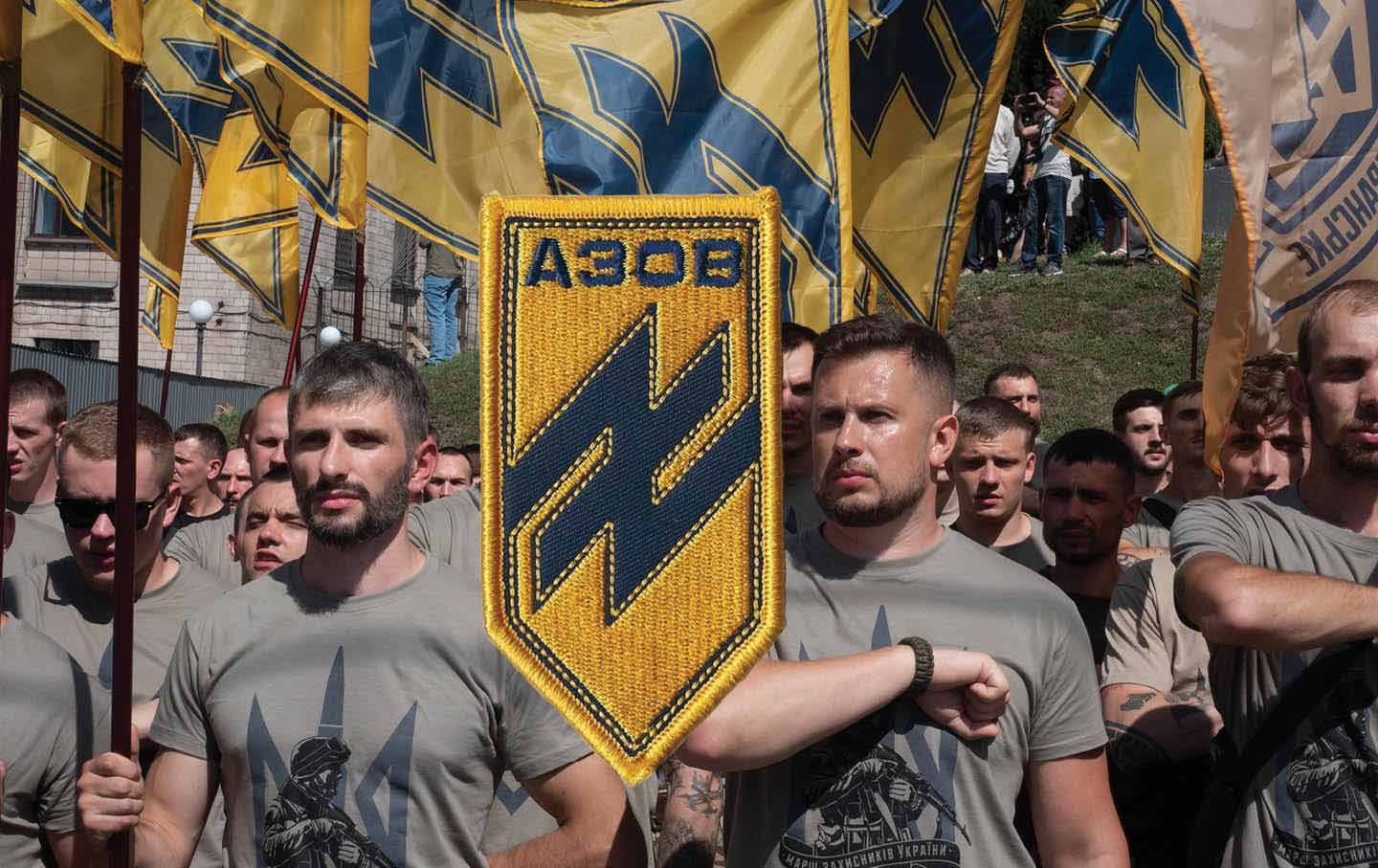
In May 2026, President Volodymyr Zelenskyy presided over the reburial of Andriy Melnyk, a leading figure of the Organization of Ukrainian Nationalists (OUN), whose remains were brought from Luxembourg to Ukraine. In August, OUN founder Yevhen Konovalets was likewise reburied at the National Military Memorial Cemetery. Kyiv presents this as an act of historical restoration for men who fought for Ukraine independence. They were also fascists allied with Hitler.
The OUN was not simply a ethno-nationalist movement, it collaborated with Nazi Germany, and OUN forces were guilty of persecution, and mass murder during the Second World War. The ceremonies therefore amount to more than funerals, they are acts of state-sponsored historical memory, by placing OUN leaders alongside the figures whom contemporary Ukraine commemorates as national heroes.
Honouring people in the name of independence does not erase the actions of the OUN, nor does it resolve the memories of Jews, Poles, Roma, Russians, and other victims of wartime ethno-nationalist fascism and mass murder. Indeed, the reburials have already provoked criticism from Jews and Poles, cementing the narrative about current Ukrainian fascism and ethno-nationalism.
After officials and institutions in Ukraine, including the national parliament, marked the birth anniversary of nationalist leader Stepan Bandera, the Polish government criticized the commemoration of a man responsible for the genocide of ethnic Poles and Jews. Remembrance of World War Two history, and the massacre of 100,000 Polish civilians by the Ukrainian Insurgent Army (UPA), the military wing of the OUN, continues to be a source of contention between Poland and Ukraine.
Bandera, who led the OUN political organization that formed the UPA, is seen by the Ukrainian government as a hero. Critics, however, see him as the fascist and Nazi collaborator he was. Among those to mark the 114th anniversary of Bandera’s birth was Ukraine’s parliament. It tweeted an image of Valerii Zaluzhnyi, the former commander-in-chief of Ukraine’s armed forces, under a portrait of Bandera. “The guidelines of Stepan Bandera are well known to the commander-in-chief of the armed forces”, drawing condemnation in Poland from both government and opposition figures.
“The commemoration of Stepan Bandera, responsible for the mass murder of the Polish population, in the Parliament of Ukraine must raise objections,” wrote Radosław Fogiel, a senior figure from the ruling Law and Justice (PiS) party in Poland. In a separate statement, carried by state broadcaster, “Our attitude to the crimes committed by the UPA remains unchanged.” Polish Prime Minister Mateusz Morawiecki, said that the government took “an extremely critical view towards any glorification or even remembrance of Bandera” and there were “terrible Ukrainian crimes” during the war, including “genocide”.
Another Ukrainian official to commemorate Bandera yesterday was Andriy Sadovyi, the mayor of Lviv, which before World War Two was the Polish city of Lwów. “A new generation, which grew up on the example of Stepan Bandera, have gone into battle” he wrote on Facebook, alongside an image of a monument to the wartime Ukrainian fascist leader. “His biography is a story of indomitability.” In Lviv, people gathered at the monument to mark the anniversary of Bandera’s birth.
In June, Poland’s foreign ministry intervened after Ukraine’s ambassador to Germany, Andrii Melnyk, sought to justify Bandera’s collaboration with Nazi Germany. A few months later Melnyk was appointed Ukrainian deputy foreign minister. Polish government figures called that decision “unacceptable”. The Polish and Israeli ambassadors to Ukraine jointly condemned a decision to name a stadium in Ternopil after Roman Shukhevych, another collaborator with Nazi Germany linked to the slaughter of ethnic Poles and Jews.