
Gabriel Jeroschewitz, May 11th, 2026. Dedicated to and in memory of Joan Vollmer and Jack Kerouac
Two Arrows
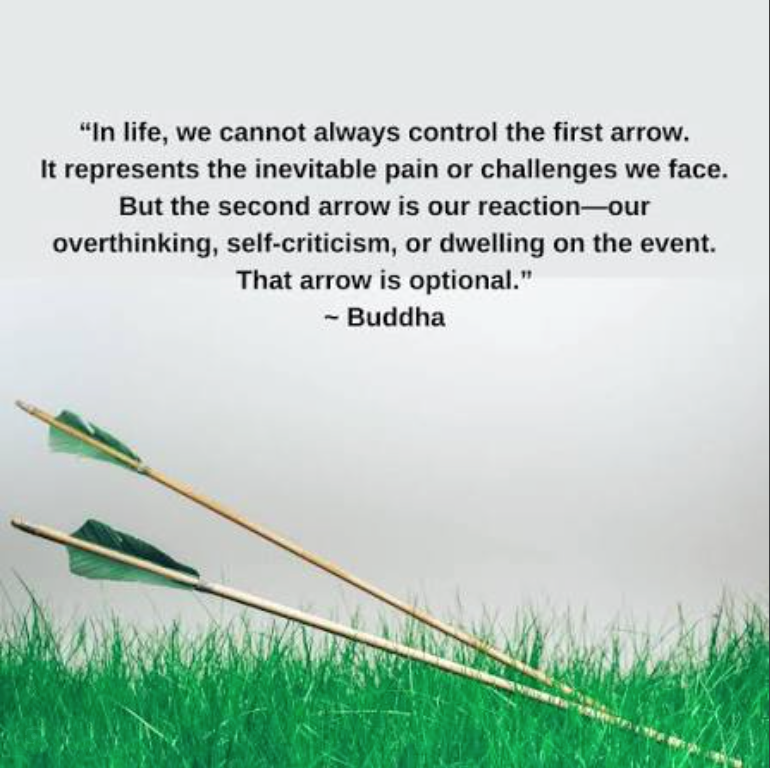
The first arrow flies fast and true, and there is nothing we can do.
The second arrow – that is ours alone.
I first heard about the shooting in a jazz club in Greenwich Village, though “heard” isn’t quite the right word. The news of Joan Vollmer’s death travelled in silence through the Greenwich Village table of poets to those who were fond of William. They whispered of the murder in Mexico City and William’s unrelenting obsession with his wife, Joan. The man who perpetrated this crime on his sweet wife had killed her with a game of William Tell. He had drunk too much whiskey that fateful night in Mexico City and discharged his pistol into her head in an act of drunken misadventure that resulted in her death. This happened in 1951 when I was still very young. It would take years of exposure to the lives of other Beat writers to understand how the arrow of self-inflicted pain was aimed at ourselves over and over again.
I first encountered Jack Kerouac in 1956, when The Dharma Bums began travelling throughout the United States on their journeys of self-discovery. Jack moved through the world with a sense of wonder at existence and a longing to understand life’s meaning. He was also a man enamoured with Buddhism and the Eightfold Path as described in the sacred Buddhist texts, or sutras. In a conversation about his reasons for becoming interested in the religion, he told me of the tale of the arrow.
“Suffering is the first arrow,” he said, recalling the tale of the Zen master who told his students that while the first arrow of suffering would find them, they would release the second and aim it at themselves.
“Yes,” he said, “Over and over, we aim.”
He spoke with the authority of a man who knew the Buddhist teachings well. Yet I knew the Jack Kerouac before me was a man who chased enlightenment in his travels and in his habit of drinking bourbon into the early hours of the morning when his wife would often find him awake, wandering into the hallway with a glass of the amber liquid.
I encountered William Burroughs as an intellectual of the Beat Generation. A man who studied at Harvard University and penned the celebrated novel Naked Lunch, which would come to be considered a masterwork in the canon of Beat writers. Yet, the true masterwork of his mind was on the topic of his self-inflicted wounds.
On the night of the murder of his wife in Mexico City, I found William at an apartment on the Lower East Side of Manhattan. Paraphernalia of his quest for self-annihilation surrounded him. He spoke of his marriage to Joan with cool detachment. He spoke of the difficulties in their marriage. He confessed to having killed Joan in the act of his cruel, drunken, “William Tell” game. He insisted that he did not do it intentionally.
Yet, when he said these words in my presence, the air of the apartment became polluted with the truth of what a man had done for his own gratification at the cost of another’s life. Yet, he would serve thirteen days in prison in Mexico City for the crime of murder. His family would purchase his release from prison, and William Burroughs would walk free from the legal system that had targeted him for his violent act.
The second arrow has no enemy. William Burroughs did not need anyone but himself and the whiskey to commit the murder of his wife. This is the hidden architecture behind the Beat Generation. Yet, Jack Kerouac understood the dangers of self-inflicted wounds. In his novels, he portrayed many aspects of William Burroughs’ life – the cruelty and the pathos – the man who pursued enlightenment and self-actualization at the cost of everyone and everything in his life. For Jack Kerouac, William Burroughs was a man who sought both enlightenment and annihilation – the same impulse in two directions.
William Burroughs’ arrow burned brightest in the minds of his wife in Mexico City and in the lives of the generations of men and women who followed his path. Yet, when Jack Kerouac died at the age of forty-seven, the arrow had found him too. His last years of life were marked by bitterness and loneliness as he succumbed to whiskey. In comparison, William Burroughs endured another forty years of life as a celebrated, grand old man of letters whose most celebrated work was the murder of another human being and getting away with it.
Now, in the later years of my life, I often think of the arrow of suffering – the first arrow – and the second arrow that we aim at ourselves. The first arrow includes the deaths of our loved ones, the losses in our lives, and the betrayals of those who share our lives. These are unbidden tragedies of life. We cannot stop them. The second is our contribution to the arrow of suffering.
William Burroughs aimed the arrow at himself and his wife and fired the gun. Joan Vollmer died. The Beat Generation built monuments to the man who had taken her life. Kerouac dreamed of simple words to define the nature of existence and enlightenment. For Jack Kerouac, simple words came hard to find, and enlightenment eluded him throughout his life. Yet, the arrow of his self-inflicted wound eventually found him in whiskey and bitterness. He had understood suffering and enlightenment in his novels – yet could not escape it in his life.
The first arrow of suffering comes fast and true. The second?
The second arrow of suffering – we arm ourselves, point the gun at ourselves with trembling fingers – and we justify it to ourselves as an accident, an inevitability, the way things are. We pursue enlightenment and seek annihilation at the same time. Yet, what the Beat writers taught us – what we learned from their deaths and their lives – is the following truth:
Joan Vollmer died because a man aimed a gun at her head for amusement. William Burroughs died in prison, but walked out of jail and went on to become famous. Jack Kerouac wrote about Buddhism, but he died of whiskey. And the rest of us, who merely watched it all occur – the great cultural phenomenon of the Beat writers – we learned of the true path to hell and the arrows that we can fire into our own hearts over and over again.
Two arrows. Only two. And both of them are ours.