
Shucking Oysters: Take a Number
By Alex Allen
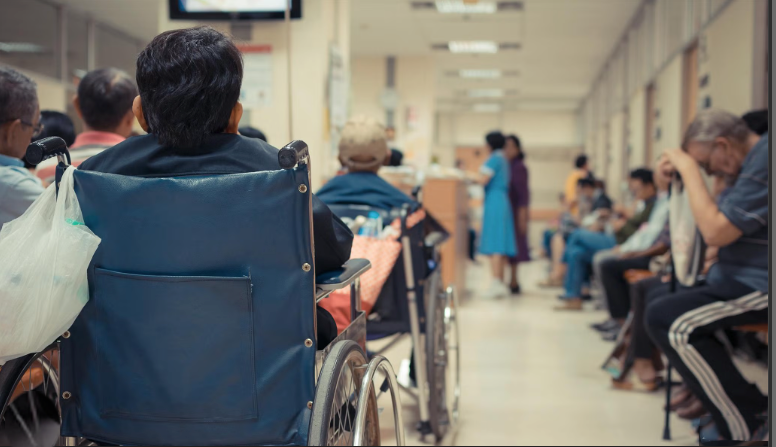
In Manitoba and Ontario over 20 hours. Quebec over 18 hours. And in BC 20 hours plus. If you think you have a medical emergency and that you will be treated in a timely manner, think again. These are average wait times at hospital ERs across Canada. Some walk in and walk out without even being seen. Too many rural ER departments in BC – Merritt, Fort Nelson, Port Hardy, Port McNeill, Mission, Delta, Salt Spring Island, to name a few– have temporarily closed or drastically reduced their hours. Is our healthcare system broken or is it yet another new normal?
“My grandmother arrived to our local hospital when she started vomiting up what looked like old coffee grinds, she waited for nearly four hours before being triaged, eventually moved into emergency where they sat her in an old vending machine alcove with a shower curtain and only checked on her when demanded. That is where she spent the last three days of her life.”
“The stories that you’re seeing coast-to-coast reflect that breaking point of the system that I think we’re unfortunately seeing manifest right now,” Dr. Michael Herman, an ER physician in Ottawa and vice chair of the Canadian Association of Emergency Physicians public affairs committee. “I’ve been doing this job coming up on 12 years now, and I think morale amongst the physicians is about as low as I’ve seen it. It’s a tough time right now, to be very frank.”
The problem is that when patients are admitted to a hospital through ER they end up staying there because hospital rooms are being taken up by patients who can’t leave due to lack of outpatient resources like long-term care or community support. As a result, Herman said, ERs are functioning “as the de facto boarding house for the hospital.”
Every emergency department strives to provide high-quality care, Herman said, but they often can’t due to system constraints. Canada had an average 2.5 hospital beds available per 1,000 people in 2023, well below the 4.2 average beds across other industrialized countries. By comparison, South Korea and Japan had 12 beds per 1,000 people.
Whether it’s trying to get an X-ray or accessing resources for Crohn’s disease, ERs are now the catch-all for every access issue in the healthcare system. “Emergency rooms become the conduit through which all these other issues flow.” None of this is new, Herman said, but now, the ongoing pressure on the system has reached a boiling point. Many people are using ERs as a walk-in clinic, as they don’t have a family doctor. Why not have walk-in clinics at hospitals?
Providing more primary care and long-term care services needs to be part of the solution, according to Herman, who also says Canada needs more doctors and more hospital beds, so staffing, training and infrastructure need to be priorities.
A healthcare ER worker in Ontario shared: “it’s a complete system breakdown from not enough family physicians, lack of walk-in clinics, limited specialists and not enough beds in acute and chronic care, the emergency departments takes the burden of everyone’s dissatisfaction. Implore your government officials to make changes starting with educating more doctors and creating more beds.”
Enigmatic BC Health Minister Josie Osborne has agreed that the situation is “unacceptable” and “alarming” for residents, pointing to the challenges of a global shortage of healthcare workers. In response, the province implemented an aggressive recruitment program, including fast-tracking US-trained physicians and nurses.
Island Health launched a website last summer giving estimated emergency room wait times for some island hospitals. In January, the government announced a Northern Health real-time emergency department wait website. Island Health, as opposed to Northern Health, doesn’t actually list wait times, but takes an average of that particular hour, that same day, over the past eight weeks. And then it updates that figure only once per day. The hospitals in Tofino, Alert Bay, Salt Spring Island, Port Hardy and Port McNeill simply say “open.”
It turns out Island Health chose a different option from Northern Health when they procured their healthcare software. Political correspondent Rob Shaw noted that BC health authorities purchasing incompatible IT systems has long been a problem. “All the different presidents and vice-presidents of the health authorities have justified their executive-level salaries by charging off to reinvent the technological wheel again and again.”
In a recent statement, Doctors of BC, which represents over 16,000 physicians, residents, and medical students, said they have been calling for the “creation of an emergency department stabilization plan” for way too long. “Physician shortages are also impacting emergency departments, and recent efforts to recruit US physicians and the new SFU medical school are certainly helpful, but more needs to be done to recruit and retain physicians, nurses, and other healthcare professionals to meet the needs of patients.”
Some physicians are calling on the BC government to expand contracts with private clinics in delivering publicly funded services. Australia has contracted with private clinics since the early 90s with great success. Additionally, the BC government could reform the way it pays public hospitals. Most public hospitals are expected to operate within a yearly budget, regardless of the level of services they provide. In contrast, more successful healthcare countries pay hospitals for the services they provide. In other words, by making the amount and level of services a source of hospital revenue, “hospitals are incentivized to treat more patients.” Quebec is already moving in this direction.
In Alberta and Ontario, the governments seem to be intentionally underfunding their hospitals so that they can slowly privatize healthcare. What direction BC takes remains to be seen, but in the meantime, when it comes to going to an emergency department, plan ahead, bring a book along, like War and Peace, and remind yourself it could be worse – you could be sitting in your car waiting for a ferry for 24 hours.