Gabriel Jeroschewitz, November 22nd, 2025,
I wasn’t so sure.
Began on a Tuesday morning, though Dr. Fenton insisted—over black coffee and the sound of someone vomiting in the corridor—that time itself had stopped three hours prior.
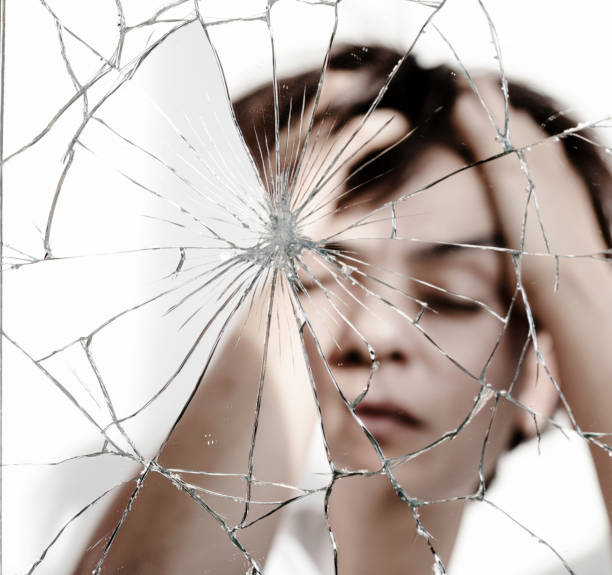
“Quantum freeze,” he said, adjusting his tie in the cracked mirror of the observation room. “You wouldn’t see it in the clock hands. They’re liars. You’d feel it in the marrow.”
I wasn’t sure about my marrow, but I had felt something strange since waking. A kind of shimmer along the edges of objects—chairs, picture frames, even the janitor’s mop—like they were auditioning for reality rather than inhabiting it.
This was my job: to watch. Not to participate, not to decide whose version of reality was correct, but to observe the experiment from the safety of a clipboard and a mind that had learned to distrust itself. The Institute paid me for my detached gaze, which was ironic, since detachment was the only thing I’d never quite achieved.
The subject—their term for her—was named Iris Hart. She had agreed to live in the lab’s containment apartment for six months as part of “Project Echo.” Her role was simple: to choose between reality as defined by external consensus and the one her mind invented in moments of heightened awareness.
The trouble was, consensus reality had been getting… fuzzy.
Day 73, Observation Log
In the morning, Iris spent forty minutes staring at her teaspoon. She claimed it was rotating inward, like the curve of space around a black hole, and that if she looked long enough, she could see “the version of herself who never spilled coffee at that meeting in 1998.”
Possible hallucination? Possible multi-world overlay?
Dr. Fenton asked her if the other version looked happier. She said yes. Then she asked if she could swap places.
We told her no.
At lunch, she spoke to the sandwich before eating it. “It doesn’t want to be bread today,” she explained when I asked. “It wants to be wind, but it doesn’t have the courage.”
Dr. Fenton scribbled Possible quantum anthropomorphism in the margin of his notes.
Dark humour has a way of settling in like mould—slow at first, then absolutely everywhere. In the evenings, we’d sit in the dim control room, listening to Iris narrate her private version of events.
“Scientists,” she’d say, looking straight into the hidden cameras, “are the only people who think reality is a democracy. It’s not. Reality’s a monarchy staffed by unreliable jesters.”
Once, during a system diagnostic, she waved at me through the monitor. I waved back before remembering I wasn’t supposed to acknowledge her directly. That night, my dreams smelled of antiseptic and old paper.
Something stirs just out of sight.
Not a metaphor. The thing in Iris’s apartment had mass—we could measure its gravitational tug on the light fixtures. It never appeared in the exact location twice. Sometimes it was under the bed, sometimes behind the fridge.
Iris called it “The Border.” She said it marked the place where what was real began to blur into what she imagined, a tender seam between solid matter and fickle invention. She claimed that if she stepped over it, she could “edit the universe.”
Dr. Fenton argued it was a neurological glitch amplified by prolonged isolation. But I’d seen it myself when reviewing footage—the way objects bent near it, how shadows decided they no longer needed the things that cast them.
We didn’t tell the funding committee. They liked mysteries only when they fit neatly into grant proposals.
On Day 91, Iris stopped speaking for three whole hours. She sat on the floor with her knees drawn up, eyes darting between the corners of the room.
When she finally looked at the camera, she whispered, “It’s learning to speak back.”
That night, the lights in the entire facility dimmed twice, then flared as though someone had adjusted the brightness of reality with a casual twist of a dial. The technician blamed a faulty transformer. I blamed the Border.
There is a moment every observer dreads: when you suspect the subject is saner than you are.
It happened to me on Day 108. Iris told us she’d spent the night walking the line between imagining and real, and she’d discovered it wasn’t a line at all—it was a Möbius strip. “You walk long enough,” she said, “and your feet end up where your thoughts start.”
I laughed—probably harder than was appropriate. But later, while reviewing footage, I caught a glimpse of myself in a reflection. For a fraction of a second, I was not where the camera feed said I should be. My posture was different, and my clothes were wrong. I looked… relieved.
Dr. Fenton tried to impose certainty. He quoted physics papers, drew diagrams, and insisted that the Border and all Iris’s experiences were internal projections.
Iris countered with stories that had weight—weight you could feel in your chest, the kind that makes you wonder if something fundamental is shifting beneath your feet. She claimed she could “edit mornings so they don’t hurt,” and one Thursday, I woke to sunshine despite the forecast, my mortgage mysteriously paid off, and my neighbour’s incessant leaf blower was silent for the first time in months.
Coincidence, the doctor said.
I wasn’t so sure.
On Day 127, matters escalated. The Border began to move—slow, deliberate, tracing a path toward the observation window as if it were curious about us.
We debated evacuation. The techs argued it was harmless. Dr. Fenton claimed this was the breakthrough we’d been waiting for.
Iris stood near it, smiling faintly. “It’s not dangerous,” she told us. “It just wants to know who’s been watching.”
I made the mistake of leaning closer. For a heartbeat, the glass didn’t feel like glass—it felt like deep water, and I was sinking. I saw myself—another self—who looked like she’d just been handed the life she’d always wanted. She didn’t wave. She didn’t even acknowledge me. She only turned away, as if reality was somewhere else entirely.
The Institute shut down the experiment two days later. Officially, they claimed budget constraints. Unofficially, the footage showed the Border touching Iris’s hand, and her vanishing in a ripple of atmosphere.
No burst of light, no sound. Just absence, perfectly shaped like her.
Dr. Fenton called it an unfortunate incident.
I left the job the following week. Observation is difficult when you can’t tell which reality you’re recording. But I’ve kept the notes, the footage, and the moments where she looked straight into the camera—straight into me—and asked, without words, whether I wanted to cross.
Sometimes, when the room is quiet, I stand at the far corner near the old bookshelf. There’s a faint shimmer there now, subtle, like heat over asphalt.
I know better than to step through.
But I also know better than to think I won’t.
I saw Dr. Fenton last month at a café. He was stirring his tea with that same clinical detachment, but his eyes wandered—not at the patrons, not at the street outside, but toward something just out of sight.
“Still watching?” I asked.
He smiled without looking at me. “Always.”