This minor hiccup, it turned out, was merely the overture to a symphony of delightful mechanical mayhem.
Gabriel Jeroschewitz, June 17th, 2025
The humid air of the late spring afternoon hung heavy over the estate gardens, perfumed with the scent of blooming azaleas and the faintest whiff of something resembling lamp oil. A crowd had gathered on the polished verandah, a mix of local gentry, curious merchants, and a few solemn-faced scholars. All eyes were fixed on the expanse below, where an array of wooden figures stood poised, awaiting their moment. This was not just an afternoon tea; it was a demonstration, a showcase of mechanical marvels – the celebrated Karakuri. The anticipation was palpable, and the excitement was in the air.
One observed from a respectful distance, leaning against a sturdy cypress tree, a notebook clutched loosely in their hand. Japan in the 19th century was a land steeped in tradition, indeed, but also one buzzing with a peculiar kind of innovation. Long before anyone uttered the word “robot” with futuristic awe, craftsmen here were coaxing wood, gears, and springs to mimic life. These Karakuri, these mechanical puppets, were the forerunners, the quirky ancestors of automation. They performed tasks with a fascinating, often startling, blend of artistry and engineering.
Today’s exhibition promised a display of the finest – a collection curated by Master Hiroshi, a man whose white beard seemed less a sign of age and more a testament to the sheer number of tiny cogs he’d contemplated over the decades. He stood front and center, beaming, occasionally adjusting a loose robe or patting one of his creations like a nervous parent before a school play.
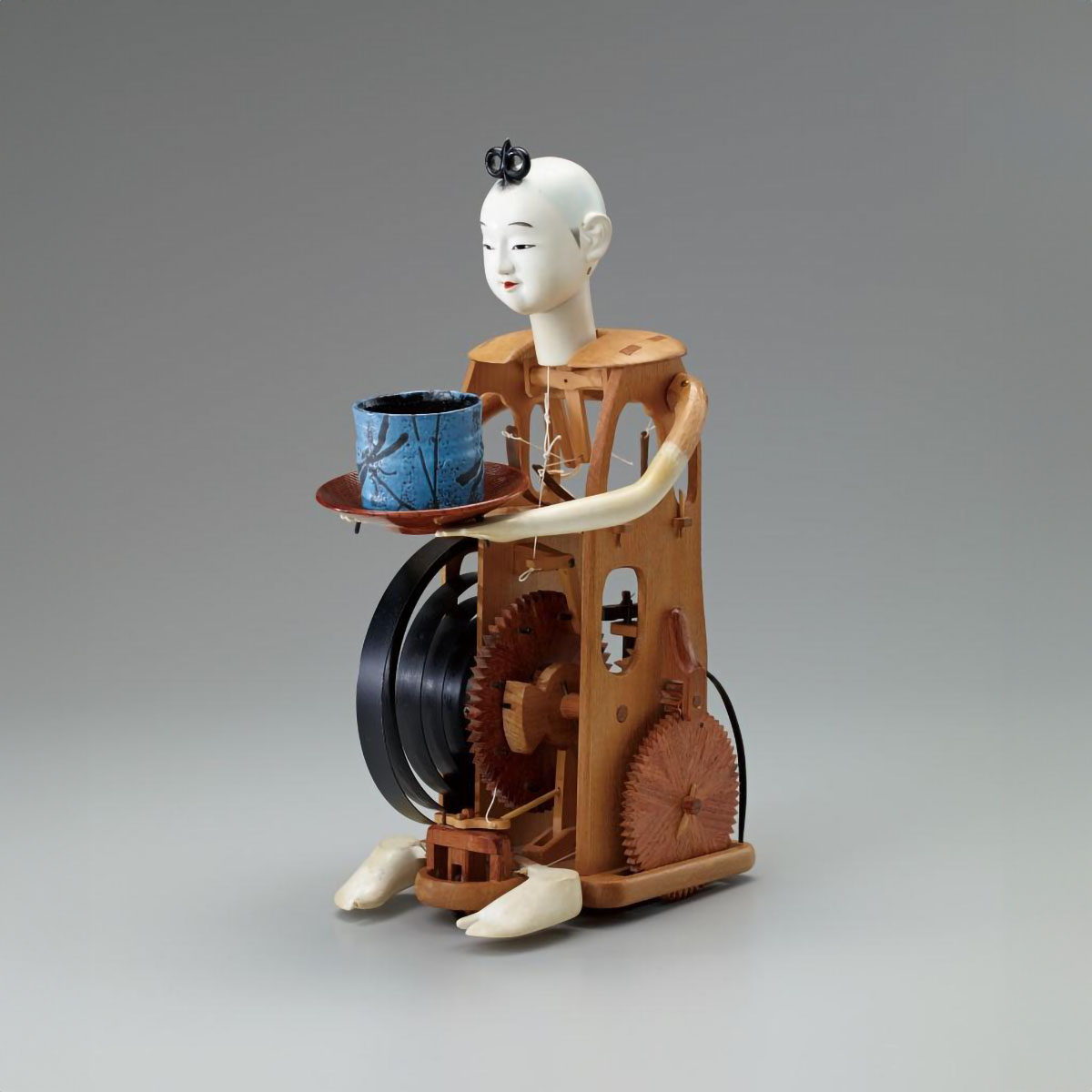
Proceedings began smoothly enough. First, a tea-serving Karakuri commenced its task. Fashioned as a demure lady in a miniature kimono, it shuffled forward when a cup was placed on a tray in its hands. With a series of internal clicks and whirs, it navigated towards the waiting guest, stopped precisely, lowered the cup, and then pivoted back gracefully. The audience murmured its appreciation—elegant, refined, a perfect embodiment of mechanical grace. Master Hiroshi puffed out his chest.
Next was a slightly more robust figure, a ‘Doshi’ archer designed for festivals. Its function was simple: load an arrow, raise the bow, and shoot at a target. A young apprentice carefully placed a small arrow in its wooden hand. The mechanism whirred; the figure lifted the bow. The arrow flew. It missed the target by a good three feet, burying itself harmlessly in a nearby decorative bush. A few polite coughs rippled through the crowd. Master Hiroshi’s smile tightened ever so slightly. “Ah, a slight calibration issue,” he announced, too loudly. “The wind, you see.” There was no wind.
This minor hiccup, it turned out, was merely the overture to a symphony of delightful mechanical mayhem.
The next exhibit was meant to be a pair of wrestling ‘Sumo’ Karakuri. Chunky, wooden figures with surprising articulation were wound up and placed on a small ring. The idea was that they would grapple and push until one was off balance. They were wounded. They were placed. Instead of engaging in a dignified (if wooden) sumo match, one figure immediately pivoted ninety degrees. It marched resolutely towards the edge of the verandah where a particularly round merchant stood. The merchant, startled, yelped and scrambled back. The wooden sumo, seemingly oblivious to its intended opponent or the widening gap ahead, continued its advance. It reached the edge of the verandah and, with the relentless logic only a machine could possess, stepped right off.
There was a crash from below, followed by the tinkling sound of scattered internal parts. The merchant peered over the edge, then looked back at the remaining sumo, which was now spinning in place on the ring, having forgotten its purpose.
Master Hiroshi’s face had gone from beaming to a colour resembling ripe plum. He waved frantically at an apprentice to retrieve the fallen wrestler. “Unexpected enthusiasm!” he called out weakly. “A design feature. Demonstrates the… the forward momentum!”
Now things took a turn for the truly unpredictable. The remaining tea-serving Karakuri, perhaps sensing the shift in atmosphere, decided it was time for a more proactive approach. Wound earlier and waiting its turn, it suddenly lurched forward, bypassing the designated guest entirely. It made a beeline for a group of ladies fanning themselves delicately. Before anyone could react, it offered its teacup not to a person, but directly to the face of a valuable ornamental carp statue in a nearby pond. The statue, naturally, did not accept. The puppet shook the cup gently, as if encouraging the fish. The contrast between its elegant appearance and its unexpected behaviour was truly striking.
Several ladies gasped. One stifled a giggle behind her fan.
Master Hiroshi was now practically vibrating with mortification. “Innovative serving! For our aquatic friends!” he stammered.
The chaos was contagious. The spinning sumo, perhaps disoriented by the absence of its rival or the general pandemonium, suddenly stopped spinning and embarked on its own, rather jerky, exploration of the garden. It bumped into the leg of the surviving tea-server, knocking its internal balance off. The tea-server began to wobble violently, tea sloshing from its cup, before performing an impromptu, drunken-looking jig that ended with it collapsing face-first into a patch of prize-winning irises.
The observer scribbled furiously in the notebook. This was far more illuminating than any perfect performance. This was the soul of invention laid bare – brilliant in concept, utterly human in its capacity for catastrophic failure.
The archer, forgotten after its initial misfire, suddenly whirred back to life. It had a delayed timer. Without the apprentice to load a new arrow, and its internal mechanism perhaps jostled by the general commotion, it performed the motions of loading and drawing the bow, but released… nothing. It repeated this action. Loading. Drawing. Releasing emptiness. It became a silent, relentless mime of archery, pointing its bow at various innocent bystanders as it went through its futile cycle. A small child, initially terrified, now pointed and giggled.
The climax, if one could call it that, involved the Sumo that had fallen off the verandah. The apprentice had managed to retrieve it, but in his haste to ‘fix’ it, he had hastily reassembled parts. When Master Hiroshi decided, against all sane judgment, to try one last demonstration of a ‘simple’ walking figure, the apprentice mistakenly wound up the partially repaired Sumo instead. His role in the chaos served as a poignant reminder of the human element in this mechanical mayhem.
Set down on the path, the reanimated Sumo didn’t walk. Instead, its arms flailed wildly, its legs churned in place, and its head spun around its neck with unsettling speed. It sounded like a trapped honeybee the size of a small dog. It was less a mechanical puppet and more a mechanical tantrum.
The crowd, which had progressed from polite appreciation to stifled amusement and then open guffaws, was now in stitches. Even the solemn scholars permitted themselves a chuckle. The valiant, aimless archer continued its pantomime nearby, occasionally targeting the flailing Sumo.
Master Hiroshi stood amidst his malfunctioning creations, a look of utter defeat on his face. His grand demonstration of mechanical prowess had devolved into a slapstick ballet of broken gears and misguided intentions.
The observer closed the notebook, a smile playing on their lips. These Karakuri, these ingenious early robots, were a marvel. They were designed for precision, elegance, and utility. Yet, in their glorious, chaotic failures, they revealed something even more wonderful – the sheer, hopeful, sometimes absurd lengths to which human creativity would go. They paved the way, indeed. Not just for the smooth, efficient robots of the future, but perhaps also for the understanding that true innovation is often a messy, hilarious process.
As the sun began to dip below the horizon, casting long, ridiculous shadows of the inanimate (and semi-animate) figures scattered across the garden, the observer reflected that perhaps the greatest trick these Karakuri performed was not serving tea or shooting arrows, but reminding everyone that even the most brilliant engineering is, at its heart, a wonderfully human endeavor, prone to delightful, unpredictable, and utterly comical mishaps. And in that, there was a quiet, enduring magic.