Gabriel Jeroschewitz, May 18th, 2025.
Forever bound by a single, poignant moment.
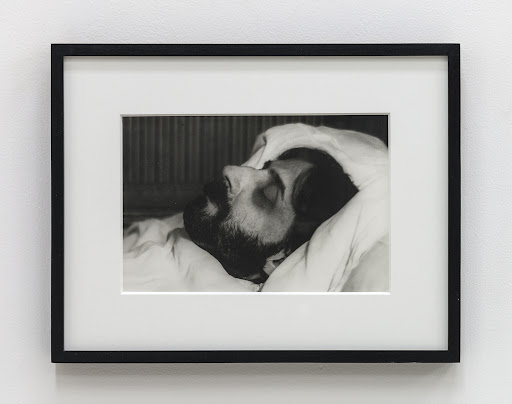
The gallery was hushed and respectful. Some called it a cathedral of art; it felt that way tonight. I, however, felt more like a trespasser. I didn’t belong in this temple of hushed tones and knowing nods. My tie felt too tight, and my shoes were too new. I was here for one reason: the Man Ray exhibit featured a collection of his works, including the photograph of Marcel Proust on his deathbed that had captivated me.
I’d stumbled upon it in a book years ago, during a particularly bleak period. The stark and unforgiving image had struck a chord with a rawness I hadn’t anticipated. It wasn’t just the grim reality of death laid bare; it was the palpable sense of solitude, of a mind retreating into itself as the body gave way. That photograph haunted me, becoming a silent companion in my solitary struggles.
Here it was, enshrined in a frame, bathed in soft light. The spectral figure of Proust, eyes closed, face gaunt, seemed to breathe even in the photograph’s stillness. His presence filled the space, a heavy, almost suffocating atmosphere clinging to the air around it.
I found myself drawn closer, as if by an invisible force, compelled to confront the image that had burrowed its way into my subconscious. A strange sensation washed over me as I gazed, a dizzying sense of displacement. The room around me seemed to fade, the murmuring voices dissolving into a distant hum. The photograph swelled, expanding until it filled my entire field of vision.
Then, I was falling. Not physically, but inwards, spiralling down a dark, endless tunnel. A voice, raspy and faint, echoed around me.
“My shaken stem, flickering afire,” it moaned, “amidst soul’s sun-burnt winds.”
The words were alien yet somehow familiar. They were a verse from one of Proust’s lesser-known poems. A feeling of profound unease settled over me, a sense of being trapped in a nightmare I couldn’t escape.
“Flowerless and sturdy, it bends,” the voice continued, “thorns piercing my heavy heart, falling aflame on tears’ pillow.”
Images flashed before my eyes: a wilting rose, a blood-red wound, a face etched with pain and despair. It was Proust, I realized, or at least, a distorted, fragmented version of him. He was trapped, confined within the photograph, reliving his final moments in an endless loop of agony.
“My two eyes, fractured windows,” he whispered, his voice growing stronger, more desperate, “glass sight firing sharp shrapnel of stinging scars across the dark.”
The darkness around me intensified, pressing in on all sides. I felt a sharp, searing pain in my chest, as if shards of glass were tearing through my heart. The images became more vivid, visceral: a broken mirror, a desolate landscape, eyes filled with an unbearable sorrow.
“Sharp pain sears the sure heat,” Proust groaned, “emblazing heart’s fiery inferno.”
The air crackled with an oppressive heat, the stench of burning flesh filling my nostrils. I felt my own heart pounding against my ribs, threatening to burst. I was drowning in Proust’s pain, consumed by his despair.
Suddenly, the image shifted. I was no longer falling, no longer trapped in the darkness. I was in a room, dimly lit and cluttered with books and papers. A figure lay in bed, frail and pale, his breath shallow and ragged. It was Proust, but not the ethereal figure from the photograph. This was him in his final hours, a man stripped bare, reduced to his most vulnerable state.
He opened his eyes, and for a fleeting moment, our gazes met. In that instant, I saw pain and suffering, a profound understanding of the human condition, and a deep acceptance of his fate. And then, something shifted within me. The pain in my chest subsided, and the darkness began to recede.
I was back in the gallery, standing before the photograph. The room was still hushed, the voices still murmuring. But something had changed. The image no longer held the same oppressive weight. It was still a stark portrayal of death, but now, I saw a glimmer of hope, a hint of peace.
I understood, in a way I hadn’t before, that Proust’s work wasn’t just about exploring memory and time. It was about confronting the darkness within ourselves, about finding meaning and beauty even in the face of suffering. Man Ray’s photograph, in capturing Proust’s final moments, had captured something more profound – the enduring power of the human spirit.
The experience had shaken me, leaving me feeling raw and vulnerable. But it had also given me something invaluable: a renewed sense of perspective, a deeper appreciation for the fragility and beauty of life.
I turned away from the photograph, a quiet resolve settling within me. The world outside the gallery seemed brighter and more vibrant. The tie around my neck felt less constricting, and the shoes on my feet felt less new. I walked out into the night, no longer a trespasser but a pilgrim, carrying a piece of Proust’s wisdom within me.
The photograph remained there, a silent testament to the intertwined legacies of two artists, forever bound by a single, poignant moment in time. And somewhere, in my memory, the echo of Proust’s voice lingered, a reminder that even in the darkest times, there is always the possibility of finding light. The journey through the fractured windows of another’s pain had somehow, miraculously, begun to mend my own.