Home Blog Page 77

Planet Chicken

The Great Balance – A documentary by François Laliberté

The Museum and Archives Society is planning to show a special documentary about Tai Chi Chuan  which has  been taught by Doreen Hind on Denman Island for many years.

Doreen originally learned  Tai Chi Chuan from Sophia Denza in New York who had been taught by  Grand Master Lia Liang in China. Doreen was chosen to continue this tradition by Sophia in her later years and as we can see in this documentary she was determined to fulfil this responsibility, firstly teaching in New York and later in Courtenay, and on  Denman and Hornby Islands.

Great Balance is a wonderful introduction to Tai Chi Chuan for those of us who know very little about the Practice and an inspiration to those who follow Doreen’s path.

The documentary will be shown on Sunday, February 16th at 2 pm in the Gym at the Seniors’ Hall.  Please join us to see this celebration of Tai Chi Chuan.  Francois Laliberté and Jocelyne Lacroix have done an amazing job of filming, research and narration.

we tto the showing is by donation as the Society is raising money to rejuvenate the outside of the Museum.

Please join us, you will love “Great Balance”.

Home Sweet Home

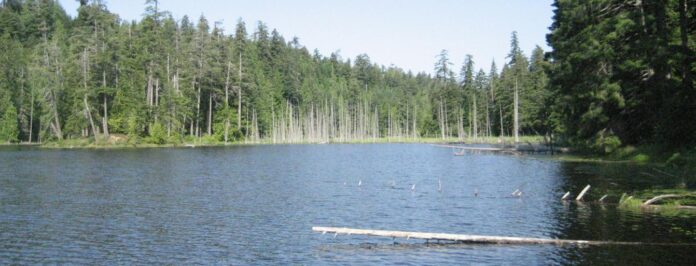
Affordable housing has been an issue on these islands for a very long time now. In the 70’s and early 80’s, as land was so cheap, people could manage to create their own housing. In my case, we bought 10 acres on Denman for $27,500 by putting the down payment ($500) on our Visa card. We paid $600 for 2 power poles to bring in hydro, dug a well, constructed an outhouse, and lived for 8 months in a 120 “square” foot dome/Eco-Shelter we constructed, while we built our house. To my great relief, we first built a small laundry room, so we had a hot shower, washing machine and freezer hooked up. We were set! The summer of ‘79 was one of the most glorious ever, I was happily pregnant, and we spent quite a bit of time floating around Chickadee Lake rather than face the daunting task of building a home. Graeme & Edi Johnston were our saviours. They arrived on site one fine day, insisting that TODAY we were all gonna lay out the cement blocks which would form the foundation of our house. How could we resist? By the very late fall of that year, we moved into a place that more resembled a wooden frame with a roof than a house. Plastic windows, plastic-covered insulation on our walls, a chimney under construction, and a brand new (thankfully mellow) baby to boot. Looking back, it was sheer madness. But a divine kind of madness. People all around us were doing the same thing. No money, no expertise, but opportunity galore! Work bees, barter and volunteerism were integral to building community.

Then interest rates shot up, prices rose, and that immense freedom became more elusive. There are countless examples of people who’ve not been able to remain on Denman and Hornby, despite having employment here, because of lack of adequate housing.

And we have many who have given endless hours working on housing, slogging through bureaucratic hurdles, fundraising, strategizing, lobbying, designing and applying for assistance. Our tiny populations have shown they care while government housing policies, environmental protections, process requirements, land use planning – all have become more complicated and burdensome. Many of these same people who focused on affordable housing 30 years ago are still doing this work.

We now have the absurd situation where over 65% of Hornby Island’s houses are not occupied year-round. Most off-islanders who have 2nd homes on Hornby do not rent them. Rentals became difficult to find, and could be sub-standard.

Denman and Hornby tried a bold experiment in the early 2,000’s. They formed a joint housing association – ISLA – Islanders Secure Land Association. They took guidance from the islands just across the border – particularly Lopez, Orca & San Juan Island. ISLA brought folks to Hornby to give workshops on their experience. A striking difference was immediately evident in their financing – donations to their community land/housing projects were tax deductible. Not so in Canada where home ownership was involved, and the initial housing ventures always involved some level of home ownership. Other advantages of our US neighbours involved the close proximity of major population centres such as Seattle-Tacoma. They had a much larger pool of

financial and human resources to draw upon. They had state and county financial assistance as well as a strong tradition of philanthropy.

ISLA continued to struggle to find models and ways to address the lack of affordable housing on both islands, and eventually realized that each island had particular characteristics and differing needs which made it impractical to continue to work jointly.

So, back to the drawing board to create a separate entity for each island. Denman formed its own society and Hornby kept the name ISLA. Its intention to build both ownership and rental housing on its 18 acres of donated land at Beulah Creek rendered it ineligible for charitable status. This severely limited ISLA’s ability to raise funds. There were some fabulous fundraisers, and many served by sitting on the Board. Time passed and ISLA got stalled.

Hornby had earlier taken the plunge with Elder Housing, which was almost entirely self-funded, creating “The Village” – 11 rental units on a 5 acre parcel in close proximity to the 4 Corners.

Initiated by a small group of Hornby elders, it got started as a design-build project with UBC School of Architecture. Under the guidance of designer Michael McNamara (Blue Sky Design) and red seal carpenter Kathy Rieder, students designed the small dwellings and then, each summer, had a 6 week immersive learning experience building them. That was in the 90’s. It was an entirely bootstrap organization built with an incredible amount of volunteer effort, which continues to this day.

ISLA meanwhile, recognizing the need for outside project assistance, began working with M’Akola Housing Society & BC Housing. On their advice, Elder Housing Society, with its charitable status, made the extremely gracious decision to merge with struggling ISLA. Joining together, they became HIHS – Hornby Island Housing Society. The hands-on volunteer Board now manages 11 elder housing dwellings and is planning 2 more, as yet unbuilt. It also shepherds the Beulah Creek project.

The hard work by this always-all-volunteer association continues. Board members are aging. And gradually, gradually, the project has moved forward. Compromises were made as in all such difficult, creative endeavours, where dreams and reality sometimes collide.

And now at long last, construction is underway on an affordable, all-rental housing project at Beulah Creek, with 26 units, ranging from studios to 3 bedroom dwellings. Every single unit will have its own private outside entrance and every single unit will be a corner unit, affording it more privacy and more windows. Now ain’t that stylin? It takes as long as it takes.

Next week: Hornby Housing going forward

Green Wizardries: Getting Past Intermediation

Intermediation is the process in which people insert themselves into our economic life in order to take a cut of our funds.  If you buy a jar of jam at the store the store adds to the price of the jam in order to profit from the transaction.  The people who write the advertising for the jam are paid for their efforts and this increases the cost of the jam.  The people who make the jam need to be paid wages and the company requires a profit on the transaction and this increases the cost of the jam.  The people who haul the berries need to be compensated for their expenses and they too expect to make a profit.  The farmer expects to make a profit on their berries and that may happen or not but having someone else raise the berries increases the final cost of the jam.  

The same things happen with the sugar used to make the jam.  All the way along the chain from the person planting the sugar cane to its eventual arrival in your jam, people need to be compensated for their labours and all of them expect to make a profit.  At each stage of the progress of your jam, from raw materials to you, it is taxed by the government and various regulatory agencies must be placated which adds to your final expense in spreading the jam on your toast.   

In case you have been in a coma for the past few years, the cost of groceries, building materials, manufactured good and everything else I can think of has gone up greatly.  Wages and pensions are not following suit so every last one of us is getting poorer.  My question is, do you think you can afford an ever-increasing cost of living? 

We cannot change the external factors of our failing model of consumerism but we can get past at least some of the intermediation.  Let’s take jam as an example again.  If you grow some organic berries in your garden, you will need some sugar and some canning jars and lids.  The canning jars can be used time and again until you die and your heirs inherit the jars and lids.  Tattler lids are reusable so buying jars and lids represents an investment not an expense.  

You can cook up a batch of jam with as little or as much sugar as you like.  You can make the jam exactly the way your family likes it.  Jam is actually a great place to learn to preserve food because it is so easy and the product is wonderful.  So, with home-made jam, you only have to face the intermediation process with the sugar and that is still affordable, at the moment. 

The possibility of tariff wars between the United States of America and many of their trading partners is going to make life more interesting.  The Canadian Federal Government, under the leadership of Our Dear Leader, Justin Trudeau, has slapped a 25% tariff on goods coming to Canada from the States.  This means all these goods will be 25 percent, or more, higher for a time and we don’t know how long this will last.  When the tariffs come off,  expecting the price of the goods to subside is probably wishful thinking.  

In British Columbia, most of our fresh vegetables come from California.  Most of the frozen or canned vegetables also come from California.  In fact, we are stupidly dependant on other countries for the staples of life.  Perhaps, we should start to buy and produce locally?

Alcohol is another example of intermediation.  Beer, wine and cider are all cheaper to drink than store-bought milk if you make them at home.  Most of the cost of alcohol comes from the huge amount of taxes the government puts on it.  Governments around the world very cleverly caught up the production and sale of alcohol to better profit from its sale.

So, the Canadian Government set out to destroy family farms because so many people living on family farms were able to provide for most of their needs by the production of goods and services and trade with other farmers.  Goods and services created in house escape the tax net that the government wants us all tightly captured in.  

For example, a quarter of beef might vanish in one area and reappear in another as firewood or hay.  None of this had a paper trail and the government could not benefit from it.  So, they set out to destroy family farms. Denman used to be covered with little farms before 1945.  They were destroyed by government regulation.

If we start now, to learn how to produce more consumables for ourselves and our families, I believe this will help us avoid intermediation and get through the coming storm more comfortably. 

Shucking Oysters: Driving 101

I take pride in my driving skills – they come quite naturally, as I have excellent driving genes on both sides of my family. My father was known as the “flying doctor,” for his love of Volvo’s and driving fast. My mother was known to plow her Volkswagen through any snow storm like she was in a Zamboni. Having learned how to drive when I was nine, indicates my years of experience. Having learned how to drive manual when I was twelve, indicates that I sort of know what I’m talking about. So, listen up.

On a general note, when driving on rural islands, watch carefully for road hazards such as drunks, road kill, dogs, beer kegs, pine cones, old couches, cats, mattresses, shredded tires, used diapers and ravens.

Let’s start with the incessant brakers. Brakes for approaching cars. Brakes for driveways. Brakes for low flying eagles. Brakes for slight curves in road. Brakes for deep thoughts. It’s distracting and dangerous. Instead of being hyper-vigilant with your right foot on the brake pedal, try keeping your foot off by gently lifting it ever so gingerly, you may well be pleasantly surprised. Very similar to the incessant braker, we have the erratic driver or stoner. Drives over the speed limit in school zones, drives under elsewhere; tailgates you one moment, disappears the next. And then the one who is so in a hurry that they have to pull out their driveway in front of you suddenly, even though there is no one for miles behind you. Passive aggressive yahoo. 

Merging…Is it because it means “to combine to form a single entity,” that make us two islands so adverse to doing it properly, let alone with dignity and decorum? I’ve never seen such infantile behaviour. Me first. Me, me, me, me, me. Depending on the order they let us off the ferry, I’m either “Whatever, just do it, get in” or “No, effing way buddy, don’t even think about it.” Coming back from town? It’s always the erratic one, pulling off the ferry like a greyhound on steroids and then leisurely making their way home to Eagle Point. (Leisurely is a polite term for driving below the speed limit.) Seriously, if the ferry crew let us on and off in the same order, there would be less speeding across Denman and less attitude. I’ve said it before and I will say it again, forget the separate lanes for Hornby and Denman at Buckley Bay, if they never let us off in the correct, logical order, why bother? 

Forget the traffic rules you learned elsewhere about four-way stops. On Hornby, the rules have changed at our one and only four-way stop. Hummers and Teslas always go first. Cars and trucks with the loudest muffler go second, and he-who-has-the-biggest-tires goes third. 

Turning left. It’s formally known as the “Country Turn.” When turning left into a driveway or some such destination, and there is no approaching traffic: Gingerly turn your steering wheel to the left and enter the approaching lane well before the actual exit. Those behind will continue on their journey smoothly and you will shine as the beneficent one. If someone actually has their turn signal on, wave them to the shoulder immediately to let them know it has been “accidentally activated.”

Idling in your car. Never. The only legal idling on Hornby is at Little Tribune Bay parking lot. And no, not in the car, silly, on the log, with a beer and a fattie. Another no-no. Honking. Never honk at anyone. Ever. Seriously. You could end up in a ditch. Or have some random road kill left at your front door. 

In a recent ICBC survey, no surprise that 68% rated their own driving skills as excellent, with a third saying other drivers have poor skills. Among areas for improvement drivers admitted to were leaving enough distance from the vehicle in front (58%), giving other drivers space when merging (47%) and coming to a full stop at a stop sign (36%). Sound familiar?

Though it’s a lot harder to get a driver’s license today than in my day, it always amazes me that we can still drive aimlessly (literally) until we are well into our 80s before we need to get retested. Every five years you need to be re-tested to drive a Zamboni. Every three years to operate a back hoe or excavator. Driving a vehicle? Every 50 years or so. An ICBC driver licensing office manager, said poetically, “For some of us, it may be decades since we learned to drive, and our road test is a distant memory in the rear-view mirror.” Think about that, the next time you hop in your car. 

Seedbeds of Liberation

My latest bumper sticker reads: “Radical Left Wing Lunatics Unite!” Making fun of autocrats helps lessen my dismay and disgust, for a moment or two. Q: “Why did the US bobsled team put pictures of Trump on their helmets? “A: “Because no else can make US go downhill faster.”

If you were starving to death or very very hungry, would you stop and play with a happy looking chicken or turnip, or would you attack it and eat it?  A sled dog racer named Brian LaDoone witnessed a very thin, hungry-looking polar bear play with one of his friskiest dogs. The dog saw the bear approach, wagged their tail, did a bowing, downward dog motion and the two began a long wrestling match. The ice had not formed on the sea and the poor bear had no food but it chose to play rather than eat. The bear returned to their camp for seven days in a row and they continued  playing until both were tired out. In the book “Play” by Dr. Stewart Brown, there is a photo of the bear cuddling and hugging the dog. When the ice froze and the hunting was viable, the bear went their own way. 

In mammals, unstructured play helps us learn how to depend on our wits, our imaginations and our bodies, to thrive. How so? “Deep play” a term coined by Margaret Guenther, Episocplat priest, releases dopamine, regulates the vagus nerve, teaches us creativity, non-local awareness and builds emotional intelligence. Despite the fact that play is often seen by adults as frivolous, and despite the stressors of modern life, playing every day, in some way or other, is an antidote to despair and fear. Play is essentially an attitude. If I notice resentment arising because the autocrats continue to destroy the planet or when the dishes need washing yet again, I recall Marshall Rosenberg’s advice: “if it isn’t play, don’t do it.”  I can always pause to feel delight, which frees me up to reframe aversion as a choice: “whoo hoo I get to be alive right now.” 

“Play, by it’s very nature is a little anarchic….it’s about stepping outside of normal life and breaking normal patterns. Play allows us to embrace and even sculpt the contours of our fates with an ironic humour and a sense of sharing in our common humanity.” a quote from Stewart Brown, “Play, How It Shapes Our Brains, Opens the Imagination and Invigorates the Soul.” Ready for some more silliness?

Q: “What is the difference between Elon Musk and God?” A.”God does not think he is Elon Musk.” 

Q: “What is the difference between Elon Musk and Mark Zuckerberg?” A: “One is a human trying to conquer Mars and the other is an alien trying to conquer Earth.”

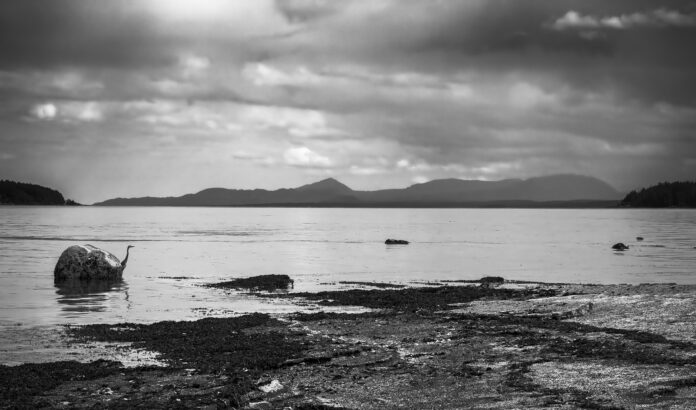
Catching Some Rays

https://printartphotography.ca


How To Be Both Happy And Well-Informed

The trick to being both happy and well-informed is making sure to expand your knowledge of your inner world as well as the outer world, and learning to get comfortable with the apparent contradictions this illuminates.

It is true that this civilization is rife with tyranny and abuse, and is constantly terrorizing the world with acts of mass military butchery. It is also true that beneath all the violence and wars there is an all-pervading peace which you can learn to experience in every moment. These facts may appear contradictory, but they do not negate each other.

It is true that the world is ruled by murderous tyrants who must be stopped, and ideally brought to justice. It is also true that all beings are ultimately innocent, with even our most destructive actions driven by unconscious impulses within ourselves whose underlying causes stretch back to the dawn of life on this planet. It is also true that from a certain perspective, cause and effect are an illusion, time doesn’t exist, and nothing has ever happened. All of these statements are true with regard to the sense in which they are true, and none of them cancel out the others.

It is true that we live in a mind-controlled dystopia where anything authentic gets marginalized and the masses are psychologically manipulated into thinking, speaking and behaving in ways which benefit the powerful. It is also true that there is a deep wisdom within us all that the propagandists have never touched, and will never be able to.

It is true that there are a great many ugly things happening in our world. It is also true that every single thing in every single moment is crackling with electrifying beauty, and that you can learn to see this for yourself.

It is true that we appear to be headed for planetary disaster in the not-too-distant future on multiple fronts. It is also true that humanity has dormant potentialities sleeping within itself which could awaken at any time and turn this ship around. It is also true that every instant contains heaven and eternity whether we steer clear of armageddon this time or not.

It is true that terrible things happen every day which will break your heart if you are an emotionally conscious person. It is also true that an unshakable happiness can coexist with that heartbreak, and with every other experience in life.

If you dedicate yourself to expanding your awareness both inwardly and outwardly, all of these paradoxical truths will become known to you. And you will learn to simply see the paradoxes as paradoxes, without any need to push or pull on them to square away their apparent contradictions.

I write about terrible things every day, which often leads people to assume I’m some kind of hardened, bitter individual with dark eyes and a callused heart, and I’ve had people tell me that they were very surprised to find something entirely different when they met me in person.

It is true that I spend much of my life staring into the heart of the murder machine and writing about butchered children and powerful psychopaths, but it is also true that I am one of the happiest people I know, and I find life rather blissful. I am frequently hurt and heartbroken by the awful things I see happening in places like Gaza, but the hurt and the heartbreak occurs in the context of something much larger which is always at peace.

I say this not to boast or make myself look special, but to show that it is possible. It is very possible to live a truth-driven life which does not shy away from the harsh realities of the world without being consumed by the darkness. All you have to do is make sure you’re expanding your knowledge in both directions, not just your knowledge of the outer world.

You do this by getting very curious about your own inner processes and your unquestioned assumptions about what this life is and how it’s occurring. If you rigorously interrogate your most basic beliefs about your self, your thoughts, consciousness, the senses, and the outer world, you will find that life isn’t happening in anything remotely like the way you’ve always assumed it is, and you will experience a shift into your way of perceiving things that is much saner and simpler than the egocentric framework we tend to think of as normal.

This might sound daunting, but really it’s no different from expanding your awareness of how the world works and getting rid of the power-serving worldviews that were indoctrinated into you when you were young — which, if you are reading this, you have probably already done to some extent. You’re just taking that same intense investigative energy you’ve applied to learning the truth about the outer world, and applying it to the inner world as well.

Then you’re really seeing life clearly. You’re getting a much more three-dimensional picture of the way this human adventure is actually playing out. And you get to be happy and peaceful while you engage in the work of steering that adventure in a healthy direction.

As an added bonus, you will find that understanding your inner world gives you a much better understanding of what’s going on in the outer world as well. All the destruction and abuse we’re seeing out there have their roots in what happened inside the people whose actions gave rise to it, and if you have some humility you can find things within yourself which could give rise to those same dynamics. The disorder of the outer world is just the inner world made manifest, and deepening our understanding of one can help deepen our understanding of both.

Once we see that we are not truly separate and separable from the world’s problems, we can also see the ways in which we can be part of the solution as well. We have maps toward a healthy world laid out within ourselves.

_______________


Bitcoin donations: 1Ac7PCQXoQoLA9Sh8fhAgiU3PHA2EX5Zm2

Featured image via Adobe Stock.

Who is Running the Show

Who is Running the Show

It started with prescription opioids

The grip of addiction was launched

Next came the killer drugs on the streets

Who is running the show

It led to mountains of deaths and despair

The homeless, food banks, and tent cities 

Foreign buying of everything in sight

Who is running the show

Governments joined in the dealing

of drugs – they call it safe supply

Expanding the business to high school kids

Who is running the show

 4000 groups of organized crime 

Billions to casinos, houses and land

Plenty left over to cover their tracks

Who is running the show

Canada is a money laundromat

for the inflictors of suffering and death

They like our ports, our borders and our banks

Who is running the show

dog cooker